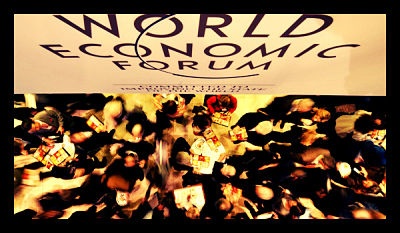
The World Economic Forum is colloquially coined as “Davos”, after Davos, Switzerland, the city in which the conference is housed annually. The WEF is an independent organization, dedicated to improving the economic state of the globe by incorporating leaders in business, politics, academics, and civil society to influence global, national, and industrial decisions.
Founded in 1971, the World Economic Forum started out as a humble group of business leaders, meeting under the umbrellas of the European Commission and the European Industrial Associations. The chair of the first gathering, Klaus Schwab, led 440 participants from over 30 countries in Davos to commemorate the finding of this non-profit organization, and created the building blocks to repeat the forum annually each January.
WEF is designed to be independent from any political, partisan, or national interest. This allows the participants in the forum to develop cross-cultural objectives to fighting economic weakness around the world.
A 1983 Forum document described the meetings as
“One of those increasingly rare international events where formality can be dispensed with, where personal contacts can be made, where new ideas can be tried out in complete freedom, where people are aware of the responsibilities involved in belonging to an international community, where we have time to look at the really important issues rather than everyday pressures. This is what we call the Spirit of Davos.”
The purpose of the WEF annual meetings varies from year to year, but all topics fall under the theme of ensuring that world leaders and attendees of the conference exercise their responsibilities “jointly, boldly, and strategically” to improve the economic state of the world for its future inhabitants.
WEF achieves this goal by collaborating with people, systems, and technologies to created indispensable leadership challenges to cultivate “new models, bold ideas, and personal courage to ensure that this century improves the human condition rather than capping its potential.”
In 1994, the World Economic Forum welcomed its 1,000th member, and decided to cap membership at that number, in order to ensure quality in member conversation and benefits.
– Kali Faulwetter
Source: Weforum, Weforum- Executive Summary
Photo: Business Week

Famine and Politics in Ethiopia
Ethiopia is a country defined by its environment. The East African nation has been plagued by droughts and famine throughout its history, plunging the people into an abject state of poverty. In the latter half of the 20th century, drought and famine became more prevalent, inciting political turmoil in Ethiopia.
These unfavorable environmental conditions especially devastated the northeastern Wollo and Tigray regions of Ethiopia. One of the most tragic events in the nation’s history was the 1958 famine in Tigray in which around 100,000 people perished.
In 1973, another brutal famine struck Wollo that resulted in the toppling of Ethiopia’s government. The reigning monarch Hailie Selassie’s inability to resolve the food crisis incited revolution. Selassie was removed from power and supplanted by a Communist junta under the infamous Mengistu Haile Mariam.
From 1983-85 Ethiopia suffered the worst famine in its history. Over 400,000 people died over the two year period. A combination of climate conditions and the policies of the incompetent Derg regime caused the famine.
After the fall of the Derg in 1991, Ethiopia stabilized before entering into a war with the neighboring country Eritrea in the late 1990s. Although the war has ended, Ethiopia remains one of the poorest nations in the world and has become a breeding ground for separatist groups like the Ogaden National Liberation Front and the Islamist terror group al-Ittihaad al Islami. Both of these groups, although their goals are different, pose a threat to the current government in Ethiopia. Moreover, the existence of radical Islamic terrorist organizations in Ethiopia could eventually harm the United States.
As Ethiopia continues to reel from the damages of famine, perhaps it would be wise for the United States to supply their East African ally with more aid. If Ethiopia is not provided for, the nation will spiral into another devastating cycle of coups. This would threaten the well being of the Ethiopian people, the stability of the region, and the national security of the United States.
– Josh Forgét
Source: BBC,The Borgen Project,Bahru Zewde
Photo: Word Press
Radio Station Supports Polio Vaccinations
Recently, insurgents have kept polio teams out of vulnerable areas. Distrust of all things American and the belief that the polio vaccine was being used to control the population has led to outspokenness against the treatment from some, and outright violence from others. In the latter part of last year alone, there were eight polio workers that were killed due to such rhetoric. However, the latest casualty in this battle is a child less than one year old, who died in a hospital.
The child’s father, Taj Muhammad, said that polio teams had not been to their area in three years due to such activity. The child joins 257 children that have succumbed to the disease in the past two years in Pakistan.
The Pakistani government suspended UN-supported vaccinations following the shooting of two female polio workers on May 28th. Radio Free Europe’s Pashto station Radio Mashaal has nevertheless been working to connect aid workers to the communities that need them. Radio Mashaal’s approach, which includes inviting religious and secular figures of authority such as mullahs and doctors to engage in discussion has, according to one doctor, led to a 50 percent drop in the number of parents who refused to administer polio drops to their children.
Yet, Pakistan—along with Afghanistan and Nigeria—remains one of the few places on the planet where polio remains an epidemic.
– Samantha Mauney
Sources: Radio Free Europe, LA Times
Photo: Gates Foundation
What a Waste
Here’s an interesting stat: one-third of all food grown globally is lost to spoilage and waste. Without any increases in crop yield or technology, 50% more people could be fed by the food already produced.
When faced with the realities of poverty and global hunger, the obvious fix is to produce more. Genetic modification, hybrid-seeds, increased fertilization… These are the solutions that come to mind and are being promoted throughout the world as well as being introduced to developing regions where food shortages are most acute. But in many cases, increased yields due to these methods won’t actually lead to any real gains in production. Not in areas where fruits already rot on the vine due to a lack of pickers to harvest them, or where a lack of serviceable infrastructure prevents farmers from efficiently transporting their product to market.
If this food spoilage and waste could be eliminated, or even reduced, the benefits could far outweigh those of slow, albeit persistent, methods of improving crops and yield. This change though will require a concerted effort. Currently, the majority of agricultural funding is channeled into research and development, with the focus being on production. The cynic could claim this is because the industry has an economic interest in increasing output, as it would lead to increased sales of seeds and other of their own products. But regardless of the reason, it is a route that needs exploring.
On February 19th, the U.S. State Department hosted a conference on ‘Food Security and Minimizing Post-harvest Loss: Markets, Applied Research, and Innovation.’ This conference was a positive step, as it demonstrated the administration’s acknowledging the seriousness of this issue, while also bringing together scientists and politicians from all over the world to address it. More steps like this need to be taken, and funding needs to be provided for research into food storage. If we can save even a portion of that lost third, the gains will be immediately apparent.
– David Wilson
Source: Mother Earth News
Photo: Guardian
Kenyan Girls Protected from Cervical Cancer
Every year, approximately 275,000 women lose their lives to cervical cancer. The vast majority of these women live in developing countries where it is difficult to access the necessary healthcare, and where the ability to screen, diagnose and treat the life-threatening cancer is rarely available. However, the fight against cervical cancer in developing countries received an unprecedented boost when the GAVI Alliance announced recently that it had guaranteed a record low price of $4.50 per dose for the human papillomavirus (HPV) vaccines.
For the first time, the GAVI Alliance will make the vaccination available to girls of a school age on a widespread scale, and at an affordable price. The GAVI Alliance has already begun their vaccination program in Kenya where cervical cancer is responsible for the deaths of more Kenyan women than any other cancer. In the past, most of the HPV vaccine programs have only been available in richer countries despite the fact that the need for these programs has always existed in developing countries. Dr. Seth Berkley, CEO of the GAVI Alliance, said that through their partnership with WHO and UNICEF, their support for HPV vaccines is “bridging the gap between rich and poor countries, enabling HPV vaccines to reach girls no matter where they live.”
The vaccine is distributed in three doses, and since Kenya has high enrollment rates among girls, schools will become the main centers for the HPV vaccines. With the support of community health workers, the treatment will also be available to girls who are unable to attend school, and who are often at higher risk of contracting the disease.
Seven other sub-Saharan countries will also receive support from the GAVI Alliance in the near future; Ghana, Lao PDR, Madagascar, Malawi, Niger, Sierra Leone and Tanzania. The GAVI Alliance estimates that by 2020, it will have immunized more than 30 million girls in 40 countries. In these countries, where access to diagnosis and treatment is seldom available, providing a preventative vaccine is the clearly preferred option. This news provides hope to millions of girls and women in developing countries who remain at risk of contracting cervical cancer.
– Chloe Isacke
Source: GAVI Alliance,Impatient Optimists
Photo: WUSC
Cooperative Farming Takes Off in El Salvador
Since its civil war in the 1980s, El Salvador has imported more than 90% of its fruits and vegetables from surrounding countries. Although Salvadorans enjoy quality products, very little of it actually comes from Salvadoran farmers because there aren’t many left.
José Mejía, a farmer who grows crops in the Salvadoran countryside, is one of the few. He and his father, who has owned the land for decades, have spent their lives selling to “coyotes”—middlemen who pay almost nothing for the crops and sell them at the market for inflated prices. Mejía recently learned that his squash, which he was selling for $5 a unit, was being sold for three times as much in the market an hour and a half away.
“The coyote has the advantage of knowing the market and handling large volumes,” said Andrés Bernal, who coordinates a regional Oxfam program that trains farmers on how to access the market. According to him, farmers like Mejía can only expect to keep, on average, 21% of the final price of their produce.
But farmers are finally taking action. Now, Mejía’s small community delivers its food products to the market personally every two weeks and they earn up to 50% more of the final profit. Farming cooperatives like his are sprouting up across the country making it easier for farmers to understand the market, meet the demand for their products, and earn more for their work.
Some cooperatives have even partnered with local supermarkets and restaurants to supply them with fresh fruits and vegetables directly from surrounding farms, thus benefiting both the farmers and their clients. Others have begun replacing coyotes by acting as middlemen themselves, offering fairer prices and better service.
Cooperatives like these are empowering Salvadoran farmers and setting the country on a path to reconfiguring its agricultural sector. Sometime in the future Salvadorans may be eating their own food.
– John Mahon
Source: The Guardian, IPS News
Photo: Flickr
What is Davos? – The World Economic Forum
The World Economic Forum is colloquially coined as “Davos”, after Davos, Switzerland, the city in which the conference is housed annually. The WEF is an independent organization, dedicated to improving the economic state of the globe by incorporating leaders in business, politics, academics, and civil society to influence global, national, and industrial decisions.
Founded in 1971, the World Economic Forum started out as a humble group of business leaders, meeting under the umbrellas of the European Commission and the European Industrial Associations. The chair of the first gathering, Klaus Schwab, led 440 participants from over 30 countries in Davos to commemorate the finding of this non-profit organization, and created the building blocks to repeat the forum annually each January.
WEF is designed to be independent from any political, partisan, or national interest. This allows the participants in the forum to develop cross-cultural objectives to fighting economic weakness around the world.
A 1983 Forum document described the meetings as
The purpose of the WEF annual meetings varies from year to year, but all topics fall under the theme of ensuring that world leaders and attendees of the conference exercise their responsibilities “jointly, boldly, and strategically” to improve the economic state of the world for its future inhabitants.
WEF achieves this goal by collaborating with people, systems, and technologies to created indispensable leadership challenges to cultivate “new models, bold ideas, and personal courage to ensure that this century improves the human condition rather than capping its potential.”
In 1994, the World Economic Forum welcomed its 1,000th member, and decided to cap membership at that number, in order to ensure quality in member conversation and benefits.
– Kali Faulwetter
Source: Weforum, Weforum- Executive Summary
Photo: Business Week
Mozambique Has Expensive Tastes
Mozambique is quite the paradoxical nation. It ranks 185th out of 187 countries on the United Nations Human Development Index, making it a country with some of the poorest people in the world. Yet, if you walk the streets of the city of Maputo, you’ll see skyscrapers, Land Rovers, sophisticated bars and restaurants, and expensive homes and apartment buildings. Despite the fact that 55% of people in the country live in poverty, it appears that Mozambique has expensive tastes. Who can afford these luxuries?
There is a huge wage gap in the country, with the average worker earning about $100 per month, and the few, super-rich who can afford $230 aftershave and $320 champagne. Many of these upper-class citizens are government ministers, relatives of the ruling party, and business people. Mozambique’s hotels are regularly crowded with business people from around the world looking to invest in the oil and natural gas the country has to offer.
Mozambique has an incredible economy, with one of the highest GDP growth rates in the world, but the problem is that money is not being distributed among the rest of the country. The theory of trickle-down capitalism is not working here, because the rich who are making the most money are not investing it in their nation, they’re keeping it for themselves. Many people are upset about the corrupt practices in Mozambique, and that business interests often take precedence over the health and safety of citizens.
Experts argue that one of the biggest problems is a lack of a middle class. The nation is developing quickly, thus pushing some people to the very top of the class and leaving the rest at the very bottom. By investing in cheaper travel to encourage new growth that will build a middle class, they claim that the country can pull many of those living in poverty above the line. They also explain that the people of Mozambique need to begin to take charge and speak out against the corruption to become the change the country needs.
– Katie Brockman
Source: allAfrica
Photo: Land Rover
5 Ways to End World Hunger
According to the World Food Program, there are 870 million people that are living with chronic hunger worldwide. The estimated cost of feeding those people is USD 30 billion, a fraction of what the United States allots to the Military and War budgets. While there has been tremendous progress in reducing hunger worldwide, today one in eight people do not get enough food to lead a healthy, active life.
Malnutrition is the number one health risk across the globe, but it is entirely preventable. Listed below are five ways to reduce poverty and help eradicate malnutrition and chronic hunger.
1. Donate to a cause or organization that will make a difference.
2. Learn the facts, spread the word, and build buzz. The more people that are involved and dedicated to ending world hunger, the better. Great sites to surf for facts are UNICEF, USAID and WFP and that is just the tip of the iceberg.
3. Call or write to Congress! A phone call or letter to state representatives and congressmen can persuade them to support bills that will protect and reduce hunger around the world. Learn how to contact state leaders at The Borgen Project.
4. Volunteer. Whether you have the time or the money, volunteering is a great way to fight the good fight and end world hunger.
5. Fundraise! Hold a garage sale, a non-event or start a fundraising website to generate awareness and funds.
– Kira Maixner
Source: WFP, The Borgen Project
Photo: SCH
Capitalism Is Helping End Global Poverty
1.1 billion people in the world still live in extreme poverty, which means surviving on less than $1.25 per day. While that may seem like bad news, the good news is that that number is half of what it was 20 years ago. Between 1990 and 2010, 1 billion people were lifted out of extreme poverty, and now we need to do it again to wipe out extreme poverty by 2030 to reach the goal set by the World Bank.
So, who is to thank for helping curb poverty around the world? Certainly, the leaders who proposed the Millennium Development Goals have contributed by raising awareness about the problem of poverty and encouraging advocacy by creating goals. And without a doubt, the nonprofit organizations that have raised money and volunteered to help raise less than privileged people out of extreme poverty should be applauded. But, the most significant hero in this scenario maybe capitalism.
One of the best ways to help people is to teach them how to help themselves. Sending food, medical care, and other supplies to help the poor helps greatly, but not as much as helping a country grow so that they can create their own food, become doctors to care for the sick, and buy or make their own supplies. When a country’s entire economy grows, individuals’ financial outlooks begin to look brighter as well.
China is a prime example of how capitalism is helping to end global poverty. The country has one of the most impressive “rags to riches” stories, bringing 680 million people out of extreme poverty from 1981 to 2010. Furthermore, a staggering 84% of China’s massive population used to live in extreme poverty, and that number has now been reduced to 10%. Most of the reasoning behind this incredible transformation lies in the fact that China’s productivity level drastically increased towards the end of the 20th century, supplying people with jobs to bring them out of extreme poverty.
There is much more to global poverty and the methods of ending it than simply providing jobs through capitalism. There are major issues with inequality and government systems, for example, and there’s not always a simple answer. But, growth remains one of the most significant ways to help a nation lift and keep itself out of extreme poverty.
– Katie Brockman
Source: The Economist
Victoria’s Secret Model Erin Heatherton Fights Poverty
Victoria’s Secret Model Erin Heatherton has teamed up with the Global Poverty Project for a new campaign called, It Takes Two. The campaign aims to raise awareness of, increase demand for, and improve access to family planning information and services around the world. The announcement coincides with the Women Deliver Global Conference in Kuala Lumpur to discuss the global health and empowerment of girls and women.
Erin Heatherton and the It Takes two campaign aim to motivate young men and women to take action in support of improving access to family planning services and information. They hope this will place pressure on governments, and to strive for significant progress and change.
Hugh Evans, co-founder and CEO of The Global Poverty Project believes that women are being denied a fundamental right when they are denied access to contraception. It Takes Two will utilize the Global Poverty Project’s online Global Citizen Platform to track and engage people.
The initiative is partnered with Women Deliver. Founder of Women Deliver, Jill Sheffield, has expressed her excitement to be a part of the campaign. She is looking forward to working with a project to help motivate countries to achieve their Family Planning 2020 goals and commitments. She believes that girls, boys, women and men all need to demand that their governments distribute family planning information and services. Sheffield believes this will give women more power and control over their lives.
Heatherton is also excited about her capacity to be part of such an important project. She feels that the lack of modern contraception to many women around the world is one of the world most pressing matters. She also believes that lack of contraception affects men and women, as well as a problem that should not be affected by a family’s socio-economic status. Everyone deserves fair access to family planning methods.
It Takes Two will launch first in the United States and second in Uganda. It will later expand to eight other countries. It is partnered with IPPF, The Bill and Melinda Gates Foundation Institute for Population and Reproductive Health, UNFPA, Marie Stopes International and more.
– Caitlin Zusy
Source: Artist Direct
Photo: Global Poverty Project Tumblr