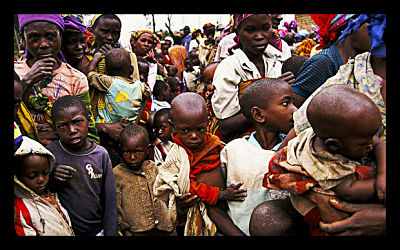
Rwanda has made vast improvements in reducing poverty in the past decade. Nevertheless, the majority of their population lives below the poverty line. Discussed below are the leading and somewhat surprising facts about poverty in Rwanda.
Top 10 Facts About Poverty in Rwanda
The Bad News
1. 57% of Rwandans live below the poverty line and 37% live in extreme poverty.
2. Rwanda is the most densely packed country in Africa. With an annual population growth rate of around 3%, the population will have an additional 12 million people by 2015.
3. The 1994 genocide, which killed about 1 million people, changed the demographic structure of the country. Women now account for 54% of the population, and women and orphans were left as the heads of many households.
4. 44% of Rwandan children suffer from stunting. This means that they are unable to grow to their full potential because of a lack of adequate nutrition.
5. Agriculture employs 80% of the labor force, but only accounts for a third of the country’s GDP. Nearly half of Rwandan agricultural households experience food insecurity.
…The Good News
6. At least 1 million Rwandans have been lifted out of poverty in the last five years. This has been attributed to an increase in agricultural incomes and income transfers.
7. Between 2006-2011, Rwanda posted an average annual growth of real GDP of 8.4%. This was driven mainly by higher productivity in the agricultural and industrial sectors.
8. Since 2005 the mortality rate of children under 5 has been halved from 152 to 76 deaths per thousand.
9. Immediately following the genocide, 100 percent of the government budget came from foreign aid. In 2011, the figure had fallen to 40%.
10. Participation in secondary schooling has doubled since 2006, and primary education has far exceeded the set target.
Rwanda still has a long way to go, but the recent successes provide hope for the 10 million people living within its borders. A combination of government programs, foreign aid, and a continued focus on agricultural production promises to bring more and more people out of poverty in Rwanda every day.
– Kathryn Cassibry
Sources: World Bank, Rural Poverty, Feed the Future, UNDP
Photo: The Telegraph

10 Things You Didn’t Know About Poverty in Rwanda
Rwanda has made vast improvements in reducing poverty in the past decade. Nevertheless, the majority of their population lives below the poverty line. Discussed below are the leading and somewhat surprising facts about poverty in Rwanda.
Top 10 Facts About Poverty in Rwanda
The Bad News
1. 57% of Rwandans live below the poverty line and 37% live in extreme poverty.
2. Rwanda is the most densely packed country in Africa. With an annual population growth rate of around 3%, the population will have an additional 12 million people by 2015.
3. The 1994 genocide, which killed about 1 million people, changed the demographic structure of the country. Women now account for 54% of the population, and women and orphans were left as the heads of many households.
4. 44% of Rwandan children suffer from stunting. This means that they are unable to grow to their full potential because of a lack of adequate nutrition.
5. Agriculture employs 80% of the labor force, but only accounts for a third of the country’s GDP. Nearly half of Rwandan agricultural households experience food insecurity.
…The Good News
6. At least 1 million Rwandans have been lifted out of poverty in the last five years. This has been attributed to an increase in agricultural incomes and income transfers.
7. Between 2006-2011, Rwanda posted an average annual growth of real GDP of 8.4%. This was driven mainly by higher productivity in the agricultural and industrial sectors.
8. Since 2005 the mortality rate of children under 5 has been halved from 152 to 76 deaths per thousand.
9. Immediately following the genocide, 100 percent of the government budget came from foreign aid. In 2011, the figure had fallen to 40%.
10. Participation in secondary schooling has doubled since 2006, and primary education has far exceeded the set target.
Rwanda still has a long way to go, but the recent successes provide hope for the 10 million people living within its borders. A combination of government programs, foreign aid, and a continued focus on agricultural production promises to bring more and more people out of poverty in Rwanda every day.
– Kathryn Cassibry
Sources: World Bank, Rural Poverty, Feed the Future, UNDP
Photo: The Telegraph
Zainab Salbi and Women for Women International
This is a global humanitarian Zainab Salbi. She is an Iraqi-born humanitarian that founded the organization Women for Women International. Salbi has dedicated the majority of her life to helping women in war-torn countries rebuild their lives and their communities. Growing up, her father was Saddam Hussein’s personal pilot and her family was firmly in the clutches of Hussein’s inner circle. After an unsuccessful arranged marriage in America to avoid the clasp of Hussein, Zainab remarried and founded Women for Women International.
In 1993 the news of rapes in concentration camps during the conflict in Bosnia propelled Salbi to found an organization to help female victims of war. The organization provides economic aid, emotional support, job skills training, and rights education to empower women and stop the cycle of violence.
Women for Women International currently works in eight war-torn countries. The organization provides a one-year program for women to receive job and business training, enabling them to earn a living. This program helps women understand their rights and liberties and provides them with the opportunity to become leaders in their communities.
Women for Women International has mobilized more than 300,000 people in 185 countries to support female victims of war. Their support has provided assistance to more than 351,000 women through education, microfinance programs, and small business development, as well as other initiatives. Women for Women International has been able to distribute $108 million in direct aid to women.
Women for Women International works in four modules. They aim to help women sustain incomes, be aware of their rights, be educated as family and community decision-makers, and provide them with social networks and safety nets for support.
Zainab Salbi has founded a massively successful and vitally important international aid organization. Women for Women International places female empowerment and recovery at the center of its philosophy to create positive social change in the world.
– Caitlin Zusy
Source: Women for Women International Ted Talk Profile
Photo: Zimbio
Ryan Gosling on Poverty
The only thing better than Ryan Gosling himself is a movie with Ryan Gosling in it. From the romantic classic The Notebook to the more recent rom-com Crazy, Stupid, Love, Mr. Gosling has bewitched moviegoers everywhere. While Gosling himself is an avid supporter of social causes such as PETA, Invisible Children, and the Enough Project, his movies teach the audience a wider and more important lesson about poverty.
The Notebook
In The Notebook, Ryan plays a persistent lover named Noah who transcends society’s expectations to win the love of his life. Even with hardships and distance, Noah’s love never deters and his determination pays off in the end. The Notebook teaches us that perseverance rewards. Poverty is a problem that will continue to persist the world unless we take action to fight it. Just as Noah never gives up, the world cannot back down against the global fight against poverty.
Crazy, Stupid, Love
In this romcom, Gosling plays a suave, young man named Jacob who leads a flashy lifestyle. He takes pity on a man named Cal whom he meets at a bar and he soon transforms Cal’s life by providing him with a debonair wardrobe and a new sense of confidence. This movie reflects how intervention can be transformative. From a grassroots approach to a more wide-scale effort, every bit of action is transformative and helpful in the fight against poverty. Crazy, Stupid, Love teaches us to be agents of change when fighting poverty.
Lars and the Real Girl
In this comedy film, Gosling is Lars, a quirky and socially awkward young man, who develops a relationship with a blowup doll named Bianca. Although all of Lars’ friends and family are initially hesitant to accept his relationship, Bianca comes to touch each of their lives. This movie shows us that poverty can affect every individual in different ways. Even if one is not directly living in poverty, the effects of poverty can be felt worldwide through limited job markets, increased security threats, and a vast untapped potential market. The solutions to poverty must be innovative and far-reaching, as seen by the popularity and universality of Ryan Gosling movies.
– Ananya Marathe
Source: The Internet Movie Database -IMDb
Photo: Poodle Stalkers
Poverty in Cameroon and Why it Matters
Cameroon is on track to become a middle-income country, however, nagging poverty spurred by under-funded social programs and ineffective public finance management holds the country in its current limbo.
The country of Cameroon boasts the largest economy in Central Africa. It is one of the oldest oil exporters on the continent, and it receives some of the smallest amounts of aid in Sub-Saharan Africa.
Cameroonian poverty has plateaued over the last several years at 40% nationally, though the rates have actually increased in the poorest areas of the country. Of those citizens living in poverty, 87% live in rural areas. According to a recent report, the World Bank does not expect Cameroon to meet most Millennium Development Goals, except for the ones related to universal primary education and gender equality.
The factors holding Cameroon back are complex. Budget austerity and general governmental inefficiency are at the heart of many of the country’s development headaches. These confounding factors have a crippling effect on the improvement and expansion of modern, secure infrastructure and established a business climate unfriendly to major investors. Thus, a country with impressive natural resources, including high value-added agricultural products like coffee, cotton, and cocoa, is struggling to effectively harness its economic potential.
The varied and fertile landscape of Cameroon enables 70% of the population to earn its living from agriculture and farming. The country is the world’s fifth-largest cocoa producer and has seen sectors outside of its long-established oil industry become the driving forces in the growth of its economy. While modest gains in the agricultural and tertiary sectors have pushed the economy, rich mineral reserves remain untapped, partially due to an infrastructure power deficit.
The World Bank believes further economic expansion and sustainable poverty reduction in the country can best be achieved through a commitment to targeted programs and efforts aimed at improving governance at the central and sectoral levels. Accordingly, such initiatives are key features in the World Bank’s Country Assistance Strategy for Cameroon. The strategy seeks to bring increased coordination and transparency on governance-related issues and to foster competitiveness and service delivery across the country.
Despite these challenges, there is hope for the future of Cameroon. The country has successfully implemented programs that have increased the primary education completion rate to 71% and have pushed gender equality, notably through the school enrollment rate for girls. These successes demonstrate the potential positive impact of effectively implemented development programs. Through cooperation with and commitment to World Bank strategies and other development efforts, the country of Cameroon should, in the not too distant future, experience real success in the fight against poverty and economic underachievement.
– Lauren Brown
Source: World Bank, Reuters
Photo: Health Care Volunteer
Design a Condom to Improve Contraception Access
In 2013, 222 million women in the developing world still do not have access to modern contraception. That is 222 million women unable to responsibly plan their families; without the ability to control their own fertility, they are unable to plan a stable future for themselves.
In developing countries, complications from pregnancy and childbirth are leading causes of death for women. Responsible family planning would not only significantly impact maternal mortality rates, but would also provide the opportunity for millions of girls to stay in school and potentially lift entire communities out of poverty.
Global Poverty Project and Women Deliver have partnered to launch It Takes Two, a campaign focused on improving access to sexual and reproductive health information and services around the world. The campaign will use the Global Citizen online platform to extend its message and generate support. It Takes Two hopes to capitalize on the game-like atmosphere of Global Citizen’s points rewards system to attract a substantial crowd of supporters.
How has It Takes Two managed to turn modern contraception into a game?
Design your own condoms.
It Takes Two is sponsoring a contest in which participants submit a condom wrapper design by July 21st, and the 10 winning designers will receive free condoms featuring their personalized wrapper. Everyone who enters will have their design profiled in the It Takes Two condom gallery, and be entered for a chance to win tickets to concerts to over 70 participating artists such as Kings of Leon, Beyoncé, Tim McGraw or One Direction.
It Takes Two wants everyone, creative or not, to step up and help spread the word that everyone has the right to plan their lives because a woman’s choices shouldn’t be made for her based on her socioeconomic level or her country of origin.
– Dana Johnson
Source: Artist Direct, It Takes Two
Photo: Global Giving
Understanding Hidden Hunger
Sight and Life, a prominent group working to fight micronutrient deficiencies prevalent among the world’s poor, has recently released its Hidden Hunger Index. Hidden hunger is defined as a chronic deficiency of necessary micronutrients. Rather than a lack of food or calories, this type of hunger results from a diet low in specific nutrients. This condition affects approximately 1 in 3 people in the world today and accounts for about 7% of diseases around the world. Although the signs are not visible, hidden hunger has long-term consequences for overall health, productivity, and mental development. The most common deficiencies are in vitamin A, iodine, folate, and B vitamins. Women of reproductive age and young children are most severely affected by this condition.
In addition to its negative and often permanent health effects, hidden hunger has numerous economic consequences. It aggravates global poverty in multiple ways and minimizes countries’ growth in economic productivity. It also increases child and maternal mortality, causes birth defects, diseases, and disabilities. Unfortunately, it also restrains the empowerment of women by adversely affecting their health.
The Hidden Hunger Index concluded that hidden hunger in pre-school age children was alarmingly high in sub-Saharan Africa, India, and Afghanistan. High Hidden Hunger Index was found to correlate with low Human Development Index, a measure based on three basic qualities of human well-being: a long and healthy life, education, and standard of living. While many micronutrient deficiencies were found to occur in groups, iodine deficiencies were often found independently. This is probably due to differing country laws on salt iodization. Iodine deficiency accounts for approximately 18 million children born mentally impaired each year.
Hidden hunger and its related health issues are significant obstacles to achieving the Millennium Development Goals (MDGs) laid out by the United Nations. The Hidden Hunger Index shines a light on micronutrient deficiencies and acts as a tool for activism. While there is information concerning hunger issues with root causes in a lack of food and calories, and about single micronutrient deficiencies, information about multiple micronutrient deficiencies is sorely lacking. Sight and Life developed the Hidden Hunger Index in the hopes that it will “serve as a tool to stimulate global efforts towards scaling up nutrition interventions”.
– Katie Fullerton
Sources: Micronutrient Initiative, Hidden Hunger Index
Photo: The Guardian
Food Aid Reform Act 2
A proposal to improve U.S. efforts to fight global poverty and hunger by reforming U.S. food aid policies to reach more people at a lower cost, faster and more efficiently was rejected by the House of Representatives in June.
The amendment to the Farm Bill proposed giving the U.S. Agency for International Development (USAID) the option of “local and regional purchase” to buy food closer to the region and people that would ultimately receive it. The amendment was voted down 220 to 203.
Under current policies, nearly all U.S. food aid must be purchased from domestic producers and half of it must be shipped overseas on U.S. ships. The stringent requirements are hampering U.S. aid from reaching those that most need it in a timely manner, critics charge.
The amendment was a watered-down version of the proposed bipartisan Food Aid Reform Act (H.R. 1983) that was introduced in April by Congressman Ed Royce (R-Calif.) who chairs the House Foreign Affairs Committee, and Rep. Karen Bass (D-Calif.). President Obama has also proposed a similar overhaul of how the U.S. delivers food aid.
Proponents of food aid reform point out that the fight isn’t over. A full list of which representatives voted for and against the food aid reform is easily available and provides a great opportunity for supporters of changing the system to continue to push those who voted against the amendment. It was a close vote, with 220 Democrats and Republicans voting against the proposal, while 203 voted in favor of it. (Eleven members did not vote.)
Is your representative on the “no” list? See the full list below.
220 No Votes (Democrats in italics):
Robert Aderholt (R-Ala.)
Rodney Alexander (R-La.)
Robert E. Andrews (D-N.J.)
Ron Barber (D-Ariz.)
Lou Barletta (R-Pa.)
John Barrow (D-Ga.)
Joe Barton (R-Tex.)
Joyce Beatty (D-Ohio)
Dan Benishek (R-Mich.)
Sanford D. Bishop Jr. (D-Ga.)
Timothy Bishop (D-N.Y.)
Rob Bishop (R-Utah)
Charles W. Boustany Jr. (R-La.)
Robert Brady (D-Pa.)
Bruce L Braley (D-Iowa)
Paul C. Broun (R-Ga.)
Corrine Brown (D-Fla.)
Julia Brownley (D-Calif.)
Larry Bucshon (R-Ind.)
Cheri Bustos (D-Ill.)
Ken Calvert (R-Calif.)
Dave Camp (R-Mich.)
John Campbell (R-Calif.)
Shelley Moore Capito (R-W.Va.)
Michael E. Capuano (D-Mass.)
John Carney (D-Del.)
John Carter (R-Tex.)
William Cassidy (R-La.)
Kahty Castor (D-Fla.)
Judy Chu (D-Calif.)
William “Lacy” Clay Jr. (D-Mo.)
James E. Clyburn (D-S.C.)
Howard Coble (R-N.C.)
Mike Coffman (R-Colo.)
Tom Cole (R-Okla.)
Chris Collins (R-N.Y.)
K. Michael Conaway (R-Tex.)
Gerald E. “Gerry” Connolly (D-Va.)
Paul Cook (R-Calif.)
Tom Cotton (R-Ark.)
Joe Courtney (D-Conn.)
Kevin Cramer (R-N.D.)
Rick Crawford (R-Ark.)
Henry Cuellar (D-Tex.)
Elijah Cummings (D-Md.)
Rodney Davis (R-Ill.)
Suzan DelBene (D-Wash.)
Jeff Denham (R-Calif.)
Scott DesJarlais (R-Tenn.)
Mario Diaz-Balart (R-Fla.)
John Dingell (D-Mich.)
Mike Doyle (D-Pa.)
John J. Duncan Jr. (R-Tenn.)
Renee Ellmers (R-N.C.)
William Enyart (D-Ill.)
Blake Farenthold (R-Tex.)
Chaka Fattah (D-Pa.)
Stephen Fincher (R-Tenn.)
John Fleming (R-La.)
J. Randy Forbes (R-Va.)
Jeff Fortenberry (R-Neb.)
Rodney Frelinghuysen (R-N.J.)
Marcia L. Fudge (D-Ohio)
Tulsi Gabbard (D-Hawaii)
Pete Gallego (D-Tex.)
John Garamendi (D-Calif.)
Joe Garcia (D-Fla.)
Cory Gardner (R-Colo.)
Jim Gerlach (R-Pa.)
Bob Gibbs (R-Ohio)
Chris Gibson (R-N.Y.)
Bob Goodlatte (R-Va.)
Kay Granger (R-Tex.)
Sam Graves (R-Mo.)
Al Green (D-Tex.)
Gene Green (D-Tex.)
Tim Griffin (R-Ark.)
Morgan Griffith (R-Va.)
Raul Grijalva (D-Ariz.)
Michael Grimm (R-N.Y.)
Janice Hahn (D-Calif.)
Colleen Hanabusa (D-Hawaii)
Gregg Harper (R-Miss.)
Andy Harris (R-Md.)
Vicky Hartzler (R-Mo.)
Denny Heck (D-Wash.)
Jaime Herrera Beutler (R-Wash.)
Brian Higgins (D-N.Y.)
Ruben Hinojosa (D-Tex.)
Richard Hudson (R-N.C.)
Duncan D. Hunter (R-Calif.)
Darrell Issa (R-Calif.)
Sheila Jackson Lee (D-Tex.)
Lynn Jenkins (R-Kan.)
Henry C. “Hank” Johnson Jr. (D-Ga.)
Bill Johnson (R-Ohio)
Eddie Bernice Johnson (D-Tex.)
Sam Johnson (R-Tex.)
Walter B. Jones (R-N.C.)
David Joyce (R-Ohio)
Marcy Kaptur (D-Ohio)
William Keating (D-Mass.)
Robin Kelly (D-Ill.)
Mike Kelly (R-Pa.)
Daniel Kildee (D-Mich.)
Derek Kilmer (D-Wash.)
Steve King (R-Iowa)
Pete King (R-N.Y.)
Adam Kinzinger (R-Ill.)
Ann Kirkpatrick (D-Ariz.)
John Kline (R-Minn.)
Doug LaMalfa (R-Calif.)
James Lankford (R-Okla.)
Tom Latham (R-Iowa)
Robert E. Latta (R-Ohio)
Sander Levin (D-Mich.)
Daniel Lipinski (D-Ill.)
Frank LoBiondo (R-N.J.)
David Loebsack (D-Iowa)
Billy Long (R-Mo.)
Alan Lowenthal (D-Calif.)
Frank Lucas (R-Okla.)
Blaine Luetkemeyer (R-Mo.)
Stephen F. Lynch (D-Mass.)
Daniel Maffei (D-N.Y.)
Sean Patrick Maloney (D-N.Y.)
Jim Matheson (D-Utah)
Jim McDermott (D-Wash.)
Mike McIntyre (D-N.C.)
Buck McKeon (R-Calif.)
David McKinley (R-W.Va.)
Jerry McNerney (D-Calif.)
Pat Meehan (R-Pa.)
Michael Michaud (D-Maine)
Candice Miller (D-Mich.)
George Miller (D-Calif.)
Markwayne Mullin (R-Okla.)
Tim Murphy (R-Pa.)
Grace Napolitano (D-Calif.)
Richard E. Neal (D-Mass.)
Gloria Negrete McLeod (D-Calif.)
Randy Neugebauer (R-Tex.)
Kristi Noem (R-S.D.)
Rick Nolan (D-Minn.)
Devin Nunes (R-Calif.)
Alan Nunnelee (R-Miss.)
Bill Owens (D-N.Y.)
Steven Palazzo (R-Miss.)Bill Pascrell Jr. (D-N.Y.)
Ed Pastor (D-Ariz.)
Steve Pearce (R-N.M.)
Ed Perlmutter (D-Colo.)
Gary Peters (D-Mich.)
Collin C. Peterson (D-Minn.)
Mark Pocan (D-Wis.)
Ted Poe (R-Tex.)
Bill Posey (R-Fla.)
Nick Rahall (D-W.Va.)
Tom Reed (R-N.Y.)
David G. Reichert (R-Wash.)
Jim Renacci (R-Ohio)
Cedric Richmond (D-La.)
Scott Rigell (R-Va.)
Martha Roby (R-Ala.)
Mike Rogers (AL) (R-Ala.)
Mike Rogers (MI) (R-Mich.)
Tom Rooney (R-Fla.)
Ileana Ros-Lehtinen (R-Fla.)
Peter J. Roskam (R-Ill.)
Keith Rothfus (R-Pa.)
Jon Runyan (R-N.J.)
Dutch Ruppersberger (D-Md.)
Tim Ryan (D-Ohio)
Linda T. Sánchez (D-Calif.)
Loretta Sanchez (D-Calif.)
Steve Scalise (R-La.)
Kurt Schrader (D-Ore.)
Allyson Y. Schwartz (D-Pa.)
Austin Scott (R-Ga.)
Pete Sessions (R-Tex.)
Terri A. Sewell (D-Ala.)
Carol Shea-Porter (D-N.H.)
Brad Sherman (D-Calif.)
John Shimkus (R-Ill.)
Bill Shuster (R-Pa.)
Mike Simpson (R-Idaho)
Kyrsten Sinema (D-Ariz.)
Albio Sires (D-N.J.)
Jason Smith (R-Mo.)
Adrian Smith (R-Neb.)
Lamar Smith (R-Tex.)
Steve Southerland (R-Fla.)
Steve Stivers (R-Ohio)
Steve Stockman (R-Tex.)
Marlin Stutzman (R-Ind.)
Eric Swalwell (D-Calif.)
Bennie G. Thompson (D-Miss.)
Glenn W. Thompson (R-Pa.)
Mac Thornberry (R-Tex.)
Pat Tiberi (R-Ohio)
Dina Titus (D-Nev.)
Paul D. Tonko (D-N.Y.)
Michael Turner (R-Ohio)
Fred Upton (R-Mich.)
David Valadao (R-Calif.)
Juan Vargas (D-Calif.)
Marc Veasey (D-Tex.)
Filemon Vela (D-Tex.)
Peter Visclosky (D-Ind.)
Ann Wagner (R-Mo.)
Timothy J. Walz (D-Minn.)
Daniel Webster (R-Fla.)
Lynn A. Westmoreland (R-Ga.)
Ed Whitfield (R-Ky.)
Roger Williams (R-Tex.)
Robert J. Wittman (R-Va.)
Steve Womack (R-Ark.)
Robert Woodall (R-Ga.)
Kevin Yoder (R-Kan.)
Don Young (R-Alaska)
ABSTAINED/did not vote
Emanuel Cleaver (D-Mo.)
Alcee L. Hastings (D-Fla.)
Rush Holt (D-N.J.)
Mike Honda (D-Calif.)
Rick Larsen (D-Wash.)
Ed Markey (D-Mass.)
Carolyn McCarthy (D-N.Y.)
Gary Miller (R-Calif.)
Frank Pallone Jr. (D-N.J.)
Harold Rogers (R-Ky.)
Louise Slaughter (D-N.Y.)
– Liza Casabona
Sources: U.S. House of Representatives U.S. House Clerk’s Office Humanosphere OXFAM
Photo: Reuters
Bangladesh Raises Millions out of Poverty
A new report from the World Bank shows that Bangladesh has made great strides in reducing poverty since the year 2000. According to the report, the nation has reduced the number of people living in poverty by 26% in only 10 years. This reduction in poverty occurred even with a growing population. In total, the number of people living in poverty was reduced from 63 million in 2000 to 47 million in 2010.
The reduction of poverty in Bangladesh is credited to two factors. The first is an increase in labor income. Rural wages have increased since 2000, lifting millions out of poverty. The second is a decrease in fertility rates. As more Bangladeshis choose to have fewer children, there are “lower dependency ratios and more income-per-capita.”
While the World Bank applauds the successes of poverty reduction in Bangladesh, a number of factors must be accomplished in order to lift the remaining 47 million impoverished Bangladeshis above the poverty line. The World Bank believes that investment in agriculture is essential since 72% of all Bangladeshis live in rural areas. Promoting jobs in manufacturing and the service sector is also critical for sustainable poverty reduction.
In addition to focusing on industry-specific growth, the World Bank recommends increasing female participation in the labor force. Women currently make up only 35% of Bangladeshi workers. As more women join the workforce, a family can earn more income and lessen the risk of living in poverty.
– Jordan Kline
Sources: World Bank, CIA
Photo: Travel Supermarket
What is PEER?
PEER or, Partnerships for Enhanced Engagement in Research, is a collaboration between the U.S. Agency for International Development (USAID) and the U.S. National Science Foundation (NSF). PEER is a competitive grant program that allocates money to scientists in developing countries, who are working on research that is of importance to the development of their respective regions. PEER focuses on granting money to scientists whose research involves food security, climate change, or other development tools such as biodiversity and renewable energy. PEER attempts to create connections between scientists of developed countries and scientists of developing countries. The grants allow these scientists to conduct research that they would not have been able to do without a grant. PEER is a relatively new program, being two years old.
Alex Dehgan, science and technology advisor to USAID Administrator Rajiv Shah commented, “…PEER Science has provided over $12 million to 98 projects in 40 countries, and we are already seeing the tremendous benefits of bringing together developing and developed country researchers to solve some of our greatest global development challenges.”
Previous PEER success stories include reducing the risk of landslides and earthquakes in Lebanon and Bangladesh, decreasing air pollution in Mongolia, and improving the resilience of coral reefs and related habitats in Indonesia. PEER allows scientists in 87 countries to apply.
DeAndra Beck, program director for developing countries at NSF said, “With two or more parties contributing resources, a true intellectual partnership can be established, maximizing the potential to advance the pursuit of science and development in new and creative ways.”
PEER just announced its second cycle of awardees this June. PEER selected 54 new projects to receive a portion of the $7.5 million allocated to this cycle. Awardees were chosen out of 300 highly qualified applicants. These 54 projects reach across 32 countries and will focus on development issues. This has been an incredibly successful program in the short two years it has been running. Its innovative idea to connect scientists all over the developing world has been very effective in solving certain development issues.
– Catherine Ulrich
Sources: National Academies, All Africa
Photo: Minnesota Public Radio
Poverty in Mauritania
The West African country Mauritania borders the North Atlantic Ocean and marks the western edge of the Sahara desert. Like many countries in North Africa, it is rich in oil and other natural resources. Unfortunately, Mauritania itself has one of the lowest GDP in Africa; like similarly resource-rich countries, it, too, suffers from what is known as the resource curse. Poverty in Mauritania is quite prevalent — the World Food Programme estimates 42% of the population is in poverty — and is caused by a number of factors.
1. Geography and Climate: Only 0.5% of Mauritania’s land — a little over 1 million square kilometers — is suited for agriculture, but a majority of Mauritanians still depend on agricultural subsistence or raising livestock. Food insecurity is a severe problem due to incessant cycles of drought and erosion; such cycles were severe enough to force nomadic Mauritanians to the main cities in the 1970s and 80s. Because of Mauritania’s placement against the Atlantic Ocean and prevailing winds, the country is afflicted by intense dust storms at times.
2. Increasing Terrorist Threat Discouraging Investment: Travel to Mauritania has been discouraged in the last decade as militant Islamic groups have moved into the North Africa region; kidnappings of travelers for ransom or by al-Qaida groups (AQIM) have been reported by US State Department travel advisories as recently as May of this year. Travel is particularly dangerous in the northern and southeastern regions of the country. The security risk discourages foreign investment, especially in extractive industries where natural resources are located in rural areas.
3. Spill-Over from Neighboring Conflicts: Even though health care services are strained for funding for Mauritanian citizens, the country also faces further difficulty due to conflict that spills over from neighboring countries. Tens of thousands of refugees from Mali fled ahead of the conflict erupting in their country; the Mbera camp is one such refugee camp in which NGO Médecins Sans Frontières (MSF) has worked extensively. These camps are often far removed from the rest of the country, straining degrading or nonexistent infrastructure required for transportation of health care supplies and food.
On the whole, Mauritania has a great opportunity for improving the living conditions of its population. Its vast natural resources have been left relatively untapped — oil was discovered first only 12 years ago — which presents an opportunity for responsible resource extraction and processing so as to avoid the worst of the “resource curse.” The country has a long relationship with the World Bank and the International Monetary Fund, and its inflation rates have remained steady in the past few years despite the risk for severe crises due to high food prices. If foreign investors can find a secure environment in which to responsibly invest in its vast natural resources, Mauritania has great potential to face — and overcome — its extreme poverty.
– Naomi Doraisamy
Sources: CIA World Factbook, International Monetary Fund, MSF, World Bank,World Food Programme
Photo: Cultureist