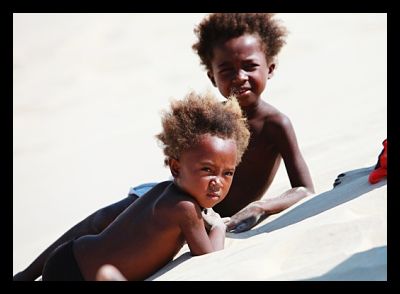
Madagascar is the fourth largest island in the world and has a population of over 22 million. It has an incredible amount of biodiversity, a great potential for sustainable tourism, and boasts a deep, rich heritage. However, before the mid-1990s Madagascar was in a downward economic spiral. Poverty in Madagascar is rampant. Even though slow improvements have been made, a 2004 CIA Factbook estimate places 50% of the population below the poverty line — the World Bank’s estimate is that 70% of Malagasy live on less than $1 a day. Some of the biggest obstacles to poverty eradication in Madagascar are as follows.
1. Geography. Its placement in the Indian Ocean off the coast of Eastern Africa exposes it to a large amount of intense tropical cyclones. Floods caused by torrential rains are contributing to humanitarian crises the country faces relatively often. Furthermore, the area that Madagascar takes up is slightly less than twice the size of Arizona with a square kilometrage of approximately 587,000 km. Because of the island’s relatively prohibitive size, deforestation and erosion are grave environmental concerns.
2. Political turmoil both past and present. Deep roots of unrest persisted after French colonial rule ended in 1960; in the early 1970s, the military seized the newly independent government and imposed strict socialist economic practices. By 1982 the country needed external aid through the International Monetary Fund. Improvements were made, especially with Madagascar’s inclusion in the Africa Growth and Opportunity Act (AGOA), which allowed Madagascar duty-free access and access to aid funding. However, in 2009 then-president Marc Ravolomanana was deposed in a coup. Andry Rajoelina replaced Ravolomanana; the coup marked Madagascar’s exclusion from the AGOA due to human rights concerns, and donors all but suspended aid to the country. Today the political turmoil and threat of conflict also have driven many tourists from considering Madagascar a destination, halting the already-stunted tourism sector.
3. Disintegrating infrastructure. According to Euromonitor International, the capital city of Antananarivo is the only city on the entire island to provide good road infrastructure. Most railway transport along the island is on the eastern side, where the principal cargo port city of Toamasina is situated to the northeast of the capital city. The country is therefore heavily isolated even between major cities; the lack of ability to move goods and workers is severely detrimental. Furthermore, even transport out of the country by air is tenuous due to air safety and security concerns, according to Euromonitor International.
4. Severe water safety, sanitation and hygiene concerns. According to WaterAid Madagascar, over 18 million people do not have access to adequate sanitation in the country; 89% of Malagasy do not have access to improved toilets. As a result, Index Mundi asserts that the degree of risk is very high for major infectious diseases; waterborne diseases are common, such as bacterial and protozoal diarrhea, hepatitis A, and typhoid fever. Ultimately, the biggest obstacle that Madagascar faces now is its political instability. President Rajoelina’s government — and the way he acquired his power — has caused international aid to come to a halt. Until then, the burden for domestic development, strengthening the economy, and addressing public safety issues falls squarely on the shoulders of the already-financially strained government of Madagascar.
– Naomi Doraisamy
Sources: BBC, CIA World Factbook, Euromonitor International, Index Mundi, Water Aid
Photo: Wild Madagascar

Poverty in Russia and the Wealth Gap
Russia is a massive country with a population of 143 million. With 18 million people living in poverty in Russia, however, the issue of alleviating poverty has become a serious issue for the administration of President Vladimir Putin. According to the Russian auditing company FBK, the minimum wage in Russia is grossly incompatible with the cost of living. The average monthly living cost is 210 US dollars/month in Moscow. The average monthly salary for a minimum wage worker there is 155 US dollars. Statistics from the government of Russia indicate that the wealthier classes have been hoarding wealth at an exponential rate while the abject poor remain stagnant. There are currently 97 billionaires in Russia, and their wealth is only increasing. The fall of the Soviet Union was the impetus for this growing income gap, as moguls were able to take advantage of an increasingly more free-market economy.
On a positive note, poverty levels have gone down in Russia since the late 1990s, when over 20% of the population was below the poverty line. Russian sociologist Natalya Bondarenko notes that “15 to 20 % of Russians (in the late nineties) considered their income enough only to buy food as opposed to just 5 to 6 % of Russians who say the same thing now.” President Putin has also alluded to a policy in which politicians as well as the heads of companies would be required to make their salaries public. Hopefully, the government of Russia will take steps to confront the issue of extreme poverty within her borders. In order for stability to be maintained in post-Soviet Russia, the Motherland must look after her children.
– Josh Forget
Sources: The Telegraph, Forbes
Photo: Guardian
Poverty in Madagascar
Madagascar is the fourth largest island in the world and has a population of over 22 million. It has an incredible amount of biodiversity, a great potential for sustainable tourism, and boasts a deep, rich heritage. However, before the mid-1990s Madagascar was in a downward economic spiral. Poverty in Madagascar is rampant. Even though slow improvements have been made, a 2004 CIA Factbook estimate places 50% of the population below the poverty line — the World Bank’s estimate is that 70% of Malagasy live on less than $1 a day. Some of the biggest obstacles to poverty eradication in Madagascar are as follows.
1. Geography. Its placement in the Indian Ocean off the coast of Eastern Africa exposes it to a large amount of intense tropical cyclones. Floods caused by torrential rains are contributing to humanitarian crises the country faces relatively often. Furthermore, the area that Madagascar takes up is slightly less than twice the size of Arizona with a square kilometrage of approximately 587,000 km. Because of the island’s relatively prohibitive size, deforestation and erosion are grave environmental concerns.
2. Political turmoil both past and present. Deep roots of unrest persisted after French colonial rule ended in 1960; in the early 1970s, the military seized the newly independent government and imposed strict socialist economic practices. By 1982 the country needed external aid through the International Monetary Fund. Improvements were made, especially with Madagascar’s inclusion in the Africa Growth and Opportunity Act (AGOA), which allowed Madagascar duty-free access and access to aid funding. However, in 2009 then-president Marc Ravolomanana was deposed in a coup. Andry Rajoelina replaced Ravolomanana; the coup marked Madagascar’s exclusion from the AGOA due to human rights concerns, and donors all but suspended aid to the country. Today the political turmoil and threat of conflict also have driven many tourists from considering Madagascar a destination, halting the already-stunted tourism sector.
3. Disintegrating infrastructure. According to Euromonitor International, the capital city of Antananarivo is the only city on the entire island to provide good road infrastructure. Most railway transport along the island is on the eastern side, where the principal cargo port city of Toamasina is situated to the northeast of the capital city. The country is therefore heavily isolated even between major cities; the lack of ability to move goods and workers is severely detrimental. Furthermore, even transport out of the country by air is tenuous due to air safety and security concerns, according to Euromonitor International.
4. Severe water safety, sanitation and hygiene concerns. According to WaterAid Madagascar, over 18 million people do not have access to adequate sanitation in the country; 89% of Malagasy do not have access to improved toilets. As a result, Index Mundi asserts that the degree of risk is very high for major infectious diseases; waterborne diseases are common, such as bacterial and protozoal diarrhea, hepatitis A, and typhoid fever. Ultimately, the biggest obstacle that Madagascar faces now is its political instability. President Rajoelina’s government — and the way he acquired his power — has caused international aid to come to a halt. Until then, the burden for domestic development, strengthening the economy, and addressing public safety issues falls squarely on the shoulders of the already-financially strained government of Madagascar.
– Naomi Doraisamy
Sources: BBC, CIA World Factbook, Euromonitor International, Index Mundi, Water Aid
Photo: Wild Madagascar
Slums, Sanitation and Misery
For the people living in the Korogocho slums in Nairobi, Kenya, life can be a constant struggle. The threat of disease and unclean drinking water looms in the minds of those who have no other options but to live in areas with broken sewage pipes and “flying toilets.” These unsanitary conditions put the people in Korogocho at risk for health problems and leave them vulnerable to exploitative water companies.
The typical day for someone living in the slums may involve the use of a flying toilet, a plastic bag used to dispose of human waste. While there are some pay-toilets, most people cannot afford the money to use one. As a result, these plastic bags can be found discarded in the streets of the slums among the broken sewer lines.
As the population in Nairobi grows, more slums are popping up. In Kenya, the number of people without access to toilets has risen to 20%. Access to piped water is even lower in urban areas, 38.4% (and 13.4% of the rural population). These numbers are likely to mimic the sanitation circumstances in Nairobi.
The health implications of unsanitary water systems are illnesses including malnutrition, diarrhea, cholera and typhoid fever. When water mixes with sewage, it creates a breeding ground for inimical viruses and germs. International health organizations and Kenya’s government are eager to improve sanitation in order to save lives. Currently, one in five African children dies from diarrhea before the age of five.
Simple ways to improve the sanitation system in Korogocho include mobile toilets, bucket removal, and dry composting toilets. However, even these solutions can result in human remains ending up in the Nairobi River. The Kenyan population is expected to increase by one million people every year, which will further exacerbate the struggling water and sanitation system. Until these problems are seriously addressed, Kenyans will continue to endure preventable illnesses.
– Mary Penn
Source: IRIN News
Photo: The Guardian
Our World’s Young Leaders: Amigos de las Americas
What does a word leader look like? Presidents, executives, members of Congress, and those with major publicity are probably the first people that come to mind.
Yet there are some leaders that don’t get this same attention. These leaders are in the background, changing communities one step at a time and building life long bonds to international cultures that can’t be diminished.
These leaders are the young students of the Amigos de Las Americas organization. Founded in 1965, Amigos stresses the importance of leaders and advocates out in the communities today. Developing leadership and cultural skills, Amigos sends high school and college students out into international communities, where developed skills are used to implement change in health and education practices.
The community service projects that Amigos have been involved in have a profound impact on the people of Latin America. In just 48 years of operation, Amigos has administered nearly 8 million immunizations, given 63,904 medical screenings and planted nearly 300,000 trees in numerous communities of Latin America. They have constructed health facilities, homes and community centers, as well as nearly 38,000 restrooms.
The influence this organization has on Latin America can’t be overstated, and students have had an overwhelming response. Over two dozen chapters have opened up in America, including a large chapter in Austin. Eighteen states in America host these chapters and are involved in the Amigos organization.
Amigos have already begun planning ahead to the summer projects of 2014. Some of the places where students will participate include Peru, Paraguay, Nicaragua, and Ecuador. The organization accepts donations on their website to help fund these trips and other projects. For more information on how to apply for one of these trips, visit www.amigoslink.org.
There are no limits to becoming a leader. Make a difference now.
– William Norris
Sources: Amigos de las Americas, Austin Amigos
Photo: Amigos de las Americas
Camel Milk: The Future of Nutrition in Ethiopia?
USAID is partnering with Somalia groups to form the Camel Milk Value Chain Development project. This project is part of the U.S. President’s Feed the Future Initiative in Ethiopia. Feed the Future is a project started by the Obama Administration that focuses on helping countries become self-sustainable through agriculture reforms and improvements. The goal of the Camel Milk Development project is to improve the production of camel milk and to make it more marketable and competitive in Ethiopian communities.
The camel milk initiative is projected to benefit 50,000 “targeted households” in the country. Abdifatah Mohamud Hassan, Somali Regional State Vice President, said, “The Camel Milk Value Chain Development project is an innovative project that addresses cultural wealth of the pastoralists and contributes to the Ethiopia Agricultural Growth and Transformation Plan.”
Once the project is underway, local farmers will be educated on camel productivity, which includes breeding, better feed, and improvements to the camels’ health. The last aspect of this strategy to increase productivity will be a main focus as USAID trains more animal health care workers. Another goal of the organization is improved camel milk quality. This will happen through extensive trainings that teach workers about proper sanitation.
Finally, USAID hopes to create a better market for camel milk by connecting local milk markets with larger milk networks. This will generate a more stable market for farmers, negating some of the uncertainty and stress that goes along with the agriculture sector. Along with a stronger market, USAID will improve hygiene, food safety standards, and infrastructure.
Given Somalia’s unpredictable weather patterns that often include drought, camels could prove to be a vital source of nutrients for a majority of the country. The USAID Ethiopia Mission Director, Dennis Weller, has even called camels the “animal of the future.” As camel milk becomes more common, those living in Somalia will experience better food security as well as economic independence.
– Mary Penn
Source: USAID
Photo: Mercy Corps
Japanese Prime Minister Pledges $14 Billion in Aid for Africa
YOKOHAMA, Japan – Japanese Prime Minister Shinzo Abe said Japan will make a large aid investment in Africa because the continent will be a growth engine in the coming years and will be at the leading edge of economic expansion. He also advocated for Japan to make a commitment to the continent in a mutually beneficial way.
Abe made his remarks at the Tokyo International Conference on African Development in Yokohama in early June. He opened the conference with a $14 billion (1.3 trillion yen) pledge for aid to help Africa. The investment is part of a larger investment of 3.2 trillion yen from Japan’s private and public sectors over the next five years. Abe told a press conference that this is a prime time for Japan to invest in Africa.
The investment is expected to support trade, infrastructure and private sector development, agriculture, agro-processing and health.
“Africa will be a growth center over the next couple of decades until the middle of this century,” Abe said. “Now is the time for us to invest in Africa.”
Abe said Japan would focus on industrialization in Africa to “generate employment and growth.”
Japan has been a long time investor in Africa, but it recently fell behind China, which has taken an aggressive approach to investment on the continent. Critics have charged that China’s investment is focused on a so-called resources grab and has not focused enough on improving human rights.
Officials in Japan stress that the country’s relationship with Africa should be a business partnership, not just a simple donor relationship. Abe has pledged to triple the value of infrastructure exports from Japan, which could be a good fit with Africa’s need for infrastructure such as roads, rails, ports and a stable power grid.
– Liza Casabona
Source: United Nations’ Development Programme, Economic Times
Photo: Rendezvous
EITI Improves Transparency and Payment
The G8 Summit in Northern Ireland on June 17 focused heavily on transparency and trade and brought the EITI — the Extractive Industries Transparency Initiative — into the spotlight. Immediately after the G8 Summit, it was announced that Italy and Germany would be implementing and piloting EITI, respectively, a step forward towards increased transparency for extractive industries worldwide.
Transparency for extractive industries is particularly necessary for developing countries that suffer from what is known as the resource curse– the trend for countries with high amounts of natural resources to be low in development. The resource curse is often perpetuated by irresponsible extraction processes that disrupt life in the host country and negatively impact its economy.
EITI, an initiative first introduced in 2002 by UK Prime Minister Tony Blair, focuses on transparency in the extraction industries — mining and logging being the largest ones worldwide — so as to address at least one element in the “resource curse”: the countries from which the extraction companies originate. While the initial implementation of EITI standards between 2002 and 2005 was aimed at voluntarily committing companies, by 2005 EITI standards took the form of “a disclosure standard implemented by countries.”
Stakeholders in EITI include over 70 of the world’s largest oil, gas, and mining companies, including Britain’s BP, America’s Chevron, Britain and Australia’s Rio Tinto, and Brazil’s Vale. The transparency standards include improved payment and revenue reporting on the parts of both company and host country. It aims to answer the questions, “How much are governments receiving?” and “Where does this money go?”
The G8’s commitment to and support for the EITI shows a continued dedication to improving transparency worldwide and addressing the resource curse. While EITI still faces obstacles such as ensuring members procure timely reports and that these reports are not so delayed as to prove entirely unhelpful. At present, 23 countries are considered EITI Compliant, and 16 have status as EITI Candidates including the recent additions of the Philippines and Honduras.
– Naomi Doraisamy
Source: Christian Science Monitor, EITI, Thomas Reuters Foundation
Photo: Christian Science Monitor
Obesity: Not Just a First World Problem
Obesity is not just a first-world problem. The World Health Organization has issued a report highlighting obesity as a global health issue. More than 42 million children under the age of five are considered overweight, with 83% of those children living in developing countries. According to the World Health Organization, “the number of overweight children in Africa has almost doubled in the past 20 years.”
The issue of obesity is paradoxically related to the problem of undernutrition. In many cases, both conditions stem from a lack of funds for purchasing nutritious foods. Undernutrition occurs when a person cannot afford enough food to sustain a healthy weight. Obesity, on the other hand, occurs when a person can only afford poor quality foods, often ones that are calorically dense but lacking in healthy nutrients.
Both obesity and undernutrition have negative consequences for the human body. Undernutrition leads to a weakening of the immune system, resulting in an increase in the frequency and duration of infections contracted by an individual. Obesity leads to more chronic diseases including cardiovascular disease, stroke, diabetes, and cancer.
The new report from the World Health Organization emphasizes the importance of ensuring that a proper diet not only contains an adequate number of calories but is also nutritious. This is especially true for infants and young children. A diet that does not deliver “a sufficient amount of quality food can lead both to poor growth and to excess weight gain.”
The World Health Organization states that “many low and middle-income countries are neglecting overweight and obesity as major health threats.” Hopefully, with the new publicity that the World Health Organization has placed on the issue, these countries will understand the health risks at hand and work to end all forms of malnourishment.
To learn more about the worldwide obesity epidemic, and how obesity is related to a country’s GDP and happiness levels, check out this interactive map from the organization’s Desirable Body.
– Jordan Kline
Sources: Deseret News, Kids Health, WHO
Photos: Deseret News
USAID Gives Contracts to Louis-Berger Group
The United States Foreign Aid budget recently contracted several development projects to the Louis-Berger Group, Inc (LBG). The contracts, which will continue for the next three to five years, will provide logistical support, aid in information technology and clean energy, and help with legal reforms in conflict-prone areas in the Philippines.
Providing logistical and especially legal support is important, especially for the autonomous region in the Muslim Mindanao. LBG previously did work in the area and saw growth in economic activity, business development, and better governance practices as a result.
The Louis-Berger group, founded in 1953, has worked in over 70 developing countries since its beginning in 1959. It is a privately-owned company that specializes in work in the following areas: buildings and facilities, development economics, energy, environment, public administration, reconstruction and recovery, transportation, and water.
Afghanistan is one of the areas in which this company is heavily involved. In the Helmand province, Louis-Berger helped rehabilitate two turbines and generators at the Kajakai power plant. With LBG’s help, the all-Afghani run plant now supplies sufficient power for both Helmand and Kandahar provinces.
Louis-Berger has over 30 U.S. Federal agencies as clients, including the Departments of Defense, Transportation, and Energy. It not only works inside the U.S., but also has client relationships with other countries in the Middle East, Africa, and Asia. It purports its goal is to ‘work its way out of a job’ by emphasizing local development and sustainability. This, hopefully, will be the case for the Philippines in these new contracts funded by USAID.
– Aysha Rasool
Feature Writer
Source: PR Web
Rural Poverty in Azerbaijan
Azerbaijan is a small Central Asian country about the size of South Carolina bordered by The Caspian Sea, Armenia, Georgia, Iran, and Russia. Similar to Russia, Azerbaijan’s heritage is derived from both Eastern and Western civilizations, making her a distinctly Eurasian entity. In the years initially following the Russian revolution of 1917, the victorious Bolsheviks invaded Azerbaijan, integrating it into the Soviet Union. This was an effort by Lenin to capitalize on the oil reserves of the Azerbaijanis.
Consequently, agriculture in Azerbaijan was collectivized. This caused agricultural workers to become dependent on a very specific, prescribed method of farming in which success depended upon the survival of the Soviet system. When the Soviet Union collapsed in the early 1990s and farms were privatized, agricultural workers were completely unprepared to grow crops on their own. This resulted in a situation in which uneducated farmers with limited resources were unable to maximize the productivity of their land.
Like other nations that declared independence after the fall of the USSR, Azerbaijan’s rural communities have struggled immensely to stand on their own two feet economically. Rural poverty is widespread, but it is especially concentrated in the desolate northeastern part of the country, with pockets also appearing in the mountainous northwestern region of Sheki-Zagatal where the poverty rate is over 50%. The International Fund for Agricultural Development (IFAD) describes the severity of the economic conditions there, stating:
“Remote areas and upland or mountainous areas show high rates of poverty. These areas often lack basic infrastructure and services, including irrigation, adequate road access, a reliable drinking water supply and health services.”
Fortunately, IFAD has invested almost $200 million in development projects in Azerbaijan over the last decade and a half. These projects focus on improving food security through practical education (such as irrigation tutorials) and the establishment of business connections between rural farmers and lucrative markets. With support such as this, agriculture in Azerbaijan has the potential to rise out of poverty in the coming years.
– Josh Forgét
Source: Rural Poverty Portal via IFAD,Glenn E. Curtis
Photo: Azerbaijan News