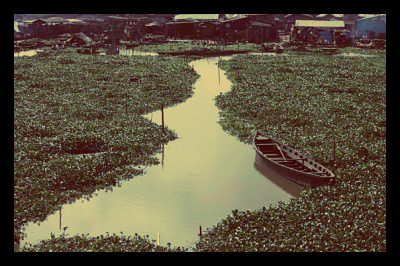
14 of the 20 most at risk nations of climate change distresses are African countries. These countries are considered as so susceptible due to the vulnerability of the population as well as the continent’s liability to extreme climate events.
Specifically, these African nations tend to experience extreme losses due to droughts, floods, fires, storms and landslides. Additionally, weak economies, governance, education and healthcare systems make it difficult to tackle or adapt to these problems.
Over 200 governments agree that global warming will exceed 2 degrees Celsius, causing much devastation and hardship, especially in Africa.
For instance, sea-level rise along Africa’s coastline is expected to be 10 percent higher than in the rest of the world, and in Guinea-Bissau, Mozambique and Gambia, up to 10 percent of the population would be at risk of floods each year by 2100.
The cost involved to address this looming danger amounts to billions.
According to the United Nations, adaptation costs faced by Africa range from $7 billion to $15 billion annually by 2020. Moreover, that amount could increase to $350 billion annually by 2070.
Some of the adaptation projects include developing drought-resistant crops, building early warning systems, investing in renewable energy sources, producing better drainage, building sea walls and prioritizing reforestation and desalinization.
According to the World Bank, there is a 40 percent chance of temperatures rising by 3.5 to 4 degrees Celsius if these types of climate change mitigation efforts are not stepped up.
Adaptation measures could, in fact, decrease the impacts of climate change in Africa.
Currently, projections for Africa are grim, even without the 2 degrees Celsius warming. Undernourished Africans are likely to increase by 25 percent to 90 percent, crop production will be reduced as arid areas are expected to increase by four percent, protein needs for over 60 percent of the communities would be jeopardized as fish will decline in African freshwater lakes and the necessary infrastructure for African communities to cope with climate impacts is inadequate. These effects will result in an increase of premature deaths, a rise in healthcare concerns and a decrease in food production.
The adaptation costs required to address the global temperature rise could reach four percent of Africa’s GDP by 2100. Therefore, additional funding is imperative if Africa is to move towards a climate-resilient life saving path. To meet this need, annual funds would need to grow at an average rate of 10 percent to 20 percent per year from 2011 to the 2020’s.
– Caressa Kruth
Sources: Thomson Reuters Foundation, The World Bank, CNN

Africa Faces Climate Adaptation Costs
14 of the 20 most at risk nations of climate change distresses are African countries. These countries are considered as so susceptible due to the vulnerability of the population as well as the continent’s liability to extreme climate events.
Specifically, these African nations tend to experience extreme losses due to droughts, floods, fires, storms and landslides. Additionally, weak economies, governance, education and healthcare systems make it difficult to tackle or adapt to these problems.
Over 200 governments agree that global warming will exceed 2 degrees Celsius, causing much devastation and hardship, especially in Africa.
For instance, sea-level rise along Africa’s coastline is expected to be 10 percent higher than in the rest of the world, and in Guinea-Bissau, Mozambique and Gambia, up to 10 percent of the population would be at risk of floods each year by 2100.
The cost involved to address this looming danger amounts to billions.
According to the United Nations, adaptation costs faced by Africa range from $7 billion to $15 billion annually by 2020. Moreover, that amount could increase to $350 billion annually by 2070.
Some of the adaptation projects include developing drought-resistant crops, building early warning systems, investing in renewable energy sources, producing better drainage, building sea walls and prioritizing reforestation and desalinization.
According to the World Bank, there is a 40 percent chance of temperatures rising by 3.5 to 4 degrees Celsius if these types of climate change mitigation efforts are not stepped up.
Adaptation measures could, in fact, decrease the impacts of climate change in Africa.
Currently, projections for Africa are grim, even without the 2 degrees Celsius warming. Undernourished Africans are likely to increase by 25 percent to 90 percent, crop production will be reduced as arid areas are expected to increase by four percent, protein needs for over 60 percent of the communities would be jeopardized as fish will decline in African freshwater lakes and the necessary infrastructure for African communities to cope with climate impacts is inadequate. These effects will result in an increase of premature deaths, a rise in healthcare concerns and a decrease in food production.
The adaptation costs required to address the global temperature rise could reach four percent of Africa’s GDP by 2100. Therefore, additional funding is imperative if Africa is to move towards a climate-resilient life saving path. To meet this need, annual funds would need to grow at an average rate of 10 percent to 20 percent per year from 2011 to the 2020’s.
– Caressa Kruth
Sources: Thomson Reuters Foundation, The World Bank, CNN
10 Gender Role Quotes in the Developing World
Gender inequality is a major concern in many developing countries. Women are sometimes still viewed as inferior to men and are often not given equal opportunities. Gender inequality is not only delaying the progress of women in education and in the workplace, but it has also been proven to impede a nation’s overall economic development. Here are some thought-provoking gender role quotes in the developing world:
1. “Gender equality is more than a goal in itself. It is a precondition for meeting the challenge of reducing poverty, promoting sustainable development and building good governance.” – Kofi Annan
2. “Society as a whole benefits immeasurably from a climate in which all persons, regardless of race or gender, may have the opportunity to learn respect, responsibility, advancement and remuneration based on ability.” – Sandra Day O’Connor
3. “Compared to income or assets in the hands of men, income or assets in the hands of women is associated with larger improvements in child health, and larger expenditure shares of household nutrients, health, and housing.” – Esther Duflo
4. “Empowering women in the developing world is crucial for greater equality between the sexes.” – European Commission
5. “Blocking women and girls from getting skills and earnings to succeed in a globalized world is not only wrong, but also economically harmful.” – Justin Yifu Lin
6. “Sharing the fruits of growth and globalization equally between men and women is essential to meeting key development goals.” – Justin Yifu Lin
7. “Equality is not just the right thing to do. It’s smart economics. How can an economy achieve full potential if it ignores, sidelines, or fails to invest in half its population?” –Robert Zoellick
8. “Gender inequality holds back the growth of individuals, the development of countries and the evolution of societies, to the disadvantage of both men and women.” – State of World Population Report
9. “As long as women face violence and discrimination, our efforts to eradicate poverty, achieve equality, and advance human rights and democracy will not succeed.” –Michelle Bachelet
10. “Much more must be done to combat discriminatory gender norms. In developed and developing countries alike, inegalitarian practices and beliefs expose women and girls to physical, sexual, and emotional violence while simultaneously stunting their own and their societies’ economic potential.” –Jordan Bernhardt
Other gender role quotes in the developing world can be found on www.brainyquote.com and www.goodreads.com/quotes.
– Allison Johnson
Read global poverty quotes.
Sources: Brainy Quote, The Atlantic, American Progress, Reuters, The Economist
Photo: Wikipedia
5 Ongoing Human Rights Battles
After all the progress we’ve made in terms of human rights over the years, you’d think we’d be living in a world without discrimination by now. Sadly this isn’t the case. Here are just 5 ongoing human rights battles that are still being fought today:
1. Rights of Women
This includes fair pay, participation in decision-making positions and positive portrayal in the media. Issues such as rape, sex-based elimination, violence against women and access to education are also at the forefront of the campaign for women’s rights. The Women’s International League for Peace and Freedom, the UN Commission on the Status of Women and other NGOs are actively working to make sure women are protected, empowered and represented.
2. Rights of Minorities
Minority groups include ethnic peoples, those who prefer alternative sexual identities and orientations, various religious groups, citizens from various nations, linguistic minorities and disabled peoples. In International Law it is illegal for any group to be actively marginalized. Other protections include the International Covenant on Civil and Political Rights, the UN Declaration on the Rights of Persons Belonging to National or Ethnic, Religious and Linguistic Minorities, the European Charter for Regional or Minority languages and the Yogyakarta Principles.
3. Rights of Indigenous Populations
The UN recognized the rights of indigenous people as the preservation of their land, language, religion and cultural heritage. Colonialism and modern-day imperialism have overlooked the claims indigenous populations have to these rights.
4. Right to Education
The right to primary education is recognized by the International Covenant on Economic, Social, and Cultural Rights. Research shows that education lifts people out of poverty by teaching them how to provide for themselves, increase their earning power and become economically stable.
5. Right to Housing
People in impoverished communities often lack adequate housing. This is a health and safety hazard that can stop a family from rising out of poverty. The Universal Declaration of Human rights recognizes that “everyone has the right to a standard of living adequate for the health and well-being of himself and of his family.”
– Stephanie Lamm
Sources: The Nation, FoR, UN
How to Make Christmas Merrier
For the world’s privileged, the Christmas season means mistletoe and hot chocolate, evergreen conifer trees with glistening ornaments, piles of presents and stockings hung on the fireplace mantle. In fact, Christmas is the largest global market stimulus due to an astounding proliferation in sales that account for almost a fifth of the retail industry’s annual sales. In the United States alone, consumers collectively spend a whopping $469 billion during the holiday season with the average family allocating roughly $800 purely to holiday indulgences and travel.
However, a substantial portion of the world’s population is deprived of such blissful and lavish holiday revelry. In many areas of the world, Christmas is not celebrated as a joyful commercial and religious event comprised of frantic trips to the local mall and family bonding; it marks just another day of struggle and survival. Even in America, one of the wealthiest nations in the world, poverty plagues about 45 million people.
Due to this, many organizations provide methods in which individuals are given the opportunity to help impoverished families and communities during the holiday season. For example, since its founding in 1993, Operation Christmas Child has given gifts to over 100 million impoverished children in approximately 130 countries worldwide. In order to make a donation to Operation Christmas Child, individuals are instructed to fill any durable shoebox with child-geared gifts and a $7 shipping donation.
Furthermore, Alternate Gifts International also allows people to lend aid during the holiday season. Unlike Operation Christmas Child, AGI focuses on distributing gifts such as nonperishable food, shelter, vegetation, livestock, and medical supplies. All of which promotes sustainability and community health. To facilitate the donation process, a catalog of needed resources are listed for prospective contributors to choose from.
Much like AGI, UNICEF released a poignant campaign urging consumers to purchase their Christmas cards and gifts online through UNICEF with the tagline of “we go where Santa doesn’t.” According to this endeavor, the purchase of each gift goes towards providing life-saving items, such as mosquito nets and water kits, to impoverished children. Hollywood actor and goodwill ambassador Orlando Bloom supports the campaign by stating “I like the fact that [it] does not simply provide people with the humanitarian aid, but also elaborates on the tools to solve problems and improve the life of children and women.”
Although simply donating to these charitable organizations provides gifts and assistance to communities in need, staying informed and enlightening others about global poverty is also an additional, albeit less direct, way to give back during this holiday season. In doing so, poverty is pushed to the forefront of national agendas.
– Phoebe Pradhan
Sources: Statista, Last Throes, Investopedia
Kashmiri Lose Faith in UN
Speaking as the voice of the 26 confederated Kashmiri groups in the Hurriyat, Syed Ali Geelani directed a scorching criticism at the UN on November 3. He claimed the organization has “miserably failed to address core international concerns.” This loss of faith from one of the many significant stateless populations – which also includes Palestinians and Kurds – has resonance around the world.
It occurs at a time when the UN is facing difficult transitions into the post-2015 period and seeking structural evolution unwelcome to those nations which are accustomed to holding inordinate power with the current status quo. This state of affairs, while unfortunate, is an opportunity for the UN to showcase exactly how indispensable it is.
The debate over structural evolution is one of the premier examples of the difficulty and significance of the United Nations. Secretary-General Ban Ki-moon has expressed the belief that the new structure – which will emphasize streamlining the expansive body of UN subsidiaries and enable more efficient cooperation with third parties – will put the UN in a singularly influential position in global politics. If he succeeds, he will undoubtedly be proven correct. Financial watchdog groups have claimed for many years that the UN is too ineffective with resources to achieve the grand aims set by its ambitious Secretary-General.
And indeed, the UN has many failures to temper its successes, failures in implementation and conceptualization which can give the impression of incompetence. But what UN member states and representatives of stateless demographics like Mr. Geelani must keep in mind is that the sheer scope of the UN’s responsibility far exceeds what is asked of any other organization. The volume of factors weighing on any situation is so great that a period for learning must be accepted.
As time goes on, the UN has exhibited an ability to learn from mistakes and continue to raise the bar higher for itself. Mr. Ban has insistently focused his rhetoric and energy on the truly global concerns – human rights, pollution, food production and so on. If UN member states are to preserve a way of life with any semblance to their traditional activities, it behooves them to surrender a degree of sovereignty and resources to the organization best suited to addressing the problems which threaten those activities. Likewise, Mr. Geelani’s plea to Kashmiri to abandon the UN and boycott elections may resonate emotionally, but the best chance for his people, and for the Kurds, Palestinians and others, to achieving the legal right to a homeland is not to eschew the international forum, but to embrace it and utilize the publicity.
– Alex Pusateri
Sources: Fox News, The Nation, Care2, Business Insider
Palestinian Poverty in the Holy Land
The status of Jerusalem is the most contentious issue in the Palestinian-Israeli conflict, which has led to an alarming rate of poverty among Jerusalem’s Palestinian population. According to the Israeli Central Bureau of Statistics, 86% of Jerusalem’s Palestinian children are below the poverty line.
As a whole, 77% of Palestinian Jerusalemite households faced poverty in 2010, compared to only 25% of Israeli households.
Prior to the 1967 war, East Jerusalem was the hub of urban and commercial life for Palestinians. After the war, Israel annexed East Jerusalem. Palestinian Jerusalemites were given a separate legal status as merely ‘permanent residents,’ restricting “access to housing, employment, education, health services and representation in the city.” Since then, Palestinian Jerusalemites have faced a policy of neglect and have become virtually isolated from the rest of the West Bank with the construction of the Israeli separation barrier in 2003.
The East Jerusalem economy accounted for 15% of the Palestinian economy prior to the 1993 Oslo Accords. In recent years, however, the economy has shrunk by half. It is estimated that the separation barrier has led to over $1 billion in direct losses to the East Jerusalem economy.
The Association for Civil Rights in Israel (ACRI) lists key factors contributing to poverty in East Jerusalem as: (1) the separation barrier and isolation from the West Bank; (2) a weakened job market; (3) the neglected school system and obstacles in higher education and professional training; (4) difficulties integrating women into the job market; (5) employment in West Jerusalem; and (6) revocation of residency and the provision of temporary status.
The UN Conference on Trade and Development (UNCTAD) echoes these factors, maintaining that Jerusalem’s increasing economic isolation, “including the building of Israeli separation barrier,” left it “integrated neither into the Palestinian economy nor into the Israeli economy.”
Politics aside, ACRI contends that a crucial way of overcoming Palestinian poverty is to address employment and fair labor conditions. Due to its isolation from the West Bank, East Jerusalem’s economy is dependent on the Israeli market, which serves as a source of employment and trade. ACRI stresses a key point for policy change should be Israeli government investment in employment services. “While Palestinians constitute a third of the municipal population, only three welfare offices operate in East Jerusalem, in contrast to the 18 in the western part of Jerusalem serving Israelis.” ACRI believes that an expansion of employment services is one way to offer the necessary tools for Palestinian residents to find jobs that offer financial stability and professional development.
– Rifk Ebeid
Sources: Al Jazeera News, Haaretz, UNCTAD, ACRI
United Arab Emirates: From Rags to Riches
The United Arab Emirates (UAE) is composed of the seven emirates of Abu Dhabi, Dubai, Sharjah, Ajman, Umm al-Qaiwain, Ras al-Khaimah and Fujairah. Located in the southern half of the Arabian Peninsula, it occupies over 83,000 square kilometers and boasts a population of 9 million.
In comparison to the rest of the world, the country is relatively young. It gained independence from the United Kingdom in 1971. The discovery of oil reserves in the 1960s catapulted the once impoverished region into a center of international business and wealth. Today, the UAE is the eighth richest country in the world.
The UAE’s political structure is both traditional and modern in its approach. Each emirate is led by an emir or ruler who oversees the internal political affairs of the region. Representatives from each emirate are chosen to form the Federal National Council. The President and vice president also serve as emirs of Abu Dhabi and Dubai, respectively.
Prior to its entry into the global oil industry, the UAE’s revenues mainly stemmed from its failing pearl and fishing industry. Today, over 90 % of Emirati are literate, due to extensive investments in education, healthcare and infrastructure.
The UAE currently rates 23 out of 189 countries for ease of doing business. Its positive relationships with foreign investors have allowed the country to successfully compete in the global marketplace and exposed its citizens to the level of globalization necessary to conduct international business.
Success has also visited the neighboring countries of Iran, Qatar, Oman and Saudi Arabia as organizations continue to promote the importance and healthcare in the region.
– Jasmine D. Smith
Sources: CIA World Factbook, BBC, Doing Business
Photo: Win Wallpapers
Katy Perry Becomes UNICEF Goodwill Ambassador
International pop star Katy Perry has become UNICEF’s newest Goodwill Ambassador as of December 3. Perry is the singer of the anthemic ballads “Firework” and “Roar” and she is obviously living up to her songs’ inspirational messages. UNICEF executive director Anthony Lake stated, “Katy Perry is already a champion for children, and we look forward to hearing her ‘roar’ on behalf of UNICEF.”
Perry’s first project with UNICEF was a trip to Madagascar in April of this year. She spent four days there speaking with local people as well as government and UNICEF workers discussing the major issues facing the country as a whole. Perry met with abused and abandoned children and young mothers. She also visited schools and medical centers and learned how UNICEF has been working toward improving poor living conditions in Madagascar. Over half of the people in Madagascar live in poverty, and the country is plagued with chronic malnutrition, poor sanitation, and lack of education. Perry’s time there and her work with UNICEF evidently impacted her, leading to her new position as UNICEF Goodwill Ambassador.
Perry has stated that her experiences in Madagascar changed her life. The trip reportedly taught her to realign her priorities away from material possessions and social status, and put her own situation into perspective. She also stated that her music has been influenced by the stories of the people she met, particularly those of oppressed and abused women. Her new hit “Unconditionally” was inspired by her time there.
Goodwill ambassadors are public figures who choose to use their put their fame and influence to good use by becoming powerful advocates for impoverished and suffering individuals globally. As a wildly successful pop icon, Perry is in the perfect position to engage young people as advocates for the world’s poor, neglected, and abused children and adolescents. She plans to focus her efforts on young people, inspiring those with the power to help, and giving aid to the vulnerable people who need it.
She stated, “I believe young people have the power to change their own lives, with our help. I am honoured to join UNICEF as a Goodwill ambassador, and committed to doing everything I can to help children and adolescents who come from such different backgrounds but want the same thing: a brighter future.”
Perry posted this statement on her widely trafficked Tumblr page, as well as some celebratory tweets and pictures from UNICEF. Perry has previously appealed to her social media followers to support UNICEF and its relief efforts for children.
Actor and comedian Danny Kaye pioneered the Goodwill ambassador concept in 1954 and its most famous participant was Oscar winner Audrey Hepburn. Today, Katy Perry joins a long list of committed ambassadors including Amitabh Bachchan, David Beckham, Harry Belafonte, Orlando Bloom, Jackie Chan, Mia Farrow, Danny Glover, Angelique Kidjo, Liam Neeson, Leo Messi, Sir Roger Moore, Vanessa Redgrave and Susan Sarandon, among others.
– Kathleen Walsh
Sources: Unicef, The Borgen Project, Tumblr, ABC, Unicef
Photo: Xinhua Net
5 Facts about Poverty in Yemen
As one of the poorest countries in the Middle East, Yemen is currently faced with some of the most extreme poverty issues in the world. There are several issues that are unique to Yemen that contribute to this magnitude of poverty, issues that are on track to only get worse unless direct action is taken to mitigate these circumstances. If basic problems, such as lack of access to water, are not properly addressed, other matters, such as sub-par literacy rates, will continue to plague the region and exacerbate poverty in Yemen.
Top 5 Facts about Poverty in Yemen
1. Yemen’s population stands at 25.4 million and approximately 54% of those people live in poverty. In other words, 54% of the population survives on fewer than 2 dollars per day.
2. Approximately 45% of the population is malnourished.
3. Life expectancy in Yemen is 64 years old, 14 years younger than the average life expectancy in the United States.
4. Major infectious diseases plaguing the country include Bacterial diarrhea, Typhoid fever, Dengue fever and Malaria, all of which are preventable, curable and in some cases largely unheard of anymore in the western world.
5. There is less than 1 physician for every 1,000 people in Yemen.
Major Causes Behind Poverty in Yemen Today
– Colleen Eckvahl
Sources: BBC: Yemen’s President cedes power, BBC: Yemen on brink of food crisis, Green Profit, Maplecroft, The World Bank
The Cost of Christmas
Beyond the messages of goodwill and the narratives of birth and rebirth, Christmas inevitably turns into an Olympics of materialism and consumerism. For now, there are only the hard questions on which to ruminate: What are the top ten gadgets we cannot live without this holiday season? What is the Cost of Christmas?
A Gallup Poll released November 14 revealed that the average amount an American plans to spend on Christmas presents this year totals to about $704. In 2012, Americans individually spent about $764 on average. To put it all in perspective, a Think Progress info-graphic revealed in 2012 that the amount Americans spend on Christmas (about $25 billion) is roughly equal to the cost of permanently ending homelessness in the United States ($20 billion).
The amount that Americans spend on Christmas presents and decorations entirely eclipses the $3.2 billion that the World Food Programme calculates is needed per year to feed all 66 million school-age children living in extreme poverty around the world. The American Christmas budget also dwarfs the annual budgets of the UNHCR, the World Food Programme, the UNDP and UNICEF combined.
Only $60 billion is needed to end world poverty.
The message here is that the extraordinarily privileged people of United States are entirely capable of leading the crusade against global poverty. Within the span of only one month of the year dedicated to holiday shopping, Americans spend enough money to permanently abolish global poverty by 50%.
While Christmastime may mean scrambling to the tree to unwrap the new Playstation 4, Xbox One and Apple products, perhaps it is time to additionally consider that that money can buy lasting world peace and equality—that these are gifts that are worth the investment and within our budget.
– Malika Gumpangkum
Sources: TIME, Forbes, Business Insider, NY Times, Think Progress, Oxfam
Photo: Telegraph