Transparency International’s annual ranking of corruption around the world reveals that every country suffers from forms of corruption. The ranking is measured from 0–100 (with lower numbers denoting more corruption) and is based on the perceptions of business people and experts in each country on the African Development Bank’s governance ratings, the World Bank and World Economic Forum assessments and a Bribe Payers Survey. 70 percent of countries earned a score of 50 or below.
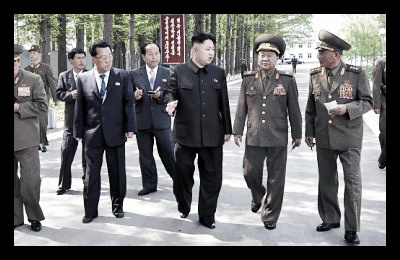
Dominating the lowest scores on the list are nations in Sub-Saharan Africa, Eastern Europe, and Central Asia, with 90 percent to 95 percent of countries earning a score of less than 50. Lowest on the list were Somalia, North Korea, and Afghanistan in a three–way tie, with a score of eight.
Director of Research at Transparency International, Finn Heinrich, explains, “Corruption is very much linked to countries that fall apart…These are not countries where the government is functioning effectively, and people have to take all means necessary in order to get by, to get services, to get food, to survive.”
Syria’s decline in rank was the most dramatic this year, dropping 24 spots to 168th place—the 10th worst. The country has experienced a bloody civil war since 2011, with the United Nations estimating over 100,000 people have died.
Conflict zones Afghanistan, Iraq, and Libya were also all at the bottom of the list.
European countries had the best scores. Only 23 percent had a score less than 50. The highest ranking were Denmark, New Zealand, Finland, and Sweden.
However, European countries that were struck hard during the financial crisis—primarily Spain, Iceland, and Slovenia—saw their ranks fall this year.
China and the United States’ rankings remained stable at 19 and 80, respectively. Myanmar, which rid itself of military rule in 2011, made the biggest advance, moving up fifteen places to 157th.
No country received a perfect score of 100. Transparency International reports that even Denmark struggles with campaign finance issues, lack of whistleblower protections, and challenges in citizens’ access to information. Countries such as the U.S. and the United Kingdom struggle with concerns over lobbying, political funds, financial fraud, and insider trading, which have affected their rankings negatively.
None of the poorest nations in the world (based on GDP)—Democratic Republic of the Congo, Zimbabwe, Burundi, Somalia, Liberia, Eritrea, Central African Republic, Niger, Malawi, and Madagascar—received a score over 38.
The link between corruption and extreme poverty is inextricable.
According to the World Bank, good governance is essential to lifting the 1.2 billion people of the world who live on $1.25 or less per day out of extreme poverty and to make sure that wealth benefits all people.
Sri Mulyani Indrawati, the Managing Director of the World Bank, clearly asserts, “A state that does not deliver ‘clean services’ will choke its engine of growth—a strong middle class—and creates a major obstacle for achieving shared prosperity.”
Huguette Labelle, the Chair of Transparency International, reiterates that efforts to improve the major crises facing the modern world such as climate change, failing economies, and extreme poverty will not succeed unless international bodies clamp down on corruption in all levels of society and make every country more transparent—from Denmark to Somalia.
– Kaylie Cordingley
Sources: The World Bank, CIA, LA Times, NPR, Bloomberg Businessweek, Al Jazeera, Wall Street Journal, Transparency International, CNN
Photo: CNN

15 Nelson Mandela Quotes
1. “If you want to make peace with your enemy, you have to work with your enemy. Then he becomes your partner.”
2. “Education is the most powerful weapon which you can use to change the world.”
3. “Like slavery and apartheid, poverty is not natural. It is people who have made poverty and tolerated poverty, and it is people who will overcome it. And overcoming poverty is not a gesture of charity. It is an act of justice. It is the protection of a fundamental human right, the right to dignity and a decent life.”
4. “I learned that courage was not the absence of fear, but the triumph over it. The brave man is not he who does not feel afraid, but he who conquers that fear.”
5. “Difficulties break some men, but make others. No axe is sharp enough to cut the soul of a sinner who keeps on trying, one armed with the hope that he will rise even in the end.”
6. “For to be free is not to merely to cast off one’s chains, but to live in a way that respects and enhances the freedom of others.”
7. “A fundamental concern for others in our individual and community lives would go a long way in making the world the better place we so passionately dreamt of.”
8. “Real leaders must be ready to sacrifice all for the freedom of their people.”
9. “I was called a terrorist yesterday, but when I came out of jail, many people embraced me, including my enemies, and that is what I normally tell other people who say those who are struggling for liberation in their country are terrorists. I tell them that I was also a terrorist yesterday, but, today, I am admired by the very people who said I was one.”
10. “To deny people their human rights is to challenge their very humanity.”
11. “I hate race discrimination most intensely and in all its manifestations. I have fought it all during my life; I fight it now, and will do so until the end of my days.”
12. “No one is born hating another person because of the color of his skin, or his background, or his religion. People must learn to hate, and if they can learn to hate, they can be taught to love, for love comes more naturally to the human heart than its opposite.”
13. “It always seems impossible until it’s done.”
14. “It is now in the hands of your generations to help rid the world of such suffering.”
15. “Man’s goodness is a flame that can be hidden but never extinguished”
– Stephanie Lamm
Sources: Dose.Ca, USA Today, Quartz
Photo: BBC UK
Water Crisis in Yemen
Ten years from now, Yemen’s capital city, Sana’a, could completely run out of water. If this happens, Sana’a will be the first capital city in the world to run dry. Currently, its nearly two million citizens do not have access to clean water on a daily, or, in some cases, even a weekly basis. In a country that is dealing with massive political unrest and severe poverty, the water shortage has, in some ways, taken a back seat to other pressing issues.
Approximately 25 million people live in Yemen, and it is estimated that 54 percent live in poverty. In addition to widespread poverty, Yemen is still recovering and putting its government back together in the wake of the Arab Spring. Political instability is still prevalent in the region with violence, revolts, and a strong presence of Al Qaeda militancy. Even with all of these issues, Yemen’s quickly depleted water sources should be its number one concern according to Naji Abu Hatim, a Yemeni expert at the World Bank. To put the water crisis into perspective, the water poverty line, according to the United Nations, is 1,000 cubic meters. Citizens in Yemen average 140 cubic meters.
With above ground freshwater sources quickly drying up, citizens have turned to tapping into underground resources. Fewer than half of the wells in Yemen regulated by the municipality are being used on a regular basis. Unregulated drilling and installing of wells has become commonplace, further lowering the water table in an attempt to access running water more often than a few times a month. Since water is only available in certain places, it has become common for people to try to fill as many containers as they can and walk the water back to their house.
The limited availability of water has led to tension over who should have access what little resources that are left. Some disputes have already led to violence in some regions where water is particularly scarce. Unless immediate action is taken to reverse the water crisis, it is likely that more violence will follow as access to water becomes more scarce.
While some action has been taken, many say it does not go far enough. Until there is massive public and government interest in the crisis, it is likely to remain a backseat issue. Currently, there are short term campaigns sponsored by the government. Tawfeek Al-Sharjabi, the deputy minister of the Ministry of Water and Environment, says these campaigns do not adequately address the problem, but the government does not have enough money to devote to long term solutions. Al-Sharjabi also says he believes the ministry cannot solve the water crisis on their own; instead it is an issue of collaboration between aid organizations and the government. “We believe that this is connected to political solutions,” Al-Sharjabi says.
– Colleen Eckvahl
Sources: BBC, Reuters, Yemen Times
PHoto: NPR
General Raheel Sharif & The Future Of Pakistan
Since Pakistan’s independence from Britain, one of the more authoritative posts in the state has been the General of the Armed Forces. The country, which boasts the sixth largest army in the world, that has historically staged frequent coups d’état against their democratically elected governments. The military, “unassailable authority” over the nation has waned in recent years, but is still “revered” by most of the nations citizens.
Ashfaq Kayani, General of the Pakistani army since November 2007, ceded power to moderate General Raheel Sharif. Kayani resigned following a “tumultuous six-year stint.” Sharif has been characterized by the media as a “blue-blooded and down-to-earth soldier.”
Sharif gained supremacy over the military, but also the internal security crisis that’s currently facing the politically unstable Islamic of 180 million people.
4,000 people attended the commencement ceremony to praise the occasion. The ceremony was praised for the seemingly “democratic” exchange of power.
Escalating tension with neighboring India over the contested Kashmir region marred the event. The projected 2014 United States military withdrawal from Pakistan’s war-torn and volatile neighbor Afghanistan is also a critical issue facing the new general.
Kayani began implementing new militaristic protocols that attempted to reposition some of the military’s focus away from the supposed danger from neighboring India. His directives were made in an attempt to address internal threat of Tehrik-e-Taliban, Pakistan’s faction of the Taliban.
Officials have stated Gen. Sharif plans to continue this policy. He has been seen as the one of the primary voices that helped convince Pakistani officials to concentrate their efforts to address the Taliban security threat. The policy was enacted to suppress Taliban power in the Federal Administered Tribal Regions, and help curb hostility with their regional rival India.
A stable government has been a principal concern for the inhabitants of Pakistan. Kayani was praised for breaking a cycle of political upheavals by not overthrowing the government. Other’s have argued that following years of coup d’états, the leading members of the armed forces believed a allowing the development of democracy was in their best interest for the time being.
Numerous onlookers have questioned whether “country” was “safer” after his administration. These concerns are justifiable. BBC reported in March that the Taliban’s strength had substantially grown in recent years, broadening outside their typical strongholds of impoverished north-west Pakistan. Taliban has slowly gained a slight power in the “commercial capital” of Karachi. They typically established supremacy in impoverished regions that had “little or no infrastructure for health, education” or “civic amenities.”
Democratically leaders in Pakistan characteristically try to appease to the military. Prime Minister Nawaz Sharif’s decision was strenuous, taking into consideration his last term as Prime Minister in the 1990’s. His term ended with General Pervez Musharraf overthrowing his government.
Sharif, who assumed office June 5, chose to keep in line with “tradition” when choosing Kayani’s replacement. He took into consideration Sharif’s family military history and “experience.”
Sharif ignored Kayani’s recommendation of General Rashad Mahmood, placing him as head of the joints chiefs, a position “subordinate to the army chief.” It was an audacious move for a nation whose government heavily influenced by its military.
Countess challenges face Sharif. Many are optimistic that Pakistan can address its security and stability concerns. Pakistan has shown improvements, but a united partnership between the military and elected officials is the only way they can truly affect change. Perhaps the dismal reality of the situation will convince them to make an effort to cooperate.
– Joseph Abay
Sources: BBC 1, 2, 3, The News International, NY Times, Geo TV, India Today
Photo: Jasarat
One Direction Starting a Trend of Giving
“I’ve seen the slums right in front of me! This is no joke! They really need your help! Poverty is real!” -Niall Horan, One Direction
Young Hollywood stars seem to be taking on a more active role when it comes to standing up for the world’s poor. One Direction band members spent time volunteering in Accra, Ghana expressing support for Comic Relief’s red nose day. The 1D members were very moved by the sights they had seen while on the trip. Harry Styles and Liam Payne were brought to tears while visiting with children in an emergency room.
The children were suffering from undernourishment and diarrhea. Sadly, many of these aliments can be prevented with proper vaccinations and care. Other band mate, Zayn Malik, is quoted saying “We all waste money on stupid things but surely the most important thing we can spend a few pounds on is protecting children from these preventable illnesses.” Also, singer and song writer Katy Perry took a four day trip to Madagascar.
Perry spent time playing with children, becoming educated on the scarcity of water, and listening to the stories of women and children who have been exposed to violence. Perry states, “In less than one week here in Madagascar, I went from crowded city slums to the most remote villages – and my eyes were widely opened.” Perry also learned that for every two children in the country, one is suffering from chronic malnutrition.
Lastly, singer Demi Lovato spent her 21st birthday volunteering in Africa. Demi, states, “With 21 being a milestone birthday, I wanted a memorable and meaningful way to celebrate, rather than throw a big birthday bash.” The trip hosted by Me to We, Free the Children organization, allowed Demi to help build a school in the impoverished village.
These and many other famous pop stars are starting a new trend; a new trend to become more giving with their time and finances. Hopefully this trend stays and spreads to more Hollywood stars. These pop stars are not only trend setters but, role models to young people everywhere. Modeling to fans everywhere that the worlds not just about the latest gadgets or toys. The world is full of poverty and death that can be prevented. This includes children and adults that die by the thousands each day from preventable causes. Acts of giving like the ones mentioned above help people in need. Hopefully many more acts of giving will be created as a result of these pop stars.
– Amy Robinson
Sources: UNICEF, Huffington Post
Black Friday Cost Comparison
In an American tradition lasting a few years short of a century, the day after Thanksgiving has heralded one event above all others: Black Friday. Although not coined as such until the 1960s, the last weekend in November for millions of Americans now represents long lines, cheap goods, and exceptionally surly customer service.
Last year, a reported 247 million shoppers took part in the seasonal shopping extravaganza, spending $423 each, approximately $59.1 billion in total. Not to be outdone, the National Retail Federation projects $602.1 billion in holiday sales this year (From Thanksgiving to Christmas), up from $579.5 billion in 2012.
T.V.s are important, especially when they’re on sale for a limited time only. And the joy of scoring the Big Bang Theory DVD from Wal-Mart at 6 p.m. on Thanksgiving Day cannot be understated. Unfortunately, Black Friday affects more than just the endorphins of the stalwart shopper. As the truly devoted consumer grits their teeth and fights for every last deal, the plight of Typhoon Haiyan survivors diminishes in the wake of the bustling holiday season.
Although Americans are noted for their generosity when it comes to international disaster relief, the amount of spending achieved on this one day highlights how much more could be done.
According to charitynavigator.org, in 2012 individuals donated around $223 billion to charities, comprising 72% of the $316.23 billion annual total. An entire year of donations makes up just under 40% of the total spent on Black Friday alone.
Instead of purchasing that ultimate box set collection for dad, Magic Bullet for the college student, or the absolutely essential new PlayStation 3 game for yourself, try diverting that potential spending toward charitable organizations dedicated to aid.
For perspective, as of September, a 25 kilogram bag of locally imported rice was priced by the National Food Authority as 1,880 Philippine Pesos, which converts to less than one U.S. quarter. For the amount of money expected to be spent this year, an astronomical 2.4 trillion bags of rice could be purchased for the Philippines.
For considerably less effort than it takes to brave the crowds this weekend, shoppers could divert funds to a charity of their choice. The Red Cross offers an SMS service where $10 is automatically donated to disaster relief every time someone texts REDCROSS to 90999. Every time you’re waiting in an hour-long line in the next few days, think of the good you could be doing, even from the comfort of your warm couch.
– Emily Bajet
Sources: Red Cross, Statistic Brain, Syracuse.com, Charity Navigator
Photo: Fleet Feet Sports
Beauty Brings Hope, Art Makes Prosperity
While talking about poverty alleviation, chances are most people think about money, food, houses and many other physical assets. However, poverty can also be healed from the heart, and art has the transforming power to bring people out of destitution physically and mentally.
Lily Yeh is a petite 70-year-old Chinese artist. Born in China but raised in Taiwan, Yeh moved to the United States in 1963 to study painting at the University of Pennsylvania’s Graduate School of Fine Art. Instead of becoming a studio artist who creates personal artwork, she chose to use art to develop impoverished communities, build connections among people, and bring prosperity. Yeh believes art is a powerful vehicle for healing, self-empowerment and social change.
“Making art in destitute areas is like making fire in the dead, cold night in the winter, which gives us warmth, light, direction, and we kindle hopes.,” Yeh said. “I can’t solve these huge social problems, but I can open up new possibilities and spaces where, through creativity and working together, we might come to new solutions.”
From 1986 to 2004, Yeh served as the co-founder, executive director, and lead artist of The Village of Arts and Humanities (The Village,) a non-profit organization dedicated to community building, economic development, and personal transformation through art. To conduct a summer park project for The Village, Yeh went to a community in North Philadelphia that was notorious for violence, drug trade, and destitution. It was called “a place without resources.” She offered art classes to local children and adults, and inspired them to paint together. Eventually, she transformed 200 abandoned lots into art parks and gardens.
Aside from changing the community’s landscape, Yeh gave people hope and fostered a sense of community pride and individual accomplishment. “It’s a new kind of empowerment,” Yeh said. “People’s minds are opened to new possibilities and affirmation.”
Under Yeh’s 18 year tenure at The Village, the organization has developed into a multifaceted center of arts and humanities, which includes educational programs, housing renovation, theater, and economic development initiatives. Currently, it has had 25 full-time and part-time employees, hundreds of volunteers, and a $1.3 million budget.
In 2002, Yeh founded Barefoot Artists, a volunteer organization which aims to revitalize the most impoverished communities in the world through participatory and multifaceted projects that foster community empowerment, improve the physical environment, promote economic development, and preserve and support indigenous art and culture. It partners with locals, joining with them to create beauty. Yeh believes that art is an inclusive process and everyone has an artist in their heart.
“Not my light shining bigger than anyone else,” she said. “We all have that innate light within us. My role is to kindle other people’s inner light, so we shine together.”
Yeh is now working on projects in Rwanda, Kenya, Ghana, Ecuador, and China. She brings her unique methodology for using art as a tool for community empowerment and individual transformation to the world.
According to YES Magazine, Yeh worked with villagers to create a wall mural called “The Palestinian Tree of Life” in Palestine. In China, she transformed a once prison-like school into an ideal and brilliant place for study. In Rwanda, she helped people build a memorial to heal their still open wounds from the Rwandan genocide.
Yeh believes that the whole process of transformation and empowerment does not merely benefit people living in the communities. She is also inspired and fulfilled by the progress of art creation, believing that it makes her life meaningful.
– Liying Qian
Sources: Barefoot Artists, The Village of Arts and Humanities, YES Magazine
Photo: Chiam Online
UNAIDS Reports Progress
The AIDS and HIV epidemics remain rampant around the world. The rates of infection are shown to have unprecedented growth in countries and regions that do not have the resources and education to provide to key AIDS populations. Overall, AIDS-related infections and deaths have dropped around the world. But the anxiety remains that such numbers are not sustainable.
In anticipation of World AIDS Day on December 1, USAIDS released a new report compiling Global AIDS data. In 2012, an estimated 35.3 million people around the world lived with HIV. Of those, 2.3 million people were newly infected with the disease while 1.6 million people died from AIDS.
There is overall progress from the earlier years. New HIV infections among adults and children have dropped 33% since 2001 while AIDS-related deaths have dropped by 30% since antiretroviral vaccines debuted in 2005.
The age gap of the afflicted has increased, extending to children and adults aged 50 years and older. The report also mentions that in “priority countries” 3 in 10 children receive HIV treatment according to treatment guidelines set by the World Health Organization (WHO). Under these new guidelines, an estimated 10 million total people around the world will be in need of treatment.
The numbers have significant room for improvement. Investments for HIV prevention services have plateaued since 2008, and by 2015 an estimated $24 billion will be needed annually for HIV resources.
As the world’s deadliest and unrelenting infectious killer, real solutions are being sought by organizations like USAIDS and the WHO. Attention to child patients, preventative education, the offering of preventative supplies, and the fostering of stable health care systems are the priorities in the mission of containing the disease in the most plagued of regions.
– Malika Gumpangkum
Sources: UNAIDS, WHO
Photo: IB Times
Most Corrupt Countries
Transparency International’s annual ranking of corruption around the world reveals that every country suffers from forms of corruption. The ranking is measured from 0–100 (with lower numbers denoting more corruption) and is based on the perceptions of business people and experts in each country on the African Development Bank’s governance ratings, the World Bank and World Economic Forum assessments and a Bribe Payers Survey. 70 percent of countries earned a score of 50 or below.
Dominating the lowest scores on the list are nations in Sub-Saharan Africa, Eastern Europe, and Central Asia, with 90 percent to 95 percent of countries earning a score of less than 50. Lowest on the list were Somalia, North Korea, and Afghanistan in a three–way tie, with a score of eight.
Director of Research at Transparency International, Finn Heinrich, explains, “Corruption is very much linked to countries that fall apart…These are not countries where the government is functioning effectively, and people have to take all means necessary in order to get by, to get services, to get food, to survive.”
Syria’s decline in rank was the most dramatic this year, dropping 24 spots to 168th place—the 10th worst. The country has experienced a bloody civil war since 2011, with the United Nations estimating over 100,000 people have died.
Conflict zones Afghanistan, Iraq, and Libya were also all at the bottom of the list.
European countries had the best scores. Only 23 percent had a score less than 50. The highest ranking were Denmark, New Zealand, Finland, and Sweden.
However, European countries that were struck hard during the financial crisis—primarily Spain, Iceland, and Slovenia—saw their ranks fall this year.
China and the United States’ rankings remained stable at 19 and 80, respectively. Myanmar, which rid itself of military rule in 2011, made the biggest advance, moving up fifteen places to 157th.
No country received a perfect score of 100. Transparency International reports that even Denmark struggles with campaign finance issues, lack of whistleblower protections, and challenges in citizens’ access to information. Countries such as the U.S. and the United Kingdom struggle with concerns over lobbying, political funds, financial fraud, and insider trading, which have affected their rankings negatively.
None of the poorest nations in the world (based on GDP)—Democratic Republic of the Congo, Zimbabwe, Burundi, Somalia, Liberia, Eritrea, Central African Republic, Niger, Malawi, and Madagascar—received a score over 38.
The link between corruption and extreme poverty is inextricable.
According to the World Bank, good governance is essential to lifting the 1.2 billion people of the world who live on $1.25 or less per day out of extreme poverty and to make sure that wealth benefits all people.
Sri Mulyani Indrawati, the Managing Director of the World Bank, clearly asserts, “A state that does not deliver ‘clean services’ will choke its engine of growth—a strong middle class—and creates a major obstacle for achieving shared prosperity.”
Huguette Labelle, the Chair of Transparency International, reiterates that efforts to improve the major crises facing the modern world such as climate change, failing economies, and extreme poverty will not succeed unless international bodies clamp down on corruption in all levels of society and make every country more transparent—from Denmark to Somalia.
– Kaylie Cordingley
Sources: The World Bank, CIA, LA Times, NPR, Bloomberg Businessweek, Al Jazeera, Wall Street Journal, Transparency International, CNN
Photo: CNN
Spread Some Love
From the creator of the organizations “Feed Just One” and “Unlock Hope” comes the latest movement, “Spread Some Love.”
The intent of this new project is to “make a positive difference in the world through messages on their products as well as serving as a fundraising tool for people and groups that are doing amazing things to help others.”
Rather than fighting poverty strictly through providing food and shelter, “Spread Some Love” has made it clear poverty goes well beyond materialistic measures. “Being unwanted, unloved, and uncared for is the greatest poverty,” as is quoted from Mother Theresa on Spread Some Love’s website.
In today’s society, it is easy to become caught in the whirlwind of social stigmas and status. “Spread Some Love” takes perspective back to the basics with their interesting approach. This organization encourages others to make a difference in the personal life of those around them.
Instead of allowing someone to go on feeling as if they are alone, or growing cold to the outside world, “Spread Some Love” demonstrates how even the smallest gesture can turn around someone’s entire day.
In their efforts to create positivity among society, the organization sells shirts that spread uplifting messages to inspire those who see it. Included with every order that is purchased are Post-It Notes so the consumer can leave impacting messages for those around them.
Aside from clothing, “Spread Some Love” also sells jewelry. This jewelry is handcrafted by women in India. This helps to provide these women with a “sense of pride and purpose,” as they spread the message of love.
The jewelry is Fair Trade certified, giving small farmers, artisans, and workers around the globe an opportunity to benefit from globalization. This also gives these individuals the chance to overcome poverty and “improve their overall standard of living.”
For each order that they receive, the organization donates one mosquito bed net per purchase to Think Humanity. These nets are then distributed in Uganda, and the recipients are then educated on the proper use for the nets.
Every 30 seconds a child under the age of five dies from malaria. Considering that over 90 percent of malaria related deaths take place in sub-Saharan Africa, these nets have made tremendous strides in protecting individuals against the disease.
For October’s sales, “Spread Some Love” donated $771.06 to Think Humanity. In November, they were able to make $1,149.25 in donations to their charity partners from their sales.
Also on their website, individuals can publish their own submissions to display how they are actively spreading the love on their own. The category is called “Selfless Selfies,” intending to put the emphasis on the act being done, or the individual receiving help.
No one may ever realize the impact they could have on someone’s life, and this organization capitalizes on that in a positive way. Following the words of Mother Theresa, Spread Some Love emphatically quotes her throughout their website to show the influence of distributing kindness and joy.
“Spread love everywhere you go. Let no one ever come to you without leaving happier.”
– Samaria Garrett
Sources: Spread Some Love, Think Humanity
Photo: Wallpaper Slot
Racism in South Africa
With the abolishment of apartheid came new possibilities: for black and white South Africans to coexist bearing the same rights and allowed the same opportunities. However, 19 years later, racism in South Africa still segregates socially and economically, hindering the opportunities for many to escape the burdening shadow of the apartheid.
During the apartheid, whites were given a systematic advantage; they were the only ones allowed to vote; allowed a higher standard of living with the segregation of schools, hospitals, housing and leisure facilities; they also benefited from having the most skilled jobs reserved for them.
This dramatic disconnect between blacks and whites created a social divide that still exists today, 19 years later. This social divide contributes to inequalities, unemployment and pockets of deep poverty suffered by many black South Africans, the majority of which reside in rural areas. Because of the strong correlations between race and rural location, and rural location and high levels of poverty, this leaves black South Africans in rural areas at a disadvantage to obtain the same education and job opportunities.
Although the income differences have narrowed in recent years, a large income disparity still exists between the two groups, with black South Africans making $65,000 less, on average, than white South Africans.
Isolation may also be a contributing factor to the racial attitudes expressed by South Africans. Socially, South Africans still harbor racial differences. An annual survey by the Institute for Justice and Reconciliation (IJR) revealed that 43.5% of South Africans rarely or never speak to someone of another race.
Class and racial disparities that are present today impede development efforts for the nation as a whole. South Africa isn’t able to truly escape the effects of the apartheid with the racism that lingers in the country.
– Maris Brummel
Sources: BBC, UNRISD, The Guardian
Photo: WordPress