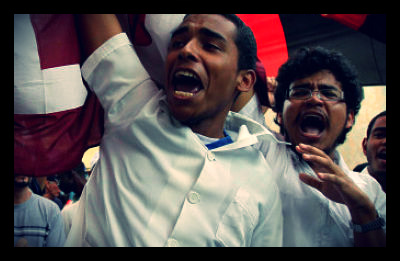
December 10th, 2013 is the 20th anniversary of the establishment of the World Conference on Human Rights.
The UN General Assembly first proclaimed Human Rights Day in 1948. However, the efforts were renewed in 1993 at the World Conference on Human Rights in Vienna through The Vienna Declaration and Program of Action.
The Universal Declaration of Human Rights was adopted in 1948. It consists of a preamble and 30 articles.
The Declaration has been translated into more than 380 languages and dialects: making it the most translated document.
This universal document defines fundamental human rights and freedoms that are to be applied to protect anyone, regardless of race, gender or ethnicity.
The human rights theme this year is Working For Your Rights, with an emphasis on looking forward to looming challenges.
At this time, let us reflect on and celebrate the achievements in human rights over the past 20 years. Broadly, there have been notable advancements in the areas of women’s rights, the development of law to achieve accountability for human rights abuses, the protection and promotion of the rights of marginalized groups and a much greater understanding of the universality and indivisibility of human rights.
The UN Office of High Commissioner for Human Rights (OHCHR) provides 20 specific accomplishments.
1.Economic, social, cultural, civil, and political rights and the right to development are recognized as universal, indivisible, and mutually reinforcing rights of all human beings, without distinction.
2. Human rights have become central to the global conversation regarding peace, security and development.
3. New human rights standards have built on the 1948 Universal Declaration of Human Rights and the implementation of international human rights treaties is significantly improved.
4. Additional explicit protections in international law now exist covering, among others, children, women, victims of torture, persons with disabilities, and regional institutions. Where there are allegations of breaches, individuals can bring complaints to the international human rights treaty bodies.
5. Women’s rights are now acknowledged as fundamental human rights. Discrimination and acts of violence against women are at the forefront of the human rights discourse.
6. There is global consensus that serious violations of human rights must not go unpunished. Victims have the right to claim justice, including within processes to restore the rule of law following conflicts. The International Criminal Court brings perpetrators of war crimes and crimes against humanity to justice.
7. There has been a paradigm shift in the recognition of the human rights of people with disabilities, especially and crucially, their right to effective participation in all spheres of life on an equal basis with others.
8. There is now an international framework that recognizes the challenges facing migrants and their families which guarantees their rights and those of undocumented migrants.
9. The rights of lesbians, gays, bisexuals and transgender individuals have been placed on the international agenda.
10. The challenges facing indigenous peoples and minorities are increasingly being identified and addressed by the international human rights mechanisms, especially with respect to their right to non-discrimination.
11. The Human Rights Council, set up in 2006, has addressed vital and sensitive issues and its Universal Periodic Review, established in the same year, has allowed countries to assess each other’s human rights records, make recommendations and provide assistance for improvement.
12. Independent human rights experts and bodies monitor and investigate from a thematic or country-specific perspective. They cover all rights in all regions, producing hard-hitting public reports that increase accountability and help fight impunity.
13. States and the United Nations recognize the pivotal role of civil society in the advancement of human rights. Civil society has been at the forefront of human rights promotion and protection, pinpointing problems and proposing innovative solutions, pushing for new standards, contributing to public policies, giving voice to the powerless, building worldwide awareness about rights and freedoms and helping to build sustainable change on the ground.
14. There is heightened awareness and growing demand by people worldwide for greater transparency and accountability from government and for the right to participate fully in public life.
15. National human rights institutions have become more independent and authoritative and have a powerful influence on governance. Over a third of all countries have established one or more such institutions.
16. The United Nations Fund for Victims of Torture has assisted hundreds of thousands of victims of torture to rebuild their lives. Likewise, the United Nations Voluntary Trust Fund on Contemporary Forms of Slavery, with its unique victim-oriented approach, has provided humanitarian, legal, and financial aid to individuals whose human rights have been violated through more than 500 projects.
17. Victims of trafficking are now regarded as entitled to the full range of human rights and are no longer perceived to be criminals.
18. A growing consensus is emerging that business enterprises have human rights responsibilities.
19. There are now guidelines for States which support freedom of expression while defining where speech constitutes a direct incitement to hatred or violence.
20. The body of international human rights law continues to evolve and expand, to address emerging human rights issues such as the rights of older persons, the right to the truth, a clean environment, water and sanitation, and food.
There is much to be celebrated. However, many people continue to not have a voice.
How can you participate?
-Support education through programs such as UNICEF’s Education First, as education is an empowering tool.
-Protect and use your freedom of speech. Journalists work to give a voice to oppressed people, and are often oppressed themselves while doing this valuable work. Find ways of supporting journalists and using your own voice to protect the human rights of oppressed communities.
-Use social media to raise awareness of Human Rights Day and human rights accomplishments or concerns that interest you.
-Contact your congressional leaders and ask them to support USAID or specific bills dealing with human rights issues, such as the Global Food Security Act of 2013 (H.R. 2822). For additional human rights related bills visit: https://borgenproject.org/legislation/
– Caressa Kruth
Sources: UNOHCHR, UN, Huffington Post, USAID

10 Global Trends for 2014
The World Economic Forum recently published a report answering the question, “What are the top trends facing the world in 2014?” Based on a poll of 1,592 leaders from academia, business, government, and non-profits, the report determined 10 global trends to expect in the coming year.
1. Increasing Tensions in the Middle East and North Africa
For the post-Arab Spring countries, promise and hope has given way to uncertainty. A debate continues about whether or not to keep religion and government separate while unemployment persists. The report recommends an entrepreneur-friendly climate to help promote economic growth for the masses, which in turn would build stability.
2. Widening Income Disparities
The gap between rich and poor is a major challenge for most of the world. The problem is seen as the most pressing issue amongst North Americans.
3. Persistent Structural Unemployment
History has shown that chronic joblessness is tied to social unrest, especially among a young generation growing up in hopelessness. A solution: train and offer mentorship to young adults so that they could develop in roles that show promise for career growth. Governments should create incentives for companies to create jobs and invest in their workers.
4. Intensifying Cyber Threats
Emerging technologies are outpacing security. Technology allows us to operate remotely more than ever, but our vulnerabilities to hackers increase. Rather than attempting to prevent all possible forms of hacking, the report suggests that we ensure that it’s not catastrophic to get hacked.
5. Inaction on Climate Change
There is action and attention towards climate change, but not at the scale that is needed. For example, there is $1 trillion of cumulative investment in renewable energy. However, $1 trillion per year is needed.
6. Diminishing Confidence in Economic Policies
The pop of the American housing bubble retrospectively revealed the deficiencies in US economic policies. The Pew conducted polls across the globe that showed people voicing similar widespread concerns about economic conditions in their countries. Europeans were particularly disillusioned.
7. A Lack of Values in Leadership
People in Latin America and sub-Saharan Africa do not trust that their leadership, even when elected, will act in the interest of the common good. Free press is important for promoting accountability along with the sharing and understanding of various values.
8. The Expanding Middle Class in Asia
More than any other region, Asians are hopeful about the economic prospects for the next generation. This is a result of free market reforms, investments in science, technology and education, a culture of pragmatism, meritocracy, and peace, and a strong the rule of law. Nonetheless, there is a need to make sure this generation of Asians does not negatively impact the global environment more than it needs to.
9. The Growing Importance of Megacities
According to the United Nations Population Division, more than half of the world’s population lives in urban areas. By 2025, there will be 35 megacities in comparison to 22 in 2011.
10. The Rapid Spread of Misinformation Online
One-third (30%) of the world’s youth have been active online for at least five years, according to the International Telecommunication Union. Social networking has also spread around the world. Rumors fly easily when there are 1 billion tweets produced every two-and a-half days
– Maria Caluag
Sources: Pew, World Economic Forum
Photo: National Post
5 Ways Art Can Help Alleviate Poverty
Art is a frequent medium for human expression and resistance, and within that space of creation and possibility is the opportunity to find ways to fight poverty and alleviate the suffering of the global poor.
1. Art can help impoverished children increase their chances of going on to college and obtaining employment by developing fundamental cognitive capacities, critical analytical skills, and providing learning experiences that have a significant impact on children’s educational achievement and social development.
A recent report published last year by the presidentially appointed Committee on the Arts and Humanities showed results stating that low-income students who were highly involved in the arts performed better, stayed in school longer, scored higher in math assessments, and were more likely to graduate high school, attend college, find stable employment, perform volunteer work in their communities, and vote.
2. Art programs can focus on entire communities faced with poverty and provide multiple services and opportunities in terms of gainful employment, a platform of expression for the voiceless, creating beauty and hope amidst poverty and blight, provide awareness to suffering, galvanizing donors and philanthropists, and can allow others to advocate for those who cannot advocate for themselves.
Programs like the Philadelphia Mural Arts Program target at-risk children, juveniles, and adults and provide them with opportunities and spaces of expression they would not otherwise have access to. The program has even taken a leading role in criminal and restorative justice by offering education programs in prisons and rehabilitation centers, helping to effectively reduce crime, violence, and the poverty and misery associated with it.
3. Art and creative expression can help provide employment and income to those who are impoverished. Having non-profit programs that help develop artists by providing a more equitable share of profits from sold work, and investing in opportunities for those who are poor to create and thrive as artists, means a larger return than one individual’s income and the chance to influence poverty in an entire community or area.
4. Art can advocate for the impoverished, provide visibility to issues of poverty, and be a platform for agency to effect change and eradicate this form of human suffering. Organizations like 2015 use art and creativity to change perceptions about poverty by raising awareness so that greater actions can be taken to fight poverty in the Middle East. By linking an art movement to the United Nations Millennium Goals, the public sphere and shared space of art becomes a political platform to support larger movements, fight poverty locally, and challenge the failings that allow for three billion people to remain trapped in poverty.
5. Art can help fund projects and utilize creativity to find measures to help end the suffering of the billions of the world’s poor. Artistic endeavors and the art community can be organized and motivated to provide fundraising and resources for essential programs and serve as the appropriate community to build connections of supporters. Art naturally involves innovation, and creative minds can be utilized to find solutions to problems like substandard housing or the effective use of public space. Those suffering in poverty need all the resources we have available, and art has the capacity to take its own form and be that of another, so when used to fight poverty, it becomes an instrument of justice.
– Nina Verfaillie
Feature Writer
Sources: Techo, TNW News, MinnPost, Astep, Mural Arts Program
Global Education Motivators
What do Mr. Rogers, Jane Goodall, and the United Nations all have in common? They are all close supporters of Global Education Motivators (GEM) one of the oldest initiatives for advocating the importance of global education in American schools.
Founded in 1981, GEM has worked tirelessly to promote global issues in the American classroom through engagement with UN educational programs, leadership conferences, and workshops. One of the initiative’s foremost programs is “United Nations Day,” where young students work together, mock UN style, to provide solutions for issues such as human rights, environmental sustainability, education, and food security.
“Believing that international communication exchange is the key to future world peace, the inclusion of cross cultural perspectives has become an integral part of GEM’s global learning programs,” according to GEM’s mission statement. “Global awareness is closely tied to global responsibility.” This commitment to cross cultural perspectives is evident in the initiative’s distance learning courses. These courses are geared for K-12 students. African Folk Tales, Conflict in Sudan and Nuclear Awareness are some of the highlights of the courses available.
GEM also boasts partnerships with the African Studies Center at the University of Pennsylvania and the project for Nuclear Awareness. Additionally, the group has a presence with the United Nations’ education initiative, UN Academic Impact. At UN Academic Impact’s Third Annual Conference, youth members of GEM presented about the program and the importance of empowering other youth to stand up for global issues through community involvement, arts and education.
While the organization most certainly embraces the mantra of “think global,” acting local is just as important for GEM. Based out of Chestnut Hill College in Philadelphia, GEM is a close partner with local Philadelphia schools and Philadelphia-based programs, like the Greater Philadelphia Global Education Network. Involving local communities and schools with issues of global development is an important part of inspiring larger movements for global education.
– Taylor Diamond
Sources: United Nations, Global Education Motivators
Photo: Dreamstime
Hunger Games Promotes Hunger Awareness
This Friday marks the premiere of the second film installment of the Hunger Games series, Catching Fire. While thousands of people will wait in line to see its midnight premiere, the film is more than just a blockbuster. The film partners with Feed America and the World Food Programme to raise awareness and advocacy for world hunger.
While the films’ website is a favorites spot for fanatics, it also offers an educational aspect, exploring hunger worldwide. The site specifically targets the younger audience, aiming to educate fans of the film about hunger and poverty. The site features a world map with five interactive factoids and links to both Feed for America’s county-level hunger map, and the World Food Programme’s interactive map of worldwide hunger. The five hunger facts are as follows:
Fact #1
1 in 5 kids suffers from hunger worldwide.
Fact #2
1 in 6 kids is underweight.
Fact #3
700 billion pounds of food are wasted every year in the U.S.
Fact #4
It costs 25 cents a day to provide a child with proper nutrition
Fact #5
This one is a video factoid. It features the personal impact of Feed for America in rural communities across the country.
Facts 1, 3 and 5 are sponsored by Feeding America and feature links to the organization’s interactive county-by-county hunger map. The map is the first of its kind to investigate the effects of hunger and poverty at a county level. Web users are able to explore how the most impoverished counties in America are affected by hunger and learn about Feeding America’s efforts to serve those communities.
Facts 2 and 4 are sponsored by the World Food Programme (WFP) and lead readers to the WFP’s world hunger map. More than 842 million people go hungry every night, and the WFP’s hunger map explores the severity of hunger country by country. The interactive map ranks countries based on prevalence of hunger and offers pertinent demographic information about each country. The site also provides information about WFP’s efforts and accomplishments to reduce hunger in each country. The map is easy to navigate and clearly communicates the need for hunger advocacy and awareness.
The Hunger Games also sponsors charitable merchandise for sale. The limited edition “Love Thy Neighbor, Feed Thy Neighbor” fan t-shirt is available for purchase, with all proceeds going towards Feeding America. The film’s star actress, Jennifer Lawrence, also partners with several charitable organizations. She has donated to DoSomething.org, Feeding America, the World Food Programme, and the Thirst Program. The film’s website presents a strong message to film fanatics that they must be educated and active against world hunger.
– Mallory Thayer
Sources: Hunger Games, Feeding America, WFP, Look to the Stars
Photo: Forbes
Too Much of a Good Thing
We need greenhouse gases. Without them, the Earth would be a cold, lifeless lump of dirt hurtling through space. Greenhouse gases allow the sun’s rays to pass through the atmosphere and warm the earth. They also prevent the warmth from escaping back into space. The problem with greenhouse gases, however, is that the more heat-trapping gases there are, such as carbon dioxide and methane, the warmer earth gets. This consequently increases the “greenhouse effect” and is what is causing a steady increase in the global temperature. The consequences are enormous.
Humans have been simultaneously burning fossil fuels and cutting down forests. Forests, which produce the oxygen needed to balance out carbon dioxide production, can be compared to a planet sized pair of lungs for Earth. The occurrence of fossil fuel burning and deforestation has increased the amount of carbon dioxide present in the atmosphere by 42 percent.
Carbon dioxide is one of the largest contributors to climate change. Though it is a byproduct of many actions, one of the main producers of carbon dioxide is the burning of coal. Coal, a fossil fuel created from the remains of dead plants from millions of years ago, produces enormous amounts of CO2 when burned.
It also took center stage in a global warming debate on Monday in Warsaw, Poland during a U.N. climate conference. Environmental activists there said that the coal industry needs to be part of the climate discourse, because many countries continue to rely on coal as their primary energy source. Coal has been heavily used since the 19th century English Industrial Revolution. While it provides quick energy, it also results in smog, acid rain, and air pollution. In 2011, 44% of emissions came from coal compared to only 35% from oil.
“Leave the coal in the ground,” says UN climate chief, Christiana Figueres. However, the likelihood that countries who rely on coal will abandon it is low. Instead, many countries are aiming to increase the efficiency of coal-powered plants. Economically, many countries refuse to “give up” using coal because the demand for energy never ceases, and as populations increases, coal quickly meets these needs.
China, for example, is the world’s largest carbon polluter, and while it is investing in renewable energy, its coal consumption continues to rise. Coal was 68% of Chinese energy consumption in 2012 and it continues to be the largest producer. As it’s population and energy needs increase, it must meet these demands.
The amount of greenhouse gases is at an annual record high – 39 million tons this year. However, in a study published by the University of East Anglia (UEA), the level at which people are polluting is leveling off. The good news even presents itself in the West, where emissions have dropped. The U.S. produced 3.7% less carbon dioxide in 2012 than the previous year, and Europe, 1.8%. However, individual emissions per person in the US is still 16 tons, compared to people in India who produce only about 1.8 tons.
Nevertheless, the 2.1% rise projected for 2013 means that global emissions from burning fossil fuels are 61% above 1990 levels, the baseline year for the Kyoto Protocol. The Kyoto Protocol, an international agreement developed in Japan on December 11, 1997, was a commitment made to reduce greenhouse gas emissions by at least 18% below 1990 levels from 2013 to 2020.
Professor Corinne Le Quéré of the Tyndall Centre for Climate Change Research at the University of East Anglia led the Global Carbon Budget report. She said: “Governments meeting in Warsaw this week need to agree on how to reverse this trend. Emissions must fall substantially and rapidly if we are to limit global climate change to below two degrees. Additional emissions every year cause further warming and climate change.”
The problem remains that while many countries have signed the Kyoto Protocol to decrease emissions, China and the United States have not.
The world, if it continues with it’s current emission levels, will see a global temperature rise of 2 degrees Celsius, the worst climate change scenario predicted by the U.N. panel on climate change.
– Chloe Nevitt
Sources: David Suzuki Foundation, Fox News, United Nations, University of East Anglia, CNN
Photo: Energy.Gov
Bill Gates Loves Fertilizer
In an interview with CBS’ Charlie Rose, Microsoft co-founder Bill Gates discussed the importance of innovation in agriculture. At first, Rose and Gates discussed Gates’ annual letter, including a call to the United States and other developed countries to further agricultural research. However, the conversation took an unexpected turn to a related topic that Gates finds fascinating: fertilizer.
Developing nations continue to face food shortages due to many causes, including climate change. Demand for food is constantly rising and the price of food is increasing as a result. Gates believes that the problems surrounding food-production goals can be alleviated if more investment is made in agricultural research, which includes research in fertilizer.
Fertilizers improve the growth of plants, and are made up of substances consisting of chemical elements such as manure. Fertilizers provide crops with the essential nutrients they need to fight off pests, disease, and the elements. However, insects and disease are only one issue that affects crops. Another major concern for crop sustainability is soil condition, which is drastically affected by changing weather. Fertilizers enhance the soil by allowing the soil to hold more water and nutrients, where forces like rain and wind would usually create unstable soil not suitable for sustained growth.
It appears that Gates’ fascination with fertilizer has developed since his interview with Charlie Rose. On November 12, 2013, Gates wrote an essay that appeared on wired.com saying, “I am a little obsessed with fertilizer. I mean I’m fascinated with its role, not with using it.” Fertilizer plays an important role in the lives of people all over the world. Specifically, 40% of the world benefits from crop output that fertilizer has made possible. Gates compares the innovative development of fertilizer to the creation of synthetic ammonia and polio vaccines.
One of the ways that the Bill & Melinda Gates Foundation has advanced research in fertilizer is through supporting a joint project by the Swiss Aquatic Research Institute and the South African Water Utility. The project involves developing urine from conventional sewer-based sanitation and central wastewater treatment systems as a commercial fertilizer and is set to be complete by 2014.
– Daren Gottlieb
Sources: EAWAG, Wired, Southwest Farm Press, The Green Book
Photo: BBC
Nelson Mandela Dead at 95
Nelson Mandela dead? Yes, the unthinkable has occurred. Arguably the world’s greatest advocate and symbol of compassion has passed away.
On Thursday December 5, 2013, Former President of South Africa Nelson Mandela died at the age of 95. He was one of the most revered men in the world, for he was an example of dedication, forgiveness, and triumph. He sacrificed his own freedom, so that others who were less fortunate could obtain their own freedom. After spending 27 years of his life in a prison cell, he was released to the cheers of billions around the world. He was the ultimate symbol of hope for a region that was on the brink of destruction. His leadership ultimately averted a racial civil war.
As the first democratically elected president of South Africa, he faced many obstacles, but was ambitious in his presidential vision. During his presidency, Nelson Mandela set out to elevate his countrymen and women from poverty. He petitioned for foreign governments to invest in his countries resources. He pushed for fair distribution of farmland to include those who were impoverished. He was successful in implementing free health care access to children under the age of six, and pregnant and breastfeeding mothers, giving healthcare to the poor.
After retirement from the Presidency in 1999, he focused his attention on other noteworthy causes. He created the Nelson Mandela Foundation, which through education has brought people together to combat HIV and AIDS in his home country. Through the organization, the 46664 campaign (his prison-issued number) has staged many prominent concerts to stimulate South African youth awareness to AIDS prevention. His example of perseverance in eradicating AIDS in South Africa has brought the country closer to an AIDS-free generation.
He also urged governmental leaders across the world to do more to alleviate global poverty. In a 2005 speech in London, Nelson Mandela pushed for leaders across the world to support global poverty reduction initiatives. He said, “Like slavery and apartheid, poverty is not natural. It is manmade and it can be overcome and eradicated by the actions of human beings… While poverty persists, there is no true freedom.” His words were a call to arms for leaders of more developed nations to extend their posterity to poorer nations.
The world has lost a true leader, a champion of equality, and a hero for the poor. Nelson Mandela’s example has inspired millions worldwide, and he will be missed but not forgotten.
– Travis Whinery
Sources: Forbes, NelsonMandela.org, Huffington Post, BBC, The Economist, CNN
Photo: ABC World News
Human Rights Day 2013
December 10th, 2013 is the 20th anniversary of the establishment of the World Conference on Human Rights.
The UN General Assembly first proclaimed Human Rights Day in 1948. However, the efforts were renewed in 1993 at the World Conference on Human Rights in Vienna through The Vienna Declaration and Program of Action.
The Universal Declaration of Human Rights was adopted in 1948. It consists of a preamble and 30 articles.
The Declaration has been translated into more than 380 languages and dialects: making it the most translated document.
This universal document defines fundamental human rights and freedoms that are to be applied to protect anyone, regardless of race, gender or ethnicity.
The human rights theme this year is Working For Your Rights, with an emphasis on looking forward to looming challenges.
At this time, let us reflect on and celebrate the achievements in human rights over the past 20 years. Broadly, there have been notable advancements in the areas of women’s rights, the development of law to achieve accountability for human rights abuses, the protection and promotion of the rights of marginalized groups and a much greater understanding of the universality and indivisibility of human rights.
The UN Office of High Commissioner for Human Rights (OHCHR) provides 20 specific accomplishments.
1.Economic, social, cultural, civil, and political rights and the right to development are recognized as universal, indivisible, and mutually reinforcing rights of all human beings, without distinction.
2. Human rights have become central to the global conversation regarding peace, security and development.
3. New human rights standards have built on the 1948 Universal Declaration of Human Rights and the implementation of international human rights treaties is significantly improved.
4. Additional explicit protections in international law now exist covering, among others, children, women, victims of torture, persons with disabilities, and regional institutions. Where there are allegations of breaches, individuals can bring complaints to the international human rights treaty bodies.
5. Women’s rights are now acknowledged as fundamental human rights. Discrimination and acts of violence against women are at the forefront of the human rights discourse.
6. There is global consensus that serious violations of human rights must not go unpunished. Victims have the right to claim justice, including within processes to restore the rule of law following conflicts. The International Criminal Court brings perpetrators of war crimes and crimes against humanity to justice.
7. There has been a paradigm shift in the recognition of the human rights of people with disabilities, especially and crucially, their right to effective participation in all spheres of life on an equal basis with others.
8. There is now an international framework that recognizes the challenges facing migrants and their families which guarantees their rights and those of undocumented migrants.
9. The rights of lesbians, gays, bisexuals and transgender individuals have been placed on the international agenda.
10. The challenges facing indigenous peoples and minorities are increasingly being identified and addressed by the international human rights mechanisms, especially with respect to their right to non-discrimination.
11. The Human Rights Council, set up in 2006, has addressed vital and sensitive issues and its Universal Periodic Review, established in the same year, has allowed countries to assess each other’s human rights records, make recommendations and provide assistance for improvement.
12. Independent human rights experts and bodies monitor and investigate from a thematic or country-specific perspective. They cover all rights in all regions, producing hard-hitting public reports that increase accountability and help fight impunity.
13. States and the United Nations recognize the pivotal role of civil society in the advancement of human rights. Civil society has been at the forefront of human rights promotion and protection, pinpointing problems and proposing innovative solutions, pushing for new standards, contributing to public policies, giving voice to the powerless, building worldwide awareness about rights and freedoms and helping to build sustainable change on the ground.
14. There is heightened awareness and growing demand by people worldwide for greater transparency and accountability from government and for the right to participate fully in public life.
15. National human rights institutions have become more independent and authoritative and have a powerful influence on governance. Over a third of all countries have established one or more such institutions.
16. The United Nations Fund for Victims of Torture has assisted hundreds of thousands of victims of torture to rebuild their lives. Likewise, the United Nations Voluntary Trust Fund on Contemporary Forms of Slavery, with its unique victim-oriented approach, has provided humanitarian, legal, and financial aid to individuals whose human rights have been violated through more than 500 projects.
17. Victims of trafficking are now regarded as entitled to the full range of human rights and are no longer perceived to be criminals.
18. A growing consensus is emerging that business enterprises have human rights responsibilities.
19. There are now guidelines for States which support freedom of expression while defining where speech constitutes a direct incitement to hatred or violence.
20. The body of international human rights law continues to evolve and expand, to address emerging human rights issues such as the rights of older persons, the right to the truth, a clean environment, water and sanitation, and food.
There is much to be celebrated. However, many people continue to not have a voice.
How can you participate?
-Support education through programs such as UNICEF’s Education First, as education is an empowering tool.
-Protect and use your freedom of speech. Journalists work to give a voice to oppressed people, and are often oppressed themselves while doing this valuable work. Find ways of supporting journalists and using your own voice to protect the human rights of oppressed communities.
-Use social media to raise awareness of Human Rights Day and human rights accomplishments or concerns that interest you.
-Contact your congressional leaders and ask them to support USAID or specific bills dealing with human rights issues, such as the Global Food Security Act of 2013 (H.R. 2822). For additional human rights related bills visit: https://borgenproject.org/legislation/
– Caressa Kruth
Sources: UNOHCHR, UN, Huffington Post, USAID
Soap Operas Tackle the Dirty Truth of Debt
Since those in extreme poverty have no line of credit (in some cases they have no state records whatsoever), they are sometimes forced to turn to loan sharks for quick cash. These loan sharks operate outside of the law and when it comes to payment, they have no mercy, often leaving the borrower in worse conditions than before the transaction.
In South Africa, this debt cycle has affected the poorest population. In the Johannesburg slum, Alexandra, loan sharks are easier to find than a job or sanitary facilities. Taking advantage of a desperate and uneducated population, loan sharks are able to make huge profits. As one Alexandra resident explains, the loan sharks hold identification cards as collateral and when their “customers” are unable to repay their loans, the ID cards are sold to refugees and emigrants from other parts of Africa.
With 18% of South Africans in debt (on record, not including those indebted to loan sharks), the World Bank is supporting a new strategy to reach and educate the public. Referred to as education entertainment, social issues are embedded into the existing storyline of a television show until the characters, and the viewers, are eventually guided to a solution. Rather than blatantly tell people what they should do- which is likely to meet resistance- advice is subtle and portrayed in the context of everyday life. Viewers are already familiar with the characters, and with the added appeal of emotion, soap operas serve as an ideal platform for credible information.
Scandal, one such show, reaches 3 million viewers in Johannesburg nightly, and its target audience is the low income population. This show has already tackled the issue of debt, with one character finding herself in a predicament then gathering information and arriving at a solution. Not only did the string of episodes warn of the negative consequences of debt, but the telephone number for a debt consolidation hotline was also displayed on screen. Following the debt-focused episodes, and for some time after, calls into the debt hotline increased 300%.
Although criticized for being overdramatic and unrealistic, soap operas have now become a resource for those struggling with poverty and other social issues. Soap Operas are a popular genre and the more viewers tune in, the more they empathize and relate to the characters on the show. By embedding useful information into soap operas, it is possible to educate an entire population without disturbing their nightly routine. Social issues associated with poverty can be combated with love triangles and scandals, thanks to education entertainment.
– Alessandra Luppi
Sources: World Bank, World Bank Blog
7 African Art Exhibits that Commemorate African Culture
Art is a powerful device that can evoke thought, respect and cultural insight. In the case of African art, many outsiders are given cultural insight into traditions and practices in Africa. Art can help provide new perspectives, and can even change the way one sees the world. Below are seven African art exhibits that provide insight into Africa’s history and culture while also commemorating the events, traditions and people of Africa. Most of the exhibits listed are being hosted in the Museum for African Art in New York.
1. Dogon Now: Masks in Motion
This exhibit demonstrates the cultural tradition of the Dogon people of Mali through a performative representation of the Dogon masquerade tradition. The exhibit utilizes multimedia and elaborate masks to recreate the ceremonies and practices of the Dogon masquerade.
2. Dynasty and Divinity: Ife Art in Ancient Nigeria
This exhibit captures life in Yoruba of West Africa from the ancient city’s civilization from the 12th-15th century. Dynasty and Divinity brings to life the artistic achievements of an ancient city and ancient civilization.
3. A Congo Chronicle: Patrice Lumumba in Urban Art
Devoted to the life and death of the Congo’s first Prime Minister, Patrice Lumumba, this exhibit displays his life through urban art. The exhibit includes 50 paintings by contemporary artists inspired by Lumumba’s life and work in the Congo.
4. African Art, New York, and the Avant-Garde
On display in this exhibit are a number of African artifacts that were found by the New York avant-garde between the 1910s and 1920s. The African artifacts are used to show the artistic vigor of New York in the mid 1910s.
5. Desert Jewels
Desert Jewels is an exhibit that displays traditional North African jewelry, highlighting the cultural and socioeconomic diversity in North African societies. The exhibit displays everything from simple adornments worn by children to opulent necklaces worn by wealthy women. Desert Jewels is a collection of over three decades.
6. Grass Roots: African Origins of an American Art
This exhibit presents a series of coiled baskets made in places across Africa as well as in South Carolina and Georgia. Grass Roots highlights not only the functional aspect of the coiled baskets, but also the beauty and meticulousness with which they are made.
7. Jane Alexander: Surveys
Well-known South African artist, Jane Alexander, exhibits work that is both compelling and disturbing in her exhibit, Surveys. The exhibit contains photographs and animal-human sculptures that capture the disfigurations Alexander has seen in South Africa. The thought-provoking display raises questions about human nature, self vs. other and hybridity between that which is familiar and that which is grotesquely foreign.
– Chante Owens
Sources: Museum for African Art, he Metropolitan Museum of Art
Photo: Tumblr