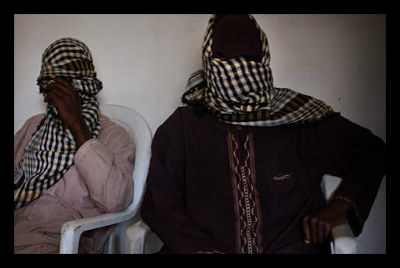
1. As of November 13, 2013, Boko Haram is now considered a terrorist group by the United States.
Boko Haram (Congregation of the People of Tradition for Proselytism and Jihad) is an Arabic term that means “Western education is sacrilege.” As a jihadist group, Boko Haram is considered to be one of the most violent movements in contemporary Islam, using aggressive brutality to achieve their end goal: to establish a “pure” Islamic state ruled by sharia law while also ending what the group considers to be westernization.
2. Boko Haram honors and promotes the concept of vengeance.
July 2009 brought Boko Haram some setbacks. A clash with Nigerian Government forces led to the deaths of hundreds of members of the jihadist group. Former leader Muhammad Yusuf, who created the group in 2001, was also captured. This capture led to Yusuf’s televised execution, as well as the deaths of his father-in-law and other sect members.
In response to this event, Boko Haram began a series of violent attacks in northeast Nigeria.
“We are responsible for the attacks in Maiduguri, Damaturu and Potiskum,” said Abul Qaqa, a supposed spokesman for Boko Haram. “We carried out the attacks to avenge the killings of our brothers by the security forces in 2009. We will continue to wage war against the Nigerian state until we abolish the secular system and establish an Islamic state.”
3. The death toll of Boko Haram is in the thousands.
Responsible for over 400 killings in 2011 alone, the group’s death toll raises daily. In fact, it said that Boko Haram is guilty of over 4,700 murders.
4. The group has strong ties to Al Qaeda and has even threatened the United States.
A January 2012 United Nations report cited regional officials as saying that “Boko Haram had established links with Al Qaeda in the Islamic Maghreb.” Apparently, some of the group’s “members from Nigeria and Chad had received training in Al Qaeda in the Islamic Maghreb camps in Mali during the summer of 2011.”
Abubakar Shekau, the current leader (also known as an “emir”) of Boko Haram, did not denounce these ties.
“Don’t think that jihad stops with the death of imams, because imams are individuals,” Shekau says. “Don’t you see and think how many sheikhs and men were martyred, like Sheikh Abdullah Azzam [the co-founder of al Qaeda], Abu Musab al Zarqawi [the leader of al Qaeda in Iraq], Abu Omar al Baghdadi [the emir of al Qaeda’s Islamic State of Iraq], Osama bin Laden, Abu Yahya al Libi [a top al Qaeda leader], Abu Yusuf Muhammad bin Yusuf al Nigiri [the former emir of Boko Haram], and others ….”
“Do not think jihad is over,” Shekau said. “Rather jihad has just begun. O America, die with your fury.”
5. Among Boko Haram’s thousands of victims are innocent civilians, including women and children.
The group set fire to a Mamudo boarding school that ended up killing 42 students and teachers. They killed 200 people in the village of Baga. Bombings of churches, schools, and various other places have earned the group their terrorist affiliation.
The fate of Alhaji Muhammadu proves the aforementioned point as well. Muhammadu was fatally shot when walking home on February 9. His son explained that his father had told the police about a booby-trapped car in the neighborhood. Boko Haram found out.
Two masked men on a motorcycle shouted: “Just try that again. Now you are dead,” recalled the son, Sudaifu Muhammadu, a 27-year-old student at Bayero University, shuddering.
“They are all around,” Mr. Muhammadu said.
6. The country’s poverty levels seem to have a negative impact on the situation overall.
The Nigerian state, the typical enemy of the jihadist group, is largely due to the nation’s enduring poverty, according to analysts. Despite Nigeria’s oil wealth, 60 percent of the population lives on less than $1 a day. Since 2004, there has been an increase in national poverty, with about 75 percent of the population considered to be poor.
Reasons for attacks seemed quite clear to the Nigerians living with the fear of impending violence: injustice and misgovernance by political officials.
“The leaders are not concerned about the common man,” said Abdullahi Dantsabe, squatting in his open-air stall where he sells cooked yams.
Ado Ibrahim, a 22-year-old sugar cane vendor, was in agreement. He stated that another flare-up was “possible, as long as injustice persists.”
7. The local police are not as helpful as they were expected to be.
National Geographic writer James Verini recalled a woman he met at a hospital in Kano this year.
“She’d been selling water in the bus station the day of the bombing. Her young daughter had been helping her,” Verini said. “When the car exploded, the girl vanished. In the darkness the woman called out for her. When her daughter didn’t respond, she began looking for a body. When she couldn’t find a body, she looked for an arm, a leg, clothing, a shoe, anything. She found nothing. She told the police what had happened, but they didn’t care and ordered her to leave. The woman’s husband went to every hospital in Kano, to no avail.”
The woman has not seen her daughter since that day.
– Samantha Davis
Sources: Reuters, International Business Times, Aljazeera, Counsel on Foreign Relations, New York Times, National Geographic

7 Facts About Boko Haram
1. As of November 13, 2013, Boko Haram is now considered a terrorist group by the United States.
Boko Haram (Congregation of the People of Tradition for Proselytism and Jihad) is an Arabic term that means “Western education is sacrilege.” As a jihadist group, Boko Haram is considered to be one of the most violent movements in contemporary Islam, using aggressive brutality to achieve their end goal: to establish a “pure” Islamic state ruled by sharia law while also ending what the group considers to be westernization.
2. Boko Haram honors and promotes the concept of vengeance.
July 2009 brought Boko Haram some setbacks. A clash with Nigerian Government forces led to the deaths of hundreds of members of the jihadist group. Former leader Muhammad Yusuf, who created the group in 2001, was also captured. This capture led to Yusuf’s televised execution, as well as the deaths of his father-in-law and other sect members.
In response to this event, Boko Haram began a series of violent attacks in northeast Nigeria.
“We are responsible for the attacks in Maiduguri, Damaturu and Potiskum,” said Abul Qaqa, a supposed spokesman for Boko Haram. “We carried out the attacks to avenge the killings of our brothers by the security forces in 2009. We will continue to wage war against the Nigerian state until we abolish the secular system and establish an Islamic state.”
3. The death toll of Boko Haram is in the thousands.
Responsible for over 400 killings in 2011 alone, the group’s death toll raises daily. In fact, it said that Boko Haram is guilty of over 4,700 murders.
4. The group has strong ties to Al Qaeda and has even threatened the United States.
A January 2012 United Nations report cited regional officials as saying that “Boko Haram had established links with Al Qaeda in the Islamic Maghreb.” Apparently, some of the group’s “members from Nigeria and Chad had received training in Al Qaeda in the Islamic Maghreb camps in Mali during the summer of 2011.”
Abubakar Shekau, the current leader (also known as an “emir”) of Boko Haram, did not denounce these ties.
“Don’t think that jihad stops with the death of imams, because imams are individuals,” Shekau says. “Don’t you see and think how many sheikhs and men were martyred, like Sheikh Abdullah Azzam [the co-founder of al Qaeda], Abu Musab al Zarqawi [the leader of al Qaeda in Iraq], Abu Omar al Baghdadi [the emir of al Qaeda’s Islamic State of Iraq], Osama bin Laden, Abu Yahya al Libi [a top al Qaeda leader], Abu Yusuf Muhammad bin Yusuf al Nigiri [the former emir of Boko Haram], and others ….”
“Do not think jihad is over,” Shekau said. “Rather jihad has just begun. O America, die with your fury.”
5. Among Boko Haram’s thousands of victims are innocent civilians, including women and children.
The group set fire to a Mamudo boarding school that ended up killing 42 students and teachers. They killed 200 people in the village of Baga. Bombings of churches, schools, and various other places have earned the group their terrorist affiliation.
The fate of Alhaji Muhammadu proves the aforementioned point as well. Muhammadu was fatally shot when walking home on February 9. His son explained that his father had told the police about a booby-trapped car in the neighborhood. Boko Haram found out.
Two masked men on a motorcycle shouted: “Just try that again. Now you are dead,” recalled the son, Sudaifu Muhammadu, a 27-year-old student at Bayero University, shuddering.
“They are all around,” Mr. Muhammadu said.
6. The country’s poverty levels seem to have a negative impact on the situation overall.
The Nigerian state, the typical enemy of the jihadist group, is largely due to the nation’s enduring poverty, according to analysts. Despite Nigeria’s oil wealth, 60 percent of the population lives on less than $1 a day. Since 2004, there has been an increase in national poverty, with about 75 percent of the population considered to be poor.
Reasons for attacks seemed quite clear to the Nigerians living with the fear of impending violence: injustice and misgovernance by political officials.
“The leaders are not concerned about the common man,” said Abdullahi Dantsabe, squatting in his open-air stall where he sells cooked yams.
Ado Ibrahim, a 22-year-old sugar cane vendor, was in agreement. He stated that another flare-up was “possible, as long as injustice persists.”
7. The local police are not as helpful as they were expected to be.
National Geographic writer James Verini recalled a woman he met at a hospital in Kano this year.
“She’d been selling water in the bus station the day of the bombing. Her young daughter had been helping her,” Verini said. “When the car exploded, the girl vanished. In the darkness the woman called out for her. When her daughter didn’t respond, she began looking for a body. When she couldn’t find a body, she looked for an arm, a leg, clothing, a shoe, anything. She found nothing. She told the police what had happened, but they didn’t care and ordered her to leave. The woman’s husband went to every hospital in Kano, to no avail.”
The woman has not seen her daughter since that day.
– Samantha Davis
Sources: Reuters, International Business Times, Aljazeera, Counsel on Foreign Relations, New York Times, National Geographic
Typhoon Haiyan Highlights Food Aid Hindrances
Located in the northwestern Pacific, comprised of more than 7,000 islands, the Philippines suffers more storms each year than any other nation in the world.
To date, Typhoon Haiyan is the most catastrophic natural disaster to strike the Philippines. More than 9.7 million people have been affected, with over 3 million of them being displaced due to the storm.
The death toll continues to rise, hitting 3,637 casualties. In a country where poverty and inequality remain a challenge, climatic disasters only thwart the growth of the economy and the citizens.
Typhoon Haiyan destroyed 384,000 acres of rice, corn, and other crops, totaling $105 million worth of damage. These crops are staples in the diets of Filipino culture and countries surrounding them; the damage is a devastating blow.
With the recent FARM bill heavily under debate in the House and Senate, Congress is in a position to provide the U.S. international food aid program with the flexibility necessary to effectively respond to natural disasters.
Just days after Haiyan struck the Philippines, the USAID’s Office of Food for Peace devoted $7.75 million from the International Disaster Assistance account. These funds will be used to purchase foods for the Philippines and neighboring countries in need.
Currently, 1,100 tons of rice positioned in Sri Lanka are in transit to the distraught area, but are not expected to arrive until December 2. In addition, 55 tons of emergency food products were airlifted from the U.S. to provide aid.
The United States is the top respondent in the world to humanitarian crisis situations around the globe. America’s humanitarianism displays the desire to help others that runs true to core human values.
Yet with food aid come various restrictions that deter not only the process of giving assistance, but the steps to receiving it as well. Food aid restricts the U.S. to only being able to send nutrients that are grown on U.S. soil.
The commodities are then shipped across the ocean; had the U.S. sent rice rather than Sri Lanka, it may have taken 10-12 weeks to arrive. This timeline can be twice as damaging as the storms themselves, considering the starvation and hunger needs that take place immediately after a natural catastrophe.
The argument currently under scrutiny is that it would be much more beneficial to send money; a resource that can be received immediately with limited restrictions.
Although the United States was able to provide financial support, had Typhoon Haiyan taken place at any other time, assistance may not have been available. Due to stipulations on aid, the U.S. may have been limited on cash from responding to crises earlier in the fiscal year.
The U.S. government does not have the flexibility to purchase food resources in any market except its own – a crippling factor that prevents America from being able to reach its full potential of assistance.
Even with the support that has been provided, Typhoon Haiyan has emphasized major errors that exist within food aid. This past spring, President Obama proposed a total reform of food aid. This presidential bid would have forced Congress to consider food aid a foreign aid issue – separating food aid from domestic agricultural issues.
In turn, this would have removed the stipulations that currently surround food aid. President Obama’s proposal was rejected, however, and the FARM bill continues to be ironed out in a special committee in Congress.
– Samaria Garrett
Sources: Common Dreams, Fox News, Brookings
College Books or Food?
As any college student knows, each semester’s course load brings with it the dread of buying textbooks. In recent years the stress of purchasing expensive books that might only be used in a single class has eased with the proliferation of rental and free online options. Despite such developments, the cost still forces many students to take out separate loans just for the books.
The average post-secondary student spends about $1,200 per year on textbooks, up 812% in the past 30 years. Not only has the cost per year skyrocketed but it has risen faster than tuition, health care costs and housing costs in the same amount of time. Furthermore, each of those costs has increased faster than inflation. With over 21 million people enrolled in post-secondary educational institutes, the amount spent in the U.S. on textbooks each year adds up to approximately $25.2 billion dollars.
Quite a lot could be purchased with $25.2 billion, particularly food, another college student focus. In fact, the average person in the U.S. spends $2,273 on food each year, less than twice the expenditure on college textbooks. In comparison, the average expenditure on food for someone in Venezuela is $1,378, in Vietnam is $345, and in Pakistan is $415. The U.S. Department of Agriculture’s Economic Research Service compiled information on 91 countries, calculating expenditures based on locations (e.g. for home cooking or at restaurants), type of food (e.g. snack, meal, or alcoholic beverage), per capita expenditure, and food expenditure as a percentage of income. It is important to note that all food expenditures quoted in this article exclude alcoholic beverages.
The findings demonstrate that generally, as countries develop the percentage of a person’s income spent on food decreases. The U.S. is one of the highest spenders on food per person, but, of the countries surveyed, uses the lowest percentage on food: only 6.6%. Meanwhile, Venezuela spends 18.6%, Vietnam spends 35.9%, and Pakistan spends 47.7% of expenditures on food. For a visual representation, check out Washington State magazine’s compilation https://wsm.wsu.edu/researcher/
One way to compare textbook spending and food spending is through the basic amounts. Each year the average U.S. college students spends almost the same amount on textbooks as a person in Venezuela does on food, 2.9 times more than a person in Pakistan and 3.4 times more than a person in Vietnam. Another option is to compare book costs to the overall expenditures per person in each country. The U.S. average per capita expenditure each year is $34,541, therefore student’s textbook purchases equal 3.4% of total expenses. In comparison, U.S. textbooks would consume 16% of Venezuelan expenditures, 124% of Vietnamese expenditures, and 137% of Pakistani expenditures.
Hunger is one of the leading problems in the world, with about 870 million people suffering from chronic undernourishment. The UN World Food Programme (WFP) cites numerous causes, foremost poverty, but also conflict, unstable markets, food waste, weather and agricultural problems. Comparing U.S. textbook expenditures and global food expenditures (as well as overall spending) sheds light on the vast inequality that exists.
The $25.2 billion textbook expenditure each year in the U.S. could easily cover the WFP’s projected $3.2 billion necessary to reach the 66 million hungry children in school via school meals programs started by WFP. Thirty-eight countries have taken over WFP-founded school meals programs, using them as incentives for children to attend school as well as for clear nutritional benefits. Another WFP program provides cash or vouchers to those who lack financial access to food. In 2011 there were 51 cash and voucher projects across the globe distributing the equivalent of $208 million. The $25.2 billion in textbook spending would provide 121 times more cash and vouchers.
With more alternatives to regular, new textbooks becoming available, the question arises, where will that $25.2 billion be spent instead? It would certainly make a dent in the problem of global hunger and malnutrition. Though not calculated in this article, the money could be used to better transport food to areas with insufficient access, or towards more efficient and sustainable agricultural practices: twenty-five billion dollars has quite a bit of spending power.
– Katey Baker-Smith
Sources: WFP, WorldHunger.org, The Economist, USDA, NCES, Student PIRGS, Huffington Post
World Cup Preparation Sparks Local Contention
Brazil has earmarked $3.5 billion in public money for the construction or renovation of 12 stadiums in preparation for the 2014 FIFA World Cup. The twelve stadiums which are spread throughout the country will host a total of 64 international football matches for the duration of the month long tournament. Brazil is mortgaging the house in the hopes of luring millions of visitors to the region in the upcoming months, bringing increased economic returns to the country.
In the seven years Brazil has had to prepare for the World Cup, the country has been concentrating on constructing stadiums, upgrading the infrastructure, building hotels and beefing up national security. Unfortunately, not all developments have gone according to plan: the construction of at least six stadiums have been delayed or are behind schedule which has jeopardized further needed preparations for the events.
Not only has FIFA (the international governing body for football) voiced its concern for construction delays, protesters and worker strikes have questioned Brazil’s prioritization of public money towards the tournament. Protestors have petitioned for the government to use funds on improving public education, health care and transportation instead of funding the tournament. This deviation of public funds has sparked local criticism and contention for an international event that is meant to build global cooperation.
After the completion of the 2010 World Cup in South Africa, a few of the stadiums that were built for the event have become under-utilized and a source of local contention. For example, the Green Point Stadium in Cape Town, South Africa now is home to a small South African Premier League team which has had high operational costs and low revenue, leading to local calls for its demolition.
The City of Manaus, deep in the Amazon Jungle, is in danger of building another future under-utilized World Cup Stadium. The city is building a $240 million futuristic stadium which will only be used for four group-stage matches. At a cost of $60 million per match and with only a few minor league football clubs interested in using the site in the future, the future sustainability of this project is in question. A local Manaus judge and president of the state prison system suggested renovating the quarter billion dollar football stadium into a prison. Other local leaders have scoffed at this idea and have maintained the future viability of the stadium for local culture, events, and sporting, but only time will tell.
Even with the challenges Brazil has faced for hosting the 2014 World Cup, there continues to be massive demand for tickets for the tournament. There have been 6.2 million ticket requests for the 64 matches, which is almost 5 million more than were requested four years earlier. Let’s hope that Brazil’s gamble at hosting the 2014 World Cup will boost economic growth of the country, trickling down funds to needed improvements in education, health care and transportation.
– Travis Whinery
Sources: The Wall Street Journal, Bloomberg, Bleacher Report
Recognizing the Legal Right to Food
Food is necessary to survival and proper nutrition. We all need it. It’s that simple. But despite its importance, access to food is still not universally viewed as a human right. The United Nations (UN) wants to change that.
According to Food Navigator, UN expert Oliver De Schutter believes that the right to food should be legally binding. Human rights currently recognized by the UN include the right to be free from slavery and servitude, the right to be free from cruel and inhuman punishment, the right to freedom of movement between countries, and the right to be recognized as a person. De Schutter wants the right to food added to that list.
De Schutter recently released a report in support of his position, entitled, “Assessing a decade of right to food progress.” In his report, De Schutter states, “Often, we labour under the misconception that the right to food is not like political rights, such as freedom of speech. But economic and social rights — to food, water, housing, social protection — are just as real, just as binding, and can be upheld just as legitimately in court.” South Africa, Kenya, Mexico, and Niger have already included the right to food in their constitutions.
By making the right to food a priority, countries can eventually begin to see long-lasting changes in the political, economic, and environmental sectors, De Schutter suggests. Eventually, these changes can help serve as permanent safeguards against widespread hunger. De Schutter believes countries should revise their laws, incorporating nutrition policies that attempt to take responsibility for the food supply.
India’s recent food policy is an example of how policy changes can help ensure the legal right to food. The north eastern Indian states of Assum, Arunachal Pradesh, Meghalaya, Manipur, Mizoram, Nagaland, and Tripura are expected to begin implementing the country’s National Food Security Act around the middle of 2014.
According to First Post India, state food ministers have taken the first steps toward the construction of an administration building for the state-run Food Corporation of India. The food law, passed by Parliament last year, will give 67% of the population the right to subsidized food grains. India will need 62 million tons of food grain annually in order to implement its food law.
– Cavarrio Carter
Sources: The Daily Meal, Food Navigator, First Post India, United Nations, Mail Online India
Photo: Web Governments
5 Way to Reduce Food Waste
The average American throws away around 25% of his purchased food and beverages. For a family of four, this percentage of waste can amount anywhere from $1,365-$2,275 every year. With food expenses ranking as the third biggest expense for American households, it is important to practice food conservation, especially when there are countries around the world struggling to feed their people. Below are five things that you can do to reduce the amount of food waste in your life.
1. Plan meals on a weekly basis
While it may not be the easiest thing to do every week, it is important to have some kind of organization for your weekly meals. This way when you go to the grocery store you know exactly what to buy and you end up wasting less throughout the week because you know what every food item is going to be used for.
2. Pick the produce that may not be the prettiest
In some places such as Kenya, strict guidelines are being enforced regarding the aesthetic appearance of produce. Because we are bombarded with images of the perfect apple, tomato, or other forms of produce we naturally seek lookalikes while shopping. The demand for “pretty” produce is causing vegetable exporters in Kenya to dispose of 40% of their produce. Buy the misshapen potato, it may not look like the rest, but it will taste just fine.
3. Rotate the items in your pantry
When you come home with a new load of groceries don’t just stick it in front of what’s already in the fridge or pantry. Rotate the old food to the front so you have a better chance of using it before it gets old.
4. Use small serving sizes
It is easy to look at a big meal and let our eyes decide how much to serve rather than our stomachs. Start with small servings, if people are still hungry they can always get seconds. Oftentimes we eat a lot less than we expect when we’re hungry. With smaller portions you can wrap up the leftovers and store them in the fridge for next time.
5. Let your senses do the deciding, not the label
Expiration dates on food are a huge reason why Americans throw away so much food. We abide by the date, assuming that the food or beverage instantly goes bad the minute it turns the date labeled on the box. In many cases, the food or beverage is still edible well after the expiration date, just use your senses to make sure. We could eliminate up to 20% of food waste if there was a clearer labeling system in place for expiration dates.
– Chante Owens
Sources: The Cultureist, US News
Photo: National Geographic
Top 5 Most Charitable Countries
With the holiday season right around the corner, the spirit of giving is resonating through the air. To compliment this, however, one particular country has made charitable events the focus of their efforts year round.
According to the “World Giving Index,” three main factors determine what “giving behaviors” are: donating money, donating time and helping a stranger. The “World Giving Index” was established by the Charities Aid Foundation (CAF) in order to give a well-rounded sense of generous behavior across the globe.
Each country was asked a question pertaining to the three aforementioned factors, and the scores were derived from the average of the answers received. Once the averages were collected, the countries were placed into specific rankings centered on these scores.
Australia ranked the highest out of every country in the world, with a total world index score of 60 percent. This percentage demonstrates the amount of individuals who participate in one of the three generous acts on a monthly basis.
In a single month, the World Giving Index observed that two-thirds of individuals in Australia donate money to charity while also helping a stranger. Since 2007, the average global participation in charitable acts has steadily decreased. Australia has consistently maintained the highest average for giving for the last five consecutive years.
The benevolent values of Australia are promoted by their response to natural disasters that took place in 2010 and 2011. From these catastrophes came the Australian Charities and Not-for-profit Commission. Australian generosity is also attributed to the fact that they are one of few countries that has survived for more than two decades without an economic recession.
Since the financial year 2009-2010, Australians increased their giving by $248 million, giving $2.21 billion in 2010-2011.
Although Australia has an overall ranking as the most generous country, studies show that Ireland has the highest rate of donating money, beating out Australia 79 to 76 percent. Ireland is ranked as the second most giving country in the world according to the World Giving Index.
Top Five Most Generous Countries According to World Giving Index
1.) Australia
World Giving Index Score: 60%
Participation in donating money: 76%
Participation in volunteering time: 37%
Participation in helping a stranger: 67%
2.) Ireland
World Giving Index Score: 60%
Participation in donating money: 79%
Participation in volunteering time: 34%
Participation in helping a stranger: 66%
3.) Canada
World Giving Index Score: 58%
Participation in donating money: 64%
Participation in volunteering time: 42%
Participation in helping a stranger: 67%
4.) New Zealand
World Giving Index Score: 57%
Participation in donating money: 66%
Participation in volunteering time: 38%
Participation in helping a stranger: 68%
5.) United States
World Giving Index Score: 57%
Participation in donating money: 57%
Participation in volunteering time: 42%
Participation in helping a stranger: 71%
– Samaria Garrett
Sources: Insider Monkey, International Business Times
Photo: Mobile Cuisine
SoulShine Colombia: The Yoga Clean Water Project
Patti Quintero and Michelle Frohlich-Klinger, creators of SoulShine, are proud to join forces with Waves For Water on a new effort to eradicate poverty in rural communities. This year, they have chosen to help women and children have better standards of living, food and water in one of the most impoverished communities in Colombia. Their goal is to eradicate poverty in Colombia’s rural communities. According to SoulShine’s official statement, the project “will be hosted at CNN Hero Catalina Escobar’s JUANFE, a non-profit organization that addresses the high rates of infant mortality and teen pregnancy in Colombia.” In addition, SoulShine Colombia will focus on providing water filters to over 100 women and families. “We will also work to empower the community by sharing a simple philosophy that we can all tap into our inner strength, wisdom, and joy through the practice of yoga, meditation, and mindfulness,” said Patti Quintero.
Moreover, SoulShine Colombia, also seeks to empower women in these communities. According to Quintero, “SoulShine Colombia will be traveling to Cartagena, Colombia to work with one of the most impoverished communities in Colombia. This journey will involve teaching the young mothers and pregnant women yoga, meditation, and mindfulness helping them tap into their inner strength and life force. Manduka was happy to donate yoga mats for the participants to use.”
Clean water will be created through new filters provided by the Waves for Water organization. According to Waves for Water “these filtration systems are portable, easy to use, easy to pack and effective. One filter can provide 100 people with clean water for up to 5 years. With these filters, dirty water becomes instantly clean – and drinkable.” Together with Waves for Water, SoulShine Colombia will provide a new, health focused method to keep Colombian women happy, and healthy and help rural communities gain access to clean water. The project is expected to launch this month.
– Stephanie Olaya
Sources: Waves for Water, Manduka
In Memory of Paul Walker – A Famous Hollywood Star and Active Philanthropist
Much of the world has been shattered and shocked by the news of Paul Walker’s untimely death-a Hollywood star whose light was snuffed out far too soon.
Earning his star power through highly successful movies such as the Fast and the Furious franchise, Paul Walker lead Hollywood as an effective leading man with his charismatic personality and smoldering good looks.
Yet beyond the screen persona and steely blue eyes was a beloved philanthropist who devoted himself to extensive charity work that outreached numerous people in need.
At the time of his death, Walker was in attendance at his own charity event- the Reach Out Worldwide charity car show in Valencia, California. He hosted the event in hopes of collecting donations to assist those affected by Typhoon Haiyan and the Illinois tornadoes.
Before setting out on the car ride that would result in his tragic death, Walker had been overjoyed to find that the gathering had accumulated a great turnout in both attendees and donations.
An attendee of the event and a longtime friend of Walker’s, Bill Townsend spoke to People magazine about Walker’s very kind and approachable demeanor at the event, stating: “Paul was standing around like he was just one of the guys. He’s one of the most grounded people you could ever imagine.”
As an individual who highly succeeded in staying grounded, Walker had many charities and causes that remained linked to his root of devotion.
Reach Out Worldwide (ROWW) reigned as an active source of his philanthropic endeavors, as a nonprofit organization he founded himself after observing the lack of resources for immediate relief response for the 2010 Haiti earthquake.
According to the charity’s web site, ROWW Is a “network of committed professionals with first responder skill-set,” that has “developed Standard Operating Procedures that facilitate arriving quickly, clearing access, providing basic necessities and medical assistance.”
Walker championed the nonprofit with much devotion and enthusiasm, often working “under the radar” when traveling on behalf of his organization and actively lending his services to areas in need.
Following the earthquake in Haiti in 2010, Walker assembled a team of first responders and headed to the most devastated areas to deliver supplies and medical aid.
In that same year, Walker traveled with a team to Chile, delivering water and medical aid to tsunami victims.
Yet foreign countries alone were not the extent of Walker’s charitable outreach. Following the tornado that hit Tuscaloosa, Alabama, Walker headed to the state and helped victims get back into their homes by running a chainsaw to clear debris.
Fellow colleagues in his charity observed that Walker preferred his anonymity when pursuing charity work, and never shied away from rolling up his sleeves and risk getting a little dirty to achieve productive results.
From the year if his charity’s inception to his very last living moment of earth, charity was the forefront of Walker’s mind.
Although many are saddened by Walker’s untimely passing, his legacy and his devotion to giving shall continue to live and prosper through his surviving charity.
Universal Studios recently announced that it shall donate profits accumulated from Fast and Furious 6 DVDs towards Walker’s charity organization- giving fans the chance to celebrate and honor both his work in film and philanthropy.
– Kaitlyn Boisvert
Sources: People, Moviepilot, LA Times
Photo: Real Big Faces
5 Celebrities Who Help Fight Poverty
In the fight against global poverty, having the resources to fund projects and the public platform to advocate for change can help effectively implement programs and bring much needed awareness to the cause. For many celebrities, ending global poverty has been a cause worth fighting for. Many have used their fame and wealth to help those in need. These five celebrities have helped the global effort to end poverty and reduce the suffering of the world’s poor.
When it comes to public personalities who capture our attention with their art, Lady Gaga tops any list of performers. Lady Gaga is an active philanthropist whose support of human rights concerns and vocal support of the LGBTQIA community has allowed her to become a legitimate voice for those who cannot speak for themselves. Gaga has partnered with Virgin Mobile to benefit homeless youth and has also partnered with The National Alliance to End Homelessness and Re*Generation. Gaga has also donated generously to survivors of the Haiti Earthquake and has utilized her live tours to advocate for social justice.
Angelina Jolie is not only a celebrity, but a global ambassador who actively fights for those impoverished, disenfranchised, and vulnerable to humanitarian crisis. Jolie regularly works with refugees around the world and makes frequent visits to victims of natural disasters. The Jolie-Pitt Foundation, which she started with Brad Pitt, aims to eradicate extreme rural poverty. She has been recognized by the United Nations as a UNHCR Goodwill Ambassador, and has received numerous awards for her efforts.
Jay-Z may be known more for his rhymes and success as a music executive; however the rapper is also a philanthropist. He has worked to help raise awareness of the global water shortage. He met with Kofi Annan in 2006 to use his tour to bring public exposure to the cause. He went on site to produce a documentary on the topic of the global water shortage – Jay-Z: Water for Life. In addition to his efforts bringing awareness to issues of security and poverty, Jay-Z has also generously donated to the relief efforts after Hurricane Katrina.
Leonardo Dicaprio is a well-known advocate of humanitarian and environmental issues, and frequently utilizes his celebrity to help those in need. The actor is actively involved in a variety of causes and organizations, ranging from blood diamonds to conservation. Dicaprio’s celebrity and generosity have taken up issues of poverty and those related to it. He supports several charities and nonprofits including Feeding America, SOS Children’s Villages, and the Leonardo Dicaprio Foundation.
Funny-lady, popular TV show host, and comedienne Ellen DeGeneres has also joined the cause of fighting global poverty. She is well known for her warmth and generosity to her fans, and this extends to those in need as well. DeGeneres has worked to benefit Feeding America and supports the Red Cross. She has received numerous awards for her efforts and has partnered with other celebrities, such as Ben Affleck, to help those in need.
– Nina Verfaillie
Feature Writer
Sources: Look to the Stars, The Borgen Project
Photo: Blog Spot