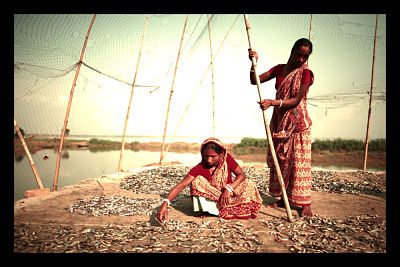
When economic crises, military conflict and general mayhem plague the continents, few people consider the impact such events may have on the communities located in the South Pacific. Over 10 million people populate the 3,500 islands scattered across the Pacific Ocean, an extremely large number of whom suffer from debilitating disease and poverty.
Save for the extreme natural catastrophes that seem to constantly plague the Philippines, the high rates of poverty, poor education and abysmal health of Pacific islanders fails to gander consistent international attention.
To illustrate the severity of the problem, here are nine facts to learn about poverty in the South Pacific.
1. 38 percent of Papua New Guineans live below the National Basic Needs Poverty Line, which means 2.7 million people are unable to buy sufficient food and meet basic requirements for housing, clothing, transport and school fees. Even more alarmingly, 61 percent of the populace does not have access to safe drinking water.
2. Pacific islands are disproportionately affected by global disasters. A 2012 World Bank study revealed that of the 20 countries in the world with the highest average annual disaster losses scaled by gross domestic product, eight are Pacific island countries: Vanuatu, Niue, Tonga, the Federated States of Micronesia, the Solomon Islands, Fiji, Marshall Islands and the Cook Islands.
3. Literacy rates are a persistent concern, especially on the Solomon Islands, where only 65 percent of the adult population (330,000 people) can read.
4. Pacific Islanders may be notorious for their love of canned meats like spam and corned beef, but what is not widely discussed is the debilitating effects such imported goods have on their health. As of 2007, eight of the 10 heaviest countries were located in the South Pacific. Nauru, the world’s smallest republic with just over 9,000 inhabitants, earned the number one spot with over 90 percent of their adult population considered obese.
5. Human rights violations also remain high in the pacific. Amnesty International recently reprimanded Papua New Guinea for burning a woman alive amid allegations of sorcery. Although the 1971 Sorcery Law has been repealed, which criminalized sorcery and could be used as a defense in murder trials, the United Nations Special Rapporteur on Violence Against Women in 2012 found that sorcery allegations are often made to mask the abuse of women.
6. Domestic abuse and gendered violence is also a concern but inconsistent reporting makes it difficult to pinpoint exact levels of abuse. In the first National Study on Domestic Violence in Tonga, conducted in 2009, results found that 45 percent of Tongan woman reported having experienced physical, sexual or emotional abuse in their lifetime.
7. Pacific Islanders are at high risk for Neglected Tropical Diseases, which commonly affect the world’s poor, women and disabled. Hookworm, leprosy, scabies and Japanese encephalitis are among the most prevalent; these adversely affect worker productivity, pregnancy outcomes and child cognition and development.
8. In 2010, Oceania unemployment rates reached 14 percent, while the United States average in the same period came in at 9 percent.
9. Since the mid 20th century, approximately 9.2 million people in the Pacific region have been affected by extreme events, resulting in 9,811 deaths and $3.2 billion in damages.
Pacific island nations’ small size, limited natural resources and great distances to major markets makes them particularly vulnerable to external crises and thus results in extremely volatile economies. Greater commitment to development initiatives will enable Oceanic nations to handle stresses caused by external forces and eventually strengthen the autonomy of the respective nations.
– Emily Bajet
Sources: University of Hawaii, Asian American For Equality, Oxfam, The World Bank, The World Bank News, Poodwaddle, Australia Network News, Australia Network, The New York Times, PLOS, Samoaobserver, Matangitonga, Labour
Photo: IFAD

Hunger in the Congo: Turning the “Red Zone” Green
Democratic Republic of the Congo is still attempting to find steady ground after the 2005 end of their five-year war. The U.N.’s most substantial unit of 20,000 soldiers is based in the Congo to oversee and keep the peace.
Unfortunately, a recent breakout of violence in Goma has amplified Democratic Republic of Congo’s hunger crisis and halted the progress that was being made.
The fight, between the Congo and neighboring Rwanda this past November, involved the Rwandan rebels crossing the Congo border and seizing the recent crop from fields and food from the homes of many residents. Numerous homeowners fled and multiplied the already large number of people relocated due to preceding conflicts.
Congo refugees often try to find shelter in areas close to their fields, but are usually forced to leave because of the lack of food and protection. Some find refuge with host families, but those families are usually under pressure to find sources of food as well.
An estimated 130,000 people in Goma are said to have escaped from their homes and farms following November’s attack.
Sarah Carrie, manager at Goma’s World Vision stated, “The lost harvest has increased chronic vulnerability in terms of access to food.”
Since 1998, 5.4 million people have died due to hunger in the Congo, war-violence, and disease; approximately 45,000 continually die each month from starvation. War is one of the leading causes of hunger in the Congo, pushing many susceptible populations into even worse conditions. Many “ethnic rivalries” fight for ownership of natural resources and innocent civilians typically endure the backlash.
Due to the large amounts of gold, minerals and diamonds it contains , the Congo should be a wealthy country, but disease, hunger and displacement from wars have caused millions of people to struggle.
Currently 30% of children five and under are suffering from undernutrition and malnourishment, which takes a toll on their immune systems, making them more susceptible to disease, infections and death.
A care group called Food for the Hungry (FH) is using armbands called MUACs to establish if a child is underweight; if the red colored section of the band shows, then the child is considered underweight. This method allows doctors to quickly determine the child’s health condition for the parents, as well as supply the parents with information on how to plan nutrient rich meals, or in some severe instances, recommend hospitalization for children who are dangerously malnourished.
Food for the Hungry trains mothers from communities to be care group leaders so that they are able to continue to educate other women on how to make nutrient rich meals from natural resources and form healthy lifestyles involving increased hygiene and sanitation.
One care group, consisting of 10 care leaders, is able to teach 600 women, which cuts costs without jeopardizing the massive benefits. Multiple women are seeing the rewards of the FH care groups and the impact it has made on the health of their children. Information is quickly passing through villages and transforming the health of hundreds of children and slowly pulling the children suffering from hunger in the Congo out of the red zone.
– Rebecca Felcon
Sources: The Guardian, Jewish World Watch, Relief Web, Trust
Photo: Flickr
READ Global Removes ‘Foreign’ from Aid
The organization READ Global has turned the concept of ‘foreign’ aid on its head. What once began as a rural library outreach program in Nepal has grown into a massive network of educational centers spanning three countries and reaching 2 million rural villagers.
Founded by Dr. Antonia Neubauer in 1991, the Rural Education and Development (READ) organization creates self-sustaining library and resource centers in rural areas owned and operated by the communities they serve.
Foreign aid programs are commonly criticized for being invasive and generally ineffective in the long run. Some of the problems originate from U.S. foreign aid regulations, which stipulate that at least 80% of funds destined for foreign countries must originate from U.S. sources.
A recent example of this restriction occurred after Hurricane Haiyan, when U.S. aid organizers were forced to ship American rice to the Philippines instead of buying it from neighboring countries like Thailand, an arguably cheaper and faster option.
Such actions flood local markets with foreign goods, making it extremely difficult for merchants to rebuild their businesses and creating a cycle of dependence on foreign aid.
The READ Global program aims to change that. Operating out of Nepal, Bhutan and India, the organization has established community centers in rural areas that establish both standard library services as well as life-changing educational classes.
“They provide the literacy classes, they provide the livelihood trainings, like mushroom farming, organic farming [and] we provide basic health training,” states READ Global’s website. “The opportunities are not only for women but children, [the] elderly population.”
The organization focuses on four main areas: education, economic empowerment, technology and women’s empowerment. It selects regions with particularly high rates of illiteracy and poverty and then creates for-profit enterprises that sustain the centers and educate villagers on financial self-sufficiency.
“All of our centers are owned and managed by the local communities,” said Shrestha. “For example one of the centers…has raised 70,000 USD and that money will go to the sustaining enterprise of that center.”
Since its inception in 1991, READ Global has established 69 centers in the three countries where it operates and hopes to open 30 more in the next five years. Their enterprises include tractor rental businesses, community radio stations and agricultural cooperatives.
“We envision a world where individual family and societies have equitable access to knowledge, information and resources,” Sanjana Shrestha, the READ Nepal Country Director. “We work in Asia to create the vibrant place where community can live and thrive.”
– Emily Bajet
Sources: Christian Science Monitor, READ Global, NPR
Photo: New Global Citizen
9 Facts About Poverty in the South Pacific
When economic crises, military conflict and general mayhem plague the continents, few people consider the impact such events may have on the communities located in the South Pacific. Over 10 million people populate the 3,500 islands scattered across the Pacific Ocean, an extremely large number of whom suffer from debilitating disease and poverty.
Save for the extreme natural catastrophes that seem to constantly plague the Philippines, the high rates of poverty, poor education and abysmal health of Pacific islanders fails to gander consistent international attention.
To illustrate the severity of the problem, here are nine facts to learn about poverty in the South Pacific.
1. 38 percent of Papua New Guineans live below the National Basic Needs Poverty Line, which means 2.7 million people are unable to buy sufficient food and meet basic requirements for housing, clothing, transport and school fees. Even more alarmingly, 61 percent of the populace does not have access to safe drinking water. Tweet this fact
2. Pacific islands are disproportionately affected by global disasters. A 2012 World Bank study revealed that of the 20 countries in the world with the highest average annual disaster losses scaled by gross domestic product, eight are Pacific island countries: Vanuatu, Niue, Tonga, the Federated States of Micronesia, the Solomon Islands, Fiji, Marshall Islands and the Cook Islands.
3. Literacy rates are a persistent concern, especially on the Solomon Islands, where only 65 percent of the adult population (330,000 people) can read.
4. Pacific Islanders may be notorious for their love of canned meats like spam and corned beef, but what is not widely discussed is the debilitating effects such imported goods have on their health. As of 2007, eight of the 10 heaviest countries were located in the South Pacific. Nauru, the world’s smallest republic with just over 9,000 inhabitants, earned the number one spot with over 90 percent of their adult population considered obese.
5. Human rights violations also remain high in the pacific. Amnesty International recently reprimanded Papua New Guinea for burning a woman alive amid allegations of sorcery. Although the 1971 Sorcery Law has been repealed, which criminalized sorcery and could be used as a defense in murder trials, the United Nations Special Rapporteur on Violence Against Women in 2012 found that sorcery allegations are often made to mask the abuse of women.
6. Domestic abuse and gendered violence is also a concern but inconsistent reporting makes it difficult to pinpoint exact levels of abuse. In the first National Study on Domestic Violence in Tonga, conducted in 2009, results found that 45 percent of Tongan woman reported having experienced physical, sexual or emotional abuse in their lifetime.
7. Pacific Islanders are at high risk for Neglected Tropical Diseases, which commonly affect the world’s poor, women and disabled. Hookworm, leprosy, scabies and Japanese encephalitis are among the most prevalent; these adversely affect worker productivity, pregnancy outcomes and child cognition and development.
8. In 2010, Oceania unemployment rates reached 14 percent, while the United States average in the same period came in at 9 percent.
9. Since the mid 20th century, approximately 9.2 million people in the Pacific region have been affected by extreme events, resulting in 9,811 deaths and $3.2 billion in damages.
Pacific island nations’ small size, limited natural resources and great distances to major markets makes them particularly vulnerable to external crises and thus results in extremely volatile economies. Greater commitment to development initiatives will enable Oceanic nations to handle stresses caused by external forces and eventually strengthen the autonomy of the respective nations.
– Emily Bajet
Sources: University of Hawaii, Asian American For Equality, Oxfam, The World Bank, The World Bank News, Poodwaddle, Australia Network News, Australia Network, The New York Times, PLOS, Samoaobserver, Matangitonga, Labour
Photo: IFAD
Polar Vortex Impact on Low-Income Families
January’s “Polar Vortex” broke records for the lowest temperatures in many cities that had lasted for 50 years to 100 years. Millions of people across the East coast and Midwest endured temperatures much below normal and all 50 states experienced freezing temperatures. Southern states, not used to freezing weather, were ill-prepared to handle it. Fox News reported that there were 21 deaths related to the cold. The homeless population was particularly vulnerable. America’s poor suffered the worst effects of the extreme cold weather; not only the homeless, but also families on social assistance and the working poor.
Cuts to Energy Assistance
Many low-income families across the country were not able to heat their homes this winter due to last year’s budget cuts. In 2013, Congress cut funding to the Low Income Home Energy Assistance Program by $155 million. Since 2010 funding for this program has dropped from $5.1 billion to $3.32. While many families cannot sufficiently heat their homes, approximately 300,000 families cannot afford to heat their homes at all.
Both the number of households receiving aid and the amount of aid households receive has been cut. Since 2010, the percentage of heat covered by the Low Home Income Energy Assistance Program has dropped from 52.5 percent to 41.5 percent. As this funding has been cut, the cost of fuel has gone up; the cost of electricity has risen by 7 percent since last year and the cost of natural gas has risen by 14 percent.
Low-Income Families Struggle to Heat Their Homes
Three children died in Hammond, Indiana in January 2013 in a house fire when their parents used propane space heaters to heat their home. Andre Young was renting a house for himself, his wife and their five children but had been unable to pay their utility bills. Their water, gas and electricity had been cut off for several months. When a spark from the propane heater engulfed the house in flames, Andre ran inside to try and save his children, all under 7 years old. He was able to save two children before he collapsed in the snow outside of the house. A 4-year-old, a 3-year-old, and a seven month old baby died. Andre was sent to hospital in critical condition.
The average family in Indiana spends $530 on heat between November and March, but that cost would have been much higher this winter. The combination of the cuts to energy assistance and the abnormally cold winter has left many families unable to cover the cost of heating their homes.
Choosing Between Health and Food
In 2013, Congress cut spending on food stamps and 47 million Americans lost food stamp benefits. The high cost of heating during this year’s polar vortex has left many poor families having to choose between heating their homes and feeding their kids. There has been an increase in the use of food banks and soup kitchens this year. Feeding America recently reported that 46 percent of its clients have to choose between paying for food and paying heating and other utility bills.
– Elizabeth Brown
Sources: Huffington Post, Huffington Post, Think Progress, Salon
Photo: Midtown Blogger
Peace Corps Preparation
Since it was established by J.F.K in 1961, the Peace Corps has been fighting first-hand the systematic effects of global poverty. Beginning as a small handful of good samaritans in only six participating countries, it has since then extended its humanitarian influence to 139 countries with the help of more than 210,000 volunteers. If you’ve ever been curious about joining the Peace Corps yourself, here is some information you must read.
How to Apply for the Peace Corps:
The process of becoming an advocate against global poverty is not as daunting as it might seem. The first step is the online application, which asks for basic information and some statements regarding one’s motivation to volunteer abroad. This is then followed by a personal interview with a local recruiter, to see if the Peace Corps seems like a good fit. If all goes well, this could lead to a formal invitation, complete with destination, departure date and project assignment information.
Then comes the fun part – preparing for departure. In the weeks prior to leaving, the Peace Corps will request the volunteer receive comprehensive dental and medical exams, as well as an array of immunizations, to make sure they are good to go. On the day of departure, volunteers head to training at an orientation site within the United States. The training continues in the volunteer’s assigned country, where they will train for three months while also living with a host family to establish skills for their cultural and linguistic adaption.
What the Peace Corps Looks for:
It is true that the demands of being a Peace Corps volunteer require a specific type of person, and thus the application process is very selective. Living and working in another region of the world, often in extremely dire situations, is a job for those with an abundance of determination, adaptability, independence, social sensitivity and emotional maturity. Those who already have some experience with volunteer work usually make the best candidates, as they have probably developed the previously mentioned qualities within themselves. The Peace Corps, furthermore, has many partner organizations such as City Year and the Special Olympics which interested volunteers can explore.
There are also some logistical pre-requisites, concerning the volunteer’s education, skills and ability to deliver aid to a community. While it is still possible to join without one, 90% of Peace Corps jobs require a minimum of a bachelor’s degree. Many jobs require pre-existing skills, such as special education, engineering and urban planning as well as agroforestry. Others can be developed on site, such as a teaching English, youth development and health education. The Peace Corps looks comprehensively at every applicant, however, and there are opportunities for non-degree volunteers who have experience working in construction, agriculture and with other non-profit organizations. By and large, the most promising candidates are those with some understanding of another language.
The Life of a Volunteer:
There is not one, quintessential Peace Corps experience, as the regions and types of work are all so diverse. The Peace Corps works in many countries and continents worldwide, in both rural and urban areas, and volunteers are expected to immerse themselves entirely so as to best serve their assigned communities. Although it is possible to have a preference for a location, flexibility helps during the application process. Regional availability also varies quickly based on need. For example, the Philippines are asking for significantly more volunteers than usual, due to the effects of typhoon Haiyan. Once there, a volunteer will be assigned to one of six main areas of specialized aid, which are: education, youth in development, health, agriculture, environment and community economic development. The commitment is 24 months, plus three months of training, thus totaling 27 months. Living accommodations are provided by the Peace Corps, and also vary greatly depending on the norm for that region.
Why Volunteer:
Helping a community build a more sustainable future for itself is an incredibly rewarding experience, as many veteran volunteers can attest to. All countries where the Peace Corps works have requested the presence of volunteers and aid programs, thus proving that the need is strong.
The benefits of joining the Peace Corps extends after service, as well. Upon return, volunteers receive $7,425 as an “adjustment” allowance, to help re-establish their lives in the United States after over two years abroad. Eligibility for student loan deferral is also provided, as well as a number of scholarships and financial aid packages to graduate degree programs. Over 70 graduate schools are partnered with the Peace Corps, and seek out returning volunteers who wish to incorporate their development experiences into their course work, such as the Paul D. Coverdell Fellow Program. For those wishing to enter directly into a career at home, the Peace Corps is invaluable for its professional connections in fields like federal employment and other non-profit organizations.
– Stefanie Doucette
Sources: Peace Corps, Time, National Archives
Photo: Salon
Uruguay Pioneers One Laptop Per Child Project
Uruguay was the first country in the world to provide a laptop to every primary school student. Plan Ceibal, Uruguay’s national One Laptop Per Child project, provided an XO laptop to each of the 395,000 children in first through sixth grades. The acronym Ceibal stands for Basic Informatic Educative Connectivity for Online Learning (Conectividad Educativa de Informática Básica para el Aprendizaje en Línea).
One Laptop Per Child, a non-profit based in Massachusetts, strives to provide each child in developing nations with a low-cost, low-power laptop. Through this technology, children become more engaged in their education and more connected to one another. The laptops are designed to be highly power efficient, with the ability to use solar power, generators, wind power or water power.
“This is not simply the handing out of laptops or an education program. It is a program which seeks to reduce the gap between the digital world and the world of knowledge,” Miguel Brechner explained, director of the Technological Laboratory of Uruguay and in charge of Plan Ceibal.
In Uruguay, the Plan Ceibal program has a cost of $260 per child, including maintenance costs, equipment repairs, teacher training and internet connection. The total figure represents less than 5 % of the country’s education budget.
The XO laptops, with Linux operating software, can connect directly to one another, meaning that a single point of access can be shared among a community of XO users.
Education in Uruguay is among the best of the Latin American countries. Uruguay has one of the highest adult literacy rates of all of Latin America. Elementary education is mandatory and free; secondary and technical education are also free. As the first country to implement a One Laptop Per Child program, Uruguay is setting the model for other countries, such as Rwanda, Nicaragua, Paraguay and Peru, which have all adapted a One Laptop Per Child program.
– Haley Sklut
Sources: One Laptop Per Child, Sources: BBC
Photo: Kit Guru
Wuhayshi Jailbreak and AQAP Resurgence
Long considered a vulnerably fractured nation, Yemen is home to one of the world’s deadliest al-Qaeda offshoots. Al-Qaeda in the Arabian Peninsula (AQAP) formed in January 2009 from an alliance between al-Qaeda branches in Saudi Arabia and Yemen. The organization, by carrying out attacks domestically while simultaneously acknowledging Western targets, instills fear over the world.
Recent developments have augmented this fear and made a necessity for action ever more apparent. Beginning with an exploding car bomb and followed by a grenade and gun assault, at least 14 inmates escaped from Yemen’s main security prison.
When in February 2006 23 convicted terrorists escaped from prison in Yemen’s capital of Sana’a, al-Qaeda experienced resurgence in the region. Nasser al-Wuhayshi, currently the leader of AQAP, played a vital role in the increased occurrence of attacks at the time.
Wuhayshi was among the escapees.
The connection between Wuhayshi and an al-Qaeda-heavy jailbreak is quite conspicuous. Including a vicious attack against the Yemeni Ministry of Defense a few months prior to the recent prison incident, in December 2013, AQAP has participated in and claimed responsibility for multitudinous attacks since its formation in 2009.
Extensive media and propaganda campaigns fuel the AQAP fire, keeping recruitment strong. The overarching goals of AQAP, of particular concern to the United States and other Western countries, is to rid Muslim countries of Western influence and to instead foster shari’a law under fundamentalist Islamic regimes. These intentions are dutifully carried out by a compartmentalized and decentralized hierarchy of power that enables AQAP to endure counterattacks and arrests without falling apart.
Despite this formation, it is important to note that Wuhayshi, over a period of four years, served alongside Osama bin-Laden in Afghanistan. Bin-Laden’s successor allegedly appointed Wuhayshi general manager of al-Qaeda fairly recently in July 2013. This position gives him extreme power and flexibility to do what he wishes with AQAP both regionally and internationally.
The main worry here is one of historical repetition. Wuhayshi, arguably one of the most powerful men in the world, especially in regard to terrorist and jihadist pursuits, earned his prestige as a result of escaping from jail. Now, once again, al-Qaeda affiliates have freed themselves from confinement. What this means for global security is yet to be seen.
– Jaclyn Stutz
Sources: Council on Foreign Relations, Al-Jazeera
Photo: Yahoo News
Child Labor in America
The Fair Labor Standards Act of 1938 had outlawed child labor in America; however, individuals have managed to find their way around the law, effectively enslaving children, the vast majority of whom are migrant workers, within these laborious jobs. While the 1938 Act outlawed child labor in settings such as an office or a restaurant, the law left the prospect of employing child laborers on farms completely legal. In the United States, many child laborers still toil away on farms, being left vulnerable to heat exhaustion, heavy machinery and dehydration.
According to NBC, thousands of children, some as young as 8 years old, are being exploited, forced to endure grueling hours and equally grueling conditions on farms. These children work for little to no cost in order for the produce industry to put food on America’s table.
Oftentimes, these children are told by their employers to lie about their age in order to circumvent any probing questions. NBC chronicles the exploitation of Ralph, a 15-year-old laborer who works on a Central Valley migrant labor camp with dozens of other children as young as or even younger than he. When asked what farm labor is like, Ralph states, “We get tired and like we get kind of tired and our arms hurt… It is too hard to be in the fields.” Indeed, these children are forced to work the fields even when temperatures skyrocket to 106 degrees.
Furthermore, the National Institute of Occupational Safety and Health (NIOSH) stated that up to 670 children had been killed while working during 1980 to 1989. Seventy percent of these deaths were initiated by violations of child safety laws. Additionally, a follow-up study by the NIOSH in 1992 reported that over 64,100 children were admitted to the emergency room due to injuries on the job.
As startling as these estimates may be, they under-report child labor-related death and injuries by 25 percent to 30 percent. It is difficult to pinpoint the precise rate of child labor in America since many exploitative employers do not report their mistreatment of children and many child laborers often fail to speak out due to fear.
Child labor remains an issue in America, a country that supposedly phased out the exploitation of children in the late 1930’s, largely as a result of a lack of effective legislation. According to Project Censored, the individuals who benefit the most from lack of legislation and awareness are the exploitative industries while young laborers remain perpetual victims.
– Phoebe Pradhan
Sources: The Nation, NBC, Project Censored
Photo: Bored Panda
Beyond Fair: Doi Chaang Coffee Beans and Development
Do you like to drink coffee? If you are like me and happen to need a cup every morning in order to function properly, here is a chance to drink your single-origin morning nectar and help to alleviate poverty all at the same time.
Some readers may have heard of the Golden Triangle, or the border area of Laos, Myanmar and Thailand. It is one of the largest opium-producing regions in the world.
One of the reasons that people resort to growing and selling opium is the grinding poverty experienced by the ethnic minorities that live across the borders of the three countries. Many of the minority groups have very few rights and are often discriminated against.
In the case of Thailand, many hill tribes members do not possess Thai identification documents—rendering them unrecognized as Thai citizens.
This consequently impedes them from accessing many basic public services such as health care and education. This combination of decades of poverty and disenfranchisement has driven minority groups towards illicit drug trade.
However, for the past few decades some tribes—among them the Akha of northern Thailand—have shifted to growing cash crops such as coffee. Nevertheless, the revenue they receive through trading with large companies was far from mutually beneficial. Enter Wicha Promyong—a successful Southern Thai entrepreneur—and his Canadian colleague, John Darch, who had spent many years in the banking sectors of Canada and England.
Together, they founded Doi Chaang Coffee with the goal of bringing development and sustainable prosperity to an Akha village on Doi Chaang Mountain.
What the Canadian-registered company does is unprecedented: 50% of the ownership of the company is given to the tribe, who also receives 50% of the profits as well as all of the money obtained from selling the green beans. Amazing!
What has this innovative and charitable form of a corporate-grower relationship achieved for the village so far? Well, they have done a good many wonderful things.
From an isolated village that was hitherto neglected by the authorities, left without paved roads, a hospital, schools, or even running water, the income from growing coffee allows the Akha tribe to become more self-sustainable. The village now has its own all those that it had erstwhile been lacking. It even has its own library and a coffee academy!
The business philosophy of Doi Chaang Coffee demonstrates that multinational commodity trades do not have to be exploitative in order to be profitable. It also suggests that perhaps the key component in establishing an equality and dignity based business model is simple and straightforward: the desire to be fair.
Readers in North America can purchase Doi Chaang Coffee both at their local Safeway and other supermarkets—if they are in Canada—as well as on their website if you happen to be in the U.S.
– Peewara Sapsuwan
Sources: Doi Chaang Coffee, Fair Trade , YouTube
Film Synopsis: Whores’ Glory
“Whores’ Glory” is Australian film-maker Michael Glawogger’s third documentary in a series including “Megacities” and “Workingman’s Death.” The film travels from Thailand to Bangladesh to Mexico into the lives of local prostitutes; three countries, three cultures, three religions – one profession.
At the Fish Bowl in Thailand, women sit behind a one-way glass fixing their hair and gossiping about their mothers until their number is called, signaling that their services have just been bought. On the other side of the glass a soon-to-be-client tells the camera how much he loves his wife and that he does this so he can respect her at home.
In the City of Joy, oral sex is forbidden since the mouth must remain pure for prayer. Contrary to their patriarchal religion, the madam’s word is law inside the ghetto, and women run every facet of life, from the adolescent girl flirting and laughing in the alley to the retired prostitute who now serves as a maid and cook. Indentured girls call up their ‘sweethearts’ to demand more visits and save their money to one day buy their own girls.
In the red-light district of Reynosa, Mexico, a prostitute and her john allow their entire interaction to be filmed, which proves to be, as one critic wrote, “as sexy as buying half a pound of roast beef at the deli counter.” Another woman describes how she no longer fears death because Lady Death is watching over her and promises smooth deliverance.
The film offers no judgment, neither on the prostitutes nor their customers. A young Bengali girl stares boldly into the camera asking if there is no other path for women to take; clients transform from misogynist cronies to shy romantics once doors are closed – suggesting that where women have the fewest options, it’s the men who are the most confused.
Glawogger believes that “the female/male relationship of any given culture can be depicted in prostitution,” but without interviewers or a concluding theme, the film is left largely open to interpretation.
The New York Times calls the documentary “a melancholy film that begins in an outer circle of hell and works its way to the depths,” while a writer of Salon thought it demonstrated “tremendous compassion, and more than a few moments of piercing clarity.”
The powerful documentary illustrated tenderness where none was asked for, powerless women who have held on to their faith and hope of a better future for women who had no reason to expect one.
– Lydia Caswell
Sources: Whores’ Glories, The New York Times, Salon
Photo: Mother Jones