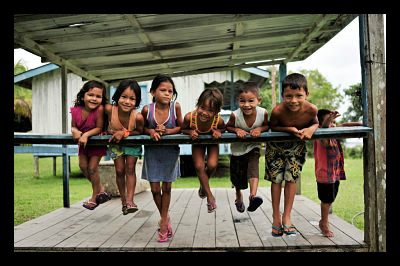
According to the Global Poverty Statistics for 2013, nearly half of the world’s population, (that’s more than 3 billion people,) can live on less than $2.50 a day. More than 1.3 billion live in extreme poverty, which is less than $1.25 a day.
As of 2013, according to the United Nations Food and Agriculture Organization, there are roughly 870 million people on the planet who suffer from chronic malnourishment; this is a large part of what makes up global poverty. This means, that 1 in 8 people suffer from not having enough food to eat.
However, there was some good news for malnourished and impoverished people in Asia and the Pacific. Asia saw new socio-economic advancements in 2013, which decreased those who suffered from severe malnourishment by 30 percent.
Latin America and the Caribbean also saw improvements in 2013. The chronic malnourished of Latin America and the Caribbean fell from 65 million to 49 million. That means where there used to be 15 percent of the population suffering from undernourishment, there is now only 8 percent of the population suffering.
In Africa in 2013, however, the number of people hungry and chronically undernourished grew by 2 percent over the period of a year. The conditions of neither the African people nor their economic status has improved much in the past several years. In this case, the number of chronic malnourished people rose from 175 million in 2013, to 239 million in 2013.
More women are hungry than men; 60 percent of women go hungry to 40 percent of men. Many women who are pregnant will still be malnourished due to a lack of maternal care being offered in their countries. This means, annually, 240,000 women will die in childbirth.
According to global poverty statistics from UNICEF, one billion children in the world today are faced with extreme global poverty, and 22,000 will die each day due to the impoverished conditions of their countries.
Due to global poverty, many children and their families cannot afford vaccinations that would fight off and prevent disease. This means, thousands, if not millions, of children will die this year alone due to preventable causes such as malaria, polio or hunger.
As the World Food Programme said, “The poor are hungry and their hunger traps them in poverty.” Hunger is the number one cause of death in the world, killing more than HIV/AIDS, malaria and tuberculosis combined.
According to the global poverty statistics of 2013, malnourishment is one of the most dangerous things facing the world’s impoverished peoples. Starvation, malnourishment and unclean drinking water kill more people than almost anything else in the world. Every single one of those problems is preventable through advocacy and donations.
According to poverty facts, 1.6 billion people, or a quarter of the entire world’s population, lives without electricity in addition to facing extreme poverty and hardship.
The world’s poor should not have to live in a world of darkness and fear of where their next meal will come from. Every single problem the impoverished world faces can be prevented through advocacy and donations.
— Cara Morgan
Sources: DoSomething, The Hunger Project, World Hunger
Photo: Flickr

Angry Brazilians Protest the World Cup
June 14 marked the kickoff of the 2014 World Cup hosted in Rio de Janeiro, Brazil, with a match between Brazil and Croatia. Brazil won 3-1, but amid the celebrations, angry Brazilians took to the streets to protest the World Cup.
Many Brazilians are angry that their government has decided to spend $11 billion on the soccer tournament rather than use the money to benefit their own people. These critics feel that the money should have gone to projects like low-income housing, hospitals, and schools.
Before the Brazil/Croatia match, a group of about 100 people took to the streets about seven miles away from the stadium where they threw rocks and started fires in an attempt to block people from reaching the game. The protest resulted in police using tear gas, at least one arrest, and spectators had to walk through rubble and debris to reach the stadium. The police have been accused of using excessive force by Amnesty International, who labeled the protesters as peaceful. Though the protests usually start out as peaceful demonstrations containing a serious message, more often than not a protestor will ignite havoc by throwing a rock or attacking police.
After the game, a group of about 600 people marched through the city carrying signs that read “FIFA go home” and “World Cup Corruption.” This protest is the most recent in a long string of anti-government protests that have taken place in multiple cities throughout Brazil over the past year.
Near the stadium a makeshift town of plastic tents known as the “People’s Cup” lays host to more than 3,000 families, who claim that the cost of rent has risen drastically since the beginning of the stadium-building process. With rent now far exceeding the minimum wage of $360 a month, many Brazilians have been forced out of their homes and into these temporary neighborhoods, reminiscent of the depression’s Hoovervilles.
Many Brazilians who are not directly involved with the protests still show sympathy for the cause and have begun rebelling in their own way. Such rebellions include not supporting their home country in the tournament, and instead rooting for other countries such as Argentina and England. A presidential election is set to take place in Brazil shortly after the World Cup, so there is hope among the people that the government will change radically after the people have cast their ballots.
In addition to the people protesting outside the stadium, there have been strikes led by teachers, police officers and subway workers, as well as marches organized by the Homeless Workers Movement.
— Taylor Lovett
Sources: CNN, The Guardian
Photo: Forbes
10 Facts About Malnutrition in Children
Child hunger is a very significant issue today. World Hunger defines hunger as protein-energy malnutrition, or a lack of calories and protein. UNICEF estimates state that malnutrition in children affects nearly 195 million worldwide. Discussed below are the leading facts about malnutrition in children and its implications.
Top 10 Facts on Malnutrition in Children
Unfortunately, many of today’s food aid programs are not targeting malnutrition. The programs are relying heavily on a corn-soy cereal blend that simply does not contain the required nutrients to keep children from becoming malnourished. While these programs are relieving hunger, many children receiving aid are still deprived of valuable nutrients that they will need to grow into successful, healthy adults.
— Rachel Davis
Sources: ChildFund, Starved for Attention, UNICEF, World Hunger
Photo: U.N.
Soccer Stars with Humble Beginnings
As John Oliver so eloquently stated, for any fanatical fan, soccer (or football) is not just a sport; it’s a religion, and the players are gods. They are symbols of faith and inspiration. They are the key holders of success, the gatekeepers of heaven. But unlike the biblical God, a glorified, elusive entity, these gods started from humble beginnings. It was indeed their supernatural gift that elevated them to deity. Here are five soccer “gods” that ascended to become soccer stars despite impoverished roots.
Rivaldo
Growing up in the northeast port town of Recife, one of Brazil’s most poverty-ridden slums, Rivaldo endured the hardship that comes with poverty. Due to malnourishment, he lost several teeth and was left bow-legged. His passion for football was his vehicle for prevailing through adversity. When he was 16 he signed his first professional contract with Paulistano and from then on, he rose to stardom. He competed in the World Cup in 1998 and 2002, helping Brazil reach the final round both years.
Pelé
One of the greatest legends of the game, Pelé too was raised in the unforgiving streets of Brazil. With not enough money to invest in his own soccer ball, he improvised by using a sock stuffed with newspaper or a grapefruit. Talent and grit were the ingredients for his successes. Throughout his career, he was elected “Athlete of the Century” by the International Olympic Committee and in 1999 was voted “Player of the Century.” Since his retirement, he has been a worldwide advocate for the promotion of soccer as a vehicle for change in developing countries.
Diego Maradona
Raised in the shantytown of Villa Fiorito, Argentina, Maradona shared one bedroom with all seven of his siblings. He did not receive any formal education; football was his only hope. In his astounding career, he played in four FIFA World Cups, was recognized for his “Goal of the Century” and was crowned FIFA “Player of the Century.”
Salomon Kalou
A current member of the Cote d’Ivoire national team, Kalou was raised in a nation in which 42.7 percent of citizens live below the poverty line. He rose to international prominence for his exceptional ability on the soccer field. Aside from serving as a figurehead of faith, he has taken an active role in inspiring his people and alleviating poverty. In 2010, he established the Kalou Foundation, which provides social services and recreation facilities for vulnerable populations.
Samuel Eto’o
Though he lived better than many in a country rampant with poverty, Eto’o began his career in Cameroon as a “street footballer.” He has since risen to be the highest paid player in the world, earning $17 million per year. His well-earned money goes toward his foundation, which funds development work in Africa.
These soccer stars have utilized their high profiles to inspire and ignite change. The good thing about the religion of soccer is that there is no hierarchy; there is no secret attribute that all of the gods possess. The most inspiring part of it all could in fact be the democratic nature of the sport. You do not even need a pair of shoes to pick up the game, or even a ball. You never know; bare feet and a ripe grapefruit could get you to big places.
— Samantha Scheetz
Sources: BBC, Bread for the World, Sportskeeda, AA Registry
Photo:Next Pulse Sports
Global Poverty Statistics 2013
According to the Global Poverty Statistics for 2013, nearly half of the world’s population, (that’s more than 3 billion people,) can live on less than $2.50 a day. More than 1.3 billion live in extreme poverty, which is less than $1.25 a day.
As of 2013, according to the United Nations Food and Agriculture Organization, there are roughly 870 million people on the planet who suffer from chronic malnourishment; this is a large part of what makes up global poverty. This means, that 1 in 8 people suffer from not having enough food to eat.
However, there was some good news for malnourished and impoverished people in Asia and the Pacific. Asia saw new socio-economic advancements in 2013, which decreased those who suffered from severe malnourishment by 30 percent.
Latin America and the Caribbean also saw improvements in 2013. The chronic malnourished of Latin America and the Caribbean fell from 65 million to 49 million. That means where there used to be 15 percent of the population suffering from undernourishment, there is now only 8 percent of the population suffering.
In Africa in 2013, however, the number of people hungry and chronically undernourished grew by 2 percent over the period of a year. The conditions of neither the African people nor their economic status has improved much in the past several years. In this case, the number of chronic malnourished people rose from 175 million in 2013, to 239 million in 2013.
More women are hungry than men; 60 percent of women go hungry to 40 percent of men. Many women who are pregnant will still be malnourished due to a lack of maternal care being offered in their countries. This means, annually, 240,000 women will die in childbirth.
According to global poverty statistics from UNICEF, one billion children in the world today are faced with extreme global poverty, and 22,000 will die each day due to the impoverished conditions of their countries.
Due to global poverty, many children and their families cannot afford vaccinations that would fight off and prevent disease. This means, thousands, if not millions, of children will die this year alone due to preventable causes such as malaria, polio or hunger.
As the World Food Programme said, “The poor are hungry and their hunger traps them in poverty.” Hunger is the number one cause of death in the world, killing more than HIV/AIDS, malaria and tuberculosis combined.
According to the global poverty statistics of 2013, malnourishment is one of the most dangerous things facing the world’s impoverished peoples. Starvation, malnourishment and unclean drinking water kill more people than almost anything else in the world. Every single one of those problems is preventable through advocacy and donations.
According to poverty facts, 1.6 billion people, or a quarter of the entire world’s population, lives without electricity in addition to facing extreme poverty and hardship.
The world’s poor should not have to live in a world of darkness and fear of where their next meal will come from. Every single problem the impoverished world faces can be prevented through advocacy and donations.
— Cara Morgan
Sources: DoSomething, The Hunger Project, World Hunger
Photo: Flickr
Three Global Poverty Myths Debunked
\
In the beginning of 2014, The Bill & Melinda Gates Foundation published its annual letter. This year, the letter reported three common global poverty myths that the world needs to better understand in order to inspire change. Through the report, the duo explain why the myths are false and, ultimately, why U.S. foreign aid and outreach are extremely positive and worthwhile.
The reports on the first two myths were written by Bill Gates. The first explains the inaccuracy of the claim that poor countries will remain poor forever. The second attacks the idea that foreign aid is a waste of time and money.
Melinda Gates has made falsifying the third myth her mission, as her section of the annual letter identifies and clarifies the common misconception that overpopulation will result from saving too many lives.
The Foundation encourages their readers to share the ideas of the letter. In order to promote awareness of the truth about foreign assistance, the hashtag #stopthemyth has been developed. Using the “#” symbol, a popular search tool on social media sites, supporters can effectively share information on Twitter, Facebook and YouTube.
The following is a list of three informative YouTube videos with the #stopthemyth label.
1. “Top 5 Myths About Global Poverty… Debunked”
Global Citizens responded positively to the #stopthemyth campaign. In this video, the organization presents five false thoughts about poverty in Africa and illustrates the truth in a creative way.
The video is a testament to the power of the #stopthemyth label. By tagging their video with this slogan, creative minds at Global Citizen can pair with the Gates Foundation to spread ideas. Visit their channel here.
2. “You Decide: Save the People or Save the Planet #StopTheMyth”
Melinda Gates narrates a video that discusses her personal project in the 2014 report. The footage of children in the video is inspirational, and the information is clear and succinct. Added visuals also contribute to its effectiveness.
The video is a product of the Gates Foundation’s YouTube channel, which has produced many more short, yet informative, clips with reasons to “stop the myth.”
3. “Bill Nye, Science Guy, Dispels Poverty Myths”
A large percentage of the American population recognizes Bill Nye the Science Guy as a trustworthy source of information. This video is no exception. In a creation of The Gates Notes channel (the YouTube account for Bill Gates’ blog gatesnotes.com) the popular science educator and television personality highlights truths about foreign aid’s place in the national budget. He also describes its potential effect on children of impoverished nations.
—Emily Walthouse
Sources: Bill and Melinda Gates Foundation 1, Bill and Melinda Gates Foundation 2, YouTube
Photo: Blogspot
TaiwanICDF Provides Clean Water
April 11 marked the official opening ceremony commemorating the completion of a new, groundbreaking water supply system made possible by the Haitian government, the Red Cross Society of the Republic of China and the International Cooperation and Development Fund of Taiwan (TaiwanICDF.) The new water system will reportedly supply safe and clean domestic water for over 90 percent of the area’s inhabitants.
In January 2010 a magnitude seven earthquake devastated Haiti and rendered about 1 million Haitians homeless, a number of which relocated from its capital, Port-au-Prince, to New Hope Village in Savane Diane. As a result, the need for accessible and clean water increased exponentially, and the new system accommodates this need and serves as a sustainable, long-term solution. TaiwanICDF reportedly showed residents how to maintain and fix the system in the event that it breaks down.
The Taiwanese ambassador to Haiti, Peter Hwang, attended this special celebration, as did TaiwanICDF’s Secretary General, Tao Wen-lung. Wen-lung said the system would provide enough water not only for over 200 homes, but additionally for the village’s health facility, school and nearby agricultural irrigation needs. He described it as “a real godsend for local residents.”
In a video on the TaiwanICDF website, a local resident describes the arduous three-hour process he formerly endured to transfer water from a far-away source back to his home. Now, he has a quick and easy water source practically in his backyard. In the video, the resident also thanks TaiwanICDF for their instrumental role in developing and maintaining the system in his village.
China and Taiwan are hosts to numerous humanitarian organizations. TaiwanICDF is particularly focused on infrastructural and economic development for long-term stability in needy nations and regions, as well as technical cooperation, humanitarian assistance and international education and training. This type of maintainable, long-term investment in developing nations has provided a model by which helpful contributions in such countries can make significant long-term differences.
– Arielle Swett
Sources: ICDF, Taipei Times
Photo: Taiwan Today
Lifespans Increasing In Poorest Countries
Life expectancy has risen in the past two decades by over nine years. Both wealthy and impoverished nations have managed to raise their citizens’ lifespans. In the wealthier countries, less people are dying from heart diseases by the age of 60. According to the U.N.’s World Health Organization annual statistics, six countries’ babies are healthier, with less dying before the age of 5, explained Margaret Chan, World Health Organization chief, in a statement.
The six poorest countries managed to raise life expectancy by over 10 years between 1990 and 2012. Liberia’s lifespans increased the most by 20 years (42 to 62).
The next few countries that were able to significantly raise their lifespans are Ethiopia (from 45 to 64 years), Maldives (58 to 77), Cambodia (54 to 72), East Timor (50 to 66) and Rwanda (48 to 65).
According to the WHO, a girl who was born in 2012 will most likely live to be approximately 73-years old and a boy up to 68-years old.
More people are starting to live longer because of an increase in food supplies, better nutrition, improvements in medical supplies and technology (immunizations and antibiotics), improved sanitation and hygiene and safer water supplies.
Although the life spans in Africa are the lowest, they have still made a significant increase by about 10 percent . Malaria deaths have decreased by 30 percent and HIV infections have also decreased by 74 percent.
A great contribution to the increasing lifespans is the larger income Africans are making, which has increased by 30 percent.
One of the poorest countries in the world, Mozambique, has made huge improvement due to the discoveries of coal and gas.
Today, this is proof that people are able to make a change in others’ lives — the ones who need it the most. Although the poorest countries still have the shortest lifespans, they have definitely increased. Over the next few decades, one could expect even more growth.
— Priscilla Rodarte
Sources: ENCA, SF Gate, Geography, The Independent
Health Care Systems Around the World
The well-being of global citizens relies heavily on the health of their health care systems. However, the type of medical attention you will receive when you go to the doctor, or even the likelihood you will attempt to seek care, varies vastly depending on where you live. Indicators like average life expectancy, infant mortality and obesity prevalence highlight the success of the health care systems. With this wealth of information, we can assess why certain nations’ health care systems are in better condition than others.
1. France
France had the best health system in the world in 2000, according to the World Health Organization’s (WHO) most recent assessment of world’s health systems. So what makes France’s method so successful? First, statistics on doctors and life expectancy are often on France’s side. France has less doctors per capita than second place Italy at 3.07 per 1,000 people, but more annual doctor visits than most of the top 10. It also has 3.43 hospital beds per 1,000 people, which is rivaled only by Japan and Italy of those in the top 10. Life expectancy is 81.66 and infant mortality rate is 3.31 of every 1,000 live births.
It falls on the government to negotiate doctor and hospital fees in an effort to keep costs low. In addition, a national insurance program flips 70 percent of the bill for everyone. The other 30 percent is picked up by private insurance. This means that out of pocket spending on health care is only $307 per capita.
2. The United States
The United States has one of the biggest economies in the world, yet it ranks 36 this year on the success of its health care system. Perhaps this is because the United States, while a wealthy nation, has an infant mortality rate of 6.17 per 1,000 births and a life expectancy of 79.56, neither of which are something to cheer over compared to other industrial nations where the average is higher. In addition, obesity prevalence has reached 36.5 percent, about three times as high as France. This signals that while the United States has the capability to provide good health care, it is falling far behind its peers. That being said, the United States is often considered the leader in medical research and cancer treatment.
In this country, insurance is provided mostly by for-profit private insurance groups, with some exceptions. Those over 65 years old qualify for Medicare and the disabled or low-income population qualifies for Medicaid, which are sponsored by the federal government and paid for by taxes. The number of uninsured is dropping, and in 2014, only about 15.6 percent of the population goes without insurance. However, citizens still pay a whopping $987 per capita out of pocket for health care. Changes will occur over the next few years with the implementation of the Affordable Care Act, but it is still early to assess how recent patterns will change the ranking of the health care system.
3. Pakistan
Pakistan ranked 122 according to the WHO in 2000 and continues to struggle with health care and disease today. The average life expectancy is 67.05 in 2014, below that of Syria and Iran. In addition, infant mortality is a frightening 57.48 of every 1,000 births. Pakistan has only .6 hospital beds and .8 doctors per 1,000 people. All this indicates that the health care system in Pakistan is struggling, leaving its citizens in serious trouble.
There is much to learn from the health care systems of other nations, but changes can be made at different levels for different countries. For countries like the United States where some tweaking to the costs and the insurance sector would vastly increase the overall health of the citizens and the system, taking notes on France’s system would be beneficial. Changes would allow more people to get coverage for less money from the federal budget. But for places like Pakistan where the system is in shambles, a functioning health care system must be in place first. Overall, different nations stand in different positions, but health care systems across the world could use a restructuring.
– Caitlin Thompson
Sources: CIA(1), CIA(2), Commonwealth Fund, Gallup Poll, NPR, The Patient Factor, PBS, WHO(1), WHO(2), World Bank(1), World Bank(2)
Photo: Telegraph
Italy Seeks Solution to Migrant Deaths
At least 5,000 migrants floating in overcrowded boats have been rescued off the coast of Sicily in the Mediterranean Sea since Thursday, June 5. Varying reports have indicated a range of 5,200-5,470 people having been rescued so far. As a result of this most recent rescue effort, the total amount of migrants that have reached Italy from North Africa has exceeded 50,000 in 2014.
The most recent rescue effort has been spearheaded by one operation led by the Italian government, called Mare Nostrum. This operation has been in effect since October 2013, and was launched in response to 366 migrants drowning after their boat collapsed just off the shore of Sicily. That disaster not only spawned Mare Nostrum into being, but also prompted a one-off response from the EU in the form of a $30 million euro emergency fund that focused on land facilities.
Ever since that initial disaster and relief fund, Italy has been repeatedly asking for more help from the EU, with very little, if any, response. This is highlighted by the fact that only Slovenia offered one ship for the span of two months last year, and that a U.S. Navy ship and a Maltese merchant vessel rescued a combined 307 migrants in the most recent event on June 5.
This most recent event is only another vivid example of the continuing problem of migrants risking their lives to flee North Africa in the hopes of a better future in Europe. This past May, an unknown number of migrants died and 17 bodies were recovered after a similar shipwreck occurred. Throughout 2013, at least 40,000 migrants landed in Italy, and this year is on track to top the record of 62,000 set in 2011 during the Arab Spring revolutions.
The Director General of International Organization for Migration, William Lacey Swing, recently released a statement trying to utilize this incident as a means to raise awareness and take action on this recurring problem. “The tragedy of migrants drowning at sea is unfortunately a global phenomenon, not just a Mediterranean emergency,” Swing said. “The unnecessary deaths of these migrants and asylum seekers is an affront to all civilized nations.”
Swing went on to state that “the international community must develop a more comprehensive approach to protect migrants and uphold human dignity. No single action is enough to address the root causes of these mixed migration flows, but lives will be saved if action is taken now to help both migrants and countries during the entire length of the migratory route.”
The International Organization for Migration has since called for a high level debate on migratory flows in the hopes of bringing together nations of destination and origin. As Swing put it: “We need to urgently look at a comprehensive range of actions that we can take together to prevent further loss of life. These include the enhancement of legal avenues for migrants seeking better prospects in Europe and the establishment of various mechanisms and measures in countries of transit in North Africa to provide migrants and asylum seekers in need of protection with opportunities to receive legal counseling.”
With any luck this most recent occurrence will cause more nations to pay attention and provide a sustainable solution to the ever-present issue of migrants attempting to leave their home countries to find a better future elsewhere.
– Andre Gobbo
Sources: International Organization for Migration, Reuters, HUffPost
Global Health Investment is a Win-Win Situation
Economists, public officials and humanitarian leaders across the globe are all echoing a new stance on foreign aid: treat it like an investment.
Sure, many areas of the world still require immediate relief in the form of solid goods, but what these communities absolutely require is the stability and means to sustain themselves long-term. In order to break the cycle of poverty, impoverished people need a new cycle altogether characterized by improved economic infrastructure and stability.
The best aspect of the investment approach is that it promises profit. Business executives are now realizing the untapped workforce potential of the world’s destitute. By developing interest in these areas from an economic standpoint, companies are not only opening up access to the world market, but they are seeing positive returns as well.
Companies like Samasource, a Silicon Valley-based startup, have illustrated success in the private sector. Samasource’s model involves big data projects that they break down into manageable tasks for their overseas workers. American tech giants such as Google and LinkedIn benefit from the work and finance of the paychecks of their outsourced employees. As a result, Samasource is profitable and growing while people in rural areas have new access to the technological world market.
Now, imagine taking the approach a step further and funding industries that directly address the critical issues impoverished people face, such as global health investments. Could financing ventures that treat HIV, malaria and infant mortality help those in need and actually boost the economy? More and more people are answering this question with a solid “yes.”
The solution won’t be so simple, however. Devex editor Rolf Rozenkranz recently sat down with Annie Baston who is the chief strategy officer at PATH, an international nonprofit that specializes in long-term solutions to break cycles of poverty. Baston explained the common challenges faced when determining a “best buy” for global health investment. Multiple factors come into play involving technological solutions and systemic reform. These elements need to be carefully orchestrated and illustrated to investors to generate interest and maintain longevity.
In fact, organizations such as The Lancet and their team of researchers have laid out a complex global health investment plan, titled “Global Investment Framework for Women and Children’s Health,” that will secure high health, social and economic returns. Through simulation modeling, The Lancet has found that “increasing health expenditure by just $5 per person per year up to 2035 in 74 high-burden countries could yield up to nine times that value in economic and social benefits.” Their models, published late last year, approach maternal and newborn health, children’s health, malaria, HIV/AIDS, family planning and immunization.
– Edward Heinrich
Sources: DEVEX(1), DEVEX(2), The Lancet, Samasource
Photo: University of Delaware