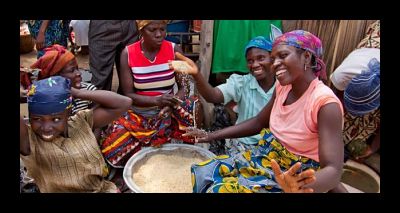
Malnutrition in Benin, like in many countries in Sub-Saharan Africa, is currently widespread. However, some experts have suggested the malnutrition rate can decrease if nutrition programs focus on education and community empowerment.
Malnutrition and Stunting
Malnutrition is defined by the World Food Programme as “a state in which the physical function of an individual is impaired to the point where he or she can no longer maintain adequate bodily performance process such as growth, pregnancy, lactation, physical work and resisting and recovering from disease.” Globally, it contributes to more than 50 percent of children’s deaths.
Researchers measure chronic malnutrition in terms of “stunting,” or low height for age. Other aspects of malnutrition include the presence or absence of edema, which is dependent upon the relationship between total calorie intake and protein intake. In addition, micronutrient deficiencies, particularly in iodine and vitamin A, characterize malnutrition, leading to growth problems in children.
Malnutrition in Benin
In Benin, roughly 4 in 10 children are chronically malnourished, according to the World Bank. In the north of the country, one UNICEF representative set the rate of severe malnutrition, which often requires immediate hospitalization, at 34.6 percent.
Thus, the problem is severe and threatens the lives of children each and every day. However, the task of reducing malnutrition in Benin faces many obstacles.
For one, 50 different languages are spoken throughout the country, limiting the scope that nutrition programs can realistically aim for in most cases. Also, many entrenched cultural beliefs induce malnutrition inadvertently, so medical personnel have expressed a need to replace myth with other forms of knowledge.
“The main cause of malnutrition is ignorance,” one nurse in North Benin said.
One myth holds that children who eat eggs become thieves. Moreover, it is culturally acceptable for a man to eat first and to leave whatever remains of his share for his wife and children.
The weapon against ignorance is education, which some experts argue must be community-driven in order to work around the country’s linguistic and cultural diversity.
Educational Programs in Benin
One such educational program is the Community Nutrition Education Project launched in 2012. Through this program, 12,607 grandmothers in various communities were taught how to promote the health of pregnant women and children. As important figures in their communities, these grandmothers are in prime positions to educate village members.
The lessons are not complicated. Village members are being taught how to use readily available foods to improve the nutrition of meals. For example, instead of feeding a child only millet, a mother could enrich the dish with soya, moringa or other local foods.
Organizations are working on a broader scale as well, but education remains a key aspect of their work. In 2013, the World Bank approved a payment of $28 million to secure nutrition services for hundreds of thousands of children and training for about 75,000 pregnant mothers and adolescents.
Focus on Cultural Factors
Certainly, structural factors are currently acting to keep malnutrition a problem in Benin. General food insecurity is high, with nearly 12% of food produced going to waste, and, as previously mentioned, the country’s diversity complicates the process of reform.
However, addressing the cultural factors leading to malnourishment can effectively reduce malnutrition in Benin, structural hindrances notwithstanding.
– Ryan Yanke
Sources: UNICEF, World Bank 1, World Bank 2, Panapress, Sci Dev Net, University of Michigan
Photo: VECO

Top Five Games for Charity: More Points, Less Poverty
If you are a gamer, then you know exactly what it feels like the moment you beat your highest score after what can be hours of not blinking or eating—excitement, pride and pure joy.
It’s an amazing feeling, really. Whether it’s seeing your name at the top of the scoreboard or earning more points for free upgrades and new features, gaming is a world of its own. But what if you expanded that world by sharing your skills with people who actually can not afford to eat or blink away a virtual reality? What if there was a way to give without losing?
Here are the top five games for charity that let gamers do just that: lend gaming skills to people in need by winning more points and lowering poverty.
1. Free Rice
Free Rice is a nonprofit website run by the United Nations World Food Programme that not only provides education to everyone for free, but also helps end world hunger by giving rice to hungry people. This is a fun way for anyone with a computer to invest in something greater than the education absorbed from the game. Not only do players learn new vocabulary, but for each correct answer, Free Rice donates 10 grains of rice through the World Food Programme to help end world hunger.
2. Quingo
Quingo combines trivia and bingo in a game that gives players the power to use points to donate to one of six charities, five of which are based in Seattle. In the game founded by Seattle-based development, Game It Forward, players around the world can choose from the following charities to which to donate: Fred Hutchinson Cancer Research Center, Kiva, PAWS, Seattle Children’s, Splash or The Martinez Foundation. The revenue generated from ads and in-game purchases is split between Game It Forward and its charity partners. This game is accessible through iTunes.
3. Charitii
Charitii is a free word game that donates unlimited, clean drinking water to communities living in poverty. For every correct word selected by the player, five ounces of water will be donated to a charity. Charitii is able to use all the money it raises to fund water and sanitation projects in 11 of the poorest communities in Africa and Asia. These projects range from hand-dug wells, boreholes, spring protections, rehabilitations and more.
4. Spin for Good
Spin for Good turns gamers into gamblers in the best way possible. With real money at stake, players compete in online tournaments on behalf of their selected charity, turning a small donation into a larger charitable gift. There’s no real loss at hand as 100 percent of the winnings go toward the charity of choice; charities include WonderWork, PEER International and the Music Resource Center. Here’s a chance for gamers to win big to give big!
5. Goodgames
Good Games allows visitors to earn a penny for every three times a game is played. These games range from arcades, cards, word searches, puzzles, strategy and much more. Every video or display ad the player sees will also generate funds for donations.
– Chelsee Yee
Sources: Free Rice, Geek Wire, PR Web, Spin for Good, Good Search
Photo: Lazy Gamer
Mark Zuckerberg Giving to Ebola Relief
Facebook CEO Mark Zuckerberg, along with his wife Priscilla, has donated $25 million to help eradicate the Ebola epidemic sweeping the world. According to a Forbes article that quoted Zuckerberg, the disease has already infected 8,400 people and is projected to infect over a million in the coming months if it continues at this rate.
The money donated by Zuckerberg will be put toward the Center for Disease Control’s Global Disaster Response Fund. The money will support safe burials, services for the dead, the training of more medical staff, medical supplies and more. Approximately 150 members of the CDC will be heading to West Africa to address the issue in person.
Zuckerberg posted on Facebook, “We need to get Ebola under control in the near term so that it doesn’t spread further and become a long term global health crisis that we end up fighting for decades at large scale, like HIV or polio.”
Ebola has quickly become a topic of concern, constantly permeating airwaves and worrying the majority of the world. Accordingly, there are other wealthy philanthropists reaching out in the campaign against this deadly disease.
The Bill & Melinda Gates Foundation has donated $50 million to U.N. agencies and other groups giving supplies to those suffering from Ebola. Bill Gates’ business partner, Paul Allen, initiated the Tackle Ebola campaign, setting an example by giving $20 million. Allen strongly remarks, “A winnable battle should never be lost.”
Zuckerberg is considered one of the top philanthropists in the United States, he is involved in various charities and willing to donate financially. With contributions like Zukerberg’s, Ebola relief efforts can advance.
– Kathleen Lee
Sources: Business Insider, Forbes
Photo: Flickr
Crisis in South Sudan
It is the world’s newest country, having only declared its independence three years ago in 2011. It was an uproarious jubilation when nine million people finally found a place in Africa to call home.
Yet, in December 2013, civil war broke out in South Sudan. It was initiated by the desire for political power that quickly turned into ethnic dividing lines. President Salva Kiir accused his sacked deputy, Riek Machar, of plotting a coup. The deposed deputy denied the accusations, but immediately began to rally rebel militias.
The continued fighting has internally displaced 1.1 million Sudanese citizens. It has also raised those that are going hungry to 1.5 million. The number of hungry are expected to rise to 2.5 million by March of 2015 tipping the hunger epidemic to a full-scale famine.
Brokered ceasefires between the Sudanese government and rebel bush fighters have been attempted at several Ethiopian hotels, but as of the moment, no resolutions have been made due to petty grievances and pride.
Alongside this war a killer outbreak of cholera, that has affected thousands of people in South Sudan, has been raging its way across the country. Sue Lautze, head of the UN’s Food and Agricultural Organization says, “[it is] the world’s most unfortunate coincidence.”
With the current outbreak of war, disease, and famine more than 100,000 Sudanese people have sought refuge across eight camps run by the UN. However, these camps aren’t without problems of their own. The rainy season in South Sudan can range anywhere from six to nine months.
In Bentiu, the capital of Unity State and one of the most contested cities in South Sudan’s civil war, the camp has been perched on swampland that was never intended to house people. Since July, due to the rains, much of the camp has been knee-deep in sometimes waist-deep in water.
As the rains have flooded the makeshift houses, many of the refugees have resorted to scooping buckets of water out of windows through the night in an attempt to keep the disabled and their children dry. The rains have also destroyed over 200 latrines leaving many to relieve themselves in the open.
Concern Worldwide, together with Danish Refugee Council and Doctors Without Borders, sprang into action when they dug a 2.2 kilometer trench to redirect the floods. It dropped the water level by 25 percent. However, according to Subodh Vijapure, Concern’s water, sanitation, and hygiene manager “It is still inadequate. People are living in sub-human conditions here.”
Despite these conditions the Sudanese people won’t leave. Many have stated that they have nowhere else to go. Stepping outside the camp’s perimeter could result in being shot, or slowly dying from diseases.
Concern Worldwide and its humanitarian partners are mobilizing as quickly as they can to raise the level of sanitation and increase food stock. With the end of the rainy season fast approaching recruitment of child soldiers is on the rise and the intense fighting is expected to resume.
– Frederick Wood II
Sources: InterAction, BBC 1, BBC 2, BBC 3, Country Studies
Photo: Flickr
Great Quotes on Poverty
Poverty affects us all, whether indirectly or directly. Here are 10 quotes on poverty to get you thinking:
“Poverty is the parent of revolution and crime.”
― Aristotle
“The test of our progress is not whether we add more to the abundance of those who have much; it is whether we provide enough for those who have too little.”
― Franklin D. Roosevelt
“Poverty is the worst form of violence.”
― Mahatma Gandhi
“Once poverty is gone, we’ll need to build museums to display its horrors to future generations. They’ll wonder why poverty continued so long in human society – how a few people could live in luxury while billions dwelt in misery, deprivation and despair.”
― Muhammad Yunus
“History is written by the rich, and so the poor get blamed for everything.”
― Jeffrey D. Sachs
“In a country well governed, poverty is something to be ashamed of. In a country badly governed, wealth is something to be ashamed of.”
―Confucius
“I am for doing good to the poor, but I differ in opinion about the means. I think the best way of doing good to the poor is not making them easy in poverty, but leading or driving them out of it.”
―Benjamin Franklin
“Saving our planet, lifting people out of poverty, advancing economic growth… these are one and the same fight. We must connect the dots between climate change, water scarcity, energy shortages, global health, food security and women’s empowerment. Solutions to one problem must be solutions for all.”
―Ban Ki-moon
“Almost half of the population of the world lives in rural regions and mostly in a state of poverty. Such inequalities in human development have been one of the primary reasons for unrest and, in some parts of the world, even violence.”
―A.P.J. Abdul Kalam
“Anyone who has ever struggled with poverty knows how extremely expensive it is to be poor.”
―James A. Baldwin
– Leeda Jewayni
Sources: GoodReads, BrainyQuote
Photo: Flickr
Malnutrition in Benin
Malnutrition in Benin, like in many countries in Sub-Saharan Africa, is currently widespread. However, some experts have suggested the malnutrition rate can decrease if nutrition programs focus on education and community empowerment.
Malnutrition and Stunting
Malnutrition is defined by the World Food Programme as “a state in which the physical function of an individual is impaired to the point where he or she can no longer maintain adequate bodily performance process such as growth, pregnancy, lactation, physical work and resisting and recovering from disease.” Globally, it contributes to more than 50 percent of children’s deaths.
Researchers measure chronic malnutrition in terms of “stunting,” or low height for age. Other aspects of malnutrition include the presence or absence of edema, which is dependent upon the relationship between total calorie intake and protein intake. In addition, micronutrient deficiencies, particularly in iodine and vitamin A, characterize malnutrition, leading to growth problems in children.
Malnutrition in Benin
In Benin, roughly 4 in 10 children are chronically malnourished, according to the World Bank. In the north of the country, one UNICEF representative set the rate of severe malnutrition, which often requires immediate hospitalization, at 34.6 percent.
Thus, the problem is severe and threatens the lives of children each and every day. However, the task of reducing malnutrition in Benin faces many obstacles.
For one, 50 different languages are spoken throughout the country, limiting the scope that nutrition programs can realistically aim for in most cases. Also, many entrenched cultural beliefs induce malnutrition inadvertently, so medical personnel have expressed a need to replace myth with other forms of knowledge.
“The main cause of malnutrition is ignorance,” one nurse in North Benin said.
One myth holds that children who eat eggs become thieves. Moreover, it is culturally acceptable for a man to eat first and to leave whatever remains of his share for his wife and children.
The weapon against ignorance is education, which some experts argue must be community-driven in order to work around the country’s linguistic and cultural diversity.
Educational Programs in Benin
One such educational program is the Community Nutrition Education Project launched in 2012. Through this program, 12,607 grandmothers in various communities were taught how to promote the health of pregnant women and children. As important figures in their communities, these grandmothers are in prime positions to educate village members.
The lessons are not complicated. Village members are being taught how to use readily available foods to improve the nutrition of meals. For example, instead of feeding a child only millet, a mother could enrich the dish with soya, moringa or other local foods.
Organizations are working on a broader scale as well, but education remains a key aspect of their work. In 2013, the World Bank approved a payment of $28 million to secure nutrition services for hundreds of thousands of children and training for about 75,000 pregnant mothers and adolescents.
Focus on Cultural Factors
Certainly, structural factors are currently acting to keep malnutrition a problem in Benin. General food insecurity is high, with nearly 12% of food produced going to waste, and, as previously mentioned, the country’s diversity complicates the process of reform.
However, addressing the cultural factors leading to malnourishment can effectively reduce malnutrition in Benin, structural hindrances notwithstanding.
– Ryan Yanke
Sources: UNICEF, World Bank 1, World Bank 2, Panapress, Sci Dev Net, University of Michigan
Photo: VECO
Three Best World Hunger Nonprofits
It might be hard to believe that hunger kills more people every year than AIDS, malaria and tuberculosis combined. Roughly 800 million people in the world are chronically malnourished, with the majority living in developing countries. Here is a look at three nonprofit organizations that are fighting to end world hunger:
Action Against Hunger
This global humanitarian organization works not only towards ending global hunger, but also in creating long-term strategies that capitalize on self-sufficient workers. Malnutrition claims the lives of over a million children, although the disease is preventable and treatable. Most of Action Against Hunger’s funding goes directly to these life-saving programs. For every $1 they raise, $0.91 is spent on program activities. Charity Navigator has given the organization the highest four-star rating seven years in a row.
Stop Hunger Now
For the last 15 years, Stop Hunger Now has coordinated the distribution of food and other needed aid to children all over the world. They target vulnerable populations and aim to involve the global community in mobilizing the necessary resources. In 2005, the organization created the meal packaging program, which combines rice, beans, vegetables and the essential nutrients and vitamins all into one small package. With each meal costing roughly $0.29, SHN is able to ship and distribute the meals all over the world. In fact, one SHN packaging event can result in more than 1,000,000 meals.
CARE
A humanitarian organization that is fighting to end global poverty, CARE staff has worked in a multitude of countries serving some of the poorest communities and populations. Since it sent the first CARE package in 1946, the organization has been addressing the issues of food insecurity all over the globe. CARE often focuses on hunger caused by natural disasters and conflict. In countries such as Chad, Lesotho, Niger and South Sudan, CARE’s programs have helped reduce the risk of disasters and food insecurity by promoting environmental sustainability and empowering people economically.
– Leeda Jewayni
Sources: World Food Program, Action Against Hunger, Stop Hunger Now, CARE
Photo: Wesley-Luther
Denmark: The Happiest Country in the World
Denmark has been ranked as the happiest country in the world. This ranking is based on a multitude of factors ranging from healthcare to riding a bike. According to a Huffington Post article, Denmark ranks as the leader of the happiest countries for six key reasons. Here is a list:
According to DailyFinance, Denmark ranks as the happiest country in the world for more black and white reasons as well. For example, the country has one of the lowest percentages of long workdays and a life expectancy of almost 80 years old.
Denmark’s happiness sheds light on the positive effects a stable economy can have on the overall wellbeing of a country’s citizens.
– Kathleen Lee
Sources: Huffington Post, Daily Finance
Photo: Flickr
Pacific Islanders Block Australian Coal Terminal
A group of Pacific Islanders has joined environmentalists in protesting climate change in Australia by blockading the Newcastle coal port, the world’s largest coal export terminal, with canoes, surfboards and kayaks. The members of island nations have come together in protest to attract scrutiny over Australia’s commitment to coal and its ultimate effect on the island nations.
The Pacific Climate Warriors’ Blockade
The activist group, the Pacific Climate Warriors, is comprised of members from a variety of island nations, including the Marshall Islands, Fiji, Vanuatu, Tokelau, the Solomon Islands and Papua New Guinea. Although there has been an annual environmental blockade of the Newcastle coal port for many years now, this is the first time the blockade has been strengthened with a Pacific Islander activist group.
The blockade only acts as a minor delay for the ships, which are headed by police escorts. The ships are still capable of leaving the massive port that sees more than 4,000 ship movements annually. Demonstrating the serious consequences of climate change that has resulted in the imminent loss of their island homes, the protesters have chosen not to passively wait as their nations become submerged. Instead, they have decided to fight against climate change.
The evidence of climate change is already apparent to the islanders through coastal erosion and the rising sea level, forcing the relocation of whole villages and threatening the very existence of the Pacific Islands and especially the atolls that encircle the seaboards.
Natural Disasters and Protests
Earlier in the year, massive floods during the seasonal tides hit the Marshall Islands, engulfing the capital, Majuro, and forcing the island’s president, Chris Loeak, to declare a state of emergency. In addition to increasingly severe weather, the sea level is expected to rice seven feet by the end of the century, due to a melting ice sheet in Western Antarctica.
The protest follows the recent role the Pacific Islanders took at the United Nations Climate Summit in New York in September, demonstrating to the many nations present at the summit the actions the island states were taking to combat climate change.
The protests have targeted Australia in particular due to its contribution to climate change. As the second largest coal exporter with the highest carbon emissions per capita in the world, Australia is heavily reliant on coal-fired power stations that employ tens of thousands of workers, causing whole towns to be reliant upon the mines for their livelihoods.
Hope and Politicians
In July, the conservative government, led by Prime Minister Tony Abbott, repealed a carbon tax on approximately 350 of the country’s largest polluters, depriving the government of an expected $7 billion over the next four years and requiring a new plan to reduce emissions that has yet to be seen.
Furthermore, a $16.5 billion project was approved over the summer to create what could possibly be the world’s largest coal mine. Despite the blockade’s physical ineffectiveness, the Pacific Islanders hope to amend the world’s apparent indifference to climate change.
– William Ying
Sources: The Guardian 1, The Guardian 2, Al Jazeera 1, Al Jazeera 2, Huffington Post
Photo: Credo Action
ISIS Luring Girls Worldwide into Ranks
Social media can be used for so much good in the world: it connects loved ones who lives in different countries, it can spread messages of good works and can easily inform users of the current events and issues happening not only in their community, state and nation, but in the world as well.
With all of the good content that can exist on social media sites like Facebook and Twitter, bad content can be posted just as easily with specific target audiences in mind. One of the most recent groups to use social media sites with the intention of spreading their beliefs is ISIS, who is targeting teenage girls, as young as 14 years old, and young women. The videos produced by ISIS are “slick [and] well-produced … targeting impressionable teenagers often feeling they don’t quite fit in with the society around them,” CBS News reports.
Reports first began coming in of girls from European countries such as Austria, France and then England of girls leaving their homes and families, fleeing to Syria to join ISIS, with hopes to either become a militant themselves or dreaming of marrying a jihadist, an Islamic militant. It is believed many are being roped in by videos and messages, which say becoming a jihad is “a way of giving meaning to their lives,” while “looking for excitement [and] looking for adventure,” CBS News reports. In both cases, it’s believed the girls are going willingly to Syria to live out a “jihad fantasy.” Most recently, three girls from Colorado have left home, getting all the way to Frankfurt before being caught and brought back to the United States.
“Some of these girls are very young and naive, they don’t understand the conflict or their faith, and they are easily manipulated. Some of them are taking young children with them; some may believe they are taking part in a humanitarian mission,” spokeswoman of the UK Muslim Women’s Network Shaista Gohir said.
While the exact number of girls who have joined ISIS is unclear, reports indicate up to 50 British, at least 40 German, 14 Austrian and 63 French girls and women have joined. Hundreds of females are leaving the safety of their homes to fight for the Islamic Extremists.
– Kori Withers
Sources: Yahoo Screen,, The New York Times,, The Guardian,, CBS News
Photo: CNN
Tacoma Internships at The Borgen Project
Looking for a Tacoma internship? The Borgen Project offers telecommuting internships in Tacoma. There are also internships available at The Borgen Project’s headquarters in Seattle. View details on current telecommute internship openings.
Tacoma Internship Openings
Political Affairs Internship
This is a part-time 14-hours per week telecommuting internship in Tacoma. The internship is 4-months and responsible for leading public and political outreach in the state and district assigned to. Must be available Monday’s 4:30-6:00 PM PST for The Borgen Project’s national conference call.
– Meet with members of Congress and/or Congressional staffers in your State and District.
– Represent The Borgen Project at various business, political and community events.
– Assist with fundraising. Create a personal fundraising campaign and meet targets.
– Mobilize individuals to contact their members of Congress in support of key poverty-reduction legislation.
– As needed, speak to groups, classes and organizations.
– Write letters of support for key programs to political leaders, media and other groups.
Qualifications:
– Outstanding writing skills.
– Self-starter who can produce great results with limited supervision.
– Strong oral communication skills and ability to lead meetings and give speeches.
To Apply: Please email your resume to openings@borgenproject.org.
Journalism Internship
This is a 12-week, part-time internship. The selected candidate will be able to work from home and set their own schedule, but must meet weekly deadlines. Articles submitted will appear on BORGEN Magazine or The Borgen Project Blog.
– Interview sources and research topics in-depth.
– Write 3 well-researched articles per week.
– Communicate with editors and supervisors.
– Assist with fundraising. Create a personal fundraising campaign and meet targets.
– Attend national conference call every Monday at 5PM PST.
Qualifications: Strong journalism writing skills. Must be able to work independently and meet deadlines with very little supervision. Experience writing for newspapers is helpful, but not required.
To Apply: Email your resume and 2 writing samples to hr@borgenproject.org with “Journalism Internship” in the subject line.
PR/Visual Editor Internship
The Borgen Project’s out-of-state PR (Public Relations) Intern is part of the content team. In this capacity, you will focus on creating photos for BORGEN Magazine and The Borgen Project Blog.
– Find images. Format, tint and resize images to meet website criteria (90% of internship).
– Promote articles via social media. Assist with fundraising.
– Create a personal fundraising campaign and meet targets.
– Attend national conference call every Monday at 5PM PST.
– Potential for Public Relations tasks.
Details: This internship is 260-hours. Hours can be completed on a full-time or part-time basis. Minimum of 4-days per week and 15-hours per week. The Borgen Project is located in Seattle and this position will operate remotely from home. This is an unpaid internship. Must be available Monday’s 5:00 – 6:00PM PST for The Borgen Project’s national conference call.
To Apply: Email your resume to hr@borgenproject.org with “PR/Visual Editor Intern” in the subject line.
Writer Internship (Tacoma, WA)
This is a 12-week, part-time Tacoma internship. The selected candidate will be able to work from home and pick their own schedule, but must meet weekly deadlines. Articles submitted will appear on BORGEN Magazine or The Borgen Project Blog.
– Write 3 articles per week.
– Research topics.
– Assist with advocacy efforts.
– Assist with fundraising. Create a personal fundraising campaign and meet targets.
– Attend national conference call every Monday at 5PM PST.
Qualifications: Strong research and writing skills. Must be able to work independently and meet deadlines with very little supervision. Experience writing SEO friendly content is helpful, but not required.
To Apply: Email your resume and 2 writing samples to hr@borgenproject.org with “Writer Intern” in the subject line.