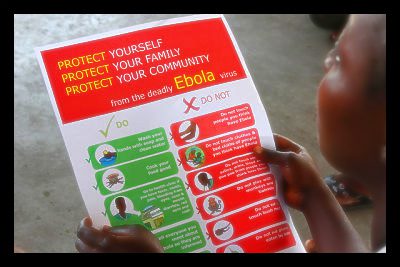
The Ebola outbreak in West Africa made apparent the brewing issues on healthcare aid in the region. Over the last ten years, aid traditionally allocated to West African governments transitioned toward the private sector. This has left Africa helpless in independently addressing these wide-scale problems at an institutional level, many experts say.
Private vs. Public Healthcare
The billions in aid dollars directed toward philanthropy programs and global campaigns steadily decreased disease in Africa over the last ten years. These programs typically work more on a case-by-case basis, leaving the countries battling widespread Ebola weak in their capability to respond.
This private vs. public sector debate on aid is an age-old one. Politics professor from Georgetown University, Carol Lancaster, discussed addressing global health problems in an interview with The Economist in 2009.
“Does anybody believe that the many millions of HIV/AIDS-afflicted Africans now receiving aid-funded antiretrovirals would be alive today in the absence of public aid funding the delivery of those drugs?” she asked. “Neither charities nor entrepreneurs could or would undertake such ambitious efforts to help those both poor and sick.”
On the other hand, some argue operating aid through governments results in wasted resources. Philanthropic initiatives pegged with the term “philanthrocapitalism,” has been argued to be more efficient and encourage innovation.
Philanthrocapitalism and Aid
“Coming from the business and financial world they, rather than bureaucrats, understand what it takes to build strong businesses,” said co-author of the book “Philanthrocapitalism: How the Rich Can Save the World,” Michael Green.
President of the African Development Bank, Donald Kaberuka, acknowledged the benefits of specific disease-based aid: “It was like the sweet spot, easy to sell and the results are there,” he said.
However, he argued that ultimately this strategy neglected to establish district and community hospitals or help educate local health officials, and it left countries more dependent on outside help. Aid dollars working directly through government programs will better enable these countries to coordinate an effective response, Kaberuka added.
“In a situation like this there are so many little things happening but somebody has to tie it together and that can only be a government,” he said.
Aid for the Long Term
President of the World Bank, Jim Yong Kim, agrees that there are problematic gaps in aid work. “If the outbreak had happened in Rwanda my own sense is that because they built district hospitals and community hospitals and have community health workers connected to the whole system, that we would have gotten this thing under control very quickly,” said Kim.
U.N. Secretary-General Ban Ki-Moon encouraged a 20-fold increase in international aid toward countries facing Ebola outbreaks, which he refers to as an “unforgiving” disease.
Kaberuka encourages this increased aid but warns of reverting to old strategies that funnel it away from long term solutions. It is clear, according to him, that the countries don’t just need additional funds, they need aid reform.
– Ellie Sennett
Sources: Reuters 1, Reuters 2, Al Jazeera U.S. News The Economist
Photo: Flickr

Snapshot: Education in Ecuador
Despite ongoing debates, the education system in Ecuador has shown improvement. Education of children who live in rural regions and promoting a bilingual education system are some of the greatest concerns moving forward. Currently, the predominant language in the schools is Spanish; however, there is an interest from governments to teach different languages and popularize them.
Education in Ecuador started to become a focus of the government in the 1980s when the literacy rate and accessibility in rural areas was very low. Since then, there has been a decrease in the illiteracy rates for both rural and urban areas. In addition there has also been an increase in the number of children enrolling for secondary and higher education. For children ages six to 14, Ecuador has made school more attainable by offering free and compulsory education, making it easier on the parents as well.
Another improvement has been the standard at which teachers are being recruited. The increased enrollment in secondary and higher education shows that now people are interested in furthering their education. With an increase in higher education, teaching candidates are coming out of teaching programs from universities, giving schools a wide variety of skills to choose from.
Although the enrollment rates in higher education has increased, according to the ministry of Education in Ecuador, only 10 percent of children attend schools in rural areas.
There have been big changes made for Ecuador in the past 30 years or so, but there are still areas of opportunity to improve upon. The recent improvements have assisted the country in training future professionals to make them educated employees and to contribute to the overall improvement of the country.
– Brooke Smith
Sources: Ecuador.com, Maps of World
Photo: Compassion
Livestock Production Brings Revenue for Women
Ethiopia is oftentimes seen as a place of extreme poverty and famine with no opportunities for the locals to improve their business. The situation is especially difficult for women, whose potential is limited by cultural and legal inequalities. However, there is an opportunity that is considered which could provide many women with a stable source of income. That opportunity is livestock. Although women still are not fully capable of making financial decisions in Ethiopia, the dairy sector is monopolized by small business farmers and processing the milk is mainly a women’s job.
This traditional role for women in the past could have been seen as disempowering, however recently there has been a fresh view and women are turning dairy into an economic opportunity for themselves and their families. With the help of training and financial assistance from USAID, these women are able to obtain the skills needed to empower themselves in spite of their obstacles. The main industries that employ women are livestock fattening and dairy production, however there are still areas in Ethiopia that women do not have access to the training and knowledge that others take for granted.
The USAID Agricultural Growth Program, Livestock Market Development, project is a part of the U.S. Government’s Feed the Future Initiative and it aims to improve nutrition and increase revenue for women. The way it plans on doing this is through training and investments in dairy, meat and live animals. Both men and women will benefit from this project but there will be special attention given to helping women become entrepreneurs with training designed specifically for their empowerment.
Strengthening Ethiopian organizations to build effective partnerships is one of the main objectives for the project as well. USAID funding is helping meet these needs with an advanced cattle cross-breeding program to create offspring that is 10 times more productive than the current cow. The project has a five year execution plan and so far there are significant results from it. About 100 women were able to receive training on entrepreneurship and leadership in one session in 2013. The same women now act as business role models within their own livestock market.
Although extreme poverty is still a major issue throughout Ethiopia, programs like this are making it easier for everyone, especially women to break the cycle and make their own business successful. Women finding success is something new to Ethiopia and this program looks to continue to empower them and help the whole country work itself out of poverty.
– Brooke Smith
Sources: USAID Feed the Future
Photo: Flickr
Ukraine Elections Shift Toward West
In a groundbreaking decision in the nation’s post-Soviet history, the Ukraine elections resulted in their first majority pro-European parliament. For the greater part of the last 300 years, Ukraine has operated under Russian or Soviet ruling; the results of the election tilt the country’s diplomatic affairs further away from Russia.
Many attribute the dramatic switch to Russian President Vladimir Putin’s elimination of Crimea and Donbas from elections. Those two regions historically have provided a solid pro-Russian vote. However, Crimea remains annexed and Donetsk insurgent controlled, stripping pro-Russian parties of their voting base.
Crimea’s annexation didn’t just remove pro-Russians from the voting process, it changed public opinion of eligible voters, as well. According to a poll by the International Republican Institute, in September 59 percent of Ukrainians favored membership in the EU and only 17 percent in the Customs union of Russia. Just a year ago, those figures were 42 percent and 37 percent, respectively.
Exit polls indicated that many voters cast their ballots out of concern that the current parliament was corrupt and incompetent.
This monumental shift creates an opportune climate for relations with the EU and the U.S., while presenting great challenges for the Ukraine.
According to Daniel Runde of Forbes Magazine, Ukraine will need new trading partners. Twenty-five percent of Ukraine’s energy comes from Russian oil. Russia is now demanding Ukraine pay back its $3.1 billion debts and prepay for future oil supplies. It appears the EU will administer two loans to the tune of $965 million to help cover these costs. This makes clear that Ukraine will need to start exploring alternative sources of energy.
Despite the fact that the country still remains very culturally woven to Russia, Ukrainian President Petro Poroshenko says he hopes to join the EU within six years. Many Europeans argue a ten-year timeline is more realistic.
Runde argues that more successful ties between western Europe and the Ukraine will require more than political efforts. Culturally mirroring the political shift toward western Europe requires Peace Corps involvement in the Ukraine, more student exchanges between the regions and more western teachers working in the country.
– Gabrielle Sennett
Sources: The Guardian, Forbes, Washington Post, WSJ
Photo: NBC News
Church World Service
For about 66 years, the Church World Service (CWS) has been feeding the hungry and helping the most vulnerable populations in the world. The organization came about after World War II, with the churches of the United States realizing the dire need for humanitarian assistance and providing billions of pounds of food, clothing and medical supplies to war-stricken areas of Europe and Asia.
CWS consists of over 35 Christian denominations and communions that target areas ranging from agriculture, health, disaster relief, refugee resettlement, food production and water sanitation. The overarching goal of the organization is to eradicate hunger and poverty by collaborating with many local partners to create a sustainable environment.
Today, the work of CWS can be seen all over Africa, Asia, Europe, Latin America and the Caribbean, the Middle East and North Africa. The organization strongly believes that development begins at the grassroots and that the citizens of the world must be empowered and self-sufficient.
In Indonesia, CWS worked with Two Degrees Food, among other organizations, to create a food security and nutrition program for local farmers. The project introduced sustainable agricultural methods to Indonesian farmworkers called Permaculture, also known as Permanent Agriculture. Some training involved making their own fertilizer and pesticides so crops could be protected properly and efficiently.
Consequently, food supply has seen a dramatic increase. Yance Banunaek, a female farmer, explains that the newly implemented program has allowed her family to eat a variety of vegetables. Banunaek states, “Before the assistance, sometimes my family would have no vegetables with our meal or only one type of vegetable, but the program has now helped my family to eat more nutritious foods.” She also says that she is able to sell her leftover vegetables in the markets, generating more income to feed her family and send her children to school.
– Leeda Jewayni
Sources: Church World Service, ActAlliance
Photo: Church World Service Harrisonburg
Tanzania’s Generation Z Sets Global Goals
Malinzanga Village’s primary school educates the countries future leaders. How do we know this? Within minutes of asking 14-year-old children what their priorities of their families and communities were, they had named many key elements of new development goals. The key elements described by these children of Generation Z were things like access to more food, more community support to end poverty and better healthcare. All these issues are current topics that many representatives of every nation in the world are discussing right now.
With the help of Happy, a local youth activist from Restless Development, ONE co-founder Jamie Drummond spoke to 15 teenagers about what they would like to see happen for their country. Restless Development started in 1985 and its main mission is to help the younger generation take a leadership role in speaking up about important issues that face their countries and the world. Happy’s background with Restless Development proved to be helpful in motivating these kids to act on their ideas. Not only did these children give great suggestions on improving certain issues but they also have inspired Malala, Desmond Tutu to take these suggestions and put them in their open letter to world leaders.
With the recent Ebola outbreak, it has only reminded Generation Z that the impoverished health systems of Africa are fragile and often are the site where most of the tropical pandemics take place. The Ebola epidemic has led to a great deal of anxiety, but this crisis fuels the flames of desire to address the issues that are needing attention and these teenagers see the future optimistically.
As the year 2014 comes to an end, the coming new year holds a lot of promise for ending poverty entirely or at least getting close. With the letter sent out to the world leaders warning them about making the right decisions for 2015, ONE and the kids from Malinzanga Village primary school gave their suggestions and hopefully, these get taken into account and change can finally take place.
– Brooke Smith
Sources: ONE, Restless Development
Reviving Mozambique’s Coconut Groves
A little over three years ago, the trees in Mozambique’s coconut groves began to develop brown spots. The leaves would then turn yellow and the coconuts would prematurely drop to the ground. At the end of three to six months, the top half of the tree would break off and fall to the ground.
Coconut Lethal Yellowing Disease
Coconut Lethal Yellowing Disease has been the cause of the trees’ deaths. The disease is spread by the rhinoceros beetle, who buries its larva into the fallen trees and saplings. Now, just three years later an estimated half of Mozambique’s coconut trees have been destroyed. With the bark stripped, the groves now look like matchsticks sticking out of the ground. The only known cures are to plant resistant varieties of palm.
According to the Food and Agricultural Organization Mozambique was the largest producer of dried coconut meat in 2011, producing over 62,000 tons yearly. All of which are either exported, turned into coconut oil or consumed locally. It is estimated that Zambézia province, alone, has losses of over $4 million in exports each year.
Some measures have been taken to halt the spread of this disease. This past year the U.S. has aided 277,000 farmers through the Millennium Challenge Account financing the Farmer Income Support Project. This measure cleared 600,000 acres of infected trees and replaced them with 780,000 seedlings.
Concern Worldwide
Even with aid, the coconuts that are being harvested are nowhere near the sustainable quantities of the past, nor are they the same size. Due to the young age of many of the trees, the coconuts are noticeably smaller.
While everything is being done to save the current coconut economy, many are urging the country to start looking for new cash crops, so the country is not overly reliant on one crop. Concern Worldwide, a nonprofit organization, is providing seeds, tools and training throughout Zambezia Province to cultivate tomatoes, sweet potatoes and lettuce as well as staple crops like sorghum and rice.
All of these plants have thrived in Africa’s climate, but Barbara Hladka, an agronomist working for Concern, believes that the plant with the biggest potential to replace the lost income from coconut sales is sesame seeds. “We are seeing buyers coming to some of the most remote communities in Zambezia to purchase sesame directly from growers for as much as 40 meticais ($1.30) per kilo,” said Hladka. “This is much higher than what farmers used to sell coconuts for.”
This new wave of agro-economics, or the process of growing different crops to bring to market, has caught on fast to help many afford the opportunity to work their way out of poverty. It is a successful worldwide trend endorsed by many of the NGOs working in Africa, India and China.
– Frederick Wood II
Sources: InterAction, Macau Hub All Africa
Photo: Huffington Post
Ebola Outbreak Sparks Debate on Aid
The Ebola outbreak in West Africa made apparent the brewing issues on healthcare aid in the region. Over the last ten years, aid traditionally allocated to West African governments transitioned toward the private sector. This has left Africa helpless in independently addressing these wide-scale problems at an institutional level, many experts say.
Private vs. Public Healthcare
The billions in aid dollars directed toward philanthropy programs and global campaigns steadily decreased disease in Africa over the last ten years. These programs typically work more on a case-by-case basis, leaving the countries battling widespread Ebola weak in their capability to respond.
This private vs. public sector debate on aid is an age-old one. Politics professor from Georgetown University, Carol Lancaster, discussed addressing global health problems in an interview with The Economist in 2009.
“Does anybody believe that the many millions of HIV/AIDS-afflicted Africans now receiving aid-funded antiretrovirals would be alive today in the absence of public aid funding the delivery of those drugs?” she asked. “Neither charities nor entrepreneurs could or would undertake such ambitious efforts to help those both poor and sick.”
On the other hand, some argue operating aid through governments results in wasted resources. Philanthropic initiatives pegged with the term “philanthrocapitalism,” has been argued to be more efficient and encourage innovation.
Philanthrocapitalism and Aid
“Coming from the business and financial world they, rather than bureaucrats, understand what it takes to build strong businesses,” said co-author of the book “Philanthrocapitalism: How the Rich Can Save the World,” Michael Green.
President of the African Development Bank, Donald Kaberuka, acknowledged the benefits of specific disease-based aid: “It was like the sweet spot, easy to sell and the results are there,” he said.
However, he argued that ultimately this strategy neglected to establish district and community hospitals or help educate local health officials, and it left countries more dependent on outside help. Aid dollars working directly through government programs will better enable these countries to coordinate an effective response, Kaberuka added.
“In a situation like this there are so many little things happening but somebody has to tie it together and that can only be a government,” he said.
Aid for the Long Term
President of the World Bank, Jim Yong Kim, agrees that there are problematic gaps in aid work. “If the outbreak had happened in Rwanda my own sense is that because they built district hospitals and community hospitals and have community health workers connected to the whole system, that we would have gotten this thing under control very quickly,” said Kim.
U.N. Secretary-General Ban Ki-Moon encouraged a 20-fold increase in international aid toward countries facing Ebola outbreaks, which he refers to as an “unforgiving” disease.
Kaberuka encourages this increased aid but warns of reverting to old strategies that funnel it away from long term solutions. It is clear, according to him, that the countries don’t just need additional funds, they need aid reform.
– Ellie Sennett
Sources: Reuters 1, Reuters 2, Al Jazeera U.S. News The Economist
Photo: Flickr
The Worst Current Dictators
The world’s most repressed countries live in a dictatorship. Citizens suffering under the rule of harsh dictatorships are often stripped of political rights and civil liberties. Those who express views differing from the state suffer consequences of physical and psychological abuse. Though the number of dictatorships has been on a decline, there is still much progress to be made. Listed below are some of the worst current dictators.
Worst Current Dictators
– Janelle Mills
Sources: Forbes, Kizaz, Freedom House
Photo: Toon Pool
What is Health Diplomacy?
The United States government has led the world as one of the largest supporters of global health efforts, with foreign assistance investments in over 80 countries. Health Diplomacy is vital in maintaining strong relationships with the international community and is crucial in advancing foreign policy.
But what is health diplomacy exactly? Although defined in many different ways, in essence, it is a multi-level process that involves international stakeholders and local organizations that are aimed at improving healthcare delivery by exporting medical equipment, expertise and human resources to those who need it most.
As an interconnected global community, health diplomacy is demonstrated to help out the allies of the United States in creating sustainable health programs to meet the needs of the people. The U.S. Department of State’s Office of Global Health Diplomacy uses diplomatic outreach to promote shared responsibility for the well-being of the world’s citizens.
In cases where diplomatic efforts may be strained or negotiations are hard to come by, health diplomacy can open doors to foster new dialogue and create more partnerships on a non-political level.
On the other hand, the U.S. Department of Health and Human Services brings in much needed technical expertise and scientific research to the interrelated fields of public health and international development. By exchanging scientific and evidence-based knowledge with leaders and health educators abroad, the United States continues to maximize its objectives in security, development and health.
One of the greatest examples of health diplomacy is the Global Fund to Fight AIDS, Tuberculosis and Malaria. Started in 2002, this international financing institution spurred a multitude of partnerships between foreign governments, civil societies and non-profit organizations to fight these three pandemics. From 2002 to 2016, 56 donor governments have pledged an astounding $42 million to the fund, with the U.S. being the largest donor. These donations will allow local experts to tackle the infectious disease issue whether it is by distributing mosquito nets to protect people from malaria, training health personnel or providing medical equipment for the diagnosis of tuberculosis.
– Leeda Jewayni
Sources: Global Health Diplomacy Net, Global Health, U.S. Department of State, The Global Fund
Photo: Flickr
Tajikistan’s Innovative Buildings
On January 2, 2010, a devastating earthquake hit the mountainous country of Tajikistan. Seven thousand people were affected by this natural disaster. The Office for the Coordination of Humanitarian Affairs (OCHA) reported that 20 villages in the Vanj district in the eastern Gorno-Badakhshan region were badly damaged. Estimates suggest that more than 140 houses were destroyed and 950 were left partially damaged.
Urgent Need for a Change
Nancy Snauwaert, a humanitarian coordination officer in the office of the U.N. Resident Coordinator in Vanj reported that, “There is an urgent need for the total reconstruction of houses. Technical guidance is crucial as over 1,000 houses have been damaged and are in need of becoming earthquake resistant.”
Currently, buildings are being constructed using concrete reinforced with steel rebar. Unfortunately, 50 percent of the country lives on less than $2 a day and rebar is financially out of the reach for many of the families residing in this earthquake-prone area.
Sustainable Housing Technology
Starting in 2008 Habitat for Humanity Tajikistan and the Tajik Institute of Seismology began to research alternate means of creating an inexpensive and sustainable house-reinforcing technology. The design created won them the FedEx Award for Innovations in Disaster Preparedness in 2013.
The design has been coined as “Sinj-technology.” Mulberry trees are cut down seasonally to harvest silk cocoons. The twigs of the tree have no other purpose and are free to use. Researchers tied mulberry branches into grids. These grids are then attached to a structural wood frame in mud walls. The grid is plastered with a mix of mud, straw and wool. This design effectively makes the walls able to resist lateral forces.
Preliminary Tests have proven that mulberry grids provide tensile strength equivalent to 80 percent of that of steel rebar. The first earthquake to test this new technology occurred in December of 2008 when the Rasht district was shaken by a 5.8 earthquake. Eighty homes in this region had been previously reinforced with Sinj-technology.
2009 Earthquake and its Effects
The next earthquake occurred in January 2009 when a 6.0 earthquake was felt in the Kumsangir district. Over one hundred homes were reinforced with Sinj-technology. A post-disaster survey found that none of the reinforced houses were damaged.
Another large advantage to this technology is that homes do not need to be rebuilt with the mulberry grids. The structures can be added to existing structures, saving homeowners as much as five times the expense of new construction. It is also 30 percent cheaper to use these materials than the standard techniques used in other seismically unstable regions.
Since receiving the FedEx Innovation Award, Habitat for Humanity Tajikistan has reinvested the money into proof of concept in an effort to create a new business strategy for Sinj-technology. Their intention is to pair this technology with local training of masons and construction workers. This would also effectively provide opportunities for affordable financing of home retrofits through microloans.
This comes as promising news for the 70% of people living in Tajikistan’s rural communities. The materials for earthquake disaster mitigation is easily accessible since it is produced by trees. The communities are now learning the trade in order to create a more sustainable future.
– Frederick Wood II
Sources: Interaction, Habitat 1, Irin News, Habitat 2
Photo: Habitat for Humanity