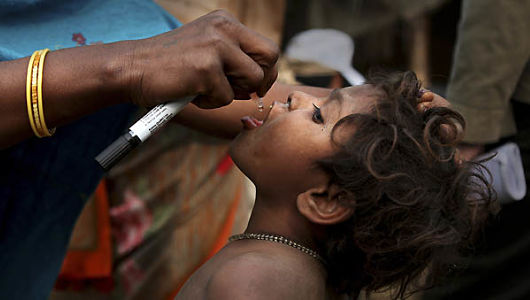
According to the World Health Organization’s (WHO) reports, Leprosy still infects almost 200,000 people globally. The disease not only infects a person but also creates an environment where a person is shunned and forced to live away from his or her family. Even though the disease is highly treatable and not very common, it still creates an immediate social stigma whenever it is mentioned. Thankfully, the disease is on its way to being eliminated completely around the globe.
Leprosy, also known as Hansen’s Disease, affects a person’s nerves, skin and mucous membranes (CDC). Lesions appear on a person’s skin and loss of feeling can occur since the nerves are damaged. Because a person loses sensation in the affected areas, burns or other injuries can go unnoticed and lead to further health issues.
The disease spreads through human contact. It is not highly contagious but can be spread through coming into contact with fluid droplets from an infected person.
The United States and other developed countries rarely ever see cases of leprosy, but several developing countries still experience the disease. According to WHO, “the leprosy burden is now concentrated in the five most endemic countries (Brazil, India, Madagascar, Mozambique, and Nepal), which account for 83% of prevalence and 88% of detection worldwide.” Usually, it is the poorest of the poor who contract the disease because they are the farthest from medical care.
WHO supplies a multi-drug therapy (MDT) free of charge to those with the disease. If the patient takes the prescribed medicine as directed, the disease is curable in as quickly as six months, but it could take up to two years.
Eliminating the disease is of huge importance to global health, but it is also vital to a family unit that has a member suffering. People with the disease are often shunned and pushed out of their social circle. An infected person is made to live with other people who have leprosy regardless of whether the person is a child or an adult. This can cause further strain on a family’s psyche, financial situation and emotional well-being.
Leprosy is well on its way to being eliminated completely from the globe. In 2000, leprosy was considered eliminated because there was less than 1 case per 10,000 people globally. But that number has the potential to be reduced even further. WHO states the following to describe the effectiveness and potential of leprosy elimination:
– There is only one source of infection: untreated, infected human beings.
– Practical and simple diagnostic tools are available: leprosy can be diagnosed on
clinical signs alone.
– Under natural conditions, “incident’ cases” (new cases in which the disease has
recently developed) make up only a small fraction of the prevalence pool. Below a
certain level of prevalence, any resurgence of the disease is very unlikely.
WHO is calling for a “Final Push” to remove leprosy as a health issue around the globe. The biggest factor is the ability to bring the MDTs to every person who has leprosy. This requires the patient’s help in seeking out medical care, despite the stigma that is associated with the disease, as well as integrating leprosy detection into routine medical care in countries where cases are still seen. While this may be easily achievable in more urban areas, the rural areas still need to see higher availability of medical care.
Seeing the end of leprosy for good is an achievable goal. Already the case numbers are dwindling as people are being treated and healed until they are no longer able to pass the disease along. As the “Final Push” is implemented more often, the good news about eliminating leprosy should be heard.
– Megan Ivy
Sources: CDC, NLT, WHO 1, WHO 2, WHO 3
Photo: Asian Correspondent

Scientists’ Crucial Role in Poverty Reduction in South Africa
The President of the Academy of Science in South Africa, Daya Reddy, claims that scientists play a key role in global poverty reduction. The problem is that the number of scientists in Africa is significantly less than anywhere else in the world. In other parts of the world, for every 1 million people, there are 1,000 scientists. In Africa, this number is 80. The second problem is what Reddy calls “the brain drain,” where one-third of Africa’s scientists leave the continent to practice their research.
Because of this, Africa’s success in poverty reduction is significantly lower than elsewhere. While worldwide poverty has been reduced by 50 percent, in Africa it has only been reduced by 8 percent.
Scientists hold the key to unlocking great mysteries, which is why Reddy teamed up with the Association of Commonwealth Universities and the South African Research and Innovation Management Association at the Research and Innovation for Global Challenge conference in May to encourage students to pursue their interests in science. In his speech, he highlights the importance of interdisciplinary studies, encouraging a “healthy collaboration”.
Reddy encourages scientists to use their knowledge of research and apply it to the world at large. “Complex problems require broad transdisciplinary approaches for their solution,” said Reddy, explaining later that this is the business of bringing together scientists with the movers and shakers of the world—the decision-makers and policy-creators, the educators and the innovators.
Scientific advancements can help in many ways, from improving the daily lives of individuals to large-scale changes. From medicine to sanitation, to agriculture and transportation, science is a unifying factor with the potential to make big changes in the world.
Great advancements have already been made, thanks to interdisciplinary work. Since the Millennium Development Goals established in 2000, now 90 percent of children globally are going to primary school, more girls are getting an education than ever before, and the odds of a child dying before the age of 5 has been cut in half. Worldwide, poverty has improved since the goals were established.
Reddy spoke at a conference in May to inspire students to pursue science. He encouraged the next generation to collaborate and create an interdisciplinary culture in order to end global poverty.
– Hannah Resnick
Sources: African Business Review, United Nations Development Programme University World News
Photo: Flickr
Expansion of Carbon Pricing Promises to Alleviate Poverty
There are two ways in which these efforts will be working to lighten the burden of poverty across the globe.
The first focuses on the role that a stable climate and healthy ecosystems have in providing a solid footing for economic development. Clean air and water, fire, flood and erosion control, mitigation from tsunamis and prevention of landslides are all services that intact ecosystems provide. These protect human populations and provide the foundation of productive agricultural systems.
Excessive use of carbon is leading to rising sea levels, increased desertification, stronger storms and less predictable weather, which will subvert the progress made on ending poverty and may create large groups of climate refugees, up to 200 million by 2050. In short, robust ecosystems offer goods and services and climate change undermines the provision of these goods and endangers massive economic, social and political costs.
The second way in which the expanding carbon market may reduce poverty depends on the design of the regulation. Currently, the two main strategies that reign supreme are cap and trade schemes and carbon taxes. The first sets a limit, the cap, on the amount of carbon that can be emitted and allows firms to trade permits to pollute. If one firm does not need to pollute, they may sell their permit to a polluter. Over time the cap is lowered and so are the emissions. Carbon taxes simply add a tax to carbon to make it more expensive and less attractive to use, though how the tax is applied and what is to be done with the revenue is flexible.
While both forms work to end poverty through protecting the environment, the cap and trade scheme contains an added component, termed carbon offsetting, which funds emissions-reduction projects in the developing world. Rather than buying permits to pollute, a firm can invest in an emissions-reduction project that otherwise would not have been financially feasible. These projects introduce clean technology and increase the level of investment in the developing world while protecting the environment.
Examples of U.N. certified emissions-reduction projects range from a soil conservation project in Moldova to reforestation of degraded croplands in Paraguay and generating power from rice husks in India. In 2013, total investment from certified projects was estimated to be over $315 billion. As carbon pricing expands, poverty reduction and sustainable development will follow.
– John Wachter
Sources: National Geographic, Oakridge National Laboratory, The Nature Conservancy, United Nations Framework Convention on Climate Change, United Nations Framework Convention on Climate Change, United Nations Framework Convention on Climate Change, World Bank
Photo: Eco Talk
Malnutrition in Samoa
Malnutrition has widespread impacts and widespread consequences. As a worldwide problem, malnutrition impacts one in five children. Within Samoa, the problem is a growing health concern, particularly for children.
Malnutrition in Samoa occurs in a variety of forms. In Samoa, the most common form of malnutrition is Protein-Energy Malnutrition or P.E.M. Because P.E.M. is caused by inadequate protein intake, it has its greatest impact on children, due to the low intake of protein in their diet. In 2013, Samoa also saw 72 hospital admissions for acute, severe malnutrition. Two children died of these cases.
As it does in the rest of the world, malnutrition leads to many health problems in Samoa. In 2014, four children died and 19 were hospitalized as a result of diarrhea outbreaks. A ministry of health report connected poor dietary practices, and the use of Devondale milk as a substitute for both adequate baby formula and poor nutritional practices, to pediatric ward visits during the outbreak.
A lack of proper breastfeeding is a major contributing factor to malnutrition. A study in the city of Apia found that 17 percent of bottle-fed infants were malnourished, compared to only five percent of breastfed infants. Perhaps this is why a ministry of health report, in response to the diarrhea outbreak, listed advocating for proper breastfeeding as a “priority area of concern,” and listed giving pregnant mothers food supplements such as folic acid and iron tablets as an “area for vigilance.”
Diarrhea caused by malnutrition is also difficult for health professionals in that diarrhea leads malnourished patients to become further malnourished.
The impact of malnutrition on Samoa, and particularly on the children of Samoa, is shocking. The reality of facing the situation is challenging, as the issue also connects with dietary changes in the region that have occurred over the past few decades, along with urbanization. That being said, supporting education on these issues for all along with supplemental nutrition problems will be highly important in preparing for the challenges of the present, while building a better future.
– Andrew Michaels
Sources: Samoa Observer, Radio New Zealand International, Radio New Zealand International, UN University, Samoa News
Photo:Flickr
Ten Poverty Statistics You Should Know
1. Globally, there are over 1 billion children living in poverty.
2. 1/4 of all humans live without electricity — approximately 1.6 billion people.
3. The World Food Programme says, “The poor are hungry and their hunger traps them in poverty.” Hunger is the number one cause of death in the world, killing more than HIV/AIDS, malaria, and tuberculosis combined.
4. Gender discrimination is widely recognized as a major contributor to children living in poverty and creating disparities in how resources are earned, valued and distributed based on power relationships between men and women. These poverty-induced relationships lead to tens of millions of children becoming victims of exploitation, violence and abuse.
5. Global poverty leads to global hunger, as people living in poverty cannot afford nutritious food for themselves and their families. This creates a vicious cycle where a lack of food makes people weaker and less able to earn money, preventing them from escaping poverty and hunger.
6. Poverty is closely linked to the inability to access clean water and proper sanitation. More than 750 million people lack adequate access to clean drinking water.
7. The disadvantages of poverty are closely linked to an increased risk of disease. For example, diarrhea, which is caused by inadequate drinking water, sanitation and hand hygiene, kills an estimated 842,000 people every year globally, or approximately 2,300 people per day. With the increased risk of disease, those under the poverty line have little access to basic medical attention, causing preventable diseases like diarrhea and pneumonia to take the lives of 2-3 million people a year.
8. 80 percent of the world’s population lives on less than $10 a day, well below the standard of the Quality of Life Index.
9. A quarter of all people live without electricity — approximately 1.6 billion people.
10. The cost of eradicating world poverty is estimated at 1 percent of global income, whereas other financial endeavors such as military spending in the U.S. alone can reach over $691.22 billion.
– Alysha Biemolt
Sources: 11 Facts About Global Poverty, Global Issues, UNICEF, United Nations World Food Programme
Photo: Flickr
Maternal Mortality in the Philippines
Maternal deaths are still a huge concern for the Philippines. By 2006, the maternal mortality rate decreased to a rate of 162 per 100,000 live births and currently, the MMR is 120 deaths per 100,000 live births—still nowhere near the target that the MDGs established.
Various factors are responsible for the high rate of maternal mortality that the Philippines face. According to the IRIN, some of the main causes of maternal deaths are hemorrhages, sepsis, obstructed labor, hypertensive disorders during pregnancy and complications associated with unsafe abortions. Having a physician, nurse or midwife who has had formal training present during the birth can decrease the maternal mortality rate, but currently, these skilled birthing attendants supervise only 60 percent of births in the Philippines. Others rely on traditional birthing attendants who do not have formal training and therefore are often unable to deal with complications.
Poor women and women in rural areas are at a disadvantage. Around 75 percent of the poorest quintile do not have a skilled birth attendant to help them through their pregnancy. Rural areas also have higher maternal mortality rates because many women in rural areas begin having children at a young age. Since adolescent women are normally not developed enough for childbirth, these young mothers face many complications during and after pregnancy and contribute to the high maternal mortality rate.
Another problem that adds to the high maternal mortality rate in the Philippines is the low level of contraceptive use. The Philippines is 80 percent Catholic, so birth control pills, condoms and other forms are contraceptive use are considered to be similar to abortion. This has led to limited access to contraceptives, since contraceptives were previously not widely available at health care clinics.
This limited access to contraceptives has negative effects. In 2006, there were three million pregnancies in the Philippines. Half of those pregnancies were unplanned, and one third of the unplanned pregnancies resulted in abortions. A higher rate of contraceptive use will prevent this from happening and will consequently decrease the maternal mortality rate.
While rates of contraceptive use have not risen much from 2006 to 2014, there is hope that contraceptive use will now increase dramatically due to a birth control law that the Philippine Supreme court approved in April 2014. The law requires the government’s health centers to have free condoms and contraceptive pills. It may be too soon to tell whether that law has a significant effect on maternal mortality. However, the law will hopefully help the Philippines to reach its MDG by the end of 2015. Other ways to help reduce maternal mortality are providing more antenatal care and more widespread access to health facilities.
– Ashrita Rau
Sources: UNDP, IRIN News, Philstar, WHO, Huffington Post, United Nations, BBC
Photo: Flickr
Indonesia’s Fight Against Stunted Growth
Over the past decade, Indonesia’s economy has grown steadily and over 50 percent of the population is now living above the poverty line. However, the wealth gap has further widened. With most of the population living in rural areas and relying on agriculture as a main source of income, it is hard for Indonesians below the poverty line to have access to nutritious food and clean water. This has caused problems such as stunted growth in children.
According to the Millennium Challenge Corporation, “a lack in critical vitamins and minerals during early childhood puts children at higher risk for chronic disease [and] delayed cognitive development” which causes a reduction in academic success and future earnings. Because of the lack of vitamins and minerals, about one-third of all Indonesian children under the age of 5 experience stunted growth—that’s seven million infants and children.
The Indonesia Compact is a five-year, $600 million agreement. The goal is to increase household income in the project areas by increasing productivity, reducing energy costs and increasing provisions of goods and services.
Part of the Compact is the $135 million Community-Based Health and Nutrition to Reduce Stunting Project. This effort is two-sided: raise awareness about feeding practices and supply access to proper nutrition and health care services.
Through this project, the people of Indonesia are being educated on how the lack of essential nutrients, such as vitamin A, iron and zinc, can impact health and affect growth. The government of Indonesia is helping by training local governments on health and sanitation services as well as nutrition, in order to have a highly aware population.
The theory is that a healthier young generation will bring economic growth to the country. The next generation will be healthy and knowledgeable, which leads to a stronger working-class and eventually an improved economy. The Indonesia Compact still has a long way to go before any change can be seen, but Indonesia is headed in the right direction.
– Hannah Resnick
Sources: Millenium Challenge Corporation, Rural Poverty Portal
Photo: Flickr
The Blockchain and Poverty
Satoshi Nakamoto was the pseudonym under which a person or persons released the invention of the Bitcoin, and more importantly, the Blockchain. Bitcoin has proved to be influential and has a fervent user-base that believes it holds the keys to upending the banking and finance world through decentralized cryptocurrency. The power behind Bitcoin, however, lies with the Blockchain. And the power of the Blockchain has the potential to spawn new technologies and help the poor.
The Blockchain technology developed by “Satoshi Nakamoto” has been hailed as a practical solution to the “Byzantine General’s Problem.” It does not completely solve the Byzantine General’s Problem, but it does enough to bypass the issue to the extent that it should pose no issue in reality. The Byzantine General’s Problem proposes the flaw of sharing information between, say, two Generals. If one wants to tell the other to “attack point A,” he or she may send a message, but then he will never be sure if the other General got the message. The Blockchain is important because it solves the problem of “double spending” by providing a practical solution to the Byzantine General’s Problem. This means that there is no risk of a Bitcoin being spent twice, which would be similar to counterfeiting money. The Blockchain does this by creating a public ledger that records every transaction that ever took place with Bitcoin. Essentially, the Blockchain enables trust without the need for identity.
Blockchain technology could be used in wide-ranging applications. For example, NASDAQ recently announced that it will be testing Blockchain technology to record transactions of share trades for privately-held companies. Brian Singer explained in an interview with Forbes that he believes that Bitcoin and the Blockchain can substantially reduce poverty around the globe. Singer argues that the ability to have undeniable, transparent ownership of something that everyone can trust is imperative. Ownership of, say, a Bitcoin is ownership overvalue. This undeniable ownership of value that is recognized in a system no matter what anyone says is what causes Singer to believe that the Blockchain technology behind Bitcoin can have a profound impact on the poor. Bitcoin has already caused disruption in the remittance business; immigrants have been using Bitcoin to send money back home. Bitcoin does not demand costly extra fees like Western Union.
The Blockchain also removes the need for a third party, such as a computer server. One purpose of a bank is to store value safely and efficiently and also manage exchanges of value at high rates using credit card and debit card systems, which are centralized. The Blockchain can safely and effectively protect your value from “double spending” and digital theft – only by mistake of the user can it be stolen – and at the same time avoid the pesky fees and rules that banks impose.
Because of the Blockchain’s ability to essentially create trust without identity in a system, it lends itself to secondary innovations such as being used for other distributed systems that are without a central point, such as one server that contains all necessary information. Although distributed systems are not new, the Blockchain could help facilitate the creation of even more. These systems are in many ways more powerful than a centralized system. They rely on much less digital and physical infrastructure, such as a server run by a third party. These systems can run independently of authority. Distributed systems of all sorts have many advantages that lend themselves to the poor. By curtailing the need for a trusted authority or more infrastructures, it makes it easier for the poor to use and access these technologies from their respective countries and makes them more reliable.
It is possible that new innovations will emerge that are of particular use to the poor, as seen when people use the Blockchain and Bitcoin to bypass traditional remittance markets. The possibilities are endless; new companies are popping up and attempting to leverage this new technology. Like the Internet or other technologies, it can be difficult at first to see where the end of the tunnel leads, and the Blockchain may be no different. With smartphones becoming more and more common even amongst the poor, innovations on the Blockchain may hold hidden solutions.
– Martin Yim
Sources: Brookings, Marketplace, Forbes, The Guardian
Photo: The Cointelegraph
Children on the Streets of Bangkok
There are more than 20,000 street children in Thailand’s major urban areas. In a single day, a child can earn 300 baht ($10) to 1,000 baht ($30) – much more than the amount a Cambodian or Burmese living in poverty makes back home. In Phnom Penh, for instance, scavenging rubbish all day will only earn a child 16 baht ($0.50).
Cambodians make up around 80 percent of Thailand’s child beggars. Cambodia is one of the poorest countries in the world and half of its population is children.
Beggars who are from Thailand usually hail from the northeast Isan region, where 40 percent of the country’s poor comes from. Their parents come to Bangkok to find work, usually as motorcycle taxi drivers or construction workers. When they have children, they realize they cannot afford to take care of them. Distrustful of the government-run orphanages, many simply abandon their children in the hands of babysitters, hoping they will find a home there. However, these children are often made to work on the streets to earn some money for their upkeep, according to chairwoman Darat Pitaksit of the Young Women’s Christian Association (YMCA) in Bangkok, an organization that works with underprivileged children.
Because going to school is mandatory until the sixth grade, most Thai children manage to attend at least primary school. Secondary school attendance in Bangkok, however, drops by 20 percent. Despite it being the richest area of Thailand, rates of attendance are lower in Bangkok than anywhere else in the country because of the presence of migrant workers’ children and the lifestyles they are made to lead.
Contrary to common perception, street children, both from Thailand and neighboring countries, do not fall into crime, drugs, or other illicit activity. “Thai children are raised to respect their elders,” Pitaksit says. “In addition, the belief in karma helps them to be more accepting of their hardships in life.” Similarly, Cambodian children would often rather beg on the streets than go to school, says Chantana Sueprom, a staff member of the UNICEF supported NGO Friends International. They feel it is their duty to help their parents earn money.
– Radhika Singh
Sources: Reuters, UNICEF, Asian Development Bank
Photo: Jimmy Lam Photography
Leprosy Is Almost Eliminated
According to the World Health Organization’s (WHO) reports, Leprosy still infects almost 200,000 people globally. The disease not only infects a person but also creates an environment where a person is shunned and forced to live away from his or her family. Even though the disease is highly treatable and not very common, it still creates an immediate social stigma whenever it is mentioned. Thankfully, the disease is on its way to being eliminated completely around the globe.
Leprosy, also known as Hansen’s Disease, affects a person’s nerves, skin and mucous membranes (CDC). Lesions appear on a person’s skin and loss of feeling can occur since the nerves are damaged. Because a person loses sensation in the affected areas, burns or other injuries can go unnoticed and lead to further health issues.
The disease spreads through human contact. It is not highly contagious but can be spread through coming into contact with fluid droplets from an infected person.
The United States and other developed countries rarely ever see cases of leprosy, but several developing countries still experience the disease. According to WHO, “the leprosy burden is now concentrated in the five most endemic countries (Brazil, India, Madagascar, Mozambique, and Nepal), which account for 83% of prevalence and 88% of detection worldwide.” Usually, it is the poorest of the poor who contract the disease because they are the farthest from medical care.
WHO supplies a multi-drug therapy (MDT) free of charge to those with the disease. If the patient takes the prescribed medicine as directed, the disease is curable in as quickly as six months, but it could take up to two years.
Eliminating the disease is of huge importance to global health, but it is also vital to a family unit that has a member suffering. People with the disease are often shunned and pushed out of their social circle. An infected person is made to live with other people who have leprosy regardless of whether the person is a child or an adult. This can cause further strain on a family’s psyche, financial situation and emotional well-being.
Leprosy is well on its way to being eliminated completely from the globe. In 2000, leprosy was considered eliminated because there was less than 1 case per 10,000 people globally. But that number has the potential to be reduced even further. WHO states the following to describe the effectiveness and potential of leprosy elimination:
– There is only one source of infection: untreated, infected human beings.
– Practical and simple diagnostic tools are available: leprosy can be diagnosed on
clinical signs alone.
– Under natural conditions, “incident’ cases” (new cases in which the disease has
recently developed) make up only a small fraction of the prevalence pool. Below a
certain level of prevalence, any resurgence of the disease is very unlikely.
WHO is calling for a “Final Push” to remove leprosy as a health issue around the globe. The biggest factor is the ability to bring the MDTs to every person who has leprosy. This requires the patient’s help in seeking out medical care, despite the stigma that is associated with the disease, as well as integrating leprosy detection into routine medical care in countries where cases are still seen. While this may be easily achievable in more urban areas, the rural areas still need to see higher availability of medical care.
Seeing the end of leprosy for good is an achievable goal. Already the case numbers are dwindling as people are being treated and healed until they are no longer able to pass the disease along. As the “Final Push” is implemented more often, the good news about eliminating leprosy should be heard.
– Megan Ivy
Sources: CDC, NLT, WHO 1, WHO 2, WHO 3
Photo: Asian Correspondent
Improving Women’s Health Leads to Sustainable Development
The Commission aimed to make policy recommendations in terms of economic, social and cultural factors that would make governments accountable for recognizing the need for improving women’s health and the welfare of them and their communities. Published at a critical point in which Millennium Development Goals are ending and the world is beginning to adopt new Sustainable Development Goals, the Commission aims to heighten women’s roles in national and international leadership and set developments in their health and social status as a measured requisite for completing each Development Goal.
The Commission’s work was primarily concerned with developing ideas about women’s health from a productive standpoint – how they contribute to societies economically, culturally and environmentally – rather than reproductive standpoint. Viewing women’s health solely in terms of reproduction allows gender inequity to prosper because it defines women solely based on their ability to have children. The report demonstrates that improvements in women’s healthcare from a comprehensive standpoint will expand their contributions in education, the economy and the environment.
Globalization, the Commission reports, has contributed to the improvement of women’s status globally but has worsened it in individual countries, threatening social stability. Thus, though globalization has led to more widespread recognition of gender inequality, it has not done anything to change it. The increasingly rapid transmission of communicable diseases, another outcome of globalization, has increased the importance of women in caring for family members and preserving the welfare of their communities.
As humanitarian crises and ecological degradation continue to grow and conditions for populations around the world worsen, the protection of women’s health and social status are increasingly vital to the well-being of societies. Thus, it is essential that nations adopt plans to improve women’s healthcare and equality.
According to the Commission, financing healthcare should take into account persistent health challenges that affect women, such as communicable diseases and violence against women and girls. They should also take on measures to promote women’s rights and recognize their invaluable roles in society. Doing so will improve not only gender equality and societal harmony but also economic stability, healthcare, education and environmental quality. Thus, in investing in the needs and welfare of women, policymakers will help achieve sustainable growth and development for their nations.
– Jenna Wheeler
Sources: The Lancet, Impatient Optimists, The Lancet
Sources: Flickr