Leprosy Is Almost Eliminated
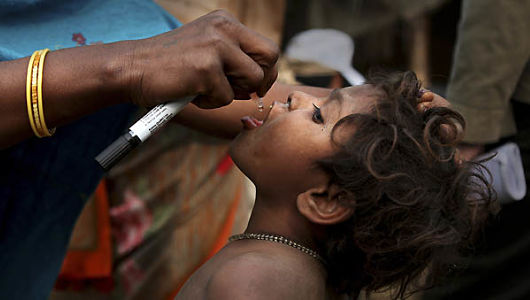
According to the World Health Organization’s (WHO) reports, Leprosy still infects almost 200,000 people globally. The disease not only infects a person but also creates an environment where a person is shunned and forced to live away from his or her family. Even though the disease is highly treatable and not very common, it still creates an immediate social stigma whenever it is mentioned. Thankfully, the disease is on its way to being eliminated completely around the globe.
Leprosy, also known as Hansen’s Disease, affects a person’s nerves, skin and mucous membranes (CDC). Lesions appear on a person’s skin and loss of feeling can occur since the nerves are damaged. Because a person loses sensation in the affected areas, burns or other injuries can go unnoticed and lead to further health issues.
The disease spreads through human contact. It is not highly contagious but can be spread through coming into contact with fluid droplets from an infected person.
The United States and other developed countries rarely ever see cases of leprosy, but several developing countries still experience the disease. According to WHO, “the leprosy burden is now concentrated in the five most endemic countries (Brazil, India, Madagascar, Mozambique, and Nepal), which account for 83% of prevalence and 88% of detection worldwide.” Usually, it is the poorest of the poor who contract the disease because they are the farthest from medical care.
WHO supplies a multi-drug therapy (MDT) free of charge to those with the disease. If the patient takes the prescribed medicine as directed, the disease is curable in as quickly as six months, but it could take up to two years.
Eliminating the disease is of huge importance to global health, but it is also vital to a family unit that has a member suffering. People with the disease are often shunned and pushed out of their social circle. An infected person is made to live with other people who have leprosy regardless of whether the person is a child or an adult. This can cause further strain on a family’s psyche, financial situation and emotional well-being.
Leprosy is well on its way to being eliminated completely from the globe. In 2000, leprosy was considered eliminated because there was less than 1 case per 10,000 people globally. But that number has the potential to be reduced even further. WHO states the following to describe the effectiveness and potential of leprosy elimination:
– There is only one source of infection: untreated, infected human beings.
– Practical and simple diagnostic tools are available: leprosy can be diagnosed on
clinical signs alone.
– Under natural conditions, “incident’ cases” (new cases in which the disease has
recently developed) make up only a small fraction of the prevalence pool. Below a
certain level of prevalence, any resurgence of the disease is very unlikely.
WHO is calling for a “Final Push” to remove leprosy as a health issue around the globe. The biggest factor is the ability to bring the MDTs to every person who has leprosy. This requires the patient’s help in seeking out medical care, despite the stigma that is associated with the disease, as well as integrating leprosy detection into routine medical care in countries where cases are still seen. While this may be easily achievable in more urban areas, the rural areas still need to see higher availability of medical care.
Seeing the end of leprosy for good is an achievable goal. Already the case numbers are dwindling as people are being treated and healed until they are no longer able to pass the disease along. As the “Final Push” is implemented more often, the good news about eliminating leprosy should be heard.
– Megan Ivy
Sources: CDC, NLT, WHO 1, WHO 2, WHO 3
Photo: Asian Correspondent
