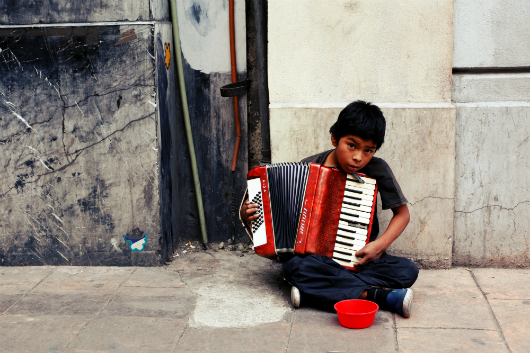
According to a study made by the Mexican government agency, Consejo Nacional de Evaluación de la Política de Desarollo Social (CONEVAL), there were 53.3 million people living in poor conditions in 2012.
This number equates to 45.4 percent of Mexico’s total population.
In Mexico, poverty is strictly linked to the decisions and actions that the government takes. According to a newspaper from Guadalajara, Jalisco, the secretaries of social development from the different Mexican states only invest between the four and five percent of their budget to social programs that do not just focus on poverty.
Education, health care, nutrition, shelter and clean water are some of the aspects that many organizations are working on to bring to the Mexican poor citizens:
1) VAMOS!
This is a non-profit organization based in Vermont that fights to offer education and job opportunities to the poor in Cuernavaca, Morelos, Mexico. The organization also offers basic human services to these people living in poor conditions.
2) Children International
This organization provides assistance to children and families that live in extreme poor conditions. Their mission is to bring real change to those living in poverty. This organization is based in Kansas, and operates in different countries such as Colombia, Ecuador, Guatemala, India, Honduras and, of course, Mexico. Their agency in Mexico is located in Guadalajara, Jalisco.
3) Flying Samaritans
This is a non-profit organization, based in California, that operates free medical clinics in the state of Baja California, Mexico. The organization counts with different professionals such as nurses, dentists, physicians, pilots, and translators that offer their work at no charge to people in rural areas that have no access to medical care.
4) Project Amigo
This is an organization founded by California businessman Ted Rose based in Cofradia de Suchitlan, Colima. The organization focuses in providing marginalized, disadvantaged, poor children in the state of Colima, Mexico with education. Project Amigo has the belief that education is a powerful key that can benefit the children’s future. The organization provides scholarships, material support, health care and supports the children to continue studying even during a college level.
5) TECHO
Techo is a non-profit organization present in Latin America and the Caribbean that focuses on eliminating poverty. This organization is lead by young volunteers that promote community development by providing solutions to families living in slums, foster social awareness and action, and advocate politically in order to promote changes that could stop poverty from emerging.
All these organizations focus on overcoming poverty and creating a better life quality for Latinos and Mexicans that live in poor conditions and lack of access to some basic needs.
According to CONEVAL, in the years of 2010 and 2012 there was a decrease in the percentage and number of people that had an educational backwardness, lacked access to health services, quality and living spaces, basic housing services, and nutrition.
The results and efforts that these individual non-profit organizations have obtained, each with their own beliefs, missions, and methods, are a big contribution to the Mexican poor community, creating change and providing opportunities to the ones in need.
– Diana Fernanda Leon
Sources: CONEVAL, INFORMADOR.MX, VAMOS!, Children International, Flying Samaritans, Project Amigo, Techo
Photo: Flickr

How a Decline in Bees Affects the Developing World
This week, President Obama revealed a solution to a problem not many Americans knew existed: declining bee populations.
The plan, appropriately titled the “National Strategy to Promote the Health of Honey Bees and Other Pollinators,” was drafted by the Pollinator Health Task Force and runs for a solid 58 pages. It’s the sort of thing that prompts endless jokes and puns (“Plan B” is a popular one), but for farmers around the world, the decline in bees is serious business.
That’s because bees play an important role in our ecosystem. As pollinators, bees help plants reproduce by spreading pollen around, enabling the creation of seeds and fruit. Many crops rely on bee pollination, including coffee and apples. Larger farms rely on beekeepers who drive from farm to farm, leasing their bees for short bouts of pollination. All in all, 30 percent of the world’s crops rely on insect pollination, most often from bees.
If these pollinators were to suddenly disappear, the world would be in a lot of trouble. Yet that is exactly what is happening, in a mysterious phenomenon known to scientists as “colony collapse disorder.” Worker bees are vanishing and their hives are slowly dying off.
That’s leaving some farmers in the developing world scrambling to find new ways of pollinating their crops. In southeast China, for instance, bee populations have been diminished by habitat destruction and heavy doses of pesticides. Apple farmers in the region are now forced to pollinate their crops by hand. Armed with utensils resembling feather dusters, the workers climb along branches and pollinate the trees themselves.
It’s a painstaking and process that leaves Tang Ya, a researcher at Sichuan University, concerned about sustainability. “For fruit growers, artificial pollination can guarantee profits,” the scientist told China Daily. “But as more young people leave their homes to seek jobs in cities, I’m afraid that artificial pollination will be very difficult to achieve in less than two decades.”
But the problem goes beyond economics; it threatens to worsen global malnutrition as well.
A study published this year by Harvard University and the University of Vermont demonstrated how declining pollinator populations would disrupt human diets in the developing world. Vitamin A, for instance, comes from crops which mostly rely on insect pollinators. According to the World Health Organization, Vitamin A deficiency can have devastating consequences for children, including blindness and a much higher risk of illness and death from common childhood infections.
Though aware of the dangers involved, scientists aren’t entirely sure what causes colony collapse disorder. A wide range of explanations have been offered, including pesticide use, climate change, malnutrition and disease. Neonicotinoid, a type of pesticide, has attracted scrutiny recently and European countries have placed restrictions on its further use.
In the United States, President Obama’s plan calls for setting aside land for pollinators, further restricting pesticide use and increasing funding for research. How the developing world will cope, however, is less clear.
– Kevin Mclaughlin
Sources: Berkeley News, China Daily, Whitehouse.gov, University of Vermont, World Health Organization
Photo: Flickr
After the White House: How Past Presidents Continue to Make a Difference
Although President Obama has only 20 months left of his presidency, he can still do a lot of good once outside the Oval Office. Here are four ways former presidents made a difference for the world’s poor:
George Bush: The former Republican president is well known for his AIDs relief work in Africa. While in office, President Bush signed the President’s Emergency Plan for AIDS Relief. The program significantly increased access to antiretroviral drugs on the African continent, saving millions of lives. That effort set the stage for his post-presidential humanitarian work with First Lady Laura Bush through the George W. Bush Institute. Located at the Bush Center in Dallas, the organization promotes global health and human rights through a variety of programs. Through the Pink Ribbon Red Ribbon initiative, for instance, the president and first lady are working to reduce deaths associated with cervical and breast cancer in the developing world.
Bill Clinton: Following his presidency, Mr. Clinton sought to address humanitarian issues worldwide. The Bill, Hillary and Chelsea Clinton Foundation has quickly become a cornerstone in the fight for improved global health, economic development, gender equality and environmental protection. Founded in 2001, the Foundation includes a wide range of humanitarian endeavors. The Clinton Health Access Initiative, for example, works to improve healthcare infrastructure, while the Clinton Development Initiative stimulates economic growth by increasing access to financial services for entrepreneurs in the developing world. The Foundation also has a strong track record in promoting the well being of women and girls across the globe.
George H. W. Bush: At 90-years-old, George Bush Sr. is the oldest president on this list, besting fellow nonagenarian Jimmy Carter by a few months. The elder Bush shows no signs of slowing down though; he’s gone skydiving on his 80th, 85th and 90th birthdays, and leads an active life. The president has been just as active in promoting public service through his Points of Light organization, which encourages volunteerism worldwide. The network boasts 250,000 service projects every year across 30 countries. That adds up to 30 million hours of volunteer service each year.
Jimmy Carter: President Carter has had many roles in his life: peanut farmer, Governor of Georgia, President of the United States—but he has perhaps found his great success as an international humanitarian. He is one of four presidents to receive a Nobel Peace Prize, but the only one to do so after leaving office. Most of his efforts have involved The Carter Center, which was founded in 1982 and takes “Waging Peace, Eradicating Disease, Building Hope” as its motto. The Center has targeted a wide range of diseases, including guinea worm, river blindness, trachoma and lymphatic filariasis. Thanks to the president’s efforts, the prevalence of guinea worm disease has been reduced by 99.99 percent since 1986.
– Kevin McLaughlin
Sources: The Clinton Foundation, The George W. Bush Institute, Points of Light
Photo: Flickr
World Bank Encourages Overseas Hiring Online
A recent effort by the World Bank has helped make overseas hiring feasible for many interested parties – and has driven a surge of employment in Africa.
Unemployment has always been a boogeyman of modern culture. Whether a fully-developed or an emerging market, no economy thrives when it has a high rate of unemployment. According to the U.N., the challenge of unemployment is growing by the year. In 2014, the number of unemployed passed 201 million people worldwide. A disproportionate number of these were women and young people just entering the workforce.
The internet could change that. Like almost everything else the internet has affected, the job market is a very different place now than it was only three or four years ago. Digital entrepreneurs are increasingly common, and small businesses have access to better tools and faster communication than was ever possible before.
Entrepreneurship is not always an option, however. Being a digital entrepreneur requires social networking, strong skill development and a market to work with. On the other hand, companies are often looking for new talent pools of employees.
A study supported by the Rockefeller Foundation and done in partnership with Dahlberg Consulting has recently resulted in a new service. The World Bank is now helping interested individuals and companies find global employees through a new online toolkit. Companies seeking new talent can look abroad for the perfect fit for their employees. Meanwhile, people with technology skills in developing countries can now find jobs that allow them to use their full capacities.
This new business model, called “online outsourcing,” has the power to catalyze new economic growth. It also has the potential to drive a new wave of economic inclusion and equality, as typically underrepresented groups can join the workforce.
The collaboration between the World Bank and the Rockefeller Foundation is part of the Rockefeller Foundation’s Digital Jobs Africa Initiative. The mission of the initiative is to create new, sustainable employment opportunities for youth in Africa and the skills training to match. This is all working toward the ultimate goal of positively impacting 1 million lives in Egypt, Ghana, Kenya, Morocco, Nigeria and South Africa.
So far, the collaborations have been a success. The partnership has enhanced digital job creation in Africa in a number of ways, including the development of an information technology park and capacity building for the digitization of public records in Ghana.
Africa’s economy and population are both growing at an unprecedented rate. By 2050, 400 million people under the age of 25 will need to be gainfully employed in order for the continent’s economic growth to be sustained. Initiatives like the partnership between the Rockefeller Foundation and the World Bank could be the key to success – both of Africa’s economy and of Africa’s youth. The job market is becoming truly global, and everyone will reap the benefits.
– Marina Middleton
Sources: The World Bank, The Rockefeller Foundation
Photo: Flickr
Malnutrition in Taiwan
Since the end of the Second World War, the face of malnutrition in Taiwan has changed dramatically. Once among the ranks of third world nations, Taiwan has enjoyed meteoric economic growth over the past seventy years. This growth has raised living standards, reduced poverty and eliminated undernutrition as a development issue. But despite this newfound prosperity, Taiwan continues to face malnutrition in the form of obesity and poor diets.
Between 1895 and 1945, Japan ruled over Taiwan as an imperial master. Over these five decades, Japan structured the island as a satellite granary. Taiwan’s principal crops became sugar and rice, and by the 1930s, Taiwan exported more than half of its agricultural output to the Japanese home islands. In fact, according to researcher Samuel Ho, the amount of rice available for consumption in Taiwan had fallen 24 percent by the 1940s. Although Japanese administrators modernized Taiwanese agriculture and invested in transportation infrastructure, they did little to improve the lot of the poorest Taiwanese: real wages remained low and malnutrition prevalent.
Soon after the end of Japanese rule, Taiwan found itself in a position to tackle malnutrition. No longer Japan’s offshore breadbasket, Taiwanese farmers saw export markets for their crops collapse. They thus began putting significantly less of their rice crop on the market and retaining more for home consumption. In addition, the Taiwanese government implemented land reforms that broke up large agricultural estates and turned tenant farmers into landowners. Combined with other “pro-farmer” policies and a growing industrial export sector, Taiwan had effectively eliminated malnutrition by the early 1970s.
But with the development of an advanced economy in Taiwan, malnutrition has resurfaced as a public health concern. According to University of Washington sources, dietary risks are the second-greatest contributor to Taiwan’s disease burden. Whereas most Taiwanese were once unable to afford a varied, nutritious diet, many now eschew healthy eating electively. To add to this concern, contemporary Taiwanese suffer from increasing rates of obesity: 31 percent of females and 41 percent of males were overweight in 2013, and obesity in people under 20 has increased by more than 50 percent since 1980. This “double burden” of malnutrition — undernutrition paired with obesity — among Taiwan’s youth may foretell the resurgence of malnutrition in Taiwan as a public health issue.
Recent research also suggests that cultural norms may perpetuate patterns of malnutrition in Taiwan. Researchers Lin and Tsai find that girls born to “marital immigrant” parents (in which one spouse — usually the wife — hails from abroad, typically Southeast Asia in the case of Taiwan) are significantly shorter and lighter than Han Chinese girls. Lin and Tsai note that Taiwanese men who marry immigrant women are disproportionately disadvantaged economically and physically. These men face immense pressure to preserve the family line, leading them to spoil their sons at the expense of their daughters. Given such ongoing changes in Taiwanese society, malnutrition in Taiwan may prove more intractable than previously thought.
– Leo Zucker
Sources: Malnutrition in Taiwan, Nutrilite Economic History Institute for Health Metrics and Evaluation Nutritional Research
Photo: World Vision International
5 Common Manifestations of Poverty
Global poverty is nothing new, but some of its causes might be commonly overlooked or forgotten. Though there are many reasons for the manifestation of poverty, there are five largely important causes that need more attention from those who can make a difference.
1. Inadequate education is a highly agreed upon cause of poverty, both in first world nations as well as poverty stricken developing countries. Commonly, education quality differs between urban and rural areas, as well as between wealthy neighborhoods and poorer parts of cities. According to Project Partner of China, rural children are more likely to attend deteriorating school facilities and face insufficient materials. Meanwhile, urban children typically have outstanding educational experiences that allow them to prosper throughout their lives. Without a proper education, the cycle of poverty often continues. Children born into poverty have a difficult time receiving an education that will support them throughout life and pull them out of poverty.
2. Healthcare access varies around the world, but in a majority of poverty stricken countries little to no healthcare is provided, especially to those in extreme poverty. Inverse care, where those better off have more access to healthcare but fewer needs for it, benefits the wealthy and worsens conditions for the poor. Global Issues reported that “2.2 million children died each year because they are not immunized” due to lack of healthcare.
3. Disease goes hand in hand with healthcare, or lack thereof, and that makes it all the more obvious why healthcare is critical. Diseases quickly spread through areas that lack proper health education and offer little healthcare. As these diseases spread, it becomes more difficult for families to take care of themselves, much less thrive. According to Global Issues, “40 million people are living with HIV/AIDS, [resulting in] 3 million deaths in 2004,” leaving 15 million children orphaned. Though HIV/AIDS causes an extremely high number of fatalities, there are 350-500 million cases of malaria each year, with 1 million of those ending fatally. Notably, 90 percent of deaths from malaria are found in Africa alone. While prevention is desirable, a cure is needed to truly make a lasting difference.
4. Dependency is possibly the most overlooked issue on this list. Dependency is often associated with laziness or the concept that those dependent cannot support themselves, but it goes much deeper than that. First-world countries have created a system that keeps poverty riddled countries from being able to provide for themselves. That, however, does not mean the system was intended to push third-world countries further into poverty. Rather, the truck loads of secondhand items that are continuously shipped into third-world countries have crippled their industries, and thus made them dependent on aid. By investing in these countries to help them rebuild an economy that can flourish, more developed countries will no longer be handing them momentary help, but making a lasting impact on their livelihood.
5. Ignorance and apathy, though two different notions, result in similar outcomes. Lacking the knowledge to care or to make a difference is a sad reality among many people in the world. Apathy, on the other hand, is not wanting to gain the knowledge to improve the lives of others. It is often easiest to live a life of ignorance, so many do. Occasionally donating to your local food drive or clothing shelter are great ways to start improving the lives of others, but going the distance to educate yourself and learning how to permanently aid those less fortunate will make a lasting difference. All of the manifestations of poverty cannot simply be numbered to five, but these causes play a large role in the sad reality. Gaining education over what needs to be done to help the human race is the perfect place to start and improve the conditions of those in need.
– Katherine Wyant
Sources: Community Empowerment Collective, Project Partner of China Global Issues
Photo: Steve McCurry
1 in 5 Children in France Living in Poverty
A new report by UNICEF France has revealed that over three million children in France live in poverty. In a span of four years, the number of children living under the poverty line increased by 440,000. Also touched on, was the high level of discrimination and human rights violation of poor migrant children. The report also addressed France’s failure to implement a strategy for children, and suggested 36 policy adjustments.
We often think of France as a sturdy, developed world power, but the widening gap between the rich and the poor, lack of policies aimed at children and widespread discrimination against migrants, show that developing countries aren’t the only places for progress to be made. In fact, many European countries face higher rates of child poverty and an estimated 1 in 3 children lives in poverty in both the United Kingdom and Spain.
These findings seem astonishing, especially for a country with the financial status and power as France, but it goes to show how important policies are. Without the proper policies in place, countries will not make progress. This new report and the investigation as a whole will provide a prime example for governments all over the world. Policy is what gives a country the power to grow. For example, we have seen poverty reduction programs go into developing countries with the good intentions of providing or creating capital only to see it stop there because of a lack of regulation or policies in place to continue growth, and to protect that growth.
The lack of policy aimed at French youth is alarming from any standpoint. The high rate of poverty among children suggests a lack of investment in youth, which will hurt France in the long term. With 3 million impoverished children, the outlook on the future working generation is not good. The rates of homelessness and school dropouts should be a serious wake up call for the French government. As more and more children fall below the poverty line, fewer children are enrolled in school, which translates directly to less economic and political participation in the future. The decreased participation will make for a less productive nation and France, as a whole will face a number of resulting problems needing urgent attention.
France has a reputation for discrimination against migrants and foreigners and this report as a part of a broader investigation and the changes the French government makes as a result should hopefully loosen some of those longstanding divisions. In order to succeed and grow as a nation, France desperately needs to become more progressive. There needs to be less marginalization and more positive policy aimed at children and at migrants to encourage them to succeed, which will in turn help France as a whole to grow.
– Emma Dowd
Sources: Eurostat, France 24, Newsweek, World Bulletin
Photo: FarsNews
Wasting Food in America
Each year, industrialized countries like the U.S. waste just about as much food as the total net amount of food that is produced in sub-Saharan Africa. That is 222 million tons wasted in comparison to 230 million produced.
In 2009, the amount of food wasted was equal to more than 50 percent of cereal crops produced globally, which is 2.3 billion tons of food.
The United States Department of Agriculture began its U.S. Food Waste Challenge in June of 2013. Along with the U.S. Environmental Protection Agency, their goal was to acquire 1,000 supporters by 2020.
Some of the goals are to minimize food wasted in school meal programs, find ways to reuse food that is rejected from the market due to “un-sellability”, estimate the amount of food waste in the U.S. each year, and discover new technologies that decrease that amount.
The initiative is much needed, considering that the average American consumer throws away ten times the quantity of food that someone in Southeast Asia does. That number has grown by 50 percent since the 1970s.
On average, American wastes about 40 percent of all food. Waste takes place on farms, in grocery stores, in homes, and in landfills. That is equivalent to 20 pounds per person, $165 billion, and one fourth of all freshwater per year.
Studies show that if America reduced food waste by just 15 percent, the amount of food saved could feed more than 25 million people per year.
Fresh water is a precious resource all over the world, and 80 percent of it is used to produce food in the U.S. Food production also uses half of the country’s land and ten percent of the nation’s total energy budget.
Food that decays in landfills now makes up nearly 25 percent of total U.S. methane emissions.
Yolanda Soto is looking to dramatically reduce the amount of food wasted in America by saving 35-40 million pounds of produce every year. She does this by collecting food rejected at the U.S.- Mexican border and shipping it to needy families in the U.S. and Mexico.
More than 50 percent of food grown in Mexico and imported to the U.S. is inspected and rejected at the border near Nogales, Arizona. Each trailer carries about $70,000 worth of food.
Soto started Borderlands Food Bank in the 1990s after being shocked at how much edible produce is tossed despite the high percentage of people plagued by hunger.
The organization’s focus is “to provide fresh, nutritious produce to people in need, advocate for the hungry, and help eradicate malnutrition and hunger.”
Beginning with the U.S. Customs and Border Protection, imported fruits and vegetables undergo inspection by around 40 different government agencies. Produce is taken out of commerce if it does not meet the USDA’s standards for quality and size.
“It’s perfectly good,” says Soto about the produce she redistributes, “but because it had some scarring, they couldn’t sell it. Who’s going to buy it?”
The truth is, American’s have this idea that in order to taste good, food has to look perfect. Anything less than perfect is rejected.
– Lillian Sickler
Sources: NPR, The Huffington Post Border Lands Food Bank National Resources Defense Council World Food Day U.S. Environmental Protection Agency USDA
Photo: Takepart
5 Organizations Fighting Poverty in Mexico
According to a study made by the Mexican government agency, Consejo Nacional de Evaluación de la Política de Desarollo Social (CONEVAL), there were 53.3 million people living in poor conditions in 2012.
This number equates to 45.4 percent of Mexico’s total population.
In Mexico, poverty is strictly linked to the decisions and actions that the government takes. According to a newspaper from Guadalajara, Jalisco, the secretaries of social development from the different Mexican states only invest between the four and five percent of their budget to social programs that do not just focus on poverty.
Education, health care, nutrition, shelter and clean water are some of the aspects that many organizations are working on to bring to the Mexican poor citizens:
1) VAMOS!
This is a non-profit organization based in Vermont that fights to offer education and job opportunities to the poor in Cuernavaca, Morelos, Mexico. The organization also offers basic human services to these people living in poor conditions.
2) Children International
This organization provides assistance to children and families that live in extreme poor conditions. Their mission is to bring real change to those living in poverty. This organization is based in Kansas, and operates in different countries such as Colombia, Ecuador, Guatemala, India, Honduras and, of course, Mexico. Their agency in Mexico is located in Guadalajara, Jalisco.
3) Flying Samaritans
This is a non-profit organization, based in California, that operates free medical clinics in the state of Baja California, Mexico. The organization counts with different professionals such as nurses, dentists, physicians, pilots, and translators that offer their work at no charge to people in rural areas that have no access to medical care.
4) Project Amigo
This is an organization founded by California businessman Ted Rose based in Cofradia de Suchitlan, Colima. The organization focuses in providing marginalized, disadvantaged, poor children in the state of Colima, Mexico with education. Project Amigo has the belief that education is a powerful key that can benefit the children’s future. The organization provides scholarships, material support, health care and supports the children to continue studying even during a college level.
5) TECHO
Techo is a non-profit organization present in Latin America and the Caribbean that focuses on eliminating poverty. This organization is lead by young volunteers that promote community development by providing solutions to families living in slums, foster social awareness and action, and advocate politically in order to promote changes that could stop poverty from emerging.
All these organizations focus on overcoming poverty and creating a better life quality for Latinos and Mexicans that live in poor conditions and lack of access to some basic needs.
According to CONEVAL, in the years of 2010 and 2012 there was a decrease in the percentage and number of people that had an educational backwardness, lacked access to health services, quality and living spaces, basic housing services, and nutrition.
The results and efforts that these individual non-profit organizations have obtained, each with their own beliefs, missions, and methods, are a big contribution to the Mexican poor community, creating change and providing opportunities to the ones in need.
– Diana Fernanda Leon
Sources: CONEVAL, INFORMADOR.MX, VAMOS!, Children International, Flying Samaritans, Project Amigo, Techo
Photo: Flickr
Can Social Business End Poverty?
Nonprofit organizations and philanthropists continue to look for innovative ideas that will bring the world closer to ending world poverty. Although donations and direct contributions provide immediate help to those suffering in developing countries, social businesses have become a popular way to help the poor. Introduced by Muhammad Yunus in 2006, social businesses provide individuals in poor countries with work, or focus on distributing food or clothing.
Social business is a cause-driven business that allows investors to receive the same amount of money they had initially invested. All other profits are reinvested into the business to cover any costs. “At the same time, it can achieve the social objective, such as, healthcare for the poor, housing for the poor, financial services for the poor, nutrition for malnourished children, providing safe drinking water, introducing renewable energy, etc. in a business way,” according to Yunus Centre.
Many companies have adopted social businesses to contribute to alleviating global poverty. Muhammad Yunus’ first business is Grameen Danone, a yogurt distributed in Bangladesh, that helps to prevent malnutrition for children. “The 10-year plan is to establish 50+ plants, create several hundred distribution jobs and self-degradable packaging,” says Yunus. Grameen has grown to develop technologies that help farmers grow crops more effectively.
Agricultural technologies include mrittikā, a soil testing software that helps farmers choose better fertilizer. Ankur is a similar software that focuses on seed selection. Healthcare software shumātā helps pregnant women follow up on personal care, and dolnā helps with vaccinations for children. These programs are examples of social businesses focused on helping the world’s poor in a new innovative way.
Other than Yunus’ programs, many companies are investing in social businesses to make a difference in the lives of the world’s poor. Popular social businesses include clothing lines based in developing countries that help to create jobs for people in rural areas. Hand Up Not Handouts is a company that works with artisans in Rwanda to create hand crafted jewelry, providing work for women to provide for their families.
As more social businesses grow, there are more opportunities available for people in developing countries. “Social businesses have created hopes for eliminating poverty from the world by generating employment,” according to the Daily Star. It is easy for organizations to donate money to the world’s poor; however, creating businesses creates jobs to provide dignity to those who may otherwise be hopeless.
– Kimberly Quitzon
Sources: Yunus, Social Business, The Daily Star
Photo: PhilStar
Solar Sister Brings Light to Rural Africa
At a time when only 24 percent of sub-Saharan Africa has access to electricity, the grassroots organization Solar Sister is taking a woman-centered approach to ending energy poverty in the region.
Solar Sister works at the community level to provide access to clean energy sources such as solar lanterns. By training and supporting women as they build their own businesses, the organization helps families in rural East Africa become more self-sufficient.
For $500, Solar Sister can provide a woman with a full lamp inventory, called a “business in a bag.” Using an Avon distribution model, the entrepreneur goes door to door, selling solar lights and other green technologies to neighbors and family members. She earns a commission on all products sold, which she can use to supplement her family’s income and expand her business.
Katherine Lucey, founder of Solar Sister, says that energy access is necessary for economic growth. With light, people can continue to work after dark and increase their productivity; children can study for longer and do better in school. Those without electricity are therefore at a disadvantage, trapped in poverty.
For this reason, Solar Sister focuses its work in places like rural Uganda, where close to 95 percent of the population lacks access to electricity. In communities that are far from the electrical grid, people depend on kerosene lamps for light. Using kerosene is not only expensive, but also dangerous, since lamps can emit toxic fumes.
Before founding Solar Sister in 2009, Lucey worked for a nonprofit on large-scale solar power projects. When she realized that these projects were doing little to help those living in poverty, she decided to try a new approach.
“The technology that we were using – the solar panel, the PVC, etc., was very ‘techie,’” Lucey explains. “And we were in homes where there was no technology. So, the women didn’t have a comfort zone with the technology.”
Solar Sister’s products, on the other hand, are simple to use: the solar lanterns charge outside during the day, then provide light at night with the flip of a switch. The lights, which have 10-year lifespans, cost between $15 and $50. Compared to the price of kerosene, which costs around $2 a week, the light pays for itself in a matter of months.
The money a woman earns from selling these products provides her and her family with more economic freedom. Mityana, a Solar Sister entrepreneur from central Uganda, says “It makes me feel proud to see that I’m bringing an income to my family.” So far, the organization has partnered with over 1,000 women entrepreneurs to bring clean energy to more than 180,000 people in East Africa.
Lucey notes that in almost all cases, the women use their earnings to provide education for their children. She hopes that this new, educated generation will help lift rural communities out of poverty.
– Caitlin Harrison
Sources: CNN, CS Monitor, USAID, World Bank
Photo: World Bank