1. Intel
As of 2014, Intel became a conflict-free microprocessor manufacturer. According to Fast Company, this means that Intel does not source its raw materials from areas involved in armed conflict and human rights issues in order to make its processing devices. The company established this goal in 2012. Ever since, the company has worked to verify more conflict-free suppliers. Intel now looks to produce all of its products in the same way. This decision has a huge social impact because it places people above profit, demanding smelting companies to do the same if they wish to continue selling to Intel.
2. Warby Parker
The eyeglass company follows the TOMS business model: buy one, give one. At Warby Parker, every pair of glasses bought donates the equivalent dollar amount to Warby’s nonprofit partners, like VisionSpring. The money is then used to train aspiring optometrists in developing countries to properly conduct basic eye exams and how to sell eyeglasses to their communities at affordable prices. The great thing about Warby’s business approach is that it aims to create sustainable change by investing in building livelihoods. The Warby Parker website explains the importance of a single pair of frames: a single pair can increase productivity by 35 percent and increase monthly earnings by 20 percent. Today, 703 million people do not have access to eyewear, but thanks to Warby Parker, more than 18,000 people in over 35 countries have improved their eyesight.
3. TOMS
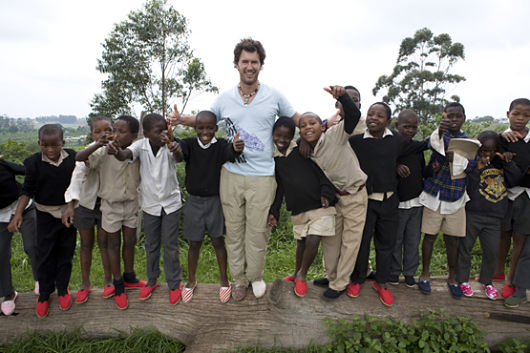
The founder of the “one-for-one” model has clothed the feet of more than 2 million children and has increased maternal healthcare participation by 42 percent as a result of shoe donations. TOMS’ work also enrolled 1,000 new students in Liberian primary schools and identified 100 children as malnourished, thanks to shoe-integrated health screenings in Malawi. The business currently works with more than 100 giving partners and aids more than 70 countries worldwide. Not only does TOMS work to give shoes, but the company also invests in supporting responsible shoe industries, providing safe water and quality education, training birth attendants and supplying birth kits. TOMS even works with bullying prevention centers in the United States by funding programs and training crisis employees to run Crisis Text Line.
4. Roshan Telecom
Afghanistan’s leading telecommunications provider is also one of the world’s most socially responsible businesses. It is a certified B Corporation, which means that it meets high and demanding standards for ethical business practices. It also works to proactively further the social and economic welfare of less developed areas. In 2014, the company expanded internationally, bringing its professional and humanitarian services along to countries like Burundi, Uganda and Tanzania. The Aga Khan Fund for Economic Development, another humanitarian player, largely owns Roshan Telecom. Together, they provide e-learning, telemedicine and environmentally friendly educational facilities. Roshan also works in East Africa to establish and strengthen mobile infrastructure.
5. Oliberté
The fair-trade, eco-friendly footwear factory supports workers’ rights in sub-Saharan Africa. Tal Dehtiar, the founder of Oliberté, began his work in 2009, partnering with factories and suppliers in Africa. In 2012, the company moved into its own factory in Addis Ababa, Ethiopia. In September 2013, it became the world’s first Fair Trade Certified™ footwear manufacturing factory. Oliberté follows the motto “Trade. Not aid.” It works to create social enterprise by providing safe and ethical working environments, in addition to recycling profits into factory and job creation. So far, Oliberté has locations in Ethiopia, Liberia and Kenya. Dehtiar is looking to develop more factories in Cameroon, the Democratic Republic of the Congo, Uganda and Zambia. The ultimate goal is to enable a healthier generation, where men and women can earn a salary, kids can go to school and one proud family can give birth to another.
6. Bloomberg Philanthropies
The Foundation Center follows founder Michael R. Bloomberg’s humanitarian works. The American politician, business mogul and philanthropist served as the 108th Mayor of New York City and dedicated his life to investing in a better, cleaner and safer future. Bloomberg Philanthropies focuses on bettering public health, education, the environment, government innovation and the arts, among many others. Bloomberg Philanthropies’ work is quantifiable and supported by data. For example, The Foundation invested $53 million over a five-year time frame to fix the overfishing problem in Brazil, the Philippines and Chile. So far, 7 percent of the world’s fisheries, and counting, are being revived, thereby bringing back countless jobs and livelihoods in addition to revitalizing ocean life. As of 2013, Bloomberg Philanthropies distributed $452 million to humanitarian projects worldwide.
7. Sanergy
Sanergy works to provide sustainable sanitation in urban slums. So far, the company has opened 701 Fresh Life Toilets, each of which comes with toilet paper, sawdust, soap, and water for handwashing, according to the Sanergy website. Each toilet also provides a waste receptacle, a sanitary bin for women, a mirror, a coat hook and a solar lantern for early morning or nighttime trips. Access to the facilities is priced, but it is comparable to informal settlements. Fresh Life Toilets prices even offer more bang for their buck because they include all the products and services that other toilets do not offer. Thanks to Sanergy, waste removal is safer, more sanitary and even eco-friendly, as the waste is converted into fertilizer and electricity. Since the company’s start, 5,446 metric tons of waste have been properly transported and treated, and 727 jobs have been created.
– Lin Sabones
Sources: Fast Company, Warby Parker, TOMS, Oliberté, Sanergy
Photo: Designed Good

University of the People: Free Education for the World
Education empowers individuals and gives them a chance to escape poverty. This idea is so accepted and powerful that one of the United Nations Millennium Development Goals (MDGs) calls to “Achieve Universal Primary Education.”
However, what is next for those who have achieved primary education? If a person has a primary or even secondary education, are there resources to allow that individual to obtain a higher education?
Often, a young adult may desire a higher education but find that their financial situation will keep them from achieving a traditional higher education without substantial scholarships. Possibly, they are too geographically far from a traditional university or need to work to contribute to the household income.
Fortunately, a global revolution in higher education is taking shape through the work of the University of the People. They have created a business plan that provides free higher education for the world online. So far, they only have four programs, but they are all accredited: Associate of Science and Bachelor of Science in Business Administration, and Associate of Science and Bachelor of Science in Computer Science. The sequence of courses is comparable to any brick-and-mortar education, and are overseen by an advisory board of professionals from several large universities.
Anyone over the age of 18 with a secondary diploma and proficiency in English can apply to the University of the People. Tuition is completely free and course materials are all accessible on the Internet and available to download. There is a small application fee, and each course does require a $100 end-of-course examination. However, the fees have the possibility of being covered through scholarships.
How is all this achievable? Well, the University has partnered with several large names in this endeavor, such as Yale University for research, New York University for applications and Hewlett-Packard for internships. Furthermore, well-qualified instructors and professionals volunteer as course instructors and course developers. People dedicated to the cause of giving everyone access to higher education make this business plan succeed.
Even with such great strides in access to education, those in poverty are still at a disadvantage. A large group of potential students is left out of this revolution because they lack Internet access, working computers or English proficiency.
However, those areas are being addressed. For example, the University of the People pledged to accept 250 qualified Haitians into the program. The University hopes this group of students will help the rebuilding of Haiti by becoming leaders through this educational opportunity. To aid the students, the University of the People pledged to “locate places for students to go to study, furnish these places with computers, ensure electricity and back-up generators and provide satellite Internet.”
The United States can also help with the technological disadvantages that Africa faces through the Electrify Africa Act. This act would establish partnerships and devote financial help to Sub-Saharan Africa, where electricity is wildly inconsistent. By creating reliable electricity sources in Africa, the economy will likely improve, and people will have the ability to escape poverty. If Sub-Saharan Africa had reliable electricity and, in turn, access to the Internet, a large group of potential students would have the opportunity to achieve higher education through the University of the People.
Students lacking English proficiency are also being addressed. The United Nations is working to bring primary education to every child around the globe with the aforementioned MDGs. Once a child is literate in their own language and has passed primary education, educators can start to focus on teaching a foreign language with proficiency in secondary school, thus opening doors for higher education.
The University of the People has rolled out a solid business plan that is already showing results. So many people around the globe that thought they would never be able to achieve a higher education due to finances or distance now have an opportunity to succeed and move out of poverty.
– Megan Ivy
Sources: Congress.gov, University of the People, UN Millennium Goals
Photo: The Positive Approach
5 Things I Learned about Poverty in Peru
An avid world traveler, there is nothing I love more than exploring new places and experiencing cultures that are vastly different from my own. On my latest adventure, I spent two weeks roaming around the South American country of Peru. Although best known for its well-preserved Inca ruins and lovable llama population, I learned that there are many dimensions of Peru that the average tourist does not see. The spirit of the Peruvian people struck me at many moments during my visit, but here I offer up five things that I learned during my travels that I find particularly revealing.
1. Rural poverty is rampant
Although government statistics report that only a third of the Peruvian population lives below the national poverty line, about 8 million people still qualify as poor. As I traveled from town to town in buses and taxis, time and time again I was forced to think about how much better the average living conditions of Americans are in comparison. Poverty in Peru is deepest among indigenous people living in remote rural areas. In fact, the national rural poverty rate is over 50 percent, with 20 percent of people in the Andean region considered extremely poor. This was evident in the villages in the mountains I passed through; they looked almost abandoned, with people living in huts, little modern technology and often no electricity.
2. Everything is cheap
For American tourists, this is not a bad thing. Currently, one Peruvian Nuevo Sol is equivalent to approximately $3.15 (USD), making purchasing hotels and food throughout Peru a breeze for thrifty college students like myself. Although I enjoyed the benefit of this exchange rate, it reflects a sad truth about the Peruvian economy. The average GDP per capita is $5,000 (USD), a sum that the majority of Americans can barely imagine earning in a month or two in order to make ends meet.
3. People are desperate
Every time I would visit a notable tourist site, I was swarmed by locals selling knock-off goods, badly reproduced “Peruvian artifacts” and women dressed in traditional garb with llamas, trying to charge money to take a photo with them. It seemed all fun and games at first, but the more I thought about it the more I realized that these were the actions of desperate people. Clearly these individuals are in need, as they are making a mockery of their own culture in order to make a couple sols – usually just a dollar or less.
4. Despite their poverty, the people are helpful
You might expect an impoverished population to lie and steal in order to make ends meet – this is the stereotype that many Americans adopt when visiting foreign countries. I, however, kept an open mind when I arrived in Peru, and I was more than pleasantly surprised by the conduct of the people I encountered. I did not feel like I was lied to or cheated at any time on my trip. On the contrary, everyone I encountered was extremely willing to help me. From the customs official who gave me restaurant suggestions to the cab driver who pulled over several times to ask locals on the street where my hostel was located, to the woman selling rice who told me to move my cell phone from my pocket to a safer place, I was met with incredible kindness.
5. More than helpful, the people are happy
Although the poverty in Peru was evident in many of the towns that I visited, also evident was the spirit of the Peruvian people. At no time during my trip did it seem that individuals in the towns were unhappy with their situation. Children played soccer, elders sat on the porches and watched the world go by, and those giving my friend and me tours for reasonable sums were passionate about the landscapes of their country. This was perhaps the most inspiring for me, for even without wealth the people of Peru are able to live fulfilling lives and be generous and welcoming to those around them, even foreigners. It is these kinds of people that are worthy of help, and it is important to remember that people in poverty are not much different from you and me.
– Katharine Pickle
Sources: Rural Poverty Portal, CIA
Photo: Pulsa Merica
4 Charity Apps and Websites
Making a difference has become increasingly easy in the technological age. Various mobile charity applications, websites and internet services have made effortless giving entail just another click of a button in one’s daily routine. Here are four digital platforms that allow you to give while doing the things you already do, without spending an extra penny:
1. Tab for a Cause
Tab for a Cause is a browser extension that resets a user’s homepage to a customizable Tab for a Cause page. Every time a user opens a tab, this page is displayed. Tab for a Cause generates between 1/10 and 1/3 of a cent of ad revenue with every opened tab because of the various advertisements displayed on the page. For every tab opened, users receive a “heart” which they can allocate to different causes of their choice including human rights, water, education, health and the environment. The money generated is allocated accordingly at the end of each quarter to corresponding charities that have partnered with the company. The site reports that it has raised over $135,000 for charity since its launch.
2. Charity Miles
Charity Miles pairs users with corporate sponsors that donate to charity for every mile users bike, run or walk. When users are ready to exercise, they can open the app to select one of nine non-profit organizations and then proceed with their routine. While the app is open, an advertisement from the sponsor is displayed. The charity app uses mobile GPS services to measure distance traveled. Biking earns up to 10 cents per mile, while walking and running earns up to 25 cents per mile. Sponsors include Timex Sports, Johnson & Johnson and Kenneth Cole.
3. Feedie
Feedie is a mobile charity app that is an excellent effortless giving tool for foodies who love to share their experiences with others. The app allows users to check in at participating restaurants around the United States, take a picture of the food and share it via social media. For every picture, participating restaurants donate 25 cents for the publicity. This pays for approximately one meal from The Lunchbox Fund, which distributes daily meals to at-risk students in South Africa.
Therefore, every photo of a meal translates into the provision of a real meal to a child in need.
4. Check-in for Good
Check-in for Good is a mobile app that allows users to raise money for causes when they check-in at participating businesses on their mobile devices. When consumers download the app, they have the opportunity to choose the causes that they want to support and find local businesses that support those causes. When they check-in using GPS services on their phones, the businesses donate a small amount to the given cause. Participating businesses also provide promotional offers through the app, which gives consumers a good deal. Users have control of whether or not they want to share their check-ins on social media. They can also use geo-targeted advertising to find new businesses to explore. Behind the scenes, the platform allows fundraising groups to ask local businesses to make micro-donations when someone checks-in with an offer to support that group. This allows consumers to save money and businesses to expand their reach, along with raising money for specific causes.
While these charity apps and websites may not produce life-changing results on an individual scale, the donations can certainly add up.
– Arin Kerstein
Sources: ABC News, Check-in for Good, Feedie, Life Hacker, Nonprofit Quarterly, Tab for a Cause
Photo: Verizon
Global Hunger: Five Things to Know
While hunger has always been a ubiquitous concern among humanitarian and developmental organizations, it is often misunderstood. Here are five things to keep in mind when considering a problem affecting millions around the world:
1. Hunger is widespread.
The United Nations estimates there are 795 million hungry people today, mainly rural people in developing nations. Although hunger is a global problem, it is concentrated primarily in Asia and sub-Saharan Africa. India has the most hungry people: 194.6 million, which is roughly 24 times the population of New York City.
2. It affects children the most.
Hunger is the leading cause of death for children under five. That is about 3.1 million deaths per year, according to the World Food Programme (WFP). Hunger also causes physical and cognitive stunting; a fourth of children worldwide suffer from this condition. Without proper nutrition, children cannot develop strong bodies and minds. The first 1,000 days of a child’s life are especially important.
3. It’s caused by poverty and waste.
A common misconception is that hunger is caused by global food scarcity or overpopulation. In fact, a third of the food the world produces goes to waste every year. Poverty and the unequal distribution of resources are actually the leading causes of hunger. It is often made worse by disasters, both natural and man-made.
4. It weakens the immune system and helps disease spread.
A proper diet is essential to a functioning immune system. Nutritionally deficient people are more likely to become infected with disease, more likely to suffer worse symptoms and less likely to recover. The World Health Programme estimates that iron deficiency is the most widespread nutritional concern, affecting almost two billion people. Vitamin A deficiency is also a cause for concern, especially among children and pregnant women.
5. It can be solved during our lifetime.
José Graziano da Silva, director-general of the Food and Agriculture Organization, recently called on the world to become the “Zero Hunger generation.” Hunger is a problem that can be solved and organizations around the world have made great progress to date. The WFP calls this effort a “best buy” because it can be very cost-efficient. For example, a child only needs 25 cents per day to receive the essential nutrients and vitamins, according to the WFP. That’s why the United Nations made global hunger a top priority in its Millennium Development Goals. That effort was a success; according to a recent report, 72 of 129 nations monitored by the United Nations met their goal by 2015. But the work continues.
– Kevin McLaughlin
Sources: U.N. Food and Agricultural Organization, UNICEF, World Food Programme, World Health Organization
Photo: Humanosphere
What is Homeland Security?
Homeland Security is often misperceived as a constant battle with bad guys and making sure the enemy does not harm the nation. While Homeland Security does work to protect against terrorism, its goals are even broader.
As defined by the official website of the Department of Homeland Security, the department works to guarantee “a homeland that is safe, secure, and resilient against terrorism and other hazards.” By ensuring security in all areas of life, resilience against harm and safety through customs and exchange, Homeland Security can protect the nation from various versions of injury.
The Department of Homeland Security describes its goals as follows:
The branches of Homeland Security frequently work with the public to ensure safety from occupational hazards, disasters and threats to cyber-harm and terrorism.
One tactic used as an advantage in Homeland Security is “soft power.” Soft power is the ability to persuade others that they want the same end goal as yourself without the use of force or violence. The term can also mean altering the general public’s opinion, usually through non-transparent ways.
Most large nations have a strong Homeland Security department to protect their citizens. Though the U.S. official department was formally created in 2002, the presence of the United States in other countries had been felt long beforehand.
During World War II, President Franklin D. Roosevelt used a great deal of soft power with his Four Freedoms to convince Americans and those around the world to support his efforts. Although the Four Freedoms were morally high in stature, it allowed him to persuade others that they wanted the same as him and the United States.
Soft power has been used plenty of other times throughout American history, but it has also been seen around the world. For example, Pope John Paul II made a trip to Poland in 1979 and, according to Homeland Security Today, “influenced events against Poland’s Communist regime, the Soviet Empire, and ultimately Communism.”
The influence strong nations have through soft power on global issues, including poverty, can be life-changing. Supporting acts and initiatives to reduce poverty around the globe can create leverage over other countries that are less sure about helping the world’s poor.
Although these strong nations have the power to push efforts through, reasons to better their own positions are usually included. By reducing poverty around the world, threatening terrorist actions can be reduced.
A majority of terrorists resort to joining terrorist groups in order to provide for their families. When groups such as ISIS offer exceedingly high pensions, it is hard for struggling families in poverty-stricken countries to decline the offer.
By improving the widespread poverty situation around the world, the globe becomes a safer home for those living in all countries.
– Katherine Wyant
Sources: Department of Homeland Security, Homeland Security Today
Photo: Climate and Security
The Impact of “Clicktivism”
In the digital age, it is easier than ever to voice one’s support for a cause or raise awareness about a particular issue, all it takes is the click of a button.
In the wake of the recent devastating earthquake in Nepal, Facebook gave users the option to donate to the International Medical Corps’ relief efforts. According to a Facebook post by CEO Mark Zuckerberg, over $10 million was raised by the Facebook community — in just two days.
Social media provides a platform to quickly support a cause without exerting much — if any — personal effort. This phenomenon has been labeled as “clicktivism,” or “slacktivism,” and has been widely criticized for creating an impression of support, rather than actually accomplishing anything for the cause.
Many critics point out that clicktivism satisfies the urge to respond to an issue, thus reducing eagerness to take further action.
However, according to a study conducted by Georgetown University’s Center for Social Impact Communication and Ogilvy Public Relations Worldwide, the truth is quite the contrary. Researchers found that Americans who promote causes using social media by creating posts, joining a group on Facebook or taking other similar actions, actually participate more in offline activist efforts than non-social media promoters.
“The presumption was that these individuals were replacing more ‘meaningful’ actions with simple clicks and shares. But what we found is that they’re actually supplementing—not replacing— actions like donating, volunteering and planning events,” Senior Associate Dean and Executive Director of the Center for Social Impact Communication Denise Keyes was quoted in the research report.
The study showed that so-called clicktivists are over four times as likely than non-social media promoters to encourage others to contact political representatives about an issue, twice as likely to volunteer time to a cause, more than twice as likely to participate in an event or a walk and just as likely to donate money.
It is unlikely that every user who donated to relief efforts in Nepal dedicated himself or herself to volunteering and staying informed about progress in the nation. But whether or not clicktivists take action offline, sharing a post inherently increases visibility and raises awareness, regardless of the amount of effort (or lack thereof) exerted by the “sharer” or “retweeter.” It is possible that a certain user does not accomplish anything further after pressing “share,” but that user’s friend might be scrolling through their newsfeed and be inspired to do more. Although using a hashtag and retweeting a human rights organization does not necessarily equate to action, the importance of such actions in rallying support for global issues cannot be diminished.
It is not a new concept to use whatever tools necessary to mobilize supporters of a cause. Activism is a spectrum comprised of many levels of involvement and dedication. Whether it be signing a petition or putting money in a donation box while purchasing groceries, lower levels of commitment exist and have existed, regardless of their portrayal on the Internet.
Clicktivists should remember that while their online actions are definitely helpful, it should not suffice or constitute full-fledged activism. Therefore, clicktivists should push themselves to stay committed to issues that pique their interest. That is not to say that they should stop sharing, liking and retweeting. The benefits of those actions are immeasurable.
– Arin Kerstein
Sources: Daily O, Facebook, Daily O, Georgetown University, Daily O
Photo: Invisible Children
What Does it Mean to Be Philanthropic?
What does it mean to be Philanthropic? Philanthropy is a noun that the Oxford English Dictionary defines as the “love of mankind” and “the disposition or active effort to promote the happiness and well being of others.” In our current society, the word philanthropic tends to be an interchangeable term with entrepreneurial. As those who are seen as philanthropic tend to be those individuals who are financially involved with an organization promoting effort to help those in need.
This current view on philanthropy by society is harmful in the way that it seems to prevent, or even stigmatize, philanthropic efforts on the small scale. These small-scale efforts can be seen as insignificant and unrealistic by a public assuming that only grandiose donations from entrepreneurial individuals can make a difference, which is a major factor for why many people do not get involved with social problems.
Philanthropy at its core is having a love for humanity, and there are many ways for people to become involved. Individual efforts over long periods of time can be as effective, if not more so, as a grand one-time financial gesture. While an entrepreneurial spirit can help with the sustainability of a philanthropic organization, they should not rely solely on financial gain. This would defeat the purpose of trying to make positive change.
Other than participating financially, volunteering time and effort to a philanthropic cause can make a difference in helping create positive change.
So as philanthropy exists to benefit others, it should be no surprise that participating in these efforts can help create a personal benefit and fulfillment within the individual. In recent studies regarding volunteer work and its physical benefits, the results showed a 22 percent reduction in mortality of the volunteer work participants. It has been proven that when an individual is involved with the helping of their fellow man, the reward center in the brain that produces the neurotransmitter dopamine creates a feeling of fulfillment and greater happiness, or a “helper’s high.” In addition, there are many other benefits to an individual volunteering within philanthropic organizations, such as better pain management and lower blood pressure.
To be philanthropic is to express love for all of mankind and to help in any way. While the majority of individuals choose to participate financially, it is important to realize that not all philanthropic ventures need this. Choosing to volunteer can help these philanthropic organizations continue to make a positive change within our society.
– Alysha Biemolt
Sources: Oxford English Dictionary, Inc., Huffington Post
Photo: Blake Rubin
Closing Tax Loopholes to Fund Development
“Tax abuse by multinational corporations increases the tax burden on other taxpayers, violates the corporations’ civic obligations, robs developed and developing countries of critical resources to fight poverty and fund public services, exacerbates income inequality, and increases developing country reliance on foreign assistance.”
This is the guiding principle and raison d’être for the recently formed Independent Commission for the Reform of International Corporate Taxation, thankfully referred to as ICRICT. ICRICT had its first meeting in March of this year after being established by a coalition of civil society groups including Oxfam, Christian Aid and the Council of Global Unions. Their aim, which is evident in their name, is to reform the global tax structure to put an end to tax loopholes and dodging.
Tax dodging, or tax evasion, occurs in a myriad of different ways, some quasi-legal and some entirely criminal. One of these, known as the separate entity concept, treats subsidiaries of multinationals as legally independent and allows the corporation to effectively shift profits away from high tax countries to regions with low or no taxes. This simultaneously reduces their tax burden and steals government revenue.
Complicated and arcane, international tax law does not spark much interest. However, it has massive implications for poverty rates and economic development around the world.
The reasons why are simple. Expounding on the guiding principle of ICRICT, the resources that are undermined by tax dodging would allow governments to invest more in public goods, specifically healthcare and infrastructure. A lack of quality education, public utilities and other government goods work against the poor and are an underlying reason why people remain in poverty.
The numbers are staggering. Africa, which received slightly less than $56 billion in official development assistance in 2013, loses more than $60 billion a year in “illicit financial outflows.” Another report estimates that for every dollar Africa receives in international aid, two dollars are lost due to tax evasion. A report by IMF researchers estimates that tax avoidance costs developing nations $213 billion a year. Globally, governments are robbed of over $3 trillion every year.
It is uplifting to realize that the window of opportunity for reform is ajar. The recent inception of ICRICT was preceded by America’s Foreign Account Tax Compliance Act, the OECD’s creation of a Common Reporting Standards and their Convention on Mutual Administrative Assistance in Tax Matters. These efforts are bringing attention and solutions to the problem.
As the window opens, the first sight on the horizon is the Third International Conference on Financing for Development, which is to take place in just over a month in Addis Ababa. The conference will make critical decisions on how the Sustainable Development Goals will be financed. Clamping down on tax dodging would uncover a huge source of funding.
In the ever-evolving arms race between regulators and thieves, the dedication and perseverance of international governing bodies and those that advise them may have tipped the balance in favor of the regulators. If successful, these anti-tax avoidance measures will harness and utilize billions of dollars for poverty reduction measures.
– John Wachter
Sources: Wall Street Journal, The Guardian 1, The Guardian 2, The Economist, ICRICT, United Nations
Photo: Flickr
Top Businesses Doing the Most Good for the World
1. Intel
As of 2014, Intel became a conflict-free microprocessor manufacturer. According to Fast Company, this means that Intel does not source its raw materials from areas involved in armed conflict and human rights issues in order to make its processing devices. The company established this goal in 2012. Ever since, the company has worked to verify more conflict-free suppliers. Intel now looks to produce all of its products in the same way. This decision has a huge social impact because it places people above profit, demanding smelting companies to do the same if they wish to continue selling to Intel.
2. Warby Parker
The eyeglass company follows the TOMS business model: buy one, give one. At Warby Parker, every pair of glasses bought donates the equivalent dollar amount to Warby’s nonprofit partners, like VisionSpring. The money is then used to train aspiring optometrists in developing countries to properly conduct basic eye exams and how to sell eyeglasses to their communities at affordable prices. The great thing about Warby’s business approach is that it aims to create sustainable change by investing in building livelihoods. The Warby Parker website explains the importance of a single pair of frames: a single pair can increase productivity by 35 percent and increase monthly earnings by 20 percent. Today, 703 million people do not have access to eyewear, but thanks to Warby Parker, more than 18,000 people in over 35 countries have improved their eyesight.
3. TOMS
The founder of the “one-for-one” model has clothed the feet of more than 2 million children and has increased maternal healthcare participation by 42 percent as a result of shoe donations. TOMS’ work also enrolled 1,000 new students in Liberian primary schools and identified 100 children as malnourished, thanks to shoe-integrated health screenings in Malawi. The business currently works with more than 100 giving partners and aids more than 70 countries worldwide. Not only does TOMS work to give shoes, but the company also invests in supporting responsible shoe industries, providing safe water and quality education, training birth attendants and supplying birth kits. TOMS even works with bullying prevention centers in the United States by funding programs and training crisis employees to run Crisis Text Line.
4. Roshan Telecom
Afghanistan’s leading telecommunications provider is also one of the world’s most socially responsible businesses. It is a certified B Corporation, which means that it meets high and demanding standards for ethical business practices. It also works to proactively further the social and economic welfare of less developed areas. In 2014, the company expanded internationally, bringing its professional and humanitarian services along to countries like Burundi, Uganda and Tanzania. The Aga Khan Fund for Economic Development, another humanitarian player, largely owns Roshan Telecom. Together, they provide e-learning, telemedicine and environmentally friendly educational facilities. Roshan also works in East Africa to establish and strengthen mobile infrastructure.
5. Oliberté
The fair-trade, eco-friendly footwear factory supports workers’ rights in sub-Saharan Africa. Tal Dehtiar, the founder of Oliberté, began his work in 2009, partnering with factories and suppliers in Africa. In 2012, the company moved into its own factory in Addis Ababa, Ethiopia. In September 2013, it became the world’s first Fair Trade Certified™ footwear manufacturing factory. Oliberté follows the motto “Trade. Not aid.” It works to create social enterprise by providing safe and ethical working environments, in addition to recycling profits into factory and job creation. So far, Oliberté has locations in Ethiopia, Liberia and Kenya. Dehtiar is looking to develop more factories in Cameroon, the Democratic Republic of the Congo, Uganda and Zambia. The ultimate goal is to enable a healthier generation, where men and women can earn a salary, kids can go to school and one proud family can give birth to another.
6. Bloomberg Philanthropies
The Foundation Center follows founder Michael R. Bloomberg’s humanitarian works. The American politician, business mogul and philanthropist served as the 108th Mayor of New York City and dedicated his life to investing in a better, cleaner and safer future. Bloomberg Philanthropies focuses on bettering public health, education, the environment, government innovation and the arts, among many others. Bloomberg Philanthropies’ work is quantifiable and supported by data. For example, The Foundation invested $53 million over a five-year time frame to fix the overfishing problem in Brazil, the Philippines and Chile. So far, 7 percent of the world’s fisheries, and counting, are being revived, thereby bringing back countless jobs and livelihoods in addition to revitalizing ocean life. As of 2013, Bloomberg Philanthropies distributed $452 million to humanitarian projects worldwide.
7. Sanergy
Sanergy works to provide sustainable sanitation in urban slums. So far, the company has opened 701 Fresh Life Toilets, each of which comes with toilet paper, sawdust, soap, and water for handwashing, according to the Sanergy website. Each toilet also provides a waste receptacle, a sanitary bin for women, a mirror, a coat hook and a solar lantern for early morning or nighttime trips. Access to the facilities is priced, but it is comparable to informal settlements. Fresh Life Toilets prices even offer more bang for their buck because they include all the products and services that other toilets do not offer. Thanks to Sanergy, waste removal is safer, more sanitary and even eco-friendly, as the waste is converted into fertilizer and electricity. Since the company’s start, 5,446 metric tons of waste have been properly transported and treated, and 727 jobs have been created.
– Lin Sabones
Sources: Fast Company, Warby Parker, TOMS, Oliberté, Sanergy
Photo: Designed Good
Tools for Achieving Foreign Policy Goals
Effective Tools for Achieving Foreign Policy Goals
Diplomacy
Diplomacy is the act of working and negotiating with representatives of foreign nations to reach consensus and set the stage for future rules. This can involve working on the development of accords, treaties, alliances and conventions. Diplomats form relationships with officials from other countries to understand their perspectives, while simultaneously portraying and promoting the values and position of the United States. Although there are many images in the media depicting diplomatic meetings regarding large-scale foreign policy decisions, most diplomatic relations — especially those of particular importance — occur behind the scenes through private discussions and negotiations. In addition to discussing issues with foreign officials, diplomats meet with many other members of foreign societies, ranging from business officials to representatives of nongovernmental organizations. By cultivating connections throughout civil society, diplomats can gain a better understanding of a country’s culture in order to find common ground on which to base relations and actions.
Foreign Aid
States can use foreign aid to achieve foreign policy objectives abroad, build relationships with other nations and address issues of humanitarian concern. There are various forms of aid, including foreign military aid, humanitarian assistance, food aid and general development aid. Foreign military aid involves augmenting another nation’s supply of military equipment and technological capabilities. Military aid can help a state indirectly influence the balance of power in areas abroad, therefore increasing a country’s sphere of influence. Military aid can also serve to help another country defend itself based on commonly shared ideals and values. Alternatively, states can give economic aid to other countries in order to stimulate growth or help with specific project development. The United States currently spends less than one percent of its budget on foreign aid.
Sanctions
Countries can use sanctions in an attempt to change another country’s behavior. Sanctions can be used to express dislike for a current behavior, limit opportunities for such behavior to continue and deter other countries from taking similar courses of action. Different types of sanctions include arms embargoes, trade embargoes, asset freezes and travel restrictions. Historically, sanctions have been put in place in an attempt to take a stand against human rights violations.
Military Force
Using military force — or hard power — in foreign relations involves states using their military to influence the behavior of weaker nations or directly involve themselves in the c0untry. The United States currently has the most powerful military in the world.
Deterrence
States can deter other states from taking an action by convincing opponents that the costs will exceed the benefits. This can happen through diplomacy or the threat of military action.
When making decisions that affect the international community, as many decisions do, states either behave unilaterally, bilaterally or multilaterally. Unilateral action indicates that a state is acting alone, independent of common norms or rules of world order. Unilateral actions tend to be based on self-interest rather than on international standards of behavior. Meanwhile, bilateral action indicates that two states are acting together. Finally, multilateral actions indicate a multiplayer coordination of efforts based on commonly shared norms. A nation’s approach toward cooperation with other nations in dealing with its foreign policy agenda is very influential in the effectiveness of each of the tools.
The foreign policy tools actually used are largely dependent on a nation’s foreign policy agenda. Most contemporary issues are seen to be multifaceted in nature, and will thus need to be approached with a combination of these instruments. The established goals of a state’s foreign policy agenda will also affect the choice of tools. In reality, the actual usage of these tools is not only dependent on what goals are being pursued, but on what resources are available.
– Arin Kerstein
Sources: Global Issues, Government of the Netherlands, United States Diplomacy Center
Photo: Council on Foreign Relations