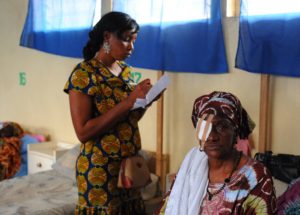
 Benin is a country located in West Africa. From 1872 to 1960, Benin was a French Colony that France used for exporting enslaved people. Liberated from French control, Benin ended up with the cultural and economic ramifications of the Transatlantic Slave Trade. In the 1970s, Benin restructured its economy using socialist principles. However, this did not improve the country’s economic or political stability, and by the 1990s, Benin shifted into privatizing its economy. Although Benin is one of the more economically developed countries in West Africa, more than 36% of the population still lives in poverty. There are approximately 92,495 people with disabilities living in Benin. Many of those most affected by poverty have physical and mental disabilities that make their chance of escaping poverty without assistance nearly impossible. Here are seven facts about the links between disability and poverty in Benin.
1. Increased Health Risks
A lack of hygiene and sanitation can lead to neglected tropical diseases, and this coincides with disability and poverty in Benin. About 11% of disabled Beninese attributed neglected tropical diseases as the cause of their disabilities. These include leprosy, with 214 annual cases, and lymphatic filariasis, which 6.6 million are at risk for. The most common forms of disabilities include visual, and hearing impairments, cerebral driving impairments, motor disabilities, intellectual disabilities and psychosocial disabilities.
Even though people with disabilities often require more medical attention, the average Beninese family is only able to financially cover one to two doctor visits a year. With increased access to health care, the rate of preventable disabilities could drop considerably and the care provided to disabled individuals would significantly increase their standard of living. One can see this in the World Health Organization-supported Assurance Pour Le Renforcement Du Capital Humain or ARCH program, which provides health insurance to the poorest Beninese communities. The results of this program have been massive, as more than 800,000 of the poorest people in Benin have enrolled in free health insurance and can now use public health facilities if they live near them.
2. Hazardous Living Conditions
Canes, wheelchairs and prosthetics are often unaffordable to those who experience disability and poverty in Benin, severely limiting mobility and safety in and out of the home. Disabled people who live alone are more likely to be at risk of falling or injury and can go long periods of time without needed assistance. Conversely, those living with family members are more likely to be victims of neglect or abuse than able-bodied individuals. By creating programs that provide canes, wheelchairs and prosthetics as well as care plans to people with disabilities and their families, Benin could prevent these hazardous living conditions.
3. Community Discrimination and Violence
When isolated by their community, impoverished people with disabilities’ access to emergency care, housing and social programs diminishes. Even more alarming in some Beninese communities is the traditional practice of killing babies born with physical abnormalities. In recent years, however, Benin authorities have begun a door-to-door campaign to raise awareness of the scientific causes behind infant deformities. This has resulted in fewer occurrences of disability-motivated infanticide as well as societal stigmatization towards people with disabilities. Educational and community-based programs such as this could put an end to the discrimination and violence against disabled Beninese.
4. Familial Liabilities
Without familial support, a majority of those impacted by disability and poverty in Benin do not have the means to afford basic necessities. Thus, households often consider them to be a financial burden. Additionally, families experience frequent blame for a child’s disability as people in some religions in Benin see disabilities as punishment for the parents’ misdeeds. Because of these misconceptions, the businesses of relatives of those with disabilities often struggle to retain customers.
The good news is that The Global Disability Fund has raised almost $400,000 as well as brought together four UN agencies, UNDP, UNFPA, UNICEF and WHO to meet with government leaders of Benin to advocate for better education on the causes of disabilities and inclusive treatment of people with disabilities in the country. With disability support from the government along with information campaigns about the humanity of those living with disabilities, families taking care of disabled loved ones will have a better chance of enduring poverty.
5. Limited Access to Education
Access to education is already limited for those suffering from poverty in Benin. More than 47% of the population is considered illiterate, and 77.5% of Beninese with disabilities are uneducated. Furthermore, only 2% of disabled children are actively attending school. With an increase in financial support to schools that can offer focused learning programs to those with disabilities, the option for education would become a reality for numerous children in Benin.
6. High Risk of Unemployment
More than 80% of disabled people are unemployed in Benin, causing many to fall below the poverty line. Benin’s labor code does include provisions to protect the employment rights of workers with disabilities. Unfortunately, this code often goes unenforced, as many people with disabilities have reported workplace and hiring discrimination. Fortunately, The World Bank’s Youth Inclusion Project is working to end employment discrimination in Benin. Although it does not currently have a program set up for people with disabilities, by providing vulnerable youth with technical skills, the project has helped employ 5,000 young people with little to no education since its start in 2021. With the support of external employment programs, such as expanding The Youth Inclusion Project to involve people with disabilities, the lives of many disabled people will most certainly be improved.
7. Government Oversight
A majority of public facilities are not accessible for those struggling with disability and poverty in Benin, including schools, transportation and courts. Moreover, there are reports that people with motor disabilities are frequently unable to access polling stations, depriving them of the ability to participate in the democratic process of voting. There is, however, growing government support for the proposed Promotion and Protection of the Rights of Persons with Disabilities Act which would guarantee certain rights such as voting, education and legal support.
Looking Ahead
As a result of the above reasons, poverty in Benin disproportionately affect those with disabilities. Despite economic growth over the past few years, Benin is still one of the poorest countries in the world. Because of this, Benin continues to rely on foreign aid to fund their government’s primary and developmental budgets. Nevertheless, there is still hope for disabled people in Benin suffering from poverty as national and international disability services move to invest in educational, medical and employment opportunities. This kind of financial and social support will allow people with disabilities a chance at life and acceptance in Benin.
– Amelia Dutch Player
Amelia is based in Savannah, GA, USA and focuses on Global Health and Politics for The Borgen Project.
Photo: Flickr

World Bank Decreasing Women’s Poverty in Latin America
Honduras’s Safe Municipalities Project
The World Bank’s Safe Municipalities Project in Honduras aims to make Honduran cities safer. First, the project empowers law enforcement locally and nationally. Second, it tackles the underlying causes of rising crime. Finally, the initiative increases the government’s ability to respond to criminal threats quickly and efficiently. Although this project aims to improve Honduran municipalities, it uniquely helps women who are the most affected by crime in Honduras.
More than a quarter of Honduran women experience physical or intimate partner violence in their lifetimes and Honduras has one of the highest global rates of femicide. Often, poverty is at the root of this, prompting the circumstances that put women at risk. However, the Safe Municipalities Project is decreasing women’s poverty in Latin America by supporting women financially and building legal systems that protect their livelihoods.
Peru’s Promoting Gender Equality Program
The World Bank is working to decrease gender-based violence in Peru in collaboration with the Ministry of Women and Vulnerable Populations. To increase awareness and response to gender-based violence, the organizations have pursued four avenues:
Women in Peru have already seen improvements in equality, including many more women joining the workforce and receiving higher education. Despite this, they face challenges in combating societal stigma and achieving beyond the traditional framework. Therefore, this World Bank initiative is giving women more ability to report violence and introducing developmental ways of limiting gender-based violence.
El Salvador’s Integrated Social Protection Project
The Integrated Social Protection project helps the Red Solidaria program create a new conditional cash transfer system in El Salvador. This system is aimed at helping families access capital to get necessities for their children and uplift underprivileged groups. In tandem with its finance-oriented approach, the program combines social protection measures with gender-based violence prevention. It provides women with financial assistance and links them with services to escape violence, like vocational training and legal assistance.
Women are given unique access to the cash transfer system, allowing them to temporarily limit financial abuse and gain independence. Only 29% of women in El Salvador have access to a financial account, compared to 45% of men, highlighting a significant gender gap in financial inclusion. Therefore, this cash transfer system plays a vital role in bridging that divide by providing women with the same financial access as men. Economic independence is often a key factor in escaping gender-based violence and the Integrated Social Protection Project is gradually dismantling this barrier, empowering women with greater financial security and autonomy.
Brazil’s Recife Urban Upgrading Project
In Brazil, particularly in urban areas, most of the population lacks adequate housing. More than 8% of Brazilians reside in favelas or urban communities with insufficient infrastructure. To address some of the challenges associated with urban poverty, the World Bank launched the Recife Urban Upgrading Project.
The project will improve favelas with roads, drainage, sanitation and formalized housing. By supporting the government in assisting people experiencing poverty in urban areas, the World Bank is also advancing opportunities for women. In Brazil, women are disproportionately affected by homelessness and its consequences. More than one-third of Brazilian women over the age of 16 experience gender-based violence at some point in their lives, with homelessness being a significant contributing factor.
The Recife Urban Upgrading Project gives women access to housing services they would not otherwise access. Through housing and the expansion of welfare services, women gain more protection from poverty-driven violence. Through formal homeownership, women gain a foothold and financial leg up to compete with men and they are connected with new employment opportunities to improve economic stability.
Conclusion
The World Bank’s initiatives across Latin America are breaking cycles of poverty and gender inequality by improving financial inclusion, protection and opportunities for women. While challenges remain, these programs pave the way for a more equitable future.
– Divya Beeram
Photo: Flickr
How Art Offers Relief from Stress Due to Poverty in Sierra Leone
History
Sierra Leone’s underdevelopment has deep roots in the aftermath of the country’s 11-year civil war, one of the bloodiest wars in African history. Despite attempts at economic recovery post-civil war, the country was consistently rated as one of the world’s poorest countries, ranking third out of 20 impoverished countries in 2025. This immense conflict caused the loss of several lives and displacement, as well as disruption in the nation’s economy and infrastructure.
Poverty in Sierra Leone
According to UNICEF, 60% of 8.8 million people live below the national poverty line and 13% live in extreme poverty conditions. Sierra Leoneans live on less than $1.90 daily, making the cycle of accessing education, food and safe water problematic to escape from. The northern region has a higher poverty rate and a lower rate in the West of Sierra Leone. The COVID-19 pandemic caused a decline in several citizens’ incomes and citizens who receive income from self-employment jobs, such as farmers, were hit the hardest. COVID-19 disrupted Sierra Leone’s poverty reduction actions and made people find different ways to make ends meet for their families.
Culture of Artistic Expression
Some residents in Sierra Leone seek an escape route from reality by participating in the arts. Through the arts, individuals can express their emotions and tell their stories to reduce anxiety, ease depression and view problems from a different perspective. Coping with the trials of life, such as poverty, builds strength to communicate and manage feelings of hopelessness. Sierra Leone residents take pride in their culture, specifically the nation’s traditional musical instruments, such as the balangi and dance, such as the Bondo dance. The art culture allows the people of Sierra Leone to surround themselves with one another as a community to address communal values and social issues.
The Arts and Poverty-Related Stress in Sierra Leone
Musicians are tackling the rise of poverty and related stress in Sierra Leone. While many believe Sierra Leone’s musicians have escaped poor living conditions, singer and songwriter Emmerson Bockarie uses his music to advocate for truth and justice in his country. “I stand with the people; I am with the country,” Bockarie said. In his single “No Easy Eh,” he sings, “Wi weh no born mit money/ less opportunity/ still wi wan be somebody/ e no easy eh.” Bockarie highlights the struggles of the youth population facing poverty-related stress in Sierra Leone, underscoring the enduring hardships that the country wants the government to address.
Spreading Hope for the Future
Art culture is a motivational characteristic of fighting poverty-related stress. It articulates social and economic concerns from the voiceless to government officials to rally local and international support for social shifts. Sierra Leonean artists assist the impoverished population and encourage the community to bond and nurture resilience during challenging circumstances. People feel emotional relief through art that endures the spirit of Sierra Leone, navigating their socio-economic landscape.
– Makayla Johnson
Photo: Flickr
Initiatives Improving Palestinian Children’s Mental Health
MAP Mental Health Services
Medical Aid for Palestine (MAP) is addressing Gaza’s mental health challenges in collaboration with the health ministry to improve access to mental health services. MAP has set up specific locations within the city to offer psychosocial and clinical support.
MAP also utilizes the close-knit community within Gaza by implementing a peer support model, enabling individuals with lived experience of mental health challenges to offer moral support to others facing similar struggles. This approach perpetuates the belief that everyone can help each other, hopefully bringing hope.
Furthermore, the organization is training its staff in psychological first aid, ensuring that they are prepared to support others and themselves through mental health challenges regardless of their role. This initiative helps ensure that as many people receive such help as possible.
GCMHP
The Gaza Community Mental Health Program (GCMHP), currently led by Dr. Yasser Abu Jamei, provides counseling over the phone. Additionally, they visit shelters and refugee camps to provide therapy. The initiative has clinics in Gaza City, Khan Younis and Deir al Balah, offering a range of services to support patients, including talking therapy, play therapy and occupational therapy.
In 2024, the GCMHP assisted more than 26,000 people in 298 days, offering care and support to individuals and families of all ages. It has also established Psychological First Aid (PFA) teams that visit camps and shelters to reach displaced families. These teams distribute toy bags to children, encouraging them to engage in familiar and enjoyable activities promoting calmness. Additionally, the teams assess whether anyone in these camps requires urgent intervention and ensure they are referred for specialized treatment.
Education and Mental Well-Being
The occupation has led to the destruction of many schools, with approximately 87.7% of educational buildings affected as of March 30, 2024. This disruption has severely impacted Palestinian children’s education and mental health, exacerbated by food, water and electricity shortages, as well as the loss of stability and educational infrastructure.
However, individuals like Israa Abu Mustafa are working to counter these challenges. She established a school for primary-aged children in Khan Younis in September 2024, starting with 35 students and expanding to 70. Despite lacking basic equipment like desks and chairs, the children continue to learn and participate in enjoyable activities. This initiative supports their well-being by restoring normalcy and safety through education.
Summary
The psychological well-being of Palestinian children is deeply impacted. However, several initiatives are offering support by providing mental health services, education and safe spaces, helping children regain a sense of stability and hope.
– Maryam Abdalla
Photo: Unsplash
The Push for Food Self-Sufficiency in Saudi Arabia
Food Waste and Loss
Despite maintaining food security, Saudi Arabia continues to struggle with food dependency and waste. According to United Nations (U.N.) data, the country accounts for 50% of global food waste, even though it has a population of about 33 million. A recent survey found that 78% of purchased food is discarded within a week to make room for newly bought groceries.
Cultural norms that encourage abundance often lead people to neglect or discard food, worsening the food waste crisis. To address the issue, the Saudi government launched programs such as Vision 2030, which includes a target to reduce food waste by 50% by 2030. In addition, the Saudi government launched the National Program for Food Loss and Waste Reduction to support this goal. Other proposed solutions include raising food prices, as low prices and bulk deals often encourage consumers to purchase more than they need.
Investing in Sustainable Agriculture
To reduce dependence on imports, the Saudi government continues to invest in initiatives like the Agricultural Development Fund (ADF), which strengthens agricultural sectors such as soybeans and maize. The country has made significant progress in the 21st century. By 2023, Saudi Arabia had reached self-sufficiency in dairy products and eggs and began exporting the surplus. The country also boosted the production of potatoes, poultry, tomatoes, red meat, carrots, fish and onions. To support continued agricultural growth, the government promotes innovations such as vertical farming, greenhouses and hydroponics. These technologies help maximize yield while conserving resources.
International Investments
Beyond domestic initiatives, Saudi Arabia is investing internationally to secure food supplies. The Saudi Agricultural and Livestock Investment Company (SALIC) has acquired an 80% stake in Singapore-based Olam Agri for $1.8 billion. This acquisition provides Saudi Arabia with access to global supply chains and strengthens its position in the international agricultural market.
Moving Forward
Saudi Arabia’s population will likely reach 40 million by 2050. To keep pace, the government focuses on improving food consumption efficiency and reducing dependence on imports. Although the country currently contributes a significant portion of global food waste, new regulations and public awareness campaigns could help lower that share over the next five years.
Efforts to expand local food production, improve waste management and promote agricultural innovation remain integral to food self-sufficiency in Saudi Arabia, and its development plans. Continued investment in sustainable practices could help the country strengthen food security and support its growing population in the years ahead.
– Naseem Rahman
Photo: Flickr
The Link Between Disability and Poverty in Benin
1. Increased Health Risks
A lack of hygiene and sanitation can lead to neglected tropical diseases, and this coincides with disability and poverty in Benin. About 11% of disabled Beninese attributed neglected tropical diseases as the cause of their disabilities. These include leprosy, with 214 annual cases, and lymphatic filariasis, which 6.6 million are at risk for. The most common forms of disabilities include visual, and hearing impairments, cerebral driving impairments, motor disabilities, intellectual disabilities and psychosocial disabilities.
Even though people with disabilities often require more medical attention, the average Beninese family is only able to financially cover one to two doctor visits a year. With increased access to health care, the rate of preventable disabilities could drop considerably and the care provided to disabled individuals would significantly increase their standard of living. One can see this in the World Health Organization-supported Assurance Pour Le Renforcement Du Capital Humain or ARCH program, which provides health insurance to the poorest Beninese communities. The results of this program have been massive, as more than 800,000 of the poorest people in Benin have enrolled in free health insurance and can now use public health facilities if they live near them.
2. Hazardous Living Conditions
Canes, wheelchairs and prosthetics are often unaffordable to those who experience disability and poverty in Benin, severely limiting mobility and safety in and out of the home. Disabled people who live alone are more likely to be at risk of falling or injury and can go long periods of time without needed assistance. Conversely, those living with family members are more likely to be victims of neglect or abuse than able-bodied individuals. By creating programs that provide canes, wheelchairs and prosthetics as well as care plans to people with disabilities and their families, Benin could prevent these hazardous living conditions.
3. Community Discrimination and Violence
When isolated by their community, impoverished people with disabilities’ access to emergency care, housing and social programs diminishes. Even more alarming in some Beninese communities is the traditional practice of killing babies born with physical abnormalities. In recent years, however, Benin authorities have begun a door-to-door campaign to raise awareness of the scientific causes behind infant deformities. This has resulted in fewer occurrences of disability-motivated infanticide as well as societal stigmatization towards people with disabilities. Educational and community-based programs such as this could put an end to the discrimination and violence against disabled Beninese.
4. Familial Liabilities
Without familial support, a majority of those impacted by disability and poverty in Benin do not have the means to afford basic necessities. Thus, households often consider them to be a financial burden. Additionally, families experience frequent blame for a child’s disability as people in some religions in Benin see disabilities as punishment for the parents’ misdeeds. Because of these misconceptions, the businesses of relatives of those with disabilities often struggle to retain customers.
The good news is that The Global Disability Fund has raised almost $400,000 as well as brought together four UN agencies, UNDP, UNFPA, UNICEF and WHO to meet with government leaders of Benin to advocate for better education on the causes of disabilities and inclusive treatment of people with disabilities in the country. With disability support from the government along with information campaigns about the humanity of those living with disabilities, families taking care of disabled loved ones will have a better chance of enduring poverty.
5. Limited Access to Education
Access to education is already limited for those suffering from poverty in Benin. More than 47% of the population is considered illiterate, and 77.5% of Beninese with disabilities are uneducated. Furthermore, only 2% of disabled children are actively attending school. With an increase in financial support to schools that can offer focused learning programs to those with disabilities, the option for education would become a reality for numerous children in Benin.
6. High Risk of Unemployment
More than 80% of disabled people are unemployed in Benin, causing many to fall below the poverty line. Benin’s labor code does include provisions to protect the employment rights of workers with disabilities. Unfortunately, this code often goes unenforced, as many people with disabilities have reported workplace and hiring discrimination. Fortunately, The World Bank’s Youth Inclusion Project is working to end employment discrimination in Benin. Although it does not currently have a program set up for people with disabilities, by providing vulnerable youth with technical skills, the project has helped employ 5,000 young people with little to no education since its start in 2021. With the support of external employment programs, such as expanding The Youth Inclusion Project to involve people with disabilities, the lives of many disabled people will most certainly be improved.
7. Government Oversight
A majority of public facilities are not accessible for those struggling with disability and poverty in Benin, including schools, transportation and courts. Moreover, there are reports that people with motor disabilities are frequently unable to access polling stations, depriving them of the ability to participate in the democratic process of voting. There is, however, growing government support for the proposed Promotion and Protection of the Rights of Persons with Disabilities Act which would guarantee certain rights such as voting, education and legal support.
Looking Ahead
As a result of the above reasons, poverty in Benin disproportionately affect those with disabilities. Despite economic growth over the past few years, Benin is still one of the poorest countries in the world. Because of this, Benin continues to rely on foreign aid to fund their government’s primary and developmental budgets. Nevertheless, there is still hope for disabled people in Benin suffering from poverty as national and international disability services move to invest in educational, medical and employment opportunities. This kind of financial and social support will allow people with disabilities a chance at life and acceptance in Benin.
– Amelia Dutch Player
Photo: Flickr
World Day of Social Justice 2025: Bridging Inequality
Understanding the Theme
Through a day dedicated to confronting systemic inequalities and advocating for sustainable solutions to poverty, this year’s theme is meant to highlight the urgent need to address key issues. Economic disparities, unfair labor practices, unequal access to education, and inadequate health care systems are some specific reasons for the world to join annually.
As global concerns grow over widening wealth gaps and declining foreign aid, this observance is a critical reminder that social justice is not just an ideal but a necessity. From policymakers to grassroots organizations, change-makers around the world are working to create a more equitable future that ensures opportunity and dignity for all.
The theme “Empowering Inclusion: Bridging Gaps Of Social Justice” reflects the pressing need to address the structural barriers that keep marginalized communities in cycles of poverty and inequality. Bridging these gaps requires comprehensive policies and community-driven initiatives that promote inclusion and long-term sustainability.
Keys in the Fight for Social Justice
The fight for social justice relies on a network of committed organizations and individuals working to dismantle systemic inequalities. There are three key players: nonprofits, policymakers and grassroots organizations. Each is instrumental to providing social justice efforts that lead to lasting change.
Nonprofits play a crucial role by providing necessary aid, fighting for policy change and raising awareness about urgent social justice issues. They often serve as a bridge between marginalized communities and essential resources, ensuring that those in need receive support ranging from education and health care to employment opportunities.
Policymakers, on the other hand, have the power to enact legislative reforms that address economic disparities and protect vulnerable populations. Furthermore, their commitment to fair labor laws, equitable taxation and social welfare programs is vital for systemic change.
Meanwhile, grassroots organizations amplify the voices of affected communities, mobilizing local efforts to challenge injustice and demand accountability. By working together, these key players create a multifaceted approach that tackles inequality from multiple angles, paving the way for a more just and sustainable future.
Real-World Initiatives Driving Equality and Inclusion
Across the globe, various initiatives have been launched to advance social justice by promoting equality in education, healthcare access, and economic inclusion. These efforts have demonstrated the power of targeted policies and grassroots movements in transforming communities and ensuring fair opportunities for all.
These initiatives showcase the tangible impact of policies and programs designed to advance social justice. The World Day of Social Justice is an opportunity to highlight such efforts and inspire further action. By learning from successful models and supporting similar initiatives, governments, organizations, and individuals can contribute to a more equitable and just world.
Making the Observance Count
The World Day of Social Justice is more than just an observance—it is a call to action to address the root causes of inequality and take meaningful steps toward eradicating global poverty. Indeed, by championing inclusive economic policies, fair labor practices, equitable education, universal healthcare and grassroots empowerment, the barriers that keep marginalized communities in cycles of hardship could be dismantled.
Real change requires sustained commitment from individuals, organizations and governments alike. Whether through supporting local initiatives, pushing for systemic change, or simply raising awareness, every effort counts in the fight for a just and equitable future.
– Bailie Cross
Photo: Flickr
Volunteers in Sudan: Groups Fighting War Challenges
The nearly two-year struggle between the Sudanese army and the rebel-turned-paramilitary Rapid Support Forces has had a particularly negative impact on women and children. War criminals often utilize sexual abuse as a weapon of war, while essential health facilities in conflict zones do not exist anymore.
However, as part of a larger community response to the worst humanitarian crisis in history, committed, women-led mutual assistance organizations have been established to provide psychological, medical, and economic help to many individuals in need. Sennar Women’s Association began its work by helping women and girls who RSF displaced. The organization’s main goals are to give pregnant women vitamins, sanitary supplies, and first aid to victims of sexual assault.
Sennar Women’s Association
The groups of women volunteers in Sudan, alongside women’s reaction rooms, are an important component of the larger emergency response rooms, which are youth-led and neighborhood-based solidarity networks, according to The New Humanitarian. These networks, which currently number several hundred nationwide, are based on Sudan’s rich history of social cooperation. Thousands of volunteers run them, preparing meals every day and maintaining utilities like water and electricity.
Since international relief organizations have not been able to regularly reach war areas, mutual aid has been extremely important in Sudan. This is even though the war has caused the greatest food crisis in history, with famine found in at least five locations and the largest displacement disaster in history, according to The New Humanitarian.
Challenges
In an interview with The New Humanitarian, volunteers in Sudan claimed that the organizations provide a lifeline for a large number of women and girls, claiming that the international assistance response has particularly overlooked their needs. According to them, the clubs also provide a network of support to help members deal with the battle.
However, according to the volunteers, they encounter an overwhelming variety of difficulties, including sexual assault by RSF soldiers and restrictions by army-affiliated officials on their access to displacement camps, where women are sometimes most in need. Volunteers reported that they do not have sufficient funding either. Although their organizations receive some financial assistance from foreign donors, it is a small portion of what the U.N. and foreign NGOs receive, despite their relatively limited access.
Unpaid volunteers frequently burn out, and communal kitchens frequently close due to the minimal funding that Sudanese benefactors and diaspora groups provide to mutual assistance organizations, according to The New Humanitarian.
How They Help
The women’s response rooms have found time to create and run educational and recreational facilities for children who do not go to scohol, even though a large portion of their work focuses on emergency, according to The New Humanitarian.
While some volunteers in Sudan reported operating literacy, numeracy and art-focused programs and safe spaces, others stated their centers have shut down due to a lack of long-term funding for teacher salaries and school supplies. Additionally, volunteers talked about managing economic empowerment initiatives that involve skill-training courses and the encouragement of small cooperatives involved in regional crafts like handicrafts and soap production.
The communal organizing has positively surprised several volunteers in Sudan, and they have stated that they would like to use it as a launching pad for future feminist activity after the war is over, highlighting how important the work of organizations is during the challenging periods of wartime.
– Taylor Naquin
Photo: Flickr
President Luiz Inácio Lula da Silva: Reducing Poverty in Brazil
Lula’s First Two Terms
On October 27, 2002, Luiz Inácio Lula da Silva secured election as Brazil’s president, becoming the first former laborer to achieve this role. During his first term, he tackled issues that burdened Brazil, such as income inequality, the minimum wage and economic record-keeping.
He launched social programs like Bolsa Família and enacted reforms to address these challenges. Despite these accomplishments, Luiz Inácio Lula da Silva faced criticism for neglecting education and crime as well as for a scandal involving his party’s illegal campaign funding.
In 2006, Lula triumphed in the presidential election again through two rounds of voting. His leadership fostered Brazil’s prosperity, symbolized by the selection of Brazil to host the 2016 Summer Olympics.
Under Lula’s guidance, Brazil thrived; however, constitutional limits prevented him from pursuing a third consecutive term. Consequently, Lula endorsed Dilma Rousseff to succeed him as Brazil’s leader.
Lula’s Absence From Office and Incarceration
Rousseff secured consecutive election victories, but during her second term in 2014, a corruption scandal implicated Lula, business owners and other Workers’ Party politicians. Over the next few years, dramatic events led to Lula’s incarceration and eventual release. Although Lula faced charges, the Supreme Court of Brazil annulled all accusations against him in 2021, clearing the way for his re-election bid.
Lula’s Reelection and Reconstruction of Brazil
In 2022, Lula campaigned against Jair Bolsonaro, a far-right politician who accelerated Amazon deforestation and mismanaged the COVID-19 pandemic, resulting in more than 600,000 deaths in Brazil. Lula emerged victorious in the election’s second round and began his third term.
Lula reinstated the policies he introduced during his first two terms. Since his return to office, 8.7 million Brazilians have moved above the poverty line. To illustrate this achievement, 10,875 individuals per day escaped poverty after Lula’s return.
Poverty reduction in Brazil is largely credited to Bolsa Família, the social program Lula initiated. Bolsa Família provides financial support to families in poverty on the condition that they ensure their children receive education and healthcare. Inspired by this program’s success, nearly 20 countries have adopted similar initiatives. Its broad reach is evident, as 42.7% of children aged 0-14 benefit from its provisions.
Unsolved Issues
Despite Brazil’s notable progress under Lula’s leadership, the country struggles with persistent racial inequality. Among Brazilians aged 15-29, 10.3 million remain unemployed and disconnected from education.
Of this group, 45.2% are black or brown women, and 23.4% are black or brown men. Altogether, 68.6% of this demographic identifies as black or brown.
What Lula and the Rest of the World Can Learn
Lula has undeniably advanced Brazil’s development during all three presidential terms. Brazil stands to benefit by maintaining Lula’s policies while expanding efforts to support disadvantaged populations, whilst reducing overall poverty in Brazil.
Brazil has already extended aid to previously underserved groups, as evidenced by Bolsa Família’s reach. Taking further steps to address the needs of marginalized communities could perfect the program’s impact.
For the world, Lula’s leadership and Bolsa Família serve as examples of effective governance. Nations facing similar challenges can adopt programs like Bolsa Família, which deliver substantial benefits with relatively simple implementation.
– Nicholas East
Photo: Wikimedia Commons
USAID Programs in Ecuador
Ecuador’s rising violence, driven by drug cartels and organized crime, destabilizes the economy, deters investment and disrupts businesses. This worsens poverty by reducing job opportunities, increasing insecurity and straining public resources for civilians.
To address these issues, the United States Agency for International Development (USAID) has implemented key programs that aim to strengthen Ecuador’s development. From environmental conservation to economic growth and democratic governance, USAID programs in Ecuador have played a crucial role in the country’s stability and sustainability. Here are seven key initiatives shaping USAID’s efforts in Ecuador.
Strengthening Development and Resilience
Since 1961, USAID has worked with Ecuador to improve the quality of life. Programs have promoted sustainable economic growth, strengthened governance and protected the environment. USAID programs in Ecuador plays a crucial role in advancing the country’s development through key initiatives:
USAID’s Lasting Impact in Ecuador
USAID programs in Ecuador are vital. They address challenges by improving governance, expanding job growth and supporting vulnerable communities. Programs like Farmer-to-Farmer boost agricultural productivity, while RADAR helps integrate migrants into the economy. By improving resilience and stability, USAID programs in Ecuador play a key role in improving livelihoods and establishing long-term stability in Ecuador.
– Giovanni Garcia
Photo: Wikimedia Commons
Cholera Outbreak in Sudan: How the Country is Fighting Back
Sudan’s History with Cholera
Throughout its history, Sudan has faced problems with cholera outbreaks, time and time again. The disease, which is transmitted through contaminated food and water sources, has left many underdeveloped communities vulnerable to epidemics. During these outbreaks, many have had concerns and criticized the government’s lack of acknowledgement and response to the epidemics. The government never formally acknowledged the 2017 epidemic, even though the National Epidemiological Corporation recorded over 23,000 cases and more than 800 deaths linked to the disease. In 2019, the Sudanese government, with assistance from the World Health Organization (WHO), made a greater effort to curb another outbreak, mobilizing treatment centers, cholera kits and enhancing disease surveillance.
The Ongoing Conflict’s Effect on the Cholera Outbreak
Millions of people had to forcefully leave their homes and move into overcrowded camps due to the country’s current civil war. As the fighting continues to affect more areas, an increasing number of health facilities stop operating. This widespread lack of health care is ultimately worsening the cholera outbreak in Sudan.
Communities fleeing from the war and attacks on hospitals and health care facilities are only exacerbating the health care crisis, as people have to rely on aid groups, which have limited resources.
The current outbreak takes place in the White Nile State, which struggled with attacks early in February. These attacks damaged a power plant in the area, leaving many without power and cutting off access to water pumps. Without access to clean drinking water, cases of Cholera in the area surged.
Looking Forward
Treating the cholera outbreak in Sudan and the broader health care crisis is extremely challenging, as access to essential resources such as clean water, food, vaccines, and sanitation facilities is limited. However, Sudan’s Federal Ministry of Health (FMoH), along with organizations such as the WHO and UNICEF, has launched several oral vaccination campaigns, accompanied by a ban on collecting water from local rivers.
The country is heavily reliant on outside help to establish facilities to fight the outbreak and help affected people. UNICEF-backed clinics help distribute rehydration solutions to people showing symptoms of cholera. In high-risk regions, UNICEF has also established areas for chlorinating water, which will help rid the cholera-causing bacteria from people’s drinking water. The power to stop this outbreak also lies within the communities and organizations working to educate people on how to prevent and treat cholera symptoms.
– Collier Simpson
Photo: Flickr