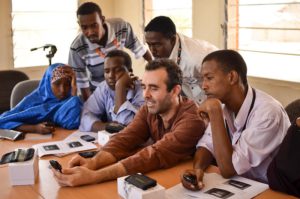
 More than 120 million individuals worldwide currently face forced displacement due to persecution, conflict, violence or human rights violations. This record-high displacement leaves millions of refugees struggling to access basic necessities, education, health care and economic opportunities. However, technology solutions for refugees are reshaping lives by building resilience and creating pathways toward secure and dignified futures.
3D Printing
Additive manufacturing or 3D printing, is transforming health care access for underserved communities by providing highly customizable, cost-effective and lightweight prosthetics for refugee patients who have lost limbs while fleeing conflict. This technology enables refugees to regain mobility, independence and hope for a better future.
e-NABLE, a global network of 40,000 volunteers, has provided 10,000–15,000 free 3D-printed prosthetic hands and arms through open-source design for those lacking medical access. Similarly, the nonprofit 3DP4ME has revolutionized hearing care, delivering 52 3D-printed hearing aids to children in Jordanian refugee camps.
E-Learning Platforms
More than 50% of the world’s 14.8 million school-aged refugee children lack formal education, limiting their future opportunities and slowing global development progress. In response, the International Rescue Committee (IRC) has successfully piloted aprendIA.
This AI-powered platform delivers accessible and interactive learning through high-quality materials, including text, audio, video, gamified assessments and PDFs, via widely used messaging platforms like SMS and WhatsApp.
By leveraging artificial intelligence and natural language processing, aprendIA offers personalized feedback and learning support, ensuring continuous education for children with limited resources.
GeoMatch
GeoMatch is an AI-driven tool developed by Stanford’s Immigration Policy Lab and ETH Zurich to help governments place refugees in optimal locations for successful integration. It analyzes refugees’ background characteristics, resettlement locations and employment data to predict employment outcomes. It also provides data-driven insights to enhance overall refugee well-being.
Translation Apps
Refugees facing resettlement often struggle with the limitations of machine translations and the scarcity of interpreters for some languages. These obstacles hinder their ability to access vital services, comprehend their rights and successfully integrate into their new communities.
Tarjimly, a nonprofit organization, is tackling this issue by connecting refugees with on-demand interpreters, enabling smoother communication during interactions with social workers, immigration officials and medical professionals.
Through a new AI partnership, Tarjimly records these interactions to help train large language models. This groundbreaking feedback loop allows humans to teach machines the nuances and cultural contexts of different languages by sharing data and correcting automated translations.
Video Games
The United Nations High Commissioner for Refugees (UNHCR) research on the digital leisure divide highlights the crucial role of digital access in refugee well-being, fostering rest, community building and access to essential information.
Video games, in particular, hold untapped potential as powerful tools for social and economic empowerment. Therefore, Project Hope, an online game-based initiative for Syrian refugee children in Türkiye, has positively influenced education, cognitive development, language acquisition and mental health.
Similarly, Refjam in North Macedonia has helped 500 displaced and stateless gaming enthusiasts to develop digital literacy and enhance employability through game-design workshops and festivals.
Blockchain
According to the World Bank, approximately 850 million people lack official identification, leaving many, especially children, refugees and stateless persons, without access to health care, education, banking and voting, heightening their risk of displacement and human trafficking.
Decentralized blockchain-based identity technology offers innovative solutions to address the global ID crisis. It provides marginalized populations with a secure, portable and immutable means of digital identification. This technology enables refugees to access vital resources and services, including the ability to seek asylum, with greater ease and efficiency.
Satellite Imagery
The integration of satellite imagery and AI is enabling planners to optimize resource allocation, enhance camp designs, track refugee movements and assess environmental impacts. For instance, AI tools were utilized to analyze migration patterns of Syrian refugees escaping conflict.
By combining satellite imagery with anonymized mobile phone data, the UNHCR could forecast the locations where new refugee camps would be needed. This proactive strategy greatly accelerated response times for humanitarian relief and enhanced living conditions for displaced families.
Makazi
More than 90% of displaced refugees are forced to remain in shelters that eventually become their long-term or semi-permanent residences. These shelters are typically inadequate, environmentally harmful and neglect the social, cultural and traditional values of the people they house.
To address this problem, Edinburgh Napier University’s SHELTERs project has developed a new prototype for temporary shelters called Makazi (Swahili for “home”). Winner of the U.K. 2019 RISE Awards, Makazi features a hexagonal design that enhances the UNHCR’s steel box-like shelters.
It is adaptable to varying temperatures and scalable to accommodate changing needs. It can also be assembled in seven days using locally available materials. Additionally, it includes water harvesting capabilities and an efficient sewage collection system.
Conclusion
Emerging technology solutions for refugees provide transformative approaches to enhance access to critical resources and improve living conditions. However, these innovations face significant challenges, including scalability, funding and infrastructure limitations, as many are still in the early development stages.
While technology solutions can play a pivotal role in supporting refugees, it cannot resolve displacement’s fundamental political, social and economic drivers. Nevertheless, ongoing advancements and integration of these technologies hold substantial promise for improving refugee outcomes and fostering more sustainable and effective humanitarian responses.
– Charlotte Codd
Charlotte is based in Waterford, Ireland and focuses on Technology and Solutions for The Borgen Project.
Photo: Flickr

Cholera Outbreak in Sudan: How the Country is Fighting Back
Sudan’s History with Cholera
Throughout its history, Sudan has faced problems with cholera outbreaks, time and time again. The disease, which is transmitted through contaminated food and water sources, has left many underdeveloped communities vulnerable to epidemics. During these outbreaks, many have had concerns and criticized the government’s lack of acknowledgement and response to the epidemics. The government never formally acknowledged the 2017 epidemic, even though the National Epidemiological Corporation recorded over 23,000 cases and more than 800 deaths linked to the disease. In 2019, the Sudanese government, with assistance from the World Health Organization (WHO), made a greater effort to curb another outbreak, mobilizing treatment centers, cholera kits and enhancing disease surveillance.
The Ongoing Conflict’s Effect on the Cholera Outbreak
Millions of people had to forcefully leave their homes and move into overcrowded camps due to the country’s current civil war. As the fighting continues to affect more areas, an increasing number of health facilities stop operating. This widespread lack of health care is ultimately worsening the cholera outbreak in Sudan.
Communities fleeing from the war and attacks on hospitals and health care facilities are only exacerbating the health care crisis, as people have to rely on aid groups, which have limited resources.
The current outbreak takes place in the White Nile State, which struggled with attacks early in February. These attacks damaged a power plant in the area, leaving many without power and cutting off access to water pumps. Without access to clean drinking water, cases of Cholera in the area surged.
Looking Forward
Treating the cholera outbreak in Sudan and the broader health care crisis is extremely challenging, as access to essential resources such as clean water, food, vaccines, and sanitation facilities is limited. However, Sudan’s Federal Ministry of Health (FMoH), along with organizations such as the WHO and UNICEF, has launched several oral vaccination campaigns, accompanied by a ban on collecting water from local rivers.
The country is heavily reliant on outside help to establish facilities to fight the outbreak and help affected people. UNICEF-backed clinics help distribute rehydration solutions to people showing symptoms of cholera. In high-risk regions, UNICEF has also established areas for chlorinating water, which will help rid the cholera-causing bacteria from people’s drinking water. The power to stop this outbreak also lies within the communities and organizations working to educate people on how to prevent and treat cholera symptoms.
– Collier Simpson
Photo: Flickr
10 Facts on Hunger in Sao Tome and Principe
10 Facts on Hunger in Sao Tome and Principe
Despite its small size Sao Tome and Principe faces challenges that mirror those of many developing nations. However, through resilience, strategic initiatives and support from the international community, continual progress is being made toward sustainable development, economic stability and reducing hunger in Sao Tome and Principe. Despite its small size, both geographically and in population, the challenges Sao Tome and Principe have experienced are not unique.
– Staff reports
Photo: Flickr
Programs Helping to Reduce Child Poverty in Guatemala
The Rotary Pathways Guatemala Literacy Project
The Rotary Pathways Guatemala Literacy Project (GLP), established in 1997, has worked to reach underprivileged communities and students through sustainable programs. This project has brought education to 295,000 children and emphasizes four complementary programs: Spark, Textbooks, Technology and Rise Youth Development. Furthermore, these programs help impoverished children in Guatemala by promoting literacy and developing technological skills.
The GLP’s Impact on Children’s Lives
The GLP has extended hope through the power of education and has continuously shown the benefits of technological literacy through the success of its students. As of 2025, the project plans to help another 6,200 children between January and October. Through its various programs, the GLP has helped hundreds of thousands of children obtain quality education and improve their chances of securing better jobs, ultimately breaking the cycle of poverty.
Looking Ahead
The Guatemala Literacy Project has made significant progress in addressing educational inequalities and poverty in Guatemala. By enhancing literacy, expanding access to learning materials, bridging the digital divide and supporting vulnerable students through scholarships, these programs offer a comprehensive solution to poverty. Continued support and expansion of these initiatives could sustain these achievements, empowering even more children to escape poverty and secure brighter futures.
– Cheyenne Weller
Photo: Flickr
Examining Hunger in Saudi Arabia
Hunger is Not a Significant Problem
According to the Global Hunger Index, hunger in Saudi Arabia is Low, with the country ranking 37 on the 2024 GHI out of the 127 countries with sufficient data to be included. The indicators comprising the GHI are proportions of the population undernourished (3% in Saudi Arabia), children under 5 stunted (10.8%), children under 5 wasted (4.5%) and children who die before their fifth birthday (0.6%). Saudi Arabia’s scores have been consistently low for decades—all indicators below 10%, except for child stunting, which has been decreasing from just below 20% in 2000.
Nutrition Issues
The 2022 Global Nutrition Report shows a slightly different picture than the GHI. Of the thirteen global nutrition targets monitored, the report shows Saudi Arabia as “off course” for seven targets and no data for three. Similar to the GHI, the country is “on course” for childhood stunting, as well as for the raised blood pressure of women. However, there has been no progress, or worsening, with regard to anemia among women aged 15 to 49. The report also measures progress towards achieving noncommunicable disease targets related to diet, and Saudi Arabia has shown only limited progress there.
In addition, the country’s obesity prevalence is higher than the regional average: 45.5% of adult Saudi women, as compared to 10.3% for the region and 34.3% for Saudi men, compared to 7.5%. Diabetes is also an issue for adult women and men (19% and 20%, respectively).
Consistent with the Global Nutrition Report, in November 2024, the Saudi Arabian government agency, General Authority for Statistics, published data indicating that the obesity rate of those aged 15 and above was 23.1%, with 45.1% classified as overweight. Obesity data for children aged 2 to 14 years was 14.6%, with 33.3% overweight. GASTAT also reported that only 10.2% of the population ate the recommended five or more servings of fruits and vegetables.
Resource Challenge: Water
Water supply is a challenge for Saudi Arabia that affects domestic grain production, resulting in dependence on imports. This means that supply chain disruptions caused by external events, e.g., the war in Ukraine, impact food costs. The country’s strategy includes maintaining strong relationships with the countries supplying grain, as well as effective government policies. This has included incentives for end-users, and policies to ensure smooth trade flows of raw materials.
Resource Challenge: Rational Consumption
The Citizen Account program was initiated by the government in 2017 to provide cash support to the “most deserving groups of citizens,” with the objective of promoting “rational consumption of resources.” Approximately $229 billion has been distributed since the inception of the program, with over $3 billion in January 2025, as the program was extended through 2025.
An NGO Response, Local and Beyond
Eta’am is an NGO established in 2011, the first food bank in Saudi Arabia and the Gulf region. The organization creates strategic alliances in order to save food from waste. It does this by distributing surplus food resources to those in need, as well as with community initiatives in the field of food support.
In 2022, Eta’am partnered with SABB (the Saudi British Bank) to establish Riyadh’s first central catering kitchen, delivering ready-made meals prepared from food/catering companies’ surplus dry foods to people with special needs, orphans and poor families. The goal has been to reduce food waste (aimed at a half million tons of dry and canned goods) while increasing food security and reducing hunger in Saudi Arabia.
An April 2022 Eta’am initiative distributed almost 157,000 food baskets to over 900,000 people in 19 countries centered around the holy month of Ramadan. Countries receiving food included Albania, Tajikistan (9,650 baskets of food to 51,400 people), Kosovo (13 tons of food to 220 families), and Niger (1,000 baskets to 5,000 individuals).
In 2023, the food company Sadia partnered with Eta’am and several Saudi retailers to donate 2.5% of sales during the month of Ramadan. Retailers promoted the campaign to raise consumer awareness about the charity and to increase their participation.
Strengthening the Kingdom: Vision 2030
Vision 2030, an “ambitious vision for an ambitious nation,” launched in 2016. A blueprint for economic diversification, it was designed in five-year phases, beginning with structural and public sector, economic and social reforms. The country is currently in the second phase, with a focus on investments in key sectors and “ambitious” projects. Eleven programs comprise the Vision, with one area being Health Sector Transformation.
The NEOM Food Production Company launched in December 2023 to develop sustainable solutions in food production, distribution and consumption. The “Vibrant” society vision includes attention to sustainable living and to efficient health and social care systems. Strategic objectives include easing access to, and improving the value of, health care services, and strengthening prevention against health threats.
Final Thoughts
While Hunger in Saudi Arabia is successfully being addressed, challenges remain in the areas of nutrition, food security and sustainable resource management. Issues such as obesity, diabetes and reliance on food imports highlight the importance of both government policies and private sector initiatives in ensuring long-term stability. Programs like Vision 2030 and partnerships with organizations such as those developed by Eta’am demonstrate the country’s commitment to addressing these challenges through innovation and strategic planning. Moving forward, continued investment in health, sustainability, and food security will be crucial in strengthening Saudi Arabia’s resilience and ensuring a healthier future for its population.
– Staff Reports
Photo: Flickr
EU Grants €1.9 billion to Revitalize Moldova’s Economy
The Reform and Growth Facility
The Reform and Growth Facility for the Republic of Moldova is an economic initiative first proposed by the European Commission in 2024. This year, the European Union and the government of Moldova reached political agreements on the restrictions to the Reform Agenda, officially establishing it as the financial basis for the Country’s current Growth Plan. The European Commission is funding the plan with €1.9 billion in financial aid from 2025 to 2027. The money will be allocated twice a year on the request of The Republic of Moldova’s parliament after the European Council confirms that all conditions of the initiative have been fulfilled.
The Economy of Moldova
Moldova is one of the poorest nations in Europe, according to the BBC. Although the Republic’s GDP has steadily increased over the past two decades, poverty and unemployment remain commonplace, especially in rural areas. For example, 13.3% of Moldovans fall below the poverty line, and nearly 25% of people between the ages of 15 and 34 do not work or attend school or apprenticeships.
Furthermore, the country’s economic structure has a multitude of underlying obstacles. For instance, it is agriculturally reliant, the BBC reports and does not produce much in the way of energy, importing a majority of its gas, oil and coal. Other structural limitations include government deficiencies, a lack of competition in the marketplace, and unequal business opportunities, all of which, according to the European Council President Ursula von der Leyen, the Reform and Growth Facility for Moldova will attempt to reform and revitalize Moldova’s economy.
The Intended Outcome
The Reform and Growth Facility for Moldova intends to provide financial support, elevate the country’s economy and bring Moldova a step closer to membership in the Europen Union. The first objective, expanding monetary assistance, will include implementing broadband internet to rural regions, as well as providing financial backing to 25,000 Moldovan businesses, according to EU4Digital.
The program also plans to contribute significant socioeconomic and structural reforms with a focus on infrastructure, the government’s role in the economy and social capital. Ursula von der Leyen put it best when she stated, “We invest in jobs, growth, services and infrastructure – from new hospitals in Balti and Cahul to the road from the capital to Odesa,” EU4Digital reports.
The Growth Facility will prioritize building sustainable energy production within Moldova by constructing a new electricity powerline that connects to the EU electricity grid, and as a result, by 2026, the country could no longer rely on energy imports. Foundationally, the Reform Plan will advocate for democracy and anti-corruption within the Moldovian government and will provide support on restructuring the economy to an open market system hinged on fair competition.
The Reform will also integrate Moldova into the European Union’s Single Market. This alone could lead to the Republic’s assimilation into global supply-chains, allowing for increased mobility of products, trade opportunities and involvement in the Digital Marketplace.
A Lesson for Foreign Aid
Since Moldova’s independence, the Reform has been the largest European Union support package, according to the European Commission. Moreover, access to the European Union’s single market has been the prominent economic growth factor for all previously included countries. It is certainly apparent though, what foreign aid can do to revitalize Moldova’s economy and reduce poverty in the country.
– Amelia Dutch Player
Photo: Flickr
Women’s Police Stations Combat Gender-Based Violence in India
Women’s Police Stations
Women’s police stations, staffed exclusively by women, provide a safer and more supportive environment for victims of gender-based violence. These stations focus on helping victims rather than solely pursuing the arrest of perpetrators. Officers connect women with domestic violence helplines, provide counseling and help them escape abusive situations. The first women’s police station, the Vanitha Police Station, was established in Kerala, India, in 1973. The success of this model led to the rapid adoption of similar stations across India, with 745 now operating, primarily in urban centers. These stations offer women a space where they can seek help without fear or intimidation. Female officers handle cases of domestic violence and sexual abuse, but they also address other gender-specific issues, giving victims a sense of empowerment and agency.
India’s women-only police stations have inspired similar models worldwide. Brazil established its first women’s police station in São Paulo and countries across Latin America and Africa have since adopted the model to combat systemic discrimination and gender-based violence.
Increasing Reporting and Legislative Impact
Women’s police stations in India have led to a 29% increase in domestic violence reporting. When women see themselves reflected in law enforcement, they are more likely to come forward and seek help. Increased reporting provides governments with more accurate data, which can lead to stronger legislation to protect women. By addressing the root causes of gender inequality, these stations contribute to breaking the cycle of violence and poverty.
Women who are more likely to experience domestic violence are often the same individuals living in extreme poverty. Rural women face higher risks of gender-based violence compared to those in urban areas. Women’s police stations not only offer support but also provide valuable information about the challenges these women face, which can shape policy changes that uplift vulnerable communities. Although the Indian government has attempted to address gender disparities in poverty, women-only police stations add urgency to legislative efforts aimed at ending these inequalities.
Global Impact on Crime Reduction
The success of women’s police stations extends beyond India’s borders. In Brazil, female homicide rates among women aged 18 to 24 dropped by 50% and the overall rate decreased by 17% following the establishment of these stations. Female personnel deterred crimes against women by creating an environment where victims felt safer reporting violence. India’s decision to pioneer this model has had a far-reaching influence, ensuring greater safety for women across the globe.
Women’s police stations offer more than law enforcement. They create a space where women can reclaim their agency, find support and pursue justice without fear. These stations address gender-based violence while contributing to broader efforts to break cycles of poverty and inequality.
Looking Ahead
Women’s police stations in India have demonstrated remarkable success, but their continued impact depends on sustained funding and expanded outreach. Increasing the number of these stations, particularly in rural areas, could ensure that more women have access to safe and supportive environments. Scaling these ongoing efforts can potentially reduce GBV and also contribute to dismantling structural inequalities that perpetuate poverty and violence. By strengthening and expanding this initiative, India has the potential to empower millions of women to live safely and independently, free from the constraints of violence.
– Divya Beeram
Photo: Flickr
Emerging Technology Solutions for Refugees
3D Printing
Additive manufacturing or 3D printing, is transforming health care access for underserved communities by providing highly customizable, cost-effective and lightweight prosthetics for refugee patients who have lost limbs while fleeing conflict. This technology enables refugees to regain mobility, independence and hope for a better future.
e-NABLE, a global network of 40,000 volunteers, has provided 10,000–15,000 free 3D-printed prosthetic hands and arms through open-source design for those lacking medical access. Similarly, the nonprofit 3DP4ME has revolutionized hearing care, delivering 52 3D-printed hearing aids to children in Jordanian refugee camps.
E-Learning Platforms
More than 50% of the world’s 14.8 million school-aged refugee children lack formal education, limiting their future opportunities and slowing global development progress. In response, the International Rescue Committee (IRC) has successfully piloted aprendIA.
This AI-powered platform delivers accessible and interactive learning through high-quality materials, including text, audio, video, gamified assessments and PDFs, via widely used messaging platforms like SMS and WhatsApp.
By leveraging artificial intelligence and natural language processing, aprendIA offers personalized feedback and learning support, ensuring continuous education for children with limited resources.
GeoMatch
GeoMatch is an AI-driven tool developed by Stanford’s Immigration Policy Lab and ETH Zurich to help governments place refugees in optimal locations for successful integration. It analyzes refugees’ background characteristics, resettlement locations and employment data to predict employment outcomes. It also provides data-driven insights to enhance overall refugee well-being.
Translation Apps
Refugees facing resettlement often struggle with the limitations of machine translations and the scarcity of interpreters for some languages. These obstacles hinder their ability to access vital services, comprehend their rights and successfully integrate into their new communities.
Tarjimly, a nonprofit organization, is tackling this issue by connecting refugees with on-demand interpreters, enabling smoother communication during interactions with social workers, immigration officials and medical professionals.
Through a new AI partnership, Tarjimly records these interactions to help train large language models. This groundbreaking feedback loop allows humans to teach machines the nuances and cultural contexts of different languages by sharing data and correcting automated translations.
Video Games
The United Nations High Commissioner for Refugees (UNHCR) research on the digital leisure divide highlights the crucial role of digital access in refugee well-being, fostering rest, community building and access to essential information.
Video games, in particular, hold untapped potential as powerful tools for social and economic empowerment. Therefore, Project Hope, an online game-based initiative for Syrian refugee children in Türkiye, has positively influenced education, cognitive development, language acquisition and mental health.
Similarly, Refjam in North Macedonia has helped 500 displaced and stateless gaming enthusiasts to develop digital literacy and enhance employability through game-design workshops and festivals.
Blockchain
According to the World Bank, approximately 850 million people lack official identification, leaving many, especially children, refugees and stateless persons, without access to health care, education, banking and voting, heightening their risk of displacement and human trafficking.
Decentralized blockchain-based identity technology offers innovative solutions to address the global ID crisis. It provides marginalized populations with a secure, portable and immutable means of digital identification. This technology enables refugees to access vital resources and services, including the ability to seek asylum, with greater ease and efficiency.
Satellite Imagery
The integration of satellite imagery and AI is enabling planners to optimize resource allocation, enhance camp designs, track refugee movements and assess environmental impacts. For instance, AI tools were utilized to analyze migration patterns of Syrian refugees escaping conflict.
By combining satellite imagery with anonymized mobile phone data, the UNHCR could forecast the locations where new refugee camps would be needed. This proactive strategy greatly accelerated response times for humanitarian relief and enhanced living conditions for displaced families.
Makazi
More than 90% of displaced refugees are forced to remain in shelters that eventually become their long-term or semi-permanent residences. These shelters are typically inadequate, environmentally harmful and neglect the social, cultural and traditional values of the people they house.
To address this problem, Edinburgh Napier University’s SHELTERs project has developed a new prototype for temporary shelters called Makazi (Swahili for “home”). Winner of the U.K. 2019 RISE Awards, Makazi features a hexagonal design that enhances the UNHCR’s steel box-like shelters.
It is adaptable to varying temperatures and scalable to accommodate changing needs. It can also be assembled in seven days using locally available materials. Additionally, it includes water harvesting capabilities and an efficient sewage collection system.
Conclusion
Emerging technology solutions for refugees provide transformative approaches to enhance access to critical resources and improve living conditions. However, these innovations face significant challenges, including scalability, funding and infrastructure limitations, as many are still in the early development stages.
While technology solutions can play a pivotal role in supporting refugees, it cannot resolve displacement’s fundamental political, social and economic drivers. Nevertheless, ongoing advancements and integration of these technologies hold substantial promise for improving refugee outcomes and fostering more sustainable and effective humanitarian responses.
– Charlotte Codd
Photo: Flickr
Adaro Energy and Its Impact in Indonesia
About Coal Mining in Indonesia
According to the Ministry of Energy and Mineral Resources (ESDM), in 2024, Indonesia’s coal sector reached a record high, with national coal production hitting 830.48 million tons, surpassing the target of 710 million tons by 116.97%. This statistic highlights Indonesia’s coal mining market achieving record-high productivity levels in history, including 2023, where production remained at an all-time high.
Indonesia’s government policies in the 1990s promoted eco-friendly, high-quality mining practices and reopened foreign investments. As a result, coal mining has remained a major economic driver, positioning Indonesia among the top five coal-producing countries globally for the past 20 years.
Coal Mining and Rural Poverty Reduction in Indonesia
East Kalimantan, the most intensively mined province, held 42% of Indonesia’s national coal reserves in 2020. Despite being a major coal hub, East Kalimantan’s poverty rate remained at 7.54% in 2021, placing it among Indonesia’s provinces experiencing poverty.
Despite persistent poverty in rural areas like East Kalimantan, South Kalimantan and South Sumatra, Indonesia has made remarkable progress in poverty reduction. The country’s poverty rate has dropped from 11.9% in 2012 to 9.4% in 2023.
According to Jakarta Globe ID, this achievement stems from rapid economic growth driven primarily by mining, alongside improvements in agriculture and forestry, which are closely linked to mining activities. Despite challenges, Kalimantan’s rural areas maintain the lowest poverty rate due to coal mining investments from major companies like Adaro Energy.
Adaro Energy’s Impact on Rural Jobs
Adaro Energy employs more than 5,000 personnel, 70% of whom are of Kalimantan origin. While headquartered in South Jakarta, the company operates in South and Central Kalimantan, creating jobs in these regions and nearby rural areas.
The company emphasizes employee development through programs like the Adaro Mining Professional Program (AMPP) and sustainability training, focusing on technical and leadership skills. By actively recruiting fresh graduates and local community members, Adaro Energy addresses local job market challenges and engages local talent.
Additionally, Adaro Energy promotes a work-life balance culture, offering health and wellness programs, performance bonuses and opportunities to participate in Corporate Social Responsibility (CSR) initiatives, ensuring employee well-being and community impact.
The Future
While the company focuses on eco-friendly coal mining, it also enhances employability through diverse job opportunities and training programs. An example is the Adaro Learning Management System, which offers management and technical skills courses.
Additionally, Adaro Ignites Education provides mentoring, scholarships and support for Islamic boarding schools, targeting rural and underrepresented communities. These initiatives aim to create extensive career prospects for all employees and locals. To date, the firm has offered scholarships to more than 250 students.
Adaro Energy’s investments in coal mining, education and employment have significantly contributed to rural development in Indonesia. By fostering economic growth, reducing poverty and creating career opportunities, the company continues to shape local communities. Its commitment to sustainable practices ensures long-term benefits for both the industry and the people it supports.
– Liubov Linnyk
Photo: Wikimedia Commons
5 Organizations Fighting Systemic Poverty in Colombia
5 Organizations Fighting Systemic Poverty in Colombia
Looking Ahead
Organizations like ActionAid U.K. and Habitat for Humanity GB play an essential role in addressing systemic poverty in Colombia. Their combined efforts tackle poverty through financial inclusion, education, humanitarian aid and infrastructure improvements. Sustaining progress requires continuous collaboration between local communities, government agencies and international partners. Indeed, expanding these initiatives could create lasting change by addressing the root causes of poverty and ensuring that vulnerable populations have the tools and opportunities they need to thrive.
– Sydney Morrow
Photo: Flickr
PretaHub: Stimulating Growth in Brazil
PretaHub: A Platform for Economic Empowerment
Adriana Barbosa launched PretaHub as a business accelerator that focuses on supporting Black entrepreneurs, many of whom face limited access to funding, mentorship and networking opportunities. The platform provides essential resources such as business training, financial literacy programs and investment connections.
PretaHub helps create sustainable businesses that generate employment and uplift communities by equipping entrepreneurs with these tools. It helps entrepreneurs overcome challenges they often face, such as denied credit.
Barbosa’s work through PretaHub directly addresses these disparities by creating opportunities for economic mobility. PretaHub is responsible for investing $2.2 million into assisting entrepreneurs, as of February 2024. By strengthening Black-owned businesses, she not only helps individuals but also contributes to broader economic development, reducing poverty by increasing financial stability within marginalized communities.
Celebrating Black Innovation
A key initiative of PretaHub is the Feira Preta Festival, an annual event that highlights and supports Black entrepreneurship, culture and innovation. This festival serves as a marketplace and networking hub where Black business owners can showcase their products, connect with potential investors and gain media visibility. It also includes workshops, panel discussions and mentorship programs designed to equip entrepreneurs with valuable skills, according to the Atlas of the Future.
The festival has become a crucial platform for economic inclusion, attracting thousands of participants and contributing to a growing ecosystem of Black-owned businesses in Brazil. Furthermore, by fostering visibility and market access, Feira Preta directly supports financial growth and job creation, helping to break the cycle of poverty in Black communities.
Reducing Poverty Through Business Growth
The impact of PretaHub extends beyond individual business success—it is part of a larger movement that could reduce poverty by empowering historically excluded communities. When small businesses succeed, they strengthen local economies while creating jobs for the working class.
PretaHub’s initiatives have provided Black entrepreneurs with the tools to grow, helping them achieve financial independence and, in turn, uplift their communities. One of the most significant ways PretaHub reduces poverty is by addressing the financial barriers that often prevent Black entrepreneurs from scaling their businesses. Through partnerships with financial institutions, PretaHub has facilitated greater access to microloans, grants and investment opportunities, ensuring that small businesses have the resources needed to grow, according to the Atlas of the Future.
Additionally, the organization provides training in financial literacy, helping entrepreneurs manage their businesses more effectively and build long-term stability. This financial support and education not only help individual business owners but could also contribute to broader economic development by fostering job creation and local economic stimulation. By empowering Black entrepreneurs to succeed, PretaHub is actively working to close the racial wealth gap and create a more equitable future for all.
Creating Initiatives That Reduce Poverty
Adriana Barbosa’s leadership in PretaHub exemplifies how women-led businesses can be a driving force for economic and social change. Through initiatives like the Feira Preta Festival, she has created opportunities for Black entrepreneurs to thrive, reducing poverty and challenging systemic inequality. Indeed, her work is a testament to the power of innovation, resilience, and community-driven economic development. As PretaHub continues to grow, its impact on Brazil’s economic landscape will only strengthen, paving the way for a more inclusive and prosperous future.
– Bailie Cross
Photo: Flickr