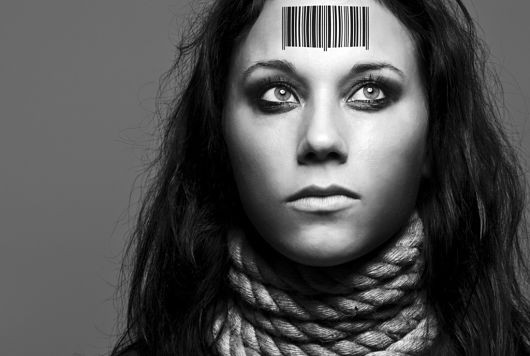
Fear dominates the lives of young girls who live in brothels. They are silenced and commanded by an oppressor who beats, rapes and threatens them. They are sold and minimized to property. With this lifestyle, how can they hope for freedom, or even hope?
On July 2, 2015, Mike Rutter and George Cook completed a 3,000-mile bike ride across the United States. Their reason for the 40-day ride? To raise awareness of human trafficking victims and extreme poverty.
The pair began their endeavor in Santa Monica, California on May 24. The cycling tour, Break the Chains, was a mission to raise money and attention for victims of poverty and violence.
According to the U.S. Department of State, 600,000 to 800,000 people are trafficked across international borders each year.
George Cook says he first realized this was such a problem when he was 13 and noticed shackles hanging in a money manager’s office. The manager told him, “Oh, those are for a slave.” Cook says he was dumbfounded, thinking “Lincoln freed the slaves,” so where were they now? The manager responded, “Well it’s going on all over the world with people being bought and sold and held in captivity.”
Like Cook, Rutter also learned about human trafficking and poverty firsthand. Remembering his first trip to India, he says, “[A child] begged me for his survival. He was surrounded by other children just like him—a generation plagued by the cycle of poverty, something most of us can’t understand.”
Rutter said, “We are simply riding a bike, but through that simple act, we have the opportunity to change a life.”
Working with Bright Hope, an organization that strives to offer opportunity and hope to those who live on less than one dollar a day, the pair provides voices for the victims who are unable to speak for themselves.
On their 40-day bike ride, the pair was followed by a 24-foot RV that was painted with the Break the Chains logo. At every stop, the men received questions and interest.
When asked how they powered through 90 miles each day in varying weather elements, Rutter said, “The girls we are trying to do this for, they don’t have a choice what’s happening to them that day so we’re going to plow ahead.”
To help motivate them further, they ride with pictures of the girls with their stories written on the back. Rutter said it was a reminder that although they may be going through a bit of pain, “it’s nothing compared to the pain that these victims go through on a daily basis.”
Throughout their tour, Cook and Rutter hoped to raise $1 million. With these donations, they plan to train more police officers to bring brothel owners to justice, as well as establish rehabilitation centers for the children that they rescue.
Cook recognizes the correlation between poverty and human trafficking. He says, “Where there is poverty, people do not have the money to pay for a detective or prosecutor. They don’t have money and can barely survive so they get taken advantage of.”
In addition to working with Bright Hope, the pair works closely with the International Justice Mission (IJM), which rescues and assists victims of violence.
On July 2, Cook and Rutter completed the 3,000 miles in Sandy Point State Park in Maryland. They raised $256,592 dollars.
To learn more or donate to the cause, visit BrightHope.org.
– Kelsey Parrotte
Sources: Facebook, International Justice Mission, Youtube, The Emporia Gazette, Wish TV
Photo: Cops

UN Peacekeepers Sexually Abuse Haitian Women and Girls
The United Nations has recently come under fire due to a report of sexual transactions between peacekeepers and Haitian women and girls. According to a report, U.N. peacekeepers in Haiti regularly exchange materials like laptops, food and medicine for sex.
Although the U.N. bans peacekeepers from exchanging employment and money for sex, many have disregarded this rule.
Since 2010, peacekeepers have maintained a ‘friendly’ presence on the island. Their main mission was to assist Haiti in both the cleanup after the earthquake as well as the rejuvenation of the country.
However, many have called into question how much progress they could have made, since many were exploiting the people they were supposed to be helping.
While this revelation is horrific, there is little prosecution for the peacekeepers committing these offenses. Typically, peacekeepers have immunity in countries in which they are serving.
This is not the first time the U.N. has come under fire for the sexual exploitation of country natives. In 2012, Kathryn Bolkovac published her remembrances of her trip to Bosnia in 1999.
In an interview with a reporter from The Telegraph, she spoke about how U.N. officers had exploited Bosnian prostitutes.
Because of the proximity of the release of the Red Cross Haiti scandal, many are questioning the Western presence in Haiti.
Is the West truly helping Haiti, or are they making the country’s economic and social situation worse?
– Erin Logan
Sources: The Telegraph, Al Jazeera, RT,
Photo: Women Under Siege
Chinese Woman Receives Global Recognition For Education
On July 2, Dr. Betty Chan Po-king received her third honorary degree in Bath, United Kingdom, from the University of Bath, granting her global recognition for education efforts from three continents.
At the summer graduation ceremony for the University of Bath, an honorary graduate award was presented to Po-king for Doctor of Laws. After her fifteen-year relationship with the university, the accolade was given to her for her commitment to providing and stimulating education, cultural diversity, and leadership.
This honor is one of three given to Po-king in the span of five years. Po-king initially earned an honorary doctorate in Humane Letters from the University of Illinois at Urbana-Champaign, U.S., her first intercontinental accomplishment in her professional career.
Four years later, she received a second award in China, Asia. The Honorary Fellowship by the Hong Kong Institute of Education was presented to Po-king in acknowledgement of her grand involvement in education in Hong Kong and beyond.
The University of Bath facilitated her third academic accolade in Europe. Honorary degrees are the most esteemed awards given by this university and are set aside for people of noticeable excellence.
Po-king originally earned her doctorate at The Union Institute and University in Vermont in 1985 and went on to acquire experience for teaching. She then became the Director of Yew Chung International Schools in China and California, which was founded by her mother, Madam Tsang Chor-hang.
In addition to her several doctorate degrees, Po-king has also served in numerous leadership positions for her educational efforts.
She has served as the Treasurer of the Pacific Early Childhood Education Research Association, the Chairperson of Child Education and Community Services Discipline Board of Vocational Training Council and the adviser of the Center for Child Development.
Po-king has served as a Member of Standing Committee on Language Education Research, a member of the Education and Manpower Bureau and a member of Appeals Board (Education) in Hong Kong, as well. She was also appointed as a Hong Kong Convention Ambassador of the Hong Kong Tourism Board and the Advisory Committee on Teacher Education and Qualifications.
Po-king’s educational ability has also presented her with unique opportunities as a Chinese female educator.
She became a member of one of the first groups of female life members of Phi Delta Kappa Educational Foundation. In addition, she was the first Chinese Keynote Speaker at the 2004 Alliance for International Education Conference in Dusseldorf, Germany.
Po-king has traveled all around the world for her educational experience. According to China Education Development, where she is a founder, “she has integrated the essence of the Eastern and Western education and has accumulated rich experience in teachers’ training.”
With her extensive knowledge of education, Po-king could very well earn additional award in another continent, but for now, her global recognition in Europe, the U.S., and Asia will continue to propel her career and enhance global education.
– Fallon Lineberger
Sources: China Education Development, PR Newswire, University of Bath 1, University of Bath 2, Yew Chung International School, Yew Wah Education Management
Photo: South China Morning Post
How the World Bank is Changing the Way We Measure Poverty
Currently, poverty is considered apparent when someone lives on less than $1.25 a day, but some question the reliability of this simplistic measurement. Therefore, the World Bank has announced that a new commission will propose revisions to the International Poverty Line to account for the many components of poverty in every country.
It turns out that the way we have been thinking about poverty is in over-generalized terms. When the United Nations announced its post-2015 Sustainable Development Goals, first on the list was the eradication of poverty “in all forms.” The notion that global poverty is multi-faceted is becoming universally accepted, and is acknowledged by the Bank’s chief economist, Kaushik Basu, who said, “The Global Commission will advise us on other dimensions of poverty that the Bank should collect data on, track, analyze and make available to policymakers for evidence-based decisions.”
A more data-driven reason for revising the way we measure poverty comes from a 2011 price survey from the International Comparison Program, which analyzes economic activity and poverty in almost every country. But evaluating the data gets complicated; depending on how the data is used, the results vary greatly, showing either a dramatic decrease in poverty or little decrease. Prices and exchange rates are changing, so the $1.25 a day standard must account for this.
Another problem with the current International Poverty Line occurs when a country’s poverty level decreases; it can be dropped from the list of countries averaged to set the IPL, resulting in a skewed measurement of progress. In addition, economic comparisons among countries include the exchange of all goods, while assessing only some goods is significant for impoverished communities.
The commission advising the Bank will consist of 24 leading international economists, and the report will be finished by April 2016. The World Bank hopes that a revised IPL will increase the possibility of attaining its two goals; the first goal is to bring the number of impoverished people to less than 3 percent of the global population by 2030, and the second is to increase per capita income of the poorest 40 percent of each country’s population.
Alterations in the International Poverty Line will change the way we define poverty in the first place, impacting philanthropy everywhere. Basu said, “We expect the Commission report to be influential not only for our own work on poverty but also in shaping global research and policymaking on this most important challenge of our times.”
– Jordan Reabold
Sources: Devpolicy, World Bank 1, World Bank 2
Photo: Give A Billion
Malala Opens Girls School for Syrian Refugees
The Malala Yousafzai All-Girls School opened on July 12 to Syrian refugees—for girls who have fallen victims to displacement. Malala Yousafzai opened the school on behalf of the 28 million children who are kept from classrooms because of armed conflict. The event also marked Malala Yousafzai’s 18th birthday, of which she was proud.
Malala Yousafzai is no stranger to armed conflict, as she was attacked in her native Pakistan in 2012 because of her support and efforts to campaign for girls’ rights and education. For this brave act, Malala was in fact awarded the Nobel Peace Prize in 2014.
Yousafzai currently believes that world leaders are failing Syria’s children. At the opening of the school she stated, “On this day, I have a message for the leaders of this country, this region and the world: you are failing the Syrian people, especially Syria’s children. This is a heart-breaking tragedy — the world’s worst refugee crisis in decades.”
That is why this school is one small step on Yousafzai’s part to help the children of the war-torn country. This effort is applauded by Antonio Guterres, the UN High Commissioner for Refugees. He stated, “We are really heartened by Malala’s ardent support for the education of refugee girls whose aspirations have already been so cruelly cut short by war. These children are the future of Syria; we must not jeopardize that by denying them the basic right to education while they are in exile”.
The newly opened school will serve around 200 Syrian girls living in refugee camps in the Bekaa Valley region along the Lebanese border, to which many Syrians have fled.
This school will stand as a testament to the perseverance and strength of the Syrian children and hopefully become inspiration to the similar creation of future schools.
– Alysha Biemolt
Sources: Look to the Stars, UNHCR, PBS, Voanews
Photo: Sampsonia Way
Cuba Earns WHO Recognition for Terminating Risk of HIV Mother-Child Transmission
On June 30, 2015, the World Health Organization (WHO) recognized Cuba as the first nation in the world to officially eliminate HIV mother-child transmission, a huge step towards the eradication of the disease entirely. WHO guidelines define ‘elimination of transmission’ as transmission so low that it no longer constitutes a public health problem — a level now certifiably reached by Cuba in terms of transmission of the disease from mother to child. Both the WHO and the United Nations Program on HIV/AIDS (UNAIDS), as well as nations around the world, congratulated Cuba in recognition of this historic achievement. Director-General of the WHO Margaret Chan called the milestone “one of the greatest public health achievements possible.”
The WHO estimates that more than 42 million people now live with HIV. 1.4 million HIV-positive women become pregnant every year, and inevitably run the risk of transferring this disease to their child. The likelihood of the infant being HIV-positive varies, but the disease can be transmitted in many ways — not only during the pregnancy, but also during breastfeeding and in different stages of the delivery process. According to various conditional factors — including geography, income and race — an untreated woman with HIV currently has a 15-45 percent chance of transmitting HIV to her child.
However, antiretroviral medications have shown enormous progress in reducing the number of children who are born HIV-positive, lowering the risk to a barely 1 percent chance of infection.
But this medication is only a crucial first step to preventing transmission of HIV from mothers to children. Cuba, with help from the WHO and other international and regional organizations, has employed a rigorous and comprehensive program that resulted in the successful elimination of mother-to-child transmission. Cuba has previously received recognition for having the lowest HIV prevalence in the Americas, at 0.05 percent of its 11 million inhabitants, partly due to a nationwide HIV screening program implemented in the 1980s.
Cuba’s existing healthcare infrastructure, which guarantees healthcare to all citizens, has allowed the nation to infuse mandatory maternal and child health programs with the tools needed for early prevention and treatment of HIV. Such treatment includes access to prenatal care and comprehensive testing, as well as treatment for HIV-positive mothers and their children both before and after delivery. A few particularly successful efforts beyond the provision of antiretroviral medication deserve credit for Cuba’s achievement: these include mandatory HIV testing for expectant women (and their partners), provision of caesarean deliveries over natural births and breastfeeding substitutions for HIV-positive mothers.
While this success was doubtless a joint and multilateral effort between various organizations, institutions and the Cuban government, it is equally obvious that the superb Cuban health system provided the gateway for the possibility of such an achievement. The Pan-American Health Organization’s (PAHO’s) director, Dr. Carissa F. Etienne, commented that “Cuba’s success demonstrates that universal access and universal health coverage are feasible and indeed are the key to success… [it] provides inspiration for other countries.”
– Melissa Pavlik
Sources: WHO 1, WHO 2, The Conversation
Photo: Caribbean 360
David Bowie and Iman’s Philanthropic Activities
Having been married for two decades, supermodel Iman and heavy-rocker David Bowie have walked a consistent pathway in relieving several communities of hardships pertaining to third-world threats such as the harrowing HIV/AIDS threat.
In late 1990, the dynamic pair participated in a fundraising event, 7th on Sale, for the enhanced medical research in treating and curing AIDS. The pair would go on to serve as recurring donors and participants in foundations that conducted deep, thorough studies of the then-unknown sexual catastrophe throughout the remainder of the 90’s.
But even with impactful collaboration in donor work as a married couple, the pair has never ceased in aiding disadvantaging areas on a separate, individual basis.
In 1998, Iman partnered with fellow philanthropist Missy “Misdemeanor” Elliott in a charitable cosmetic line, Misdemeanor Lipstick, where proceeds collected from each item sold were issued to the nonprofit Break the Cycle, an organization that works to minimize domestic hardships and abuse to help young children and teenagers to live safely.
Around this time, other philanthropic measures taken by the supermodel included her support for organizations alleviating the mistreatment against Somali native women, world hunger and HIV/AIDS-related crises. A majority of Iman’s charitable endorsements were further supported through her organization IMAN Cosmetics, which supports the “Raise Hope for Congo Campaign,” an initiative aimed at protecting and empowering Congolese women and girls.
With his spouse generating similar awareness, David Bowie has headlined global concert tours that assist in the betterment of drastic illnesses that take a toll on developing nations. Along with his famous contributions was his feature in the 1985 Live Aid concert, which generated funds to minimize threats of climatic and AIDS-related dangers.
Moreover, Bowie went on to utilize his live performing skills through another charitable opportunity, this time in loose hand-in-hand with wife Iman. In 2006, the groundbreaking rock musician collaborated with Grammy-winning R&B musician Alicia Keys. The two artists sung and performed live at a New York concert as part of Keys’ nonprofit Keep a Child Alive, an organization that works to rid African children of AIDS and poverty-induced restraints.
Iman was also involved in the lively event, as she and comedian Wanda Sykes served as hosts of the event’s black-tie dinner in celebration of the initiative’s planning and success.
It would not be long until Keys and fellow organizers appointed Iman as the initiative’s Global Ambassador for Keep a Child Alive after noting the model’s sincere elements in raising awareness for multiple pandemics across the globe. With a newly designated role, Iman launched not only additional fundraisers to support a variety of causes but also programs like “I am African,” a tool utilized to build awareness of the AIDS pandemic greatly affecting her native Somalian homeland.
As years have progressed, nothing has stopped this power couple’s path to giving back to those in need. With social media tools redefining the nature of networking for a passionate cause, Iman and David Bowie still remain fixated and up-to-date on endorsing as many foundations as they possibly can to improve the world.
– Jeff Varner
Sources: Philly.com, Billboard, CNN, Slice, Iman Cosmetics, Getty Images
Photo: ENCA
Pope Brings Strong Poverty Focus to Latin American Tour
Pope Francis has been entertaining a wide variety of topics on his current Latin American tour, but poverty has remained at the top of his list.
“Do we realize that something is wrong in a world where there are so many farm workers without land, so many families without a home, so many laborers without rights, so many persons whose dignity is not respected?” the Pope said in Spanish at a stop in Santa Cruz, Bolivia. “Do we realize that that system has imposed the mentality of profit at any price, with no concern for social exclusion or the destruction of nature?”
The Pope’s focus on poverty rings especially true for many living in the countries he’s speaking in. In Ecuador, over 25% of the population lives below the poverty line; that number jumps all the way up to 60% in Bolivia.
According to the Vatican, the overarching theme of the Pope’s visits is to bring “the Church for the poor.” The Pope is reaching out to the poverty-stricken people and regions of his native South America.
“The human environment and the natural environment are degrading together, and we can’t adequately confront human and social degradation without paying attention to the underlying causes,” the Pope said at a stop in Quito, Ecuador. “In today’s world, among the most abandoned and abused poor, we find the most oppressed and damaged land.”
– Alexander Jones
Sources: Big News, CNN, Telesur
Photo: BBC
Baseball Road Trip Raises Awareness for Global Poverty
Baseball is America’s favorite pastime, and paying a visit to all 30 Major League Baseball parks in the country is surely on the bucket list of any fan of the game. Jodi and Jack Petrinovich of Washington state began their baseball road trip in April and plan to return home at the end of July, after visiting every park in the country.
What appears to be an all-American road trip at first glance, is actually much more. The Petrinovichs set out on their journey with an honorable mission: to raise awareness and spread the word about Unbound, a nonprofit organization that provides aid to people around the world living in poverty.
In 20 countries, Unbound provides the opportunity for people to become sponsors for children, young adults or elders. That sponsorship supplies families with the tools they need to become self-sufficient. By empowering others to succeed, Unbound lifts people out of poverty.
Ideally, the Petrinovichs would like to find a person at each baseball park who will sponsor a child. They themselves began sponsoring a young girl from Mexico several years ago, providing her with donations and two pen pals.
As natives of the Evergreen State, the couple generally represents the Seattle Mariners at each ballpark across the country. When the Mariners are not playing, this tends to spark conversation, providing the perfect gateway for the pair to inform others about Unbound and their admirable mission to get more people involved.
As their baseball journey reaches its final stages, the Petrinovichs have inspired 10 people to become sponsors for a child in need. The couple is lending a voice to the voiceless, hitting a major homerun in the eradication of poverty.
– Sarah Sheppard
Sources: Unbound, The News Tribune
Photo: The News Tribune
Break the Chains Raises Awareness of Human Trafficking
Fear dominates the lives of young girls who live in brothels. They are silenced and commanded by an oppressor who beats, rapes and threatens them. They are sold and minimized to property. With this lifestyle, how can they hope for freedom, or even hope?
On July 2, 2015, Mike Rutter and George Cook completed a 3,000-mile bike ride across the United States. Their reason for the 40-day ride? To raise awareness of human trafficking victims and extreme poverty.
The pair began their endeavor in Santa Monica, California on May 24. The cycling tour, Break the Chains, was a mission to raise money and attention for victims of poverty and violence.
According to the U.S. Department of State, 600,000 to 800,000 people are trafficked across international borders each year.
George Cook says he first realized this was such a problem when he was 13 and noticed shackles hanging in a money manager’s office. The manager told him, “Oh, those are for a slave.” Cook says he was dumbfounded, thinking “Lincoln freed the slaves,” so where were they now? The manager responded, “Well it’s going on all over the world with people being bought and sold and held in captivity.”
Like Cook, Rutter also learned about human trafficking and poverty firsthand. Remembering his first trip to India, he says, “[A child] begged me for his survival. He was surrounded by other children just like him—a generation plagued by the cycle of poverty, something most of us can’t understand.”
Rutter said, “We are simply riding a bike, but through that simple act, we have the opportunity to change a life.”
Working with Bright Hope, an organization that strives to offer opportunity and hope to those who live on less than one dollar a day, the pair provides voices for the victims who are unable to speak for themselves.
On their 40-day bike ride, the pair was followed by a 24-foot RV that was painted with the Break the Chains logo. At every stop, the men received questions and interest.
When asked how they powered through 90 miles each day in varying weather elements, Rutter said, “The girls we are trying to do this for, they don’t have a choice what’s happening to them that day so we’re going to plow ahead.”
To help motivate them further, they ride with pictures of the girls with their stories written on the back. Rutter said it was a reminder that although they may be going through a bit of pain, “it’s nothing compared to the pain that these victims go through on a daily basis.”
Throughout their tour, Cook and Rutter hoped to raise $1 million. With these donations, they plan to train more police officers to bring brothel owners to justice, as well as establish rehabilitation centers for the children that they rescue.
Cook recognizes the correlation between poverty and human trafficking. He says, “Where there is poverty, people do not have the money to pay for a detective or prosecutor. They don’t have money and can barely survive so they get taken advantage of.”
In addition to working with Bright Hope, the pair works closely with the International Justice Mission (IJM), which rescues and assists victims of violence.
On July 2, Cook and Rutter completed the 3,000 miles in Sandy Point State Park in Maryland. They raised $256,592 dollars.
To learn more or donate to the cause, visit BrightHope.org.
– Kelsey Parrotte
Sources: Facebook, International Justice Mission, Youtube, The Emporia Gazette, Wish TV
Photo: Cops
Deworming School-Age Children
The World Health Organization estimates that 1.5 billion people, 24% of the world’s population, have a worm infection. Infected people usually have soil-transmitted helminth infections caused by the most prevalent worm species: roundworms, whipworms and hookworms.
These worms are spread through direct contact with contaminated soil caused by open defecation in impoverished, usually tropical, regions. The contact with human feces is a result of poor sanitation, feces contaminating crops and children walking barefoot.
The worm’s eggs can be ingested on food that has not been properly washed or cooked as well as through the consumption of food when people eat with dirty hands. Some worm larvae are also able to work their way through a person’s skin to enter into the body, especially through the soles of children’s bare feet.
When a child has a worm infection, his or her health is compromised. Symptoms are not always pronounced, but rather show up slowly and can sometimes be hard to detect. The worms leech essential nutrients away from a child’s body causing malnutrition, anemia, lethargy and cognitive repression due to lack of nutrients. These issues can cause children to be so physically weakened that school is missed and absenteeism rises.
Thankfully, even though worms are one of the most prevalent infections in poverty stricken areas, it is also has one of the easiest and most cost-effective forms of treatment. Several organizations are working toward deworming children. Innovations for Poverty Action (IPA) and Deworm the World Initiative are two that have teamed up in this effort. Together they were able to deworm over 35 million children in 2012!
Deworming school-age children was possible through school initiatives. They have found that deworming children at school with a pill is highly effective for two reasons.
1. It is so easy that teachers can be trained to administer the medicine, which relieves the costs of needing medical specialists on site.
2. The medicine is safe even if a child is not currently infected. If 20% of the children in a region are known to have worms, then every child can be dewormed safely without the possibility of side effects. This will reduce any possible infections.
The medicine cost is very low as well. The actual medicine only costs a few pennies per child; factoring in all the costs associated with administering the medicine, the cost is still less than 50 cents per child. To be the most effective, the medicine needs to be administered twice a year. Since costs are so low, that goal is financially feasible.
A trial conducted in the early 2000s in Kenya found that by administering the medicine, school absenteeism fell by 25% and younger children were found to have cognitive gains. A separate study found that through deworming children’s bodies were better able to fight off other diseases, such as malaria, because essential nutrients were not being depleted by the worms.
Currently, Deworm the World is working quite intensely in India’s Bihar State, Delhi State and Rajasthan State, as well as in Kenya. The organization is able to work through the schools in those areas, treating millions of children. Those children are now given a much greater chance to excel in school since worms are not stealing their body’s resources.
Deworming children cannot be the sole answer, since the source of the worms needs to be addressed in the regions as well. Proper sanitation, clean water, uncontaminated food and children wearing shoes are still needed to ensure new worm infections do not occur.
But while those issues are being worked on, deworming children is giving infected children a chance to thrive in their education, since they are more energetic and focused during their studies and missing much less school than before.
– Megan Ivy
Sources: CDC, Evidence Action, Innovations for Poverty Action, WHO
Photo: What Gives