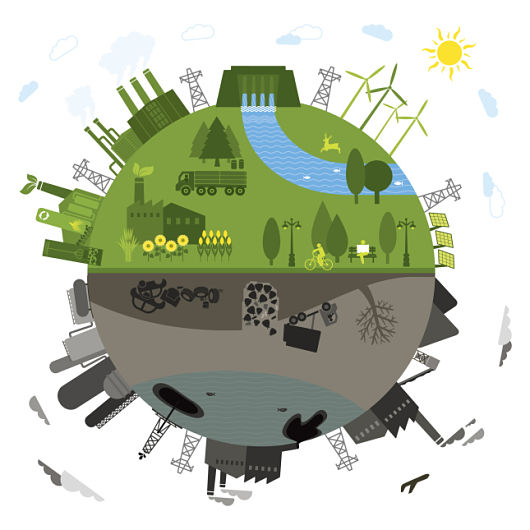
In 2000, the United Nations set the Millennial Development Goals. Ambitious proposals that sought to improve the lives for the billions of impoverished around the world. Fifteen years later, many of those goals have been accomplished.
Globally, 700 million people were lifted out of extreme poverty. Millions were saved due to vaccinations for malaria, tuberculosis and other non-communicable diseases. The number of people who didn’t have access to freshwater dropped significantly and the disparity of boys to girls enrolled in school dropped in every region on earth.
This was all accomplished before 2015.
Some goals are still in progress. For example, efforts to lift people out of poverty can result in environmental degradation. The rate of hunger, while dropping, is not falling quickly enough to meet the goal set in 2000.
Despite this, the United Nations is now going even bolder. Set to be adopted by world leaders in September, the new Sustainable Development Goals seek to finish what the Millennial Development Goals started, while adding their own components.
The seventeen goals are comprehensive, and apply to individuals as well as countries. Despite their broadness in scope, these goals demonstrate that poverty, climate change, health and economic wellbeing are all interconnected issues.
These are the seventeen Sustainable Development Goals:
1. End Poverty in all its forms everywhere
2. End hunger, achieve food security and improved nutrition and promote sustainable agriculture
3. Ensure healthy lives and promote well-being for all at all ages
4. Ensure inclusive and equitable quality education and promote lifelong learning opportunities for all
5. Achieve gender quality and empower all women and girls
6. Ensure availability and sustainable management of water and sanitation for all
7. Ensure access to affordable, reliable, sustainable and modern energy for all
8. Promote sustained, inclusive and sustainable economic growth, full and productive employment and decent work for all
9. Build resilient infrastructure, promote inclusive and sustainable industrialization and foster innovation
10. Reduce inequality within and among countries
11. Make cities and human settlements inclusive, safe, resilient and sustainable
12. Ensure sustainable consumption and production patterns
13. Take urgent action to combat climate change and its impacts
14. Conserve and sustainable use the oceans, seas and marine resources for sustainable development
15. Protect, restore and promote sustainable use of terrestrial ecosystems, sustainably manage forests, combat desertification, and halt and reverse land degradation and halt biodiversity loss
16. Promote peaceful and inclusive societies for sustainable development, provide access to justice for all and build effective, accountable and inclusive institutions at all levels
17. Strengthen the means of implementation and revitalize the global partnership for sustainable development
Indeed, ambitious.
The United Nation website has a more comprehensive explanation of how each of these goals are to be accomplished by 2030.
It is estimated that these goals will cost roughly one trillion dollars a year. However with international tax reform, developing countries will generate more domestic tax revenue and be able to meet their own development agendas with less foreign aid. Members of the United Nations believe this will allow international aid to become a thing of the past.
In an interview with the BBC, International Development Secretary Justine Greening said the Sustainable Development Goals are different from other United Nation initiatives because it harnesses the private sector investment, in addition to developing country’s domestic resources.
She believes this will “turbo charge” development.
The ambitiousness of the Sustainable Development Goals is daunting. However the past fifteen years saw so much progress that the world can be cautiously optimistic.
– Kevin Meyers
Sources: BBC, Post2015.org, UN Department of Economic and Social Affairs
Photo: Fiinovation

The State of Healthcare in Yemen Today
The conflict in Yemen, which has been raging for the past three months, has led to a humanitarian catastrophe that has caused 2,800 deaths, displaced over a million people, and caused 21 million Yemenis to be in dire need of immediate assistance, according to UNICEF. The human rights organization has also projected that in the next 12 months, 2.5 million children will suffer from chronic diarrhea, 1.3 million from pneumonia, and 280,000 from severe malnutrition.
These projections are based off the massive destruction of the country produced by the recent crisis, which has caused immeasurable damage to Yemen’s infrastructure and has prompted the United Nations to declare that the country now stands on “the edge of civil war.”
Yemen, a country of 25 million which contains numerous religious and ethnic factions, has long been a breeding ground for violent extremism, producing some of the worst known-terrorists in recent history, such as Osama Bin-Laden. The recent conflict in Yemen represents one manifestation of the ethnic and religious tension which characterizes Yemenese society, which exploded into full-blown fighting when the Houthi’s (an Iran-backed Shi’a rebel group from the North) forced Sunni President Abdrabbuh Mansour Hadi out of the capital Sanaa in February. Mr. Hadi is now seeking refuge in Riyadh, Saudi Arabia, while his country bears the near-daily brunt of attacks on the part of Houthi rebel groups and an Arab-backed coalition, led by Saudi Arabia and including Egypt, Morocco, Jordan, Sudan, the United Arab Emirates, Kuwait, Qatar and Bahrain.
Yemen’s healthcare system, which was in poor condition prior to the recent fighting, has been especially hard-hit as a result of the crisis, which has resulted in dwindling medical supplies and the destruction of numerous hospitals throughout the country. A blockade by the Arab coalition, and restrictions that were placed on the commercial import of fuel, food, and medical supplies by the international community have helped to exacerbate the country’s healthcare problems, making it impossible for the approximate 90% of Yemenis who depend upon these supplies to gain access.
Aid workers also say that the crisis has contributed to a rising number of preventable deaths, with an increasing number of children dying from relatively minor illnesses, such as strep throat. According to the World Health Organization, an inability to access even basic medical care, like obstetrical support during childbirth, and the closing of national programs to fight diseases such as tuberculosis, has caused a surge in the number of people who require urgent medical care, which stood at 8.6 million in March. In addition to lack of supplies, the frequent droppings of bombs and raiding of hospitals carried out by Houthi groups have led to the closure of over 158 health facilities. According to officials, this has contributed to the deaths of 470,000 children under the age of five, as well as the outbreak of diseases such as polio and measles throughout the country.
As conflict continues to spiral out of control in Yemen, humanitarian organizations have begun to adjust their response to the country’s humanitarian and health crisis, which many officials believe to be getting worse. According to Dr. Ahmed Shadoul, WHO’s Representative to Yemen, “Yemen’s health system is on the verge of breakdown, and it is only thanks to the heroic efforts of the country’s health workers, the resilience of its brave people and the tireless efforts of national and international humanitarian organizations that any semblance of health care is being provided.”
In order to attempt to hold this fragile structure of Yemen’s healthcare service together, the WHO released a revised Yemen Humanitarian Response Plan on Friday, June 17. The Revised Plan calls for $152 million to enable the WHO and its partners to meet the health needs of 15 million Yemeni citizens, whose health and livelihoods continue to be devastated as their country devolves into violence.
– Ana Powell
Sources: The Guardian, UNICEF, Washington Post, World Health Organization
Photo: UN Multimedia
Man Runs Across the Country to Fight Global Poverty
Remember in “Forrest Gump” when Tom Hanks’ title character ran across the country? Everyone asked him why he did it and he said he just felt like running. So he ran.
Inspired by his favorite film, Barclay Oudersluys is currently on a run across the United States in an event he titled Project Gump. The 23-year-old began his trip in California and plans to end in Maine in less than 100 days, for a total of 3,200 miles.
But Oudersluys isn’t running simply for the sake of a good run; he is on a cross-country run to raise awareness and funds for the Hall Step Foundation, a nonprofit dedicated to ending global poverty. Founded in 2009 by professional runners Ryan and Sara Hall, the organization fights extreme poverty by improving health. During his 100-day run, Oudersluys would like to raise $10,000 for the organization.
The journey quite accurately follows that of Forrest Gump’s. It began at Santa Monica Pier and will end at the famous Marshall Point Lighthouse, just like in the movie. Running about 32 miles everyday in five to seven hours, Oudersluys has covered over 2,000 miles in 68 days.
Fortunately, Oudersluys has some seriously awesome friends that are driving cross-country in a van full of food, water and clothes as he runs. He typically rests in the back of the van or drives to a hotel each night.
Running across the country surely means seeing historical landmarks and meeting interesting people and Oudersluys has definitely seen some cool things, including another runner journeying across the country in the opposite direction.
Documenting his journey on Twitter and Instagram, Oudersluys hasn’t forgotten what his run is all about–lending his voice (or legs) to the fight against global poverty. Check out Project Gump’s mission and fundraising progress at their website, or follow Oudersluys on social media.
– Sarah Sheppard
Sources: Telegraph, 6abc, The Steps Foundation
Photo: Flickr
Senators Cardin, Flake, Coons and Isakson Introduce Millennium Compacts for Regional Economic Integration Act
Ranking Member of the Foreign Relations Committee, Senator Cardin (D-MD), Chairman of the Subcommittee on Africa and Global Health Policy, Senator Flake (R-AZ), and members of the Foreign Relations Committee, Senator Coons (D-Del) and Senator Isakson (R-GA), have introduced the Millennium Compacts for Regional Economic Integration Act.
This piece of legislation could potentially allow the Millennium Challenge Corporation (MCC) to partner with countries in order to address regional development challenges and encourage trans-border economic growth in the developing world, especially in Africa. The Millennium Challenge Corporation is an independent U.S. foreign aid agency established by Congress in 2004. This agency aims to combat global poverty through economic growth. The MCC partners with developing countries committed to good governance, economic freedom and investing in their citizens.
Countries have reformed in order to partner with the MCC. For example, Ghana changed its power grid in order to partner with the MCC. In addition, Lesotho allowed women to open bank accounts in order to receive MCC assistance. Given this, it is assumed that countries could improve conditions in their country in order to develop regional economic partnerships. This would yield two benefits simultaneously.
In a world of globalization, many economies are interconnected. Global economies have experienced significant and sustained growth partly because of regional infrastructure and integrated trade agreements. Through greater regional economic collaboration, countries can improve infrastructure deficiencies, unemployment and poverty reduction efforts.
The MCC’s work could be enhanced if it had the authority to encourage regional economic growth. In Central America, road infrastructure could be significantly improved if the roads connected across borders. In Africa, countries could create regional power agreements and connect countries through transportation infrastructure.
Knowing this, the Millennium Challenge Corporation could foster regional economic growth between developing countries. Today, it is important to consider globalization when assisting developing countries. Globalization could help developing countries grow faster than ever.
In conclusion, this bipartisan piece of legislation aims to improve economic interconnectedness between neighboring developing countries. The MCC could foster these relationships between countries. Globalization could exponentially help developing countries grow, given that it increases trade, infrastructure access and energy access.
– Ella Cady
Sources: Senate, Open Congress, The Constituent
Photo: MCC
Water Access for Displaced Iraqis
The International Organization for Migration has estimated that since January of 2014, over 3 million Iraqis have been displaced by ISIS militants and forced to relocate. In the past two months, over 276,000 have been forced to relocate out of fear or danger. Many of the refugees have chosen to abandon their homes and flee to the mountains in Northern Iraq to avoid the constant fear of attacks and violence from the Islamic State. Unfortunately, in addition to protection from violence, there is a desperate need for basic supplies such as food and water.
Amnesty International researcher, Donatella Rovera says, “The civilians trapped in the mountain area are not only at risk of being killed or abducted; they are also suffering from a lack of water access, food and medical care. We urge the international community to provide humanitarian assistance.”
In response to the conflict, UNICEF has worked to set up many transition camps in the Kurdistan region of Iraq. Baherka is one such camp that was formerly a concrete factory outside outside the town of Erbil. The makeshift facility currently accommodates approximately 3,000 refugees. In the camp, every family has access to a kitchen, shower, latrine and 150 liters of water per day.
Adding to the numerous fears and concerns, there is also a reluctance for some Iraqis to join the refugee camps. Many of the refugee camps are overcrowded and can present their own unique set of dangers such as violence, disease or abduction. Separation from family members is another serious concern. For these reasons, many of these families choose to take their chances in the remote mountains where their communities are smaller. Access to clean water is also scarce due to the rough, mountainous terrain.
“The plight of displaced people caught up in the fighting in Iraq is increasingly desperate and all parties to the conflict must do more to ensure their safety,” states Rovera.
Thankfully, there are nongovernmental organizations working towards providing aid to these displaced Iraqis. UNICEF’s Water, Sanitation & Hygiene (WASH) division has received funding from Germany’s KfW Development Bank and has been tasked with aiding 25 families living near the town of Dohuk in the mountains of Northern Iraq.
Fortunately, there are times when complex issues can be solved with ordinary and conventional methods. This has been the case thus far with the aforementioned Iraqi families. A tractor hitched to a 4,000 liter water tank has been providing water to over 62,000 people every day. Families fill up as many buckets and tin cans as they can carry and use the water for drinking in addition to bathing, washing and cooking.
However, funding needs are a constant reminder that this service is not permanent. Without access to clean water, Ghassan Madieh, the UNICEF WASH Specialist in Dohuk, states “There would be sewage in the streets… You will see people getting unchlorinated water. You will see less water quantity. It will have a negative impact on health, especially on children and the most vulnerable.”
– The Borgen Project
Sources: BBC, Telegraph, UNICEF 1, UNICEF 2
Photo: International Business Times
Save Lives At Birth Challenge Encourages Innovation
The Save Lives At Birth Challenge seeks to improve the chances of survival for mothers and newborns in developing nations. Their aim is to leapfrog existing products and conventional approaches to find the best possible solution to a difficult problem.
In Sub-Saharan Africa, women are 136 times more likely to die in childbirth than in developed countries. From the beginning of labor through the following 48 hours, the mother and newborn are at the highest risk of infection and complications, and the Save Lives At Birth Challenge seeks to change these unfavorable odds.
The Save Lives At Birth Challenge takes on the leapfrogging mentality: skip intermediary steps and get right to the fastest, smartest and cheapest solution. Each year, Save Lives At Birth offers grant money to innovators with big ideas that will help women and children.
One remarkable innovation that received this grant money was the Gene-Radar, created in Cambridge, Massachusetts. It’s an iPad-sized device that accurately tests for diseases such as HIV in less than an hour. In the developing world, it can take up to two weeks to get blood tests and cost up to $200. The Gene-Radar is still in production, however, by the time it is on the market it will be 10 to 100 times cheaper than the current option.
Using the Gene-Radar, health workers would simply have to take a prick of blood, place it on a nano chip, then place the chip in the device and have results within the hour. This would allow the health worker to easily identify the problem, and for the patient to quickly receive treatment.
Another innovation that received grant money was thought up by a car mechanic, Jorge Odón, who got the idea after watching a video on how to remove the lost cork from a wine bottle. He realized the same trick could be used to save a baby stuck in the birth canal. Odón’s invention is shockingly simple: an attendant would slip a lubricated plastic bag around the baby’s head, inflate to grip and then pull the bag until the baby emerges.
Doctors say this invention has enormous potential in the developing world. Odón has created a solution to a problem that has been around for years. It is innovation like this that the Save Lives At Birth Challenge seeks and promotes.
– Hannah Resnick
Sources: Save Lives At Birth 1, Save Lives At Birth 2, Saving Life at Birth 3, USAID
Photo: Save Lives At Birth
A New “Leash” on Life: India’s Stray Dogs
While the nation of India has found its own new lease on life as it begins to become heavily industrialized, the furry members of its society are facing some new challenges.
For decades India has struggled with the issue of stray animals, and while cows and elephants are considered holy and treated with respect, the dogs and cats of India are facing a much harder time in their attempts to stay alive.
According to the World Health Organization, there are around 18,000 reported cases of rabies every year in India. In order to remedy this, India’s government had called for the euthanization of India’s stray dogs; however, after much discussion, the Animal Welfare Board of India (AWBI) has asked many states to hold off on this action and attempted to vaccinate the stray animals against several diseases. Essentially, the AWBI believes that such actions taken against these animals is inhumane, as there is no clear distinguishing factor that determines whether an animal should be put down or vaccinated.
When walking the streets of India, it is very common to see dogs and cats roaming around, but travelers are advised not to pet them or interact with them, as they often find food in waste piles and are thus highly prone to disease and infection. However, many residents have been taking care of these animals for years; these animals are thought to have migrated over along with the original inhabitants of the land, thus creating a very blurry line as to which animals are stray and which have been domesticated. The issue with the current laws is that there is no defining point at which an animal becomes a family member and at which point it is still a stray. Many animal rights groups working alongside citizens have been fighting for this distinction to be made.
For now, the AWBI is advising the government to hold off on any euthanization or vaccination tactics that may be used to reduce the stray animal population. Some experts have proposed the idea of neutering definitively stray dogs and cats, so as to reduce the population. Many experts have made it clear that the key to reducing this issue is to better understand the animals themselves and their behavior. Most healthy animals will not bite or scratch a human unless they feel threatened, so a better understanding of animal behavior will allow citizens to express proper caution when dealing with them.
While the government of India remains at a standstill, citizens and animal rights groups have begun to press for better adoption systems and more definitive lines as to an animals ownership. Euthanization of these animals is effectively going against the Indian Supreme Court ruling against the killing of animals, and harm and cruelty toward animals. Many petitions and protests have been held against this action, but no decision has been reached. There is still a long road ahead for these furry friends, but it looks like there may be a light at the end of this very long tunnel.
– Sumita Tellakat
Sources: CNN, BBC
Photo: CNN
The Counterintuitive Case for Legalizing Drugs
The wars between rival cartels and the government in Mexico have caused tens of thousands of lives to be lost over the past 15 years. Many of these people have been bystanders or activists aiming to end the corruption and destruction of the country by narco-terrorism. Last year, outrage was sparked by a specific incident in which 43 Mexican students were kidnapped and killed by a Mexican cartel. The incredible levels of violence are a curse on Mexicans, who are simply trying to live their lives, and even more so to the poor. Unfortunately, Mexico is not the only example of the “war on drugs” gone wrong, with the hurting of the population it is suppose to aid.
The drug war has been a spectacular international failure; it simply has not worked and instead, has made things worse for almost all parties involved. This shouldn’t be a surprise, the prohibition of alcohol in the 20th century created conditions similar those in Mexico today, with soaring violence and no evidence that the supply of narcotics in the market has decreased.
The poor bear the burden of the failures of policymakers. Instead of using money to help expand programs to help the poor, billions are poured into drug law enforcement programs in developing nations at the behest of developed nations. These billions of dollars are wasted playing wack-a-mole with the suppliers of these illicit drugs without actual progress. For example, Columbia spends $35 billion on drug law enforcement and yet, it is still associated with cocaine as it has in the past. Essentially, $35 billion has been thrown down the drain instead of helping those in greatest need.
The poor in the United States are also hurt extensively by the drug war policies. The United States imprisons about 1 of every 100 adults as a direct result of the drug war. The people imprisoned then face extraordinary difficulty with job searches once released, and stay trapped in poverty. This costs taxpayers even more money that could be spent, instead, on the “war on poverty.”
Together, poverty and the war on drugs have become a vicious cycle. The narcotics industry has become extremely lucrative due to its illicit nature. This has attracted many impoverished people to pursue a career in the narcotics black market because many feel they have a better chance in there than in the regular labor market. Then, after being caught and marked as criminals, they have nowhere to go but back into the black market because regular work is often no longer an option. In turn, this brings more drugs and violence into poor neighborhoods.
Through a variety of means, pushing drugs underground has clearly had an effect on the poor in all parts of the world, from South America to inner cities of the United States. By ending the war on drugs and decriminalizing and/or legalizing drugs, the adverse effects on the poor and the rest of the population could be eliminated.
Portugal had huge problems with drugs until they decided to decriminalize all drugs. The results of this policy experiment were profound. Drug use was cut in half, among other positive results. In Washington State, the legalization of marijuana resulted in $70 million dollars in tax revenue. This doesn’t even include the hidden savings resulting in not enforcing nonsense drug prohibition and the judicial and prison costs also saved.
People endorse drug prohibition because they don’t want to see overdoses, addiction and crimes related to drug usage. Sadly, the evidence shows that drug prohibition seems to be a driving force behind all three undesirables. The drug war also hurts those living in poverty across the globe through cartel and gang-related violence (that would not occur if it was not on the black market), wasted government resources, and a focus on punishing addicts rather than re-introducing them into society. To help the poor and the addicts, increase government efficiency, and decrease tens of thousands of needless deaths—end the war on drugs. A quick look at the simple facts and the history of prohibition shows that the war on drugs is a regressive policy that doesn’t work. It’s time to reconsider.
– Martin Yim
Sources: CBS, NPR, The Guardian 1, The Guardian 2, Forbes
Photo: CBS
Sustainable Development Goals: Why They Matter
In 2000, the United Nations set the Millennial Development Goals. Ambitious proposals that sought to improve the lives for the billions of impoverished around the world. Fifteen years later, many of those goals have been accomplished.
Globally, 700 million people were lifted out of extreme poverty. Millions were saved due to vaccinations for malaria, tuberculosis and other non-communicable diseases. The number of people who didn’t have access to freshwater dropped significantly and the disparity of boys to girls enrolled in school dropped in every region on earth.
This was all accomplished before 2015.
Some goals are still in progress. For example, efforts to lift people out of poverty can result in environmental degradation. The rate of hunger, while dropping, is not falling quickly enough to meet the goal set in 2000.
Despite this, the United Nations is now going even bolder. Set to be adopted by world leaders in September, the new Sustainable Development Goals seek to finish what the Millennial Development Goals started, while adding their own components.
The seventeen goals are comprehensive, and apply to individuals as well as countries. Despite their broadness in scope, these goals demonstrate that poverty, climate change, health and economic wellbeing are all interconnected issues.
These are the seventeen Sustainable Development Goals:
1. End Poverty in all its forms everywhere
2. End hunger, achieve food security and improved nutrition and promote sustainable agriculture
3. Ensure healthy lives and promote well-being for all at all ages
4. Ensure inclusive and equitable quality education and promote lifelong learning opportunities for all
5. Achieve gender quality and empower all women and girls
6. Ensure availability and sustainable management of water and sanitation for all
7. Ensure access to affordable, reliable, sustainable and modern energy for all
8. Promote sustained, inclusive and sustainable economic growth, full and productive employment and decent work for all
9. Build resilient infrastructure, promote inclusive and sustainable industrialization and foster innovation
10. Reduce inequality within and among countries
11. Make cities and human settlements inclusive, safe, resilient and sustainable
12. Ensure sustainable consumption and production patterns
13. Take urgent action to combat climate change and its impacts
14. Conserve and sustainable use the oceans, seas and marine resources for sustainable development
15. Protect, restore and promote sustainable use of terrestrial ecosystems, sustainably manage forests, combat desertification, and halt and reverse land degradation and halt biodiversity loss
16. Promote peaceful and inclusive societies for sustainable development, provide access to justice for all and build effective, accountable and inclusive institutions at all levels
17. Strengthen the means of implementation and revitalize the global partnership for sustainable development
Indeed, ambitious.
The United Nation website has a more comprehensive explanation of how each of these goals are to be accomplished by 2030.
It is estimated that these goals will cost roughly one trillion dollars a year. However with international tax reform, developing countries will generate more domestic tax revenue and be able to meet their own development agendas with less foreign aid. Members of the United Nations believe this will allow international aid to become a thing of the past.
In an interview with the BBC, International Development Secretary Justine Greening said the Sustainable Development Goals are different from other United Nation initiatives because it harnesses the private sector investment, in addition to developing country’s domestic resources.
She believes this will “turbo charge” development.
The ambitiousness of the Sustainable Development Goals is daunting. However the past fifteen years saw so much progress that the world can be cautiously optimistic.
– Kevin Meyers
Sources: BBC, Post2015.org, UN Department of Economic and Social Affairs
Photo: Fiinovation
Global Health Increasingly Influenced by Religion
A new series published in a U.K. medical journal demonstrates the growing role of religion in global health.
The three-part series from The Lancet focuses on faith-based healthcare and how religious organizations can play a crucial role in helping health coverage become universal. The series suggests a lack of evidence about the abundance of health services faith-based organizations provide and represent. However, the series also validates the important role faith-based health providers play in immunization, prevention of mother and child deaths, HIV services and antimalarial campaigns.
The role of religion in global health is even more crucial in areas with fragile health systems.
Faith-based organizations have a unique opportunity because of their experience, strengths and capacities. According to The Lancet, the chance to play a vital role in global heath arises from their wide geographical coverage, infrastructure and influence. For a faith-based organization to have an impact on global health, it needs the support and trust of its community. This is where religious leaders play a role.
Religious leaders tend to have lots of authority at the grass roots within a community, as well as the ability to shape people’s opinions. Leaders of faith-based organizations, along with having substantial social and political sway, also have a network of people they inspire, in turn mobilizing congregations to make a difference. For example, Channels of Hope, a project of the Evangelical Christian aid organization World Vision International, mobilized almost 400,000 local leaders to transform health and development in their communities.
Religious leaders are also a reliable source when it comes to information about medical programs. Some vocal minorities may use religious arguments and possible distrust of government to advocate against immunizing children, but by enlisting the help of leaders in the religious sector, medical programs can extend their reach.
Such an occasion was seen in both Angola in the late 1990s, and India in the late 2000s. In both instances, religious leaders helped to educate those who distrusted government officials.
Muslim leaders in India helped to reverse opposition to polio vaccines in certain areas where rumors and misconceptions about the government were rampant. In Angola, churches helped to end polio by making sure messages reached isolated populations — the same areas that often saw high illiteracy rates and poor media coverage.
Partnerships also play a key role in global health, as shown by case studies examined in The Lancet series.
When religious leaders partner with groups including government organizations, public-sector agencies and international development actors, effectiveness is often boosted.
Such an instance occurred in Sierra Leone in the 1980s when Muslim and Christian leaders united with UNICEF and led a campaign to increase immunization rates in children under the age of 1. By combining forces, rates increased from six percent to 75 percent.
By joining forces, not only can it be made possible that every child is vaccinated, but a successful partnership can also help generate long-term support for necessary health services for children.
– Matt Wotus
Sources: Medical Xpress, UNICEF
Photo: Cross Catholic
XPrize Sets Sights on Bringing Literacy to 250M Children Worldwide
New data from the UNESCO Institute for Statistics states that global literacy rates for youths and adults have been on the rise. Sixty percent of all countries that provided data in 2012 reported overall literacy rates of 95% or higher.
Still, there is a great need for a solution in this regard. The report also said that “An estimated 250 million children around the world cannot read, write, or demonstrate basic arithmetic skills. Many of these children are in developing countries without regular access to quality schools or teachers.”
These statistics ultimately became a project for a nonprofit called XPrize. XPrize runs competitions that aim to produce technology to benefit humankind. An ongoing competition that began in 2014 requires that teams develop an open source software that enables children in developing countries to teach themselves basic reading, writing and arithmetic.
XPrize launched a 6-month registration period and all teams have 18 months to develop their own solution. Currently, there are 198 registered teams. The top five finalists with the best results will receive one million dollars. The ultimate grand prizewinner will receive 10 million dollars as the top performing team solution.
Click here for more information on how to get involved and remain updated on the progress of the competition.
XPrize believes that children are a solution to global poverty, and that many of the world’s greatest minds are untapped due to a lack of basic education. “By enabling a child to learn how to learn, that child has opportunity–to live a healthy and productive life, to provide for their family and their community, as well as to contribute toward a peaceful, prosperous and abundant world.”
For the competition’s promotional video, several children were asked what their ultimate life goals were. So many of those goals have seemed unrealistic due to their location and state of living. However, with support from XPrize, those dreams can become a reality.
– Anna Brailow
Sources: Xprize 1, Xprize 2, Tech Crunch, UIS, YouTube
Photo: CNN