The following businesses were created by young entrepreneurs in Nigeria:
House of Dabira
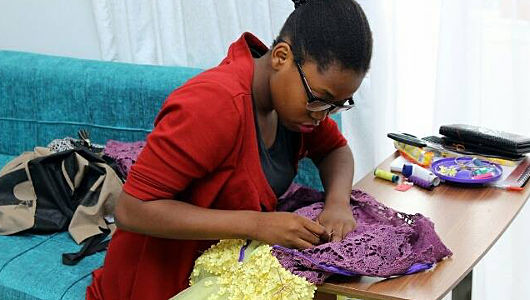
In 2011, at the age of 18, Inioluwa Ajayi founded the House of Dabira. Based in Ibadan, the House of Dabira designs high-quality, custom-made clothing.
Since the company’s beginning, Ajayi has been in multiple fashion shows. She has also won various awards, including Entrepreneur of the Year at the 2014 Oyo Students Entrepreneurship Awards.
Ajayi is now 21 and has graduated from the University of Ibadan with a law degree. She has around four to six clients each month and hopes to expand in the future.
“We plan to significantly grow our client base both within and outside Africa by creating signature collections for top retailers, opening House of Dabira stores in key cities across the continent, listing on e-commerce shopping sites like Jumia … and creating a diffusion line, Da’ara, to produce more affordable outfits,” she explained to How We Made it in Africa.
Ajayi also hopes to donate part of her profits to help fight domestic violence. “Finally, we plan to grow the House of Dabira Campaign against domestic violence by investing five percent of all profit into supporting victims of domestic violence, leading multimedia campaigns to eradicate the scourge and creating projects to teach young girls about design,” she said.
Kenny Palm Oil
Ndilemeni Kenechukwu is a 22-year-old electrical engineering student who founded Kenny Palms Nigeria, which packages and sells various forms of palm oil.
Kenechukwu became interested in entrepreneurship when he was 13 years old and read the book Rich Dad Poor Dad by Robert Kiyosaki, an American businessman and investor.
The company began in 2013. Today, it employs 12 people. “There is increasing demand for hygienic and low-cholesterol, edible palm oil due to the upsurge of heart-related ailments, disease prevention awareness and the most recent Ebola outbreak,” said Kenechukwu.
Kenechukwu has high hopes for his company’s future; by 2035, he hopes to be the leading producer of palm oil in Africa. He is currently investing his profits so he can expand production.
Greenville Organic Foods
Kavode Yussuf is a 21-year-old and is head of Greenville Organic Foods in Alimosho, near Lagos, Nigeria. The company processes the West African cassava root and turns it into garri, a popular, tapioca-like food.
The company began in Dec. 2014 and is making around $600 per month. Greenville Organic Foods employs two people and provides cassava farmers with a stable income, something that they were not previously receiving.
“Farmers must sell off their cassava within two weeks of harvesting,” said Yussuf. “This makes cassava farmers anxious and this anxiety makes buyers price down the cassava. So our coming on board gives some farmers the assurance that there is a market for their product.”
Yussuf hopes to raise enough money to build a production plant; as of now, due to lack of funding, production and packaging are outsourced.
“It will cut our production cost,” he said. “We will [be able to] employ more people, make more profits and, best of all, we will be in direct control of the quality of our products.”
– Margaret Mary Anderson
Sources: How We Made it in Africa, Anzisha Prize
Photo: How We Made it in Africa

Indigenous Knowledge and Climate Change?
It is no mystery these days that scientists have told Africa to brace itself for potentially devastating impacts of global climate change, and that the rural and the poor are likely to be hit the hardest. However, recent findings reported at the UNESCO scientific conference in Paris last month proposed that these rural areas, and the native farmers and pastoralists who live there, may actually be the most prepared to respond to a changing climate.
Benoit Hazard, an anthropologist from Institut National des Sciences Humaines et Sociales in Kenya researching resilience in East Africa, thinks the indigenous knowledge of local agriculturalists has already prepared them to adapt to sudden climate changes–and Hazard thinks this knowledge ought to be more widely implemented.
“We have traditional societies with specific knowledge to link things with ecological conditions, who know where water sources are and how to adapt. They need to be supported to mix their knowledge with agriculture practices,” said Hazard.
According to the research findings, those practicing more traditional farming methods tend to be much more sensitive to ecological changes, like drought for example. They also understand how to change their practices in order to not only adapt for themselves but to also not overburden the natural resources.
In addition to understanding how to utilize natural resources in a sustainable way, farmers who practice this type of agro-ecology, most often invest in a variety of agricultural products, such as livestock, crops, and the use of pollinators. Mixing these resources in a way that blends with the natural ecology of the landscape creates agriculture that has a higher chance of adapting with its environment.
Other farmer innovations stemming from traditional knowledge include planting indigenous crops, utilizing organic fertilizer and even using waste crop material to increase crop fertility.
Hazard suggested at the UNESCO conference that these traditional practices needed to be taught and encouraged more broadly and that combining new agricultural advances with the indigenous knowledge that has allowed East Africans to succeed in such a harsh climate is key to surviving potentially harsher future climates.
– Gina Lehner
Sources: allAfrica, United Nations Environment Program
Photo: Our World
2016 Olympics: Brazil and Its Economy
Brazil will be the first South American country to host the Olympics for the 2016 Summer Olympics. Although Brazil has an emerging economy, the 2016 Olympics may do more harm than good as it relates to the economy and those living in poverty.
The theory is that hosting the 2016 Summer Olympics will cause a growth spurt in the economic development of Brazil with an influx of tourism and employment. However, Brazil also spent more than $11 billion on hosting the FIFA 2014 World Cup. The data from the World Cup shows that the costs of hosting such a big event may outweigh the benefits. The World Cup did little to boost the economy and the jump in tourism the government was anticipating was not as significant as expected.
The economy in Brazil is looking rather weak considering the fact that the country has $900 billion in foreign debt and economic activity is decreasing yearly by almost five percent.
The state of the economy coupled with the costly and grueling task of Olympic preparation seems to be rather dangerous. The budget for the Olympics was originally $2.93 billion but has risen to $13.2 billion since January 2014.
Although Mayor Eduardo Paes of Rio de Janeiro claims that 57 percent of the funding will be from private enterprise, the brunt of the consequences of the infrastructure projects will fall upon the shoulders of the Brazilian taxpayers.
Amid the excitement of the coming of the Olympic Games is the very real crisis of eviction that families are facing. The scarcity of land in Rio means that things have to be shifted around to accommodate the new infrastructure.
Thousands of families have been moved out of poor neighborhoods (called favelas) so the neighborhoods can be destroyed and then rebuilt as different Olympic structures. Approximately 3,000 families in Rio have been forced to relocate as a result of the Olympic projects.
An estimated 67,000 people have been evicted from their favelas since 2009 when Rio was chosen to host the Olympics. Those who fight against the eviction and refuse monetary compensation and alternate housing are met regularly with aggressive eviction attempts.
The price of land is quickly rising in anticipation of the Games. After the Games, the complexes will be converted to luxury condos for sale for up to $700,000.
The 2016 Summer Olympics will change the economy of Brazil and leave a lasting impact. Those who will feel the weight the most will be the voiceless poor.
– Iona Brannon
Sources: Bloomberg Business, Business Insider, The Guardian, NPR, Reuters, Seven Pillars Institute, Washington Times
Photo: Brazil the Guide
Ampion Venture Bus Program Supports Startup Ideas
Ampion Venture Bus, a Pan-African entrepreneurship initiative, helps develop tech entrepreneurs in a unique way — a bus road trip across different parts of Africa. The bus journey enables tech experts with dreams to solidify their startup ideas into real business projects.
Entrepreneurs board the Ampion bus with an idea. On the five to seven day bus journey, the entrepreneurs interact directly with their target users. They also fine-tune their initial idea, launch and pitch it to potential investors. On the bus, the entrepreneurs learn from each other and receive advice from mentors.
The Ampion bus stops at innovation hubs along the road. The end of the five to seven day trip is planned to coincide with a regional tech event, in which the entrepreneurs who just finished perfecting their idea can pitch to more investors.
The Ampion Venture Bus trip is unique because the bus drives through rural areas. Many startups in Africa focus solely on issues in large urban metropolitan areas, and popular startup events usually occur in big cities.
“In Nairobi, for example, you might have a start-up event every other week. But we drive to rural areas, go to places where we are often the first organization ever to organize an entrepreneurship event,” explained Fabian-Carlos Guhl, CEO of Ampion.
At the end of the road trip, the most promising, successful startups join the Ampion Fellowship. This is an incubation program that provides a startup with funding, office space and mentoring.
The best of the Ampion Fellows receive a trip to Germany in order to modify their businesses even further and to meet with more potential investors.
“Travelling on the bus helps the teams to work closely together. In agriculture, for example, we go to farms, talk to farmers and see what challenges they face – and then our local and international teams try to develop solutions that suit them.”
Each trip, the Ampion bus carries 200 promising young entrepreneurs in five buses, divided into categories of interest. The company aims for females to account for 50 percent of bus-goers.
So far, over 30 successful startups have begun due to the Ampion Venture Bus program. Startups have provided innovative solutions to issues in “health care, citizen engagement, education, public transport, sanitation and tourism,” according to How We Made it in Africa.
One successful startup born of the Ampion bus is funeral.ly. Based in Zimbabwe, the startup provides users with tools to coordinate and manage funerals.
Another startup is MobiDawa, located in Kenya. The program reminds patients to take medicine at the correct times, provides instructions on how to take medicine and warns them of possible side-effects.
“We want to identify start-ups that have potential to change the face of Africa, and ideally also globally. We want to foster technology that can disrupt an entire industry and generate profit, but also make social sense. We look for brilliant people… we look at their ideas, the quality of their education, their past entrepreneurial projects and their motivation. We certainly won’t accept someone who says ‘I don’t care about sustainability, I just want to get rich as soon as possible’” said Guhl.
– Margaret Anderson
Sources: How We Made It In Africa, Ampion
Photo: Flickr
Global Magnitsky Human Rights Accountability Act
The Global Magnitsky Human Rights Act is a bill currently in the Foreign Relations Senate committee.
Sponsored by Senator Benjamin Cardin (D), the bill’s intent is to “impose sanctions with respect to foreign persons responsible for gross violations of internationally recognized human rights, and for other purposes.”
Having been introduced in January of 2014, and then reintroduced in January 2015, the bill has yet to reach the Senate floor. However, it has earned the sponsorship of Senators like Marco Rubio (R) and John McCain (R).
This bill would give the president the power to impose sanctions on any entity or government who abuses the rights of people. The definition of these abuses is in accordance with the “internationally recognized human rights.” These abuses include human trafficking and extrajudicial killings. The bill would not only serve to punish governments who are actively participating in the abuses but those who are providing financial assistance to the individual or entity wreaking havoc.
Earlier this month, the Human Rights Watch testified in front of the Senate Foreign Relations Committee, urging Congress to pass the bill.
In their testimony, they mentioned the fact that in many countries (especially those affected by Arab Spring), “conflict and repression” were unexpected consequences, affecting large quantities of people. During their testimony, they also spoke of how the U.S. and other Western democracies rarely speak harshly of the atrocities taking place.
Because of the lacking dialogue taking place in mainstream media, and in the interest of the people being affected by the negative choices made by people in high positions of power, the Human Rights Watch supported the passage of this bill so that it is “harder for authoritarian rulers, dictators and kleptocrats to recruit and maintain a coterie of supporters.”
– Erin Logan
Sources: Human Rights Watch, Congress
Photo: Sputnik
U.N. Accredits “Freedom Now” NGO
The United Nations recently accredited the nonprofit, Freedom Now, as an official Non-Governmental Organization, when only one month before, its application had been denied.
Freedom Now is an American nonprofit organization that works to help free those who have been imprisoned as a result of discrimination based on sex, race, gender and other criteria. This is an advocacy group, which not only provides legal advocacy to clients but also advocates in the public sphere to raise awareness of illegal detentions taking place around the world.
In the original vote, the application was denied by a United Nations committee, arguably because this organization seeks to undermine the country’s own system. One example of a country voting against Freedom Now to further its own agenda is China, which has a history of imprisoning people who disagree with the government. Currently, Freedom Now has a campaign to free a Chinese Nobel Peace Laureate Liu Xiaobo, who is currently serving an 11-year sentence that began in 2009 for “undermining the state authorities,” according to the Nobel Prize website.
While some countries like China and Russia strongly opposed the accreditation, the United States made the final accreditation possible. Following the rejection, the issue was brought to the U.N.’s Economic and Social Council, or ECOSOC, which had the power to vote again on July 20.
With its NGO status, Freedom Now can continue to grow its work as a nonprofit helping those imprisoned based on their identity, but this process has also sparked controversy in the international political sphere. Now, perhaps the United Nations will seek to reform its accreditation system, in which countries that have not always met the UN’s human rights standards are still part of the forces deciding whether or not to give an organization a title of “U.N. NGO.” Freedom Now is teaching us about illegal detentions, but this situation has helped bring public attention to the corruption that allows these detentions to take place.
– Rachelle Kredentser
Sources: India Times, Freedom Now, Nobel Prize, New York Times
Young Entrepreneurs from Nigeria Boost Local Economies
The following businesses were created by young entrepreneurs in Nigeria:
House of Dabira
In 2011, at the age of 18, Inioluwa Ajayi founded the House of Dabira. Based in Ibadan, the House of Dabira designs high-quality, custom-made clothing.
Since the company’s beginning, Ajayi has been in multiple fashion shows. She has also won various awards, including Entrepreneur of the Year at the 2014 Oyo Students Entrepreneurship Awards.
Ajayi is now 21 and has graduated from the University of Ibadan with a law degree. She has around four to six clients each month and hopes to expand in the future.
“We plan to significantly grow our client base both within and outside Africa by creating signature collections for top retailers, opening House of Dabira stores in key cities across the continent, listing on e-commerce shopping sites like Jumia … and creating a diffusion line, Da’ara, to produce more affordable outfits,” she explained to How We Made it in Africa.
Ajayi also hopes to donate part of her profits to help fight domestic violence. “Finally, we plan to grow the House of Dabira Campaign against domestic violence by investing five percent of all profit into supporting victims of domestic violence, leading multimedia campaigns to eradicate the scourge and creating projects to teach young girls about design,” she said.
Kenny Palm Oil
Ndilemeni Kenechukwu is a 22-year-old electrical engineering student who founded Kenny Palms Nigeria, which packages and sells various forms of palm oil.
Kenechukwu became interested in entrepreneurship when he was 13 years old and read the book Rich Dad Poor Dad by Robert Kiyosaki, an American businessman and investor.
The company began in 2013. Today, it employs 12 people. “There is increasing demand for hygienic and low-cholesterol, edible palm oil due to the upsurge of heart-related ailments, disease prevention awareness and the most recent Ebola outbreak,” said Kenechukwu.
Kenechukwu has high hopes for his company’s future; by 2035, he hopes to be the leading producer of palm oil in Africa. He is currently investing his profits so he can expand production.
Greenville Organic Foods
Kavode Yussuf is a 21-year-old and is head of Greenville Organic Foods in Alimosho, near Lagos, Nigeria. The company processes the West African cassava root and turns it into garri, a popular, tapioca-like food.
The company began in Dec. 2014 and is making around $600 per month. Greenville Organic Foods employs two people and provides cassava farmers with a stable income, something that they were not previously receiving.
“Farmers must sell off their cassava within two weeks of harvesting,” said Yussuf. “This makes cassava farmers anxious and this anxiety makes buyers price down the cassava. So our coming on board gives some farmers the assurance that there is a market for their product.”
Yussuf hopes to raise enough money to build a production plant; as of now, due to lack of funding, production and packaging are outsourced.
“It will cut our production cost,” he said. “We will [be able to] employ more people, make more profits and, best of all, we will be in direct control of the quality of our products.”
– Margaret Mary Anderson
Sources: How We Made it in Africa, Anzisha Prize
Photo: How We Made it in Africa
Fair Trade for Banana Farmers in Ecuador
Ecuador is home to over 14 million people and an estimated 18 percent are involved in the banana trade or business. Banana sales comprise over 60 percent of the country’s GDP and Ecuador supplies almost 40 percent of the world’s bananas. These numbers help explain and prove the prevalence of non-fair trade companies.
According to TransFair USA, basic necessities for banana farmers cost $9.60 per day. This is in contrast with non-fair trade wages that can be as low as $3 daily. This has caused an influx of unlawful child labor violations, working conditions and extended hours. The Human Rights Watch has accused non-fair trade companies of employing children as young as 8 years old.
The international farming advocacy organization, Food Empowerment Project, states, “banana producers and distributors Dole, Del Monte and Chiquita have all refused to take responsibility for the conditions on plantations from which they source their product.”
These conditions have caused small-scale farmers to seek fair trade methods to help better provide for their families. For example, the El Guabo Association of Small Banana Producers cooperative started in 1998 when 14 farmers decided to take their chances by bringing a single container of bananas, totaling almost 40,000 pounds and selling directly to a European market. Their goals were to cut out all the intermediaries and deal directly with domestic and international markets.
The success of this collective business model has provided an alternative model of farming tactics and has lead other companies to adopt similar practices. International fruit companies such as Dole, Del Monte and Chiquita have sought business in other countries due to the mounting political support in Ecuador for farmers and small business. These prevailing attitudes create an environment of conditions where a fair trade sustainable fruit seller, like All Good Fairtrade (AGF), can thrive.
AGF is a banana company located in the Southwest of the country. The organization utilizes purely organic fertilizer and has banned the usage of over 100 agrochemicals typically used in mass fruit production. Furthermore, AGF is also able to pay their workers wages that are approximately $3 more per day than the average banana industry worker. The organization is supplied by over 400 Ecuadorian family farms in 15 communities, all of which are a part of the El Guabo Association of Small Banana Producers.
For each bunch of bananas sold, AGF delivers seven to ten cents back to the El Guabo collective for fair e-trade premium funding. In the five years of the company’s existence, AGF has given back over $600,000. As a community, the families vote democratically on how and where to allocate these funds. So far, the capital has been invested toward building a free medical center and a special needs school, supporting multitudes of school children and implementing various sustainable farming initiatives. Education and school supplies are also awarded to the children of the El Guabo collective.
– The Borgen Project
Sources: CS Monitor, Food is Power, Green America
Photo: Food is Power
The World’s Poorest Citizens and Climate Change
Climate change, once considered an extremely controversial subject that provoked bipartisan deadlock within American politics, is now widely accepted as an unfortunate reality by many of the world’s most developed countries. Last week, for instance, President Obama introduced his “Clean Power Plan,” a government initiative aimed at reducing greenhouse gas emissions from America’s coal-burning power plants.
However, while climate change has been (at least superficially) accepted as a fact in rich countries such as the United States, many of the world’s population has still never heard of the term “climate change,” let alone of its harrowing consequences.
A study conducted this year, which analyzed data collected from over 100 countries by the Gallup Poll in 2007 and 2008, discovered that over 40 percent of the world’s inhabitants have never heard of climate change. The study also found that a correlation exists between a country’s income level and the general public awareness about the issue. In developed, first-world countries such as the United States, Canada and Russia, for instance, over 90 percent of people are aware of climate change. In developing countries, such as India, Pakistan and Egypt, however, the number of people conscious of climate change is vastly lower, measuring around or less than 30 percent.
Interestingly, the study also discovered that while a smaller percentage of people in poorer countries were aware of the phenomenon, those who had heard of it regarded the issue with greater severity than those in rich countries. According to VICE Magazine, this phenomenon, in turn, reflects the fact that poorer countries are actually more vulnerable to climate change, especially since they are worse equipped to deal with its effects.
Researchers involved with the study told VICE that the results confirmed the impossibility of a one-size-fits-all approach to climate change communication. A multitude of factors affects how people come to know about and engage with the issue, even in first-world countries. In China, for example, a citizen’s concern with climate change tends to correlate with the quality of air pollution experienced in different regions.
Despite these other factors, however, researchers reflected that the biggest revelation brought about by the survey was the discovery that climate change awareness blatantly mirrors global income inequalities.
While this might seem daunting for the future of poor countries, researchers have argued that the discovery that knowledge of climate change and global poverty are more inextricably linked than previously thought actually offers a glimmer of hope for the future of our fragile Earth and its billions of poor inhabitants.
For instance, a study conducted in the past year by Frances Moore and Delavane Diaz of Stanford University found that future projections based on economic growth in third-world countries also projected parallel downward trends in global temperatures. Their research thus showed that targeting global poverty could have an inadvertent positive effect on climate change, by providing poor countries with the knowledge and tools with which to limit their negative environmental impact.
In light of this, the discovery of Gallup’s most recent poll offers valuable insight into one way in which the global community can help manage the calamitous effect of climate change: by first managing the calamitous effects of global poverty.
In order to achieve this, however, it is first necessary to eradicate the correlation that currently exists between wealth and knowledge of climate change. In a world where all, and not just 60 percent, of humanity will be affected by climate change, all, and not just 60 percent, must first be made aware of the issue and of its potentially and universally catastrophic consequences.
– Ana Powell
Sources: CNN, The Guardian, VICE
Photo: The Guardian
The World Food Programme: 6 Hunger Hot Spots
The World Food Programme is waging war on hunger and fighting an uphill battle in six of the world’s hunger hot spots; Syria, Iraq, Yemen, South Sudan, Nepal and the Ebola-affected regions in Guinea, Liberia and Sierra Leone.
Most of the world’s population lives in developing countries. Many of them are mired in extreme poverty, with little hope of access to clean water and often reduced to scavenging for food in trash heaps lining their decrepit shanty town streets, just to feed their children. But in these six emergencies, the situation is even more urgent.
The World Food Programme (WFP), the world’s largest humanitarian aid agency fighting hunger, is the food aid branch of the United Nations, working to address hunger across the globe and promoting food security. Workers are on the ground in these areas trying to ease the crisis by providing needy families with life-saving food.
In Syria, the WFP is struggling to meet food need demands, as nearly six million people have been displaced. The ongoing armed conflict in Syria has been growing worse and the situation steadily deteriorating. Although the WFP has been reaching approximately four million people using hand to mouth operations, funding is running low and the need is increasing drastically.
Iraq has been in crisis for years and continues to be. The recent upsurge in violence has left 1.8 million displaced without access to water or food. The WFP reports having reached out to about a million people since June, providing assistance.
Yemen is a rapidly deteriorating humanitarian emergency. With around half of all children under five being stunted (too short for their age), Yemen already stands as having one of the highest child malnutrition rates in the world. Millions of people are being cut off from basic human needs such as food, water and electricity as fighting persists and fuel shortages continue.
Although the food security threat in South Sudan has been stabilized for now, sustainable assistance is essential in the region as the situation remains extremely fragile. The WFP has been able to reach more than 2.5 million people this year but if fighting continues, the situation in South Sudan could turn into a full-blown catastrophe.
The 7.8 magnitude earthquake that hit Nepal on April 25th, 2015 devastated the region, leaving approximately eight million people affected and living without access to food, water or shelter. With the epicenter being just outside of Kathmandu, large populations were displaced and 30 out of 75 districts in the country were ruined. The Nepalese government issued a state of emergency and the WFP is currently in the country providing assistance.
The WFP has responded in force to the Ebola emergency plaguing West Africa and has met the needs of people affected by the outbreak since April in Guinea, Liberia and Sierra Leone. Along with food assistance, the WFP is also helping get the humanitarian staff and equipment into the crisis zones.
According to www.worldhunger.org, the United Nations Food and Agriculture Organization estimates that about 805 million people of the 7.3 billion people in the world, or one in nine, were suffering from chronic undernourishment in 2012 to 2014. Almost all the hungry people, 791 million, live in developing countries, representing 13.5 percent, or one in eight, of the population of developing counties.
When disaster strikes or when war tears through a nation, humanity can be taken to the breaking point. With help from organizations like the World Food Programme, families fighting for survival can find some relief and possibly some hope.
– Jason Zimmerman
Sources: WFP, World Hunger
Photo: Action Against Hunger
5 Fascinating Effects of Foreign Aid on Politics
Here are five ways foreign aid impacts politics:
Unfortunately, in recent years, aid funding in the United States has decreased significantly, which is hard to believe when aid has so many positive effects on the United States’ politics and safety. Hopefully, in the coming years, politicians will turn this downward trend around in order to continue reaping these benefits.
– Clare Holtzman
Sources: Forbes, InterAction, Munich Personal RePEc Archive, USAID, Washington Post
Photo: Bloomberg