The World Energy Council (WEC) estimates that only a third of the world’s potential hydropower capacity has been developed.
With this knowledge in mind, an endless expansion of possibilities awaits for future investments in this renewable energy.
In fact, today hydropower is recognized as the cleanest renewable source in the world — the carbon emissions emitted from its lifecycle of construction, operation and decommission are far less in comparison to its renewable friends, wind and solar.
According to an article by SciDev Net, Africa is the world’s fastest growing economy; however, despite the foreseeable opportunities for this emerging continent, millions of people remain in severe poverty.
At the heart of this issue lies energy poverty, with 600 million Africans living without electricity, according to the International Energy Agency (IAE).
This means that more than half of the country’s population lacks access to electricity, rural residents faring worse with just 27.8 percent having access to electricity — what many count today as something they cannot live without.
Despite these harrowing numbers, hydropower use accounts for 84 percent of all non-fossil fuel energy use across Africa, a continent rich in rivers and lakes, making it ripe for this type of energy source.
Among the world’s longest waterways, The Nile is shared by many neighboring countries and offers great potential for hydropower in Africa.
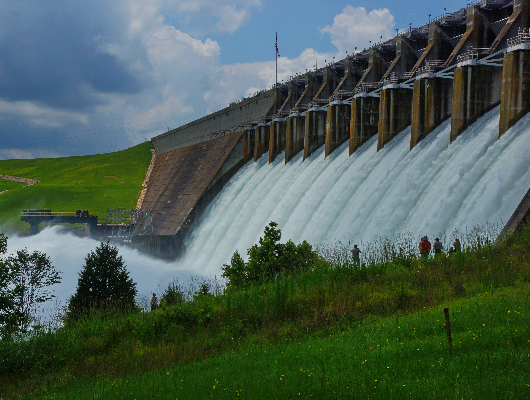
Recognizing this potential, the construction of the Grand Ethiopian Renaissance Dam (GERD) is underway, a structure which will be 145 meters high and its completion planned for 2017. With this height, it will be nearly one and a half times the height of the Victoria Falls and also the largest dam in Africa.
The creation of this dam will benefit many, producing almost triple the amount of Ethiopia’s current electricity production, as the dam is capable of producing six gigawatts of energy in peak output.
Dams harnessing and producing hydropower typically last 50 years without maintenance, producing limitless and continuous power, unlike other sources which are not as dependable.
However, some negative aspects of hydropower include the high costs associated with design and construction and the uncertain impact it will have on local people who call the site of the dam their home.
Although the construction and usage of hydropower “come with a complex set of social and environment challenges,” international hydropower associates are in the process of creating sustainability standards to develop and ensure Africa’s place in a world looking toward hydropower.
Future plans for the implementation of hydropower along Africa’s waterways include the Congo, Niger, Orange and Senegal Rivers, which when combined will have the potential to generate nearly 27 gigawatts of electricity.
As Africa continues to invest in renewable energy sources such as hydropower, an end to energy poverty is possible.
As SciDevNet reveals, “The next few decades could prove critical to the future of Africa’s water, energy and people.”
– Nikki Schaffer
Sources: SciDev, World Energy, World Energy Outlook
Photo: Wikipedia

LIMBS International: Prosthetics for the Poor
The demand for affordable prosthetics in the developing world is great and the supply is lacking. Prostheses that are affordable and sturdy enough are hard to come by.
Approximately 40 million people in the developing world are in need of prosthetics yet only five percent have any prosthetic options. Whether or not the five percent can afford the options is a whole other question.
LIMBS International works to reduce the number of amputees lacking prosthetics through innovative designs created with developing countries in mind. The organization is focused on finding cheaper and more efficient ways to produce practical prosthetics and has developed the first mass-produced, low-cost, multi-axis prosthetic knee.
The philosophy that LIMBS International uses is a holistic plan focused on education, community rehabilitation and technology development. The organization trains teachers to educate children on the needs of amputees in developing countries.
It also focuses on rebuilding the community through the Community Based Rehabilitation program to help address social, mental and emotional trauma that amputees have experienced. The technological development has an emphasis on creating low-cost, high-quality prosthetics.
Taking this further, the organization trains people to repair the prosthetic devices in their country of focus using material available in the region.
The prosthetic knee that LIMBS has built is manufactured in Bangladesh to be used in large-scale relief efforts by clinics and international organizations after natural disasters.
LIMBS International has launched a project called Project: Mobility to fit 250,000 amputees in the world with prostheses by 2024. The distribution of LIMBS International’s LIMBox to clinics that LIMBS partners with as well as to NGOs around the world will help reach that goal on time.
The organization is currently working in nine different countries: Bangladesh, Bolivia, Cambodia, Dominican Republic, El Salvador, Guatemala, India, Kenya and Mexico.
– Iona Brannon
Sources: LIMBS International
Photo: Wikipedia
Sisters Fold Origami and Raise $650,000 to Build Wells
Every year about 842,000 people die from diarrhoea that causes dehydration and more than 840,000 people die from a water related disease each year. Worldwide, there are 750 million people who lack clean water access, which is more than twice the size of the U.S. population.
On average, it costs between $12,000-$15,000 to build enough wells to support an entire village of people. Five thousand dollars builds one well and provides enough water for 500 people. The costs include constructing the wells, preparing the community for the water project, and then monitoring and evaluating.
In 2011, Katherine Adams, age 5, and her sister Isabelle Adams, age 8, learned about the millions of people who go thirsty every day and about the girls who haul water all day instead of going to school. Therefore, both girls put their origami folding skills to use to raise money to build a well in Ethiopia.
With the help of their dad, they held an origami sale at a Starbucks in Dallas, Texas in order to help thousands of people without water. After eight weeks of selling origamis, the two girls raised more than $10,000, which is enough to benefit an entire village.
It has been almost four years since they started folding origamis, and the two sisters–now 9 and 11–founded an organization called Paper for Water that has hundreds of volunteers and helped raise more than $650,000. That is enough money to create clean sustainable water for about 63 to 65 villages or 32,000 people.
The origami ornaments are not easy or simple to make. The average ornament they make takes one hour and one volunteer took 22 hours to create a single ornament.
Globally, it would take about $20 billion to solve water and sanitation problems, which the girls believe is doable. Their origami ornaments are for sale online ranging from $10 to $100 per item and give you an option to donate without getting an origami gift.
– Donald Gering
Sources: Good News Network, Paper for Water, UNICEF, Water.org, The Water Project
Kabul City: On the Road to Improvement
When we think of a “bad road,” often times we conjure an image of driving over narrow, uneven or pot-holed ridden paths, usually in the heart of a city or perhaps out in the middle of nowhere. But what if the main road we traversed in our walk to school every day or commute to work was in a state of even worse condition—unpaved and muddy, invisible beneath a cloud of dust?
For residents living in the Qala-e-Zaman Khan neighborhood in Kabul, traveling on roads which match this description was an everyday occurrence. A five minute walk to school became a 20 minute one, with students changing out of their mud-caked clothing several times a day, while also becoming more susceptible to illness as a result of breathing in the perpetual dust.
Left almost untouched for nearly half a century, the need for infrastructural improvements for roads in the neighborhood of Qala-e-Zaman Khan was dire. Fortunately, with the support of the Kabul Municipal Development Program (KMDP), implemented by the Kabul Municipality, a project to build and pave roads could finally begin.
This program was funded by a grant equaling $110 million from the Afghanistan Reconstruction Trust Fund (ARTF). Established in 2002, the ARTF provides a financial vehicle for the government of Afghanistan’s budget, allowing them to make a significant difference in areas such as education, health, agriculture, rural development, infrastructure and governance.
Aside from improving street conditions, an article from The World Bank states that the KMDP organization has more goals in store.
“KMDP’s objectives are to increase access to basic municipal services in selected residential areas of Kabul city; redesign Kabul Municipality’s Financial Management System to support better service delivery; and enable early response in the event of a relevant emergency.”
Since the creation of newly paved roads in this area of Kabul, the quality of living has improved for its people. Shopkeepers have seen their income double now that dust no longer settles on food. Children don’t dread the mud-splattered walks to school, taxi cabs have reduced their fares and those seeking hospitals save time on the newly constructed streets.
The KMDP plans to reach at least 770,000 people with their services throughout the 1,770 hectares of government-owned land. So far, at least 618 hectares have been improved.
The organization has also funded over 310,000 beneficiaries comprising over 100,000 from upgraded roads and more than 210,000 from trunk roads. At least 76,000 indirect beneficiaries have also benefited, including students and staff of schools and institutions of higher education.
With the construction of asphalt roads in neighborhoods that have only known dust and mud-covered paths, residents embrace the positive outcomes that continue to surface with each new step.
– Nikki Schaffer
Sources: World Bank, ARTF
Photo: Flickr
The Benefits of the Egypt Recycling Program
At 7 a.m. every Friday and Saturday, members of the Cairo Runners Club wake up and prepare to hit the soon-to-be crowded streets of Egypt’s capital. Yet these intrepid urban runners are not trying to exercise before work—the weekend actually has already begun (an Egyptian weekend lasts from Friday to Saturday).
Their early waking is rather a matter of health and safety than of discipline. By rising with the sun, they can avoid the noxious air pollution and congested streets that perpetually plague Egypt’s capital.
In fact, according to environmental data from the World Health Organization (WHO), Cairo is more polluted than even Beijing, Bangkok and Mexico City. It has a level of fine particulate that is seven times the WHO standards. These extreme levels of pollution often can lead to heart disease and cancer.
In order to curb air pollution, the Egyptian government has turned to a variety of strategies, including banning the burning of waste and spending more on public transportation. One program that is showing promising results is an initiative supported by the World Bank, which aims to replace old and inefficient mass-transit vehicles in the city.
The program, named Egypt Vehicle Scrapping and Recycling Program, provides cash incentives of up to 5,000 Egyptian Pounds, roughly 640 U.S. dollars, to taxi owners to relinquish and recycle their aging vehicles.
The Egypt recycling program also uses operating licenses to leverage compliance. Mass transit vehicles older than 20 years can no longer receive new operating licenses. Before the program, the age of the average taxi in Cairo was a whopping 32 years. Vehicles this old suffer from poor safety ratings, bad reliability and lack the catalytic converters that filter out pollutants from an engine’s exhaust.
Although the program is reinvigorating the transit fleet in Cairo, its effectiveness does not necessarily extend beyond the metropolitan area. In fact, since the program does not prescribe the method for disposing of these aging vehicles, owners can sell parts to private parties where the law is not in effect.
The Egyptian Environmental Affairs Agency also outlined a variety of challenges this program must face in order to succeed. First of all the program requires the complete motivation and organization of the vehicle owners, traffic department and the Ministry of the Interior.
The first project of its kind worldwide, the program also was entering uncharted waters and therefore only a small number could provide the required services. The complexities of Egyptian bureaucracy were also noted as hindrances to the program and would require attentiveness in order to coordinate affairs.
Nonetheless, since the program has been initiated in 2010, the World Bank has reported noticeable improvements. It estimates that during 2013 and in 2014, the program prevented over 130,000 tons of carbon dioxide emissions. The program also has exchanged an impressive total of 40,689 old taxis with new taxis in Cairo alone.
Many of the old taxis were in excess of 50 years old, well above the already high average of 32 years. As Cairo replaces more of its aging taxis it can expect cleaner skies and perhaps even more runners.
– Andrew Logan
Sources: The World Bank 1, The World Bank 2, United Nations Environment Program, Egyptian Environmental Affairs Agency, USA Today
Photo: Flickr
Wood for Maternal Healthcare in Haiti
The island nation of Haiti is the poorest country in the Western Hemisphere, with one in four inhabitants of this small Caribbean nation living in extreme poverty. Plagued by political instability, as well as the devastating aftermath of the 2010 earthquake, the country of Haiti is still struggling for recovery.
In the wake of the worst earthquake in a 200-year history for Haiti, an estimated 1.5 million people were left homeless. The rehabilitation process for the affected population is crippled by the financial hardships of the country. According to a World Bank report, one in two Haitians live in poverty, living on less than $3 a day.
The extreme poverty conditions in the country have unsurprisingly affected the healthcare system as well. The insufficient healthcare system was dealt a further blow after the earthquake of 2010, which is estimated to have destroyed 60 percent of the healthcare infrastructure in Haiti.
The deterioration of the healthcare system has especially affected the maternal and neonatal health in the country. According to UNICEF, maternal mortality in Haiti is 35 women out of every thousand; neonatal health care is equally abysmal, with 3.1 percent of newborns dying within the first month after birth.
Most of the maternal and neonatal deaths are considered largely preventable, given adequate healthcare resources. Accessibility to these resources is another important issue, with less than 36 percent of pregnant women giving birth in any healthcare facility.
The poor state of maternal health has spurred Maternal Life International — a nonprofit organization based in Montana — to direct its efforts for better maternal and neonatal health care at Haiti. Its objective is to build family health offices in the country to assist pregnant women and newborns.
As laudable as its mission is, it is faced with the difficulties of resource scarcity in Haiti. The lack of lumber in Haiti is a major obstacle in rebuilding the country.
The deforestation of Haiti has long been an issue of concern for the island nation, affecting the economic and ecological health of the country. Wood is quite significant for building structures in Haiti, as cement buildings are a danger in a region susceptible to earthquakes.
The volunteers for Wood for Haiti have a solution to the problem: lumber for the family healthcare facility building shipped straight from the forests of Montana. The group of volunteers from Missoula will assist in providing Maternal Life International procure 5 tons of lumber for construction of the family healthcare facility in Haiti.
The volunteers are working first to gather lumber in Butte, where Maternal Life International is based. The lumber is currently stored in a warehouse in Butte to be shipped to Haiti later when the construction projects begin.
The Wood for Haiti is a commendable effort by the Montana lumber industry. The donation of building materials is somewhat of a novel idea in an era of usually monetary donations. It does, however, provide for the delivery of natural resources, which Haiti needs but lacks.
It is not to say that lumber is all Wood for Haiti provides. It also provides vocational training to Haitians for the construction and rebuilding projects. With a combination of resource provision and training local labor, Haiti can be brought that much closer to economic stability.
The collaborative efforts of Wood for Haiti and Maternal Life International are anticipated to be a stepping stone toward improving the standards of maternal health in Haiti and ultimately conditions across the country.
– Atifah Safi
Sources: MATR, UNICEF, Doctors Without Borders, Maternal Life International, CIA
Photo: Google Images
Child Labor to Make Chocolate
Chocolate is produced from the cacao bean, often referred to as cocoa, which is primarily grown in Western Africa. More than 70 percent of the world’s cocoa comes from the countries of Ghana and Cote d’Ivoire in West Africa, where children are often employed in harsh, unsafe conditions to meet the demands of the market. Such labor takes place in order to increase production while keeping prices competitive.
According to the Food Empowerment Project, the farms of Western Africa supply cocoa to international giants such as Hershey’s, Mars and Nestle. Cocoa is grown primarily as an export crop and accounts for 60 percent of the Ivory Coast’s export revenue.
Cocoa farmers, however, earn less than $2 a day, an income below the poverty line. As a result, farmers look for cheap sources of labor to keep their prices competitive.
These low wages perpetuate child trafficking and dangerous conditions for working children. According to the International Labor Rights Forum, children laboring on cocoa farms are exposed to chemicals, long working hours, and the denial of a formal education.
Children are also reportedly forced to use chainsaws and machetes, and they sometimes must drag more than 100 pounds worth of cocoa pods through the forest. If the children do not work fast enough they may be beaten.
The problem is getting worse. Between 2009 and 2014, Child Labor in cocoa production increased by 46 percent. Most of the children in West Africa begin working on the cocoa farms between the age of 12 and 16, although children as young as five have been found working.
An estimated 1.8 million children are being forced to labor on cocoa farms in Western Africa. In Ghana, 10 percent of the children do not attend school, while the number is as high as 40 percent in Cote d’Ivoire.
Despite its prevalence, in Cote d’Ivoire child labor is actually illegal. Offenders could receive one to five years of jail time and up to $2,200 in fines. These laws, however, are rarely enforced.
The country has invested about $40 million to implement projects such as the building and rebuilding of schools and a tracking system to keep at-risk children accounted for and safe. However, without the enforcement of the law many children are not protected by these measures.
Advocates have called on the $60 billion chocolate industry to help alleviate the problem of child labor by paying cocoa farmers a livable wage and consumers to avoid purchasing chocolate that is sourced from Western Africa.
– Drusilla Gibbs
Sources: Food Is Power, Labor Rights, Anti-Slavery
Photo: Flickr
Education in Rwanda: Highest Enrollment Rates in Africa
The Rwandan elementary educational system has brought the primary completion rate to 72.7 percent in 2012. The completion rate was at 53 percent only four years prior.
There has been an increase in the national budget for education in Rwanda for the 2017-18 year. The budget was 17 percent in 2012 and is projected to rise to 22 percent. This funding will help provide Rwandan students with the opportunity to further their studies.
Rwanda was awarded the Commonwealth Education Good Practice Award in 2012 for its education program. The program is called the Nine Year Basic Education Fast Track Strategies and was designed to provide access to nine years of education for Rwandans. The community-based curriculum emphasizes quality education and community-incorporation.
Classrooms and restrooms have been built in accordance to the program. The program was initiated in 2009 and the success of the program is evident in the increase in enrollment, retention, and completion rates of primary school.
Although Rwanda’s primary school enrollment rates are high, the numbers show that a much smaller percentage of primary school children are continuing on to secondary education. The net enrollment rate for secondary school is 33 percent from 2013. This number does show a slow but steady increase of 3 percent from 2010 when the enrollment rate was at 30 percent.
Rwanda’s prioritization of the education of the youth is shown through the increase in enrollment rates throughout the country. Hopefully, other African countries will be quick to follow Rwanda’s lead.
– Iona Brannon
Sources: Commonwealth, Global Partnership, UNICEF, US Embassy, World Bank
Photo: Living in KiGali
Can Hydropower Alleviate Energy Poverty in Africa?
The World Energy Council (WEC) estimates that only a third of the world’s potential hydropower capacity has been developed.
With this knowledge in mind, an endless expansion of possibilities awaits for future investments in this renewable energy.
In fact, today hydropower is recognized as the cleanest renewable source in the world — the carbon emissions emitted from its lifecycle of construction, operation and decommission are far less in comparison to its renewable friends, wind and solar.
According to an article by SciDev Net, Africa is the world’s fastest growing economy; however, despite the foreseeable opportunities for this emerging continent, millions of people remain in severe poverty.
At the heart of this issue lies energy poverty, with 600 million Africans living without electricity, according to the International Energy Agency (IAE).
This means that more than half of the country’s population lacks access to electricity, rural residents faring worse with just 27.8 percent having access to electricity — what many count today as something they cannot live without.
Despite these harrowing numbers, hydropower use accounts for 84 percent of all non-fossil fuel energy use across Africa, a continent rich in rivers and lakes, making it ripe for this type of energy source.
Among the world’s longest waterways, The Nile is shared by many neighboring countries and offers great potential for hydropower in Africa.
Recognizing this potential, the construction of the Grand Ethiopian Renaissance Dam (GERD) is underway, a structure which will be 145 meters high and its completion planned for 2017. With this height, it will be nearly one and a half times the height of the Victoria Falls and also the largest dam in Africa.
The creation of this dam will benefit many, producing almost triple the amount of Ethiopia’s current electricity production, as the dam is capable of producing six gigawatts of energy in peak output.
Dams harnessing and producing hydropower typically last 50 years without maintenance, producing limitless and continuous power, unlike other sources which are not as dependable.
However, some negative aspects of hydropower include the high costs associated with design and construction and the uncertain impact it will have on local people who call the site of the dam their home.
Although the construction and usage of hydropower “come with a complex set of social and environment challenges,” international hydropower associates are in the process of creating sustainability standards to develop and ensure Africa’s place in a world looking toward hydropower.
Future plans for the implementation of hydropower along Africa’s waterways include the Congo, Niger, Orange and Senegal Rivers, which when combined will have the potential to generate nearly 27 gigawatts of electricity.
As Africa continues to invest in renewable energy sources such as hydropower, an end to energy poverty is possible.
As SciDevNet reveals, “The next few decades could prove critical to the future of Africa’s water, energy and people.”
– Nikki Schaffer
Sources: SciDev, World Energy, World Energy Outlook
Photo: Wikipedia
6 Reasons Breadfruit Can Solve World Hunger
What is breadfruit? Although it sounds fictitious, it is actually a real food with the potential to contribute to the eradication of world hunger.
Breadfruit is shaped like a football and has a prickly texture. The fruit grows on trees and is highly nutritious. It is not well known because many people find it bland and tasteless.
However, there are 6 reasons why food critics should stop turning up their noses at this fruit and they all pertain to helping starving people.
– Kelsey Parrotte
Sources: Business Insider, National Tropical Botanical Garden, Wall Street Journal, Huffington Post
Malala Yousafzai: Fighting for Global Education
In 2012, 15-year-old Malala Yousafzai was shot three times by the Taliban because she was fighting for her right to attend school. Three years later, the youngest Nobel Peace Prize winner is creating a social movement through her activism regarding global education.
Now 18 years old, Yousafzai has called on the United States and other leading powers to devote more of their foreign policy to educational opportunities for needy children around the world.
“World leaders…are only focusing on six years of education, or nine years,” she said at a panel event co-hosted by Foreign Policy, Vital Voices, and the Malala Fund at the Carnegie Endowment in Washington. “This is not how we are going to achieve success in our future. It is necessary we provide 12 years of quality education to every child.”
Around the world, 57 million children of primary school age do not attend school, with half of these children living in sub-Saharan Africa. Out of these children, 54 percent who do not attend primary school are girls.
Yousafzai argues that leading world powers spend too much on their military forces and should promote, “Books, not bullets. Books, not bombs.”
According to the U.S. Department of Defense archives, $663 billion of the U.S. budget goes towards the military while a mere 0.1 percent is used for foreign aid, including global education.
As Yousafzai continues her global activism and promotion of the Malala Fund, the Nobel Peace Prize winner is finishing her high school education in England because she is afraid the Taliban will kill her if she tries returning to Pakistan.
While finishing school is her top priority, the activist also has a documentary being released on October 2. The documentary “He Named Me Malala” will follow Yousafzai’s life as she completes schoolwork, visits schoolgirls in Nigeria, and viewers will even have the opportunity to see the aftermath of the gunshot injuries as she undergoes surgery and physical therapy.
“I made a choice not to tell the global political story,” said film director Davis Guggenheim during the Q&A after the Telluride Film Festival screening. “As a father of two daughters, I wanted to tell the story of… why did this amazing girl happen?”
As the documentary’s release date to the public approaches, there are high hopes that the film will start a conversation and make a lasting impact on the current state of global education.
– Alexandra Korman
Sources: BMZ, Fast Coexist, Foreign Policy, Los Angeles Times
Photo: Flickr