Can Hydropower Alleviate Energy Poverty in Africa?
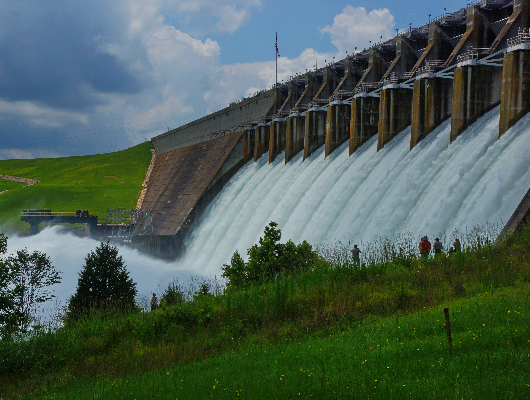
The World Energy Council (WEC) estimates that only a third of the world’s potential hydropower capacity has been developed.
With this knowledge in mind, an endless expansion of possibilities awaits for future investments in this renewable energy.
In fact, today hydropower is recognized as the cleanest renewable source in the world — the carbon emissions emitted from its lifecycle of construction, operation and decommission are far less in comparison to its renewable friends, wind and solar.
According to an article by SciDev Net, Africa is the world’s fastest growing economy; however, despite the foreseeable opportunities for this emerging continent, millions of people remain in severe poverty.
At the heart of this issue lies energy poverty, with 600 million Africans living without electricity, according to the International Energy Agency (IAE).
This means that more than half of the country’s population lacks access to electricity, rural residents faring worse with just 27.8 percent having access to electricity — what many count today as something they cannot live without.
Despite these harrowing numbers, hydropower use accounts for 84 percent of all non-fossil fuel energy use across Africa, a continent rich in rivers and lakes, making it ripe for this type of energy source.
Among the world’s longest waterways, The Nile is shared by many neighboring countries and offers great potential for hydropower in Africa.
Recognizing this potential, the construction of the Grand Ethiopian Renaissance Dam (GERD) is underway, a structure which will be 145 meters high and its completion planned for 2017. With this height, it will be nearly one and a half times the height of the Victoria Falls and also the largest dam in Africa.
The creation of this dam will benefit many, producing almost triple the amount of Ethiopia’s current electricity production, as the dam is capable of producing six gigawatts of energy in peak output.
Dams harnessing and producing hydropower typically last 50 years without maintenance, producing limitless and continuous power, unlike other sources which are not as dependable.
However, some negative aspects of hydropower include the high costs associated with design and construction and the uncertain impact it will have on local people who call the site of the dam their home.
Although the construction and usage of hydropower “come with a complex set of social and environment challenges,” international hydropower associates are in the process of creating sustainability standards to develop and ensure Africa’s place in a world looking toward hydropower.
Future plans for the implementation of hydropower along Africa’s waterways include the Congo, Niger, Orange and Senegal Rivers, which when combined will have the potential to generate nearly 27 gigawatts of electricity.
As Africa continues to invest in renewable energy sources such as hydropower, an end to energy poverty is possible.
As SciDevNet reveals, “The next few decades could prove critical to the future of Africa’s water, energy and people.”
– Nikki Schaffer
Sources: SciDev, World Energy, World Energy Outlook
Photo: Wikipedia
