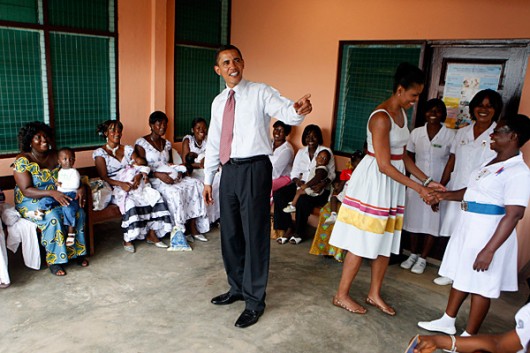
President Barack Obama visited Kenya and Ethiopia earlier this summer to draw global attention to challenges facing development organizations throughout Africa, including establishing more widespread access to electricity.
While those large-scale initiatives are important in providing poor regions with economic opportunity, another initiative, equally important, went largely uncovered: community-based development.
Community-based (or “community-driven”) development is defined by Rural Poverty Portal as “a way to manage development, including the design and implementation of policies and projects, [which] facilitates access by poor rural people to social, human, and physical capital.”
Strategies used by community-based organizations include enabling targeted communities to design their own anti-poverty policies, establishing the means for good long-term governance, and prioritizing the impact of public expenditures from the “bottom of the pyramid” up.
Wayne Firestone, CEO of International Lifeline Fund, points to the malaria epidemic in northern Uganda as a phenomenon that could benefit from the inclusion of local communities.
Previous top-down health initiatives, such as indoor residual spraying interventions, he said, have lowered the immunity of residents, made them complacent in taking preventative measures, and have generally made communities more vulnerable to the disease.
Such initiatives would become more effective if they included local communities in “the design, implementation and maintenance of solutions.”
While local communities have voiced their desire to become more involved in decision-making processes, their national governments have started to endorse that sentiment on a global level.
One of the primary takeaways from the Financing for Development Conference in Addis Ababa earlier this year was that developing countries want to take “greater ownership” over their development through domestic resource mobilization (DRM), a process in which countries raise and allocate their own development funding.
USAID associate administrator Eric Postel notes that while DRM has historically been overlooked in global anti-poverty efforts, the international community has begun to realize its importance for countries hoping to escape poverty.
“DRM is hardly a new concept, but one that has unfortunately been out of the spotlight for many years. I remember attending the aid effectiveness conference in Busan, South Korea, in 2011.
Support for DRM was barely discussed there,” he wrote in an article for Devex. “Since then, the global community has coalesced around the importance of this transitional bridge from a nation’s receiving international aid assistance to its sustainable providing for its own.”
While some developing countries may never realize absolute autonomy in directing their own anti-poverty initiatives, DRM is a positive step for countries hoping to become more self-reliant. Earlier this year, Kenyan President Uhuru Kenyatta made an appeal to African countries to stop accepting international aid entirely.
Although certainly not in the best interest of many African civilians, that position reflects the common and natural desire among poor countries to achieve sustainability and self-determination.
Indeed, the lack of cohesion among rural communities like those in northern Uganda can make community-based development difficult, primarily because it takes time to establish functioning bodies vested with the ability to prioritize community needs.
According to Firestone, however, development assistance ought to be rethought in ways that will enable communities to participate in the management of their own affairs.
“For decades, development assistance has created a culture in which these communities are recipients, not leaders of their own solutions,” he said.
“Many development thinkers have started conversations around how we can shift that culture to make sustainable progress; how residents of poor, rural communities can be problem solvers rather than problems, and can embrace changes they generate internally.”
– Zach VeShancey
Sources: Devex 1, Devex 2, Rural Poverty Portal
Photo: Flickr

Anti-Poverty Efforts: Integrate Targeted Communities
President Barack Obama visited Kenya and Ethiopia earlier this summer to draw global attention to challenges facing development organizations throughout Africa, including establishing more widespread access to electricity.
While those large-scale initiatives are important in providing poor regions with economic opportunity, another initiative, equally important, went largely uncovered: community-based development.
Community-based (or “community-driven”) development is defined by Rural Poverty Portal as “a way to manage development, including the design and implementation of policies and projects, [which] facilitates access by poor rural people to social, human, and physical capital.”
Strategies used by community-based organizations include enabling targeted communities to design their own anti-poverty policies, establishing the means for good long-term governance, and prioritizing the impact of public expenditures from the “bottom of the pyramid” up.
Wayne Firestone, CEO of International Lifeline Fund, points to the malaria epidemic in northern Uganda as a phenomenon that could benefit from the inclusion of local communities.
Previous top-down health initiatives, such as indoor residual spraying interventions, he said, have lowered the immunity of residents, made them complacent in taking preventative measures, and have generally made communities more vulnerable to the disease.
Such initiatives would become more effective if they included local communities in “the design, implementation and maintenance of solutions.”
While local communities have voiced their desire to become more involved in decision-making processes, their national governments have started to endorse that sentiment on a global level.
One of the primary takeaways from the Financing for Development Conference in Addis Ababa earlier this year was that developing countries want to take “greater ownership” over their development through domestic resource mobilization (DRM), a process in which countries raise and allocate their own development funding.
USAID associate administrator Eric Postel notes that while DRM has historically been overlooked in global anti-poverty efforts, the international community has begun to realize its importance for countries hoping to escape poverty.
“DRM is hardly a new concept, but one that has unfortunately been out of the spotlight for many years. I remember attending the aid effectiveness conference in Busan, South Korea, in 2011.
Support for DRM was barely discussed there,” he wrote in an article for Devex. “Since then, the global community has coalesced around the importance of this transitional bridge from a nation’s receiving international aid assistance to its sustainable providing for its own.”
While some developing countries may never realize absolute autonomy in directing their own anti-poverty initiatives, DRM is a positive step for countries hoping to become more self-reliant. Earlier this year, Kenyan President Uhuru Kenyatta made an appeal to African countries to stop accepting international aid entirely.
Although certainly not in the best interest of many African civilians, that position reflects the common and natural desire among poor countries to achieve sustainability and self-determination.
Indeed, the lack of cohesion among rural communities like those in northern Uganda can make community-based development difficult, primarily because it takes time to establish functioning bodies vested with the ability to prioritize community needs.
According to Firestone, however, development assistance ought to be rethought in ways that will enable communities to participate in the management of their own affairs.
“For decades, development assistance has created a culture in which these communities are recipients, not leaders of their own solutions,” he said.
“Many development thinkers have started conversations around how we can shift that culture to make sustainable progress; how residents of poor, rural communities can be problem solvers rather than problems, and can embrace changes they generate internally.”
– Zach VeShancey
Sources: Devex 1, Devex 2, Rural Poverty Portal
Photo: Flickr
NeoVent Reaches Babies in the Developing World
In rural parts of the developing world, health care is iffy at best. If there is a healthcare facility, it often lacks trained employees and equipment. The equipment may even be outdated due to the expense to update it. And, too often, people traveling to a healthcare facility die in their travels.
This is the case seen in newborns when they are born in a rural village and must make the voyage to the nearest healthcare facility. It is very common for premature newborns to have difficulty breathing.
“Hospitals supply continuous positive airway pressure (CPAP) to keep the lungs ‘open’ as the baby breathes on its own. However, very premature babies who cannot breathe on their own require dual pressure treatment along with CPAP to provide both negative and positive pressure to the lungs at a normal breathing frequency.”
In first world countries, this is an easy fix because they are usually born at a hospital with the necessary equipment. However, this is not true in the rural parts of the developing world. Babies that need treatment for underdeveloped lungs do not have access to the dual pressure treatment system because the equipment is expensive, difficult to operate, or hard to upkeep.
According to the World Health Organization, the mortality rate of premature infants in underdeveloped countries can be up to eight times higher than in the U.S., due to lack of resources. But there is hope for the newborn babies of the developing world.
Stephen John and Joseph Barnett, two engineering students at Western Michigan University (WMU), invented the NeoVent. This device is an easy-to-operate dual-pressure system that is aimed at helping premature babies breathe.
“The NeoVent consists of an innovative oscillatory relief valve, and is driven by excess air generated by the CPAP machine. Air at a constant pressure is transported from the CPAP machines into the child’s airway via a tube. The tube is submerged into water to produce bubbles, which are caught in a small inverted bowl on the relief valve.”
As this tube fills bubbles, a positive pressure is applied to the infant’s lungs, bringing in air. And as the bubbles disperse, a negative pressure is applied to the infant’s lungs, pulling air out of the lungs. This is seen as a breathing motion on the infant’s chest.
By keeping the developing world in mind, John and Barnett have priced the machine at a mere $25. The engineering students plan to implement the NeoVent in limited resource facilities in Nepal, Kenya and Uganda.
John and Barnett received $3,500 as U.S. winners of the 2015 James Dyson Award. The students plan to use this money to start clinical trials and manufacture a second round of production level devices.
The NeoVent also won the Lemelson-MIT undergraduate “Cure It” competition and the Brian Thomas Entrepreneurial competition at Western Michigan University. In addition to these awards, NeoVent is also the recipient of a VentureWell E-teams grants and a research grant from WMU’s honors college.
NeoVent maybe not look like the expensive technology in state of the art hospitals, but it functions just the same. By creating an effective and affordable device, John and Barnett will be saving many premature infants’ lives in the developing world.
– Kerri Szulak
Sources: Machine Design, WMU News
Photo: Flickr
USAID Sets New Goals for Maternal Health
The United States Agency for International Development, or USAID, is a government organization in charge of allocating funds and aid to global issues.
Millions around the globe have felt such power and emotion in the form of kisses, hugs, listening ears, and countless late nights.
However, maternal and child survival continues to be among the key issues that feed into the poverty crisis in developing countries around the world.
According to the UN, “a woman dies from complications in childbirth every minute – about 529,000 each year – the vast majority of them in developing countries.”
As part of the Millennium Development Goals, which concluded earlier this year in 2015, several countries banded together in order to increase maternal and child survival by three-quarters. While the target was not met, significant progress was made and millions of lives were saved in countries that normally do not receive the care and resources required for a healthy delivery.
Now that 2015 is coming to an end, many countries and organizations are now setting new goals to improve maternal and child survival. USAID recently came out with its new goal to reach an additional 38 million women with increased access to care during childbirth.
With this goal in mind, an action plan was put together in order to achieve this milestone. On their site the organization stated, “the USAID report details how to reach 38 million of the most vulnerable women around the world with increased access to health care during delivery by 2020.”
This plan includes a focus on 24 target countries including, but not limited to Ethiopia, Nepal, Afghanistan, Haiti, and India.
With this aid, more mothers have had access to care during and after the birth of their children. A recent article from the USAID Impact blog reported successes within some of these target countries.
The organization reports that in Ethiopia, 38,000 workers have been trained and dispatched around the country to help mothers and children. In Nepal, female workers travel to provide women with antiseptic gel, free of charge, to reduce infant infection. Malawi has increased efforts to save infants born without fully developed lungs.
Similar stories are beginning to flourish in developing countries around the world. With countries receiving the necessary resources and aid during this vulnerable time for both mother and child, lives are being saved and general health standards improved.
The survival of these mothers and children around the globe is imperative if we are to alleviate the poverty crisis our world now faces.
To quote the USAID Impact post, “When a child dies, and when a mother dies giving birth, it is a tragedy for all of us…because it continues the cycle of extreme poverty that holds the entire world back. Together, we can break that cycle.”
When a mother is lost, children and fathers feel the strain and the community as a whole is affected. When a child is lost, the community misses out on that child’s potential accomplishments and impact. With USAID reaching out to the formerly unreachable, maternal and child survival increases and the community as a whole improves.
– Katherine Martin
Sources: UNICEF, USAID 1, USAID 2
Photo: pixabay
Should We be Accepting Refugees in America?
As Europe continues to struggle with a steady stream of refugees from Syria, Iraq and beyond, the United States is still debating a proper policy response to the crisis. It begs the question – what are the implications for accepting refugees in America on a large scale?
White House discussions regarding U.S. refugee policy have been held in recent weeks, but it still seems that the Obama administration is far from making a concrete decision.
President Obama has stated that the U.S. will accept around 10,000 Syrian refugees over the next year, but more longstanding U.S. involvement has yet to be confirmed.
In a recent op-ed for the New York Times, director of migration and refugee services of the United States Conference of Catholic Bishops William Canny laid out some key ways that genuine U.S. involvement could greatly aid Syrian refugees.
“In addition, the United States can resettle a much larger number of the 4 million Syrian refugees than the 1,600 we have to date,” Canny says. “The U.S. refugee program could absorb as many as 100,000 Syrian refugees if the political will to do so existed. Security checks are in place to ensure that those resettled are not a threat to us.”
According to the UN, 7.6 million Syrians have been internally displaced since the beginning of the conflict in 2011, and an additional 4.1 million have been displaced outside of the country altogether. The need for increased U.S. response is growing rapidly.
“A robust U.S. commitment to the resettlement of Syrian refugees would encourage other reluctant nations, especially those in Europe, to accept more and to keep their doors open until this horrific conflict can be ended,” Canny continues. “It also would show that the United States is not indifferent to human suffering and remains, as always, a beacon of hope to the world.”
– Alexander Jones
Sources: New York Times, US News, Washington Post
Photo: Google Images
Midwives in Chiapas: Lowering Maternal Mortality Rates
Maternal mortality rates in Mexico have steadily decreased over the past fifteen years. The global maternal mortality rate has decreased by nearly 50 percent between 1990 and 2013. However, the work is far from over.
Ninety-nine percent of maternal deaths happen in underdeveloped countries according to the World Health Organization. Chiapas is the poorest state in Mexico with a poverty level at over 76 percent.
Maternal mortality rates can be significantly lowered with skilled care and supervision throughout the childbirth and traditional birth attendants are being trained to offer this care through workshops and programs in Chiapas.
Traditional midwives are extremely important in communities within Chiapas because of the negative connotation that comes with hospitals and the hesitation that women have toward giving birth in hospitals. Fifty-five or more out of every 100,000 women die in Chiapas during childbirth.
The traditional midwives are receiving training for problems that arise during obstetric emergencies. Understanding the protocol will allow them to act quickly in situations that may cost the mother’s life.
https://www.youtube.com/watch?v=jCuE8Y0d8sk
One such organization is the Global Pediatric Alliance. The alliance has started a training program for midwives in Chiapas. They have programs in four different municipalities in Chiapas. Los Altos de Chiapas is the first community and 88 percent of the population is poor. Fifty-six percent of the population lives in extreme poverty.
The plan is to train at least 120 Tzeltal and Tzotzil-speaking midwives between 2014 and 2017. An estimated 100,000 people will be impacted by the project. The second municipality is Las Margaritas, a highly marginalized area with extremely low Human Development Index rankings.
The isolated communities in the area particularly suffer from the lack of care adequate obstetric care. The program with GPA has already held five trainings for 29 traditional birth attendants in the area.
The training of midwives is changing the maternal mortality rates and the risks of home births in Chiapas.
– Iona Brannon
Sources: Arizona State University, Global Pediatric Alliance, New York Times, Reuters, World Health Organization 1, World Health Organization 2
Seven Things You Didn’t Know About the Poorest Country in the World
Malawi is ranked as the poorest country in the world according to GDP per capita. However, Malawi does not just consist of poverty. Below are seven facts that shed light on Malawi:
– Iona Brannon
Sources: Al Jazeera, Carlsberg Group, Encyclopedia of Earth, Fair Trade, Global Finance Magazine, InterPress Service News, Mail and Guardian Africa, US National Library of Medicine
Photo: Flickr
Big Gains Seen in Socially Responsible Investments
Socially Responsible Investments (SRI), those that pay attention to the environmental and social impacts of what they fund while still turning a profit, have ballooned. The Forum for Sustainable and Responsible Investment, an association for professionals and organizations engaged in sustainable, responsible, and impact investing, recently released a report detailing the growth of SRI in the United States, showing huge increases in funding.
Coming in at over $6.5 trillion in 2014, the Socially Responsible Investments market in the United States has shown a 76 percent increase since 2012 and has grown nearly tenfold from 1995. “These assets account for more than one out of every six dollars under professional management in the United States,” the report states. The dollar amount is over 200 times larger than the annual flow of Official Development Assistance from the United States.
The growth in SRI is not limited to the United States. The Global Sustainable Investment Alliance, a worldwide collaboration of sustainable investment organizations takes a broader view, looking at the amount of money invested in SRI around the world by region.
In 2014, $21.4 trillion was tied up in SRI around the globe, an increase of $8.1 trillion from two years previously. Europe leads the pack, with 63.7 percent of the total, more than doubling the amount held by the United States. Canada contributes 4.4 of the share, an impressive number considering its relatively small population. In fact, per capita SRI in Canada is higher than the United States. These three regions contribute 99 percent of the total, with Asia and Australia/New Zealand taking .2 and .8 percent respectively.
Europe also has the highest proportion of SRI to total managed assets, with 58.8 percent of all investments channeled towards socially beneficial growth. The global average is just over 30 percent and has grown nearly 50 percent in the last two years.
To be sure, foreign investment by governments to aid developing nations must also be strong. “The global challenges are so complex and the size of the funding that’s needed is so large, traditional funding sources like philanthropy are probably not going to be sufficient to meet it,” said Anna Kearney, associate director for corporate social responsibility at the Bank of New York Mellon (BNY Mellon), in July.
In addition, the issue of how much of SRI ends up aiding environmental and social development in the developing world is unclear.
However, the Global Impact Investing Network — a nonprofit working to scale up impact investing — sheds some light on the answer. The group surveyed 146 SRI firms around the globe and found that 48 percent of the $60 billion under management by these firms was invested in emerging markets. That may be a proxy for the ratio of the $21.4 trillion in SRI that is invested in developing economies.
The trajectory for SRI remains promising. As more consumers look to put their money toward helping the planet and the poor while earning a profit, a growth in investment options that offer this will follow.
– John Wachter
Sources: Forum for Sustainable and Responsible Investment 1, Forum for Sustainable and Responsible Investment 2, Global Impact Investing Network, Global Sustainable Investment Alliance, The Guardian, Organization for Economic Cooperation and Development
Photo: Flickr
How Renewable Energy Leads to Opportunities for All
Electricity connects people to opportunities such as the internet. The internet has multiple economic and social benefits and is increasingly the gateway to opportunities such as jobs and education. The number of new users has tripled in the past 10 years, but its adoption has slowed due to the lack of access to electricity.
Access to electricity is expanding in cities where they are adopting smart energy grids and building sensor-driven transport systems. In rural areas, electrification is progressing slowly.
In Sub-Saharan Africa, this is especially true, where the International Energy Agency (IEA) estimates almost 1 billion will have electricity by 2040, but 530 million who live in the countryside will not.
There is a huge disparity in living standards and economic opportunities between cities and countryside. The world’s 600 largest cities generated $30 trillion GDP in 2007, more than half the global total. They are predicted to generate $64 trillion GDP (60% of total) in 2025.
There are two approaches to dealing with the disparities between cities and rural areas. The cheapest is what happens if nothing is done to address the problem: people move to cities for better economic opportunities. The second solution is rapidly establishing renewable energy and battery storage in rural areas.
Renewable energy is now more feasible given the advances in technology. They also make better use of scarce resources. The use of advanced batteries in electricity grids improves efficiency and allows energy managers to take electricity to remote and underserved areas.
An example of where this can be deployed is India. India could become one of the most energy-insecure countries with 300 million without electricity. However, given renewable energy technologies, it could expand electricity to about 80 million and 110 million in a small period of time.
China is already using digital technologies for ultra-high-voltage (UHV) transmission systems to transport its energy to parts of the country that use the most energy, but have no energy sources.
A South African company uses a combination of a solar charger and battery storage units in remote areas to allow consumers to be able to power mobile phones, computers, radios and lighting.
It would be great to see the development of large-scale renewable solutions continue. This would lead to the sun becoming the world’s largest source of power by 2050. As a result, those in the developing world would be using carbon-free energy.
Given that the per-watt price of photovoltaic cells dropped by 85% since 2000, the McKinsey Global Institute predicts energy storage production will be valued at $100 billion per year by 2025.
– Paula Acevedo
Sources: Stanford Social innovation Review, United Nations
Photo: Pixabay
Developing World Connections: Poverty-Alleviating Projects
Of the 31 million people living in Peru, roughly 26 percent of them live in poverty. With the idea of a globally engaged, poverty-free and socially just world, Developing World Connections and its many volunteers work alongside locals to counter poverty in Lima, Peru and surrounding communities among many other countries on different continents.
Developing World Connections’ mission is to connect people and resources through international community development. The organization has impacted nine countries on three different continents so far.
Developing World Connections has worked in Peru, Guatemala, Nepal, India and Kenya among others. Some of the projects include working with children and youth, education and training, food and water security and homes and community building. As a whole, the organization is focused on having a global impact.
In Nepal, Developing World Connections works with Creating Possibilities, an organization dedicated to increasing the rights for women and children. The goal of this partnership is to help women make substantive income to provide their children. In India, Developing World Connections works with Comfort the Children International to create sustainable change.
Developing World Connections bases its projects on a number of guiding principles as follows:
– Julia Hettiger
Sources: Developing World Connections, Verge Mahazine, Haganaisworth
Photo: Flickr
Making a Difference: School Gardens in Developing Countries
Right now, world leaders are faced with a daunting challenge. At the current rate the population is growing, it is predicted that there will not be enough food to feed the world, especially in developing countries. Fortunately, the introduction of school gardens to education gives hope to the end of global poverty.
For many children in developing countries, students must walk to school at an utmost of 4 miles. Some children even walk to school knowing they will not have a lunch because their family could not afford the cost.
According to the World Food Programme (WFP), 795 million people are undernourished, meaning one in nine people will not receive enough food to lead a normal, healthy and active life.
Students cannot focus or comprehend new information in the classroom without a proper meal. If students do not learn and go to school, the cycle of poverty will most likely continue.
A solution to this problem exists with school gardens that can help overcome the nutritional crisis. Not only will children be guaranteed a meal during lunch, but they can also learn how to eat a healthy and nutritious meal.
For 14-year-old Marita Wyson, a student from Malawi, her school garden is making a lasting impact on her life and helping her gain the proper nutrients for healthy adolescent development.
“I am able to understand what my teachers are telling me,” she said. “My grandmother doesn’t have to worry so much about how she will provide food for me and my sister.”
With governments partnering with organizations around the world, school gardens are becoming increasingly popular and have shown to give students a better understanding about the environment. If children are introduced to agriculture and the environment at an early age, they are more likely to have a better attitude about the subject.
While the deadline for the U.N.’s 2015 Millennium Development Goals has passed this September, two of the most important goals — cutting poverty in half and making primary education universal — have come a long way since the turn of the century.
While poverty has been cut in half since 1980, primary education lags behind in developing countries including sub-Saharan Africa.
The introduction of these school gardens in developing countries may become the turning point in eradicating global poverty. With the world united, school gardens can make not only an immediate difference but ensure the future of children living in developing countries.
– Alexandra Korman
Sources: FAO, KCET, The Christian Science Monitor, Vox World, WFP
Photo: Flickr