The Syria Refugee crisis is becoming increasingly difficult to ignore. With the picture of the young refugee boy whose body washed up on shore grabbing the attention of the world, more people than ever are paying attention to this humanitarian crisis.
With increased awareness of the Syrian Refugees, comes an increase in advocacy (as people in many countries are stepping up to tell their governments how they feel about accepting refugees into their countries) and an increase in activism.
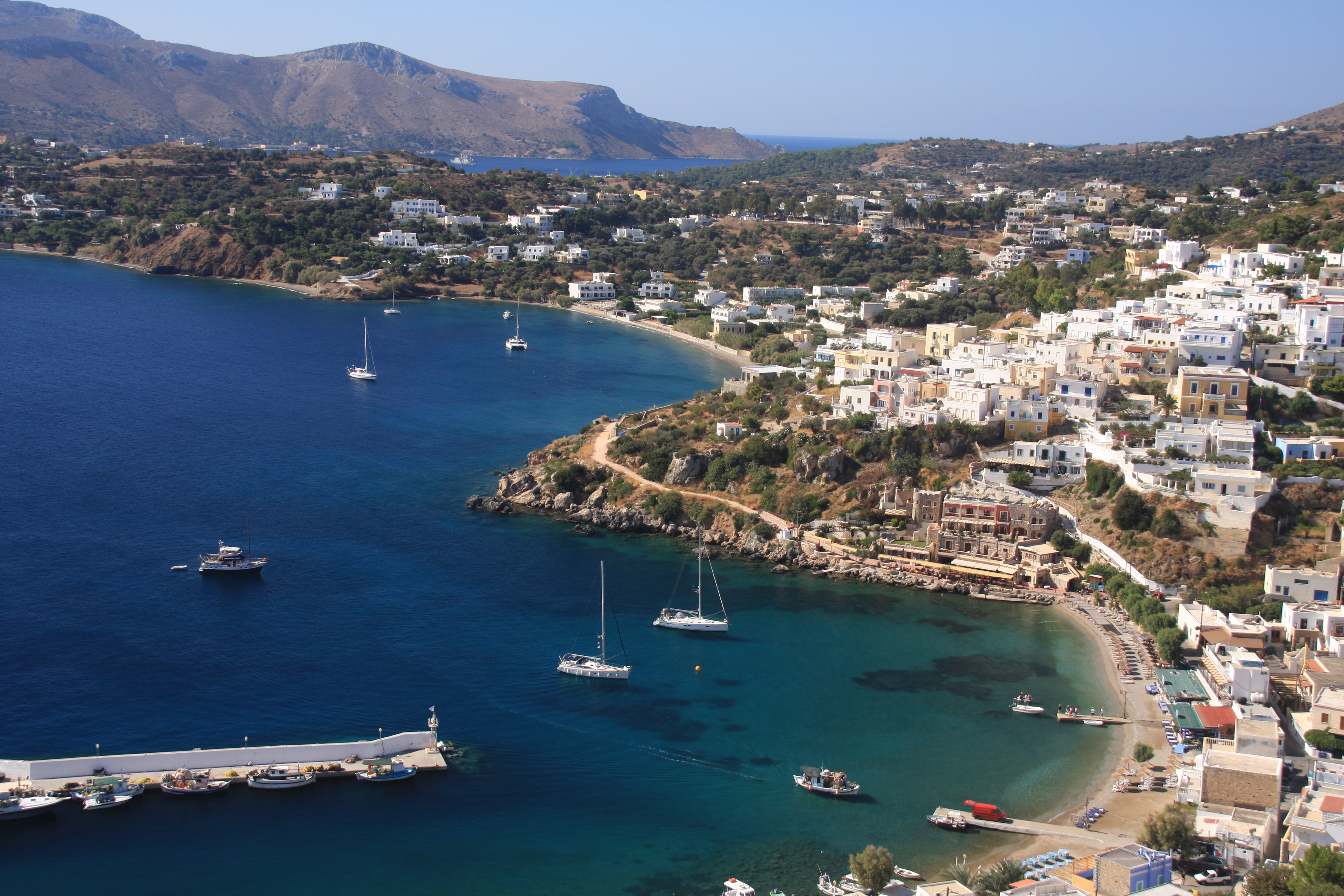
Individuals like hotel owner Andrew Davies and lettings agent Wendy Wilcox on the Greek island of Symi, are stepping up to help these those who are fleeing violence and pain in hopes of finding a better life.
Together, the pair has launched a reception service on the tiny Greek island called Solidarity Symi, using an abandoned post office as their resource headquarters.
This organization is a not-for-profit that works to provide food, clothing, shelter, and medical treatment to destitute Syrians who have crossed over the Mediterranean into Europe.
These heroic individuals work at this project eight hours a day in addition to the jobs they work at to make a living.
There are 30 core volunteers that work to get the refugees taken care of while they are in Symi and to direct them to resources about how to continue their journey safely.
Though some Symi residents worry about the influx of refugees hurting their tourism-based economy, Davies’ thoughts on the matter are simple. “How could we lie on the beach reading books when people were suffering?” he asks.
Many cross the Mediterranean in dangerously overloaded boats, with smugglers who overcharge them or delay the trip. But, in a country torn apart by war, many Syrians are left with no other choice.
As Francine Uenuma of Save the Children emphasizes based on the refugees she has spoken to near Serbia, “They’re fleeing violence. They’re fleeing persecution. And the risks they’re taking, I think, underscore that point.”
Right now, independent operations like Solidarity Symi are especially important in light of the strain on humanitarian aid agencies such as the U.N. High Commissioner on Refugees (UNHCR) and the U.N.’s World Food Program.
Solidarity Symi has raised over £26,000 through a Facebook site and donations from visitors. There are donation boxes set up around the island, and community members are working to raise awareness of the organization through on-site and online mediums so that it can continue to develop.
The Facebook page is also continually updated with items that the organization is in need of, so that those present on the island can make material donations such as soap, travel bags, specific foods, sleeping mats, and even toys for children.
The Solidarity Symi Facebook page is a very positive resource that updates supporters with pictures and posts about how their donations are helping and about refugees as individual people, not simply victims and members of a mass migration.
The people working tirelessly at organizations such as Solidarity Symi are a perfect testament to how each individual has the power to make a positive difference.
For more information about Solidarity Symi, or to donate to the organization, visit their website.
– Emily Dieckman
Sources: Blogspot, Daily Mail, Facebook, NPR 1, NPR 2, Reuters
Photo: cooksailing

Mission of Hope Haiti Builds 500 Homes
In 2010, an earthquake killed over 200,000 Haitians and left crumbling housing infrastructure. Since then, homelessness in Haiti has steadily declined but more than 85,000 people still remain without a home. Rebuilding from the damage is the toughest task for the poorest country in the Americas.
Before the earthquake, Haitians lived in relatively poor housing built from inadequate materials. Haiti ranks near the bottom in the world in providing shelter for their citizens. Shelter includes availability of affordable housing, access to electricity, quality of electricity supply, and household air pollution attributable deaths.
The international community has been very supportive of Haiti. The EU provided $996 million to Haiti from 2008 to 2013. Money that was used for roads, education, food security, human rights, agricultural, electricity, and trade.
On a smaller level, charities and volunteers have been a strong driving force for recovery in Haiti.
Mission of Hope Haiti, a Christian missionary organization, provides education for people in the island nation. The organization has a partnership with Hope for Haiti, and the government in Haiti to build homes. Recently, Mission of Hope celebrated its 500th home built for the affected families since 2010, an average of 100 homes each year.
Every house has three rooms, land for farming, detached bathroom, access to education, water, two fruit trees, and agricultural training. The cost of each home is relatively low at $6,000.
Mission of Hope has educated 6,000 children, provided 91,000 nutritious meals each day, and housing for hearing-impaired families. Their work has helped make Leveque one of the best settlements in Haiti.
“Our vision from the first home built has been to provide those who lost their homes with a quality, cost efficient Haitian home that will not only provide a place to live but a place to thrive,” said Mission of Hope President Brad Johnson.
Homelessness in Haiti is still a serious threat to human security, but organizations like Mission of Hope provide solutions and help that will benefit thousands of people’s lives.
– Donald Gering
Sources: EurActiv, Good News Network, Huffington Post, Social Progress Imperative
Photo: Google Images
Sanitary Improvements for Millions in Ethiopia
Going to the bathroom: a subject that, as humans, we like to pretend doesn’t even happen most of the time. However, for rural Ethiopians living without the most basic sanitary structures, an initiative to improve latrine use was one which needed to happen.
In the village of Kurt Bahir, local carpenter Kefale Demelash used his skills to build a two-room latrine for public use within the village after becoming inspired to initiate sanitary improvements after a diarrhea outbreak plagued the area.
For this particular latrine, one side was designated for women and the other side for men. Smaller pits were also dug for children which would be safer than customary ones, encouraging the young to start the habit of using them early.
With just the establishment of this one latrine, others were motivated to create their own. Soon, with the help of Demelash, 126 latrines were created within Kurt Bahir, all meeting the international standards for improved sanitation. These new latrines would help reduce the risk of communicable diseases, which are commonly spread by unsafe sanitation practices.
Demelash was able to receive training as a village coordinator through the government’s Health Extension Program (HEP), which trains and deploys members into rural areas of the country to educate and promote sanitary practices.
Further progress in sanitation is also being made through the Water and Sanitation program (WSP), a five-year multi-donor partnership between the World Bank and the government.
The World Bank describes the program goals as “scaling up its capacity, improving sanitation and hygiene services and increasing access by the poor in 104 selected districts in Amhara, Oromia SNNP and Tigray regional states.”
Ethiopia has suffered through many different kinds of communicable diseases attributed to poor hygiene and sanitation. However, with the execution of the government’s Universal Access Plan (UAP), it is hoped that sanitation can be improved by 100 percent.
Currently, more than 7 million people have been educated on healthy sanitation practices by 1,782 trainers and implementers under the program. Prior to the program, open defecation was a recurring problem, but with the organization in full-swing, 52 percent of the kebeles (an administrative unit within Ethiopia) in the woreda (districts) are defecation free.
Taking a creative approach in the program’s expansion strategies, prizes were offered within villages. This was initiated by a local “savings mechanism” through the woreda, where the prize money was given to the best innovator, performer or implementer of an improved sanitation project.
With this strategy in mind, neighbors found inspiration in one another, which ultimately led to improvements across woredas.
The World Bank found “in Mecha and Medebayzana woredas, more than 55,000 households now have improved latrines, and communities have also started applying the sanitation lessons they learned in their daily lives, such as keeping their homes, compounds and communities clean, making themselves safer and healthier.”
– Nikki Schaffer
Sources: World Bank, We Are Water
Photo: Flickr
Bangladesh Nonprofit Wins World Food Prize
In early November of 1970 a category-3 tropical cyclone made landfall over what was then called Eastern Pakistan. It was the single deadliest tropical storm in human history with a death toll reaching over 500,000. The next year, in 1971, the region would fight a war to form the independent nation of Bangladesh.
Due to so much devastation in so little time, Bangladesh would go on to become the second poorest country on the planet. That’s where one man, Fazle Hasan Abed, felt something had to be done.
Abed formed BRAC, or the Bangladesh Rural Advancement Committee, in the early 1970s as a temporary organization dedicated to providing aid to individuals and their families who were affected by the catastrophes. But after providing immediate relief Abed realized the need for round the clock, global aid.
Since its creation, the Bangladesh nonprofit has evolved into one of the largest organizations fighting to end global poverty and hunger. As a result, Abed was announced as the recipient of the 2015 World Food Prize on September 2 in Des Moines, Iowa.
Estimates on the scope of BRAC’s now 40-year impact show that the organization has helped nearly 150 million people across Africa and Asia. The organization has plans to expand its reach into 10 additional countries.
The World Food Prize was created in 1986 to recognize individuals who contribute to the production, innovation and availability of global food supplies. The prize is a donation of $250,000. The award ceremony will take place in October.
Initially, Abed and BRAC worked to combat the incredibly high childhood mortality rates in Bangladesh before seeing the need to combat poverty on an even grander scale. In 2010, Abed was knighted by Queen Elizabeth II for his efforts to empower women through STEAM and agricultural education.
Most recently, BRAC has begun a self-sufficiency and financial training program in 9 different countries. The program gives participants a weekly stipend to discourage begging and menial labor.
A bank account is set up in their name so as to teach financial and practical skills. Participants may also receive a grant to buy a computer, a cow, or a chicken coop to begin their own business.
On the program Abed said, “In many countries, poor people are not seen as a solution to the problem but the problem. Poor people can be organized and become the solution to the poverty themselves…All we need to do is provide them opportunities and conditions and give them the tools.”
Sir Abed, who recently celebrated his 79th birthday, now has yet another trophy to add to his collection that shows his undying desire to end global poverty, suffering and hunger.
– Joe Kitaj
Sources: Fortune, Huffington Post, BRAC, Word Food Prize
Photo: Globalhand
UNRWA Funding Gap Prevents Palestinians from Visiting School
The U.N. Relief and Works Agency was set to run out of money in September due to a $100 million funding gap. As of Aug. 19, $70 million in last-minute donations were reported from Saudi Arabia, Kuwait, the United Arab Emirates, the U.S., Britain and Sweden. As a result, the funding gap is now $22 million but luckily, services will continue.
The last minute donations came right before the school year is about to start, averting the closure of 700 schools that educate half a million children. The schools have already been forced to increase their class size from 38 to 43. UNRWA already had cut 85 percent of its short-term contracts with international consultants.
As of July, the U.N. agency helping Palestinian refugees was facing its biggest funding crisis since it started in 1948, which would have led to a hold in the school year and not being able to help the displaced people in Yarmouk camp near Damascus.
UNRWA receives most of its funding from a small number of donors, primarily the U.S., Saudi Arabia, E.U. and the U.K. Just Syria needs $415 million and UNRWA only has 27 percent of that. Why is the funding gap so wide, one may ask?
According to UNRWA’s commissioner general, Pierre Krahenbruhl, “Palestinian refugees are facing their most severe situation since 1948. They have had 50 years of occupation, nine years of a blockade in Gaza and now five years of conflict in Syria. When you look at all of that, how much more can they absorb?”
He spoke with The Guardian about how the four year war in Syria, siege of Yarmouk, and continuous blockade of Gaza has all led to the depletion of UNRWA’s finances and Palestinians facing the greatest crisis since the Arab-Israeli war in 1948.
In the past four years, about 60,000 Palestinians have left Syria and joined long-term refugees who have lived in camps in Jordan and Lebanon for decades.
Krahenbuhl has gone to the E.U. and U.K. government to secure funding. He believes young people without school will leave them susceptible to radicalization, given the instability in the region. He also believes many refugees may try to migrate to Europe.
UNRWA works with 600,000 Palestinians still in Syria, 2 million registered Palestinian refugees in Jordan, 1.2 million in Gaza, 700,000 in West Bank, and 300,000 in Lebanon. UNRWA is doing great work for people that are in dire circumstances, so one would think it could receive more donations from more donors.
– Paula Acevedo
Sources: Seattle Pi, The Guardian
Photo: Flickr
Global Goals & UNICEF Launch “World’s Largest Lesson”
The Global Goals for Sustainable Development will launch on September 25, 2015, when 193 world leaders unite in New York City to pledge their commitment to the 17 initiatives that seek to achieve three major goals by 2030: end extreme global poverty, fight inequality and injustice and fix climate change.
The more awareness of the Global Goals, the better. If more people understand the mission of the goals, more change is likely to occur in the next 30 years.
That’s why the Global Goals have partnered with UNICEF to launch “World’s Largest Lesson,” a program designed to teach children the reality of poverty, the importance of the goals and the impact that they can have on the future.
The kids of today are the future of tomorrow; they have the potential to become the generation that changes the world and ends extreme poverty. However, it is imperative that they first understand the Global Goals. “World’s Largest Lesson” is an opportunity to promote global citizenship in schools around the world.
Together, UNICEF and the Global Goals have created a program to teach children about the three major components of the goals.
The “World’s Largest Lesson” includes several videos and lesson plans accessible to teachers around the world. It also encourages teachers to spend the week following Sept. 25 teaching their students about the Global Goals through a wide variety of subjects.
Positive change can be enforced by anyone, anywhere, regardless of age. “World’s Largest Lesson” believes that children are capable of making a difference and seeks to inspire young people to take action. Through lessons in geography, sustainability, technology and citizenship, teachers can break down the Global Goals and foster citizenship in their students.
The Global Goals will change the world and provide new life for the impoverished. “The World’s Largest Lesson” will ensure that children around the world are aware of current and future events, and inspire them to build a just and sustainable world.
– Sarah Sheppard
Sources: TES 1, TES 2
Photo: British Council
GHW: Improving Health Care in Ghana
The Global Health Watch Report (GHW), a report focused on monitoring and evaluating global health, launched in Accra, Ghana late last month.
This year’s report, the fourth edition, was launched with the theme: “Watchdogging an Essential Element to Ensuring the Right to Health.”
The purpose of GHW is to create a voice in favor of alternative dialogue when it comes to global health. The report combines analysis, alternative proposals and stories of those struggling to obtain sufficient levels of health care.
The launch of the report comes at a time when health care in Ghana remains underfunded and health officials are fighting for justice and equality for health care.
The government of Ghana is still dealing with issues such as poor sanitation and open defecation, which it spends $290 million and $79 million on, respectively, each year. Additionally, the delivery of health care sees an annual cost of $54 million.
By improving sanitation and hygiene, Ghana can help decrease the burden it sees from the spread of disease. Health officials are also calling for funds to assist with promoting and sustaining behavior changes in regards to sanitation and hygiene practices in local areas.
When it comes to the delivery of health care, health officials are calling for joint efforts to make sure citizens have universal access to sexual and reproductive health. They also want to see improved and equal distribution of resources for such care.
Eighty experts from around the world made contributions to the report, which also addresses issues seen in health systems and looks at how social, political, economic and environmental factors play a role in health care.
– Matt Wotus
Sources: AllAfrica, Global Health Watch
Photo: Flickr
Solar-Powered Phone Chargers: Mobile Access to Those Off-Grid
The Little Sun Charge, a solar-powered phone charger, is finding success on Kickstarter. The project was launched as a part of the Sustainable Energy for All Initiative (SE4All), originated by UN Secretary-General Ban Ki-Moon, which aims to ensure global access to modern energy services by 2030.
The Little Sun Charge is powered entirely by solar power and charges phones in less than five hours. Other conventional solar-powered phone chargers require between eight and twenty hours to charge a phone. The device is barely larger than a smartphone and uses a USB port, so it can power other electronic devices as well.
While marketed on Kickstarter for travelers, hikers, campers and freelancers, Little Sun Charge has particular relevance for those who live off-grid. With this device, phone ownership is a greater possibility, as those individuals could have a means to power their phone. Currently, 1.1 billion people live without access to electricity.
The project was initiated by Danish-Icelandic artist Olafur Eliasson and Danish entrepreneur and engineer Frederic Ottesen.
The Kickstarter project has a fundraising goal of 50,000 Euros by the end of September; it is currently at 40,000 Euros and is expected to meet its goal. Proceeds from the project go towards support solar power initiatives in Africa and the SE4All Initiative.
Little Sun Charge is the second Little Sun project; the first was an LED lamp. 200,000 of these Little Sun LED lamps have been distributed in Europe, Canada, Australia, Japan and the United states in addition to 10 African countries, including Zimbabwe, Ghana, Senegal, Ethiopia and Kenya.
Both devices aim to support sustainable energy initiatives in Africa, especially solar entrepreneurship.
The charger is expected to be released in March 2016 at a retail price of 120 Euros.
– Priscilla McCelvey
Sources: Climate Action Programme, Wired,
Photo: api.ning
Solidarity Symi: A Safe Haven for Syrian Refugees
The Syria Refugee crisis is becoming increasingly difficult to ignore. With the picture of the young refugee boy whose body washed up on shore grabbing the attention of the world, more people than ever are paying attention to this humanitarian crisis.
With increased awareness of the Syrian Refugees, comes an increase in advocacy (as people in many countries are stepping up to tell their governments how they feel about accepting refugees into their countries) and an increase in activism.
Individuals like hotel owner Andrew Davies and lettings agent Wendy Wilcox on the Greek island of Symi, are stepping up to help these those who are fleeing violence and pain in hopes of finding a better life.
Together, the pair has launched a reception service on the tiny Greek island called Solidarity Symi, using an abandoned post office as their resource headquarters.
This organization is a not-for-profit that works to provide food, clothing, shelter, and medical treatment to destitute Syrians who have crossed over the Mediterranean into Europe.
These heroic individuals work at this project eight hours a day in addition to the jobs they work at to make a living.
There are 30 core volunteers that work to get the refugees taken care of while they are in Symi and to direct them to resources about how to continue their journey safely.
Though some Symi residents worry about the influx of refugees hurting their tourism-based economy, Davies’ thoughts on the matter are simple. “How could we lie on the beach reading books when people were suffering?” he asks.
Many cross the Mediterranean in dangerously overloaded boats, with smugglers who overcharge them or delay the trip. But, in a country torn apart by war, many Syrians are left with no other choice.
As Francine Uenuma of Save the Children emphasizes based on the refugees she has spoken to near Serbia, “They’re fleeing violence. They’re fleeing persecution. And the risks they’re taking, I think, underscore that point.”
Right now, independent operations like Solidarity Symi are especially important in light of the strain on humanitarian aid agencies such as the U.N. High Commissioner on Refugees (UNHCR) and the U.N.’s World Food Program.
Solidarity Symi has raised over £26,000 through a Facebook site and donations from visitors. There are donation boxes set up around the island, and community members are working to raise awareness of the organization through on-site and online mediums so that it can continue to develop.
The Facebook page is also continually updated with items that the organization is in need of, so that those present on the island can make material donations such as soap, travel bags, specific foods, sleeping mats, and even toys for children.
The Solidarity Symi Facebook page is a very positive resource that updates supporters with pictures and posts about how their donations are helping and about refugees as individual people, not simply victims and members of a mass migration.
The people working tirelessly at organizations such as Solidarity Symi are a perfect testament to how each individual has the power to make a positive difference.
For more information about Solidarity Symi, or to donate to the organization, visit their website.
– Emily Dieckman
Sources: Blogspot, Daily Mail, Facebook, NPR 1, NPR 2, Reuters
Photo: cooksailing
Experts to Create a Global Health Risk Framework
In response to recent outbreaks of infectious diseases such as Ebola, Middle East respiratory syndrome (MERS), severe acute respiratory syndrome (SARS) and H1N1, the National Academy of Medicine is coordinating a new Commission on Global Health Risk Framework. The framework will address the need for better local and global health infrastructure to stem the spread of diseases on a global scale.
The Commission is a multinational, independent board made up of 18 members from 11 countries. The National Academy of Medicine serves as the secretariat. Those serving on the board are members of their countries’ health ministries and funds while others work in universities and the insurance industry.
To create the framework, the Commission will convene four workshops, each lasting up to three days. Topics include governance for global health, financial responses to pandemic threats, resilient health systems, and research and development of medical products.
A wide range of experts will address the layout of related global initiatives, challenges and lessons learned from past health threats, and the reactions of governments, communities, and the private sector during threats.
The first public meeting was held in Washington D.C. on July 29, 2015. At the conclusion of the four workshops, the commission will publish a consensus report on how to address the issues raised and will provide detailed recommendations for fixing problem areas. The report is scheduled for release by the end of 2015.
– Katherine Hewitt
Sources: NAM 1, NAM 2, News Medical
Photo: Flickr
Millions of Iraqis Don’t Have Health Care Access
The conflict between the government of Iraq and ISIL resulted in millions of Iraqis without health care access. The ongoing conflict has created widespread insecurity in the region, and this insecurity keeps people away from an area which in turn keeps funding very low.
Humanitarian organizations, including the World Health Organization (WHO), have only received $5.1 million out of the $61 million they need from the international community to provide health care services. As a result, 84 percent of frontline programs have been stopped. This has left 3 million Iraqis without health care access.
Vital services include trauma care, primary healthcare, outbreak detection and management, immunizations, and reproductive health care services.
According to a spokesperson for WHO, Tarik Jasarevic, 5.8 million kids need to be vaccinated in 2015 and 2016. It is imperative these children receive polio vaccinations considering cases of polio have occurred in Iraq in 2014 — fortunately none have been reported since April 2015. Currently, the polio vaccination campaign has a $45 million funding gap.
U.N. agencies and their partners are looking to fundraise $498 million to cover costs of shelter, food, water and other life-saving services for the rest of 2015. This is a challenging task, given only 15 percent of it was secured as of July 2015.
Despite the insecurity in the region, shouldn’t the international community provide the necessary funding, given the unfortunate situation 3 million Iraqis are in? Such aid would also keep those affected from having to resort to desperate means and join radicalized organizations.
– Paula Acevedo
Sources: United Nations Radio, UN News Centre
Photo: Flickr