As Americans prepare for another season of holiday gift-giving, it is important to consider where and how items are produced. Questions about fair trade products, ethical sourcing and supply chains are not always on the average consumer’s mind—but they should be.
For items produced both domestically and overseas, were they produced using sustainable practices? Did the employees working at all levels of the company receive fair pay? Is the company’s supply chain transparent and ethical?
These considerations can have consequences for many working people around the world. Companies selling products on American shelves can have traces of child labor, conflict minerals, forced labor and human trafficking.
The employees at these companies might make a wage that keeps them from extreme poverty yet binds them to a working poor, in-work poverty status.
To make gift-giving easier this holiday season, here is a list of poverty-fighting gifts and ethical companies that utilize sustainable practices, are fair trade and pay workers fair wages, thus keeping them from in-work poverty.
Chocolate
Chocolate companies receiving cacao beans from West Africa often have supply chains tainted by child labor, forced labor and human trafficking. Organic, fair trade chocolate is ethically sourced.
According to the Slave Free Chocolate organization, chocolate produced by companies such as Taza, Green and Black’s, Newman’s Own, Honest Artisan and Aldi are produced without child labor and meet the guidelines for fair trade. The full list can be found on the Slave Free Chocolate website. 
Clothing
While many companies pay garment workers in Southeast Asia wages that leave them in working poverty, The Good Trade has compiled a list of companies producing clothing and jewelry that are fair trade. Some companies selling in the U.S. include prANA, Eileen Fisher, EleganTees and Patagonia.
Coffee
Fair trade coffee ensures that companies pay the coffee farmers fair wages and use sustainable practices. According to Fair Trade USA, coffee farmers selling fair trade coffee earned, on average, 40 cents more per pound than farmers not selling fair trade coffee.
Some popular fair trade coffee companies include Wild Harvest, Wolfgang Puck Coffee Company and Dunkin Donuts. Coffee sold at grocery stores such as Whole Foods, Trader Joe’s, Wegmans, Weis Markets, The Fresh Market and Aldi are also fair trade certified.
Tea
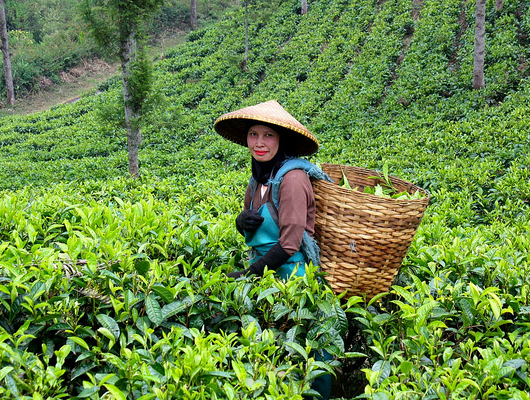
Tea companies that pay workers a living wage include Celestial Seasonings, Honest Tea, Keurig, Numi, Stash, Traditional Medicinals and The Republic of Tea.
Sports Gear
Sports balls produced by Senda Athletics are free of child labor and provide workers with fair wages and safe working conditions, whereas many other companies produce sports balls using child labor in India. With regards to sports and outdoor apparel, companies such as L.L. Bean, Vaude and REI are considered sustainable.
Products from companies with ethical supply chains
Corporations that have transparent supply chains and engage in sustainable, ethical business practices on an international level are more worthy of one’s holiday shopping dollars than companies that don’t support their workers.
Sedex is an organization whose members meet standards for labor, health and safety, the environment and business ethics. Members include Barbour, Bacardi, Hallmark, Miller Coors, P&G, and Unilever.
Resources such as Slave Free Chocolate, The Good Trade, Fair Trade USA and Rank a Brand can be very helpful in choosing a gift that is sustainable this holiday season. To help support workers all over the world, it’s important to be just as mindful when choosing a gift based on how it is made as when we consider the gift-receiver.
– Priscilla McCelvey
Sources: Fair Trade USA, The Good Trade, Oxfam, Rank a Brand, Slave Free Chocolate
Photo: Flickr1, Flickr2

How Climate Change Impacts Poverty
The topics of global warming and climate change have been discussed in great length in recent times. The effects of both of these trends have an especially significant impact on those living in poverty. Here are some ways climate change impacts poverty by making life more difficult for those already experiencing poor conditions:
Displacement
Climate change causes more extreme weather. For instance, floods or hurricanes can result in damage to homes and land. Displacement is especially an issue in developing countries when natural disasters strike because victims may flee to safer areas, but are unable to return to their homes.
According to the Brookings Institute, since 2008, an average of 26.4 million people have been displaced by natural disasters every year. Relocating impoverished communities means that efforts to end poverty slow down and become more complicated, especially in developing countries.
Hunger
Many impoverished communities live in rural areas where agriculture is their source of sustenance. Climate change can cause droughts, famines and loss of livestock, which causes food and water to become scarce.
A survey of households in India’s Andhra found that in a 25-year span, 12 percent of households became more impoverished, and 44 percent of them cited the weather as the cause.
The poor rural farmers who produce the bare minimum needed to feed their families have few resources as it is. Climate change will lead to more undernourished households.
Sanitation and Water Supply
Climate change jeopardizes the availability of clean drinking water. For example, severe flooding causes damage to drinking water infrastructures, which often take weeks to repair. Climate change also creates an environment where diseases are easily spread. In 2007, floods in Bangladesh resulted in the widespread contamination of tubewells.
More countries are enforcing climate policies in order to slow down global warming. These strategies include policies that reduce greenhouse gas emissions, carbon pricing to reduce emission and phasing out fossil fuel emissions.
Dr. Margaret Chan, the World Health Organization Director-General stated: “The evidence is overwhelming: climate change endangers human health. Solutions exist and we need to act decisively to change this trajectory.”
– Marie Helene Ngom
Sources: World Bank, Brookings, WHO
Photo: Pixabay
Poverty-Fighting Gifts to Consider for the Holidays
As Americans prepare for another season of holiday gift-giving, it is important to consider where and how items are produced. Questions about fair trade products, ethical sourcing and supply chains are not always on the average consumer’s mind—but they should be.
For items produced both domestically and overseas, were they produced using sustainable practices? Did the employees working at all levels of the company receive fair pay? Is the company’s supply chain transparent and ethical?
These considerations can have consequences for many working people around the world. Companies selling products on American shelves can have traces of child labor, conflict minerals, forced labor and human trafficking.
The employees at these companies might make a wage that keeps them from extreme poverty yet binds them to a working poor, in-work poverty status.
To make gift-giving easier this holiday season, here is a list of poverty-fighting gifts and ethical companies that utilize sustainable practices, are fair trade and pay workers fair wages, thus keeping them from in-work poverty.
Chocolate
Chocolate companies receiving cacao beans from West Africa often have supply chains tainted by child labor, forced labor and human trafficking. Organic, fair trade chocolate is ethically sourced.
According to the Slave Free Chocolate organization, chocolate produced by companies such as Taza, Green and Black’s, Newman’s Own, Honest Artisan and Aldi are produced without child labor and meet the guidelines for fair trade. The full list can be found on the Slave Free Chocolate website.
Clothing
While many companies pay garment workers in Southeast Asia wages that leave them in working poverty, The Good Trade has compiled a list of companies producing clothing and jewelry that are fair trade. Some companies selling in the U.S. include prANA, Eileen Fisher, EleganTees and Patagonia.
Coffee
Fair trade coffee ensures that companies pay the coffee farmers fair wages and use sustainable practices. According to Fair Trade USA, coffee farmers selling fair trade coffee earned, on average, 40 cents more per pound than farmers not selling fair trade coffee.
Some popular fair trade coffee companies include Wild Harvest, Wolfgang Puck Coffee Company and Dunkin Donuts. Coffee sold at grocery stores such as Whole Foods, Trader Joe’s, Wegmans, Weis Markets, The Fresh Market and Aldi are also fair trade certified.
Tea
Tea companies that pay workers a living wage include Celestial Seasonings, Honest Tea, Keurig, Numi, Stash, Traditional Medicinals and The Republic of Tea.
Sports Gear
Sports balls produced by Senda Athletics are free of child labor and provide workers with fair wages and safe working conditions, whereas many other companies produce sports balls using child labor in India. With regards to sports and outdoor apparel, companies such as L.L. Bean, Vaude and REI are considered sustainable.
Products from companies with ethical supply chains
Corporations that have transparent supply chains and engage in sustainable, ethical business practices on an international level are more worthy of one’s holiday shopping dollars than companies that don’t support their workers.
Sedex is an organization whose members meet standards for labor, health and safety, the environment and business ethics. Members include Barbour, Bacardi, Hallmark, Miller Coors, P&G, and Unilever.
Resources such as Slave Free Chocolate, The Good Trade, Fair Trade USA and Rank a Brand can be very helpful in choosing a gift that is sustainable this holiday season. To help support workers all over the world, it’s important to be just as mindful when choosing a gift based on how it is made as when we consider the gift-receiver.
– Priscilla McCelvey
Sources: Fair Trade USA, The Good Trade, Oxfam, Rank a Brand, Slave Free Chocolate
Photo: Flickr1, Flickr2
Education in Sexual Health and Reproduction with SMS Text
Access to sex education is not readily available in developing countries. Even more prevalent is the lack of access for younger people. Consequently, they do not receive information that could keep them safe.
Now, a new initiative is changing that.
Text messaging has remained a popular way for young people in Cambodia to communicate. According to a 2014 study conducted by BBC Media Action, 96 percent of Cambodian youth have access to a cellular device. Of that amount, 30 percent use text messaging.
OneWorld UK capitalized on this idea, launching a conversation about a previously considered taboo topic. Their “Smart Youth, Good Future” initiative prompts discussion about sexual health and reproduction through an SMS text messaging service.
“Youngsters using the service will be able to communicate on a level they are used to and comfortable with,” says Sanary Kaing, OneWorld’s project officer.
Before the service was launched, many young people felt uncomfortable talking about sex education. The absence of knowledge prevented people from educating themselves about ways to keep each other safe, resulting in pregnancy, STDs and unsafe abortions.
“Very few parents discuss sexual and reproductive health with their children, and teachers are also very hesitant to discuss issues related to sexuality, even though they are incorporated into the school curriculum,” says Jeffery Allen, global programme coordinator for OneWorld U.K., one of the three NGOs running the pioneering project.
Women, in particular, felt uncomfortable bringing up the topic.
“Many women do not feel safe or comfortable accessing sexual and reproductive health information and services at public health facilities because they are afraid of what family and community members will think or say about them,” Allen adds.
OneWorld not only relies on the fact that many teenagers have cell phones. It also owes its success to the projects anonymity.
“It is a great opportunity for teenagers to access accurate, non-judgmental and confidential information and counseling,” Allen says.
OneWorld hopes that the service will continue to spark conversations about sex. While it is still too early to assess the success of the program, Allen says that a similar project garners between 250 and 1,000 messages a day.
– Alyson Atondo
Sources: One World, IPS News, Medium
Photo: Flickr
Sierra Leone Declared Ebola-Free
The country recently celebrated the milestone after almost 4,000 people died since the outbreak.
The WHO noted that 42 days have passed since the last confirmed patient was discharged on September 25 of this year. Anders Nordstrom, the Sierra Leone representative for WHO, revealed the positive news.
“WHO commends the government and people of Sierra Leone for the significant achievement of ending this Ebola outbreak,” Nordstrom said.
While the country has reached the 42-day benchmark, it still has to undergo a 90-day surveillance period.
Indeed, reaching the 42-days is a good reason to rejoice. However, it does not mean that Ebola in Sierra Leone is completely eradicated. Neighboring Liberia reached the 42-day goal in May, only to experience new cases before it was declared Ebola-free again.
Still, Sierra Leone remains optimistic with the news WHO has brought forth.
“We have prevailed over an evil virus. We persevered and we have overcome. We must not let down our guard,” said Sierra Leone President Ernest Bai Koroma.
The country will continue to take preventative measures to disable potentially new cases. Bodies will still continue to be swabbed and “safe burials will continue for all suspicious cases.”
It seems as though the disease has been prevented from spreading further. However, the people who had contracted the disease have ongoing health issues.
Juliet Spencer is considered by many to be one of the lucky ones. She contracted Ebola while taking care of her husband but was able to beat the virus. While she is happy that she is alive, she is still prevented from accomplishing tasks due to lingering complications.
“I feel good today that I have survived to see this day, witnessing this ceremony,” Spencer said. “My only regret is that I do not have a good health to carry on my business. I am unable to walk, I have joint pains and ear and eye problems.”
The 90-day surveillance period will be sure to test the country. However, the WHO and the people of Sierra Leone are confident that the disease will soon be eradicated. Nordstrom adds that the country could set an example for other countries looking to expunge Ebola.
“We now have a unique opportunity to support Sierra Leone and build a strong and resilient health system ready to detect and respond to the next outbreak of the disease or any other health threat,” Nordstrom said.
– Alyson Atondo
Sources: CNN, ABCNews, The Atlantic
Photo: Wikimedia
Clinic-In-A-Box Helps Bring Healthcare to Africa
Clinic-in-a-box (CiB) is an innovative solution to providing facilities with long-term health care to impoverished regions of South Africa and beyond. Manufactured in South Africa, it only takes four to six weeks for a CiB to turn up, and as promised, shipping is free.
The inexpensive design adapts the storage capacity of a freight container to fold out and erect a clinic whose size and shape is determined by the consumer’s needs.
The container that holds all of the equipment is recycled from old freight carriers. It is prefabricated before shipping, and by the time it reaches its destination it will only take four days until the completed product emerges, equipped with a unique selection of technology aimed at providing exactly what the region requires.
The reason clinic-in-a-box is so ingenious is not only because of its mobility but also due to its application to the health system in rural parts of Africa.
They will help to bring sustainable healthcare to those who lack the means to do so, seeing as the upkeep of the clinic can be met by a small community. So once a clinic has been established, it relies on the people to properly maintain it.
The price of visiting one of these clinics is $10-$15 (R77-R96) which is still not cheap enough for most impoverished Africans. However, the cost is significantly lower than state health care, which only covers about 20 percent in South Africa, the home of CiBs.
This inequality of health provisions brings about the issues of affordable and accessible health care that South Africa faces today.
https://www.youtube.com/watch?v=uGHnr4DMwU8
In South Africa alone there is only one doctor per 4,000 people; this is because nearly 73 percent of the 165,000 qualified health practitioners work in the private sector, which is rather expensive for the 80 percent of people who live in areas where affordable healthcare is hard to come by.
By distributing more health centers in these containers, healthcare will quickly become easily obtainable and the price will become much more fixed.
In comparison to the $3,179 (R45,000) one pays to give birth in a South African hospital, a similar procedure curated in a clinic-in-a-box costs significantly less. This is because the price of building a hospital ($1.05 billion or R 1.5 billion) dwarfs the price of constructing a small clinic ($53,512 or R 757,443) capable of serving a wide variety of ailments–not to mention it only takes a few days to build the clinic and months to place a hospital.
The Clinic-in-a-Box holds promise for the thousands in rural parts of South Africa that healthcare will one day be accessible to the majority of people and not just to those who can afford it.
Because of this, it won an award in the SA Innovation Awards of 2015. The standard model starts at $50,000, but more selections are available and offer different options. However, all come with running water, air conditioning and a toilet—great luxuries for comfort-ability in areas that struggle day-to-day.
– Emilio Rivera
Sources: South Africa, Bus-Ex, SA Private Hospitals, PFSCM 1, PFSCM 2
Photo: Flickr
ShareTheMeal App Uses Technology to Fight Global Hunger
Those numbers make hunger and malnutrition the number one risk to health worldwide. That makes malnutrition a greater threat than AIDS, malaria and tuberculosis combined.
Enter the United Nations World Food Programme (WFP), the largest humanitarian agency fighting hunger today. Each year, the WFP reaches 80 million people with food assistance in around 80 countries.
As an initiative that relies completely on voluntary donations, two managers at WFP, Sebastian Stricker and Bernhard Kowatsh, have created a way to make donating even easier by using technology to fight global hunger.
In fact, thanks to them, donating is right at your fingertips.
That’s because they’ve created an app. It’s called ShareTheMeal.
Currently being hailed as the first of its kind, this free app allows iOS and Android users to fund food rations for as little as $0.50. While a small sum to most in the Western world, in other, poorer parts of the planet, the value can be life-saving. The sum is enough to provide the vital nutrition an individual needs a day.
“The simple act of sharing a meal is how people all over the world come together,” said Ertharin Cousin, the WFP’s executive director, “This digital version of sharing a meal is a tangible way that generation zero hunger can act to end hunger.”
Pilot tests for the app were performed in June 2015 across Germany, Austria and Switzerland. Using the technology to fight global hunger, more than 120,000 users provided more than 1.7 million meals for schoolchildren in the southern African country of Lesotho.
The money coming from Thursday’s global launch of ShareTheMeal will initially be used to support 200,000 Syrian refugee children living in the Zaatari camp in Jordan who participate in the WFP’s school meals program.
“By Christmas, we hope to have gathered enough shared meals, to feed these children for one year,” ShareTheMeal’s head of growth Massimiliano Costa says.
Improvements to hunger and living conditions in refugee camps as well as among Syrian communities is widely viewed as crucial to encouraging Syrians not to embark on risky travel to Europe.
If the app does well, the project will expand to other countries and regions. The WFP is already looking at the numbers. With two billion smartphone users worldwide, that statistic outnumbers the hungry children in the world 20 to 1.
The United Nations’ has set the ambitious goal of ending world hunger by 2023. Perhaps ShareTheMeal is the answer.
– Kara Buckley
Sources: ShareTheMeal, Forbes, Reuters, The Guardian Photo: Pixabay
How to Improve Global Health
Think about how much of an issue health care is here in the United States. Then think about how, although not perfect, the majority of us have access to even basic healthcare and the right to go to a hospital if we need care.
In third world countries, the idea of healthcare and regularly scheduled doctors’ visits is almost non-existent. Even where healthcare does exist, there are not enough healthcare workers compared to the ratio of people. It is time to take action in thinking about the effects of poor healthcare and how to improve global health overall.
According to the World Health Organization (WHO), close to 60 countries currently have less than 23 health workers for every 10,000 people. Worse yet, 13 developing countries have less than one hospital per million people, a staggering figure that seems impossible but is a reality in these countries. These ratios are expected to get even worse in 2045 when the world’s population is projected to exceed 9 billion. It is clear that the time to implement initiatives to improve global health is now.
Although it is extremely important that there are an adequate number of healthcare workers and doctors in relation to the population that they serve, it is critical to advocate behavioral changes. Diseases and conditions such as HIV, obesity and malnutrition can be fought in part by simply taking the time to educate people on the importance of self-awareness, safety and proper sanitation.
Spending is another component of improving global health. Although the number of pandemic outbreaks such as SARS and Ebola has been increasing, the World Bank projects that less than a third of the $3.4 billion needed to maintain a strong (not excellent) pandemic preparedness system has been committed. Also, according to the World Health Organization, donor countries have only spent $3 billion of the $6 billion needed to maintain the health of the public globally.
In order to improve global health, the WHO sums it up best when it says that the main areas of focus are health systems, non-communicable diseases, communicable diseases, corporate services and preparedness. If the emphasis, time, effort and money can be placed on these areas of health, then the world will be well on its way to improving the global health of the public.
– Drusilla Gibbs
Sources: Time, Clinton Foundation, WHO, APA
Photo: Global Health
MDGs: What They Achieved After 15 Years
Through the agreement, the MDGs target different dimensions of poverty including hunger, disease, insufficient shelter, gender inequality, global education and environmental sustainability.
With an expiration date of December 2015, the achievements made through the MDGs provide evidence that poverty can be eliminated worldwide by 2030.
MDG 1: Cut Extreme Hunger and Poverty in Half
Since 1990, the amount of people living on less than $1.25 per day decreased from 1.9 billion to 836 million in 2015. While extreme poverty was cut in half, extreme hunger narrowly missed the mark, dropping from 23.3 percent to 12.9 percent.
MDG 2: Achieve Universal Primary Education
Primary School Enrollment has seen a slight rise, increasing from 83 percent in 2000 to 91 percent in 2015.
MDG 3: Eliminate Gender Disparity in Education and Empower Women
Since 1990, approximately two-thirds of developing countries have achieved gender unity. In Southern Asia, the primary school enrollment ratio favors girls over boys in 2015.
MDG 4: Reduce Child Mortality by Two-Thirds
The child mortality rate decreased from 12.7 million in 1990 to 6 million in 2015. In addition, the measles vaccine compared to 2000 covered almost 10 percent more children worldwide.
MDG 5: Reduce the Maternal Morality Rate by 75 Percent
Compared to 1990, the maternal mortality rate has been cut in half, narrowly missing the 75 percent benchmark.
MDG 6: Combat HIV/AIDS, Malaria and Other Diseases
Since 2000, the number of new HIV infections decreased by 40 percent, dropping from 3.5 million to 2.1 million in 2013.
MDG 7: Increase Environmental Sustainability
In 2010, the goal to increase access to clean water was achieved five years early. Since 1990, 2.6 billion people have gained access to improved drinking water.
MDG 8: Develop an Open Partnership for Development
Overseas development assistance from developed nations to developing countries increased 66 percent. With the expansion of technology, Internet infiltration increased significantly from 6 percent in 2000 to 43 percent in 2015.
– Alexandra Korman
Sources: The Guardian
Photo: NaijaLog
LifeStraw Purifiers: Kenyan Schoolchildren with Drinking Water
Vestergaard, a Swiss global health company, created a water filtration system called LifeStraw to put an end to these water-related infections. LifeStraw is a lightweight, portable filter that uses hollow fiber technology to filter up to 1,000 liters of water. The filter is also chemical-free and does not require any electrical power — instead, it depends on the suction generated by its user.
Water enters the plastic container and flows through narrow fibers under high pressure. These fibers then trap bacteria and other toxins that are flushed out of the water via backwashing. The clean water travels through pores in the walls of these fibers.
With LifeStraw, households in these regions will no longer have to boil contaminated water to make it drinkable. As a result, there will likely be a reduction in indoor pollution and house fires. People will also burn less firewood, which helps lessen deforestation. According to Vestergaard, the use of LifeStraw reduces carbon emissions by nearly three tons per year, per filter.
Of note, luxury car manufacturer Jaguar Land Rover (JLR) invested in LifeStraw in 2013 in support of sustainability. In partnership with the carbon-offset company ClimateCare, the LifeStraw Carbon for Water project was born. This partnership has provided 1,900,000 people in western Kenya with LifeStraw filters.
Within the next few years, this investment will also provide 300,000 Kenyan schoolchildren access to safe water and filtration training programs. Once LifeStraw filters are installed at a school in Kenya, a JLR team will monitor its use once every term for five years. Teachers and students will also complete training to learn about the significance of clean water.
In 2014, the Follow the Liters campaign was created by 80 LifeStraw volunteers to provide schoolchildren with safe water. If a person purchases one LifeStraw water filter, the company will provide a child from the developing world with clean drinking water for an entire year.
Last year, 158,000 African students were provided with a LifeStraw filter and 300 more schools in western Kenya also received filters.
– Kelsey Lay
Sources: Business Fights Poverty, Jaguar Land Rover, LifeStraw, The Examiner
Photo: Flickr
Company Partnerships Aim To Increase Access to Vaccines
Since the development of the modern-day vaccine, millions of lives have been saved each year, becoming the most cost-effective health invention ever created.
While progress has been made, one in five children worldwide are not fully protected by the most basic vaccines.
With the help of a $750 million five-year pledge from the Bill & Melinda Foundation, the Global Alliance for Vaccines Immunization (GAVI) was created in January 2000.
The global public-private partnership’s goal is to save children’s lives and improve health through increasing vaccine access to the world’s poorest countries.
Since the inception of the alliance, the Bill & Melinda Foundation have committed $2.5 billion to GAVI.
“Investments in global immunization have yielded an extraordinary return,” said Julian Lob-Levvt, CEO of the GAVI Alliance. “The GAVI Alliance was founded just 10 years ago and has already saved 5 million lives by increasing access to immunization in the world’s poorest countries. The potential to make bigger strides in the coming decade is even more exciting.”
Through the global partnership, GAVI works with the World Health Organization (WHO), the World Bank, and UNICEF to deliver life-saving vaccines to developing countries.
By maximizing existing systems, the GAVI Alliance uses the following organizations so life-saving vaccines reach the poorest developing countries.
WHO: Since GAVI is not present on the ground, it works with WHO regional offices to decide where vaccines are desperately needed.
UNICEF: Using its supply division, UNICEF procures the vaccines while GAVI provides the funding. UNICEF procured $3.38 billion worth of supplies and services in 2014.
World Bank: The financial institution provides insight on supply and demand and plays a key role in innovative financing.
Since 2000, GAVI has contributed to the immunization of 500 million additional children.
Through continued partnerships, vaccines can prevent 264 million illnesses by 2020.
“We must make this the decade of vaccines,” said Bill Gates. “Vaccines already save and improve millions of lives in developing countries. Innovation will make it possible to save more children than ever before.”
– Alexandra Korman
Sources: Gates Foundation 1, Gates Foundation 2, Gavi
Photo: Flickr