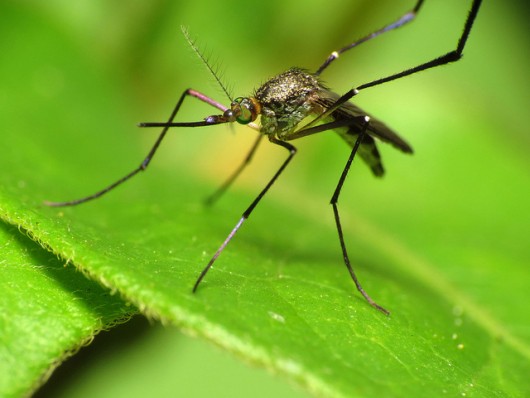
The Zika virus has been in Asia and the Pacific for roughly six decades but its symptoms had caused little concern in the area. Yet after the recent outbreak in the Americas, certain countries in the region are now taking preventative measures.
Zika is an emerging mosquito-borne virus that was first identified in Uganda in 1947. The first outbreak in Asia, though, occurred in the 1960s.
“It has appeared in Indonesia, Malaysia, India, Cambodia, Vietnam, Thailand, the Philippines and Pakistan, but no widespread cases have been reported and symptoms have typically been mild and similar to dengue and chikungunya, which may have helped mask its presence,” according to the Associated Press.
Nonetheless, after the World Health Organization (WHO) declared a global emergency a few weeks ago, several countries in the region have started taking special precautions.
According to IRIN, “Tonga has declared an epidemic, and the government of the Cook Islands has advised women to delay becoming pregnant. Japan, South Korea, Nepal and India have issued advisories to pregnant women against traveling to infected countries.”
Nepal is attempting to get rid of standing water where the Zika-carrying Aedes aegypti mosquito might breed, said Dr. Babu Ram Marasini, director of the Department of Health Services.
“South Korea has announced a fine of two million won (about $1,700) on doctors who fail to immediately report suspected cases, while Malaysia has asked travelers to the country to report to health centers if they have symptoms,” added IRIN.
The U.S. Centers for Disease Control and Prevention says that it is unclear how the Zika virus arrived in the Americas. However, it is theorized that it arrived with participants from the Pacific at sporting events in Rio de Janeiro two years ago.
Since then, the Zika virus has been spreading rapidly across the Americas, with 1.5 million cases reported in Brazil alone.
IRIN emphasized that “despite Zika’s relatively benign history in Asia and the Pacific, there is a risk that a stronger form of the virus may have emerged, and that it could spread throughout the region with much more severe consequences than previous outbreaks.”
Additionally, Dr. Shailendra Saexana from the Indian Virological Society said “The strain in Brazil could be new because mutation rates in these viruses are high. Moist tropical climates, population explosion and international travel mean Asia is susceptible to Zika.”
Various Asian countries are currently very vulnerable to an outbreak of Zika, especially due to the increase in migration from rural areas to cities, as well as the lack of sanitation and abundance of stagnant water where mosquitoes can breed. However, with these new preventative measures in place, the risks may be reduced.
– Isabella Rolz
Sources: World Health Organization, IRIN, Associated Press
Photo: Flickr

Hope on the Horizon: Increase in Food Assistance for Iraq
With this new support, provided through USAID’s Office of Food for Peace (FFP), the U.S. government has contributed nearly $623.8 million to support humanitarian activities in Iraq since the 2014 fiscal year, according to USAID’s Iraq-Complex Emergency Fact Sheet.
The new funding will support the distribution of household food parcels, including beans, dry peas, flour, oil and rice — and immediate response rations for vulnerable populations comprising ready-to-eat food items, such as beans, biscuits, canned meat, canned peas and dates according to USAID’s Iraq-Complex Emergency Fact Sheet.
USAID is helping the WFP reach 1.5 million displaced and conflict-affected Iraqis throughout the country according to USAID’s Feb. 29, 2016 press release.
This significant boost in aid has the potential to help Iraqis who were adversely impacted by cuts to the WFP last year. In August 2015, the WFP was forced to cut back food assistance due to a funding shortfall, according to the U.N.
“Unfortunately, lack of funds and the rise in the number of displaced Iraqis forces us to reduce the size of the food rations we provide to tens of thousands of families living outside camps,” said Jane Pearce, WFP representative and country director in Iraq, in an August 2015 press release.
This recent increase in food assistance for Iraq comes at a crucial time. The food and medicine shortage in Iraq resulted in the death of approximately 20 children and older persons in recent weeks according to a report by the International Organization for Migration (IOM).
Between December 2015 and January 2016, the price of some food commodities in Fallujah increased by more than 800 percent, according to the WFP; as of late February, a 110-pound bag of rice cost $400 and a 110-pound sack of wheat flour was priced at $550, reported the IOM.
There is hope that this increase in food assistance for Iraq is a sign of more good to come for internally displaced persons living in the country.
– Summer Jackson
Sources: UN, USAID 1, USAID 2
Photo: Wikipedia
One Step at a Time to Help at Home and Abroad
Pick an issue area
The most important step to start improving the world is to find an issue you are passionate about. The more passionate you are about a cause, the more likely you are to enjoy working for it and the more inspiration you will find. The issue could be anything from rhino poaching in South Africa or water safety in Flint, MI to school supplies for children in Brazil.
Remember that there are problems both abroad and in your own backyard. Each cause is important and doing something is more effective than doing nothing.
Raise money
Organizations often need both money and manpower to keep their efforts running. How you want to contribute to a cause is up to you.
But if you are interested in donating or fundraising, there are many different options. Whether donations come from your own savings, running a fundraising campaign or asking family members to donate to a cause in lieu of gifts for a special occasion, the money you give to an organization will be very useful for keeping projects running. Donations do not have to be astronomical to make a difference!
Another way to contribute money is by shopping smart. When you are buying products for yourself or as gifts, try to buy products that give back. To start, you could look at this list from the Huffington Post of gifts that give back. Do research and find products that you love that have an added bonus of giving back.
Online websites also provide ways to give back. If you frequently order from Amazon, the company’s Amazon Smile program donates 0.5 percent of the price of eligible purchases to the charity of your choice.
Volunteer your time
You might also choose to work with a local organization on a regular basis or volunteer for a summer to work across the country or across the world. If you are interested in empowering youth, you could volunteer to tutor or become a mentor. You might also try volunteering to prepare food packages at your local Red Cross Food Bank and sort clothing donations at the Salvation Army.
Technology has opened up endless opportunities to volunteer with people around the world. If you are interested in helping teach English, Pax Populi, an online website sponsored by the U.N., allows volunteers to sign up as conversation partners for students in Afghanistan. This website also has opportunities to apply for translation, editing and research volunteer positions.
Another often overlooked but highly important volunteer position is to advocate for your chosen cause or organization. Efforts such as handing out flyers, making donor calls or contacting government representatives can be crucial in spreading the word.
Asking your Senate or Congressional leaders to support specific legislation is not nearly as intimidating as it may seem. Leaders respond well to requests from their constituents and putting pressure on them can spur change at the state or national level. Check out this page to see how we contact government representatives at the Borgen Project.
Stay connected
Lastly, the most important way you can help the world is to be knowledgeable and active in your community. Try to keep up with news reports and research topics of interest to you.
The world changing every day means the challenges it faces are changing as well. The best way we can help the world is to create a population of caring and active citizens.
– Taylor Resteghini
Sources: Amazon Smile, The Borgen Project, The Huffington Post, Pax Populi, UN Online Volunteers
Photo: Voluntariat
Human-Centered Designs for Poverty-Related Challenges
IDEO.org tackles world challenges through design by partnering with nongovernmental organizations, governments, foundations and nonprofits and then going to areas where human-centered designs can solve poverty-related challenges.
Wyatt says in the interview that IDEO.org does a lot of qualitative research by spending time with those who are severely impoverished in order to figure out what they are willing to pay for services that could really improve their lives. The IDEO.org team then brainstorms creative solutions to these problems.
“The way it improves lives is that the solutions we’re creating—instead of being things that are immediately discarded or not sustainable—are solutions that people actually use,” Wyatt says in the interview.
One project that IDEO.org is working on is tackling reproductive health in Zambia and Kenya. They are working with Marie Stopes International, a global nonprofit for sexual and reproductive services, to help adolescent and unmarried girls who are not yet ready to have their first child. Typically, Wyatt says, programs focus more on mothers and birth-spacing and on women stopping having children once they’ve reached the number they want to have.
However, this project has a three-part solution. The first part is a communications campaign, where characters known as the “Divine Divas” educate young girls about different forms of contraceptives. The second part is a peer-to-peer outreach program for girls to share what they know about contraceptives and local clinics. The third part is designing the actual clinic. The purpose of the project is to reduce instances of unplanned pregnancy.
A large part of the human-centered design is learning to have empathy, Wyatt says. The IDEO.org team is trained in connecting to, relating to and asking questions of the girls and making them feel comfortable. IDEO.org also works in a range of different sectors to help alleviate poverty, including agriculture, water, sanitation, health, finances and childhood development.
By shifting the focus to human-centered, practical solutions, organizations can more efficiently and sustainably address issues and bring about change.
– Kerri Whelan
Sources: University of Pennsylvania, IDEO 1, Marie Stopes, IDEO 2
Photo: Flickr
The Wonderbag: Changing Women’s Lives
The Wonderbag works by allowing the person cooking to heat any pot of food and then place the boiling pot into the bag and seal it. The initial heating can be done in any way whatsoever: on a stove in a modern kitchen, over a campfire or on a charcoal fire in a developing country’s village. The heat from the initial boiling keeps the food cooking inside the Wonderbag for eight to 12 hours.
The Wonderbag is portable and can be used anywhere. In addition to heating food, it can also be used as a cooler. All you have to do is freeze it and it will keep food cold for hours.
In an interview with the Huffington Post, inventor Sarah Collins said “The biggest killer in the world is indoor air pollution related diseases; over 4 million people die annually from cooking related fire diseases,” half of whom are under five years of age. Also, the burning of fuels causes hundreds of thousands of burns every year, according to the Wonderbag website.
Deforestation is a major problem around the world and is happening especially quickly in the developing world where they still use wood and charcoal as fuel and for the purposes of cooking. And by 2025, water shortages may affect up to two-thirds of the world’s population. In an interview with Climate Action, inventor Sarah Collins stated that: “The bag can reduce the amount of fossil fuels that people use for cooking by 90 percent.”
According to the Wonderbag website, the preparation of food can have a particularly damaging effect on the progress of women in developing countries. Preparing food can take hours, including the time spent gathering fuel. The use of the Wonderbag can free up several hours a day, allowing girls time to go to school and women time to do other work.
According to Climate Action, Collins says that through humanitarian work, she aims to get her product to “the people who live on a dollar a day in the developing world.” In the developing world, the bag can be used similarly to a slow cooker in a modern kitchen.
Finally, for each Wonderbag purchased by someone in the developed world, one will be donated to a family in the developing world, linking people all around the world to each other.
– Rhonda Marrone
Sources: Wonderbag, Facebook, Huffington Post, Climat Action Programme
Photo: Flickr
After Six Decades, Zika Virus in Asia Causes Concern
The Zika virus has been in Asia and the Pacific for roughly six decades but its symptoms had caused little concern in the area. Yet after the recent outbreak in the Americas, certain countries in the region are now taking preventative measures.
Zika is an emerging mosquito-borne virus that was first identified in Uganda in 1947. The first outbreak in Asia, though, occurred in the 1960s.
“It has appeared in Indonesia, Malaysia, India, Cambodia, Vietnam, Thailand, the Philippines and Pakistan, but no widespread cases have been reported and symptoms have typically been mild and similar to dengue and chikungunya, which may have helped mask its presence,” according to the Associated Press.
Nonetheless, after the World Health Organization (WHO) declared a global emergency a few weeks ago, several countries in the region have started taking special precautions.
According to IRIN, “Tonga has declared an epidemic, and the government of the Cook Islands has advised women to delay becoming pregnant. Japan, South Korea, Nepal and India have issued advisories to pregnant women against traveling to infected countries.”
Nepal is attempting to get rid of standing water where the Zika-carrying Aedes aegypti mosquito might breed, said Dr. Babu Ram Marasini, director of the Department of Health Services.
“South Korea has announced a fine of two million won (about $1,700) on doctors who fail to immediately report suspected cases, while Malaysia has asked travelers to the country to report to health centers if they have symptoms,” added IRIN.
The U.S. Centers for Disease Control and Prevention says that it is unclear how the Zika virus arrived in the Americas. However, it is theorized that it arrived with participants from the Pacific at sporting events in Rio de Janeiro two years ago.
Since then, the Zika virus has been spreading rapidly across the Americas, with 1.5 million cases reported in Brazil alone.
IRIN emphasized that “despite Zika’s relatively benign history in Asia and the Pacific, there is a risk that a stronger form of the virus may have emerged, and that it could spread throughout the region with much more severe consequences than previous outbreaks.”
Additionally, Dr. Shailendra Saexana from the Indian Virological Society said “The strain in Brazil could be new because mutation rates in these viruses are high. Moist tropical climates, population explosion and international travel mean Asia is susceptible to Zika.”
Various Asian countries are currently very vulnerable to an outbreak of Zika, especially due to the increase in migration from rural areas to cities, as well as the lack of sanitation and abundance of stagnant water where mosquitoes can breed. However, with these new preventative measures in place, the risks may be reduced.
– Isabella Rolz
Sources: World Health Organization, IRIN, Associated Press
Photo: Flickr
Improving the Diet of the Poor in Cuba
According to the U.N. Food and Agriculture Organization (FAO), there are 852 million undernourished people in the world, of whom approximately 815 million reside in developing countries.
“Rampant hunger and malnutrition impair the economic performance of individuals, households, and entire nations, and can lead to political instability and civil strife,” said Carmen G. Gonzalez, a professor at the University of Seattle.
Likewise, the health systems of the majority of countries, whether rich or poor, are inefficient and fragmented, preventing marginalized communities’ access to crucial health systems.
Nonetheless, in Cuba, these policies have reduced hunger in recent years, and the number of undernourished people is significantly diminishing.
“Cuba represents an important alternative example where modest infrastructure investments combined with a well-developed public health strategy have generated health status measures comparable with those of industrialized countries,” suggested the International Epidemiological Association.
After the 1959 Revolution in Cuba, the government led efforts to improve the diet and the health of impoverished citizens. One form of these efforts was an increase in animal protein production and consumption.
According to the World Health Organization (WHO), “there has been an increasing pressure on the livestock sector to meet the growing demand for high-value animal protein. The world’s livestock sector is growing at an unprecedented rate and the driving force behind this enormous surge is a combination of population growth, rising incomes and urbanization.”
Urbanization stimulates improvements in social and political spheres and there is still a gap between rural and urban nutrition. “Compared with the less diversified diets of the rural communities, city dwellers have a varied diet rich in animal proteins and fats, and characterized by higher consumption of meat, poultry, milk and other dairy products,” said WHO.
As diets become richer and more diverse, the protein derived from the livestock sector could improve the nutrition of the poor in Cuba. But through a developed health system, the Cuban government has not only successfully reduced malnutrition but also developed an advanced socio-economic strategy uniquely designed for developing nations.
– Isabella Rolz
Sources: World Health Organization , International Epidemiological Association , FAO
Photo: Flickr
5 Habits of a Highly Successful Advocate
5 Habits of a Highly Successful Advocate
– June Samo
Sources: American Planning Association, Government and Community Relations, Salsa, TASCO, The Advocacy Project, WFP
Photo: Flickr
BURO Bangladesh Fights Poverty in Bangladesh
BURO Bangladesh currently serves 1.3 million impoverished people, many of whom are women, operates 644 branch offices in Bangladesh and employs more than 6,000 staff.
Established in 1990, the organization is one of the first microfinance institutions in the country to dedicate 100 percent of its operations to achieving financial sustainability for women and their families through commercial capital.
BURO Bangladesh offers two main programs, a microfinance program and a remittance program. The main goal of the microfinance program is to reduce poverty among the disadvantaged and the poor living in Bangladesh. Some of the features of the program include open withdrawal savings accounts, optional loans and operational and financial self-sufficiency resources.
The remittance program is designed specifically for expatriates who work abroad in order to provide for their families back in their home country. BURO Bangladesh has established partnerships with multiple banks and money transfer services across Bangladesh and Asia, such as Western Union, Xpress Money and Merchantrade products, to provide their clients with products.
Besides focusing on microfinancing to assist with poverty alleviation, they have also implemented other projects to address common issues in Bangladesh. These projects concern issues such as supplying clean water, both for consumption and hygiene purposes; human resource development within companies; and improving health, hygiene, nutrition and sanitation throughout the country.
According to its 2014-2015 report, BURO Bangladesh has successfully helped over one million people. In a country where approximately 36 percent of the population lives below the national poverty line of $2 per day, the organization plans to continue assisting impoverished people, particularly women, throughout Bangladesh until poverty is reduced significantly.
– Julia Hettiger
Sources: BURO Bangladesh, Mix Market, Nation Multimedia
Photo: Flickr
Where Donald Trump Stands on Global Poverty
In this presidential race, Trump has been focused on illegal immigration in the U.S., particularly Mexican and Muslim immigration. He continuously affirms his belief that illegal immigrants are a national security concern. He also continues to voice his disapproval of immigrants from Syria migrating to the U.S.
Other hallmarks of his candidacy have been his unapologetic rhetoric. Trump’s controversial appeals have become his greatest asset in acquiring votes. In addition to immigration, he has been particularly vocal about the Islamic State group and the threat he believes the terrorist organization poses.
In contrast to fellow presidential candidate Bernie Sanders’ humble beginnings and opposition to wealth inequality, Forbes identified Trump as one of the richest American billionaires. So given his wealth and his stance on immigration, where does Donald Trump stand when it comes to foreign aid?
“It is necessary that we invest in our infrastructure, stop sending foreign aid to countries that hate us and use that money to rebuild our tunnels, roads, bridges and schools—and nobody can do that better than me.”
– Donald Trump’s Presidential Announcement 2016
“Pakistan’s a real problem because they have nuclear weapons… I would say we don’t give them any money unless they get rid of their nuclear weapons.”
– Donald Trump speaking on Fox News, May 9, 2011
“Money should be spent in our country. We should rebuild our country and also by the way reduce our $16 trillion in debt.”
– Donald Trump speaking about Afghanistan, March 13, 2012
In addition to his opinions on foreign aid, Trump’s discourse on decreasing the poverty rate in the U.S., which currently stands at approximately 14 percent of the population, consists of diminishing public assistance and handing responsibility for the poor over to volunteer organizations.
The results of this presidential election will reveal whether Americans prefer a leader with proven experience or charismatic promises. Foreign aid plays an essential role in the lives of millions around the globe. The continued provision of this foreign aid from the U.S. depends on which leader Americans choose to elect.
– Mayra Vega
Sources: India Times, Talk Poverty, NPR, The Atlantic
Photo: NY Daily News
Open Society Foundations: Giving Countries Their Freedom
Authoritarian governments, in which absolute power is held by a single dictator or ruling party, have been linked to an increase in poverty. To unveil the full impact of authoritarian government on poverty, the Human Development Report of the United Nations analyzed the condition of sub-Saharan Africa over the last 30 years. The study revealed authoritarian governments are more likely to become corrupted, have greater levels of violence than democracies and often favor the poverty of their citizens.
Conversely, open societies allow for freedom of belief, flexible social structure and availability of information. Citizens have a greater say in the running of their own countries and lives.
George Soros founded OSF in 1979 when he realized he had the funds and connections to make a real difference. By 1984, he had established his first foundation in Hungary, which involved the distribution of photocopiers in a bid to lessen the communist control on freedom of print. Within two decades, OSF had become active in all regions of the world.
Despite its positive aims, some countries have not welcomed OSF’s mission. In May 2015, Russia banned ‘undesirable’ foreign organizations that could compromise its constitutional order or national security. “The ‘undesirables’ law and its implementation have been a terrible blow for civic freedoms in Russia,” said Hugh Williamson, the Europe and Central Asia director of Human Rights Watch.
Despite resistance, OSF continues to grow by way of a two-part strategy. First, it operates the Central European University, where future political leaders can research and analyze new solutions to ensure that open societies remain stable. Students from more than 100 countries attend the university.
Second, current OSF president Christopher Stone created the New Executives Fund, a $2 million fund to start off nonprofit organizations that support education, social change and public health. Every year, two or three selected nonprofits receive two-year grants ranging from $25,000 to $250,000. This fund, as well as supporting worthy causes, has directed global attention toward OSF.
Making inroads to transforming authoritarian governments into open societies helps to reduce poverty and improve standards of living. OSF is committed to forming governments across the globe “where all people are free to participate fully in civic, economic and cultural life.”
– Sarah Prellwitz
Sources: Philanthropy, HRW, Open Society Foundations 1, Open Society Foundations 2, Tide Global Learning
Photo: Google Images