Poverty Reduction in Vietnam: Economic Growth and Challenges
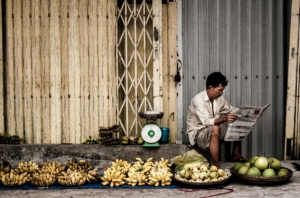 Over the last three decades, poverty reduction in Vietnam has experienced unprecedented success. The Doi Moi Reforms in 1986 have been a success story in what was once one of the poorest nations. This progress continues today. With the average distance of the poverty line shrinking, upward mobility is widespread and welfare programs and public investment continue to improve lives. Despite these successes, there are remaining challenges. There are still many people living in transient poverty, and some areas of multi-dimensional poverty require solutions. For instance, gender equality, ethnic, minorities and rural communities bear the brunt of Vietnam’s current challenges.
Economic Growth
Poverty reduction in Vietnam is largely attributed to the reforms of the 1980s. Key Changes were incentives to diversify agrarian production, opening trade to the global market and domestic investment which contributed to exports and job creation in urban areas, according to the UNDP report. The income these policies generated drove the improvement of domestic services and improved quality of living.
The 2022 World Bank report found that the Low and Middle low-income country poverty rate dropped from 16.8% to 5% in 2010-2020. In the same decade, the size of the middle class has tripled from 7.3 million people in 2010 to 22.6 million people in 2020. Health outcomes have also improved. Vietnam’s universal health index is higher than global averages at 73, and infant mortality rates fell from 32.6 per 100 births in 1993 to 16 in 2022.
In 2015, the government implemented a National Target Program to reduce deprivation in some remote rural areas and regions where incomes have not risen as fast as in other areas. They are continuing to develop them into 2025, according to the UNDP report. These programs include the New Rural Development program, which aims to improve critical services for rural communities, such as education, health, transport, water supply, security, communication and more.
The impact of Foreign direct investment (FDI) should not be ignored either. After joining the World Trade Organization in 2007, formal jobs with foreign-owned enterprises opened up in the manufacturing sector. There were 2 million more manufacturing jobs in 2020 than in 2018, and 1.9 million had formal work contracts. Showing a link between FDI and an increasing number of jobs with higher wages, according to the World Bank report.
Addressing Inequality and Ethnic Minorities
These are encouraging trends and the economic achievements are monumental. However, poverty is dynamic, and despite these successes, most households are still vulnerable to transient poverty. For the majority, their households can be driven below the poverty line by a sudden change in their conditions. Sixty percent of households are vulnerable to income poverty, especially in rural regions. For instance, during the COVID-19 Pandemic, 73.3% of Vietnamese lost income, UNDP reports.
Children without access to technology suffered the most significant learning losses during lockdowns. The poorest regions of Vietnam, which are usually remote and mountainous, are disproportionately home to ethnic minorities. While ethnic minorities represented 6%-13% of Vietnam’s population in 2020, they accounted for 21%-42% of the nation’s poor, according to the World Bank report. These disparities indicate that ethnic minorities benefit the least from Vietnam’s poverty reduction efforts and are most vulnerable to conditions of poverty.
The government has focused on tailored plans to support ethnic minorities with central funding through National Targeted Programs (NTPs) to test innovation on a local level. The 4M initiative, (meet-match-mentor-move) aims to enable ethnic minority women to break their isolation by introducing them to non-agricultural markets like e-commerce, social media and multi-stakeholder networks, UNDP reports. Knowing production and business methods, these women have expanded their markets and enterprises, benefiting around 13,000 women.
NTPs can support interaction among government bodies and communication between government agencies and local authorities to test new solutions to poverty reduction in remote areas. For instance, incorporating digital technologies at a grassroots level, as they did with the 4M initiative and digitizing poverty reduction services targeting remote communities to reduce administrative costs and service time.
Steps Going Forward
According to a survey of the NTP-National Rural Development, much of NTP spending was on socio-economic infrastructure, but targeted household programs may lift the remaining poor above the poverty line. The concentration of poverty among ethnic minorities in rural areas also calls for NTPs which target these communities directly, ensuring access to resources, investment and digitization.
While challenges remain, particularly for ethnic minorities and vulnerable communities facing climate risks, Vietnam’s commitment to poverty reduction offers hope for continued progress. Poverty reduction in Vietnam is one of the three NTPs in 2021-2025. By adjusting the multidimensional poverty line, 10 million more people are eligible for government social assistance. Aim for a 1.5% annual reduction in MDP International cooperation and an adaptive approach to policy will be essential to ensure that Vietnam can continue its journey toward a more equitable and sustainable future.
– Jonathan King
Jonathan is based in London, UK and focuses on Global Health and Politics for The Borgen Project.
Photo: Pexels
