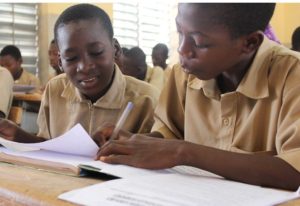
 Located in the heart of West Africa, Burkina Faso is leading in educational innovation by making strides to ensure clean and reliable energy for learning. Numerous initiatives aimed at enhancing education in the country led to the creation of various programs supported by national and international organizations like the World Bank and the World Food Program (WFP).
Promoting Education in Dori
GSOL Energy has successfully installed a 20-kilowatt-peak (kWp) solar photovoltaic (PV) system at the Digital Learning Center in Dori, Burkina Faso. Furthermore, the project, initiated by the WFP, is part of a broader effort to improve education in rural areas by providing reliable access to electricity.
The new solar PV system supplies a stable and sustainable power source, ensuring the Digital Learning Center in Burkina Faso operates continuously, even during extreme weather or inconsistent sunlight. The system also includes key features that boost its performance and efficiency, including:
- Roof-mounted solar panels optimised for peak efficiency.
- 20 kWh inverter system enabling autonomous operation.
- Battery backup providing up to 12 hours of continuous power.
- Remote monitoring is used to track performance in real-time.
- Air-conditioned enclosure safeguards system components against extreme heat and dust.
As part of the project, local staff were trained in operating, maintaining and troubleshooting the solar system. This approach enables the learning center to manage the system independently, helping to ensure its long-term sustainability.
The Lighting Africa Project
The Lighting Africa project, funded by the World Bank through Burkina Faso’s Ministry of Energy and implemented in partnership with Innovation Energie Development (IED), promotes sustainable energy solutions. This project significantly enhances the use of solar technology in rural Burkina Faso and establishes quality standards in renewable energy. This project aims to improve energy access for 400 off-grid primary schools in Burkina Faso.
A key feature of the project is the introduction of solar libraries, which will provide 25,000 certified solar lamps to schools. Additionally, students can rent these lamps to study and complete essential tasks at home. Families can access reliable lighting without facing upfront costs by keeping ownership with the schools.
In addition to providing essential lighting, this project seeks to increase awareness and demand for certified solar products in remote villages, which may not have grid electricity for at least the next 10 years. Measures will be implemented to develop a sustainable commercial network for selling certified solar lamps and kits near the schools.
Digital Inclusion
The Resource Center in Ouagadougou, co-founded by Christophe Oulé, promotes accessible information and communication technology. Its members are developing digital tools such as solar-powered audio devices, e-readers, Braille printers and accessible textbooks to support inclusive education for people with disabilities.
In 2021, the center achieved remarkable progress by translating 150 books into the barrier-free EPUB format, enhancing access to knowledge for individuals with visual impairments. An additional 54 books have been scanned and are on the verge of being digitized, making them accessible for both auditory and Braille formats.
The center not only provides essential educational materials for blind students but also includes novels, making literature accessible to all. Using 11 laptops and 10 tablets, audio content is conveniently transferred to small memory cards, allowing students to engage with learning resources fully. Moreover, students can take advantage of a Braille printer, enabling them to print and read their lessons in Braille, further fostering an inclusive educational environment.
Planning for the Future
The World Bank has invested significantly in Burkina Faso’s education sector. It has approved the $140 million Restoring Education System Performance and Improving Resilience (REPAIR) project on May 5, 2025. This initiative also allocates a $10 million grant to support Host Communities and Refugees.
Currently, the project is seeking co-financing from the Global Partnership for Education. Its goals include expanding access to pre-primary and primary education, enhancing student learning outcomes and strengthening the overall educational services available in the country. This comprehensive strategy ensures a more resilient and effective education system, benefiting local communities and refugee populations.
Key priorities are developing infrastructure resilient to climate instability, providing emergency education for at-risk groups, improving the quality of learning and strengthening institutional capacity for effective decision-making. The project is divided into four components: increasing educational access, aiding emergency education, enhancing foundational learning quality and building institutional capacity.
These combined efforts reflect a clear push toward a more inclusive and sustainable education system in Burkina Faso. Indeed, with support from global partners, the country is making strides in expanding access, improving quality and building resilience in education for all.
– Vanuza Antonio
Vanuza is based in the UK and focuses on Good News and Global Health for The Borgen Project.
Photo: Flickr

Peru’s JUNTOS Program Expansion
What Is JUNTOS?
JUNTOS supports impoverished households in most Peruvian districts, including some Indigenous Amazon communities. In 2005, roughly 40% of Peru’s population lived below the poverty line without a structured national solution. The government introduced cash transfers to improve access to nutrition and later expanded the program to cover health care and education.
JUNTOS provides funding through three pillars:
Restitution of fundamental rights
Promotion of productive development
Social safety net support
These pillars helped more than 85% of Peru’s population access direct cash transfers. The program targets pregnant women, vulnerable women and children ages 0 to 19.
Development of JUNTOS
JUNTOS began expanding in 2009 with its first additional initiative: the Promotion of Savings Culture (2009–2012). This success led to other programs, including Financial Education (2012), Technology Platforms for Financial Inclusion (2014–2015) and We Learn Better Together (2017–present). In 2022, JUNTOS expanded further to ensure that the majority of districts across Peru could access all available benefits.
Outcomes and Success of JUNTOS
Over two decades, Peru’s JUNTOS program has delivered results that mark significant progress in the country’s fight against poverty. In 2022, more than 703,000 households received cash transfers and essential nutrition support. Of Peru’s 1,890 districts, 1,840 gained direct access to JUNTOS services. Among the recipients were 1.5 million vulnerable women and children.
Compared to conditions in 2005, these outcomes represent major strides in reducing malnutrition, increasing school participation and improving financial literacy. Reports also highlight notable improvements in children’s development, especially cognitive growth among those exposed to the program between the ages of 0 and 4. Increased access to nutrients contributed to significant reductions in stunting among young children.
Children who accessed JUNTOS benefits early in life showed stronger developmental outcomes, suggesting that age plays a key role in the program’s long-term success. JUNTOS’ success can be attributed to its emphasis on administrative adaptability and its responsiveness to local contexts. The program’s integration with local health and education providers has ensured smoother delivery of services, while inter-agency collaboration has strengthened accountability and monitoring mechanisms. Moreover, community participation—especially involving women—has reinforced trust and boosted enrollment among marginalized groups.
Moving Forward
Peru’s JUNTOS program has supported the country’s most vulnerable populations with consistent, effective interventions. Free cash transfers improved the lives of nearly 2 million people, while expanded programs enhanced the development and well-being of children and families. JUNTOS stands as an example of how social protection programs could combat extreme poverty on a national scale.
– Joel Raymer
Photo: Flickr
Local Solutions Drive Madagascar’s Poverty Solutions
Battling Hunger and Malnutrition
Since 2019, the southern regions of Madagascar have been grappling with severe droughts, leading to famine-like conditions. Approximately 1.3 million people are food insecure, with malnutrition rates among children under 5 doubling in recent years. In response, the World Food Programme (WFP) and UNICEF have collaborated to deliver life-saving nutrition supplies, such as Plumpy’Sup, to malnourished children in remote areas. Innovative methods, including Unmanned Aircraft Systems, have been employed to reach isolated communities.
Madagascar’s reliance on rain-fed agriculture makes it vulnerable to the harsh climate. Prolonged droughts have devastated crops, leading to food shortages and economic hardship. To combat this, Madagascar’s poverty solutions include programs promoting climate-smart agriculture. These initiatives teach farmers sustainable practices, such as using drought-resistant crops and mulching, to improve food security and protect the environment.
International Support and Development Projects
The U.S. Agency for International Development (USAID) committed $22.1 million to support Madagascar’s southern regions through projects like Vikina and Harea. These initiatives aim to build resilience, improve food security and promote sustainable farming practices. Additionally, USAID’s Mikajy project focuses on linking biodiversity conservation with sustainable livelihoods. By supporting community-based enterprises and introducing conservation farming, the project helps communities achieve economic growth while preserving natural resources.
In 2023, the World Bank approved a $250 million credit to expand access to social protection for extremely poor households across all 23 regions of Madagascar. The initiative aims to strengthen the national safety net system and improve household resilience to economic and climate-related shocks. In the same year, the World Bank committed an additional $400 million to the Digital and Energy Connectivity for Inclusion in Madagascar Project (DECIM). This program aims to double the country’s energy access from 33.7% to 67% and expand internet connectivity by reaching 3.4 million new users. The investment supports long-term development by promoting digital inclusion, clean energy and infrastructure growth.
Community-Driven Initiatives
Local communities are also taking action in Madagascar’s poverty solutions by preserving their lush forests. Reforestation projects, such as those by Eden Reforestation Projects, aim to restore mangroves and upland forests while providing both environmental benefits and employment opportunities. In the Makay region, eco-tourism initiatives promote low-impact tourism, generating income for local communities while funding conservation efforts. Microfinance programs, like those supported by Money for Madagascar, empower individuals to start small businesses, fostering economic independence and community development.
Looking Ahead
By focusing on sustainable development, climate resilience and economic empowerment, Madagascar continues to build a path toward resilience and improved well-being for its people.
– Giovanni Garcia
Photo: Flickr
Solidarity Income: Building Futures With Cash Transfers
Programs such as Families in Action, Youth in Action and Solidarity Income have proven imperative in promoting youth education and improving the health and well-being of citizens. They also provide emergency financial assistance. The nation has implemented these initiatives to support vulnerable communities in achieving long-term economic stability and building futures in Colombia.
Families in Action
In 2000, Colombia started its main conditional cash transfer program, Families in Action. The program aims to assist low-income families with consistent financial support if they meet specific conditions. These include ensuring their children attend school regularly and get routine health checkups for children aged less than 5.
Since its inception, Families in Action has helped around 2.7 million Colombian families and about 10 million people. The program has increased the use of preventive health care services. More families are taking their children to growth and development check-ups and ensuring increased diversity in rural children’s diet. The program aims to break the intergenerational cycle of poverty and help future generations lead successful lives by building futures in Colombia.
The program is supported by numerous international agencies such as the World Bank and the Inter-American Development Bank (IDB). These influential partners ensure that the program is running smoothly and has enough funding, which is crucial to continued success.
Youth in Action
Another initiative launched by the Colombian government in 2001 is Youth in Action. Aimed at easing the challenges many low-income youth face during their transition to adulthood, the program supports individuals aged 14 to 28 in college or attending vocational training programs. It provides regular cash payments to eligible students, which help pay for important expenses such as transportation, school supplies and housing. The main goal is to reduce youth unemployment and help students stay in school.
The initiative has been able to help approximately 300,000 young people through job training in semi-skilled trades, particularly in major cities where many struggle with unemployment. The program also connects these students with essential career services and job placement programs, guaranteeing their education leads to future opportunities.
The program has helped increase earnings and employment. For example, earnings for women increased by almost $18 per month (at the time of the evaluation). Additionally, 20% of program beneficiaries work in government-recognized firms, compared with 17.4% of other women. Overall, Youth in Action is an investment in Colombia’s future workforce and a strategic tool for building futures in Colombia through a fairer society.
Solidarity Income
Social inequalities among informal workers and families excluded from traditional social safety nets were exacerbated by the COVID-19 pandemic. In response, the government launched Solidarity Income in 2020 to provide unconditional cash transfers to support families not protected by other assistance initiatives.
Unlike Families in Action, Solidarity Income has no conditions. Instead, it is specifically designed to quickly help struggling people who lost jobs and could not afford food during the pandemic. The program used data from government databases and financial institutions to pinpoint exact households, allowing them to send money, even to those in remote areas.
In only a few years, the initiative reached more than three million families, with most in extreme poverty. An example is Heidy Barrera, who said, “this money will allow me to buy food for my household.” Solidarity Income was crucial during the height of the pandemic, when many other forms of financial support were unavailable.
Conclusion
Colombia’s Families in Action, Youth in Action and Solidarity Income programs show the impact of how organized cash transfer programs can positively influence millions of lives. These initiatives provide short-term relief and long-term development by helping people grow through education and health, which are essential in preventing regression and help build futures in Colombia. Strengthening and expanding these programs will be of utmost importance to create a more equitable society for the future generation of Colombians.
– Rafe Photopoulos
Photo: Flickr
Venezuela’s Anti-NGO Law Looms: 2 Organizations Fighting Back
According to Amnesty International, “The approval of this law aims to keep Venezuelan civil society from continuing to stand alongside victims [of poverty, violent crime, et cetera] and providing assistance in ways that authorities are unable to.” In this time of uncertainty, it is more important than ever to support organizations that are challenging the country’s tyrannous government.
Hogar Bambi Venezuela
Founded in 1992, Hogar Bambi Venezuela focuses on providing care to children and youth misplaced from their families “due to abuse, mistreatment or economic hardship.” The organization organizes “temporary, substitute” homes for the children, then facilitates their return to their families – or the adoption process, if the first option is not feasible.
American-based organization Bambi International Foundation is a long-time supporter of Hogar Bambi Venezuela. It funds various projects to support the Venezuelan NGO in its mission to care for displaced minors.
One project it completed in recent years was the purchase of a private vehicle. Before purchasing the vehicle, staff members of Hogar Bambi were unable to transport all of the children to necessary medical appointments due to the unreliability of the Venezuelan public transportation system. The project helped Hogar Bambi transport the children for their medical appointments and necessary services such as cardiology, dermatology, laboratory, surgical examinations, etc.
Bambi International Foundation also facilitates the building and renovation of structures to house them. In 2020, it raised nearly $6,000 towards renovating and installing electricity in a building housing 36 displaced Venezuelan infants.
Currently, Bambi International Foundation is campaigning for a new cause – the Sports and Recreation for Children and Adolescents Deprived of a Family project. It is currently 40% of the way to completing its goal of raising $25,000 to provide at-risk Venezuelan youth with access to recreational activities such as team sports, swimming lessons and various outdoor adventures.
Fundacion Jacinto Convit
Inspired by the work and values of Doctor Jacinto Convit, Fundacion Jacinto Convit has been working for 13 years to make health services and education accessible throughout Venezuela. The organization funds “scientific research, healthcare programs, and educational and community projects, through a multidisciplinary team, to contribute to the well-being of the most vulnerable populations and to the country’s social development.”
Fundacion Jacinto Convit has made revolutionary strides in medicine, particularly in making cancer treatment more accessible. One project it currently has in development is ContiVax – an immunotherapy treatment that targets breast cancer. The treatment is currently being put through clinical trials throughout the Americas and Europe, and will hopefully prove to be a safe, effective, low-cost treatment option for patients who either can not afford or cannot access chemotherapy, or prefer an alternative for any reason.
In addition to ContiVax, the NGO focuses on providing a “highly specialized free medical assistance service for the molecular diagnosis of malignant neoplastic diseases (such as leukemia and some solid tumors) and infectious diseases (mainly HIV)” through their Molecular Diagnostic Unit, hopefully contributing “to the improvement of mortality and morbidity rates in patients with some types of cancer.”
Fundacion Jacinto Convit also focuses on educating Venezuelan youth. One of its educational programs, Values Through Science, facilitates talks, lessons, film screenings, and educational activities at schools, conferences, and other community spaces. The project is intended to encourage Venezuelan youth to develop an interest in the sciences while promoting critical thought, curiosity, and teamwork.
Venezuela’s Anti-NGO Law: In Conclusion
Although the passing of Venezuela’s anti-NGO law seems intent on preventing the country’s needy from accessing the life-saving services that they require, the country’s NGOs are not giving up.
– Helena Birbrower
Photo: Flickr
WHO and Africa CDC Work To Curb the Spread of Mpox in Africa
The original plan garnered positive results but not at the rate required to diminish the growth of the infection fully. Together, the Africa CDC and WHO are reworking the plan, hoping to accomplish the goals laid out.
Mpox in Africa
When the original plan was created in 2024, the spread of the disease occurred rapidly from sexual or close contact. It began in the Democratic Republic of the Congo (DRC) and quickly traveled to Burundi, Kenya, Uganda and Rwanda. Today, Mpox is present in 28 countries worldwide. However, outside of Africa, the cases are travel-related and rare.
Inside Africa, it is reported to have spread to the Republic of the Congo, South Africa, South Sudan, the Republic of Tanzania and Zambia. Prior to the PCEHS declaration, Mpox vaccines were not available in underdeveloped or developing countries despite originating in the DRC.
The Joint Continental Preparedness and Response Plan
The Joint Continental Preparedness and Response Plan, in its original efforts, focused on 10 key pillars in its efforts: coordination, risk communication and community engagement, disease surveillance, laboratory capacity, clinical management, infection prevention and control, vaccination, research, logistics and maintaining essential health services.
These pillars have managed to get more than 650,000 people vaccinated within the six countries at the highest risk. Of the vaccinations, 90% were administered in the DRC. Overall, more than one million vaccines were administered over the 10 listed countries and efforts to reduce the spread of Mpox in Africa through the implementation of the vaccination plan have not ceased.
The New Plan
The new plan, which still includes these pillars, intensifies the focus on controlling outbreaks and implementing Mpox prevention into routine health services. After the emergency period ends in August of 2025, the WHO and Africa CDC want the health services to continue. The aim is to prevent the further spread of Mpox in Africa.
To ensure this, the organizations agreed to continue to support countries in continuing the PHECS strategies. Beyond this, they aim to expand community engagement to strengthen the effectiveness of health strategies. Essentially, they will enhance and optimize each pillar, intending to finish the changes by the end of May 2025.
Final Remarks
With the reworking of the Joint Continental Preparedness and Response Plan, the WHO and African CDC hope to garner even more success in curbing and eradicating the spread of Mpox in Africa. Combating Mpox is not just a regional issue; it’s a test of our global commitment to health equity.
– Abby Buchan
Photo: Pixabay
Catalonia’s UBI Program: A Bold Strategy for Poverty Reduction
The Government of Catalonia tasked the Office of the Pilot Plan for UBI with managing the two-year experiment. The team selected the 5,000 participants from two groups: 2,500 randomly chosen across Catalonia and 2,500 residents of two lower-income villages. The pilot aims to assess the effects of unconditional cash distributions on various social and economic outcomes, which do not replace any existing benefits. This approach allows for a comparative analysis to determine the true efficacy of unconditional income in improving social and economic conditions.
Results Are Yet To Be Seen
The Catalan government has not released any official outcome data. A comprehensive evaluation of Catalonia’s UBI program will occur in 2026 when researchers assess income changes, employment, health and well-being across recipients and a designated control group. Sociologist Sergi Raventós, who initially implemented the program, emphasized, “This is the first time something like this has been done anywhere in the world.”
In an interview with InfoLibre, Raventós spoke about his belief that UBI should serve as a central redistributive tool for the 21st-century welfare state. He has also previously stated that recipients of UBI often report lower stress and greater freedom to make meaningful life decisions. Results from other UBI programs back up this assertion. However, given the novelty of Catalonia’s pilot program, such results remain impossible to predict before the release of official data.
Learning From Global Examples
Catalonia’s UBI program builds on lessons from earlier UBI trials around the world. From 2017 to 2018, Finland tested a UBI pilot that gave 2,000 unemployed people $635 monthly. Although the funds didn’t significantly impact employment rates, participants experienced reduced anxiety, higher life satisfaction and increased confidence. Many used the income to invest in personal projects, such as starting businesses, volunteering or focusing on education.
Similarly, in the United States, the SEED program in Stockton, California, gave 125 people $500 per month for two years. Recipients found full-time jobs at double the rate of non-recipients and reported improved emotional health. These findings suggest that UBI can enhance well-being, even without major effects on employment outcomes.
However, Catalonia’s pilot program is unique in its effort’s scale and duration. The program includes a larger sample size, higher monthly payments and a design that reaches urban and rural communities. The Catalan team is also collaborating with academics to ensure rigorous evaluation to help determine whether UBI improves recipients’ quality of life across various metrics.
Implications for Global Poverty Strategy
The results of Catalonia’s UBI program may likely influence poverty policy across the globe. Governments in South Korea, Kenya and Brazil have also explored unconditional payments, though few programs match Catalonia’s scope.
The Catalan program’s results will provide more substantive data on whether direct cash support helps people escape cycles of low-income instability. As cost-of-living crises grow worldwide, Catalonia’s experiment could change how countries think about poverty, security and the role of government in economic planning and dignity.
– Kelsey Eisen
Photo: Flickr
Solar Energy for Education: Access To Learning in Burkina Faso
Promoting Education in Dori
GSOL Energy has successfully installed a 20-kilowatt-peak (kWp) solar photovoltaic (PV) system at the Digital Learning Center in Dori, Burkina Faso. Furthermore, the project, initiated by the WFP, is part of a broader effort to improve education in rural areas by providing reliable access to electricity.
The new solar PV system supplies a stable and sustainable power source, ensuring the Digital Learning Center in Burkina Faso operates continuously, even during extreme weather or inconsistent sunlight. The system also includes key features that boost its performance and efficiency, including:
As part of the project, local staff were trained in operating, maintaining and troubleshooting the solar system. This approach enables the learning center to manage the system independently, helping to ensure its long-term sustainability.
The Lighting Africa Project
The Lighting Africa project, funded by the World Bank through Burkina Faso’s Ministry of Energy and implemented in partnership with Innovation Energie Development (IED), promotes sustainable energy solutions. This project significantly enhances the use of solar technology in rural Burkina Faso and establishes quality standards in renewable energy. This project aims to improve energy access for 400 off-grid primary schools in Burkina Faso.
A key feature of the project is the introduction of solar libraries, which will provide 25,000 certified solar lamps to schools. Additionally, students can rent these lamps to study and complete essential tasks at home. Families can access reliable lighting without facing upfront costs by keeping ownership with the schools.
In addition to providing essential lighting, this project seeks to increase awareness and demand for certified solar products in remote villages, which may not have grid electricity for at least the next 10 years. Measures will be implemented to develop a sustainable commercial network for selling certified solar lamps and kits near the schools.
Digital Inclusion
The Resource Center in Ouagadougou, co-founded by Christophe Oulé, promotes accessible information and communication technology. Its members are developing digital tools such as solar-powered audio devices, e-readers, Braille printers and accessible textbooks to support inclusive education for people with disabilities.
In 2021, the center achieved remarkable progress by translating 150 books into the barrier-free EPUB format, enhancing access to knowledge for individuals with visual impairments. An additional 54 books have been scanned and are on the verge of being digitized, making them accessible for both auditory and Braille formats.
The center not only provides essential educational materials for blind students but also includes novels, making literature accessible to all. Using 11 laptops and 10 tablets, audio content is conveniently transferred to small memory cards, allowing students to engage with learning resources fully. Moreover, students can take advantage of a Braille printer, enabling them to print and read their lessons in Braille, further fostering an inclusive educational environment.
Planning for the Future
The World Bank has invested significantly in Burkina Faso’s education sector. It has approved the $140 million Restoring Education System Performance and Improving Resilience (REPAIR) project on May 5, 2025. This initiative also allocates a $10 million grant to support Host Communities and Refugees.
Currently, the project is seeking co-financing from the Global Partnership for Education. Its goals include expanding access to pre-primary and primary education, enhancing student learning outcomes and strengthening the overall educational services available in the country. This comprehensive strategy ensures a more resilient and effective education system, benefiting local communities and refugee populations.
Key priorities are developing infrastructure resilient to climate instability, providing emergency education for at-risk groups, improving the quality of learning and strengthening institutional capacity for effective decision-making. The project is divided into four components: increasing educational access, aiding emergency education, enhancing foundational learning quality and building institutional capacity.
These combined efforts reflect a clear push toward a more inclusive and sustainable education system in Burkina Faso. Indeed, with support from global partners, the country is making strides in expanding access, improving quality and building resilience in education for all.
– Vanuza Antonio
Photo: Flickr
Vaccines in Developing Countries: Victory in Vaccination
Malaria Vaccine in Sudan
The Federal Ministry of Health (Sudan), the United Nations Children’s Fund (UNICEF), WHO and Gavi, the Vaccine Alliance partnered in November 2024 to distribute the first malaria vaccines in Sudan. Indeed, the country is the first in the WHO’s East Mediterranean region to introduce a vaccine for the disease.
Sudan has one of the highest rates of malaria infection in the region, with more than 1.3 million cases in 2023, of which 22.3% were children. Ongoing conflict has caused vaccination coverage to fall to 30% in active-conflict zones. However, the campaign distributed the vaccines to 15 health facilities and 148,000 children. The number of facilities will rise to 129 throughout 2025 and 2026.
Ebola Vaccine in Sierra Leone
Alongside Liberia and Guinea, Sierra Leone was one of the three countries most affected by the 2014 West Africa Ebola virus outbreak. However, it is the first of the three to introduce a nationwide preventive vaccine for the disease. The campaign began in December 2024 and administered the vaccine to 20,000 health care workers across 16 districts.
Health care workers carry a high risk of infection when treating the Ebola virus. Sierra Leone lost 7% of its health care workforce to the disease during the 2014 outbreak. The campaign follows a series of immunization successes in the country. It has also reached 90% diphtheria-tetanus-pertussis vaccine coverage since 2001 and 100% human papillomavirus (HPV) vaccine coverage as of September 2024. Sierra Leone shows that vaccines in developing countries can achieve and sustain results.
Vaccine Education in Trinidad and Tobago
The Pan American Health Organization (PAHO) led a two-day workshop for 79 school nurses in Trinidad and Tobago that covered how to talk to patients about vaccines and correct misconceptions. The country is emphasizing HPV vaccination, which can prevent 70% of cases of cervical cancer, for children 9–14 years old.
In Trinidad and Tobago, there are an estimated 202 women diagnosed with cervical cancer and 127 die from it every year. The nurses found the sessions informative and now have strategies to communicate the safety of vaccines to their patients. This signals a productive future for vaccines in developing countries.
Vaccines in Conflict-Affected Areas of Cameroon
In 2024, the Cameroon Baptist Convention Health Services (CBCHS) partnered with UNICEF to bring vaccines to conflict-affected northwest and southwest Cameroon areas. Non-State Armed Groups initially prevented the health care workers from entering the regions. However, Ful Morine Fuen of CBCHS persuaded them, saying they could not “kill diseases like malaria, diarrhea, etc. with a gun” but with vaccination.
The workers targeted displaced families, assessing the vaccination status of children aged 6 months to 5 years. They referred children needing vaccines to local facilities or administered vaccines through mobile clinics. Twelve families were hesitant about vaccination, but 11 of them agreed to it after workers discussed the benefits. In total, 473 children received the necessary vaccines.
Looking Ahead
Vaccines in developing countries have helped thousands of people in the past year. The continued efforts of local governments and international health organizations will stop the spread of preventable diseases. They will save even more lives by World Immunization Week 2026.
– Tyler Payne
Photo: Flickr
The Current State of Hunger in Suriname
Hunger in Suriname
The 2024 Global Hunger Index categorizes hunger in Suriname as Moderate, but it is very close to being considered Low. It ranks 55th out of the 127 countries assessed, with its score improving over 26% since 2000. Of the four components comprising the GHI score–% population undernourished, % children who die before age five, % children under five who are stunted or % wasted, all indicators are considered low, except for children wasted (5.2%).
The 2024 reported performance of Suriname on its achievement of the 17 U.N. Sustainable Development goals showed a score of 70%. On SDG2, Zero Hunger, Suriname is seen as moderately improving, but with challenges remaining, most significantly in the prevalence of obesity (adults), and with stagnation of undernourishment.
Nutrition in Suriname
According to the 2020 Global Nutrition Report, Suriname is “on course” to meet only one of the 13 global nutrition targets—childhood overweight. The country has made some progress regarding childhood stunting and exclusive breastfeeding. However, no progress or worsening was reported for anemia of women of childbearing age, low birth weight and wasting of children under 5, with all other indicators “off course.” As Suriname tackles the remaining challenges of SDG2, this will include the need to address the challenges of nutrition.
Climate Concerns and Food Production
Although only 0.3% of its land is arable, very little of the suitable land is being used for agriculture. Agricultural development economist Iwan Poerschke reports that 60% of Suriname’s consumed food is imported. However, he believes that the favorable climate and fertile soil would allow the country to become a “significant food supplier in the region,” as well as meet its own food needs. Poerschke feels that moving agriculture from an emphasis on small-scale production to action on a larger scale could achieve this. Challenges are, in part, related to mismanagement, insufficient sustainable agricultural development, and other factors. Rising sea levels and temperature often lead to flooding in the fertile coastal area. Although extreme heat in the August through November dry season can lead to drought, as it did in 2023.
Growth of the agricultural sector thus involves government investment, mitigation strategies for addressing climate concerns, research collaboration, organic and ecological farming and the acquisition of knowledge to facilitate these efforts. The country’s Agriculture, Livestock and Fisheries Minister has already referred to the need to adjust to climate challenges. Indeed, talks are taking place to provide crop insurance options.
A Small Country with a Bigger Impact
Suriname is a small country that does not have a significant food security problem. However, if Poerschke is correct, this small country can do more to provide for itself, as well as to contribute to food security in the region.
– Staff Reports
Photo: Flickr
Life After the Volcano: Montserrat Rebuilding Efforts
Today, Montserrat rebuilding efforts continue to affect thousands of residents, who face persistent poverty, limited resources and the weight of long-term displacement.
The Lingering Impact of the Soufrière Hills Eruption
The volcano’s devastation destroyed key infrastructure, including roads, utilities and government buildings. According to the Montserrat Statistics Department, more than 60% of the island’s population was forced to evacuate permanently. Those who stayed faced the challenge of resettling in the island’s northern part, which had limited infrastructure at the time.
The economic collapse that followed was severe. The World Bank reported that Montserrat’s gross domestic product (GDP) fell more than significantly in the immediate aftermath of the eruptions. As of 2022, about 36% of Montserrat’s residents live below the poverty line.
Montserrat’s Long Road to Recovery and Housing Stability
Housing insecurity remains a major issue in Montserrat’s rebuilding efforts. Many families still live in transitional shelters or informal homes lacking adequate weatherproofing or sanitation. The Post-Disaster Needs Assessment conducted by the United Nations Development Programme (UNDP) in 2021 identified housing rehabilitation and expansion as a top priority.
International aid has played a vital role in tackling these issues. The Joint SDG Fund, in partnership with the Government of Montserrat, supports projects targeting poverty reduction, workforce development and sustainable housing. Similarly, the Montserrat Budget Support Programme, backed by the U.K.’s Foreign, Commonwealth and Development Office, has helped maintain essential services and fund housing projects in the north.
The COVID-19 pandemic deepened economic hardship and food insecurity. In response, the UNDP issued emergency grants to farmers and fishers to support food production during lockdowns. Still, Montserrat rebuilding efforts remain slow. Construction costs, limited access to credit and climate-related risks continue to challenge progress. However, the Former Premier of Montserrat, Joseph Farrell, has emphasized the need for resilient housing models to withstand future shocks.
Despite obstacles, Montserrat’s people have shown resilience. Civic groups, returning diaspora members and entrepreneurs are working to revitalize communities and small businesses. The Montserrat Sustainable Development Plan outlines goals for economic diversification and infrastructure growth.
A Path Toward Long-Term Recovery
Montserrat’s experience is a stark example of how small island nations face compounded risks from natural disasters, poverty and limited resources. The island’s slow but steady recovery highlights the importance of long-term investment, disaster resilience and community-driven planning.
“The resilience of the Montserratian people is unmatched,” said U.N. Resident Coordinator Didier Trebucq in a recent visit. “But to truly rebuild, we must continue supporting efforts that prioritize equity, sustainability and local leadership.”
While the volcano still lingers beneath the surface, so does the enduring hope of a resilient, more secure Montserrat.
– Giovanni Garcia
Photo: Wikimedia Commons