Women Coders: Empowering Women in Ethiopia
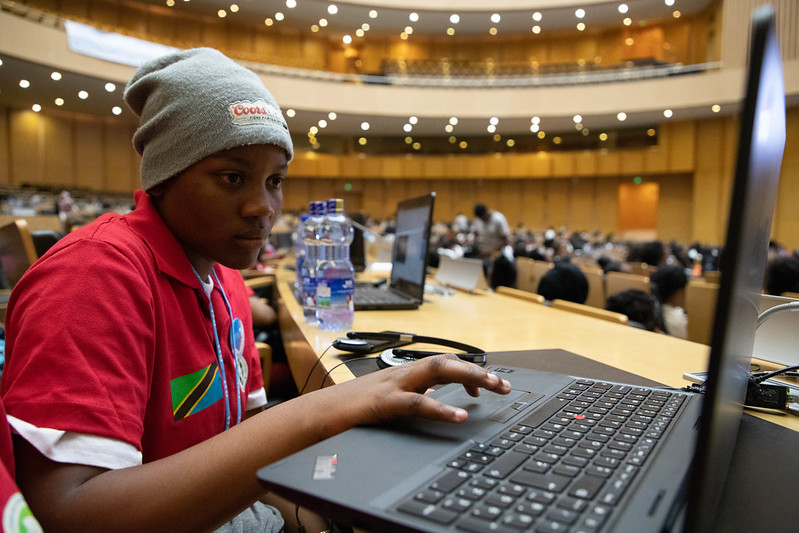 In 2025, women in Ethiopia continue to face steep barriers in escaping poverty. This reality spurred the Federal Democratic Republic of Ethiopia to adopt the National Policy on Women in 1993, aimed at addressing gender inequities in access to resources and social opportunities. Despite good intentions, this legislation fell short in eliminating the structural and cultural disadvantages that keep many women in poverty.
Fast forward to the global tech boom of the 2000s and Africa now represents the fastest-growing region for technology worldwide—an enormous opportunity for poverty alleviation through economic growth and increased market access. But as the tech sector grows, gender disparities also widen. In Ethiopia, the digital economy has magnified decades-old inequalities in income, leadership and opportunity.
The Feminization of Poverty
With a population nearing 127 million, Ethiopia ranks as Africa’s second most populous country and one of its fastest-growing economies. Yet, approximately 69% of the population—about 82 million people—live in multidimensional poverty. Additionally, 18.4% or more than 22 million Ethiopians remain vulnerable to poverty. Women in Ethiopia are particularly affected, facing a unique phenomenon known as the feminization of poverty, a concept representing the disproportionate number of women facing debilitating barriers to personal development. The following statistics reflect systemic barriers:
- Only 21.9% of girls complete lower secondary school.
- Women face an 18.9-point adult literacy gap compared to men, higher than the Sub-Saharan Africa average of 12.4 points.
- Vulnerable employment affects 87.4% of women.
- The account ownership gap between men and women is 15.9 points.
- Roughly 50% of women are not homeowners.
- About 37% of women experience intimate partner violence, 10% above the global average.
- Women trail 44% behind men in hourly wages.
- Only 30% of women receive STEM training or work in tech.
These gaps cost the country an estimated $3.7 billion annually, underscoring the economic consequences of gender inequality.
Tech Training for a New Generation
In Ethiopia, where only half of all primary school girls reach fifth grade, forging a new path to sustainability and financial independence for future generations of women is critical. SheCodes, in partnership with the Delac Foundation, provides a tech-based solution to these ongoing challenges.
The initiative offers coding education to 5,000 Ethiopian women, delivering free online workshops in front-end development, product design and project management. Indeed, with every purchase at SheCodes, one Ethiopian woman receives free coding education through online workshops focusing on product development, design and management.
Founded in 2017 by Matt Delac, SheCodes initially started as an idea supporting only 10 female students. Almost a decade later, SheCodes has provided online training to more than 235,000 women, of whom 2,257 reside in Ethiopia and across 191 developing countries.
Closing the Gender Gap Through Technology
The program’s work includes growing the number of women coders seeking professional and career development by boosting female participation in technology. This increased involvement is pivotal in poverty reduction, driving economic growth and the continued ascent of women and their families.
Research from the World Bank demonstrated how helping women break into the male-dominated digital and tech sector improves income, raises employment and creates new opportunities for all. The Harvard University Center for African Studies demonstrated how women-led tech firms experienced a 34% higher return on investment than those led solely by men. With one coding class at a time, SheCodes bridges the employment and wage gap, equipping aspiring women coders in Ethiopia with the skills to build a better future.
