Vietnam’s Transformed Economy: The Rice Revolution
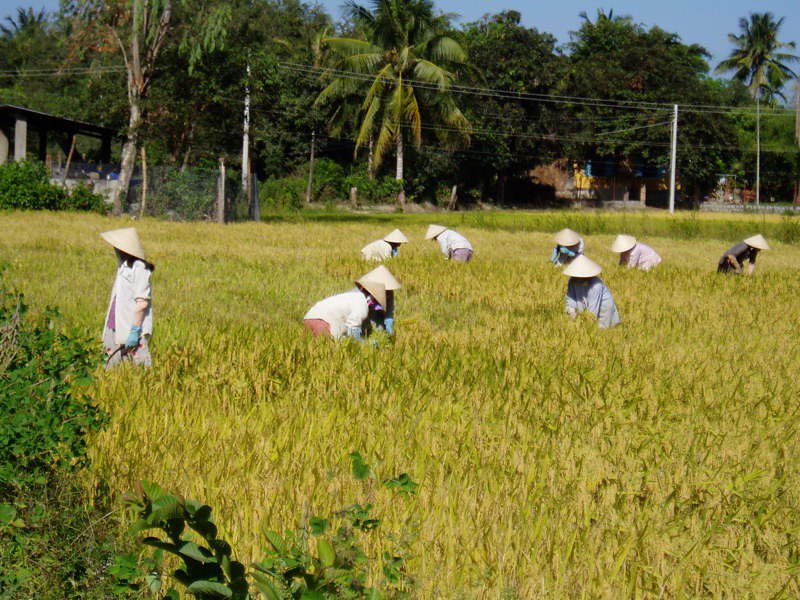 In recent history, Vietnam—a country once associated with war and humanitarian crises—has emerged as one of Southeast Asia’s most resilient and rapidly developing economies. Through agricultural innovation and strategic reforms, millions have been lifted out of poverty. At the heart of this revival is Vietnam’s rice sector, which has secured food security and turned the country into a global exporting powerhouse.
From Crisis to Recovery
Following the end of the Vietnam War in 1975, the country faced profound challenges. Widespread poverty, food shortages, devastated infrastructure and a stagnant economy threatened national survival. Humanitarian aid from countries like the United Kingdom (U.K.), Australia, Japan and the United States (U.S.) helped avert famine. The turning point came with the launch of Doi Moi in 1986—an economic and political reform policy initiated by the Communist Party. Doi Moi shifted Vietnam’s centrally planned economy toward a more market-oriented system, unlocking the potential of its agricultural sector, especially rice production.
Rice Revolution Powers Rural Prosperity
According to the Observatory of Economic Complexity (OEC), Vietnam ranks as the world’s third-largest rice exporter out of 184 countries. In 2023 alone, the country exported $3.88 billion of rice, mainly to the Philippines, Indonesia, China, Ghana and Côte d’Ivoire. Vietnam supplies more than 7 million tons annually to countries across Asia, Africa and the Middle East. Vietnam’s transformed economy depends on the Mekong Delta, often called the “Rice Bowl of Vietnam,” producing more than half of the country’s rice, accounting for 95% of its exports.
The government’s dismantling of the collective farming system and its return of land-use rights to households drove this transformation. As Dr. Matthew Morell, Director General of the International Rice Research Institute (IRRI), explained: “Vietnam contributes more than 6% of global rice production. Promoting good agricultural practices such as the ‘1 Must Do, 5 Reductions’ will help farmers reduce pesticide use and at the same time increase productivity toward sustainable rice production and gradually improve the brand of Vietnam rice.”
The government also heavily invested in rural infrastructure. Roads and electricity are used by almost 100% of the population, enabling farmers to access markets efficiently. This helped lift millions out of poverty, especially in rural provinces such as A Giang, Dong Thap and Kien Giang. During the COVID-19 pandemic, domestic rice production ensured national food security and reinforced Vietnam’s role in global food supply chains.
Beyond Agriculture: A Diversified Economy
While agriculture remains central, Vietnam has broadened its economy to include manufacturing, services and technology. The country has become a preferred destination for foreign investment in electronics and textiles, with tech companies like Samsung, Intel and LG establishing operations since 2008. In 2023, Vietnam launched its first homegrown electric vehicle brand, Vinfast, which began exporting to North America and Europe.
