Everything You Need To Know about Hunger in Cuba
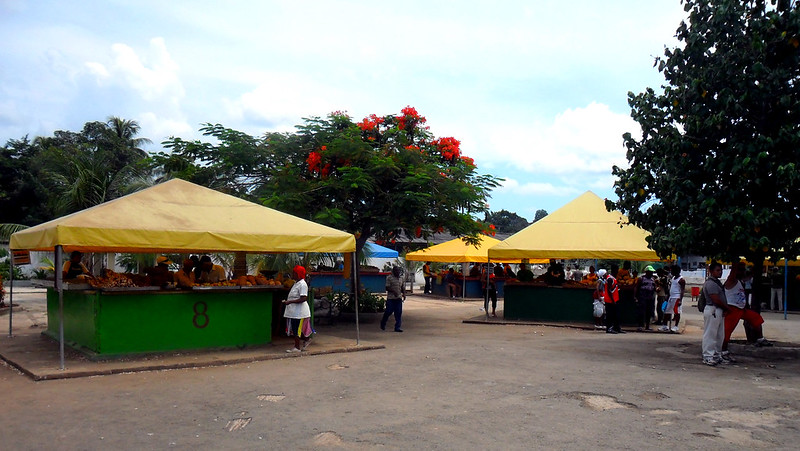 A 2023 Cuban Observatory for Human Rights (OCDH) report reveals that 78% of Cubans have stopped eating some meals, indicating undeniable hunger in Cuba. With nine in 10 Cubans barely earning “enough to survive,” and 62% struggling to buy essential goods. The Food Monitor Program and community projects address the crisis globally and provide on-the-ground support.
Ration Books to Market Choices
Since the 1962 Cuban Revolution, the government has subsidized a universal monthly food supply, which it distributes through libreta, a ration book. From 2021, more than 11 million Cubans are registered for this vital support.
Over time, the libreta has faced reductions, sustaining 85% of individuals in the OCDH report for 10 days or less. In December 2023, President Miguel Díaz-Canel expressed intentions to phase out staples like rice and sugar, redirecting support to the most vulnerable.
Other options include Freely Convertible Currency (MLC) stores, agricultural markets or the black market. In MLC stores, transactions must occur in foreign currency. The aim is to capture remittances from abroad to pay for food imports. However, this practice has widened the disparity between those with access to remittances — either from relatives abroad or through work in the COVID-19-impacted tourism sector — and those solely reliant on local salaries.
Nonetheless, MLC stores face shortages. The majority turn to the competitively priced black market, usually associated with illegal activity. In Cuba, this is where street vendors address the gaps in food and other household goods.
The Economic Impact
“The Special Period” economic crisis followed the 1991 collapse of the Soviet Union, a significant supporter of Cuba. Historically, Cuba’s agricultural sector relied on large-scale monocultures, for the exports of sugar, tobacco, citrus and coffee. The Soviet Union supported Cuba by purchasing a share of its sugar and importing 63% of its food. After the Soviet Union’s collapse, an economic downturn resulted in drastic reductions in state-subsidized rations and triggered widespread hunger in Cuba.
To address this, Cuba imported rice from Vietnam and sold sugar to China. Subsequently, Cuba became heavily reliant on imports, constituting between 70% and 80% of its food supply in 2024, with minimal efforts to boost domestic production.
In 2024, the economy is in a decline reminiscent of the suffering, scarcity and hunger in Cuba during The Special Period. Sugar cane production in Cuba dropped from 816,000 tons in 2020-21 to 480,000 tons in 2021-22, with an overall 35% decrease between 2019 and 2023.
As of October 2023, food imports decreased to $1.6 billion. The current scenario reveals vulnerabilities in Cuba’s food security, as political relations and heavy reliance on food imports, including those for animals, expose the entire system to geopolitical challenges. Cuba is not producing or importing.
Substitutions, Shortages and Shifts in Daily Diet
The Food Monitor Program provides an analysis of the quality and availability of essential items in the Cuban diet, offering insight into the current culinary landscape of May-June 2023.
The government usually prioritizes milk for vulnerable groups, but it was recently removed from the libreta and replaced with concentrated milk powder. The increased price of beans has led households to consider excluding this vital protein. Coffee, integral to Cuban identity, has experienced setbacks in production. Rice, typically consumed in two meals a day and featured in various Cuban dishes, is experiencing shortages.
Many beloved food items in the daily Cuban diet have been substituted with cheaper but less nutritious alternatives. Sometimes, bread is used as a substitute for rice during lunch and dinner. However, the product has undergone substitutions with unpopular alternative flour like corn, pumpkin and sweet potato, according to the Food Monitor Program. Eggs, valued for versatility, affordability and availability, offer a protein alternative to meat but have become as inaccessible as pork or fish. The short supply of sunflower oil and other fats has impacted the ability to cook.
Resilience Amid Shortages
In response to the crises, individual and community-based mutual aid initiatives like the Quisicuaba project, a community-led soup kitchen in central Havana registered in 1992, are feeding the hungry. With the support of on-island cultural and community groups, foreign donations and private gifts, Quisicuaba Cabildo served breakfast, lunch and dinner daily to 4,000 people in January 2024.
The group’s leader emphasizes inclusivity: “We feed anyone who arrives … there are no conditions. We don’t ask how much they make, and we charge nothing,” Reuters reports. The project also provides a delivery service to those who cannot reach the kitchen.
Numerous smaller-scale projects and individual acts of aid have sprouted across the country. The Breath Of Life Humanitarian Project delivered Christmas dinners to 44 homeless individuals in Havana in 2023. Similarly, comedian Limay Blanco generously offered dinner to more than 300 people. In Guanabo, a bar owner organized a New Year’s Eve dinner for 180 low-income elderly and children.
These actions showcase the resilience and determination of Cuban communities in the face of food shortages. Acknowledging the vital need for global support in tackling hunger in Cuba, the demonstrated adaptability, solidarity, and resilience among Cubans offer compelling examples of collaborative assistance for shaping a more sustainable and food-secure future.
– Ben Miley-Smith
Photo: Flickr
