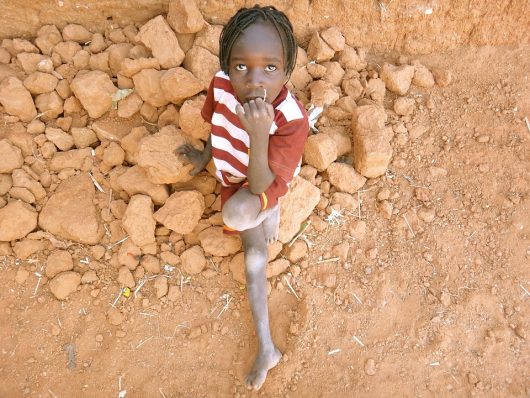
Efforts to reduce global poverty have been largely successful over the past few years. However one of the highest costs is that poverty hinders economic growth. It is a preventable burden that has solutions.
Here are five facts from around the world on how poverty hinders economic growth and what you can do to help reduce global poverty:
1. The effects of poverty cost U.K. citizens about 1,200 pounds per person every year.
According to the Guardian, 25 percent of health care spending is associated with treating conditions related to poverty; 20 percent of the U.K.’s education budget is spent on initiatives, like free school meals, to reduce the impact of poverty.
2. Child poverty reduces U.S. productivity and economic output by 1.3 percent of GDP each year, which costs the U.S. about $500 billion per year.
Economic hardship disproportionately affects children more than any other age group. The Center for American Progress believes impoverished children are more likely to have low earnings as adults and are somewhat more likely to engage in crime.
This “reduced productive activity” generates a direct loss of goods and services to the U.S. economy.
3. Children living in poverty have higher dropout rates and absenteeism, which limits their employability.
The Council of State Governments Knowledge Center found that nearly 30 percent of poor children do not complete high school, which limits future economic success.
A more educated individual is more likely to participate in the job market, to have a job, to work more hours, to be paid more and less likely to be unemployed according to an Economic Policy Institute report from August 2013.
Countries may see a rise in economic productivity by ensuring that children from low-income backgrounds have equitable access and are motivated to stay in school.
4. Poverty increases the risk of poor health; it is a $7.6 billion burden on the Canadian health care system.
The link between poor health and poverty is undeniable; the World Health Organization (WHO) declares poverty as the single largest determinant of health.
Poverty increases the likelihood of developing conditions that are expensive to treat such as diabetes and cardiovascular disease. Therefore, reducing poverty not only cultivates a healthy economy but it can also create a physically healthier society.
5. Billions of people — especially women — remain offline.
Developing countries are paying the cost of poverty while missing out on the economic benefits of increased internet access.
Women and the Web, a study sponsored by Intel, reveals that bringing an additional 600 million women online would contribute at least $13-18 billion to annual GDP across the developing world.
Increasing internet access in developing countries would also increase participation in e-commerce and increase access to educational resources and health services.
Want to help in the global fight to end poverty?
Mobilizing your congressional leaders to endorse poverty-reducing legislation has a widespread impact on reducing the high cost of poverty. For example, the Digital GAP Act aims to bring affordable, first-time internet access for at least 1.5 billion people in developing countries by 2020 and would help to bridge the digital divide. This will greatly facilitate change and decrease the way that poverty hinders economic growth.
Please visit The Borgen Project’s action center for more information on how you can contact your congressional leaders and voice your support for innovative, poverty-reducing legislation.
– Daniela Sarabia
Photo: Pixabay

Hunger in Turkey Remains Prevalent in Rural Areas
However, Turkey still has a long way to go to reduce poverty and hunger domestically — malnutrition is prevalent in its rural regions.
The rural poverty rate in Turkey is 35% compared to the urban poverty rate of 22%. The extreme poverty rate in rural households is at the root of growing hunger in Turkey.
Living in poverty impacts food security, secure employment, education and healthcare — all of which are easier to attain in urban regions of Turkey.
The recent influx of Syrian refugees also placed pressure on food security in Turkey. Turkish communities hosting Syrian refugees have expanded by up to 30%, which increased competition for employment and increased rent prices.
The International Fund for Agricultural Development (IFAD) implemented a plan in 2006 that focused on job-creation to bolster economic prosperity and improve living standards in rural areas to address hunger in Turkey.
The IFAD plan aims to increase participation in Turkey’s labor force by supporting small businesses and encouraging self-employment that generates incremental income.
This strategy also works to improve agricultural initiatives in remote areas of Turkey through the spread of farm mechanization and processing plants.
The United Nations Development Programme (UNDP) launched the Ardahan-Kars-Artvin Development Project (AKADP) to further reduce poverty in Turkey.
By working with local farmers from rural, eastern provinces of Turkey, the AKADP would introduce and encourage sustainable agricultural practices to reduce rural poverty and hunger in Turkey.
The AKADP claims to benefit those living in rural Turkey by increasing livestock and crop productivity, improving knowledge of farm management and strengthening both economic and social infrastructure.
Turkey is making remarkable advances toward reducing hunger because of the UNDP and IFAD projects. The WFP recently acknowledged Turkey for reducing its total undernourished population by half.
The IFAD also recognized Turkey as one of the 79 developing countries that achieved their hunger target of reducing malnutrition and the proportion of underweight children under five years old.
The Turkish government and humanitarian organizations have made it a priority to continue to uplift those in rural areas out of poverty. It is possible to reduce hunger in Turkey by investing in rural areas, which will help its inhabitants forge brighter futures.
– Mariana Camacho
Photo: Flickr
Five Ways Poverty Hinders Economic Growth
Efforts to reduce global poverty have been largely successful over the past few years. However one of the highest costs is that poverty hinders economic growth. It is a preventable burden that has solutions.
Here are five facts from around the world on how poverty hinders economic growth and what you can do to help reduce global poverty:
1. The effects of poverty cost U.K. citizens about 1,200 pounds per person every year.
According to the Guardian, 25 percent of health care spending is associated with treating conditions related to poverty; 20 percent of the U.K.’s education budget is spent on initiatives, like free school meals, to reduce the impact of poverty.
2. Child poverty reduces U.S. productivity and economic output by 1.3 percent of GDP each year, which costs the U.S. about $500 billion per year.
Economic hardship disproportionately affects children more than any other age group. The Center for American Progress believes impoverished children are more likely to have low earnings as adults and are somewhat more likely to engage in crime.
This “reduced productive activity” generates a direct loss of goods and services to the U.S. economy.
3. Children living in poverty have higher dropout rates and absenteeism, which limits their employability.
The Council of State Governments Knowledge Center found that nearly 30 percent of poor children do not complete high school, which limits future economic success.
A more educated individual is more likely to participate in the job market, to have a job, to work more hours, to be paid more and less likely to be unemployed according to an Economic Policy Institute report from August 2013.
Countries may see a rise in economic productivity by ensuring that children from low-income backgrounds have equitable access and are motivated to stay in school.
4. Poverty increases the risk of poor health; it is a $7.6 billion burden on the Canadian health care system.
The link between poor health and poverty is undeniable; the World Health Organization (WHO) declares poverty as the single largest determinant of health.
Poverty increases the likelihood of developing conditions that are expensive to treat such as diabetes and cardiovascular disease. Therefore, reducing poverty not only cultivates a healthy economy but it can also create a physically healthier society.
5. Billions of people — especially women — remain offline.
Developing countries are paying the cost of poverty while missing out on the economic benefits of increased internet access.
Women and the Web, a study sponsored by Intel, reveals that bringing an additional 600 million women online would contribute at least $13-18 billion to annual GDP across the developing world.
Increasing internet access in developing countries would also increase participation in e-commerce and increase access to educational resources and health services.
Want to help in the global fight to end poverty?
Mobilizing your congressional leaders to endorse poverty-reducing legislation has a widespread impact on reducing the high cost of poverty. For example, the Digital GAP Act aims to bring affordable, first-time internet access for at least 1.5 billion people in developing countries by 2020 and would help to bridge the digital divide. This will greatly facilitate change and decrease the way that poverty hinders economic growth.
Please visit The Borgen Project’s action center for more information on how you can contact your congressional leaders and voice your support for innovative, poverty-reducing legislation.
– Daniela Sarabia
Photo: Pixabay
10 Facts About Pakistani Refugees and Asylum in Pakistan
The media’s focus has centered on the Syrian refugee crisis but other people from other nations, including Pakistani refugees, are fleeing their homelands for a better future in America or Europe.
Because it shares its borders with both Iran and Afghanistan, Pakistan has been embroiled in the Iran and Afghanistan wars with the United States. Many refugees have fled to and from Pakistan due to the ongoing conflict.
Here are 10 facts about Pakistani refugees and asylum in Pakistan:
The refugee system in Pakistan is still in flux and requires more strict legislation be passed to help asylum seekers.
Advocates like Malala Yousafzai are doing great work to bring attention to the plight of Pakistanis fleeing Pakistan but there is still work to do.
You can help by contacting your Congress representatives and letting them know you support increasing the International Affairs Budget that goes to help the world’s poor, which often includes struggling Pakistani refugees.
– Bayley McComb
Photo: Flickr
New Global Education Fund Aims to Increase Schooling Projects
Sunny Varkey, an entrepreneur from India who lives in Dubai, launched the Varkey Foundation Challenge Fund in March 2016. The $200,000 global education fund was created to support education projects across the globe.
Varkey set up the Challenge Fund to help accomplish the goals of his non-profit, the Varkey Foundation, which works to ensure every child in the world has access to quality teachers.
The fund strives to provide good teachers and quality education to all children, no matter their circumstances.
“The Challenge Fund looks to support early-stage initiatives which build the capacity of teachers and to strengthen the status of the teaching profession,” Varkey said.
Countries in sub-Saharan Africa, the Arab States and South Asia are facing massive teacher shortages. This has put efforts to provide quality teachers and education for children at risk.
The United Nations Educational, Scientific and Cultural Organization (UNESCO) found that sub-Saharan Africa must raise its current stock of teachers by 68 percent in less than a decade to provide its students with enough teachers.
However, simply hiring teachers will not solve the problem. Educators will need adequate training and support in order to provide quality instruction.
The minimum qualification to become a teacher is approximately nine years of schooling. Unfortunately, 43 percent of teachers in the Congo and 55 percent of teachers in Lao People’s Democratic Republic do not meet this requirement.
The countries that need the most new teachers are also the countries with the least-qualified teachers — this issue is one the Varkey Foundation Challenge Fund hopes to fix.
Varkey’s first projects have already been chosen but non-profit organizations from any country may apply for a portion of the global education fund.
The company will start with organizations in China, Ghana, the Middle East and Ukraine according to The Economic Times. Partner organizations that offer innovative solutions that support the fund’s mission are also offered grants of up to $50,000.
– Alice Gottesman
Photo: Pixabay
Defeat of ISIS Could Mean Better Healthcare for Libyan Citizens
The United States declared it carried out a series of airstrikes on the Libyan city of Sirte, an ISIS stronghold, at the request of the Libyan government in August 2016.
The strikes came after nearly two years of concentrated efforts by the U.S. and Libyan governments to remove ISIS from Sirte; a strategically important city located directly between two of Libya’s largest cities, Benghazi and Tripoli.
The erasure of ISIS’s presence from Sirte means the city’s residents will be able to enjoy a higher standard of living, increased access to food and fuel and control of their incomes. Reclaiming the city from ISIS also means that healthcare in Libya will be one step closer to returning to pre-2011 standards.
Regaining control of Sirte will allow the Libyan government and certain NGOs, such as Doctors Without Borders, to begin safely providing much-needed healthcare services to the city’s residents.
Healthcare providers in Libya will be able to distribute resources across the country more evenly as they are needed, especially between Benghazi and Tripoli.
On a more significant level, overcoming the ISIS presence in Libya will remove one of the larger issues that the country has had to contend with during its rebuilding process, which has been ongoing since the country experienced a wave of revolutionary action during the Arab Spring in 2011.
Currently, the country lacks a central government as numerous opposing factions emerged after the fall of the Gaddafi regime.
A U.N.-backed entity known as the Government of National Accord recently made the most significant strides in uniting the country. They will undoubtedly find the task easier with ISIS’s removal.
A successfully unified government would likely see the return of a functioning and well-equipped healthcare system; something that the country has been sorely lacking since 2011.
According to Doctors Without Borders, many hospitals have been forced to close in recent years due to lack of funds, lack of staff members and concerns about security.
A fully functioning government would be able to solve the coordination problems currently preventing the distribution of funds and supplies.
They would be also able to effectively provide secure environments for hospitals and healthcare providers to safely operate.
More funds, supplies and increased security would allow for the return of foreign-born healthcare workers, many of whom left in the wake of 2011 upheaval.
– Will Clifft
Photo: Flickr
Alleviating Elderly Hunger in South Korea
A quick economic recovery after the end of World War II and the signing of the Korean War Armistice in 1953 has mitigated growing rates of poverty and hunger in South Korea. Poverty, however, is a particular threat to the elderly population in South Korea, which has been aptly named the “forgotten” generation.
According to a 2011 report by the government-funded Korea Labor Institute, 48.6% of the country’s elderly — individuals aged 65 and over — struggled with relative poverty. Relative poverty, as opposed to absolute poverty, is defined as earning 50% or less of the median household income.
More recently, the Organization for Economic Co-operation and Development (OECD) found that approximately half of the country’s elderly were living in poverty in 2015. This poverty rate has been considered the highest among the 34 nations studied by the OECD.
Pastor Choi Seong-Won has been an organizer of a weekly mobile-kitchen for 18 years. He has helped to alleviate the economic hardships of the elderly homeless by providing lunches over the weekends. Seong-Won told CNN that the reason for this emergence of elderly poverty and hunger in South Korea “is the more than two years of serious economic crisis in Korea, along with the global economic downturn. Wealthy people will be fine no matter the situation, but people going through economic struggles say now is a really difficult time.”
Other local churches in Korea have fed 300 to 500 seniors as they lined up for food. However, charitable meals will not solve the problem of elderly poverty and hunger in South Korea alone.
Bernard Rowan, professor of political science at Chicago State University, also discussed the causes of poverty in the Korea Times. Rowan cites population growth among the elderly in Korea shifts in cultural traditions as causal factors. Traditionally, Korean culture has placed great emphasis on respecting seniors. The present-day lifestyle, however, has left many parents and grandparents to find work for themselves.
“That may include their emotional lives too,” Rowan explains. “A great many live incredibly alone.”
A Rise in Suicide Rates
Yet, these rates in poverty among the elderly have not only affected hunger in South Korea but have also contributed to higher rates of suicide. According to Statistics Korea, 50.3 out of every 100,000 Seoul citizens 60 years or older took their lives in 2014, the highest rate among all Korean age groups.
Seventy-year-old Seong Young-sook expressed her struggles to a CNN reporter saying, “I feel that my generation is being forgotten.” She continued, “I tried to kill myself next to my husband’s grave. Someone discovered me and I survived.”
Given that elderly poverty and hunger in South Korea are both affecting suicide rates, strategy and swift action are key to alleviating the problem.
Brainstorming and Enacting Solutions
In order to relieve elderly hunger in South Korea, the government recently updated its 1988 national pension system, now offering a “basic pension” retirement program. This expansion targets the poorest seniors and provides them with less than $200 a month.
The government plans to reach 90% of the population over the age of 64 by 2060.
Rowan also shared strategies to help reduce poverty among the elderly. The author suggests increasing the number of employment and volunteer opportunities for Korean elders in order to tap their knowledge and experience as well as continue to engage the demographic.
Kim Bok-soon, author of the Korea Labor Institute report, also offered a similar solution that goes beyond the pension program. He believes that the government’s labor market policy should be revised to accommodate elderly workers.
Public officials must continue to take action to alleviate elderly hunger in South Korea as well as high suicide rates.
– Priscilla Son
Photo: Flickr
Jeans for Refugees: Celebrities and Artists Join Forces
“Ever seen the news and felt helpless, sad or angry about why things are the way they are? You are not alone!” says the Jeans for Refugees website. “And our mission is to make sure that neither are the millions of refugees who are homeless, hungry and suffering the effects of war and destruction.”
Jeans for Refugees uses art and celebrity culture as tools to raise awareness. Their website explains that the project, “galvanizes celebrity culture to focus a global audience on a global humanitarian cause.”
Actors, artists, models, singers and songwriters have donated jeans that Dar will paint and sell in an auction at the end of October. The proceeds will be donated to International Rescue Committee (IRC) projects that provide relief to millions affected by the global refugee crisis.
Alicia Vikander, Benicio del Toro, Bryan Adams, Daniel Radcliffe, Emma Watson and Ryan Gosling are some of the celebrities involved in the project. Dar paints each pair of jeans to reflect the personality of the celebrity who donated them. Dar told Vogue News that celebrities do not need convincing to donate a pair of their jeans.
“I believe they were convinced the same way that I was convinced myself, and how everyone else became convinced too — this is a humanitarian cause that is much grander than me and everyone involved in it,” said Dar.
Platoon Cultural Development claims Dar is a renaissance man, whose name is big in fashion, textiles, body art, painting and many other artistic fields.
Having Dar’s signature on the Jeans for Refugees movement places the humanitarian cause at the forefront of popular modern art and in the sights of the millions involved in the art community.
The enthusiastic response from celebrities shows how individuals with influence are eager to support a worthy cause. The hope is that others will follow these celebrities’ examples and react as quickly when given the opportunity to help those in need.
Dar’s art has the potential to be a major awareness-raising tool as it reminds people that every life deserves a chance.
– Christina Egerstrom
Photo: Zimbio
Five Strategies to Combat Water Shortages in Pakistan
Pakistan faces an impending water shortage, due to the combination of declining rainfall and groundwater with a growing population. The Pakistan Council of Research in Water Resources (PCRWR) ominously estimates that the supply of water in Pakistan could be critically low by 2025.
WaterAid reports that 16 million people do not have access to clean water. As a result, people are drinking from unsafe and unreliable sources. Urbanization means more concrete and less water seeping back into aquifers. Fortunately, many strategies are being mobilized to treat water shortages in Pakistan before conditions become critical.
Access to Sanitation
Many people in Pakistan do not have access to safe water. WaterAid was incredibly concerned by the high numbers of people without access to proper sanitation. Methods over the past decade emphasize political pressure, education and community projects that all focus on sanitation. WaterAid supplied 229,982 people with safe water in the last year.
Additionally, the Pakistan Water Forum built washrooms in schools to ensure that kids have access to clean drinking and washing services.
Rainwater Accumulation
Poor storage solutions fail to capture 70% of Pakistan’s rain. WaterAid and the Pakistan Water Partnership are helping communities build containers for rainwater collection.
Irrigation Systems
The Punjab Irrigated Agriculture Productivity Improvement Program Project (PIAPIPP) is building better irrigation systems to move water in Pakistan. New systems like drip, bubbler and sprinklers are far more efficient than canal irrigation. PIAPIPP provides support, supervision and education in the areas receiving these systems.
Education
The Pakistan Water Forum is distributing teaching materials created by Project Wet to 10 governmental schools. The project provides free lessons on the water cycle and the importance of conservation and sanitation. After floods, Pakistan Water Forum and the Salvation Army hold community meetings to ensure that residents are aware that floodwater is contaminated.
Water ATMs
The Punjab province is implementing water ATMs that provide water when a card is scanned. This invention, which was created by Punjab Saaf Pani Company (Clean Water Co.) and Poverty Alleviation Lab (IPAL), will provide quality water while tracking the quantity used.
Solar-powered machines will be attached to the filtration plants and provide a maximum of 30 liters a day per family. This new distribution technique is a refreshing change, as only 13% in rural and 42% in urban Punjab province have access to clean water.
The drought is problematic, but its potential dangers are being actively addressed. The broad range of strategies to conserve and distribute water demonstrates how the threat of water shortages in Pakistan can be lessened by preventative action.
– Jeanette I. Burke
Photo: Flickr
A $3.85 Billion Emergency Education Fund is on the Horizon
U.N. Special Envoy for Global Education and former U.K. Prime Minister Gordon Brown announced an emergency education fund, the Education Cannot Wait Fund, at this year’s World Humanitarian Summit in Istanbul. The fund, which hopes to raise $3.85 billion in the next five years, aims to ensure that the millions of children across the globe who are directly affected by emergencies are provided with an education.
What is Considered an Emergency?
Conflict or wars, natural disasters and health-related crises, such as the yellow fever outbreak, are all examples of emergencies.
How is Education Affected by Emergencies?
Children are often displaced or taken out of school due to emergencies and schools may be attacked or taken over by armed forces.
The number of children that do not attend school is alarming. The United Nations Educational, Scientific and Cultural Organization (UNESCO), along with the United Nations High Commission on Refugees (UNHCR), found that only 50% of refugee children are in primary school and 25% of refugee adolescents are in secondary school.
According to The Christian Science Monitor, 2.6 million Syrian children stopped attending school due to Syria’s civil war, 1,200 schools were closed and made into shelters in Iraq and an estimated 400,000 children in South Sudan withdrew from school.
The number of schools attacked or taken over — an estimated four each day, according to UNICEF — is also devastating. Attacks have also occurred in Afghanistan, Yemen, Nigeria and Palestine.
Why is an emergency education fund necessary?
Education received two percent of emergency relief funding, the smallest share of humanitarian funding, according to an Education For All Global Monitoring Report. Only 38% of aid requests for education are met, which is about half of the average for all other sectors.
“Without school, young children caught up in emergencies are at risk of becoming the youngest laborers in the field, the youngest brides at the altar, the youngest recruits vulnerable to extremism and radicalization,” said Brown at the summit in Istanbul.
Education contributes to peacebuilding and the rebuilding of damaged communities. Future generations will be disadvantaged if education is not prioritized in humanitarian response. Uneducated and unprepared citizens may struggle to contribute to their society’s recovery.
Additionally, an emergency education fund provides hope. Brown stated, “We believe that this fund will offer young people hope, because when we ask ourselves what breaks the lives of once thriving young children, it’s not just the Mediterranean wave that submerged the life best, it’s not just the food convoy that does not arrive in Syria, it is also the absence of hope; the soul-crushing certainty that there is nothing ahead to plan or prepare for, not even a place in school.”
The Education Cannot Wait Fund, which was launched with an initial $100 million in donations, aims to reach a minimum of 13.6 million children over the next five years; it aspires to reach up to 75 million children by 2030.
The emergency education fund will support local NGOs, as they are able to provide education more cheaply and quickly than U.N. agencies or the World Bank.
– Alice Gottesman
Photo: Flickr
Education in Botswana: Overcoming a Resource Curse
Although the Ministry of Education in Botswana spends around 30% of public spending on vocational and academic learning, education is only free from the age of 6 to 13.
Richard Khumoekae, Botswana National Front Youth League (BNFYL) President, suggests that Botswana should adopt a model of basic education especially because it currently values natural resources (diamonds, in particular) more than human resources.
Despite the criticism, the Botswanan government has continuously attempted to improve the educational system. Education is the top priority in the national budget. As it relates to primary education, the government aims to make sure that children are literate in both Setswana and English. The primary education curriculum also includes mathematics, science and social science.
Botswana’s “ten-year school programme,” adopted from the idea of Patrick van Rensburg, a South African educationalist, includes both primary and junior secondary levels, focuses on teaching children vocational and practical skills. Primary education is fully funded by the government, and most of the cost of secondary education is also funded by the state. These continuous attempts of the government to improve the education system in Botswana have led to a high literacy level, as more than 95% of the population between 15 and 24 years old can read and write.
Botswana, as a diamond-rich country, managed to overcome a so-called “resource curse”: the notion that countries with abundant natural resources do not perform as well economically as those without. It was one of the fastest-growing economies, with an average growth rate of nine percent per year, between gaining independence in 1966 and 1980. This was mainly due to its successful education reforms.
According to a recent statement, the government of Botswana is looking to diversify away from diamonds, because the precious mineral, like all-natural resources, is not going to last forever. The government is also looking for other ways to increase employment for the youth population.
According to Botswana’s education policy documents over the last 4 decades, the ideal system for education in Botswana promotes four principles: democracy, development, self-reliance and unity. One of the main objectives of the national education is “to attain competence in progress of education.”
Although Botswana still has to make sure that education becomes more compulsory, even for education level above primary, the country continues to make progress for future generations.
– Gulyn Kim
Photo: Flickr