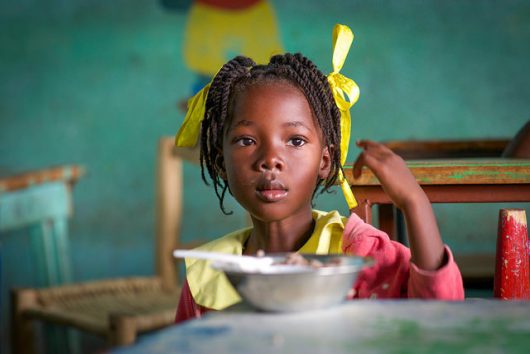
The U.S. House of Representatives passed the Education for All Act of 2016 on September 7 — five days after it was initially listed on the House Schedule. This bill, which promotes quality universal basic education, now moves on to the Senate.
In July, Sen. Richard Durbin (D-IL) introduced near-identical companion legislation to the Senate which is currently being considered in the Foreign Relations Committee.
This low-cost, bipartisan bill aims to amend the Foreign Assistance Act of 1961, asserting that multilateral education aid to developing countries is essential to protecting U.S. national security interests.
The bill requires that the United States government develop a comprehensive strategy, beginning with the designation of a Senior Coordinator of U.S. Government Actions to provide basic education assistance within USAID. This position will coordinate international resources in order to promote universal access to education.
If the Education for All Act continues its momentum, once signed by the President, the bill has the potential to change the lives of millions of children.
Currently, 59 million primary school-aged children are not enrolled in school. Furthermore, 250 million children who do attend school are unable to read, write, or do basic mathematics. Many drop out before the fourth grade.
Gender discrimination, conflict and extremism continue to limit the educational growth potential for at-risk children.
Guided by coordination, sustainability and aid effectiveness, the Education for All Act will support national education plans in developing countries worldwide, creating specific indicators to measure educational quality.
Additionally, the bill focuses on the equitable expansion of education in marginalized or conflict-affected populations, in an attempt to keep schools safe from violence.
“An education is a fundamental tool with which boys and girls are empowered to increase their economic potential, improve their health outcomes, address cultural biases, participate in their communities and provide for their families”, said Nita Lowey (D-NY-17), the original sponsor of the House bill.
According to the bill text, the legislation would promote and contribute to an overall increase in economic growth for underdeveloped countries, improve democratic institutions of government, encourage empowerment for women and young girls while “ensuring that schools are not incubators for violent extremism.” As such, focusing on improving access to education across the globe would promote U.S. national security interests.
Congressional Budget Office estimates indicate that the Education for All Act is low-cost initiative, requiring less than $500,000 per year. Enacting the bill would neither increase net direct spending nor budget deficits in the future.
The Borgen Project applauds the House for passing this important legislation and urges readers to call and email their Senators to support the Education for All Act of 2016. Let’s get this bill to the President’s desk and give millions of children access to quality education.
– Larkin Smith
Photo: Flickr
Learn about the READ Act.

House Passes Education for All Act of 2016
The U.S. House of Representatives passed the Education for All Act of 2016 on September 7 — five days after it was initially listed on the House Schedule. This bill, which promotes quality universal basic education, now moves on to the Senate.
In July, Sen. Richard Durbin (D-IL) introduced near-identical companion legislation to the Senate which is currently being considered in the Foreign Relations Committee.
This low-cost, bipartisan bill aims to amend the Foreign Assistance Act of 1961, asserting that multilateral education aid to developing countries is essential to protecting U.S. national security interests.
The bill requires that the United States government develop a comprehensive strategy, beginning with the designation of a Senior Coordinator of U.S. Government Actions to provide basic education assistance within USAID. This position will coordinate international resources in order to promote universal access to education.
If the Education for All Act continues its momentum, once signed by the President, the bill has the potential to change the lives of millions of children.
Currently, 59 million primary school-aged children are not enrolled in school. Furthermore, 250 million children who do attend school are unable to read, write, or do basic mathematics. Many drop out before the fourth grade.
Gender discrimination, conflict and extremism continue to limit the educational growth potential for at-risk children.
Guided by coordination, sustainability and aid effectiveness, the Education for All Act will support national education plans in developing countries worldwide, creating specific indicators to measure educational quality.
Additionally, the bill focuses on the equitable expansion of education in marginalized or conflict-affected populations, in an attempt to keep schools safe from violence.
“An education is a fundamental tool with which boys and girls are empowered to increase their economic potential, improve their health outcomes, address cultural biases, participate in their communities and provide for their families”, said Nita Lowey (D-NY-17), the original sponsor of the House bill.
According to the bill text, the legislation would promote and contribute to an overall increase in economic growth for underdeveloped countries, improve democratic institutions of government, encourage empowerment for women and young girls while “ensuring that schools are not incubators for violent extremism.” As such, focusing on improving access to education across the globe would promote U.S. national security interests.
Congressional Budget Office estimates indicate that the Education for All Act is low-cost initiative, requiring less than $500,000 per year. Enacting the bill would neither increase net direct spending nor budget deficits in the future.
The Borgen Project applauds the House for passing this important legislation and urges readers to call and email their Senators to support the Education for All Act of 2016. Let’s get this bill to the President’s desk and give millions of children access to quality education.
– Larkin Smith
Photo: Flickr
Is Eskimology Frozen in Time?
The world’s only college degree in Eskimology may no longer be available this fall. The University of Copenhagen has suspended Eskimology courses for the 2016 school year due to recent budget cuts.
The classes are set to resume next fall, however, the future looks bleak for Eskimology since more budget cuts are expected in the future. A few other subjects have been cut as well, with many focused on regional studies, such as South East Asian studies.
What exactly is Eskimology? The field covers the history, languages, and culture of arctic peoples. The origins can be traced back to the 18th century and the writings of Hans Egede. The University of Copenhagen began to offer courses in the department in the 1920s. The university’s official Department of Eskimology was founded in 1967.
Although the current Eskimology department is small, it is not going down without a fight. Ecologists argue the field is even growing in importance as global warming and mining concerns (two major issues for the Eskimo/Inuit community) take center stage.
How does the decline in Eskimology education impact its subjects? Because of its colonial ties to Denmark, much of the coursework at the University of Copenhagen focuses on the people of Greenland. Recently, Greenland — which has a majority Eskimo/Inuit population — has been grappling with issues of independence, environmental concerns, and an international battle over their coal and oil reserves.
In the face of chaos, Greenland’s government often sought the advice of Copenhagen’s top Eskimologists. Additionally, the University of Copenhagen was, until this year, the only university in the world (outside of Greenland) to offer Greenlandic language courses.
Maintaining the friendly connection between Greenland’s Eskimo/Inuit population and the University of Copenhagen is also vital during this time as debates rage over the status of Greenland’s independence. Tine Pars from the University of Greenland advised, “We have had a lot of collaboration with Eskimology and Arctic Studies at Copenhagen University over the years… these academic collaborations have been good for research and teaching, and good for both countries.”
The decision to cut Eskimology has been a controversial one, especially since many Danes believe they have a responsibility to protect the Greenlandic culture. One Danish newspaper states, “If Greenland’s economy and business shall develop in the coming years and the massive social problems are addressed, this requires knowledge and reciprocal engagement.” As Greenland faces an uncertain future, many Danish and Greenlandic citizens push for the resurgence of Eskimology.
– Carrie Robinson
Photo: Flickr
Niti Aayog Addresses the Poverty Line in India
Niti Aayog, the National Institution for Transforming India (of the Government of India), is redefining the poverty line in India. The program functions to assess the impact of the government’s anti-poverty schemes and other welfare initiatives.
The BJP Government of India plans to address the definition of the poverty line in India by having Niti Aayog set up a panel of experts to devise a new poverty line.
Niti Aayog has been measuring the impact of the government’s anti-poverty schemes and welfare initiatives. With this information, the institution plans on determining a poverty reduction target in addition to a 15-year vision document and seven-year strategy paper outlining poverty reduction tactics.
The Brainstorming Process
It is important to note that the new poverty line will only define poverty; it will not be used to distribute resources under government schemes. The change will be important on how it affects the Niti Aayog measurement of the impact of poverty reduction programs.
The decision to address the poverty line arose after controversies surrounding the issue during the United Progressive Alliance regime. Once discussion began on the issue, the parties involved decided that the current poverty line defined as the Tendulkar Line was too low and the Rangarajan Line was too high.
The new poverty line will be based on the latest available National Sample Survey Office’s household consumption expenditure survey.
The Indian Rupee, Rs, buys more in India relative to what the dollar buys in the U.S. The new poverty line will reflect a weaker dollar, relative to the country of India.
Suresh Tendulkar proposed the Tendulkar Line determining that Indian citizens spending at least Rs 27 in rural and Rs 33 in urban areas (2011-2012) lived above the poverty line. As a reference,$1 is about 67 Rs today.
The New Poverty Line
Chakravarthi Rangarajan proposed the Rangarajan Line, raising the poverty line in rural areas to Rs 32 and Rs 47 in urban areas respectively. Chakravarthi Rangarajan’s method of determining the poverty line is based on the monthly expenditure of a family of five. In theory, it is cheaper to live in a family of five than single.
Although the new poverty line will be equivalent to a higher U.S. dollar at the Tendulkar Line, it will still be relative in real terms in India. The changing poverty line drives up the amount of U.S. dollars a person can survive on, even though poverty itself is changing very little. For example, $1.90 in 2011 bought approximately the same things as $1.25 did in 2005 in a poorer country.
The new poverty line will prospectively be made higher than the current Tendulkar Line. With this change, one can determine that as the prices in poor countries become lower, their currencies become stronger in purchasing power.
ICP price surveys have concluded that price levels in poor countries are lower than they were in previous years, relative to those in the U.S. World Bank.
Niti Aayog acts as a think tank for the Government of India, providing directional and policy inputs for the country and designing strategic and long-term policies. The group also provides technical advice to states, and replaced the Planning Commission to better serve the needs of the people of India.
Niti Aayong serves as a good omen for increased progress within the fiscal realm of India, but only time will tell if the group is actually invaluable.
– Kimber Kraus
Photo: Flickr
Bringing Immunization Training to Nigeria
Last November, the Gates Foundation hosted the Teach to Reach: Innovative Methods for Immunization Training summit in Seattle. Some of the Nigerian summit attendees have since returned to their home country to share what they have learned about immunization training.
The Teach to Reach website describes the event as “a resource for immunization professionals to share and explore recent advances in educational psychology and instructional design, and to discuss how best to use new strategies and tools to improve immunization training.”
Doctor Bassey, the current Head of Routine Immunization and Essential Services at the National Primary Health Care Development Agency in Nigeria leads a group “working to revitalize the national immunization training task team.” Two of his major partners are Doctors Abiola and Abisola from Clinton Health Access Initiative.
The team has faced many challenges in an attempt to increase immunization training in the country. One of the major issues is ensuring access to every health facility in the country of 180,000 people. The doctors are also pushing for each immunization center to use the same training manuals.
Abiola and Abisola have done major work in the state of Lagos to provide more hands-on rather than theoretical training– for instance using life-size dolls to practice delivering immunizations. They report that Lagos State Government officials have been very supportive of their efforts.
Increased immunization training also works to advance adult learning and strengthen the skilled labor market within Nigeria.
Bassey, Abiola and Abisola are not the first to focus on immunizations in Nigeria. Nigeria has worked to increase immunizations and improve training within the country for decades. Nigeria’s Expanded Programme on Immunization began in 1979, and 20 years later, the fight against polio has resulted in a renewed focus on vaccinations. Thus, the resulting creation became the National Programme on Immunization.
Despite the countless initial obstacles, the future of immunization training in Nigeria looks bright and displays the success of the Teach to Reach Summit message.
– Carrie Robinson
Photo: Flickr
Ten Facts about the Nigerian Refugee Crisis
Although most know of the atrocities committed by ISIS and the millions of displaced refugees throughout The Middle East and Europe, mainstream media has very much undercovered the Sub-Saharan terrorist group, Boko Haram. Consequently, very few are aware of an equally saddening Nigerian refugee crisis and the need for foreign aid.
Boko Haram is an Islamic extremist group based in northeastern Nigeria that has allied itself with ISIS. Although an extreme religious group, it has targeted Christians and Muslims alike, rebelling against the Nigerian government to form an Islamist state.
Since 2009, the group has killed more than 20,000 and displaced more than 2.3 million, of whom 1.3 million are children. In 2014 alone, the group killed more than 6,600 and abducted 276 schoolgirls from Chibok, Nigeria. In 2015, The Global Terrorism Index named Boko Haram the world’s deadliest terror group, ahead of ISIS. Just under 2 million have been displaced in Nigeria so far, according to the UNHCR.
Unlike Syrian refugees, who have escaped to countries with reasonable resources and social benefits, Nigerians are surrounded by countries with much less wealth. With so much less news coverage, western citizens are also less likely to contribute to this cause.
Here are 10 facts about Nigerian refugees:
In a northeast Nigerian aid camp, more than 1,200 people have died of starvation and illness. One-fifth of the 800 children suffered from malnourishment and almost 500 had died.
Maiduguri, Nigeria alone is estimated to host between 1.2 million to 2 million refugees.
In August of 2016, the government began to investigate the theft of food from refugee camps by officials.
In one feeding center, between 10 and 25 percent of children die.
Without proper food or drinking water, refugees must also endure temperatures easily over 100 degrees Fahrenheit.
The UNHCR has requested $30 million in funding but received only $12.5 million from the U.S. government.
Beyond refugees, around 5.5 million people do not have enough to eat in Nigeria.
Niger is facing its own food crisis, even as more than 87,000 Nigerian refugees enter the country.
Just over 31,000 Nigerians have requested asylum in Italy, with more than half in Italy.
Only five percent of Nigerian migrants are granted refugee status in Europe.
As the U.S. focuses on its own refugee crisis from South America and Europe focuses on a primary stream of refugees from the Syrian/Iraqi region, it will be difficult to find financially capable nations to help Nigerian refugee crisis. As for countering Boko Haram, mainly Niger, Nigeria, Chad, Benin and Cameroon are actively fighting the terror group.
If not militarily, perhaps the western world may consider helping refugees by welcoming them into its own societies or sending money to refugee camps. China, which has pledged $60 billion to invest in Africa, may also want to secure its investment and social standing by aiding refugees and the Nigerian government.
– Henry Gao
Photo: Flickr
Addressing Top Diseases in Costa Rica
Costa Rica is best known for its beautiful beaches and mountains, which make it a tourist hot spot for much of the year. However, poverty impacts 21.7% of the population and this poverty brings a heightened risk of disease.
As a tropical country, tourists and locals alike are at risk of contracting illnesses related to insect and mosquito bites. Diseases in Costa Rica like dengue fever and chikungunya are especially of note considering their prevalence. Both are transmitted through mosquito bites and have similar symptoms including fever, headaches and joint pain.
Dengue fever, which is now present in 73 of Costa Rica’s 81 cantons, is usually an unpleasant but not fatal illness so long as it does not develop into severe dengue, which has more severe effects. Chikungunya is also typically not fatal, although the symptoms can be debilitating.
The Zika virus has recently been the subject of much study and media attention. Zika is another disease in Costa Rica that threatens the population. Like chikungunya and dengue, it is spread through mosquito bites. A June 15 report confirmed 107 cases of Zika in the country.
Costa Rica’s year is divided into two seasons, the rainy and the dry, and during the rainy season, mosquito populations increase due to the increase in still water. Costa Rica is taking the risk of disease seriously and has begun several important steps in the prevention of these illnesses.
Their efforts include fumigation campaigns across the country as well as attempts to rid communities of objects that collect still water and create additional breeding grounds for disease-carrying mosquitos. Another disease-fighting strategy rests in Spinosad, a product of bacterial fermentation.
This chemical is non-toxic to humans and yet has a deadly effect on insect larvae making it a perfect solution to the problem of mosquito breeding grounds. The Spinosad pills can be used in swimming pools, ponds and fountains.
While mosquitos are a significant cause of diseases in Costa Rica, there are many ways to prevent these types of illness. Costa Rica shows impressive self-sufficiency in their fight to end Zika, dengue and chikungunya.
– Jordan Little
Photo: Flickr
Why Teaching Abroad is Mutually Beneficial
Teaching abroad is an incredible opportunity to give back, and the experience can provide an individual with a multitude of unanticipated advantages. In addition to experiencing a different culture, teaching abroad can vastly improve one’s chances of finding a career in a variety of fields.
The majority of teaching abroad programs aim to teach English in impoverished regions around the world, so as to improve children’s education. Such skills/lessons are desperately needed because according to a reputable teaching abroad program, Sudan Volunteer Programme (SVP), numerous local teachers in these countries do not have the proper skill-sets to teach English, or the school does not have enough money to pay their teachers.
In such cases, volunteers are needed to help educate children and give them the proper skills and opportunities to attain a successful profession. This type of education proves tremendously impactful, as speaking English can significantly increase a child’s chance of professional success down the road.
According to the University of Toronto, teaching abroad can be equally advantageous for the teacher volunteer’s career opportunities. To teach abroad, the volunteer generally does not have to be a certified teacher or have any particular foreign language skills to serve for an organization. Many volunteers can be ‘hired’ with a bachelor’s degree in just about anything, an interest to learn about foreign cultures, a good attitude, a passion for education and seriousness about the job.
Having taught underprivileged children in a foreign country provides one with distinct cultural and teaching experience that can galvanize one’s career. Recent graduates with bachelor’s degrees who teach abroad are often hired full time into high standing positions that they may not have otherwise qualified for.
According to WorldTeach, an accredited teaching abroad program, numerous individuals go into academic careers, international development, educational or volunteer organizations, teachers, school administrators and in business and multi-national companies. Some have become leaders in the U.S. Congress, and one has even served as a U.S. Ambassador.
Though living in a foreign country for a summer or a year may seem daunting, the benefits that can come from the experience prove to be well worth any initial hesitation. From giving children a shot at a better future to becoming more culturally aware, teaching abroad is an incredible opportunity that will boost one’s personal growth and a chance at professional success.
– Bella Chaffey
Photo: Flickr
UK Makes Girls’ Education a Priority
The U.K. has recently pledged to put £100 million towards education for girls in developing countries.
The initiative was announced at the Girls Education Forum in London, with a particular focus on the role that technology will play in reducing the number of girls unable to attend schools around the world. According to the BBC, the initiative will be dispersed mainly across sub-Saharan Africa and will provide for smartcards (to monitor attendance and incentivize families) and satellite broadband (for internet connectivity in more rural areas).
Education’s Effects
The chair of the Global Partnership for Education, Julia Gillard, praised the initiative to the BBC and said, “When we educate girls, we see reduced child deaths, healthier children and mothers, fewer child marriages and faster economic growth.”
The pledge comes as a follow-up to Britain’s Girls Education Challenge. The challenge, launched in 2012, aims to give £300 million to 37 projects in 18 countries to ensure that girls in developing countries have access to the education they need to rise up out of poverty.
Education for girls in developing countries is important for a variety of reasons. Aside from the moral obligation to give girls the opportunity to take advantage of their right to an education, educating women and girls has proven economic and sociological impacts.
Female Empowerment
According to UNICEF, gross domestic product per capita increases with the enrollment of girls in primary school. Educated girls also learn the skills they need to make healthier life decisions, both for themselves and for their future families. Mothers are also much more likely to send their daughters to school if they too received an education, so providing girls with schooling increases the prospects of future generations.
This pledge comes on the heels of a similar initiative to increase access to education for girls: the iMlango program. Since its inception, the program has provided Android tablets, broadband internet, and interactive learning tools to 195 schools in Kenya.
IMlango has been touted as a success, increasing attendance in schools by 15%, and officials hope that the new initiative will create similar results. Girls across the world depend on organizations and programs such as these to boost not only their education, but their quality of life as well; thankfully, it seems that these females are in very capable hands.
– Sabrina Santos
Photo: Pixabay
Seven Facts About Poverty in Poland
Poland is not a poor country by any means, but the region has historically possessed little wealth due to occupation, wartime and political mistreatment. As such, alleviation of poverty in Poland has been a focal point of recent Polish governments. Discussed below are the leading facts about poverty in Poland, and how the issue is addressed at the national and international level.
7 Key Facts About Poverty in Poland
These facts about poverty in Poland only begin to scratch the surface of such a complex region. This eastern European nation exudes fiscal prosperity amidst underlying unemployment and rural poverty, a conundrum that needs to be solved.
– John English
Photo: Flickr
Malnutrition in China: Overcoming Hunger in Rural Areas
Due in part to its economic growth, China became the first country to accomplish the United Nation’s Millennium Development Goal of reducing the number of people living in extreme poverty and hunger in half. Unfortunately, there are still 150 million people in China that are considered undernourished. Most of those that suffer hunger are women, children and elderly people from rural regions.
While China has almost eliminated urban poverty, with only 1.6 percent of the urban population living under the minimum income line set by the government, much of the rural population has yet to see the benefits of growth.
Reforms have produced an average per capita income of about $17,000. However, when compared with the median per capita figure of $6,000, it is apparent that new wealth has not been distributed evenly.
Today, nearly half of China’s 1.3 billion people live in rural areas. More than 70 million of rural residents live on less than a dollar a day.
Although most rural children receive enough calories to survive, the problem of malnutrition in China is a question of nutrients. Up to 51 percent of children between the ages of eight and twelve suffer from anemia in provinces such as Qinhai. Several experts estimate that about half of all infants in rural areas are anemic as well.
Malnutrition in China saddles children with a severe disadvantage — stunted brain growth. Lu Mai, the secretary-general of a government-run charity, argues that rural children are far behind urban children in academics because of their eating habits.
China’s government has already taken steps to combat these health problems. Schools in 600 rural villages provide daily nutritional supplements to students during lunch. Despite these admirable governmental efforts, Mr. Lu affirms that much more needs to be done.
Mr. Lu, along with a research group out of Stanford University, advocates the distribution of a powdery nutritional supplement called ying yang bao, which is rich with iron, zinc, calcium and a variety of vitamins.
Sprinkling this mixture on meals once a day will make up for dietary deficiencies, and it will only cost 32 cents per packet to make and distribute. Studies in 2006 confirm that the supplement significantly reduces anemia and improves growth, but parents struggle with consistently feeding the nutrient-rich mix to their children.
China’s government has not given up. The drive of the country’s current five year plan is to end all poverty in China by 2020. While this may sound ambitious, China has an incredible recent history of eradicating poverty and effectively lifting over 800 million people out of extreme disparity since the late 1970’s. If this massive country is able to keep at its current pace, China may be the first country to have a poverty and hunger free population.
– Emiliano Perez
Photo: Flickr