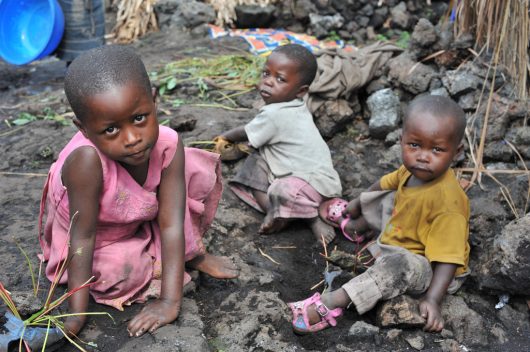
In July, the Rwanda Biomedical Center and UNICEF ran a health awareness campaign in Rwamagana, which revolved around the continued fight against malnutrition in Rwanda.
Rwanda has made impressive developmental progress since the tragedy in 1994. According to the Ministry of Health, the mortality rate for children under 5 has declined more than 60 percent since the 1990s.
Despite this progress, the stunting of children under 5 remains at 38 percent, due to chronic malnutrition, nutritional imbalance and food insecurity. The recent campaign in Rwamagana reported that this number could be cut in half, as long as parents personally ensured that their children were eating the recommended diet.
Stunting is particularly prevalent in rural areas, for these regions are typically the most impoverished and the least educated – both critical influences on the likelihood of malnutrition.
Stunting hinders physical and psychological growth, permanently affecting a child’s long-term development and capacity. Given these dire consequences, the government has scaled up community health outreach, mobilizing door-to-door nutrition education in the most remote areas.
Malnutrition doesn’t usually take lives directly, instead increasing childhood susceptibility to death from diseases such as pneumonia, diarrhea and HIV. Particularly, malnutrition decreases the efficacy of antiretroviral therapy, making this chronic condition a large roadblock in the management of the HIV pandemic in Rwanda.
In rural areas, the availability of nutritious food is scarce, especially during agricultural lean periods. The typical diet of cereals and tubers is completely nutritionally imbalanced, leading to deficiencies in protein, iron, vitamin A and iodine.
The government has been working ceaselessly to reduce malnutrition in Rwanda through community organization, mass media initiatives and investment in a National Nutrition Policy. This policy aims to promote sectoral collaboration, simultaneously reducing poverty through the investment in human health.
The Rwamagana campaign targeted lifestyle changes as essential components of the fight against chronic malnutrition. These grim statistics could be transformed through increased parental responsibility, the promotion of alternative sources of income during agricultural setbacks and the assistance of smallholder farmers.
Food insecurity is a primary element of malnutrition, so linking small farmers to their markets is essential. WFP’s Purchase for Progress does just this, providing strength, support and security to rural Rwandan economies.
The WFP and the government additionally fight malnutrition in Rwanda through grassroots community involvement programs, including home grown school feeding programs, monthly childhood growth monitoring and baby-friendly hospital initiatives to promote breastfeeding.
The government of Rwanda understands that the reduction of malnutrition is a complex feat; requiring support from many sectors, such as health, education, commerce and agriculture. Ensuring equal access to nutritional education and treatment is crucial to countrywide hunger alleviation.
Chronic malnutrition in Rwanda interferes with many of the Millennium Development Goals, as it sustains poverty, obstructs educational progress and facilitates the detrimental impact of preventable diseases. With continued focus and diligence, Rwanda can continue to make progress in the promotion of its children’s health.
– Larkin Smith
Photo: Flickr

The Continued Fight Against Malnutrition in Rwanda
In July, the Rwanda Biomedical Center and UNICEF ran a health awareness campaign in Rwamagana, which revolved around the continued fight against malnutrition in Rwanda.
Rwanda has made impressive developmental progress since the tragedy in 1994. According to the Ministry of Health, the mortality rate for children under 5 has declined more than 60 percent since the 1990s.
Despite this progress, the stunting of children under 5 remains at 38 percent, due to chronic malnutrition, nutritional imbalance and food insecurity. The recent campaign in Rwamagana reported that this number could be cut in half, as long as parents personally ensured that their children were eating the recommended diet.
Stunting is particularly prevalent in rural areas, for these regions are typically the most impoverished and the least educated – both critical influences on the likelihood of malnutrition.
Stunting hinders physical and psychological growth, permanently affecting a child’s long-term development and capacity. Given these dire consequences, the government has scaled up community health outreach, mobilizing door-to-door nutrition education in the most remote areas.
Malnutrition doesn’t usually take lives directly, instead increasing childhood susceptibility to death from diseases such as pneumonia, diarrhea and HIV. Particularly, malnutrition decreases the efficacy of antiretroviral therapy, making this chronic condition a large roadblock in the management of the HIV pandemic in Rwanda.
In rural areas, the availability of nutritious food is scarce, especially during agricultural lean periods. The typical diet of cereals and tubers is completely nutritionally imbalanced, leading to deficiencies in protein, iron, vitamin A and iodine.
The government has been working ceaselessly to reduce malnutrition in Rwanda through community organization, mass media initiatives and investment in a National Nutrition Policy. This policy aims to promote sectoral collaboration, simultaneously reducing poverty through the investment in human health.
The Rwamagana campaign targeted lifestyle changes as essential components of the fight against chronic malnutrition. These grim statistics could be transformed through increased parental responsibility, the promotion of alternative sources of income during agricultural setbacks and the assistance of smallholder farmers.
Food insecurity is a primary element of malnutrition, so linking small farmers to their markets is essential. WFP’s Purchase for Progress does just this, providing strength, support and security to rural Rwandan economies.
The WFP and the government additionally fight malnutrition in Rwanda through grassroots community involvement programs, including home grown school feeding programs, monthly childhood growth monitoring and baby-friendly hospital initiatives to promote breastfeeding.
The government of Rwanda understands that the reduction of malnutrition is a complex feat; requiring support from many sectors, such as health, education, commerce and agriculture. Ensuring equal access to nutritional education and treatment is crucial to countrywide hunger alleviation.
Chronic malnutrition in Rwanda interferes with many of the Millennium Development Goals, as it sustains poverty, obstructs educational progress and facilitates the detrimental impact of preventable diseases. With continued focus and diligence, Rwanda can continue to make progress in the promotion of its children’s health.
– Larkin Smith
Photo: Flickr
Great Strides for Education in Nigeria
Children walking to school: an image many take for granted and expect as a given in the world today. But in many places, such as Nigeria, not every child has the opportunity to learn.
Nigeria, the most populated country in Africa, comprises 20 percent of the total children not currently attending school in the world. And the problem is far from stagnant as there are 11,000 babies born every day in the country.
Politically insecure and vulnerable to attack, Nigeria’s children are at great risk for not receiving an education. The northern part of the country faces a devastating statistic as two-thirds of the children are illiterate.
An attack in Northern Nigeria forced 2.2 million people to flee their homes, resulting in the displacement of families whose children no longer have a school to attend. In 2015, USAID set out to change the status quo, teaming up with state officials and a number of non-profit organizations to improve education in Nigeria.
They developed the Education Crisis Response Program: a program designed to relieve the local schools of some of their overwhelming demands by providing education for children between the ages of six and 17 in three different Nigerian states.
Two hundred ninety-four learning centers were built for classes three days per week. In-class meals and necessary school supplies were provided. The Education Response Program did not stop there. Recognizing the possible trauma many of these children may have experienced in the rapid displacement of their families from their homes, the program also provides psychological treatment.
Teachers in these learning programs have been trained to approach their classrooms through a psychosocial mindset. They encourage group work, remain aware of the history these children hold and provide open student-teacher interaction to help them feel safe and comfortable back in the classroom.
The Nigerian government supports this program and will be entrusted with the task of carrying its essential goals through when the program is phased out in 2017. The country is also planning financially so that the education response will grow with time.
Furthermore, the World Bank announced in September of 2016 a budget of $500 million for basic education in Nigeria.
Nigeria joined the Global Partnership for Education in 2012, established to increase the amount of people receiving quality, basic education. This partnership has worked with each state to develop a plan “to outline its priorities and objectives.”
In addition, an organization called the Nigerian International Athletes Association (NIAA) will hold a conference in October. The NIAA is a union based in the United States comprised of former Nigerian athletes seeking to improve the future of athletics, education and healthcare in their home country.
According to Premium Times, the NIAA’s president plans to use the conference’s funds “to support kids from disadvantaged homes with their education and help talented young athletes to combine sports and education.”
Perhaps the NIAA’s efforts combined with those of USAID and World Bank will result in not only the maintainence of millions of children’s education, but the advancement as well. With teachers trained to care for them beyond the classroom and former athletes enabling them to chase their dreams, education in Nigeria is surely on the rise.
– Rebecca Causey
Photo: Flickr
Education in South Africa
How Can Vocational Training Help Developing Communities
Vocational education aims to provide the skills and training for individuals to pursue industrial and commercial occupations. It works as a method that is taught in professional schools or even job training workshops. The methods gained popularity after the Second World War as an alternative college education concerned with skills and specialized training methods.
In Malawi, the government adopted vocational training to promote self-employment and help vulnerable youth seek better opportunities. The government worked with researchers to evaluate and study how the program will affect development and improve economic conditions. The results indicated increased economic development and improved well-being of youth. The results also indicated that there is an increased likelihood of individuals starting their own businesses. The youth also invested more time on their skills development.
The results of a vocational training session for young women in Delhi showed an increased in employability, increased wages and a higher likelihood of owning a sewing machine. This increased employment could drive the economy and increase the pace of development in India as more women are entering the productive labor force. Even though such training might be costly, their impact on employment as a global issue is important.
Lastly, in Morocco, youth make up about one-third of the population. Unfortunately, 40 percent of these youth are out of school. Hence, vocational training can significantly impact the youth conditions in Morocco. USAID along with other partners locally, work to provide alternative sustainable opportunities.
The training revolves around equipping the youth with skills required to enter the workforce and to connect them to high-level demanding jobs. The training also focuses its attention in underprivileged neighborhoods in the north of Morocco.
– Noman Ahmed
Photo: Flickr
The Apparent Project Saves Children from Orphanages
After Haiti’s 2010 earthquake, an influx of international aid entered the country. This relief funded the construction of many orphanages housing about 32,000 children.
Out of 760 orphanages, roughly 80 percent of these children have living parents who want to take care of them, but lack access to adequate health, education and social services.
Shelley Clay and her husband moved to Port-Au-Prince in 2008. They were looking to adopt a child but quickly discovered the overflow of children whose parents still continued to visit them. On one block, according to Clay, there were 20 orphanages which essentially operated as 24/7 day-care services.
Clay found famished young boys were stealing eggs from their equally impoverished neighbors. Single mothers were looking for work, but the market was limited.
To provide context, here are some more facts on poverty in Haiti:
In 2008, there were 380,000 orphaned Haitian children. Clay found many of the missionaries wanting to make a difference by investing in the construction of orphanages fueled a larger problem. With public housing services, feeding programs and food aid, the problem is never corrected, Clay told Deseret News.
She realized creating jobs would start to solve the issue one family at a time, so she launched a non-profit program called the Apparent Project. Clay saves many children from orphanages, keeping families together, by providing them work and a roof over their head.
Over the last couple years, she has helped 220 people gain income by transforming Haiti’s garbage into an object value — jewelry. Clay provides jobs to local women by recycling these natural resources for basic life necessities.
Now the artisanal jewelry is sold in home tupperware-style parties and small partnerships with stores, such as the GAP and Donna Karan. In December of 2011, The Apparent Project sold $100,000 in jewelry. This moved Haitian employees from conditions of poverty to middle class status while saving children from orphanages.
– Rachel Williams
Photo: Flickr
How South Sudan Is Improving Its Education Sector
As the world’s newest country, South Sudan has made strong progress in improving its education sector. In just four years, the enrollment of children in primary school has doubled, and the chance for a child in South Sudan to receive schooling has increased by 20 percent in the past decade. South Sudan’s Alternate Education System is also helping over 200,000 youth and adults catch up on their education.
Unfortunately, education in the country is still considered among the worst in the world. The adult literacy rate is only 27 percent and 70 percent of children ages 6-17 have never set foot in a classroom. The dropout rate for children in their first six years of primary education is 60 percent.
Overcrowded primary schools are extremely common and qualified teachers are few and far between. Only 15 percent of teachers in South Sudan are qualified with just three out of five teachers receiving a salary from the government.
In a World Bank article, the Country Director for South Sudan stated that in order to catch up with the rest of Africa, South Sudan needs consistent investment in classrooms, more schools in rural areas, more trained teachers and an efficient distribution of educational resources.
In order to make those improvements and boost education in South Sudan, USAID has implemented various programs and projects benefiting both students and teachers across the country.
USAID has greatly improved the accessibility of education in South Sudan. The Agency has contributed to the construction and rehabilitation of 140 primary schools and five secondary schools across the country.
In the past five years, the Agency has awarded over 9,000 scholarships to girls and disadvantaged boys who were previously unable to afford secondary education.
USAID’s South Sudan Teacher Education Program is helping to improve teacher qualification through in-service training and the implementation of a curriculum and professional teaching standards.
In 2012, the Agency provided technical assistance for the drafting and passage of South Sudan’s General Education Bill. According to a member of South Sudan’s National Legislative Assembly, “The bill provides for compulsory and free education for all citizens of the country through primary level.”
Although education in South Sudan is improving, there is still a lot of ground to make up. Organizations like USAID, UNICEF and the World Bank are working with the government of South Sudan to develop a stronger, self-sustaining education system.
– Kristyn Rohrer
Photo: Flickr
Hunger in Venezuela: Solving the Country’s Food Crisis
Venezuela, a country on the northern coast of South America, is well known for its lush forests and beautiful coastal view. Unfortunately, the breathtaking scenery does little for combating the growing concern of hunger in Venezuela.
Since Nicolás Maduro’s assumption of the Venezuelan presidency in 2013 after Hugo Chávez’s death, polls have found that 87 percent of citizens do not have enough income to provide food for their families.
Of their measly income, 72 percent is spent on food alone. To afford enough food to feed a family, the Center for Documentation and Social Analysis estimated a family would need the equivalent of 16 minimum-wage job salaries.
Inflation has also risen to over 180 percent since December 2015. This is partly because of a drop in oil prices that reduced Venezuelan foreign earnings by two-thirds. However, it also caused in part by the formation of Local Committees of Supplies and Protection (known locally as CLAP).
CLAP regulates when people can go shopping at the supermarket and even what they are allowed to buy based on the last digit of their identity card. For instance, if the identity card ends in a zero or one, a citizen might be able to buy groceries on Monday. They receive staples such as flour, pasta, and soap at a controlled price; the government controls even hunger in Venezuela.
These regulated shopping trips are not enough for struggling Venezuelans; lately, protests have become more widespread and even physically violent. In Cumaná, protestors marched on a supermarket, defying the grocery-shopping schedule implemented by the government, to empty the entire supermarket of food.
Riots like the one in Cumaná have occurred across Venezuela, with as many as 50 riots in the span of two weeks.
In addition to growing participation in supermarket riots, citizens have been calling for President Maduro’s resignation, blaming his socialist policies and exploitation of farmers for the current food crisis. Maduro’s response has been to blame bordering countries for hoarding food and bombing Venezuelan power plants.
Keep an eye on the Borgen Project for more information on hunger in Venezuela and developments in the Venezuelan food crisis.
– Bayley McComb
Photo: Flickr
Poverty in Mayotte
Although it is difficult to find detailed information about the condition of poverty in Mayotte due to its small population and complex relationship with France, development remains a major problem facing the country.
The 247,386 people of Mayotte are considered French citizens and live under French law. While Mayotte’s connection to France provides some financial advantages, most individuals identify culturally and religiously with the Majority Muslim Comoran people. Mayotte became a member of the European Union in 2014.
This past spring, unrest over poverty in Mayotte came to a head as violent riots led by trade unions broke out in the streets. One activist shares his concern with French news station France 24, “a primary school student on the French mainland gets €7,400 (from the government)… In Mayotte, it is €4,300 ($4,850). That is injustice”.
Despite their status as a French territory, many Mahorais feel neglected by the French government. In 2011, over 84 percent of Mahorais lived below the poverty line compared to just 16 percent in France. There is also an extreme disparity between the upper class — which includes many French expatriates — and lower class of Mayotte. Of note, Mayotte’s GDP per capita is less than a quarter (€7,99) of France’s.
Mahorais also face concerns of rapidly increasing immigration — mainly from the Surrounding Comoros Islands — from individuals seeking French citizenship and a presumed higher standard of living. More than 40 percent of the Mayotte population were born outside of the country and immigrated to look for work.
In May, local anti-immigration groups took actions to expel many of the immigrants (over 700 people in one village alone), regardless of their legal status. Both French and Mahorai officials have spoken out against the forced expulsions. However, these events also prove to French officials that the Mahorais expect their concerns to be taken seriously.
In light of the unrest, France has since sent numerous officials to Mayotte to try to ease tension and put an end to the violence.
Politically and financially Mayotte is aligned with France, but they fit in more with the geography and culture of the Comoros Islands. However, due to its close ties to France Mayotte is much wealthier than surrounding islands. Hopefully, the territory can use its position within the French government to seek further assistance regarding poverty in Mayotte and unrest due to growing immigration concerns.
– Carrie Robinson
Photo: Flickr
Collective Action to End Poverty in the Central African Republic
Following a 2012 armed insurgency that fought for national control, a coalition of rebel militia factions started the Séléka movement and installed a new ruling regime that led to an unprecedented level of poverty in the Central African Republic.
Currently, the Central African Republic (CAR) ranks among the poorest countries both on the continent and globally. According to the United Nations Development Program (UNDP) 2013 Human Development Report which classifies countries’ performances using a gamut of developmental variables, the Central African Republic ranked 180 out of 187 countries.
Additionally, as a result of current conflict in the country, the Central African Republic’s economic prospects are dismal at best, which is exemplified by its average income per capita of $750.
Implications of Poverty in the Central African Republic
The civil war has disproportionately affected the children of the Central African Republic; more than 50% of the population is below the age of 14. Children that manage to avoid becoming internally displaced persons or child soldiers often never enter the educational system. Moreover, teenage girls are more likely to be illiterate; they attend primary school at rates 21% lower than their male counterparts.
Unfortunately, the people of the CAR also have to contend with terrible health conditions. Currently, more than 120,000 persons live with HIV. Approximately 11,000 individuals require a recurring dose of antiretroviral drugs in order to prevent spreading their disease to a fetus.
The plight of people in the CAR is largely caused by the absence of sustainable agricultural practices. Apart from the effects of conflict, insufficient agricultural infrastructure has produced an alarming food security crisis — more than 10% of children in CAR suffer from malnutrition.
Although the humanitarian situation presents daunting challenges, the international community continues to demonstrate its commitment through stalwart relief efforts. Notably, S.O.S Children’s Villages International has created two-day care facilities, medical centers and educational services that are available to the people of the CAR for free.
The World Food Programme (WFP) is another international actor that has made an impact on poverty in the Central African Republic. So far, the WFP has provided meals to families with children under the age of five and plans to distribute 1.1 metric tons of food across the country in 2017.
In addition to international organizations and global nonprofits, governments that provide foreign aid have helped combat poverty. The United States plays an essential role in reversing poverty; in the past four years, the U.S. has contributed $190 million to the CAR and plans to contribute more than $31 million in 2016.
The global community must continue to prioritize curbing poverty in the Central African Republic, with both assistance programs and greater media coverage of the day-to-day plight for those in the country. It is practical to provide aid, as it is essential for international stability.
– Adam George
Photo: Flickr
Bilingualism: A Resolution to Cultural Conflict in Thailand
Since 2004, 6,500 people have died as a result of cultural conflict in Thailand between Malay Muslims and Thai Buddhists in the ‘Deep South’ (Thailand’s three southernmost provinces). The culture clash stems partly from the majority Muslim area’s desire for autonomy, a hot topic in Thai politics. On numerous occasions, public schools have been targeted for attacks, leaving educators concerned about their students’ safety.
In the Deep South, four out of five individuals identify as Muslim, compared to Thailand’s overall 93 percent Buddhist population. Many of Thailand’s Muslims believe the country’s public education system, which is geared toward Buddhists, only serves to exacerbate the ongoing conflict. Although Malay Muslims’ first language is often not Thai, all public school classes are taught in it.
Professor Suwilai Premsrirat of Thailand’s Mahidol University has spent the past 10 years working to integrate the Patani-Malay language into public-school curriculum in the Deep South through a pilot program to deter cultural conflict in Thailand.
Although Premsrirat faces criticism from both sides for incorporating elements of the opposing group’s language, she believes the bilingual approach is the key to success. Primary school teacher Mrs. Hareena promoted the pilot program, saying “you can see [the students] are understanding better now.”
Hopefully Premsrirat’s initiative will also serve to reduce cross-cultural violence in the Deep South by promoting understanding and diversity. “We want to make it [clear] we respect [Patani-Malay language and culture],” Premsrirat said, speaking for the Thai public school system.
According to Asia Peacebuilding Initiatives, incorporating the Malay language into the public school system may discourage Muslim families from sending their children to private Muslim schools. More Malay children attending public schools will result in increased diversity and mingling between the two cultures. This in turn may help promote national unity and reduce cultural conflict in Thailand.
Asia Peacebuilding Initiatives is quick to point out, however, that while language integration is a major step, the ultimate goal is to shift educators’ perspectives on the importance of diversity in language and religion.
Because of the cultural conflict in Thailand, many Malay Muslims feel alienated by their native tongue. Hopefully, incorporating their language into Thailand’s public school curricula will provide Malay Muslims a sense of belonging and Thai Buddhists an opportunity for understanding.
– Carrie Robinson
Photo: Flickr