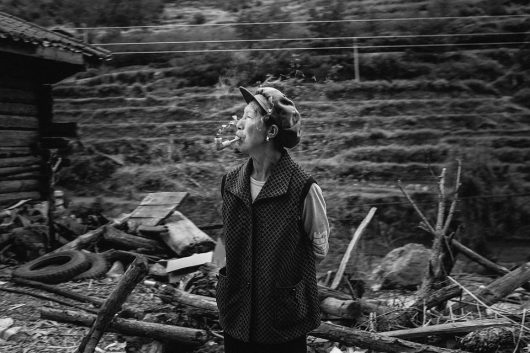
Tobacco and global poverty have an often overlooked connection. According to the World Health Organization (WHO), “Many studies have shown that in the poorest households in many low-income countries, spending on tobacco products often represent more than 10 percent of total household expenditure.”
The WHO, the U.N. and other international organizations have recognized and researched this link to decrease tobacco use and poverty rates. Here are five ways tobacco control reduces poverty globally:
1. Tobacco control will relieve financial hardships.
Tobacco addictions exacerbate an already stressful financial situation for those living in poverty.
Families, as a result, have less to spend on food, education, healthcare and other necessities. Bangladesh, for example, spends 10 times the amount on tobacco than on education. Tobacco control reduces poverty by helping families spend less on tobacco, freeing up more income to spend on necessities.
2. Tobacco control will save lives.
The Center for Disease Control and Prevention reports 6 million tobacco-related deaths worldwide per year. Tobacco users die 10 years earlier than non-users. Smoking also causes cancer, heart disease, stroke, lung diseases, diabetes and chronic obstructive pulmonary disease.
Tobacco control is known as one of the most effective ways to reduce consumption. Its implementation would reduce the amount of smoking-related illnesses, keeping more workers in the labor force and ease health care expenditures for families.
3. Tobacco control will reduce exploitation.
Tobacco also affects those who produce it. Farmers who produce tobacco on a small-scale in developing countries depend heavily on the tobacco industry. Although large corporations provide credit for farmers, including seeds, fertilizer, pesticides and technological support, they expect the farmers to forgo profits and sell at the company’s contract price. This is further evidence that tobacco control reduces poverty.
Furthermore, farmers’ children have saved the tobacco industry an estimated $1.2 billion in production costs through unpaid child labor. The industry employs 63 percent of children in tobacco-farming families, preventing 10-14 percent from attending school for work’s sake.
The lack of education drives individuals deeper into poverty. Tobacco control reduces poverty not only by giving farmers better opportunities to provide for themselves, but also eliminating the need for children to sacrifice school for work, ultimately granting them the chance to move up social classes in the future.
4. Tobacco control will improve economies.
Tobacco takes away 1-2 percent of the world’s GDP annually. A 2011 WHO report found that governments can introduce effective tobacco control measures for as little as $0.11 per person per year. If governments allocated the extra revenue from such taxes to their health budgets, WHO found this year in a report that “public expenditure on health would increase by four percent globally.”
Currently, the costs of tobacco production outweigh the profits. For example, although Tanzania earns $50 million from tobacco sales annually, the African country spends $40 million on health care for tobacco-related cancers.
Tobacco control in the form of taxes would increase government revenue and funds for the poor.
5. Tobacco control will help the achieve the SDGs.
The U.N.’s Division for Sustainable Development seeks to reduce poverty and coordinate the 17 internationally agreed Sustainable Development Goals (SDGs). The aforementioned effects of tobacco control directly align themselves with the SDGs, as they include no poverty or hunger, good health and well-being, quality education and economic growth worldwide by 2030.
Because of its negative byproducts, tobacco use is considered a hindrance to global development.
However, with proper tobacco control, individuals, governments and organizations believe it can provide sustainable benefits.
– Ashley Leon
Photo: Pixabay

Environmental Conservation in Kenya Benefits Development
Since Kenya gained independence in 1963, the country has prioritized the protection of its land alongside the development of its people. The focus on environmental conservation in Kenya benefits agriculture, alleviates poverty and promotes sustainable development.
Kenya is rich in biodiversity, containing deserts, savannas, wetlands, coral reefs and over 1 million hectares of closed-canopy indigenous forests. The country has nearly 35,000 known species of plants, animals and microorganisms.
Historically, Kenya has been active in international climate conventions. In 2010, with the adoption of a new constitution, the Kenyan government made environmental conservation a civil obligation. The 2010 constitution takes an ecological perspective to sustainable development, advocating for conservation in the interest of both the earth and humanity.
The Need for Environmental Conservation in Kenya
Environmental management and rehabilitation strategies are essential in Kenya, as 70% of the country’s workers are employed in agriculture. In addition to this, ecotourism makes up nearly 20% of the country’s GDP.
Despite Kenya’s economic reliance on environmental health, 80% of the country’s land is arid or semi-arid. Only a small percentage of land is suitable for growing crops, and even these fertile areas are fragile. With poor agricultural management, the topsoil is easily washed away.
Kenya’s poorest are the most likely to live in arid regions. Poverty cyclically increases with the scarcity of productive soil, clean water, effective sanitation and market opportunities. Without these critical resources, the poor are unable to improve their livelihoods.
Environmental conservation in Kenya is key to its development. While enforcing conservation is challenging due to population pressures, raising public awareness of environmental issues could also raise support for such measures.
As smallholder farmers seek arable land, they encroach on Kenya’s indigenous forests. Because of Kenya’s richness in non-timber forest products such as medicinal plants, essential oils and beeswax, the destruction of its forests harms both its wildlife and its economy. Conserving the forests is pivotal to protecting both Kenya’s resources and its 50 endangered species.
The beautiful mangrove forests and coral reefs that line Kenya’s Indian Ocean border are also a substantial form of revenue for the country, providing both ecotourism destinations and ecosystem services.
Communities Work Together for Sustainable Conservation
To further promote the ecological perspective of Kenya’s government, the Nature Conservancy and the Northern Rangelands Trust have collaborated to develop community conservancies in the northern semi-arid grasslands. These conservancies cover three million hectares, within which over 200,000 people from 17 different ethnic tribes reside. They strive to help Kenyan communities engage in environmental conservation.
The conservancies protect communal land for livestock and wildlife, teach grazing management techniques and provide opportunities for alternative income sources such as tourist lodges and campsites. The Northern Rangelands Trust also helps connect pastoralists to their markets, helping them access fair prices for their sustainably raised livestock.
Environmental conservation in Kenya greatly benefits its economic and social development. Sustainable development can help Kenya achieve the Kenya Vision for 2030, transforming the country into a clean, secure, middle-income nation.
– Larkin Smith
Photo: Flickr
The Rise and Impact of Renewable Energy in Africa
Renewable energy in Africa is one of the continent’s most promising industries. The Africa Progress Panel acts as one of the many entities responsible for making renewable energy such a priority across the continent.
The Africa Progress Panel
The Africa Progress Panel is run by 10 members and founded in 2008. Kofi Annan, recipient of the 2001 Nobel Peace Prize and one-time United Nations Secretary-General, serves as chairman for the panel.
The remaining members come from all walks of life and numerous professional backgrounds. Politicians, economists and advocates representing organizations such as the International Monetary Fund and The World Bank make up the Africa Progress Panel.
The overarching mission of the panel is to “advocate for equitable and sustainable development for Africa.” The organization’s advocacy covers numerous areas, including agriculture and education, but the group’s most recent focus is energy.
Africa and Renewable Energy
Africa’s natural resources represent a great opportunity for renewable energy to prosper in the continent, but millions of Africans continue to live without access to electricity. The role of the Africa Progress Panel is to influence African governments and international entities, such as The World Bank, to invest in low-carbon or renewable energy projects that move away from the dangers of fossil fuels and bring quick and widespread energy access to citizens.
Caroline Kende-Robb, the Africa Progress Panel’s executive director, wrote in an editorial piece that the panel hopes by 2030 energy will be available worldwide. The Africa Progress Panel’s 2015 “Power, People, Planet” edition of their annual publication — the Africa Progress Report — focused on achieving this goal.
Power, People, Planet
In this report, the panel outlines a number of proposals to governments, organizations and companies both inside and outside of Africa. These recommendations include terminating subsidies for fossil fuels, creating new urban centers with renewable energy in mind, setting higher goals for energy production, increasing international financing and enhancing both innovation and transparency.
Thankfully, the panel’s recommendations are taking hold — Africa is quickly becoming a hotbed of renewable energy. Solar, wind, hydroelectric and geothermal projects are expanding across the continent as countries begin surpassing their benchmarks for energy expansion and financing.
A recent article by CNN explores many of these projects, including the Olkaria Geothermal Power Plant in Kenya, which will eventually energize more than 250,000 homes throughout the country, and Rwanda’s Solar Power field, which brings electricity to 15,000 households.
Poverty-ending Potential
These new initiatives in renewable energy in Africa have the potential to end poverty for millions of Africans. According to the Africa Progress Panel’s Africa Progress Report 2015 — Power, People, Planet, new renewable energy bring “prices as low as US$1-2/kWh, implying cost reductions of 80-90 percent”.
Many Africans are extremely dependent on agriculture, as it is one of the continent’s largest industries. The Africa Progress Report 2015 expressed that the inconsistent availability of energy is damaging yields for farmers and forcing them to use techniques that are harmful to the environment. New technology will not only bring electricity to countless homes, it will also re-energize agriculture in Africa by helping to produce more food and protecting the ecosystem.
This rise of renewable energy in Africa will introduce light to the dark, impoverished and long-forgotten corners of the continent.
– Liam Travers
Photo: Pixabay
Australia’s Refugee System and the Nauru Detention Center
Asylum seekers who arrive in Australia without a valid visa are transferred to either the Nauru or Manus Island Detention Center, where they spend an average of 445 days behind bars.
Australian law dictates that there is no limit on the length of time a refugee may be held in a detention center.
This militarized system of dealing with refugees is designed for the ease of processing on staff. It is also easier to sell to other countries as “effective” rather than identifying and adapting the Australian refugee system to current changing global migration patterns.
Despite criticism that its refugee system is inhumane, the Australian government’s methods in their detention centers are often envied and copied by other countries, particularly because of the hostile mood toward refugees in recent years.
In contrast to Germany, which accepted over one million refugees in 2015, Australia placed only around 13,750 refugees in their Humanitarian Program in the 2015-2016 year.
Recently, the Nauru Detention Center, in particular, has come under scrutiny since the release of around 2,000 staff incident reports from the Center. These detail, among other things, sexual and physical abuse of refugees as well as self-harm among refugees.
In July 2015, there was an average of one incident of a refugee self-harming every two days. These “incidents” ranged from slashing wrists or overdosing on pills to self-immolation.
Immigration Minister Peter Dutton stated in a press release that refugees lied about the incidents of sexual abuse at Nauru Detention Center and deliberately self-harmed in order to garner sympathy and speed up their immigration process.
Though the Prime Minister Malcolm Turnbull has resisted holding a royal commission on the state of Nauru Detention Center, Human Rights Commissioner Gillian Triggs called for immediate action on the Australian Broadcasting Corporation, calling the Detention Center’s methods illegal and immoral.
Three non-governmental organizations have also petitioned the Royal Commission into Institutional Responses to Child Sex Abuse to investigate Nauru, based on the released reports of abuse.
Because the reports on the maltreatment of Nauru Detention Center prisoners were released so recently (first published by The Guardian on August 10th, 2016), there is no current information on whether the Australian government plans to close the detention center or allow it to remain open. There is also a dearth of information on what solutions the government will propose to fix the allegations of sexual and physical abuse to refugees.
Until the mistreatment of asylum seekers at Nauru Detention Center can be investigated thoroughly, proposed solutions are based on testimony alone. These solutions include improved living conditions, faster processing, and more visitations between refugees and any relatives/loved ones who live on the mainland. An increase in healthcare, especially mental healthcare, for those living in the detention center is also a proposed solution.
– Bayley McComb
Photo: Flickr
Circle of Sisterhood: Global Impact
Circle of Sisterhood was founded in 2010 by Ginny Carroll. She was inspired by the best-selling book, Half the Sky, which focuses on women’s education around the globe. The Circle of Sisterhood website quotes the aforementioned book which states, “one study after another has shown that educating girls is one of the most effective ways to fight poverty. Schooling is often a precondition for girls and women to stand up against injustice, and for women to be integrated into the economy.”
Carroll saw the Greek community as perfect volunteers for her mission as “they’re already organized, they already understand philanthropy, they already give millions of dollars a year to domestic work… the vision was, this was a way for all sorority women… to have a global effect.”
Sorority chapters on college campuses around the nation who choose to participate as volunteers for Circle of Sisterhood raise funds to build schools and create scholarships for girls and women around the globe. Chapters may opt to host a bake sale, trivia night, or any other fundraising event to collect donations from fellow students. Many campuses even host screenings of the documentary version of Half the Sky to inspire more women to volunteer.
According to Circle of Sisterhood website, “as college educated women, we know the value of achieving an education… every girl in the world deserves the opportunity to go to school.” Considering that only around seven percent of the world’s population currently holds a college degree, many sorority women feel it is their duty to try to spread their educational good fortune.
As of 2015, Circle of Sisterhood had already impacted 17 countries and built five new schools, such as Ethiopia, Kenya and others. The organization has also raised almost $500,000 in grants.
After six years, sorority women involved in Circle of Sisterhood have continued to show their gratitude for their own educations by helping other women and girls to achieve the same.
– Carrie Robinson
Photo: Flickr
Five Ways Tobacco Control Reduces Poverty
Tobacco and global poverty have an often overlooked connection. According to the World Health Organization (WHO), “Many studies have shown that in the poorest households in many low-income countries, spending on tobacco products often represent more than 10 percent of total household expenditure.”
The WHO, the U.N. and other international organizations have recognized and researched this link to decrease tobacco use and poverty rates. Here are five ways tobacco control reduces poverty globally:
1. Tobacco control will relieve financial hardships.
Tobacco addictions exacerbate an already stressful financial situation for those living in poverty.
Families, as a result, have less to spend on food, education, healthcare and other necessities. Bangladesh, for example, spends 10 times the amount on tobacco than on education. Tobacco control reduces poverty by helping families spend less on tobacco, freeing up more income to spend on necessities.
2. Tobacco control will save lives.
The Center for Disease Control and Prevention reports 6 million tobacco-related deaths worldwide per year. Tobacco users die 10 years earlier than non-users. Smoking also causes cancer, heart disease, stroke, lung diseases, diabetes and chronic obstructive pulmonary disease.
Tobacco control is known as one of the most effective ways to reduce consumption. Its implementation would reduce the amount of smoking-related illnesses, keeping more workers in the labor force and ease health care expenditures for families.
3. Tobacco control will reduce exploitation.
Tobacco also affects those who produce it. Farmers who produce tobacco on a small-scale in developing countries depend heavily on the tobacco industry. Although large corporations provide credit for farmers, including seeds, fertilizer, pesticides and technological support, they expect the farmers to forgo profits and sell at the company’s contract price. This is further evidence that tobacco control reduces poverty.
Furthermore, farmers’ children have saved the tobacco industry an estimated $1.2 billion in production costs through unpaid child labor. The industry employs 63 percent of children in tobacco-farming families, preventing 10-14 percent from attending school for work’s sake.
The lack of education drives individuals deeper into poverty. Tobacco control reduces poverty not only by giving farmers better opportunities to provide for themselves, but also eliminating the need for children to sacrifice school for work, ultimately granting them the chance to move up social classes in the future.
4. Tobacco control will improve economies.
Tobacco takes away 1-2 percent of the world’s GDP annually. A 2011 WHO report found that governments can introduce effective tobacco control measures for as little as $0.11 per person per year. If governments allocated the extra revenue from such taxes to their health budgets, WHO found this year in a report that “public expenditure on health would increase by four percent globally.”
Currently, the costs of tobacco production outweigh the profits. For example, although Tanzania earns $50 million from tobacco sales annually, the African country spends $40 million on health care for tobacco-related cancers.
Tobacco control in the form of taxes would increase government revenue and funds for the poor.
5. Tobacco control will help the achieve the SDGs.
The U.N.’s Division for Sustainable Development seeks to reduce poverty and coordinate the 17 internationally agreed Sustainable Development Goals (SDGs). The aforementioned effects of tobacco control directly align themselves with the SDGs, as they include no poverty or hunger, good health and well-being, quality education and economic growth worldwide by 2030.
Because of its negative byproducts, tobacco use is considered a hindrance to global development.
However, with proper tobacco control, individuals, governments and organizations believe it can provide sustainable benefits.
– Ashley Leon
Photo: Pixabay
Top Five Facts You Should Know about Haitian Refugees
As the poorest country in the northern hemisphere, Haiti continues to strive for economic and political stability years after the quake. While the Haitian government rebuilds Haiti’s economic and social infrastructure, the U.S. and other countries play a major role in supporting the integration and well-being of Haitian refugees abroad.
One way to ensure that the U.S. provides vital humanitarian support to refugees is by expanding the International Affairs Budget. The funds of the International Affairs Budget are imperative to helping refugees and the world’s poor but unfortunately, this resource is grossly underfunded.
To help alleviate the Haitian refugee crisis, call or email your congressional leaders in support of increased funding for the International Affairs Budget.
– Daniela Sarabia
Photo: Flickr
The Top 10 Diseases in Afghanistan and their Treatment
Based on an age-standardized death rate taken in 2014, coronary heart disease ranks number one of the top diseases in Afghanistan taking thousands of lives each year. Of all the deaths in Afghanistan according to the 2014 data, coronary heart disease accounted for a little more than 9 percent. The age adjusted death rate for this disease calculates to 193.21 per 100,000 people ranking Afghanistan twentieth in the world.
Influenza: Also known as the “common flu.”
According to data recorded in 2014, deaths caused by influenza or pneumonia totaled 28,841 people. The age-adjusted death rate is 97.78 per 100,000 people making it the second most prominent disease in Afghanistan. Unfortunately 72 percent of children who suffer from pneumonia are unable to reach the necessary care of a doctor.
The age-adjusted death rate for tuberculosis as of 2014 is 70.41 per 100,000 people. This ranks Afghanistan number 13 in the world regarding mortalities from tuberculosis. Early treatment and proper diagnosis needed to cure tuberculosis and therefore upwards of 13,000 Afghans die each year from the preventable diseases in Afghanistan.
In 2014, 15,977 people or 7.10 percent of the population died because of diarrhoeal diseases. This often can be prevented by drinking safe, clean water and access to adequate sanitation which many Afghans cannot accomplish. Only 48 percent of those with a diarrhoeal disease receive the proper rehydration needed to survive. With many diseases causing early childhood deaths, diarrheal diseases account for 25 percent of them.
In 2015 there were 935,800 cases of diabetes in Afghanistan and 19,698 deaths. The age adjusted death rate for tuberculosis as of 2014 ranks diabetes mellitus in Afghanistan number 71 in the world regarding mortalities.
Lung disease caused 2,874 deaths according to data recorded in 2014. The age adjusted death rate is recorded as 27.77 per 100,00 people ranking Afghanistan number 43 in the world regarding lung disease mortalities.
The age adjusted death rate ranks hypertension in Afghanistan at 25th in the world for deaths from hypertension. Without the proper access to professionals and doctors, diagnosing then implementing a way to fix hypertension is extremely difficult.
One in eight Afghan women are affected by breast cancer. According to the Minister of Public Health Affairs, “[Breast cancer] is not a fatal disease if we seek treatments.” However, the age adjusted death rate of breast cancer ranks Afghanistan number 20 in the world.
One of the most serious liver diseases in Afghanistan is hepatitis or inflammation of the liver. In 2013, almost 30,000 cases of viral hepatitis were diagnosed. The WHO is dedicated to fighting the “silent killer” by raising awareness and providing cures.
While deadly, the top 10 diseases in Afghanistan are treatable with the proper awareness and care.
– Casey Marx
Photo: Flickr
Olympic Success Can Boost Tourism in Kenya
According to an article published by CNN, tourism in Kenya produces about $6 billion a year, but the recent rise in terrorism has hurt the industry. Government organizations have begun to focus on sports tourism as a solution to this downturn in the country’s economy.
The beauty, history and culture of East African countries, combined with the popularity of their native athletes has allowed sports tourism in Kenya to prosper in the past few years. Fatuma Hirsi Mohamed, the principal secretary at the Ministry of Tourism, stated, “our sportspeople put the country on the global map.”
Kenyan middle-distance runner David Rudisha, commonly known as “the King”, solidified his place as one of the greatest athletes in the world when he won the men’s 800-meter race in Rio, his second gold medal in that event after setting the world record during the 2012 Summer Olympics in London. However, Rudisha is not only known for his abilities on the track, but he has also become one of Kenya’s most prominent ambassadors for tourism.
Kenya offers attractions for all types of tourists, including world-class athletes, dedicated fans and curious travelers. The famous town of Iten, Kenya located in the Great Rift Valley is one of the country’s most popular destinations. This high altitude attraction is most famous for being the training ground of countless decorated Olympic runners, including Rudisha. Lornah Kiplagat, a world champion runner, founded Iten’s High Altitude Training Center, which is now visited by both training Olympians and casual runners from across the world.
While Iten is an enormous draw for many tourists, Kenya is looking to expand the industry by building on many of their already popular events. The annual Maralal Camel Derby is a world-renowned race that attracts local and international spectators, with all proceeds going toward local communities. The Lewa Marathon, which is known as one of the world’s toughest marathons, also raises money for conservation and community projects.
The country is hopeful that sports tourism in Kenya will be a viable industry heading into the future. The country will continue to host sports events and clinics, while star athletes such as David Rudisha inspire fans to visit and experience the beautiful home of Olympic legends.
– Liam Travers
Photo: Flickr
Foreign Aid Critical to Reducing Poverty in Sierra Leone
As one of the poorest countries in the world, Sierra Leone is ranked 180 out of 187 on the U.N.’s Human Development Index and faces many challenges to creating sustained development. The year 2012, the last year for which official statistics are available, put the proportion of the population below the poverty line, at 60%. Since the recent Ebola outbreak, current estimates indicate that 77.5% of the population suffers from poverty in Sierra Leone.
Ebola Epidemic and its Consequences
The Ebola epidemic significantly set back the progress made by the West-African nation since the end of its long civil war in 2002. Taking around four thousand lives, and disrupting the country’s health system, the outbreak rocked the developing country.
Until the outbreak, Sierra Leone made numerous strides in multiple aspects of development. The country was cited as a success story of peacebuilding missions and establishing good governance and stable institutions. GDP growth averaged over seven percent every year for the past decade, but shrank to two percent after the West-African Ebola crisis.
Sierra Leone’s Global Reliance
The country is heavily reliant on exports of iron ore to support its domestic economy, contributing to GDP more than all other factors combined. Most of the rest of the country’s revenue comes from agricultural products, which remain at low productivity levels across the board.
Additionally, the country has a high dependence on foreign aid, with more than half of investment coming from foreign sources.
Despite progress, lack of infrastructure and high youth unemployment remain large barriers to the country elevating to a middle-income status. With 70% of its youth unemployed and only about 40% of adults able to read, significant investments in economic development and education remain high priorities to eradicate poverty in Sierra Leone.
The poor nation also has one of the highest infant mortality rates in the world, with over 71 deaths per 1,000 live births.
Essential International Aid
Many international groups are engaging in efforts to reduce the level of poverty in Sierra Leone, including the International Finance Corporation branch of the World Bank, which is investing in many critical areas to boost economic and private sector development to hopefully make the country a self-sustaining middle-income country.
Additionally, the International Rescue Commission provides humanitarian relief efforts through local engagement to prevent death by preventable diseases. The organization accomplishes such feats through its healthcare and educational assistance which improves future prospects.
While the rise of Ebola may have temporarily derailed development efforts, Sierra Leone continues to march toward improved economic and social conditions with help from international organizations. While challenges exist, the country has been consistently improving since 2002.
The country hopes to bounce back from its recent hiccup as quickly as possible and to begin addressing the issue of poverty in Sierra Leone, which prevents it from becoming a middle-income country.
– Adam Gonzalez
Photo: Flickr
Poverty in Chad
Through its history, the African country of Chad has fallen victim to instability, corruption and devastating climatic variation.
Since the country gained its independence from France in 1960, it has struggled with controversial elections and an allegedly corrupt president, Idriss Denby Itno. Tensions between religious groups and ethnic factions have furthered instability despite several peace agreements that have been reached.
Equally as damaging as Chad’s instability is its unpredictable climate. The country relies heavily on oil and agricultural exports, yet soil erosion, drought and plague locust can destroy crops and make it impossible to collect oil and other natural resources.
Factors like political and social instability, as well as an unforgiving climate, make poverty in Chad very real and very challenging to fight.
According to the World Bank over 45 percent of Chad’s population lives at or below the national poverty line. The poverty line is the amount of income needed to afford the necessities of life like food, water and shelter. Living at or below a poverty line can put immense pressure on people and often causes children to miss school. Unfortunately, uneducated communities often lack the skills and knowledge to help lift themselves out of poverty and in turn become even more impoverished.
Exemplifying what can come with living under the national poverty line is Chad’s slum population. As of 2014, nearly 90 percent of the Chadian population resided in slum housing. A slum is defined as housing that lacks access to clean water, sanitation, proper living space or structural durability. These living conditions can lead to higher rates of illness and crime within the community.
Overall, poverty in Chad has a devastating effect on the country. By looking at how long a country’s population lives, how educated they are and what standards of living they endure, one can determine how developed the country is. Every year the U.N. collects this data to look at each country’s development progress. The result is the Human Development Index (HDI) which uses life expectancy, an education index and Gross National Income as key dimensions of human development.
In 2015, the U.N. ranked Chad 185 out of 188 countries measured in terms of HDI. This low score means that on average, Chad is not only less developed than most other countries, but it’s people live shorter lives, are undereducated and are relatively unproductive in terms of GNI.
This statistic is undoubtedly linked with high rates of poverty in Chad. And, though investments in Chad are risky, there are organizations reaching out to Chad.
One organization, Aid for Africa empowers especially vulnerable populations like women and children in hopes that they may one day escape poverty. This is done through community-based self-help programs, education programs, business help and ecological protection.
– Weston Northrop
Photo: Flickr