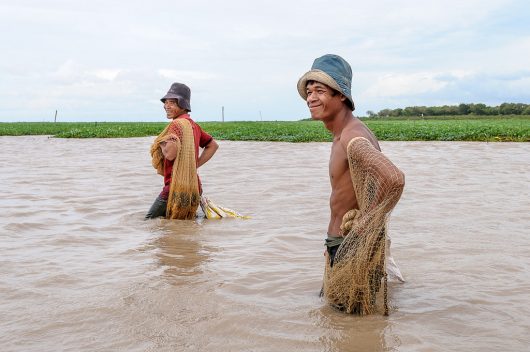
In many regions around the world, millions of people lack access to improved water sources and billions are without proper sanitation materials. In order to combat these harsh realities and situations, many organizations are focused on bringing clean water to those who need it. One of these groups is Neverthirst, an international nonprofit dedicated to providing clean and living water solutions throughout North Africa and Southern Asia. To accomplish this, the organization creates numerous projects, and currently, its focus is on the improvement of water quality in Cambodia.
Located in Southeast Asia, the country and its inhabitants are faced with a distressing problem. The issue of water quality in Cambodia is truly a serious one, but with the assistance of Neverthirst, water quality for all Cambodians can be enhanced. But what projects are being implemented, and how do they improve water quality in Cambodia?
Cambodia Biosand Filter and Latrine Project
The Cambodia Biosand Filter and Latrine Project addresses the issue that although many people have access to water, the quality of the water makes it unsafe and often unsuitable for necessary actions such as consumption.
Drinking unsafe and dirty water can potentially lead to devastating health problems, including diarrheal diseases. Diarrhea alone kills more than 800,000 children under five annually, or about 2,200 children every day. This initiative strives to slow the transmission and development of further diarrheal diseases, thus reducing the number of deaths in children under five in Cambodia.
Cambodia Well Project
Some Cambodians have access to clean water, however, transporting water can be extremely difficult. Usable water is usually located a great distance from the community, making it nearly impossible to carry a significant amount of water per trip.
Through the Cambodia Well Project, Neverthirst hopes to improve accessibility and availability of clean water substantially by installing high-quality hand pumps that can last up to 10 years. In addition to the installation of hand pumps, the organization also gives the communities and villages further funds for any required repairing of the hand pump in the future and instructs users on how to maintain it over time.
The creation and use of these pumps will greatly increase the water quality in Cambodia that is received and utilized by the various communities.
Cambodia School Project
In the immense province of Mondulkiri, many schools and children don’t have access to safe drinking sources. For a portion of schools in the region, schools’ only source of water is a shallow well. Neverthirst, through both the Cambodia School Project and the School Rain Tank Project, is attempting to instill a two-step process that will greatly improve schools’ access to clean water.
First, the construction of a concrete rain tank will collect and provide water for an average of 250 students per school. After the completion of the rain tank, education on safe drinking water is next. Teaching children the importance of clean drinkable water is important to the prevention of future disease outbreaks.
Conclusion
Overall, Neverthirst has created a massive 5,537 projects, serving more than 390,000 people in a total of five countries. Currently, the organization has projects established in Sudan, South Sudan and India.
Each year, more than three million people die from water-related causes, including inadequate sanitation and poor hygiene. With the assistance of Neverthirst, countries, communities and villages like those in Colombia can be aided in its rebuilding efforts and enhance its water quality and safety.
Water quality in Cambodia is just one issue, and Neverthirst is dedicated to helping in all corners of the world.
– Jordan J. Phelan
Photo: Flickr

Annie Lennox Supports The Global Fund in APPG Meeting
Activist and world-renowned musician, Annie Lennox, has become a powerful and influential voice for those suffering from malaria, HIV, AIDS and tuberculosis. Her dedication to the cause became even clearer at a recent All-Party Parliamentary Group (APPG) meeting in London where she spoke out in favor of the Global Fund and their efforts to reduce and treat disease in impoverished areas.
This is but one of the many ways in which Annie Lennox involves herself in issues of global poverty and disease. In the past, she has fundraised for the Treatment Action Campaign by donating the funds raised from her single, Sing. She is also a recipient of the British Red Cross’ Services to Humanity Award.
At the APPG meeting, she continued her charity work, by vocally supporting the Global Fund and their many initiatives. The Global Fund is a financing institution with the goal of providing support to countries suffering from diseases such as AIDS, tuberculosis and malaria.
The organization has set a $13 billion funding target for the 2017-2019 period. This money will go toward saving eight million people and stopping 300 million new infections across the span of three years. In order to reach this goal, donor nations will have to increase their offerings by 20%. Multiple nations such as Japan and Canada have agreed to this increase. However, the U.K.’s contribution is crucial to reaching this goal.
In her keynote speech, Annie Lennox urged British members of parliament to invest further in the Global Fund and increase their disease-fighting efforts. She said: “With the upcoming replenishment of the Global Fund, the U.K. government has the opportunity to show that their continued leadership and dedication to saving and improving quality of life has not waned.”
Award-winning actress Emma Thompson supported the call for the U.K. to step up their funding. Other notable speakers, such as The ONE Campaign’s U.K. Director, Saira O’Mallie, spoke on the same subject. O’Mallie addressed the pertinent issue through her statement, “Amid the uncertainty over the U.K.’s position in the world following Brexit, the Government’s continued commitment to the Global Fund will offer reassurance to millions of vulnerable people.”
The Global Fund does wonders to improve health across the globe, and should be supported across all countries in addition to the U.K.
– Jordan Little
Photo: Flickr
United Nations Plans For The Eradication of AIDS by 2030
Recently, the United Nations unveiled its plan to combat global health concerns. If earnestly implemented, the international community could see the eradication of AIDS by 2030. The plan is a part of the U.N.’s Sustainable Development Goals (SDGs), which identified 17 developmental goals and 169 sub-targets.
The SDGs were constructed on the successes of the recently concluded Millennium Development Goals, which addressed global development issues through “time-bound and quantified targets.” The eight U.N.-brokered goals have become synonymous with the “the most successful global anti-poverty push in history” as it has reduced HIV infections by 33% since 2001.
Despite the unprecedented developmental success, the United Nations General Assembly wanted to pursue a refined and more robust approach to the eradication of AIDS. Therefore, in 2015 as the Millennium Goal expired, the United Nations High-Level Political Forum on Sustainable Development announced a program aimed at eradicating AIDS, particularly through United Nations General Assembly Resolutions.
Notably, Resolution A/69/856 identifies that the eradication of AIDS and prevention must go beyond providing sufficient doses of anti-retroviral treatments. In addition to medicine, it is necessary for governments alike, the international community and civil society to advocate for safe-sex practices.
The task of implementing treatments towards pursuing a world free of global health concerns should not disproportionately fall on the United Nations, however. Moreover, other actors have provided significantly to health movements such as the United States President’s Emergency Plan for AIDS Relief (PEPFAR). PEPFAR is a bipartisan policy that supports HIV testing and counseling for more than 14.2 million pregnant women; HIV testing and counseling for more than 56.7 million people as well as training for more than 140,000 health care workers.
Other efforts are being made by NGOs and nonprofits such as The Global Fund, which has given $22.9 billion to over 1,000 initiatives in 151 countries.
– Adam George
Photo: Flickr
Overcoming the Water Crisis in Papua New Guinea
According to a 2016 report from WaterAid, an international organization that works to improve water quality, sanitation and hygiene to the most vulnerable populations, Papua New Guinea is the worst country in the world in terms of household water access. There are 4.5 million individuals, 60% of the population in Papua New Guinea who lack access to clean water. As a result of the water crisis in Papua New Guinea, 800 children die every year from diarrhea.
In the capital city, Port Moresby, about half of the population live in communities located on precipitous inclines prone to flooding. Many of these areas are outside the perimeter of utility services and far from water mains or sewage pipelines.
WaterAid suggests the vital water source connections will not be constructed for many years. The organization also notes that extreme weather along with rising sea levels contributes to an already precarious water crisis in Papua New Guinea.
Prohibitive costs, The Rakyat Post reports, are a major source of concern with respect to water quality. Poor residents in Port Moresby pay 54% of their daily wages to buy water (about 50 liters) from delivery services. By comparison, an individual living in the U.K. can expect to pay 0.1% of their daily earnings for the same amount of water from an official piped supply.
Henry Northover, head of policy for WaterAid told The Guardian that the global water difficulty was not always an issue of limited supply but in many instances a distributional problem. He added that with “clear and coherent” government policies and international intervention the crisis will be remedied.
Overcoming the crisis of water quality worldwide has been and continues to be challenging. Since 1990 advancements have been achieved, as 2.6 billion people now have access to clean water. With major improvements seen in Cambodia, followed by Mali, Laos and Ethiopia.
According to Northover ending the water crisis in Papua New Guinea and worldwide in general and thus availing all individuals worldwide access to clean water is an achievable goal, but he underscored the importance of a “clear, coherent strategy” by governments and an emphasis on water access to take global precedence.
– Heidi Grossman
Photo: Flickr
‘Neverthirst’ Projects: Enhancing Water Quality in Cambodia
In many regions around the world, millions of people lack access to improved water sources and billions are without proper sanitation materials. In order to combat these harsh realities and situations, many organizations are focused on bringing clean water to those who need it. One of these groups is Neverthirst, an international nonprofit dedicated to providing clean and living water solutions throughout North Africa and Southern Asia. To accomplish this, the organization creates numerous projects, and currently, its focus is on the improvement of water quality in Cambodia.
Located in Southeast Asia, the country and its inhabitants are faced with a distressing problem. The issue of water quality in Cambodia is truly a serious one, but with the assistance of Neverthirst, water quality for all Cambodians can be enhanced. But what projects are being implemented, and how do they improve water quality in Cambodia?
Cambodia Biosand Filter and Latrine Project
The Cambodia Biosand Filter and Latrine Project addresses the issue that although many people have access to water, the quality of the water makes it unsafe and often unsuitable for necessary actions such as consumption.
Drinking unsafe and dirty water can potentially lead to devastating health problems, including diarrheal diseases. Diarrhea alone kills more than 800,000 children under five annually, or about 2,200 children every day. This initiative strives to slow the transmission and development of further diarrheal diseases, thus reducing the number of deaths in children under five in Cambodia.
Cambodia Well Project
Some Cambodians have access to clean water, however, transporting water can be extremely difficult. Usable water is usually located a great distance from the community, making it nearly impossible to carry a significant amount of water per trip.
Through the Cambodia Well Project, Neverthirst hopes to improve accessibility and availability of clean water substantially by installing high-quality hand pumps that can last up to 10 years. In addition to the installation of hand pumps, the organization also gives the communities and villages further funds for any required repairing of the hand pump in the future and instructs users on how to maintain it over time.
The creation and use of these pumps will greatly increase the water quality in Cambodia that is received and utilized by the various communities.
Cambodia School Project
In the immense province of Mondulkiri, many schools and children don’t have access to safe drinking sources. For a portion of schools in the region, schools’ only source of water is a shallow well. Neverthirst, through both the Cambodia School Project and the School Rain Tank Project, is attempting to instill a two-step process that will greatly improve schools’ access to clean water.
First, the construction of a concrete rain tank will collect and provide water for an average of 250 students per school. After the completion of the rain tank, education on safe drinking water is next. Teaching children the importance of clean drinkable water is important to the prevention of future disease outbreaks.
Conclusion
Overall, Neverthirst has created a massive 5,537 projects, serving more than 390,000 people in a total of five countries. Currently, the organization has projects established in Sudan, South Sudan and India.
Each year, more than three million people die from water-related causes, including inadequate sanitation and poor hygiene. With the assistance of Neverthirst, countries, communities and villages like those in Colombia can be aided in its rebuilding efforts and enhance its water quality and safety.
Water quality in Cambodia is just one issue, and Neverthirst is dedicated to helping in all corners of the world.
– Jordan J. Phelan
Photo: Flickr
Education for Refugees is Essential for Development
In Jordan, many Syrian refugees are struggling to settle in. The refugees went there to avoid a difficult war but it is challenging to start a new life away from home. Muzoon is a 16-year-old “champion on education” in her community. She is determined to stop the current situation from destroying the future for her people.
Muzoon believes in chances and creating opportunities. She wants to build enthusiasm toward education for refugees in her generation. She is also keen on promoting values and being independent in her thoughts and practices. Muzoon was referred to as the “Malala” of Syrian refugees.
Muzoon appreciates and acknowledges the value of education. As a refugee in a camp managed by the United Nation’s Refugee Agency, she understands that education for refugees is a key component for development. Furthermore, it is also a basic human right and the United Nations strives to provide it to all refugee children.
Currently, the United Nations High Commissioner for Refugees (UNHCR) takes care of 20 million refugees. Among these, 50% of the children are enrolled in primary education, 25% have access to secondary education and only 1% have access to tertiary education.
The UNHCR realizes that education is crucial for displaced communities. It serves the need for life skills and psychosocial needs. In addition to that, education promotes cohesion, provides access to valuable information and offers a safe environment.
Education for refugees is a great enabler. It provides capacity and opportunity for growth. With Syria’s war, there is a massive human crisis that requires a quick response. If refugees, especially the young generations are not educated, there is a chance of these children encountering future disadvantages such as poverty.
Just like any other major natural disaster, education deserves to be treated as of equal importance. However, providing education for refugees is a long-term cause and it will require long-term funding to achieve the development of the refugee community. An investment in education is even more important to girls. It reduces the chances of forced labor, early marriage and extremism. This investment will help young girls and refugees in general to avoid such risks and develop a purposeful life.
Furthermore, the British Council believes that the refugee community needs to be taught about hope. As an epic tragedy, the problem could have massive spillovers. Ensuring education for refugees is a key response to such a crisis.
The British Council works on integrating refugees into their new communities, especially the refugees moving to Europe, by providing language training to cope with the challenges in the new communities.
The British Council has a firm belief that humanitarian relief is very essential, but aid goes beyond simple relief. Since the scale of the crisis is huge, education will make a lasting difference.
– Noman Ahmed
Photo: Flickr
World Bank and Sri Lanka: Creating a Sustainable Future
“Sri Lanka is blessed with a rich endowment of ecosystems. Striking a fair balance between economy and ecology is crucial, not only for the preservation of the ecosystem but also for helping people emerge from poverty,” said Idah Pswarayi-Riddihough, World Bank Country Director for Sri Lanka and the Maldives.
The project, known as the Ecosystem Conservation and Management Project (ESCAMP), strives to monitor the management of natural ecosystems and sustainable usage of its natural resources in an attempt to directly develop negatively affected neighboring communities.
Working with a multitude of associations and government programs, including the Department of Wildlife Conservation (DWC) and the Forest Department (FD), the collaboration is intended to ensure the management of environmental resources and the promotion of a sustainable future.
One such aspect of the project is the improvement of the country’s forests. Although natural forests occupy an estimated 30% of the total land area in Sri Lanka, and approximately 14% of the country’s land area is under legal protection, damage to natural ecosystems is still prevalent.
Devastating forest degradation of dry zone forests and biodiversity loss has led to the inability for natural ecosystems to produce and provide essential benefits. This agreement hopes to halt these harmful actions.
Furthermore, ESCAMP is determined to emphasize the importance and development of social inclusion, something that is vital to the eradication of poverty. “Managing this natural heritage is the responsibility of all Sri Lankans,” said Pswarayi-Riddihough.
In addition to this collaboration, a number of other equally promising initiatives have recently been enacted to improve the quality of life and the environment in Sri Lanka. One of these plans is the Metro Colombo Urban Development Project, which is attempting to improve the city’s flood resilience and quality of life through the development of an integrated flood management system. Approximately 232,000 inhabitants of Colombo will have greater flood protection as a result. Simultaneously, the Strategic Cities Development Project aims to support and strengthen cycling lanes and spaces for riders during the country’s urbanization process.
The culmination of projects such as ESCAMP and its intended goals is transforming how the world looks at, thinks and characterizes Sri Lanka. Overall, Sri Lanka appears to be improving tremendously as it is preparing a more reliable and sustainable future.
– Jordan J. Phelan
Photo: Flickr
The Appeal and Usefulness of Web-Based Health Programs
Recent advancements in technology have transformed and improved countless aspects of peoples’ lives. Some of the word’s greatest health concerns are obesity and the abuse of alcohol and tobacco. Can web-based health programs make a dent in these problems?
Web-based health programs encourage setting concrete goals and can interact with users throughout the day. They have the added benefit of 24/7 accessibility.
One example is an online tool designed for the Obesity Prevention Tailored for Health II project. The tool locates and displays health food stores, parks and recreational programs near users. It also suggests health-and-eco-friendly transportation options such as biking, walking and using public transit.
Discussed below are two examples of studies examining the usefulness of web-based health programs.
University of Washington
At the University of Washington in Seattle, researchers have been reviewing studies about the effectiveness of mobile and web-based health programs in helping users curb unhealthy behaviors such as overeating and smoking.
The team of researchers found that web-based programs helped users increase their physical activity and lose weight. Eighty-eight percent of the tested programs helped people exercise more. In addition to this, 77% of tested programs designed to help users quit smoking proved effective.
Health Affairs Journal
Health Affairs published a study examining nearly 2,000 overweight adult participants whom researchers divided into groups. In some groups, participants were given access to a social-networking intervention program, and in other groups, they were not. The program featured motivational emails and phone calls, an online discussion forum and a tool for recording food intake. Participants who used the web-based health program experienced slightly greater body mass index (BMI) reduction on average than did participants who didn’t use the program.
Overall, web-based health programs offer a promising alternative to traditional health interventions. They are generally low in cost and widely accessible. Web-based health programs have the potential both to change the way we look at health and improve countless peoples’ quality of life.
– Nathaniel Siegel
Photo: Flickr
Treatment and Prevention: On the Cusp of Ending Malaria by 2020
The end of malaria could possibly be closer than expected. With the recent success of Sri Lanka officially declaring itself as Malaria free after withstanding three years without a single case of infection. The World Health Organization (WHO) Reported a 60 percent decrease in global malaria mortality rates between 2000 and 2015.
According to the Guardian, “Public health officials said 13 countries, including Argentina and Turkey, had reported no cases for at least a year and may well follow the success of Sri Lanka…” Sri Lanka was near ending malaria 50 years ago and it has finally been able to do so becoming a catalyst for other countries.
The local transmission of malaria is slowly but surely being reduced as countries invest more in treatment and prevention strategies. Earlier this year the WHO estimated that “21 countries are in a position to achieve this goal, including six countries in the African Region.”
The Global Technical Strategy for Malaria 2016–2030 is currently in place. Four crucial points make up the plan, which includes reducing the rate of new malaria cases by at least 90 percent, reducing malaria death rates by at least 90 percent and eliminating malaria in at least 35 countries.
This plan was devised before the triumphant victory of Sri Lanka over malaria. Recently the members of the WHO of the African Region have adopted a framework that goes hand-in-hand with the goals outlined by the Global Technical Strategy for Malaria 2016–2030.
Within the document issued by United States Agency for International Development (USAID) titled President’s Malaria Initiative Strategy 2015-2020 the optimism to end malaria within this time period is evident. The document goes on to state “Innovative approaches to deploying existing tools also are being tested, including presumptive insecticide rotation to mitigate the spread and intensification of resistance.”
The U.S. has made it a priority to partake in ending malaria along with the other countries trying to terminate the disease from its country by 2020.
– Mariana Camacho
Photo: Flickr
Zade Dirani Becomes a UNICEF Ambassador
Zade Dirani recently became the Regional UNICEF Ambassador for the Middle East and North Africa. The famous Jordanian pianist is continuing on with his steadfast involvement in advocacy and charity work. Dirani joins the ranks of other ambassadors like Egyptian actor, Mahmoud Kabil and Lebanese entertainer, Nancy Ajram.
Previously, as the founder of the Zade Foundation for International Peace and Understanding, Dirani demonstrated a passion for helping others.
Now in his new partnership with UNICEF, he will be working to further the rights of children in the Middle East and North Africa, with a special focus on children caught in conflict or dealing with violence and poverty.
Dirani is an immensely talented pianist. Previously described as a “Piano Prodigy” by People Magazine, he has touched tens of thousands of people in live performances, including Nelson Mandela and Queen Elizabeth.
In the past, through his namesake foundation, Dirani used his musical talent working with young musicians to foster a culture of peace and understanding. Work done through the Zade Foundation attempts to create peace builders and future community leaders.
The piano superstar is already hard at work. Dirani went on his first a field visit as a UNICEF Ambassador to a Za’atari, Jordan refugee camp and to the neighboring town of Mafraq, Jordan.
There, he played for groups of around 300 children and adolescents. Dirani met and spoke to youth from various different backgrounds, bringing joy to many who had fled the violence in Syria.
Dirani spoke about the experience saying, “I wanted to bring my music to children and youth – today and in the months to come – as a way to engage them and become a form of therapy for those who have witnessed things that no child should ever experience.” His talent and commitment to his cause are inspiring and a valuable asset to UNICEF.
– Jordan Little
Photo: Flickr
Japan Gives $21 Million to Relieve Hunger in Africa and Asia
The fight against hunger in Africa and Asia remains a life-threatening issue. However, in an attempt to end this crucial battle for good, the government of Japan has generously donated a total of $21.6 million to the World Food Programme (WFP).
Distributed among 11 countries, the cash contribution will be used strictly to provide both food and nutrition assistance while consciously adapting to each country’s current needs, necessities and issues.
Countries receiving a majority share of the funding include Guinea ($3.8 million) and Uganda ($2.5 million), while Sri Lanka, the lone South Asian country benefiting from the endowment, will obtain $2.2 million.
In Guinea, the money will be specifically focused on assisting an estimated 150,000 school children in areas where food insecurity has significantly worsened as a result of the recent Ebola outbreak, while mothers in Uganda will receive essential education in health and growth monitoring.
Worldwide, malnutrition and undernutrition are two serious problems for children under five. Nearly half of all deaths in this portion of this population can be connected to undernutrition, while estimated one-in-five children under five are directly affected by malnutrition.
Food insecurity issues are immensely consequential and severe as they greatly increase the harshness and rate of contractible common infections, stall recovery and reduce one’s education.
In addition to this contribution, a number of organizations and initiatives such as The Hunger Project and Feed the Future are currently working to end hunger in Uganda.
The WFP was established in the early 1960s and is presently the world’s largest humanitarian agency dedicated to fighting hunger worldwide. The voluntarily funded organization reaches more than 80 million people in 82 different countries on average annually.
In 2015 alone, total contributions to WFP reached $5 billion, and as of Sept. 25, donations for 2016 are at $4.3 billion.
This funding from the government of Japan will surely go far in ending hunger in Africa and Asia. With a multitude of organizations and momentous contributions annually, the fight against food insecurity truly doesn’t stand a chance.
– Jordan J. Phelan
Photo: Flickr