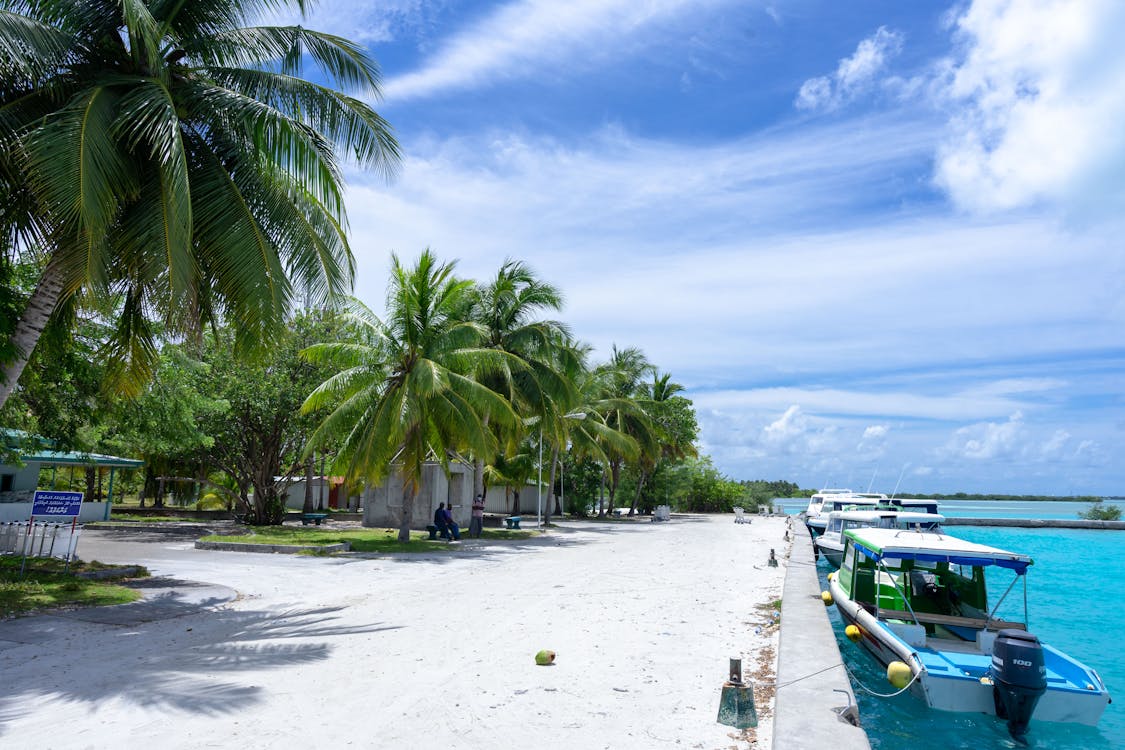
Vanuatu is a country in the southwestern Pacific Ocean that consists of 13 main islands and many smaller ones. With a total population of 318,007, Vanuatu is one of the smallest nations in the world. Despite aggregate economic growth, of those living in this country, approximately 16% lived below the international poverty line, while 4% faced unemployment in 2020. Furthermore, 75% of the population lives in rural areas with limited access to health care and other social amenities.
Causes of Poverty in Vanuatu
Geography plays a key role in understanding poverty in Vanuatu. The country consists of more than 80 islands and is characterized by rugged terrain, volcanic activity and dense tropical forests. The dispersed nature of its islands makes infrastructure development challenging, limiting access to basic services such as health care, education and transportation, particularly in rural areas where the majority of the population resides.
Additionally, the susceptibility to natural disasters, including cyclones and earthquakes, further exacerbates poverty by disrupting livelihoods and infrastructure. Limited arable land (1.8% of the total land) and reliance on subsistence agriculture also contribute to economic vulnerability. These geographic factors collectively contribute to Vanuatu’s high poverty rate.
Even in a relatively small island nation, the plight of people experiencing poverty in urban and rural areas is not easily delineated. Indeed, different areas experience varied iterations of development. For example, from 2006 to 2010, the rate of poverty declined from approximately 20% to 18% in Port Vila, the capital city. However, it increased from approximately 12% to 24% in Luganville during the same period. These discrepancies emerge largely because of geographic location, which determines principal economic activities such as fishing and tourism.
Access to basic foodstuffs also depends on weather patterns and agricultural production, which are especially interdependent on small, shallow islands. These coastal communities are threatened by rising sea levels and increasingly frequent tropical storms, such as Cyclone Pam, which swept through the Pacific in 2015 and destroyed up to 96% of food crops on some of Vanuatu’s southernmost islands.
Solution
Although Vanuatu is susceptible to extreme weather, traditionally sound building practices offer light but flexible protection and help minimize fatalities in emergencies. An increase in telecommunication infrastructure also proved to be life-saving. When Cyclone Pam hit, SMS text alerts notified island residents. In many cases, it was the only effective warning system that allowed citizens to prepare accordingly. This access to modern technology can help growing populations confront increasingly frequent extreme weather movements.
Despite these obstacles, the ADB reports that Vanuatu’s overall poverty rate is low relative to other small nations in the Pacific. Recently, increases in tourism, agricultural production, foreign aid and investment have been reflected in Vanuatu’s positive economic growth. Furthermore, the United States Agency for International Development (USAID) recognizes the delicate geographic circumstances of Pacific islands such as Vanuatu, as nearly 50% of the Pacific Islander population lives within a mile of a coastline. Therefore, USAID is committed to alleviating poverty in Vanuatu by building infrastructure that will withstand pressures from both climate change and extreme weather.
By understanding the unique circumstances of island nations such as Vanuatu, the U.S. and other global economic powerhouses can allocate aid in ways that are both culturally and geographically appropriate, helping to lift these vulnerable populations out of poverty.
– Laurel Klafehn
Photo: Flickr
Updated: May 27, 2024

Poverty in Vanuatu
Vanuatu is a country in the southwestern Pacific Ocean that consists of 13 main islands and many smaller ones. With a total population of 318,007, Vanuatu is one of the smallest nations in the world. Despite aggregate economic growth, of those living in this country, approximately 16% lived below the international poverty line, while 4% faced unemployment in 2020. Furthermore, 75% of the population lives in rural areas with limited access to health care and other social amenities.
Causes of Poverty in Vanuatu
Geography plays a key role in understanding poverty in Vanuatu. The country consists of more than 80 islands and is characterized by rugged terrain, volcanic activity and dense tropical forests. The dispersed nature of its islands makes infrastructure development challenging, limiting access to basic services such as health care, education and transportation, particularly in rural areas where the majority of the population resides.
Additionally, the susceptibility to natural disasters, including cyclones and earthquakes, further exacerbates poverty by disrupting livelihoods and infrastructure. Limited arable land (1.8% of the total land) and reliance on subsistence agriculture also contribute to economic vulnerability. These geographic factors collectively contribute to Vanuatu’s high poverty rate.
Even in a relatively small island nation, the plight of people experiencing poverty in urban and rural areas is not easily delineated. Indeed, different areas experience varied iterations of development. For example, from 2006 to 2010, the rate of poverty declined from approximately 20% to 18% in Port Vila, the capital city. However, it increased from approximately 12% to 24% in Luganville during the same period. These discrepancies emerge largely because of geographic location, which determines principal economic activities such as fishing and tourism.
Access to basic foodstuffs also depends on weather patterns and agricultural production, which are especially interdependent on small, shallow islands. These coastal communities are threatened by rising sea levels and increasingly frequent tropical storms, such as Cyclone Pam, which swept through the Pacific in 2015 and destroyed up to 96% of food crops on some of Vanuatu’s southernmost islands.
Solution
Although Vanuatu is susceptible to extreme weather, traditionally sound building practices offer light but flexible protection and help minimize fatalities in emergencies. An increase in telecommunication infrastructure also proved to be life-saving. When Cyclone Pam hit, SMS text alerts notified island residents. In many cases, it was the only effective warning system that allowed citizens to prepare accordingly. This access to modern technology can help growing populations confront increasingly frequent extreme weather movements.
Despite these obstacles, the ADB reports that Vanuatu’s overall poverty rate is low relative to other small nations in the Pacific. Recently, increases in tourism, agricultural production, foreign aid and investment have been reflected in Vanuatu’s positive economic growth. Furthermore, the United States Agency for International Development (USAID) recognizes the delicate geographic circumstances of Pacific islands such as Vanuatu, as nearly 50% of the Pacific Islander population lives within a mile of a coastline. Therefore, USAID is committed to alleviating poverty in Vanuatu by building infrastructure that will withstand pressures from both climate change and extreme weather.
By understanding the unique circumstances of island nations such as Vanuatu, the U.S. and other global economic powerhouses can allocate aid in ways that are both culturally and geographically appropriate, helping to lift these vulnerable populations out of poverty.
– Laurel Klafehn
Photo: Flickr
Updated: May 27, 2024
Helping Vulnerable Communities Survive Disasters
Sparked by humanitarian organizations like the American Red Cross, backed by companies like JP Morgan Chase & Co., and enhanced with data sharing from Facebook, vulnerable communities now have a better chance at surviving disasters thanks to a program called Missing Maps.
A disaster can devastate any community, but historically, the damage is considerably more widespread in the world’s poorest and most vulnerable communities. For example, on October 4, 2016, when Hurricane Matthew made landfall on the southern peninsula of Haiti, over 3,200 homes were destroyed and more than 15,000 people were displaced. In Haiti alone, over 1,000 people died because of this storm.
Many times, if a disaster occurs in a vulnerable, unmapped location, first responders lack the information necessary to make valuable decisions regarding life-saving relief efforts. Missing Maps is a collaborative project that literally puts these vulnerable communities on the map. This way, humanitarian organizations can better meet the needs of the communities and people they are trying to help.
Digital volunteers working with Missing Maps have helped map the homes of 8 million people worldwide. Data from the program has already begun to enhance disaster response efforts — examples include Typhoon Haiyan that struck the Philippines in 2013, and the Nepal earthquake, in 2015.
JP Morgan Chase and its employees are supporting Missing Maps by participating in “mapathons,” where volunteers create digital maps for the world’s poorest and most vulnerable communities. Kathy W., a Business Operations Executive at JP Morgan Chase, commented on the effectiveness of the program, stating, “The work we’re doing really helps to build more resilient communities and helps save lives.” Chase employees have held 22 official “mapathon” sessions and have helped put vulnerable communities in South Africa, Vietnam, Colombia and Peru on the map.
Recently, Facebook joined the efforts and began sharing its population density data with Missing Maps in hopes of putting 200 million more people on the map. This will help the Red Cross and other organizations on the forefront of this project to reach their mapping goals.
Earlier this year, Facebook began applying techniques from computer vision satellite imagery to generate high-resolution population maps that indicate how and where people are aggregated in communities throughout the world. Originally intended to aid in developing geographically specific communications technologies, Facebook decided to publicly share this data in hopes of helping first responders and humanitarian organizations increase efficiency with disaster planning and disaster response.
As part of its work with Missing Maps, the American Red Cross has already implemented data from Facebook, mapping more than two million people in Malawi alone. The humanitarian organization plans to continue to use this data to map vulnerable communities in other disaster-prone areas, like Haiti.
– Ashley Henyan
Photo: Flickr
Ten Facts About Kiribati Refugees
Climate change will drive migration on a massive scale in the coming years. Estimates of people fleeing natural disasters range from 25 million to 1 billion. The small island nation of Kiribati in the Pacific will be extinct by 2100. The government is trying to help the Kiribati refugees migrate with dignity, but their legal status is still in limbo.
It is hopeful that with the help of the government and international aid, each refugee, resident and the overall island will be preserved.
Eliza Gkritsi
Photo: Flickr
Often Overlooked: The Problem of Global HIV Stigma
HIV is known as a widespread and dangerous disease. Discussions of possible solutions often focus on discovering more effective medical treatments. However, an overlooked factor in combating the disease is the stigma associated with HIV.
According to AVERT, in 35 percent of surveyed countries, more than 50 percent of people admitted to having a discriminatory attitude toward people who are HIV-positive.
HIV stigma exists for a number of reasons. Misconceptions about the methods of HIV transmission can lead people to falsely believe HIV-positive people are a direct danger to them. Some believe an HIV diagnosis is the result of immoral action or irresponsibility. And HIV stigma can have not only social consequences but medical consequences for patients as well. For example, on average one in eight people diagnosed with HIV is denied healthcare resources. Such findings are disturbing, considering that health care providers should be treating and reducing cases of HIV.
In an attempt to dodge the stigma , patients sometimes refuse HIV and tuberculosis testing for fear of positive results. Because an HIV diagnosis correlates to a greater risk of contracting tuberculosis, this stigma leads not only to reduced diagnoses of HIV but also to reduced diagnoses of tuberculosis. In 2015, one-third of HIV-related deaths were a result of tuberculosis.
Solutions to combat HIV stigma include educating the public and conducting awareness training for healthcare workers. Organizations such as Malteser International are training individuals to provide support to those in their communities who are HIV-positive. Lydiah Litunya, a Kenyan woman and HIV patient, used to try to hide her diagnosis to avoid HIV stigma. She managed to get treatment and after being trained by Malteser International, she dedicated herself to helping other HIV patients and reducing the stigma surrounding HIV. This kind of vocal advocacy is exactly what HIV patients around the globe need.
– Edmond Kim
Photo: Flickr
Longer Life Expectancy in Rich Communities Compared to Poor
Life expectancy is a reliable parameter of development that reflects a country’s state of healthcare, population structure and development of treatment alternatives. Recently, researchers have revealed that inequality in incomes can result in a large divide in life expectancy between rich and poor societies.
The study investigated the life expectancy of several counties within the United States. The obtained values were compared to the life expectancy for 222 countries globally. The comparison revealed that more than half of the countries in the world performed better in terms of life expectancy in comparison to the poorest counties within the United States.
While this particular study was conducted in the United States, several other countries show similar results. For instance, an article published in The Lancet compared life expectancy for several districts belonging to England and Wales. The results revealed that the more economically prosperous districts in London had better life expectancy compared to districts in North-West England such as Liverpool and Blackpool.
So what creates the disparity between richer and poorer societies? An important causative factor is the level of healthcare in different countries. Poorer societies are likely to have access to a limited array of healthcare facilities, and may not be able to afford these services. As a result, individuals in poorer communities are excluded from access to life-prolonging treatment which can not only enhance life expectancy but also improve the quality of life.
An improvement in life expectancy is likely to benefit older population groups proportionately more. Thus, efforts to narrow the life expectancy difference should focus on improving health outcomes in the aging population. This can be achieved through an improvement in pension schemes. It is important to ensure that retired individuals receive sufficient stipend that will comfortably grant them access to healthcare resources.
Statistics published by the World Health Organization suggest that a boy born in 2012 in an economically developed country can expect to live approximately 16 years more compared to a boy born in a developing country. A larger difference of 19 years is expected for women, who typically have longer life spans in developed countries worldwide.
The WHO attributes the better life expectancy of economically flourishing countries to greater control over non-communicable conditions such as heart disease. This is done through timely monitoring of blood pressure, cholesterol levels and other aspects that help optimize management and reduce a risk of life-threatening crises.
By setting up regular health screening programs in rural communities, chronic conditions can be detected at a stage where they can be managed appropriately, without adverse side effects. Individuals can be encouraged to acquire control over their own health by implementing lifestyle alterations and becoming compliant with recommended treatment.
– Tanvi Ambulkar
Photo: Flickr
October 11: International Day of the Girl Child
Since its inception in 2011, the Day of the Girl Child centers on a different topic each year. In 2016, the theme “Girls’ Progress = Goals Progress: A Global Girl Data Movement,” emphasizes the use of technological advances to acquire comprehensive data on girls worldwide, their unique struggles and the forces that oppress them.
In an address at the U.N. headquarters on October 11, 2016, Executive Director of U.N. Women Phumzile Mlambo-Ngcuka spoke on the importance of this movement: “Working with our partners, we are supporting countries to strengthen national capacity and systems to collect, analyse and disseminate gender data to improve statistics on priority issues for girls — including gender-based violence, adolescent pregnancy and reproductive health, informal employment, entrepreneurship, and unpaid work.”
Much of the U.N.’s efforts regarding the Day of the Girl Child centers on the practice of child, early and forced marriage, all of which remain prevalent issues in the world’s poorest countries.
Child marriage not only leaves psychological and physical scars that inhibit girls from personal fulfillment but also perpetuates cycles of poverty that trap families in situations with little or no education, economic disadvantages and poor health conditions.
Families often seek the temporary financial relief of a “bride price,” money given to them in exchange for marriage to their daughter. This practice, however, only continues the cyclical nature of poverty in their communities – it denies girls the opportunity for education, and ultimately, cripples new and developing families in the same way.
The other option — education for girls — helps to solve this long-term problem. A girl who has received just one additional year of primary education is 15 percent more likely to boost their future earnings, and this figure only increases with each additional year of education.
The U.N. has already made some advancements in the for fight for girls’ equality. After drawn-out and passionate lobbying in Malawi, the country passed the Marriage, Divorce and Family Relations Act in 2015, which restricts the age of marriage without parental consent to 18.
Thanks to advancements in data collection, the lives of girls and women across the globe may now be much easier to improve. U.N. Women has continued to push for the end of child marriage, and thus, a step toward ending deeply entrenched poverty in some of the world’s poorest countries. As U.N. Assistant Secretary-General Lakshmi Puri phrased it, “Humanity can’t afford to lose half of the world’s creativity, passion and work. When you invest in a girl everyone benefits.”
– Emily Marshall
Photo: Flickr
Elpida Home Gives Hope to Refugees in Thessaloniki
On June 14, 2016, The Radcliffe Foundation released a statement explaining its partnership with the Greek Ministry of Migration in an initiative aiming to house over 800 Syrian refugees in Thessaloniki in northern Greece. Frank Giustra, founder of The Radcliffe Foundation, worked alongside Amed Khan, an American philanthropist, to create a revolutionary alternative housing option for refugees in Thessaloniki.
Together, with the support of thousands of volunteers, they set out to “rehabilitate an abandoned clothing factory to provide housing for 800 refugees,” many of whom were women and children. According to project manager Mike Zuckerman, the project’s strategy was to “rehabilitate Greece’s abandoned infrastructure to aid in solving both the Economic Crisis and the Refugee Crisis at the same time.”
The facility, dubbed the Elpida Home, opened to families on July 24. Here are five ways the Radcliffe Foundation and the Elpida home are giving hope to refugees in Thessaloniki.
Between the joint efforts of the Greek Ministry of Migration and The Radcliffe Foundation, Syrain refugees inThessaloniki will have a better chance at overcoming the obstacles displacement creates.
– Hailey Visscher
The Booming Camel Trade in the Horn of Africa
Last year, war-torn Somalia saw the highest in two decades export revenue from the sale of livestock abroad: $384 million. The increasing trade is a result of increased demand from the Gulf states for camel meat. The booming camel trade is a source of hope for the otherwise unfortunate country.
Once called the “Switzerland of Africa,” Somalia has been entrenched in a bloody civil war between the government and Islamist militant groups since 1986. Estimates place deaths between 350,000 and 1 million.
This year, hope glimmers in the Horn of Africa. The first democratic elections are under way, using a unique model drafted with the help of the United Nations, amid allegations of mass corruption.
In the peaceful regions, progress is taking place. The government has expanded its port facilities for shipping livestock, including camels, goats, and cattle. The animals are shipped mainly from the port of the capital, Mogadishu, but also from the northern ports of Bosaso and Berbera.
Somalia is home to world’s largest population of camels, a third of all on the planet. With an impressive number of 7.2 million animals, they surpass the next biggest herd, in Sudan, by almost 50 percent. They are also the largest camel milk producer worldwide “by far,” according to the Food and Agriculture Organization of the United nations.
The FAO has worked with the Somali government in the past five years to invest heavily in livestock infrastructure, vaccination programs and producing fodder. The capital for this initiative is coming from the European Union and the U.K. Of the country’s 10.5 million people, more than half rely on livestock for food and income, the Somali Chamber of Commerce has concluded.
The traditional methods used by Somali herders render the meat a unique taste that is desired in the Gulf. The government is trying to market it elsewhere as well. The booming camel trade is expanding to new markets. They recently started exporting to Egypt and are scheduled to begin trade with Malaysia.
The trade of livestock accounts for 40 percent of Somalia’s gross domestic product and is expected to reach 50 percent by next year. It is also the most important source of foreign-exchange earnings, only outnumbered by remittances from Somali diaspora, a central bank official told Bloomberg news.
The booming camel trade is not limited to Somalia. Camels from Sudan and Eritrea are also in high demand. The Rashaida tribe who lives there is known to produce the world’s best racing camels. These are coveted by the high-income countries of the Gulf who traditionally host camel races.
Buyers from the United Arab Emirates buy every year 100 to 300 young camels from the small village of Abu Talha. Some sell for as much as $80,000. Sudan’s exports more than tripled between 2010 and 2013 to $670 million, when the last World Bank data was available.
“The camels are everything, they give us meat, milk, and trade,” Hamed Hamid, a member of the Rashaida tribe told the Economist.
– Eliza Gkritsi
Photo: Flickr
The True Costs of Fast Fashion
The fashion industry used to be “four seasons in a year; now it may be up to 11, 15 or more.” This phenomenon is resulting in “fast fashion.” Currently valued at $1.2 trillion, with more than $250 billion spent in the U.S. alone, the fashion industry has exploded as increased wages have increased demand. With this overload in consumption, there is inevitably much waste which damages the environment and exploits poor workers.
According to the Environmental Protection Agency, 15.1 million tons of textile were created in 2013. More than three out of every four garments has been incinerated or put in landfills. Traditionally, the U.S. has tried to reduce waste by selling used clothing to countries such as Pakistan, India, and Russia. With the strong dollar and increasing availability of cheap clothing from Asia, however, demand for secondhand clothing has decreased. As a result, large amounts of waste needed to be taken care of.
The fast fashion industry also imposes an immense burden on the environment. The industry produces “10 [percent] of global carbon emissions and remains the second largest industrial polluter, second only to oil.” Producers consume nearly 70 million barrels of oil a year in just the production of polyester fiber and dump 1.7 million tons of dyeing chemicals into the environment. The industry also goes through an estimated 1.5 to 2.4 trillion gallons of fresh water a year, polluting much of it and damaging both human health and the environment.
While recent progress has created worker empowerment, the use of cheap labor in the fashion industry has been marred by tragedy. In 2013, a garment factory in Dhaka, Bangladesh collapsed, killing more than 1,100 people. Like other countries experiencing immense poverty, Bangladesh would “see its economy collapse” without the textiles industry. Brands such as Gap, Adidas and H&M have also been criticized for using child labor, paying wages of 50 cents per hour and demanding 10-hour shifts. With other options only as good as intensive agricultural work, many uneducated women find these abusive jobs as their best options. Workers also have had very little leverage in negotiating their working terms and so have less job security.
As all these issues continue to be exposed, however, progress will continue to be made. Since the factory collapse, registered trade unions in Bangladesh have increased from three to 120 and wages nearly doubled. As consumers have grown warier, smaller brands have emerged to promote the “slow fashion movement,” where people shop for quality over quantity and buy products made of sustainable materials. Larger brands have also sought change. H&M and Patagonia launched trade-back programs where customers can send in unwanted clothing that will be recycled and sold again. Nike has also worked to eliminate child labor and improve working conditions.
Although it is always great to see businesses take the initiative in improving the fast fashion industry, the ultimate dictator of change is the customer. Customers are the deciding factor in what companies produce. If the purchasing culture changes to one where customers primarily value how companies have treated its workers and the environment, then the necessary change will follow.
– Henry Gao
Photo: Flickr
Fighting Cancer in Resource-Poor Countries for $1.72
In 2012, 3.5 million women died from cancer. Women are diagnosed with cervical and breast cancer at a rate of about 2 million per year, and the diseases’ outcome can largely be predicted by geography. According to The Lancet, 62 percent of deaths resulting from breast cancer occurred in low- and middle-income countries. Similarly, 87 percent of deaths due to cervical cancer occurred in resource-poor countries. Clearly, fighting cancer in resource-poor countries can be difficult.
These trends are even more concerning given that the number of cancer-related deaths among women is expected to increase to 5.5 million by 2030. Over this same time period, the number of women diagnosed with breast cancer is expected to nearly double, and the number of women diagnosed with cervical cancer is expected to increase by 25 percent.
Most global health efforts targeted toward women focus on sexual and reproductive health. However, non-communicable diseases like cancer, cardiovascular disease, respiratory disease, diabetes, dementia, depression and musculoskeletal disorders constitute the greatest threats to women’s health. Indeed, breast cancer and cervical cancer result in three times as many deaths as childbirth and pregnancy complications do.
Further, the global economic burden of cancer is sizable ($286 billion in 2009), primarily because it keeps people out of the workforce and can lead to premature death. Addressing the burden of cancer on women’s health could lead to increased female participation in activities that benefit countries’ economies.
Even in more developed countries, cancer screenings and appropriate treatments are not equally available to all groups. Women belonging to ethnic and cultural minorities, in particular, may not have access to essential health care.
However, cancer screening and treatment is not as costly as is often assumed. As little as $1.72 per person could provide essential medical interventions to diagnose and treat cancer effectively. This amount is about 3 percent of current health care spending in resource-poor countries.
Mammograms for breast cancer screening and radiography for cancer treatment are not often available in low- and middle-income countries. A series of articles from The Lancet recommended increasing the availability of the HPV vaccine for girls and providing cost-effective screening procedures like clinical breast examinations and cervical cancer screenings through visual inspection with acetic acid.
The articles also called for mastectomy and tamoxifen treatments to be made available to people fighting cancer in resource-poor countries by 2030. The Lancet cited Mexico and Thailand as examples of countries where universal health care coverage has improved the diagnosis, treatment and outcome of cancer in women.
– Madeline Reding
Photo: Flickr