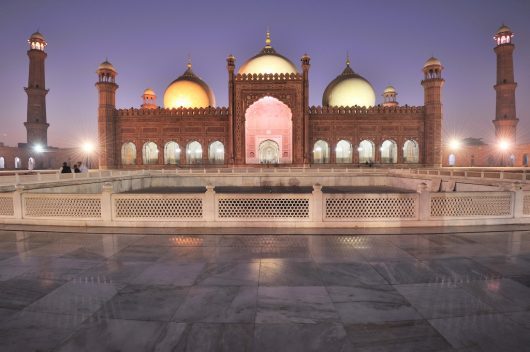
This year, economic growth in Pakistan reached its highest rate in eight years. With 4.7 percent growth in FY 2016, up from four percent the previous year, the country shows promise for further economic success and prosperity.
The World Bank praised the government’s prudent efforts in restoring economic stability. Growth has largely been driven by consumption, and indicators of economic improvement include low inflation, a low budget deficit and a low current account deficit. Additionally, foreign exchange reserves strengthened. The country’s recently upgraded ratings by Standard and Poor is proof of economic success.
In addition to economic growth, Pakistan has succeeded in reducing the percentage of people living in poverty. The percentage of people living in poverty in Pakistan decreased from 64.3 percent in 2002 to 29.5 percent in 2014. The World Bank president claims the country is on track to increased economic growth and prosperity, but in order to maintain and expand growth, the government must take additional steps.
Low rates of investment and declining export competitiveness hinder further growth. In order to strengthen economic growth in Pakistan, public, private and international investments will need to increase.
Despite Pakistan’s success in poverty reduction and improving health, nutrition and education have been trailing behind. The World Bank’s Country Director in Pakistan recommends implementing structural reforms that will benefit the entire population to promote viable and widespread success.
Pakistan will benefit from investments in electricity, education, health and nutrition. The government can help achieve these goals by expanding the electricity supply, accelerating energy reforms, ensuring anti-poverty measures and encouraging private sector investments. By expanding services and prioritizing individual prosperity, economic growth in Pakistan will benefit the population at-large.
Pakistan’s Prime Minister has expressed dedication to widespread growth by investing in the development of mega-hydropower projects, rail and road infrastructure, education and health.
Economic growth in Pakistan is attracting international interest and providing opportunities for investment. The high performance of the Pakistan Stock Exchange and projects under the China-Pakistan Economic Corridor are leading the World Bank, the China Development Bank and other sovereign investment authorities to express interest in investing in Pakistan.
Although improvements are needed, economic growth in Pakistan is expected to continue. The World Bank projects further success for Pakistan, achieving a 4.8 percent growth rate in FY 2017 and 5.4 percent in FY 2018. Services in Pakistan are expected to grow by five percent. Large-scale manufacturing is expected to grow between four and 4.5 percent and investments are expected to increase from 14 to 14.6 percent of the GDP.
Economic growth in Pakistan is promising for the country’s future. Success in reducing poverty, stimulating economic growth and attracting international investments prove the country is committed to accelerating sustainable economic growth for years to come.
– McKenna Lux
Photo: Flickr

VOD Education in Kenya
Kenya has seen remarkable growth in education in the last few years. Between 2012 and 2013 student enrollment increased by 20 percent, and the number of college graduates in Kenya is expected to exceed those without any formal education by 2020.
However, university resources aren’t keeping up with the rapid increase in student enrollment. According to Finance Minister Njeru Githae’s 2012 policy budget statement, “The sector’s biggest challenges include inadequate infrastructure and staffing, a slow pace of ICT integration and dealing with accelerated admissions to universities.”
Video on Demand or VOD education in Kenya has yet to blossom, but it has the potential to ease the pressures that Githae mentioned. Africa’s market is perfect for the system’s development and integration into school systems due to the country’s high population and extensive internet penetration.
The system allows students to select and watch video content of their choice via either their televisions or computers. VOD allows teachers to customize and live to stream their own content to give students in remote areas access to the most effective lectures.
When used as a supplement to traditional teaching methods, it reinforces students’ understanding of content. Students have the option to stop or replay parts of lectures as many times as needed, while advanced learners can use the system to explore more material. Students can also use the system to catch up on missed lectures.
VOD education in Kenya could give the country an advantage with Information and Communications Technology (ICT) competitiveness and innovation. The system will familiarize students with technology and prepare them for entrance into a modern workforce that highly values technological literacy.
The system also contributes to student empowerment, active engagement, leadership and collaboration. Educators who use VOD encourage students to collaborate with each other — even peers from other universities — to create their own material.
VOD generates revenue through subscriptions, sponsorship, and advertising models, which could be used to fund education and reduce the cost of tuition. Students can access the system for free with university hotspots.
VOD education thus far has been shown to enhance student performance and academic development. Not only does it have the potential to become a useful enhancement to 21st century teaching methods, but it also is compatible with Kenya’s goal of becoming a globally competitive and prosperous nation.
– Liliana Rehorn
Photo: Flickr
France to Close all Coal Power Plants
This November at an annual U.N. climate change conference, President Francois Hollande announced that by 2023, France will no longer rely on coal for any of its energy. The country already derives over 75 percent of its electricity from alternative methods and President Hollande’s announcement indicates that France is to close all coal power plants.
Coal is relatively cheap and easy, making it a popular global energy source. Today, it makes up 40 percent of the world’s energy. Coal energy also produces 39 percent of global Carbon Dioxide (CO2) emissions.
Besides the heavy release of CO2 into the atmosphere, coal as an energy source is problematic in many ways. The mining and extraction process for obtaining coal can have severely detrimental effects on the environment. The process can cause the destruction of landscapes and habitats, deforestation and erosion, contamination of groundwater, air and dust pollution and the displacement of communities.
Coal mining releases methane into the atmosphere. In terms of contributing to climate change, methane is about 84 times as powerful as CO2. On top of this, coal mining is a very dangerous job and can often have harmful effects on workers’ health. Those who inhale coal dust can suffer from black lung disease, cardiopulmonary disease and hypertension.
France’s decision to close all coal power plants comes in the wake of The Paris Agreement, an agreement made between 195 countries in 2015 to set the world on track to avoid dangerous climate change.
The country has become a leader in low-carbon energy production by increasing its use of nuclear fission, which produces many more health and environmental risks than fossil fuels. The country creates so much nuclear energy that it is able to export much of it to neighboring nations, bringing in substantial domestic revenue. The decision to cut all coal energy production by 2023 will even beat the United Kingdom’s decision to do the same by two years.
The announcement shows that France is committed to the Paris Agreement and the radical changes that come along with it. The country passed a bill in September banning the use of plastic cups, silverware and dishware, which will be implemented in 2020. France is the first country in the world to pass such a law.
Countries such as Germany, Finland, the UK and Canada are following France’s example and committing to similar ecological goals. The U.S. gets about 33 percent of its energy from coal and President-elect Donald Trump has not yet outlined a plan for reducing coal production.
Overall, France’s commitment to close all coal power plants by 2030 is an example to follow. The goals of the Paris Agreement require concrete dedication to stopping climate change, and France and President Hollande recognize this.
– Peyton Jacobsen
Photo: Flickr
Economic Growth in Pakistan Projects Future Prosperity
This year, economic growth in Pakistan reached its highest rate in eight years. With 4.7 percent growth in FY 2016, up from four percent the previous year, the country shows promise for further economic success and prosperity.
The World Bank praised the government’s prudent efforts in restoring economic stability. Growth has largely been driven by consumption, and indicators of economic improvement include low inflation, a low budget deficit and a low current account deficit. Additionally, foreign exchange reserves strengthened. The country’s recently upgraded ratings by Standard and Poor is proof of economic success.
In addition to economic growth, Pakistan has succeeded in reducing the percentage of people living in poverty. The percentage of people living in poverty in Pakistan decreased from 64.3 percent in 2002 to 29.5 percent in 2014. The World Bank president claims the country is on track to increased economic growth and prosperity, but in order to maintain and expand growth, the government must take additional steps.
Low rates of investment and declining export competitiveness hinder further growth. In order to strengthen economic growth in Pakistan, public, private and international investments will need to increase.
Despite Pakistan’s success in poverty reduction and improving health, nutrition and education have been trailing behind. The World Bank’s Country Director in Pakistan recommends implementing structural reforms that will benefit the entire population to promote viable and widespread success.
Pakistan will benefit from investments in electricity, education, health and nutrition. The government can help achieve these goals by expanding the electricity supply, accelerating energy reforms, ensuring anti-poverty measures and encouraging private sector investments. By expanding services and prioritizing individual prosperity, economic growth in Pakistan will benefit the population at-large.
Pakistan’s Prime Minister has expressed dedication to widespread growth by investing in the development of mega-hydropower projects, rail and road infrastructure, education and health.
Economic growth in Pakistan is attracting international interest and providing opportunities for investment. The high performance of the Pakistan Stock Exchange and projects under the China-Pakistan Economic Corridor are leading the World Bank, the China Development Bank and other sovereign investment authorities to express interest in investing in Pakistan.
Although improvements are needed, economic growth in Pakistan is expected to continue. The World Bank projects further success for Pakistan, achieving a 4.8 percent growth rate in FY 2017 and 5.4 percent in FY 2018. Services in Pakistan are expected to grow by five percent. Large-scale manufacturing is expected to grow between four and 4.5 percent and investments are expected to increase from 14 to 14.6 percent of the GDP.
Economic growth in Pakistan is promising for the country’s future. Success in reducing poverty, stimulating economic growth and attracting international investments prove the country is committed to accelerating sustainable economic growth for years to come.
– McKenna Lux
Photo: Flickr
Poverty in Lesotho
Gaining independence from the U.K. in 1966, Lesotho has aspired to develop economically, socially and environmentally. Like many African nations, however, Lesotho has also faced a difficult struggle with poverty alleviation. In fact, according to the World Bank, approximately 57 percent of the population still lives in extreme poverty, which provides an incentive to understand the factors at play. As such, here are five major aspects of persisting poverty in Lesotho today:
Lesotho’s outlook is not entirely disconcerting. Women in Lesotho boast one of the highest literacy rates in all of Africa, reflecting Lesotho’s commitment to both education and gender equality. In fact, the percentage of GDP spent on education is the largest of any country in the world. Likewise, women in Lesotho report higher human development levels than their male counterparts in all areas except overall income. While there are admittedly several factors to consider for overcoming poverty in Lesotho, it is likely that solutions will continue to build on the nation’s current strengths.
– Zack Machuga
Photo: Flickr
Congress and Hong Kong Human Rights and Democracy Act
Florida’s Republican Senator and co-chair of the Congressional-Executive Commission on China, Marco Rubio and Republican Arizona Senator Tom Cotton introduced a revised version of the Hong Kong Human Rights and Democracy Act to congress. The revision comes as a response to the recent abductions of booksellers and the removal of Hong Kong pro-independence leaders from office.
The city of Hong Kong has been a special administrative region of China since 1997. The relationship between Hong Kong and China works under the principle “One Country, Two Systems.” Other than foreign affairs and defense, Hong Kong operates independently.
However, in the past year, there have been conflicts between the two entities. According to Rubio, the act will “renew the United States’ historical commitment to freedom and democracy in Hong Kong at a time when its autonomy is increasingly under assault.”
The Hong Kong Human Rights and Democracy Act reaffirms the principles of the United States-Hong Kong Policy Act of 1992. In addition to the U.S. support of democratic actions, freedom of expression and the upholding of human rights, it also warns against the government of the People’s Republic of China from obstructing Hong Kong’s independence.
The revised act will also require that Hong Kong issue an annual report, and the U.S. Secretary of State will determine if it is operating independently. Furthermore, the act calls to freeze the assets of individuals who violate the rights of Hong Kong citizens.
The act cites cases in which pro-democracy activists have been harassed. Some have had legal charges pressed against them, while others have faced travel restrictions. Members of the press have disappeared after publishing works criticizing Beijing. Journalists who have done the same have been physically attacked.
“China’s assault on democratic institutions and human rights is of central importance to the people of Hong Kong and of its status as a free market, economic powerhouse, and hub for international trade and investment,” Rubio said. “It is critical in the days ahead that the democratic aspirations of the people of Hong Kong be a vital U.S. interest and foreign policy priority.”
By introducing the new Hong Kong Human Rights and Democracy Act, it aims to draw attention to the increased reports of human rights violations in Hong Kong linked to China, as well as punish those who do not uphold democracy.
– Karla Umanzor
Photo: Flickr
Education in Mosul: Keeping Hope Alive
Occupied by the Islamic State since 2014, Mosul has been in the news recently as the site of the most largely-deployed Iraqi army since 2003. As the state attempts to wrest control of the city back from ISIS, Mosul has suffered heavy casualties and numerous humanitarian crises.
Recently, 40 percent of Mosul’s population was cut off from their water supply as the conflict raged into its sixth week. Additionally, the onset of winter intensifies the anxiety surrounding the food supply.
Education in Mosul has always struggled against a myriad of obstacles over the past 15 years, and the arrival of the Islamic State has only worsened a shaky situation. Curriculums were overturned, textbooks destroyed and children were soon being indoctrinated with violent dogmas and the use of weapons. Students traveled to class to learn how to build bombs and load guns.
Families are removing children from school to avoid these militarized classrooms, the physical danger of traveling and attending school in a war zone. For those who have fled the city, refugee camps are often lacking in educational materials and teachers.
Despite these challenges, camps around Iraq are continuing their commitments to keeping education alive. In the Hassan Sham camp outside Mosul, teachers are seizing the opportunity to establish regulated learning environments for subjects like Arabic, English and Math.
Despite the surrounding chaos, the teachers’ dedication is matched by their students’ passion for returning to regular classes, thriving in the positive and controlled environment. When NPR correspondent Alice Fordham asked a young boy in the camp how it felt to return to school, he responded with, “The happiest.”
This dedication is not just restricted to the small children of the camp. Reviving education in Mosul is garnering support from many outlets, with organizations like the Iraqi Institution for Development, UNICEF and the Norwegian Refugee Council promising to aid Iraqis in their goal to continue education for their children.
– Emily Marshall
Photo: Flickr
HIV Vaccine Trial Begins in South Africa
A new HIV vaccine trial has begun in Johannesburg, South Africa where experts are cautiously optimistic about its potential for success.
The trial, which is funded by the National Institutes of Health, is based on a trial that took place in Thailand and yielded moderately successful results. Thailand trial’s results were controversial because the vaccine was tested on a segment of the population with a low risk for infection. The trial in South Africa hopes to remedy this issue by using members of their own population, which have a uniquely high rate of infection and thus puts wider swaths of the population at risk.
The HIV/AIDS death rate has greatly decreased with the increasingly widespread availability of antiretrovirals, yet infection rates continue to increase. Scientists and doctors believe that a vaccine is the only possible measure to successfully eradicate the disease, and many of them believe that this trial could be the beginning of the end for a disease that continues to infect more than 1,000 people daily in South Africa alone.
CNN reports that an estimated one adolescent becomes infected every two minutes worldwide. According to Anthony Fauci, the director of the U.S. National Institute of Allergy and Infectious Diseases, there is no reason to believe that the HIV/AIDS crisis is over. In the U.S., infection rates have remained steady for the past 15 years in spite of prevention efforts.
Because of the high HIV infection rate in South Africa, scientists believe that an effectiveness rate of 50-60 percent would be sufficient to enter negotiations with drugmakers, although this is significantly lower than most other vaccines.
The study will enroll 5,400 sexually active men and women between the ages of 18 and 35 who are not infected with HIV. They will receive five shots of the vaccine and three boosters over the course of the study, which is expected to yield results in 2020. It aims to provide greater protection from infection and has been adapted for the HIV subtype that is found in southern Africa.
This trial, which is the first HIV vaccine trial in nearly a decade and is only the seventh full-scale human trial in the world, has been met with both skepticism and optimism. Glenda Gray, the president of the South African Medical Research Council, is leading the study. Although she admits that there is no guarantee that the trial will be successful, she remains optimistic about the results.
The HIV vaccine trial in Thailand was run by the U.S. Army, whose Dr. Nelson Michael called the trial “A signpost for vaccine development. This was a yes-we-can moment: the opportunity to become enthusiastic. The door has cracked open. We are all going to try to collectively crash through it.”
Kenya, who will be monitoring the trial closely, is expected to begin a similar trial early next year.
– Eva Kennedy
Photo: Flickr
Scotland’s Eco-Village for the Homeless
Eco-villages are defined as communities whose members seek to live lives that have as little impact on the environment as possible. These communities have been popping up all over the globe for years now, their inhabitants dedicated to being more socially, economically and ecologically sustainable. Eco-village for the homeless can provide a safe environment for people to get back on their feet before looking for permanent housing.
There can be many environmental, economic, social and health benefits to living in an eco-village. The communities encourage local economies in rural areas and often farm unprocessed and pesticide-free produce. The villages reduce the release of CO2 and provide a natural habitat for indigenous ecosystems. The communities also promote less noise pollution and better air quality.
In Scotland, a local charity organization plans to implement an eco-village with the purpose of providing safe temporary housing for the homeless.
In 2015, there were over 28,000 homeless living in Scotland. Social Bite recognized the seriousness of Scotland’s homeless population back in 2012 and has been tackling social issues through business ever since.
The organization currently runs 5 different cafes throughout Scotland. The cafes run a “suspended” coffee and food program, where customers can pay for an extra beverage or lunch for a homeless person to enjoy later.
The non-profit Social Bite is also conscious about employing vulnerable members of the community. A quarter of their employees were once homeless and 100 percent of the business’s profits go toward solving social problems.
Social Bite’s most recent endeavor involves the construction of an eco-village for the homeless in Edinburgh. The village is set to be made up of 10 homes that are capable of housing up to 20 people. The city council spends about $21,000 annually to provide housing and food for one person at a shelter, so the village is expected to save the government massive amounts of money.
Aside from being fiscally beneficial and sustainable, the eco-village community will also provide basic social resources. This includes job training, therapy, financial advice, literacy training and basic education. The goal of the services is to help the tenants directly as they work to move onto more permanent accommodations.
Construction on the village is set to begin in early 2017 and is expected to be up and running by the upcoming summer. Aside from being ecologically friendly, the buildings will also be completely transportable and mobile if necessary.
Social Bite and their dedication to humanitarian work have attracted the attention of celebrities such as George Clooney and Leonardo DiCaprio. DiCaprio visited one of Social Bite’s locations this November to help raise awareness for the organization’s cause.
Overall, the construction of Scotland’s first eco-village for the homeless will provide a frugal and effective way of combating social stigma and homelessness in the country.
– Peyton Jacobsen
Photo: Flickr
Celebrities Pose for 2017 Hear the World Calendar
For 85 percent of the world, hearing is a quality of life that is often taken for granted while the other 15 percent of the population envisions a future limited by disability. Every year, 665,000 children are born with hearing deficiencies, and those living in low-income countries are unable to receive the adequate treatment needed to aid hearing loss.
Hear the World was established in 2006 by Sonova. Its mission? Providing equal opportunities for individuals with hearing impairment. As 2016 comes to a close, the foundation marks its 10 year anniversary and has successfully donated over 100,000 hearing aids and has “supported 24 projects in 19 countries.”
One of Hear the World’s campaigns to raise money is their annual calendar featuring celebrities posing with one hand behind their ear as a symbol representing hearing awareness. The foundation has been recognized by the Guinness World Records for “the world’s largest photographic awareness campaign with 53 celebrity ambassadors.” The newly released 2017 Hear the World calendar, which sells for $40 with all proceeds benefiting the foundation, features celebrities such as Cindy Crawford, Jake Bugg and Linda Evangelista.
Though hearing loss is a global issue, impoverished countries experience it as more of a burden, especially children. According to research, “60 percent of childhood hearing loss is preventable” and yet, with the lack of resources in low-income countries, children are left untreated and their learning abilities are hindered. In countries such as Cambodia, hearing loss would be preventable without issues such as “incorrect treatment of middle ear infections, malaria drug overdose or acoustic trauma caused by landlines.” Such preventable situations drive the Hear the World Foundation to develop programs that equip countries with financial and audiological resources to help relieve the effects of hearing loss.
In 2015, Hear the World partnered with photographer Philipp Rathmer to implement a project in Malawi, Africa that allowed young people affected by hearing impairments to photograph their favorite sounds since receiving hearing aids. Some of the youth favored the sounds of local animals while others appreciated sounds of the manual labor that drives their local economy. Fifteen-year-old Pauline Mwanja says, “I like the sound of sewing machines because I know something nice will come out of it.” Because of Hear the World’s efforts toward providing hearing health awareness, the youth of Malawi have found joy in sound again just like Masautso Mwale who simply says, “I like to hear people call my name.” Not only has rehabilitated hearing brought joy to the Malawi people but they also have a newfound sense of appreciation for sounds which now hold a deeper significance.
By raising awareness about hearing disabilities that are prevalent in low-income countries, individuals living with hearing loss, especially children, are offered a better future with necessary resources. By purchasing the 2017 Hear the World calendar as a gift this holiday season for family and friends, it will be a gift to those in need, as well!
– Amy Williams
Photo: Flickr
Relief, Investment and Infrastructure: 10 Ways to Stop Poverty
Though there are many ways to combat global inequity, this list of 10 ways to stop poverty addresses several primary concerns, including providing relief, investing in communities, and setting up the infrastructure necessary to further development.
– Madeline Reding
Photo: Flickr