 Over the past decade, Angola has significantly enhanced its social protection system, transitioning from emergency aid to comprehensive safety nets. Situated in southwestern Africa, Angola has experienced significant economic growth, primarily driven by its oil sector, despite years of conflict. The country has strengthened its social protection framework to address disparities and effectively safeguard vulnerable citizens. Social protection Development in Angola has progressed from simple humanitarian assistance during periods of conflict to well-organised programmes specifically aimed at poverty reduction. This transformation demonstrates Angola’s developmental trajectory and its unwavering commitment to improving social systems.
Cartão Kikuia (Kikuia Card)
Launched in 2013, the program had 101,246 beneficiaries nationwide. This innovative program aims to address the social impacts of economic reforms, particularly regarding fuel subsidies, by combining cash transfers with subsidised access to essential goods. It’s all about making life a little easier. Beneficiaries are issued a prepaid card with KZ10,000 ($10.76) monthly, allowing them to purchase a select range of products at discounted rates from registered vendors. The primary goals of the program are to tackle income poverty and food insecurity while also fostering local market growth.
Initially tested in urban regions, the Cartão Kikuia program has progressively expanded into peri-urban and certain rural areas. Evaluations of the program have revealed beneficial effects on household consumption and dietary diversity. The program encompasses vulnerable groups, including widows with orphans, people with disabilities and ex-combatants.
Kwenda Program
The Kwenda Program stands as Angola’s first cash transfer social protection initiative, launched in May 2020 to address the needs of the most vulnerable households during the COVID-19 pandemic. Backed by $320 million from the World Bank and $100 million from the Angolan Government, this program is dedicated to supporting 1.6 million at-risk households. Designed with flexibility in mind, the Kwenda Program efficiently and safely reaches its beneficiaries, with most recipients receiving e-payments, granting most of them access to the financial system for the very first time in their lives.
Since its inception, the Kwenda program has made a significant impact, allocating $23 million by early 2022 and conducting 314,000 cash transfers, with 60% of beneficiaries being women. Enrolment has surged, exceeding half a million families registered by January 2022, and nearly half (247,000) have received at least one cash transfer. Thanks to the Social Protection Development in Angola, more than a million families are enrolled in the Kwenda programme, most of whom have received direct financial aid.
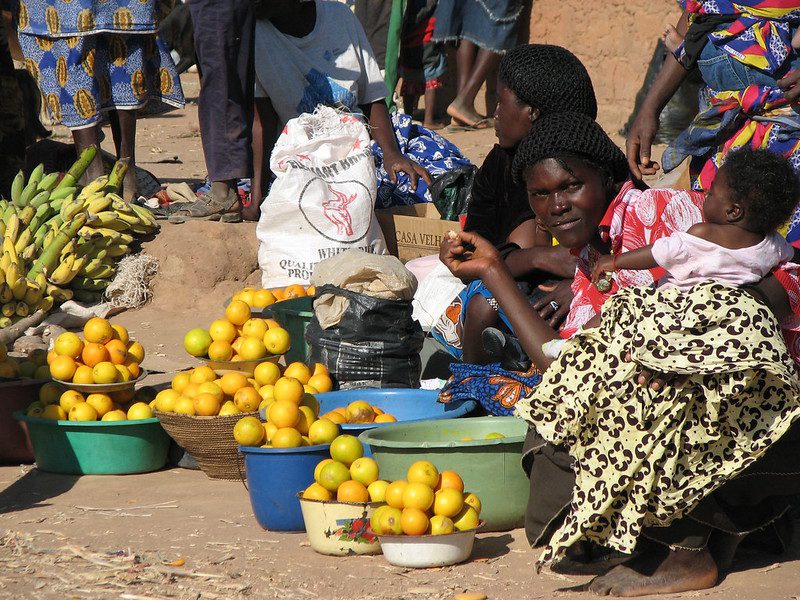
Maria Feliciana, a 92-year-old citizen from Catete in Icolo Bengo Province, a local vendor, shared her thoughts on the government program: “This initiative shows that the government remembers the poorest among us. It’s for everyone in need, even those in the villages. It treated us with respect and dignity.” She added, “Please bring the program back! Do not forget us older people in the villages. We have contributed to this country throughout our lives. This small help means everything to us. And please make it permanent—one year is not enough to change a lifetime of poverty.”
Valor Criança Social Cash Transfer Pilot
Valor Criança is a pilot program of social cash transfers, implemented by the Ministry of Social Action, Family and Women’s Promotion, with technical support from UNICEF, designed as a child-sensitive, unconditional social cash transfer program targeted at households with children aged zero to five years in selected municipalities prone to food insecurity. The program began implementation in 2019 as a pilot program, initially benefiting 20,000 children through monthly delivery of 3,000 AOA to 7,700 families in 257 municipalities in the provinces of Moxico, Bié and Uíge. It provided a monthly cash transfer of AOA 3,000 ($10 in the period) per child under 5, which was increased to AOA 5,000 in response to COVID-19, with the transfer amount directly paid to the child’s caregiver (predominantly women), limited to three eligible children per household.
The program served as an important foundation for Angola’s broader social protection system and has shown a significant impact in supporting vulnerable families with young children. The program also linked families to other services, including birth registration and early childhood development services, making it more than just a cash transfer program.
Institutional Framework and Governance
The Ministry of Social Action, Family and Promotion of Women oversees social protection policies in Angola. Recent reforms aim to improve coordination among ministries and government levels, contributing positively to social protection development in Angola.
The National Social Action Policy (PNAS) came after various initiatives, setting up a framework for future actions. One significant initiative that started in 2019 was the Strengthen and Scale Up Social Assistance to Vulnerable Population of Angola (APROSOC) project, which focused on enhancing social assistance for the vulnerable population and received funding from the European Union.
Angola has also made progress in strengthening its social registry system, which helps identify potential beneficiaries and reduce duplication across programs. The Cadastro Social Único (Unified Social Registry) is gradually spreading nationwide, though challenges remain in reaching remote populations.
Further Ahead
Angola is making progress in its Social Protection framework by improving data collection and policy development. An International Labor Organization (ILO) workshop held in Luanda, Angola, in June 2025 saw the Interministerial Group on Social Protection Statistics convene to prepare the second Social Protection Statistics Bulletin, with new members participating.
This initiative signifies a shift towards systematic monitoring and evaluation in social protection development in Angola’s governance. Technicians from 12 key institutions collaborated to analyse data from 2022-2024, aligning with Sustainable Development Goal 1.3.1 on social protection coverage. Furthermore, projects funded by Portugal’s Ministry of Labour and Social Security and the European Union back these efforts, highlighting Angola’s commitment to expanding social protection and fostering economic growth.
– Vanuza Antonio
Vanuza is based in London, UK and focuses on Good News and Global Health for The Borgen Project.
Photo: Flickr

Gender Wage Gap in Nicaragua Ranks 6th Narrowest Globally
Through a variety of efforts, Nicaragua has decreased its gender wage gap by 80% since 2006. Decades-old initiatives such as the Nicaraguan Women’s Institute have set the stage for Nicaragua’s record levels of gender equality today, and more recent programs such as Better Work are doing on-the-ground work to fight for equal pay.
Nicaraguan Women’s Institute
The Nicaraguan government created the Nicaraguan Women’s Institute in 1987 as a body for spearheading gender equality policies. These policies influence areas of female inequality from domestic abuse to labor. The Women’s Institute targets Nicaraguan institutions, providing strategies that will sustainably enact gender equality over time.
While the institute implemented many of its programs some time ago, the foundation it laid has allowed Nicaragua to reach its impressively narrow gender wage gap today. Many of its programs have targeted a wide range of areas in a woman’s life beyond wages, including health and education. These strategies, such as the National Program of Gender Equity, may have helped women gain access to employment, decreasing the gender wage gap.
Better Work
Better Work is an initiative that increases factories’ compliance with labor standards from the International Labor Organization (ILO). This program is a joint initiative from the ILO and the International Finance Corporation (IFC).
Better Work examines a factory’s labor conditions and shares its findings with major companies. Since many of today’s companies prefer to work with ethical factories for reputational issues, noncompliance with ILO standards is penalized.
Gender equality is a core element of Better Work’s approach. Better Work uses training and advisory services to help factories adhere to ILO standards, with gender equality strategies fully integrated into these efforts. Complying with gender equality, such as wage equality, is therefore incorporated into complying with ILO labor standards.
Since its establishment in Nicaragua in 2010, Better Work has worked with 32 Nicaraguan factories, 20 brands, and more than 45,000 workers. The initiative specifically targets the gender wage gap by fighting for shorter hours and higher wages for women to match those made by men. Industry labor accounts for almost a fifth of employment in Nicaragua, meaning Better Work’s efforts can reach a significant portion of the population.
Gender Wage Gap in Nicaragua: Going Forward
The Nicaraguan Women’s Institute and Better Work can be expected to continue to make a positive impact on Nicaragua’s gender wage gap. Nicaragua still has a way to go until it reaches gender equality in the workforce, with a female employment rate of 54.9% and a male employment rate of 75.9% in 2024.
Yet, the Women’s Institute’s institutional change strategy and Better Work’s advisory and incentive-based approach have already helped Nicaragua to decrease its gender wage gap by 80% since 2006, showcasing their effectiveness.
– Madison Fetch
Photo: Flickr
Social Protection in Angola
Cartão Kikuia (Kikuia Card)
Launched in 2013, the program had 101,246 beneficiaries nationwide. This innovative program aims to address the social impacts of economic reforms, particularly regarding fuel subsidies, by combining cash transfers with subsidised access to essential goods. It’s all about making life a little easier. Beneficiaries are issued a prepaid card with KZ10,000 ($10.76) monthly, allowing them to purchase a select range of products at discounted rates from registered vendors. The primary goals of the program are to tackle income poverty and food insecurity while also fostering local market growth.
Initially tested in urban regions, the Cartão Kikuia program has progressively expanded into peri-urban and certain rural areas. Evaluations of the program have revealed beneficial effects on household consumption and dietary diversity. The program encompasses vulnerable groups, including widows with orphans, people with disabilities and ex-combatants.
Kwenda Program
The Kwenda Program stands as Angola’s first cash transfer social protection initiative, launched in May 2020 to address the needs of the most vulnerable households during the COVID-19 pandemic. Backed by $320 million from the World Bank and $100 million from the Angolan Government, this program is dedicated to supporting 1.6 million at-risk households. Designed with flexibility in mind, the Kwenda Program efficiently and safely reaches its beneficiaries, with most recipients receiving e-payments, granting most of them access to the financial system for the very first time in their lives.
Since its inception, the Kwenda program has made a significant impact, allocating $23 million by early 2022 and conducting 314,000 cash transfers, with 60% of beneficiaries being women. Enrolment has surged, exceeding half a million families registered by January 2022, and nearly half (247,000) have received at least one cash transfer. Thanks to the Social Protection Development in Angola, more than a million families are enrolled in the Kwenda programme, most of whom have received direct financial aid.
Maria Feliciana, a 92-year-old citizen from Catete in Icolo Bengo Province, a local vendor, shared her thoughts on the government program: “This initiative shows that the government remembers the poorest among us. It’s for everyone in need, even those in the villages. It treated us with respect and dignity.” She added, “Please bring the program back! Do not forget us older people in the villages. We have contributed to this country throughout our lives. This small help means everything to us. And please make it permanent—one year is not enough to change a lifetime of poverty.”
Valor Criança Social Cash Transfer Pilot
Valor Criança is a pilot program of social cash transfers, implemented by the Ministry of Social Action, Family and Women’s Promotion, with technical support from UNICEF, designed as a child-sensitive, unconditional social cash transfer program targeted at households with children aged zero to five years in selected municipalities prone to food insecurity. The program began implementation in 2019 as a pilot program, initially benefiting 20,000 children through monthly delivery of 3,000 AOA to 7,700 families in 257 municipalities in the provinces of Moxico, Bié and Uíge. It provided a monthly cash transfer of AOA 3,000 ($10 in the period) per child under 5, which was increased to AOA 5,000 in response to COVID-19, with the transfer amount directly paid to the child’s caregiver (predominantly women), limited to three eligible children per household.
The program served as an important foundation for Angola’s broader social protection system and has shown a significant impact in supporting vulnerable families with young children. The program also linked families to other services, including birth registration and early childhood development services, making it more than just a cash transfer program.
Institutional Framework and Governance
The Ministry of Social Action, Family and Promotion of Women oversees social protection policies in Angola. Recent reforms aim to improve coordination among ministries and government levels, contributing positively to social protection development in Angola.
The National Social Action Policy (PNAS) came after various initiatives, setting up a framework for future actions. One significant initiative that started in 2019 was the Strengthen and Scale Up Social Assistance to Vulnerable Population of Angola (APROSOC) project, which focused on enhancing social assistance for the vulnerable population and received funding from the European Union.
Angola has also made progress in strengthening its social registry system, which helps identify potential beneficiaries and reduce duplication across programs. The Cadastro Social Único (Unified Social Registry) is gradually spreading nationwide, though challenges remain in reaching remote populations.
Further Ahead
Angola is making progress in its Social Protection framework by improving data collection and policy development. An International Labor Organization (ILO) workshop held in Luanda, Angola, in June 2025 saw the Interministerial Group on Social Protection Statistics convene to prepare the second Social Protection Statistics Bulletin, with new members participating.
This initiative signifies a shift towards systematic monitoring and evaluation in social protection development in Angola’s governance. Technicians from 12 key institutions collaborated to analyse data from 2022-2024, aligning with Sustainable Development Goal 1.3.1 on social protection coverage. Furthermore, projects funded by Portugal’s Ministry of Labour and Social Security and the European Union back these efforts, highlighting Angola’s commitment to expanding social protection and fostering economic growth.
– Vanuza Antonio
Photo: Flickr
Earthquake Recovery Project: Rebuilding Morocco
Earthquake Recovery Project
In response, the Moroccan government introduced a five-year recovery project valued at approximately 120 billion dirhams (about $11.7 billion). The plan prioritizes rehousing, infrastructure upgrades and social and economic development. A central feature of the plan, the “supervised self-construction” model, allows affected residents to rebuild their homes using government financial support and architectural guidance. Reconstruction efforts focus on the most severely affected areas, including the provinces of Al Haouz, Chichaouoa, Taroudant, Marrakech, Ouarzazate and Azilal.
The project aims to reach 4.2 million people. Funding comes from the national budget, international aid and various public and private contributions. USAID committed $12.6 million to support Morocco’s earthquake recovery project. Eligible families receive up to 140,000 dirhams (approximately $13,600) to cover reconstruction and temporary housing needs.
Challenges Ahead
Despite the ambitious plan, progress remains slow. By 2024, only around 1,000 of the targeted 55,000 homes had been built. Labor shortages, rising material costs and difficult mountain terrain have created bottlenecks. Landslides left many roads blocked by debris and boulders, preventing emergency services and aid convoys from reaching those in need. The government also faced criticism for limiting foreign aid. Authorities initially accepted help only from a few countries—Spain, Qatar, Britain and the UAE—while declining offers from others, including France, Germany, Tunisia, Canada and the United States (U.S.) Many viewed this decision as a missed opportunity to accelerate the recovery process and widen the scope of assistance.
Community-Led Recovery
While national efforts struggled, grassroots initiatives stepped in to fill the gap. In Ait Bourd, a Moroccan architect introduced an insulated, earthquake-resistant home design capable of replacing about 50,000 destroyed homes. The Atlas Foundation partnered with local communities to support participatory planning and build capacity, ensuring that villagers guided the rebuilding process themselves. In Talat N’Yaaqoub, residents organized teams to clear rubble and distribute supplies. University students from Marrakech launched mobile clinics and provided psychological support for survivors. Caritas Morocco, with backing from the Caritas Confederation, worked to deliver clean water, food and hygiene essentials. These local initiatives did more than meet immediate needs—they also strengthened community resilience and laid a foundation for long-term recovery.
Looking Forward
These community-led initiatives address immediate needs and lay the groundwork for sustainable development and resilience against future disasters. As Morocco navigates the complex path to recovery, integrating grassroots efforts with national and international support may help accelerate reconstruction. Ongoing coordination, resource mobilization and attention to regional disparities could likely influence the pace and scope of long-term recovery. Monitoring progress and adapting strategies to on-the-ground realities remain important as rebuilding continues across affected provinces.
– Sebastian Llerena
Photo: Flickr
Wadhwani AI: Fighting Poverty in India
Reducing the Spread of Tuberculosis
India has the highest burden of tuberculosis (TB) cases globally:
The National Tuberculosis Elimination Programme (NTEP) is the Indian governmental initiative to reduce the spread of TB. The Transformative Research and Artificial Intelligence Capacity for Elimination of Tuberculosis (TRACE-TB) – Wadhwani AI’s umbrella term for several AI programs they are using to help combat TB – aims to improve upon diagnostic tools available and speed up treatment processes.
One of these goals is to improve upon the screening tools available to diagnose TB. These screening tools tend to be expensive, rely on specialist training and require a laboratory setup. Because of this, many TB patients go unrecorded because these screenings simply are not accessible or are under too much demand. Wadhwani AI’s solution is an AI-based diagnostic tool that analyses the sound of a patient’s cough and identifies probable cases of TB. This tool is available as an app, both for health care workers and for people looking to test at home.
Line Probe Assay
Another branch of TRACE-TB is improving the expediency of recording the results of Line Probe Assay (LPA) strips. LPA strips help diagnose cases of drug-resistant TB. Manual testing for this is done at one of only 64 labs across India, which are able to perform around 400,000 tests annually. Not only is this a highly insufficient rate of testing, but the manual process is subject to clerical issues. Due to this overburdened system, many cases will have significant delays in their treatment. Using AI to rapidly evaluate LPA strip results greatly improves upon this response time. This initiative uses a “human-in-the-loop” as part of the process, having someone double-check when the algorithm is uncertain about the interpretation of the results.
Helping Cotton Farmers Fight Pest Infestations
Across the globe, the primary crop for almost 100 million farmers is cotton. Ninety percent of these farmers are from smallholding farms in poorer countries. India is the world’s largest cotton producer (26% of the global output), and is a massive source of employment in the country. Not only are there 5.8 million cotton farmers in India, but a further 40 to 50 million work in the processing or trading of cotton.
Cotton is extremely vulnerable to pest infestations, and on average, Indian farmers lose around 30% of their crops annually. The acuteness of these losses are due to a combination of factors. Firstly, manually collecting data on infestations and then analysing it is very time-consuming, and often by the time that is done any counter-measures may no longer be effective. Secondly, there is a widespread lack of education amongst farmers about correct pesticide usage: using the wrong chemicals or spraying the incorrect amount can prove redundant to combating the infestation, and can be detrimental to the health of the farmers and the environment.
How It Works
Wadhwani AI’s initiative to help cotton farmers fight pest infestations is the CottonAce app. It is easily accessible, works offline and is available in nine languages.
Farmers install pheromone traps amongst their crops, which trap pests. They then upload images of the pests to the app and the AI algorithm identifies the pest and calculates how severe the infestation is. CottonAce generates instantaneous recommendations on which pesticide to use and how to best apply it. The app then shares the data with nearby farmers, creating an early-warning system for the area. CottonAce is a great example of a simple, easily scalable and highly accessible tool that can improve the security of the livelihoods of millions of people, and an easy-to-replicate example of using AI to fight poverty in India.
Assessing Students’ Literacy Skills
Vaachan Samiksha is an AI-based tool for assessing the oral literacy of students. India’s Annual Status of Education Report 2023 showed that more than half of grade five students struggled with reading texts designed for children aged three years below them. Typically, oral fluency is assessed by teachers individually, having students read a passage and then manually counting how often they mispronounce words. With millions of students to consider, this process is incredibly inefficient, fallible and provides very little information about the students’ needs. Wadhwani AI hopes to speed up this process and better gauge what individual students need via Vaachan Samiksha.
In partnership with the Gujarat government, 33,000 schools across the region are currently using the tool. Wadhwani AI developed an AI speech-to-text model that provides instantaneous transcription of the student during the literacy assessment and identifies the mispronounced terms. Multiple students are able to be assessed simultaneously, and the program can efficiently detect patterns in incorrect pronunciation and difficulties. This enables teachers to understand how and where each student is struggling with their oral-literacy, and helps to identify which students might need additional support. As of March 2025, the app has helped make more than 3.6 million assessments across Gujarat.
Closing Thoughts
Wadhwani AI’s work is a reminder that artificial intelligence isn’t only about high-tech labs or futuristic applications—it can be a powerful tool for solving real-world problems in low-resource settings. By designing practical, scalable solutions rooted in local needs, Wadhwani AI is helping shape a future where technology aids the critically underserved. As their programs continue to develop, they offer a compelling model for using AI to fight poverty in India and the potential for tackling global poverty with similar initiatives.
– Reuben Avis-Anciano
Photo: Flickr
5 Nations Eliminating GBV in Central Africa
DRC: The World Bank’s Gender-Based Protection
The DRC’s collaboration with the World Bank has created the Gender-Based Violence (GBV) Prevention and Response Project. The GBV Prevention and Response Project aims to increase government support for ending GBV and improve response times for GBV emergencies. The project offers survivor support centers, economic reintegration for women who have experienced abuse, and legal aid to women looking to get justice for any abuse or GBV. The project has served more than 79,000 women, reaching more than 8 million total. Undoubtedly, the DRC Gender-Based Violence Prevention and Response Project has increased access to justice and economic options for women living in poverty with no escape from gender-based violence.
CAF: Economic Independence through the Bêkou Trust Fund
In the CAF, the EU created the Bêkou Trust Fund for humanitarian development. The funds have been particularly helpful to women through its goals to restore security and the social contract between the government and the people. In CAF, less than 20% of girls attend secondary school and there are around 10,000 cases of yearly GBV on average. In the last 10 years, €11 million went to use in the gender theme of the fund. Through the Trust Fund, more than 68,000 women have received help with socio-economic integration, helping them live safely and independently.
Chad: Microfinancing for Empowerment via USAID
USAID’s Women’s Economic Empowerment Initiative in Chad is working towards empowering women to escape cycles of gender-based violence through economic empowerment. Under the World Bank’s Sahel Women’s Empowerment and Demographic Dividend, the initiative increases women’s access to health care, ability to enter the job market and lowers barriers to living independently. In Chad, 16.2% of all women face gender-based or sexual violence in their lives. Although the USAID program is new, it has the promise to reduce this rate and increase equality between men and women in Chad.
Cameroon: Education and Legal Advocacy via UN Trust Fund
The U.N. Trust Fund to End Violence Against Women, started by resolution 50/166 at the UNGA, has reached more than 7.7 million women globally. It aims to eliminate violence against women by increasing access to services like counseling and health care. Nearly 55% of women living in Cameroon experience gender-based violence every year. Still, the collection of programs under the U.N. Trust Fund aim to help more than 12,000 women escape systemic poverty and gender-based violence in Central Africa.
Rwanda: The World Bank’s Social Protection Transformation Project
In Rwanda, one significant initiative in combatting gender-based violence in Central Africa is the World Bank-funded Social Protection Transformation Project (SPTP), which integrates GBV prevention and response into its broader mission of economic empowerment.
This program provides financial assistance, vocational training, and social services to vulnerable populations, including survivors of GBV. Through this initiative, Rwanda has expanded safe spaces and counseling services, ensuring that survivors receive both economic and psychological support. The project also works closely with local NGOs and government agencies to enhance legal protections and improve access to justice for victims. By combining economic resilience with GBV prevention, this initiative reflects Rwanda’s commitment to breaking cycles of violence and fostering long-term recovery for survivors.
GBV in Central Africa: The Future
Reducing poverty is not only a strategy for economic development—it is a crucial step toward ending GBV in Africa. Aid aimed at reducing GBV in Central Africa is equipping women with the financial independence, legal protections, and social support needed to break free from cycles of abuse. These programs show that when the international community invests in women’s empowerment, it fosters safe, equitable societies. Continued support is essential to ensure lasting progress and to give more women the tools they need to build secure, self-sufficient futures.
– Divya Beeram
Photo: Flickr
Fighting Femicide in Uruguay
Ending Gender-Based Violence
In 2017, the government decided to take action against disturbing levels of femicide in Uruguay with various legal reforms. This included Law no. 19.580, which specifically recognizes and defines femicide as a crime whilst sentencing perpetrators more severely than those guilty of homicide. As a result of this shift in legal focus, the state launched the Observatorio de Violencia Basada en Género hacia las Mujeres (OVBG), which collects and monitors data regarding gender-based violence in Uruguay, and ProMujeres, a program that focuses on gender equality and women’s empowerment, under the Ministry of Social Development. Funded by the Inter-American Development Bank (IDB), ProMujeres aims to enhance the work of Inmujeres, Uruguay’s National Institute of Women, thanks to the allocation of new funding.
The work of Inmujeres
Inmujeres is responsible for overseeing the OVBG, as well as monitoring the implementation of Law no. 19.580 and providing various services for women at risk of femicide in Uruguay. Most of these services include legal support, temporary shelter and telephone counselling for victims of gender-based violence.
Between 2020 and 2024, the organization offered their services to 16,821 victims of gender-based violence, as well as supporting 175 women in situations of human trafficking in 2022.
Furthermore, in 2020, the government announced a $4 million increase in funding for electronic ankle bracelets designed to distance perpetrators from victims, thereby preventing future cases of femicide in Uruguay. Inmujeres is also working to avoid femicide in Uruguay by running a campaign in schools across the country, called Noviazgos Libres de Violencia. The youth-orientated project aims to break the intergenerational cycle of intimate and former partner violence and reached around 13,000 young people in 2022 alone.
Building a Network of Prevention, Support and Awareness
In addition to legal reforms and state-run programs, there are various civil society groups working to fight femicide in Uruguay in numerous ways.
Mujeres de Negro (Uruguay) has been raising awareness about femicide in Uruguay since 2006. Based in Montenegro but part of a wider international movement, Mujeres de Negro (Uruguay) organises silent protests in remembrance of victims, as well as publicly advocating against gender-based violence and denouncing discrimination.
Comuna Mujer is another Montevideo-based organization fighting femicide, operating 14 centres across the region where women at risk of gender-based violence can receive free and confidential services. These services include legal and psychosocial support to help women escape situations of gender-based violence. Comuna Mujer’s impact on women at risk of femicide in Montevideo has been crucial, as the organization provided services to 5,063 women and carried out 15,896 consultations between 2023 and 2024.
Whilst offering support services for victims is essential, the Uruguayan Network Against Domestic and Sexual Violence (RUCVDS) focuses on the prevention of gender-based violence, and their work has been extremely impactful across Uruguay. The RUCVDS is composed of over 30 civil society groups with over 25 years of experience, running a range of projects catered towards the prevention, awareness and research of gender-based violence.
One of these projects includes the 2021 “Nunca Más a Mi Lado” campaign, which included the re-release of the song “No Te Va Gustar” in order to promote healthy relationships and raise awareness about the dangers of romanticizing abusive partnerships. The campaign spanned over ten years and involved 100 workshops, including sessions inside female prisons, and all of the proceeds from the song’s re-release went towards projects preventing domestic violence
Femicide in Uruguay: The Challenges and Gaps
Despite the great work of both the state and civil society groups, Uruguay has not been able to keep up with the increasing demand for supportive and preventative services related to gender-based violence, and female participation in positions of power continues to be low.
Although the legal reforms in 2017 signalled the prioritisation of femicide as an urgent issue in Uruguay, efforts to fully implement the law have not yet been completely successful, according to Amnesty International, mostly due to a lack of resources. It is also important to recognise that marginalised groups are at a higher risk of femicide in Uruguay, since 86% of afro-descendant women and 92.5% of LGBTQ+ women reported being victims of gender-based violence, which is much higher than the national average of 77%
The Future
Uruguay’s success in its approach to fighting femicide lies in its decision to invest in prevention and monitoring, instead of just focusing solely on punishment. The eradication of femicide is a complex process, but with the investment of more time and resources, Uruguay is on the right track.
– Clodagh Dowson
Photo: Flickr
How Employment in Bangladesh Is Empowering the Poor
Unemployment and Poverty in Bangladesh
Employment opportunities remain scarce in Bangladesh, even for university graduates preparing to enter the workforce. According to the World Bank, Bangladesh’s unemployment rate stood at approximately 4.7% in 2024. Each year, more than two million young people join the workforce. However, formal job creation lags, pushing many into low-paying, informal sectors. This persistent shortage underscores the critical role of job creation in tackling the country’s widespread poverty.
In 2016, nearly 90% of Bangladesh’s population survived on just $6.85 per day or less. This figure reflects the country’s deep-rooted income inequality and underscores the urgent need for sustainable economic development.
Barriers to Employment in Bangladesh
Many people living in poverty in Bangladesh are willing to work but face a severe shortage of employment opportunities or are systematically excluded from the labor force. With few options available, some beg on the streets to survive. “They’re hurt, they’re homeless. Some are blind, some are missing limbs,” said Karim. “We spoke with one man who didn’t have legs. He was interested [in working], but he was afraid he wouldn’t be able to do certain things.”
Beyond the natural challenges of finding work, some individuals in Bangladesh are trapped in street begging by dangerous criminal syndicates. These groups often prey on those already vulnerable, such as the homeless and unemployed, coercing them into continued begging through threats and, in some cases, physical violence. Disturbingly, there have been reports of syndicates mutilating individuals, including the deliberate removal of limbs, to increase sympathy from passersby.
According to Karim, this made security a major concern when approaching beggars and those who considered leaving the streets feared for their safety.
Employment as a Tool of Empowerment
Despite significant barriers to employment, conditions in Bangladesh have gradually improved alongside the country’s development. Data indicates a positive correlation between rising employment rates and GDP growth, with poverty levels steadily declining in recent years. As more people gain access to stable work, many have been able to break free from the cycle of poverty—and, in some cases, escape the control of exploitative street syndicates.
While Payra lacked the resources to drive large-scale societal change, the organization demonstrated that meaningful impact at the individual level is still possible. With just 20,000 BDT—roughly $164 per person—it helped several individuals escape poverty by supporting them in launching small businesses, including tea stalls, clothing shops and food vendors.
Women in the Workforce
There is a clear correlation between increased female workforce participation and the declining poverty rate in Bangladesh. “Before, there was a very low percentage of women working. Now, there are more working in industries like garments and food and that’s a leading reason why poverty data has decreased. Women being able to enter the market has helped families,” says Karim.
This trend aligns with broader economic logic: as more of the population gains access to employment, living conditions improve over time. Historically excluded from the workforce, women have played a critical role in this shift. Between 1974, shortly after Bangladesh’s founding and 2019, female labor force participation rose from just 4% to more than 36% and the upward trend continues. At the same time, the national poverty rate has steadily declined, highlighting the transformative impact of inclusive employment.
– Jesse Correll
Photo: Flickr
Success in Zambian river restoration
Background
Rivers like the lower Kafue are incredibly important to nearly all aspects of life, supporting 900,000 Zambians. Nearly 20% of cattle in the area rely on the wetlands from the Kafue River and 90% of all electricity in Zambia comes from dams on rivers like the Kafue.
According to the 2017 report, “Water resources, and the essential services they provide, are critical to achieving poverty reduction, inclusive growth, public health, food security, human dignity for all.” In fact, the Kafue River is not unique, as the Zambezi River supports an additional 250,000 people along the Barotse floodplains alone.
The WWF in Zambia explained in its 2017 report that pollution and overuse have threatened the ability of large cities to have adequate water. In fact, 47% of Zambians have no access to clean water due to these issues.
Environmental Disasters
Large environmental disasters have exacerbated this systemic issue. On February 18, 2025, a tailings dam holding back toxic waste from a copper mine broke down, allowing more than 50 million liters of acid waste into the Kafue River. Local resident Sean Cornelius told AP News that, “Prior to the February 18, this was a vibrant and alive river. Now everything is dead, it is like a totally dead river. Unbelievable. Overnight, this river died.” Due to Zambia’s heavy reliance on hydropower, it makes potential dam disasters all the more likely.
Stepping into this crisis is a coalition of climate investors, the WWF and local river communities to assist with Zambian river restoration. The Climate Investment Fund (CIF) has begun working with eight counties along the Zambezi River basin to help implement nature-based solutions.
Evans Kaseke, program manager for the Zambezi Strategic Plan, explained that, “The program aims to promote, protect and restore natural environments through landscape approaches by investing in agriculture, food production, forest and land use, and coastal system management.”
Climate Adaptation for Protected Areas (CAPA)
Additionally, the WWF has been helping communities along the Nsongwe River to help build smaller check dams through its Climate Adaptation for Protected Areas (CAPA) Initiative. These dams help end erosion from overuse. Mervis Sibbuku, local resident, thanked WWF, “For years, we watched the river degrade. These check dams have given us hope, allowing us to see water flow evenly and greenery return along the banks.”
In partnership with WWF Zambia, the Nsongwe communities have started to remove silt and replant critical foliage, restoring parts of the river to both wildlife and community residents. Though much work needs to be done, international finance, NGOs and governmental aid can go a long way to empowering local impoverished communities to improve their environmental conditions. Zambian river restoration shows that critical funds and innovative practices can help undo environmental poverty.
– Joseph Laughon
Photo: Flickr
Fighting Malnutrition in Refugee Camps With Microgreens
The Power of Microgreens
Microgreens are tender, immature greens harvested just after sprouting, typically within seven to 21 days. Though small in size, they hold quite a bit of nutritional value. According to the Cleveland Clinic, microgreens are rich in vitamins C, E and K and beta-carotene and antioxidants that support heart health, reduce inflammation and may help fight chronic disease. Their concentrated nutrient content makes them an effective dietary supplement, especially in low-resource settings.
Since microgreens grow quickly and require minimal space, water and equipment, they are well-suited for refugee camps where access to fresh produce is limited. They can thrive in shallow trays with basic soil or growing mats, using only sunlight or low-energy lights. This makes them an efficient, low-cost solution for improving food security and nutrition in overcrowded and under-resourced environments.
Growing Health at Home
Families in refugee settlements across Lebanon and Jordan are improving their nutrition through small-scale gardening initiatives. Supported by the United Nations High Commissioner for Refugees (UNHCR) and local partners, refugees are adopting keyhole gardens. This includes circular raised beds that use compost and greywater to grow various vegetables in spaces of limit and restriction. These gardens are built using readily available, recycled materials, making them affordable and sustainable for displaced households.
UNHCR reports that such gardens help increase access to fresh produce and empower families to participate actively in food production. By cultivating vegetables at home, refugees can supplement their diets with fresh, nutritious ingredients while reducing reliance on food aid.
Growing Solutions Across Africa
Refugees are improving their food security and nutrition in parts of sub-Saharan Africa through sustainable gardening practices. In Kenya’s Kakuma refugee camp, programs like the permagarden initiative have trained residents to grow vegetables using climate-resilient techniques that conserve water and enhance soil health. These small plots can be built with locally available materials and thrive in limited space, making them ideal for approaching malnutrition in refugee camps.
According to Devex, participants in the permagarden program reported increased access to diverse vegetables and greater household nutrition. Beyond physical health, gardening has also helped reduce stress and build a sense of purpose among participants. However, as the Humanitarian Practice Network notes, efforts like these face challenges from environmental extremes, such as drought and flooding, which threaten the fragile resilience systems in Kakuma.
Organizations Making an Impact
The Lemon Tree Trust is transforming how displaced communities interact with their environments by promoting gardening as a tool for resilience, dignity and self-reliance. Working primarily across the Kurdistan Region of Iraq in fighting malnutrition in refugee camps, the organization helps residents reclaim unused spaces for growing food and flowers. Through initiatives like garden competitions, community garden spaces and the distribution of seeds and plants, the Lemon Tree Trust supports displaced families in creating green spaces that nourish both body and spirit. These gardens improve access to fresh produce and foster community cohesion, mental well-being and a sense of home in uncertain settings.
Mercy Corps is also taking bold steps to support refugee self-reliance by integrating food security initiatives like microgreen farming into broader economic and social development programs. Its approach goes beyond immediate relief, aiming to unlock the long-term potential of displaced individuals. For example, Mercy Corps has significantly invested in job training, agricultural innovation and women-led entrepreneurship. These efforts are helping refugees transition from reliance on aid to lead productive, independent lives. Through partnerships and strategic funding, the organization is scaling initiatives offering nutritional and economic benefits, enabling communities to thrive even in the most challenging environments.
A Path Toward Self-Reliance
Microgreens are not a complete solution to malnutrition in refugee camps, but they offer an affordable, fast-growing and scalable way to improve health outcomes. More importantly, they place the power of food production back into the hands of the people who need it most. As international aid agencies look for sustainable ways to enhance food security, microgreens represent a small but mighty innovation with the potential to transform lives.
– Vasara Mikulevicius
Photo: Pexels
Child Marriage in Andorra
Despite Andorra’s modest geographic size, the country is known for its Romance Catalan language and strong diplomatic spirit. Above all these fascinating features, Andorra has a lengthy history of underage marriages as defined by the 1995 Andorra Marriage Law. With the approval of the child’s guardians, this law permits 16-year-olds to marry. The United Nations (U.N.) Committee on the Rights of the Child (CRC) and the Convention on the Elimination of All Forms of Discrimination Against Women (CEDAW) are two active organizations that aim to end child marriage and bring social stability.
Reproductive Freedom for Young Girls
According to the CRC, teenagers in early marriages have the right to seek reproductive and sexual health facilities when in need. Particularly, many teenage females suffer the most from these early marriages. They typically endure domestic violence from their partners. Additionally, they can fall pregnant at an early age, which may trigger mental health problems down the road.
However, the country criminalizes abortion in all circumstances and doesn’t offer domestic exceptions, even for rape, incest or health risks. As a result, people who seek abortions, including underage girls, are forced to travel to Spain or France. In response, the CRC in September 2023, expressed grave concern over Andorra’s total ban. Similarly, CEDAW recommended legal reform so that women and girls, including minors, don’t have to leave the country to access essential reproductive care.
UN Push Leads to Andorra Child Marriage Ban
In 1996, Andorra implemented a recommendation from the U.N. Committee to standardize the minimum legal age for marriage at 18 for both boys and girls. However, despite this early move, concerns persisted over loopholes in the country’s legal framework that still allowed underage marriages under certain conditions. In 2023, the issue resurfaced when the U.N. took note of recent amendments to the Qualified Act on Persons and Families. These reforms reinforced the prohibition of child marriage. These updates provided a more explicit and enforceable legal ban, making the country’s stance on the issue more straightforward.
The U.N. Committee suggested an act to standardize the minimum legal age for marriage at 18 for both boys and girls. Andorra implemented this recommendation in 1996. The U.N. brought up the subject again in 2023 after seeing that the Qualified Act on Persons and Families, a recently amended law, had been reinforced to outlaw child marriage. This allows for a more straightforward and apparent ban on this issue.
That same year, CEDAW called on Andorran communities to end underage marriage entirely. The Committee criticized provisions that permitted marriage as early as age 14 with judicial approval and age 16 under specific circumstances. CEDAW urged Andorra to fully align with international standards by establishing 18 as the absolute minimum legal age for marriage, without exceptions.
Further back in 2015, during the Universal Periodic Review by the U.N. Human Rights Council, Andorra had already agreed with CEDAW’s recommendations to strengthen child protection laws. As part of its broader human rights commitments, Andorra ratified the Council of Europe Convention to prevent and combat violence against children and conflict-related crimes. Under this framework, forced marriages, whether involving adults or minors, are now classified as a form of sexual abuse.
Final Remarks
Andorra has taken a pivotal stance against child marriage, guided by unwavering support for the two global groups. Andorra continues to establish child rights that adhere to universal standards. Legislative modifications and the cautious assembly to hold meetings helped examine these pressing issues and served to support this. Andorra’s commitment to safeguarding adolescents’ health assists in minimizing the adverse social and health effects of unlawful marriages.
– Janae Bayford
Photo: Flickr