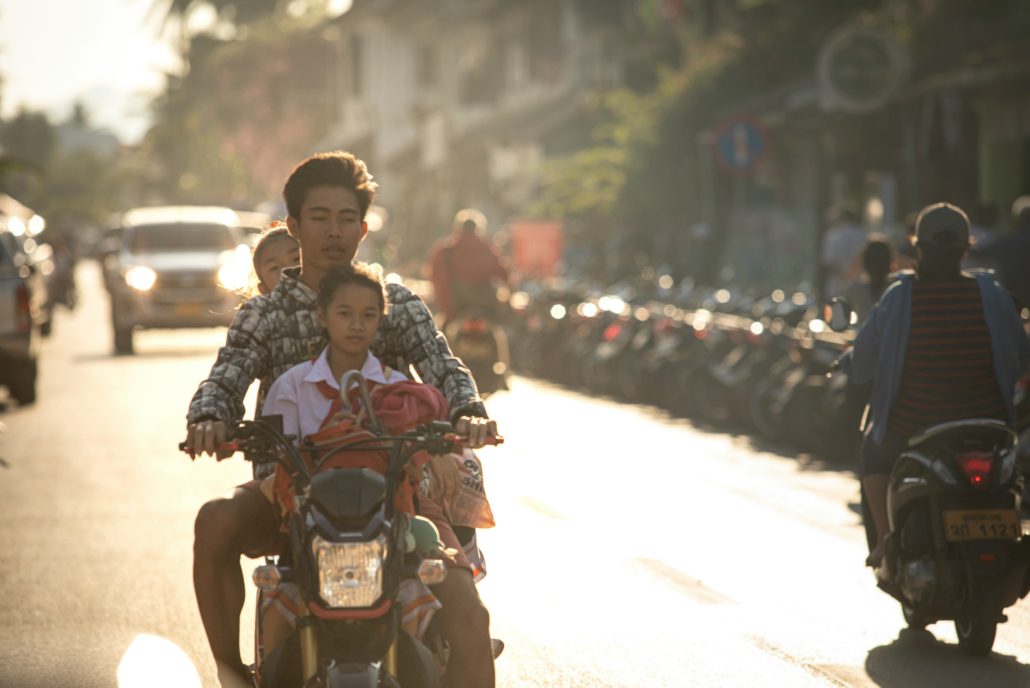
 Laos is one of Southeast Asia’s most beautiful and significant countries in terms of biodiversity – but also one of the region’s poorest nations. Foreign aid to Laos is key to alleviating this and protecting the country. With around 40% of Laotians living in poverty in the 1990s, the country has seen significant growth in recent years. However, 18% of the population still live in poverty.
The Lao economy relies on foreign aid and tourism for its investments, while an overwhelming majority of citizens work in agriculture. To build a robust economy and continue to lift people out of poverty, foreign aid focuses on the intersection between changing weather, poverty reduction and biodiversity. Sustainable development which connects rural populations to landscapes and urban cities alike.
Lao Biodiversity and Infrastructure
The environment in Laos comprises 166 species of reptile and amphibian, 700 birds, 90 bats and more than 700 mammals, according to the Convention on Biological Diversity. Situated on the heavily diverse Mekong River, the country contains more than 500 species of fish and 10,000 types of plant, with 40% of its landmass covered by forest. Locals can harness this biodiversity for poverty reduction through agricultural trade.
More than 60% of Laotians work in agriculture, primarily growing a diverse range of rice variants. This natural diversity and rich environment must receive protection to allow the 2 million farmers and laborers to make a profit. This sustainable use of the environment allows economic growth for the poorest in Lao society, while protecting the landscape for future generations.
The agricultural industry struggles when conservation is not at the heart of the sector’s development. Between 2001 and 2022, agricultural land increased from 8% to 18% due to a focus on protected spaces and arable land. Permanent pastures are key to supporting Lao agriculture. Through conservation efforts, the 48,000 unemployed Laotians can find work in conservation projects or crop production. However, these peripheral regions are ill-equipped and disconnected from the rest of the country.
Employment
Agricultural work can also be insecure and susceptible to seasonal fluctuations. Employment in all sectors decreased between 2013 and 2019. Industry itself has created few job opportunities, whereas rising farm incomes have primarily reduced poverty. Conservation projects create jobs that avoid these issues, providing wage-based income and job security. Alex Kremer, World Bank Lao PDR Country Manager, estimates “production forests could create up to 300,000 jobs through sustainable plantations.”
The combination of infrastructure projects and protection against natural disasters further allows Laotians to participate in a growing economy. Between 2010 and 2017, aid from the World Bank improved 171 km along two national roads, cutting travel time by 50% and 72% respectively. This infrastructure for travel and transport is crucial for rural Laotians living in poverty – the current focus of foreign aid to Laos.
How This Helps
The poorest live in rural villages away from larger cities, such as Vientiane and Luang Prabang, and struggle to find funding to improve their tertiary roads. Connecting these communities to larger financial centers and allowing them to travel for work lifts them out of poor conditions and opens them up for business.
During the aforementioned period, the World Bank reports 1,600 km of provincial roads were maintained to connect Laotians across the vast countryside. This allows an existing rural, agricultural economy to be connected to the growing investment centers in the Northern regions of Laos, potentially connecting a rural farmer to western markets.
Through conservation efforts, people not only find jobs but green jobs, which both harness and protect the rich biodiversity of Laos. With further infrastructure investments, local communities can manage their own forests within their local areas, but only if foreign aid can be expanded to the 1,200 villages within protected forest landscapes.
These areas are the hardest to connect to growing urban population ceners, but reaching them is crucial to helping those in extreme poverty on the fringes of Lao society. There is still a lot of work to do, and foreign aid to Laos can bridge these gaps.
The Real-World Impact
The Poverty Reduction Fund does this, for example, with its ‘community-based construction’ of local infrastructure. This also provides education on food consumption, which transforms the approaches of poor families in their health and hunger. Foreign aid to Laos stresses a ‘bottom-up,’ people-focused approach to downsizing poverty, which puts the community and its environment at the heart of poverty-reduction. This initiative was particularly crucial in educating poverty-stricken families who were vulnerable during the coronavirus pandemic.
Foreign aid to Laos is a case study in the intersection between climate, health and poverty in international development. Improving aspects of a country’s infrastructure, seemingly to help just one part of society, simultaneously lifts others out of poverty and improves the overall health of the population. This creates a sense of dignity for the country’s inhabitants, previously unthinkable before the turn of the century.
Important attributes in the makeup of society are amplified through foreign aid in unimaginable, and often intangible, ways. Foreign aid to Laos not only downsizes poverty, but acts as a practical strategy for sustainable development through local infrastructure and job creation.
– Lee Stonehouse
Lee is based in Newcastle upon Tyne, UK and focuses on Good News and Politics for The Borgen Project.
Photo: Unsplash

Ambitious Goals and Quick Results: Mongolia’s Vision 2050
Mongolia’s Vision 2050 was first introduced as a response to the COVID-19 pandemic in May 2020. During 2020, Mongolia experienced an economic reduction of 10%, strikingly fast, unlike previous years. The lockdown on homes also revealed the vulnerability of citizens to poverty, with food insecurity, easy job loss, and a decrease in agricultural products. The policy has three phases: phase one from 2021 to 2030, phase two from 2031 to 2040, and finally from 2041 to 2050.
Mongolia’s Poverty Goals for 2050
Mongolia’s Vision 2050 has many objectives for different parts of the culture and government. For poverty specifically, Mongolia plans to reduce national poverty to 15% by 2030 and 5% by 2050. The first phase, 2021-2030, involves bolstering an economic environment that supports entrepreneurship, expanding the job market by moving many financially unstable citizens to the middle class, and providing at least 75% of herders and farmers with decent equipment and technology to support a stable business flow. On top of this, Mongolia plans to resolve any overdue external debt the government owes while maintaining a stable economy.
By resolving external debt, foreign trade and investment are stronger and less risky, which in turn helps create a steady stream of employment for citizens. If the country improves job opportunities, many Mongolian citizens could transition from poverty into the middle class. One of Mongolia’s Vision 2050 goals is to make the middle class a predominant economic group to encourage job creation and innovation.
The second and third phases, 2031-2050, will foster a competitive nature in business to keep cash flows going smoothly and to prompt innovation among citizens to improve the culture and economy. Alongside these goals is to improve credit ratings and increase national savings. In the last phase, 2041-2050, Mongolia hopes to make the middle class a predominant economic group. With many citizens transitioning to the middle class with a lucrative job environment and encouraging entrepreneurship, inflation should drastically decrease, while employment skyrockets. One of the most ambitious goals in this final stage of Mongolia’s Vision 2050 is to create at least one city completely free of poverty.
Strides in Progress
One of the fastest results that Mongolia’s Vision 2050 accomplished was improved air quality in 2020. This problem partly predated the implementation of Vision 2050, where in 2019, Mongolia’s Voluntary National Review raised the question of growing air pollution, and started taking steps to reduce it. However, thanks to the urgency and efforts of Mongolia’s Vision 2050, in 2020, Mongolia cut air pollution down by 40%.
Halfway through phase one, Mongolia’s Vision 2050 has already yielded some promising results for the rest of the policy plan. The creation of the E-Mongolia app is an e-government service that has been designed for public use. Essentially, the app allows citizens to look up vehicles and property for purchase in a given area. The app also allows citizens to look at personal medical records, prescriptions, and accurate data on floods. The app has made strides in making data, accessibility, and communication easier for citizens and political officials in Mongolia. In other words, the app has improved the quality of life through access and clarification while making political dealings faster and easier.
Value chains for livestock have also improved drastically from 2020 to 2025. Animal husbandry has experienced increases in quality, which has driven down price volatility in Mongolia, specifically for products like cashmere, meat and dairy. The economic potential for livestock bolstering is promising, with many more Mongolian politicians showing an interest in the sector in recent years, and continuing to pour resources and effort into the chain to create a stable pillar of economic income.
The Future
Mongolia’s Vision 2050 continues to work towards the ambitious goals of reducing national poverty to 5% and creating a poverty-free city by 2050. With the swift result of decreased air pollution, the growing focus on the farming economy, and the ease and quality of life improvement brought about by the E-Mongolia app, future success looks tangible and bright for Mongolia.
– Russell Bivins
Photo: Flickr
Invisible Inequality: Disability and Poverty in Singapore
SG Enable is an agency that centers around disability and poverty in Singapore, aiding anyone from different underprivileged backgrounds. It also aims to make Singapore a more inclusive society by helping to advocate and raise awareness.
About Disability and Poverty in Singapore
According to the Singapore government data, around 3.1% of Singapore’s adult population lives with some form of disability, the rate rising to 13.3% among those aged 50 and above, the biggest percentage seen. Students in Singapore cover the smallest percentage at 2.1%.
While the numbers may seem modest, households and communities deeply feel the effects. People with disabilities (PWDs) in Singapore are significantly less likely to be employed: only 32.7% of working-age PWDs held jobs as of 2023, compared to more than 80% in the general population.
Saltandlight, a foundation that provides a digital gathering space for Christians globally, interviewed Aaron Wong, who has a type of muscle dystrophy called charcot-marie-tooth disease and decided to return to Singapore in 2025, where he grew up. Upon returning, Mr. Wong detailed his tough transition into Cheshire House, a nonprofit care home: “I had to be assisted by hired help whom I barely knew with dressing up and toileting. It was humbling and humiliating.” He described Cheshire House as a “godsend” and said that he “started to see that [he] was not in Cheshire Home as a means to an end, but there was meaning and purpose in me being here within its walls with 110 other people.”
Those living with a disability can contact SG Enable for further help. Otherwise, there are other ways to seek help through the specific organization such as The Singapore Association for the Deaf (SA Deaf) or the Singapore Association of the Visually Handicapped (SAVH).
Addressing Disability and Poverty in Singapore
Through multiple initiatives, the Ministry of Social and Family Development (MSF) announced many ways to help those most affected. The Enabling Masterplan of 2030 was announced on October 11, 2022, which outlines the plan for Singapore as a society that is inclusive for all in 2030, as it was created by, for and alongside persons with disabilities and their caregivers. Along the way, the government has also announced new measures in place to help such as flexible work schedules, and building disability-friendly buildings and sites.
The high cost of living exacerbates this inequality around poverty too. In 2021, The National Institute of Health surveyed the possible correlation between disability and poverty in Singapore. The study’s analysis further revealed that individuals with lower levels of education and those who were unemployed or economically inactive were significantly more likely to have disabilities. This association indicates that individuals facing economic hardship might be at a higher risk of disability, or conversely, that the presence of a disability could lead to reduced educational and employment opportunities, thereby increasing the likelihood of experiencing poverty.
However, the government is taking several measures to help bridge the gap between disability and poverty in Singapore. The Ministry of Culture, Community and Youth (MCYS) introduced subsidized health care, housing and education, and a Ministry spokesperson told the BBC that “Singapore has an extensive social safety net.”
The ComCare Endowment Fund
The ComCare Endowment Fund also emerged in June 2005, which financially aids low income people and families through support programs to the public. To qualify, those applying must have a total income for the household of $1,900 or less, or a per capita household earnings of $650 or less. The Straits Time reported that ComCare had distributed more than $236 million to those in need, a Singapore record since the Fund’s creation.
One can define a developed nation by the dignity and opportunity it provides to its most vulnerable citizens, not by GDP or worldwide rankings. Singapore’s next frontier of prosperity may not be innovation or money, but rather deepening its social contract.
– Sumayyah Karim
Photo: Unsplash
How Foreign Aid to Laos Is Key To Sustainable Development
The Lao economy relies on foreign aid and tourism for its investments, while an overwhelming majority of citizens work in agriculture. To build a robust economy and continue to lift people out of poverty, foreign aid focuses on the intersection between changing weather, poverty reduction and biodiversity. Sustainable development which connects rural populations to landscapes and urban cities alike.
Lao Biodiversity and Infrastructure
The environment in Laos comprises 166 species of reptile and amphibian, 700 birds, 90 bats and more than 700 mammals, according to the Convention on Biological Diversity. Situated on the heavily diverse Mekong River, the country contains more than 500 species of fish and 10,000 types of plant, with 40% of its landmass covered by forest. Locals can harness this biodiversity for poverty reduction through agricultural trade.
More than 60% of Laotians work in agriculture, primarily growing a diverse range of rice variants. This natural diversity and rich environment must receive protection to allow the 2 million farmers and laborers to make a profit. This sustainable use of the environment allows economic growth for the poorest in Lao society, while protecting the landscape for future generations.
The agricultural industry struggles when conservation is not at the heart of the sector’s development. Between 2001 and 2022, agricultural land increased from 8% to 18% due to a focus on protected spaces and arable land. Permanent pastures are key to supporting Lao agriculture. Through conservation efforts, the 48,000 unemployed Laotians can find work in conservation projects or crop production. However, these peripheral regions are ill-equipped and disconnected from the rest of the country.
Employment
Agricultural work can also be insecure and susceptible to seasonal fluctuations. Employment in all sectors decreased between 2013 and 2019. Industry itself has created few job opportunities, whereas rising farm incomes have primarily reduced poverty. Conservation projects create jobs that avoid these issues, providing wage-based income and job security. Alex Kremer, World Bank Lao PDR Country Manager, estimates “production forests could create up to 300,000 jobs through sustainable plantations.”
The combination of infrastructure projects and protection against natural disasters further allows Laotians to participate in a growing economy. Between 2010 and 2017, aid from the World Bank improved 171 km along two national roads, cutting travel time by 50% and 72% respectively. This infrastructure for travel and transport is crucial for rural Laotians living in poverty – the current focus of foreign aid to Laos.
How This Helps
The poorest live in rural villages away from larger cities, such as Vientiane and Luang Prabang, and struggle to find funding to improve their tertiary roads. Connecting these communities to larger financial centers and allowing them to travel for work lifts them out of poor conditions and opens them up for business.
During the aforementioned period, the World Bank reports 1,600 km of provincial roads were maintained to connect Laotians across the vast countryside. This allows an existing rural, agricultural economy to be connected to the growing investment centers in the Northern regions of Laos, potentially connecting a rural farmer to western markets.
Through conservation efforts, people not only find jobs but green jobs, which both harness and protect the rich biodiversity of Laos. With further infrastructure investments, local communities can manage their own forests within their local areas, but only if foreign aid can be expanded to the 1,200 villages within protected forest landscapes.
These areas are the hardest to connect to growing urban population ceners, but reaching them is crucial to helping those in extreme poverty on the fringes of Lao society. There is still a lot of work to do, and foreign aid to Laos can bridge these gaps.
The Real-World Impact
The Poverty Reduction Fund does this, for example, with its ‘community-based construction’ of local infrastructure. This also provides education on food consumption, which transforms the approaches of poor families in their health and hunger. Foreign aid to Laos stresses a ‘bottom-up,’ people-focused approach to downsizing poverty, which puts the community and its environment at the heart of poverty-reduction. This initiative was particularly crucial in educating poverty-stricken families who were vulnerable during the coronavirus pandemic.
Foreign aid to Laos is a case study in the intersection between climate, health and poverty in international development. Improving aspects of a country’s infrastructure, seemingly to help just one part of society, simultaneously lifts others out of poverty and improves the overall health of the population. This creates a sense of dignity for the country’s inhabitants, previously unthinkable before the turn of the century.
Important attributes in the makeup of society are amplified through foreign aid in unimaginable, and often intangible, ways. Foreign aid to Laos not only downsizes poverty, but acts as a practical strategy for sustainable development through local infrastructure and job creation.
– Lee Stonehouse
Photo: Unsplash
How National Vocational Training in Egypt is Empowering Youth
Reforming Education to Meet Labor Market Demands
Egypt’s strategic investment in TVET reflects a commitment to building a more resilient and inclusive economy. The Technical Education Reform Strategy is reshaping how young people prepare for the job market, a group that currently sits at 20% unemployment compared to Egypt’s overall 7%, one of the highest in the MENA region. These conditions highlight the urgency of the nation’s tactical use of a competency and skills based curriculum, ensuring new workers can survive the competitive and rapidly evolving labor market each year.
International development partners like the European Training Foundation, the German Development Corporation and the USAID-funded “Workforce Egypt” project have supported this nationwide reform. Together, these efforts have led to the creation of more than 2,900 institutions that blend academic learning with hands-on experience in fields such as agribusiness, hospitality and clean energy.
Partnerships that Power Progress
A central pillar driving reforms in the country’s education policy is the Egypt Impact Lab (EIL), a government-embedded initiative led by J-PAL Middle East and North Africa. It works alongside the Ministry of Education and Technical Education to evaluate and design policies. The EIL provides evidence and projections to ensure that vocational education policies continue to produce workers who support Egypt’s evolving economy.
In addition, the EIL acts as an interconnected space that brings together policymakers, donors and international experts to align priorities and shape reforms. These partnerships are instrumental in converting ambitious ideas into effective, scalable programs that can reach the students who need them most.
Reaching the Marginalized: Refugees and Informal Workers
While Egypt’s education reforms benefit millions of youth, they are particularly crucial for vulnerable communities. Egypt hosts more than 900,000 registered refugees, along with 1.5 million Sudanese migrants fleeing the current crisis. Refugees face high barriers to employment and education, which vocational training in Egypt aims to address. Programs like Caritas Egypt’s “For a Better Future” offer training and entrepreneurship skills to Egyptian and Syrian youth. Participants receive certifications from the Ministry of Social Affairs, gaining a foothold in Egypt’s competitive labor market. Training topics range from plumbing and tailoring to sustainable practices like plastic waste management and water conservation.
The World Food Programme (WFP) also plays a vital role, especially through its skills development program for refugees and marginalized groups. The WFP focuses on building skills in high-demand sectors, while also providing micro-loans to women entrepreneurs and promoting inclusive training opportunities. These policies directly impact participants’ economic well-being, with household incomes of women in the WFP’s She Can program increasing by up to 50%.
A Path Forward
Vocational training in Egypt has developed into a tool of long-term socio-economic growth, laying long term groundwork to equip young people and marginalized groups with the skills to not only sustain the country’s developing economy, but also transform their own lives.
The initiatives and partnerships created by Egypt’s TVET system build futures for millions, holding the potential to reduce the inequality and deprivation that the many Egyptians below the poverty line face every day. Furthermore, as Amr Bosila of the Ministry of Education and Technical Education noted, “By aligning education with labour market needs…Egypt charts a course towards a future of inclusive growth and opportunity.”
– Tom Finighan
Photo: Flickr
Internet Access in Peru: Bridging the Digital Divide
Barriers in Rural Areas
Rural communities, especially those in the Andes Mountains and around Cusco, face the greatest access challenges. Harsh terrain prevents signal transmission and complicates infrastructure development. Many residents also lack the financial means to afford laptops or data plans. As most internet infrastructure concentrates in urban centers, the rural-urban divide continues to widen. As of 2023, 38% of Peruvians lived below the poverty line, with an additional 5.7% at risk of falling into extreme poverty. Amid these economic challenges, internet access remains a privilege rather than a basic utility. However, several organizations are working to change that reality by expanding digital access nationwide.
Improving Access Through Education
art=”1580″ data-end=”2164″>Jangala, an NGO focused on digital access for underserved communities, partners with local organizations to bring internet connectivity to Peru. In Cusco—where 20% of children never finish primary school and 38% never complete secondary education due to financial hardship—Jangala teamed up with the Latin American Foundation of the Future (LAFF). Together, they provided laptops to students and introduced the Jangala Big Box to schools. This technology delivers instant internet access, enabling students to complete homework, collaborate with peers and access new learning tools.
Students in Cusco say that access to online resources through Jangala’s Big Box helps them complete their homework and stay enrolled despite financial challenges. This step forward has created new learning opportunities for students who might otherwise have been forced to drop out, reducing long-term risks of poverty.
A Broader Effort: Internet Para Todos
Beyond Cusco, the initiative Internet Para Todos (Internet for All) works to expand connectivity across Peru. This partnership—formed by Telefónica and Meta (formerly Facebook)—focuses on cost-effective solutions that target remote, rural areas. Since 2016, the group has connected 2.8 million Peruvians and established 1,900 4G sites in more than 15,000 towns. Rather than relying on heavy capital investment, the project uses shared infrastructure and open-access models. This strategy significantly lowers costs and extends services to hard-to-reach populations.
Building Digital Skills
To ensure people can fully benefit from connectivity, Peru launched the Digital Basic Basket program. This initiative supports digital literacy and aims to equip individuals with the skills needed to navigate education, health care and job markets online. The program focuses on rural areas and supplies tablets to students, along with digital training for public sector workers such as teachers and police officers. These ongoing efforts coincide with Peru’s growing digital economy. In 2021, the country’s e-commerce sector reached $9.3 billion—a 35% jump from the previous year. Forecasts predict that by 2030, the market will grow to $15.3 billion.
Looking Ahead
Peru’s journey toward digital inclusion reveals that expanding access requires more than infrastructure—it also depends on digital skills, education and local engagement. Organizations like Jangala and Internet Para Todos play a key role in bridging this divide. By continuing to improve internet access in Peru by building low-cost networks, training communities and supporting long-term solutions, Peru could reduce poverty and unlock greater opportunity for all citizens.
– Felix Hughes
Photo: Flickr
Thailand’s Efforts Against Deforestation Aids Communities
Background
Southeast Asia contains around 15% of the world’s tropical forest, much of which is in Thailand. These forests are losing 1.2% every year, one of the highest deforestation rates in the world. One of the main causes of this loss rate in Southeast Asian countries like Thailand is extractive industries like palm oil and illegal logging.
Thailand is one of the world’s top producers of palm oil, producing 2.78 million tons in 2018. In Thailand specifically, palm oil cultivation and production lands have grown by 60% since 2009.
Deforestation
Additionally, illegal logging also contributes significantly to deforestation. Thailand’s efforts against deforestation include increased government restrictions on the logging industry in 1989 and 2006. However, Thai forests continue to be at risk for illegal logging.
According to Forest Trends’ October 2021 report on Thailand, “Illegal logging and trade affect many timber species, but highly valuable – often rare and endangered – species that are protected under harvest and/or trade regulations are a key target and at an elevated risk for illegality.” China remains the key importer of illegally harvested timber.
By 2024, Thailand lost 62,600 hectares of forest. The effect of this deforestation isn’t just devastating to the environment and biodiversity. It also harms the millions of people in Thailand who live near forests.
While Thailand is fighting deforestation, researchers at the World Bank estimate that if it does not stop, the wider environmental devastation of deforestation would decrease the Thai GDP by more than $550 billion. By contrast, the economy would grow by $54 billion if deforestation stops.
The study isolates that flooding is one of the main ways that “…increases the risk and severity of floods, which can have devastating consequences. Case in point, the 2011 flood affected more than 13 million people, destroyed 19,000 homes, displaced 2.5 million people…”
Thailand Fighting Back
However, Thailand and the international community are fighting back. Thailand’s efforts against deforestation include: strengthening property rights, changing domestic budget priorities and international cooperation. Instead of pitting the global poor and the environment against each other, the Thai government has instead empowered local communities. One of the key ways Thailand has helped protect forests is to grant stronger property rights to people living in reserve forests. Researcher Thanyaporn Chankrajang found that forests with these communal property rights experienced increased forest cover and decreased forest fires.
The Thai government has also switched its fiscal policies to help protect forests. Through fiscal grants, the governments receive increased money, funded through a commodity tax, if they can successfully protect their natural resources, like naturally-grown forests. Additionally, the Thai government continues to set aside funds for forest reserves that focus on sustainable forest management.
EUDR
Assisting them with these efforts, the European Union is teaming up with Thailand to help them join the European Union’s Deforestation Regulation (EUDR). The EUDR will help regulate Thailand’s forestry, rubber and palm oil industries in order to become more sustainable. Not only will the EU help Thailand regulate these industries and their supply chains, but also help monitor for deforestation trends. With this help and through its National Economic and Social Development Plan, Thailand aims to stop deforestation by increasing its forest area to 40% of the country.
Thailand faces a major ecological crisis that will continue to harm both its environment and its poorest communities. However, due to Thailand’s efforts against deforestation and thanks to the assistance of the international community, these negative trends can not only be halted but entirely reversed.
– Joseph Laughon
Photo: Flickr
Sanitation Improvements in Uganda: Empowering Youth Innovation
Addressing a National Sanitation Crisis
Many Ugandan schools still face serious challenges related to water, sanitation and hygiene (WASH). According to UNICEF, nearly 30% of schools do not have usable toilets and 40% lack access to handwashing stations. These shortages contribute to frequent illnesses, absenteeism and high dropout rates, particularly among girls, who are more likely to miss school during menstruation when hygiene facilities are inadequate.
The Centre for African Justice notes that poor WASH conditions in schools harm students’ health, attendance and dignity. While Uganda has policies like the School Health Policy in place, implementation often falls short, particularly in rural regions. To bridge these gaps, youth-led movements and nonprofit organizations continue to play a vital role in sanitation improvements in Uganda and raising community awareness.
Students Lead Practical Sanitation Solutions
A collaborative project between Wright State University students and a rural Ugandan school offers a clear example of youth-driven innovation. The engineering students co-designed and installed composting latrines, handwashing stations and improved gray water discharge systems. These improvements introduced sustainable technology while strengthening local ownership. Teachers, students and parents reported stronger attendance and a renewed sense of pride in their school environment.
Clean Water Boosts Girls’ Education
Access to clean water directly supports girls’ education. At God’s Hope Primary School, the nonprofit Simone’s Kids installed a clean water system that replaced unsafe, time-consuming water collection, reducing student absenteeism. Previously, children spent hours walking to collect water from unsafe sources. The new system provides safe drinking water and supports regular handwashing practices. Girls, in particular, benefited from private sanitation facilities, which allowed them to manage menstrual hygiene and continue their education without disruption.
Safe Water Unlocks Opportunity
Water for Good, a nonprofit working in Uganda, highlights how safe water systems open new possibilities for children. A young girl shared how a new well at her school enabled her to attend classes regularly and focus on her future goals. These stories show how basic water access can change educational outcomes and help students imagine new possibilities.
A Sustainable Path Forward
Youth-led sanitation efforts in Uganda reflect a broader commitment to health, equity and education. By installing clean water systems, building safe toilets and promoting hygiene, these projects create safer learning environments. Continued investment in school sanitation could support better academic outcomes and strengthen national development. Uganda’s youth remain central to this progress, shaping a future where all students can learn and thrive with dignity.
– Vasara Mikulevicius
Photo: Flickr
Digital Solutions: AgriDigital Reduce Rural Poverty
Rural Poverty: Background
The AgriTech sector, an industry that provides technological solutions to agricultural problems, has surged in recent years, with an average of 1,522 new companies founded annually in the past decade. This comes at a time when global agriculture has faced numerous threats, from supply chain shocks during the COVID-19 pandemic, to a changing climate that threatens global crop supplies, to the ongoing conflict in Ukraine, which has raised food prices worldwide.
Brookings suggests that increasing agricultural productivity can directly reduce poverty, with a 1% increase in agricultural GDP creating a greater than 1% decrease in poverty. AgriTech businesses should help boost this productivity. Instead of increasing the resources available to small rural farmers, these companies help producers reach the market, make informed decisions through data, and gain access to key lines of credit and funding.
This article will highlight three AgriTech companies in three different countries and examine how these digital solutions can help reduce rural poverty and help farmers grow their businesses from subsistence activities to free-market enterprises.
AgriDigital
AgriDigital is a digital management platform that helps participants across the agricultural supply chain manage their business and make sales. Based in Australia, AgriDigital uses blockchain technology—the same digital ledger that’s behind the world’s leading cryptocurrencies—to allow buyers and sellers to make safe transactions through their platform.
Enabling online transactions between members of the agricultural supply chain is only one of AgriDigital’s many functionalities. The platform also allows users to manage inventory and deliveries, send invoices, connect with other partners in the supply chain and utilize their data to make informed business decisions. The software is designed to help each of the different roles across the supply chain, including farmers, site operators, grain traders, and brokers.
Apollo Agriculture
Apollo Agriculture helps Kenyan and Zambian farmers gain access to financing. The company allows farmers to buy inputs directly on their site. If a farmer is cash-strapped and needs to buy on credit, Apollo will give them a loan with favorable repayment conditions. The farmers also receive free insurance on purchases bought with credit in case of an emergency.
Apollo connects farmers with nearby agrodealers who also use the site. In helping both dealer and farmer buy and sell inputs where needed, Apollo fills the same intermediary role as AgriDigital, providing a platform to connect various members of the supply chain. Apollo also provides training for farmers and logistics for agrodealers.
Mayani
Mayani is a company from the Philippines that helps agri-fishery businesses sell their products to local businesses. With 2% of the country’s GDP consisting of aquaculture, Mayani helps fisheries weather the seasonal spikes that leave fishermen and women at the mercy of volatile prices. The business helps these fisheries and farms find partner businesses such as restaurants, hotels and supermarkets in a B2B format. These partner businesses gain access to sustainably sourced, quality local ingredients. Households can also use the platform to find fresh produce for the home kitchen. Mayani, while acting as an intermediary, also performs quality control on products delivered from the farm to the kitchen/market.
Technology Solving Rural Problems
The three companies surveyed above are just a small sample of the larger AgriTech sector that creates efficient ways to boost productivity and reduce rural poverty. They also perform just a small subset of the total functions that AgriTech businesses provide.
AgriDigital also helped customers manage their business, while Apolo Agriculture provided training and financing.
However, Brookings notes several other functions that AgriTech businesses perform. These include mechanization processes like IoT sensors that help farmers increase crop production, or traceability capabilities that allow products to be tracked through the supply chain, ensuring responsibility for quality products.
International poverty has decreased where crop productivity has increased. In East Asia, where many countries have climbed the economic ladder, crop yields have multiplied by a factor of six in the last 40 years. In Sub-Saharan Africa, however, these crop yields have doubled, Brookings reports.
The Future of Rural Poverty
If agricultural productivity is inversely related to global rural poverty, then businesses must focus their efforts on increasing this productivity. AgriTech businesses like AgriDigital, Apollo Agriculture, and Mayani are working towards this goal. By training farmers in useful skills, helping farmers make better business decisions through data collection, giving farmers much-needed access to finance and inputs, simplifying complex business management into simple, easy-to-use applications and connecting different groups of the supply chain together through effective intermediary platforms, these companies work to reduce rural poverty. Helping smallholder farmers gain access to markets ensures that the two-thirds of the world’s poorest who are employed in agriculture can escape rural and overall poverty and become small business owners in their own right.
– Charles Citron
Photo: Flickr
Being Poor in Panama: Challenges and Pathways To Progress
Panama’s GDP grew by 7.4% in 2023, and its poverty rate declined from around 50% in the late 1980s to 13.6% in 2024. However, these gains remain unevenly distributed. An economic slowdown in 2024—driven by mining shutdowns and droughts affecting the Panama Canal—coincided with a one-point increase in poverty, underscoring the country’s ongoing challenge: entrenched inequalities that disproportionately affect rural communities, Indigenous populations and urban peripheries. The disparities are especially stark between urban areas (4.8% poverty rate) and Indigenous comarcas (76%), highlighting how geography and ethnicity continue to shape opportunity.
Contributing Factors to Poverty in Panama
Three primary factors contribute to being poor in Panama:
How Poverty Shapes Everyday Life in Panama
Being poor in Panama affects every aspect of daily life. Here are some ways poverty affects people in Panama:
Initiatives Driving Progress Against Poverty
While Panama’s challenges remain substantial, coordinated efforts across sectors demonstrate measurable progress in poverty reduction.
A Path Forward
Being poor in Panama results from overlapping geographic, economic and institutional inequalities, but progress is possible. With sustained investment in education, inclusive job creation and climate-resilient infrastructure, Panama can convert growth into shared prosperity. By scaling proven programs and strengthening cross-sector collaboration, no community must be left behind.
– Jacobo L. Esteban
Photo: Pixabay
Disability and Poverty in Cabo Verde
According to the latest studies, an estimated 6% of the population of Cabo Verde is living with some form of disability. However, these figures were published in 2010 and are considerably low in comparison to the rest of the global population, highlighting that they are both out of date and likely to be an underestimate. Given the limited data on disability and poverty in Cabo Verde, it can therefore be difficult to form a complete understanding of what life is really like for those living with disabilities.
Pre-Pandemic
In the years leading up to the COVID-19 pandemic, Cabo Verde saw a considerable reduction in its national poverty rate, from 35.2% in 2015 to 27.7% in 2019. This decline was in part due to the active steps the government made to improve social inclusion for its disabled population.
For example, in 2017, in partnership with Handicap International, the National Human Rights and Citizenship Commission produced and disseminated an informative document on disability rights. Titled ‘Un Mundu Pa Nos Tudu’ (‘A World for Us All’), the document details common challenges faced by people with disabilities and debunks myths surrounding the disabled community, helping to improve levels of inclusion.
During the Pandemic
However, the pandemic pushed an estimated additional 88 million people worldwide into poverty, and the situation in Cabo Verde was no different. By 2020, almost a third (31.3%) of its population was living in poverty, reversing previous progress.
In a report published in 2021, the International Disability Alliance found that the pandemic revealed several key areas where support for the disabled population falls short. These include limited participation of people with disabilities in health policy decision-making, insufficient prenatal care for mothers with disabilities and a mental health care network which excludes the disabled community.
Post-Pandemic
Despite this, the government has implemented policies in the aftermath of the pandemic to continue the positive advancements they made before the outbreak, both with respect to poverty levels and social protection for people with disabilities. In 2022, the poverty rate began to fall again and people with disabilities started to see visible improvements to their standard of living.
Established in 2016, the Rede Nacional de Campanha da Educação para Todos, Cabo Verde (otherwise known as the National Network of The Education for All Campaign, Cabo Verde) was able to resume its efforts to improve the lives of disabled people across the country. Led by Dr Marciano Monteiro, who lives with visual impairment, the coalition advocates for increased funding for inclusive education.
In line with the government’s aim of promoting equal opportunities for all, the Ministry of Education, in partnership with the coalition, published a comprehensive report detailing a new set of regulations for schools across the country. These rules guarantee the inclusion of all children with special educational needs, as well as fee-free education, from basic to tertiary, for all children with disabilities.
These changes have already resulted in visible developments within the education system and the situation regarding disability and poverty in Cabo Verde. The quality of teaching, especially with respect to how teachers can support those with diverse educational needs, has greatly improved, leading to an increase in the number of disabled people who stay in school for longer.
Looking Ahead
In making considerable practical adjustments to education and healthcare, the government in Cabo Verde has enabled the disabled population to receive the support they require. This in turn is helping the country break the cycle of poverty.
– Elsa Tarring
Photo: Wikipedia Commons