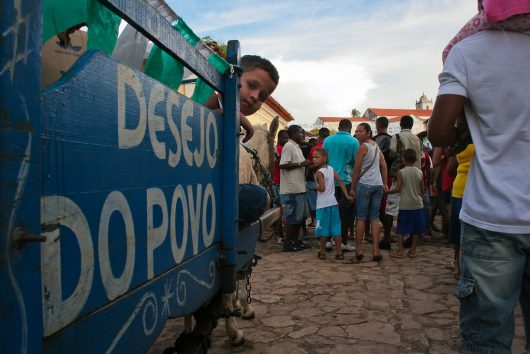
Hunger and poverty in Latin America, including Mexico, Central and South America, have decreased since the 1990s and early 2000s. However, hunger and malnourishment continue to be ongoing issues as a result of poverty.
In 2015, 28 percent of Latin Americans suffered from impoverished conditions, as compared to 44 percent in 2002. Although the numbers had improved since 2002, there was a stall in improvements in 2013.
As of 2017, studies show that 130 million people in South America are currently living in a state of poverty across various countries. These countries include Honduras, Venezuela, Guatemala, Nicaragua, Uruguay, Argentina, Bolivia and Chile.
Contributing Factors of Poverty
One major cause of the poverty and instability suffered among individuals living in these countries is the disparity between socioeconomic classes. According to the Huffington Post, some things that can be done to decrease the rate of poverty and increase the well-being of persons living in Latin America include “comprehensive poverty reduction programs” specifically directed at increasing labor incomes, improving social programs and configuring ways to “integrate early childhood development into the social development.”
Additionally, while Latin America was once a large producer of commodities, this changed after the recession in 2008. Countries such as Brazil, Argentina and Venezuela have faced greater economic losses over the past year. For example, Brazil faced severe economic hardship in 2016 due to failed policy-making strategies and an overall inadequate political environment, which led to higher inflation and a lower income for businesses and families.
The economy in Venezuela has also left much to be desired. Last year, the country faced a free fall in oil production, which led to heightened inflation and negative economic effects on the overall quality of life for Venezuelans.
Argentinian economist Raul Benitez-Manaut told Inter Press News Agency that the real problem surrounding hunger and poverty in Latin America is a “problem of access, not production.” Likewise, he has vocalized the importance of wealthier countries taking the initiative to reach out and help countries whose citizens are suffering from hunger and malnourishment.
Ideas for Improvements Moving Forward
In 2013, Harvard University conducted a study and offered some useful solutions that can help reduce poverty in Latin America. One solution offered by the university addressed the issue of low productivity in Latin countries and the need for the public and private sectors to work together to resolve this issue. For example, a project known as “Mundo Vex Tenda” was created in Brazil in 2010 and funded by the United States Inter-American Development Bank. The project focuses on providing individuals running small businesses in Brazil with the opportunity to learn effective business-related skills in areas such as financial literacy, marketing and food safety practices.
Additionally, Harvard researchers stated that “governments must root out violence and invest in specialized infrastructure; create transparent, accountable mechanisms that decentralize decision-making; and direct resources to reinvigorating the private sector, short of protecting it from competition.”
– Lael Pierce
Photo: Flickr

Poverty in Guadeloupe
In 2009, the citizens of Guadeloupe launched the largest revolt in the country’s history. According to Reuters, there were “huge demonstrations accompanying the strike, consisting of as many as 100,000 people marching in the streets demanding social and economic change.” The strikes were in response to the rising cost of living and disparity in commodity prices in comparison to metropolitan France. The first general strikes were caused by the salary of Guadeloupe being lower than metropolitan France. Alongside low salary, the unemployment and poverty in Guadeloupe were double than the workers living in metropolitan France.
The strikes included groups ranging from environmental groups, to music and dance groups. The wide diversity of activists came together and formed the Lyannaj Kont Pwofitasyon (LKP), loosely translated as the Alliance Against Profiteering. After a month of striking, the LKP came to an agreement with the French Government on 165 demands, including “A 200-euro ($250) increase in the monthly minimum wage, measures to aid farmers and fishermen, lower bank fees, reduced airfares between the islands and France, and reduced prices on food, housing, water, gasoline, and public transportation.”
The strike ended on March 4, 2009, with the Jacos Binos Accord. It is uncertain what the long-term impact of the movement will be and how it will affect the socioeconomic future of Guadeloupe, but one thing is clear, as the new slogan on T-shirts and banners in post-strike Guadeloupe asserts: “Nothing will ever be like it was before!”
Strikes Effective in Reducing Poverty
As a way of rectifying the rifts caused by the strikes, President Sarkozy personally visited Guadeloupe. During his stay, he asserted the view that “Guadeloupe is French, and will remain French.” Almost a decade later, we are seeing some of the ways the French government has taken action to keep poverty in Guadeloupe low preventing another revolt.
In 2016, France created a universal healthcare system for individuals who live within Guadeloupe. The scope of coverage ranges from medicinal prescriptions to death insurances, in attempts to further decrease poverty. The unemployed are also able to use the health care benefits. As of the first day of 2017, “This system covers pregnant women and patients with long-term illnesses (LTI). Patients in these categories no longer pay upfront for their appointments with medical professionals as part of their maternity or LTI coverage.” This took much of the strain of high living costs off of citizens and created more accessible healthcare for Guadeloupe.
This past September, the French government sent police reinforcements to tackle the ever-increasing crime rates in Guadeloupe. According to an article published on Dominica News Online, 70 police officers were sent from France to aid with overall violence within the country. Decreasing crime rates increases tourism, which is increasingly important with the new global attention Guadeloupe is receiving due to being part of France.
Since the revolt in 2009, Guadeloupe has been recognized as a French nation. Much of Guadeloupe’s attractiveness today is attributed to its tropical area with its French-style of living. The French continue to send aid to help in decreasing poverty in Guadeloupe.
– Taylor Elgarten
Photo: Flickr
Five Awesome Women Who Fought Disease
History is full of unsung female heroes, and the story of the fight against disease is no exception. March 8 is celebrated as International Women’s Day, and global health organizations worldwide took the opportunity this year to recognize amazing women who have made, and continue to make, important contributions. Here are five awesome women who fought disease:
1. Lady Mary Wortley Montagu, 1689-1762
Lady Montagu was almost singlehandedly responsible for introducing inoculation to Western medicine. An accomplished poet and letter writer, Montagu became an advocate for global health after she witnessed a smallpox vaccine being administered during a visit to the Ottoman Empire. She used her writing skills to defend the practice at home in England, where she defied European doctors by having her son Edward vaccinated.
2. Dr. Isabel Morgan, 1911-1996
Instrumental in the fight against polio, Morgan broke new ground in the medical understanding of vaccines with her work during the 1940s. She and her team proved that “killed-virus” vaccines were effective in the creation of antibodies in the immune systems of monkeys, preventing the virus from passing the blood-brain barrier. Thanks to her research, a safe and effective vaccine for humans was created and continues to save lives today.
3. Dr. Rebecca Lee Crumpler, 1831-1895
Crumpler challenged the status quo by becoming the first African-American woman to earn an M.D. She devoted her practice to caring for freed slaves and the poor after the end of the Civil War in 1865. Her written work published in 1883 Book of Medical Discourses, which contains a brief autobiography of her career, is one of the first medical references in the U.S. authored by an African-American individual.
4, Henrietta Lacks, 1920-1951
Lacks fought disease in a most surprising fashion: with her own cellular tissue. After being diagnosed with cervical cancer at age 30, Lacks provided a sample from a tumor that contained what medical research refers to as “immortal” cells. Her cells were code-named ‘HeLa cells’ by doctors and researchers. These particular cells are able to survive indefinitely in a laboratory environment, for reasons still partially unknown to science. They have been used to learn more about everything from developing vaccines to cellular behavior in zero gravity environments.
5. Nontokozo Zakwe, 1993-current
Zakwe is living proof that even without medical degrees, girls can grow up to become awesome women who fought disease. Zakwe is a volunteer and ambassador for the DREAMS partnership across 10 African countries, led by the U.S. President’s Emergency Plan for Aids Relief (PEPFAR). After being inspired by her mother’s battle with HIV, Zakwe continues to raise awareness and provide education for preventing the spread of the virus throughout the world.
On International Women’s Day 2017, the Joint United Nations Programme on HIV/AIDS (UNAIDS) released a report outlining its impressive goals to reduce the number of girls and women infected by the virus by providing access to reproductive health options to 90 percent of the population by 2020. Among the ranks of those working to achieve that reality, there will surely be more pioneering women in the global fight against the disease.
– Dan Krajewski
Photo: Flickr
UN Secretary-General Calls for a System Overhaul to Achieve the SDGs
In her first official statement as U.N. Deputy Secretary-General, Amina Mohammed called for a new approach to achieving the Sustainable Development Goals (SDGs). She gave her speech to the U.N. Economic and Social Council (ECOSOC) operational activities segment, which met between February 28 and March 2, 2017.
Participants at this year’s ECOSOC meeting discussed increasing coordination, accountability and transparency in the U.N.’s approach to the SDGs. In her address, Mohammed stated that to achieve the SDGs would require all countries to “redefine traditional planning, delivery and monitoring.”
Mohammed has a track record of fighting for the environment. She has held positions as the former Minister of the Environment of Nigeria, the founder of the Center for Development Policy Solutions and a professor for the Master’s in Development Practice program at Columbia University’s Earth Institute. Mohammed’s past achievements show her commitment to the SDGs. In her address she said that, “achieving the SDGs is not an option, but an imperative for a safe and secure future of prosperity, opportunity and human rights for all.” The SDGs are an investment in preventing crises from forming out of global challenges like poverty, climate change, environment and hunger.
Mohammed believes that achieving the SDGs will require the U.N. to take more initiative. While the U.N. is actively engaged in efforts to achieve the SDGs, policy and framework has expanded immensely since the creation of the Millennium Development Goals in 2000. For example, the Addis Ababa Action Agenda laid out specific guidelines for implementing the SGDs in 2015, and the Inter-agency Task Force was created in 2016 to analyze progress. Only time will tell what developments will come in the future.
– Josh Ward
Photo: Flickr
Helping Others Helps You to Live Longer
A study from December 2016 indicated that the secret to humanity’s desire to live longer may not exist in pills, surgical treatments, lotions, fad diets or exhausting workouts. The research, published in the journal Evolution and Human Behavior, indicates that simply helping others increases the probability of living longer. Although the study focuses on grandparents who give occasional care to children or grandchildren, it also discusses the health benefits gained by childless couples who provide support to other people.
The researchers state that the neural and hormonal system that is triggered during caregiving can positively impact health and reduce the mortality of the helper. They indicate that these benefits occur when applied to both relatives and non-relatives.
Good Vibes from Volunteering
This study’s findings are not unique. A 2013 review of 40 similar studies indicated that volunteering can reduce early mortality rates by a surprising 22 percent. Published in BMC Public Health, the review also indicated that when people volunteer, they feel good. This can reduce depression and increase contentment.
In a statement, lead author Dr. Suzanne Richards states, “Our systematic review shows that volunteering is associated with improvements in health.”
We Can Do Better
However, the review indicates that our global community has room for improvement. Only 27 percent of Americans and 22 percent of Europeans volunteer their time. Australia is slightly more altruistic, with 36 percent of Australians performing community service.
Having a busy schedule doesn’t necessarily exclude someone from the benefits of community service, since it doesn’t take a major time commitment to reap the rewards. According to the review, just an hour of volunteer work per month is enough for participants to absorb those positive emotions and potentially live longer.
It’s likely that many people are capable of finding a way to spare an hour a month to support the causes important to them. Health and longevity may just depend on it.
– Gisele Dunn
Photo: Flickr
Insurance Payouts for Victims of Drought in Kenya
The drought in Kenya has reached “epic” proportions, according to government officials. The lack of rainfall caused Kenyan officials to declare the situation a national disaster, and approximately 2.7 million people have been affected.
Fortunately, on Feb. 20, relief reached many via insurance payouts under a livestock insurance subsidy through the Kenya Livestock Insurance Program (KLIP). This is no ordinary insurance company, though. Thanks to development by Kenya’s Ministry of Agriculture, Livestock and Fisheries and technical assistance from the International Livestock Research Institute (ILRI), KLIP is using satellite technology to assist the affected farmers.
Automatically-Triggered Technology
Using both visible and infrared frequencies, the sensitive satellites used by KLIP record the color of ground vegetation in the affected areas. With comparative analysis, KLIP then reviews the recorded data to determine if there is enough “green” plant matter available for livestock to consume. If the index of data indicates a health risk for the livestock based on lack of resources, the insurance payouts are automatically triggered. The technology is tailored so that the subsidies are automatically deposited into farmers’ accounts. The state of the current drought in Kenya triggered KLIP’s criteria, and more than $2 million was paid to approximately 12,000 affected households.
Sustenance via Satellite
On average, each household will receive $170. Based on figures used by KLIP, the subsidy will be enough to support approximately 70,000 head of livestock. An estimated 100,000 people stand to benefit from the payout.
In addition to the monetary benefits, livestock feed, veterinary medicine and water trucks are deployed when the system is triggered. The Kenyan government also plans to increase food rations to those hardest hit.
Cabinet secretary for Kenya’s agriculture ministry, Willy Bett, acknowledged the importance of the recent disbursement to mitigate the drought in Kenya, “…without their livestock, pastoralist communities would be devastated.”
– Gisele Dunn
Photo: Flickr
How Big Thinkers Use Technology to Fight Poverty
Technology has long been considered one of the most useful tools in combating global poverty. New developments continue to show even more promise in this regard. Two prominent thinkers have made recent strides toward finding dramatic new breakthroughs in using technology to fight poverty.
Rob Nail is the CEO and co-founder of Singularity University, a global community created to take on the greatest challenges facing the world today with the use of exponential technologies. Having already worked directly with the government of Uruguay to provide 100 percent of young students with interconnected laptops and tablets, Nail is now looking to the future of education by applying those technologies.
“Imagine five and six-year-old kids learning coding and robotics. What will Uruguay look like 15 years from now?” Nail told Forbes in a January interview. “That can translate into us creating a world of abundance, as we like to call it.” Nail has also worked with existing industrial giants such as Lowe’s and GE in creating technological programs to fight poverty.
Nail is not alone in his quest for using technology to fight poverty. In December, Stanford University launched a dedicated Poverty and Technology Lab. The lab seeks innovative technological solutions to the problem of ongoing global inequality.
The Poverty and Technology lab was announced during December’s Summit on Poverty and Opportunity, a two-day event held on Stanford University’s campus. Attendees included tech juggernauts, such as Facebook founder Mark Zuckerberg and ex-Microsoft CEO Steve Ballmer.
The lab’s founding director Elisabeth Mason told Buzzfeed news that the lab will develop an entirely new field of academic study “that applies the premises and tools of technology to the policies and processes of fighting poverty.” Mason holds extensive experience in fighting poverty as the Senior Advisor at the Stanford Center on Poverty and Inequality. She was awarded the New Yorker of the Year honor by NY1 in 2015.
The Fourth Industrial Revolution, more commonly referred to online as 4IR, is the name for the radical globalization of cyber networks poised to revolutionize the way businesses operate today. It is comprised of three main components: the Industrial Internet of Things, which are machines that collect and act on information, Big Data, which is the mass capturing of data itself, and Digital Infrastructure, which securely connects all the devices.
With their passion for social justice and vision of a future where poverty is nothing more than a historical memory, both Nail and Mason are primed to be major figures in 4IR by using technology to fight poverty.
– Dan Krajewski
Photo: Flickr
Poverty in Tobago: The Poor in a Wealthy Nation
Tobago is a luscious rainforest-covered island off the coast of Venezuela. It is part of the complete nation of Trinidad and Tobago, with Tobago being the smaller of the two islands. Trinidad and Tobago are considered wealthy nations, but about 20 percent of people living there are below the poverty line. Many do not even realize that there is poverty in Tobago.
The poverty in Tobago is a serious issue. Most of the poverty in the nation is situated in the urban communities of the island, according to the World Bank report on Trinidad and Tobago.
Despite the income made by the nation off of oil exports, people are living below the poverty line in Tobago at TT$1,230 per month, according to the national publication, the Trinidad and Tobago Guardian.
Those that were interviewed by the Trinidad and Tobago Guardian said that the TT$1,230 (USD$183) was what they spent on food each month. Therefore many citizens below the poverty line aren’t able to afford anything except for the basic necessities.
The good news about the nation is that the unemployment rate is only at four percent, according to the CIA World Factbook. But for many of those who are unemployed, drugs and criminal activity have been issues for the nation in past years.
The crime and drug violence throughout the years has put a damper on the tourism industry in the nation. The crime rates and the violence on tourists all loop back into one common issue: poverty in Tobago.
But there is work being done for the island nation to decrease poverty. Some of the strategies being used include promoting growth in non-oil sectors, improving labor conditions by reducing discrimination, improving education, supporting health reforms and helping programs meet the needs of the poor.
– Hailey McLaughlin
Photo: Flickr
Poverty in Latin America
Hunger and poverty in Latin America, including Mexico, Central and South America, have decreased since the 1990s and early 2000s. However, hunger and malnourishment continue to be ongoing issues as a result of poverty.
In 2015, 28 percent of Latin Americans suffered from impoverished conditions, as compared to 44 percent in 2002. Although the numbers had improved since 2002, there was a stall in improvements in 2013.
As of 2017, studies show that 130 million people in South America are currently living in a state of poverty across various countries. These countries include Honduras, Venezuela, Guatemala, Nicaragua, Uruguay, Argentina, Bolivia and Chile.
Contributing Factors of Poverty
One major cause of the poverty and instability suffered among individuals living in these countries is the disparity between socioeconomic classes. According to the Huffington Post, some things that can be done to decrease the rate of poverty and increase the well-being of persons living in Latin America include “comprehensive poverty reduction programs” specifically directed at increasing labor incomes, improving social programs and configuring ways to “integrate early childhood development into the social development.”
Additionally, while Latin America was once a large producer of commodities, this changed after the recession in 2008. Countries such as Brazil, Argentina and Venezuela have faced greater economic losses over the past year. For example, Brazil faced severe economic hardship in 2016 due to failed policy-making strategies and an overall inadequate political environment, which led to higher inflation and a lower income for businesses and families.
The economy in Venezuela has also left much to be desired. Last year, the country faced a free fall in oil production, which led to heightened inflation and negative economic effects on the overall quality of life for Venezuelans.
Argentinian economist Raul Benitez-Manaut told Inter Press News Agency that the real problem surrounding hunger and poverty in Latin America is a “problem of access, not production.” Likewise, he has vocalized the importance of wealthier countries taking the initiative to reach out and help countries whose citizens are suffering from hunger and malnourishment.
Ideas for Improvements Moving Forward
In 2013, Harvard University conducted a study and offered some useful solutions that can help reduce poverty in Latin America. One solution offered by the university addressed the issue of low productivity in Latin countries and the need for the public and private sectors to work together to resolve this issue. For example, a project known as “Mundo Vex Tenda” was created in Brazil in 2010 and funded by the United States Inter-American Development Bank. The project focuses on providing individuals running small businesses in Brazil with the opportunity to learn effective business-related skills in areas such as financial literacy, marketing and food safety practices.
Additionally, Harvard researchers stated that “governments must root out violence and invest in specialized infrastructure; create transparent, accountable mechanisms that decentralize decision-making; and direct resources to reinvigorating the private sector, short of protecting it from competition.”
– Lael Pierce
Photo: Flickr
Hunger in Ecuador — Assistance is Still Needed
Ecuador’s Hunger Crisis
Efforts Underway
The World Food Programme (WFP) provides food assistance to around 300,000 people. The organization is also working in collaboration with the government to end malnutrition by focusing on pregnant and breastfeeding women and children under 2 to help reduce malnutrition and stunting in the population. The WFP is actively engaged in strengthening the capabilities of governmental institutions, equipping them with advanced tools and expertise to combat the ongoing crisis effectively.
In addition to the WFP’s efforts, Tetra Pak and the Ministry of Education have launched a collaborative pilot program to provide schoolchildren in targeted regions with 200 ml of nutritious milk daily, five days a week. The program’s goal was to combat malnutrition and reduce school dropouts. Following its success, the program has been formalized into legislation and implemented nationwide.
Looking Ahead
Despite all efforts, Ecuador still faces immense challenges in reducing hunger, food insecurity and malnutrition. The international focus and assistance on Ecuador have decreased recently because it is an upper-middle-income country, further exacerbating the problems. The need of the hour is to assist Ecuador in dealing with these issues by providing aid and assistance and helping it achieve Sustainable Development Goal 2 of zero hunger.
– Dustin Jayroe
Photo: Flickr
Updated: October 1, 2024
Top Five Diseases Infecting Pregnant Women in Poverty
While the disease Maternal and Neonatal Tetanus affects newborns, there are other diseases that can be harsher to pregnant women in poverty, since their bodies work harder to provide health to two individuals. Because of a lack of healthcare and nutrition, these women can be more susceptible to diseases that could be easily managed in countries with accessible healthcare. Here are the top five diseases affecting pregnant women in poverty:
Hepatitis E
Pregnant women in the second or third trimester are more likely to experience liver failure when they contract Hepatitis E. When contracted in the third trimester, the fatality rate is as high as 25 percent. An epidemic in India resulted in high mortality rates of pregnant women. To decrease the risk of spreading Hepatitis E, it is important to maintain hygienic practices and proper handling of public water supplies, since the infection can spread through contaminated drinking water.
Measles
Due to vaccinations, measles is fairly rare in developed countries. However, this is not the case in developing countries. While measles is severe to a baby, it can be even worse for women during pregnancy. A study from Saudi Arabia found that 80 percent of pregnant women in poverty with measles were hospitalized. Measles can infect the fetus and increase the risk of prematurity and miscarriage.
Malaria
Though preventable through vaccination, malaria remains prevalent in Africa. There are about 200,000 newborn deaths each year as a result of malaria in pregnancy, and 30 million women in areas infected by malaria become pregnant each year. When pregnant, the woman’s immunity to diseases decreases, so exposure to malaria increases the risk of illness, severe anemia and death. However, there have been interventions to decrease the risk of contracting malaria. In 2000, the first African Summit on Malaria was held in Abuja, Nigeria. Here, heads of state committed to providing effective malaria interventions to at least 60 percent of pregnant women. Also, there have been efforts to bring malaria interventions through antenatal clinics in Africa.
HIV/AIDS
Globally, HIV/AIDS is the leading cause of death among women between the ages of 15-24, the age women are most likely to become pregnant. Women are twice as likely as men to contract the virus. Antiretroviral therapy has been used to treat pregnant women.
Tuberculosis
This airborne disease is 10 times more likely to infect pregnant women who test positive for HIV. According to the WHO, every year about 700,000 women die from tuberculosis, and more than 3 million women contract the disease. Tuberculosis is the third leading cause of death among women between the ages of 15 to 44. When pregnant, the disease is harder to diagnose since the symptoms (fatigue, tiredness, and shortness of breath) are similar to typical symptoms of pregnancy.
If the U.S. Congress passed the Reach Every Mother and Child Act, pregnant women in poverty who are diagnosed with treatable diseases could receive the necessary treatment. If passed, the U.S. government will provide agencies to expand interventions for maternal health, to provide treatments and assistance to afflicted women and children.
– Emma Majewski
Photo: Flickr