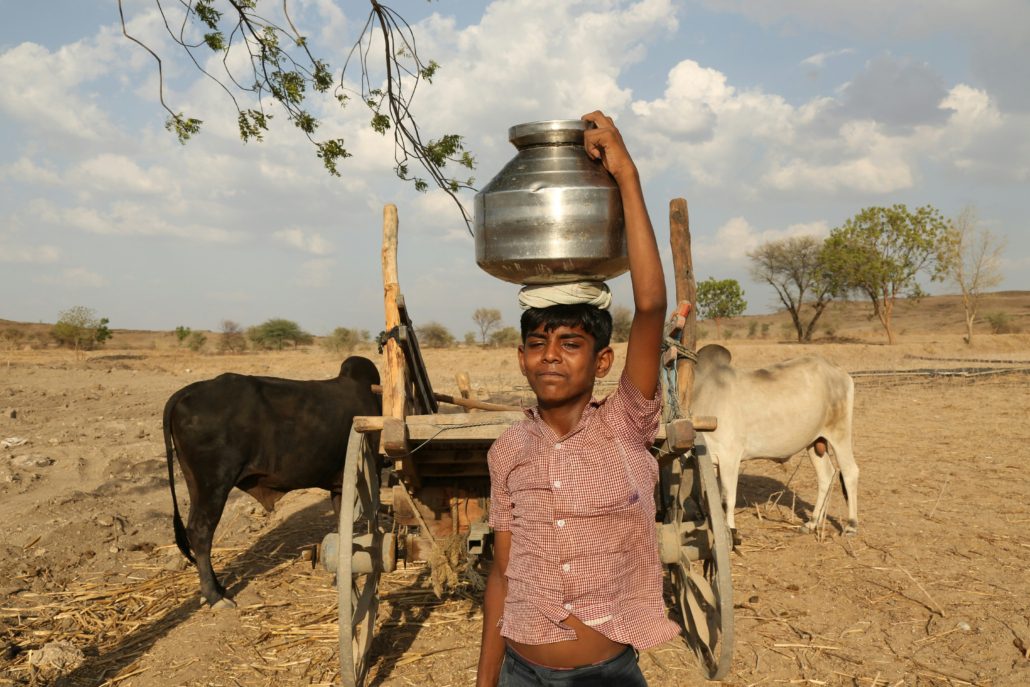
 India, home to 18% of the world’s population and only 4% of its water resources, faces a need for sustainable water management. In response, national campaigns and programs that local communities and women are leading are transforming how India conserves, consumes and manages water, thus addressing the water crisis in India.
About the Water Crisis in India
The severe water crisis amid record-breaking heat waves intensifies each summer, and according to data from India’s Health Ministry, between March 1st and June 18th, 2024, 110 people died from heatstroke.
The right to safe drinking water is a fundamental human right. According to the Central Ground Water Board in 2020, 256 districts were water-stressed. In rural areas groundwater levels are overexploited, and as per a report from the National Commission on Integrated Water Resources Development (NCIWRD), India’s average per capita water availability, is likely to reduce drastically by 2050, leading to a severely water stressed country.
In rural settings, the lack of infrastructure and sanitation, fueled by a lack of hygiene education, gives way for preventable waterborne diseases to take the lives of millions every year. It affects countless children and elderly folk whose immune systems are weakened by age. The public taps and tube wells that are the primary source for many in rural areas are the most prone to contamination.
In addition to global causes like changing weather patterns and availability, India faces specific, deeply rooted challenges. In a country like India where social inequalities have persisted, social inequities that linger directly impact access to water, how it is allocated, distributed and consumed. Additionally, water scarcity and exclusion from public resources continue to disproportionately affect marginalized communities. Here are some key missions working to address the water crisis in India:
1. Jal Shakti Abhiyan: Catch the Rain Campaign
The Indian government launched the Jal Shakti Abhiyan campaign, which translates to “water power,” in 2019 to promote water conservation strategies across India, especially the rural areas. The initiative introduces a new slogan and theme each year on World Water Day, March 22nd. In 2024, the focus was to empower women with the slogan “Nari Shakti Se Jal Shakti’ to highlight the role of women in sustainable management of water resources.
This year’s campaign emphasizes water conservation and management through community participation and innovative strategies. It launched in Banaskantha, Gujarat, with the aim to construct 50,000 recharge wells along with water conservation strategies that boost groundwater levels, agriculture and sustainable farming.
To raise awareness this year, it featured several key events including the inauguration of exhibitions that highlighted water conservation through artistic expression and the unveiling of innovative water management projects, including Community Sanitary Complexes, Liquid Waste Management Systems, the Gobardhan Project and a Solid Waste Management Shed in Haryana, according to a press release by the Press Information Bureau.
Since its launch in 2019, this campaign has had tremendous success. Between March 2023 to December 2023 alone, the initiative implemented 66.4 million afforestation activities, built approximately 1.06 million water harvesting structures, renovated more than 250,000 traditional water bodies and created 1.24 million watershed development structures.
2. Jal Jeevan Mission: Har Ghar Jal
The government of India launched The Jal Jeevan Mission in 2019 as a flagship program to provide safe and adequate drinking water to rural households across India. Planned as a four-year initiative, the mission focuses on implementing long term sustainable water systems as well as greywater management and rainwater harvesting.
Since its announcement in 2019, rural households with tap water connections have grown from 17% to 80%, now reaching around 156 million households. The mission enabled a total of 154 districts, 1,570 blocks, 95,728 Gram Panchayats and 1,99,675 villages to become “Har Ghar Jal,” meaning every home has access to water.
According to a report by the World Health Organization (WHO), the mission has helped avert nearly 400,000 deaths from diarrheal diseases, prevented 14 million Disability Adjusted Life Years (DALYs) and saved up to $101 billion in health-related costs.
3. Jal Sahelis or “Water friends”
India’s drought-prone Bundelkhand region saw a movement in water conservation led by local communities and women. Local NGO group Parmarth Samaj Sevi Sansthan set up the Jal Saheli program in 2011 to address the long history of water scarcity in the region. The initiative aimed to empower women— many of whom used to walk over a mile to fetch water from a well— to take charge of water management in their communities.
This program enabled women from different villages to receive training in water conservation efforts and management, learning about sustainability and government schemes. Challenging gender norms, the women became the face of advocacy and leadership.
The initiative’s efforts contributed to a shift in agricultural water use, retention of rainwater techniques, and more. Today, there are around 1,530 Jal Sahelis (water friends) across 321 villages in Bundelkhand.
Other Initiatives
Additional campaigns and government initiatives, such as the Repair, Renovation and Restoration of Water Bodies (RRR) scheme, have launched to support broader water management and conservation goals. The RRR scheme is a more long-term scheme that originated in 2005 with a focus to restore and enhance water bodies such as to improve irrigation and efficiency. Since its launch, more than 1,000 water bodies have been restored across multiple states.
Looking Ahead
The growing impacts of changing weather patterns, groundwater crisis and water availability emphasizes the need to focus on water not just as a resource but as a lifeline. Initiatives and movements like the Jal Shakti Abhiyan and Jal Jeevan mission make empowering communities to learn more about water conservation and management more imperative than ever.
For millions of villages in India, the promise of safe water is not just a milestone, but a shift toward a more water abundant and sustainable country in the face of changing climates.
– Sahana Shastry
Sahana is based in Newtown Square, PA, USA and focuses on Good News and Global Health for The Borgen Project.
Photo: Unsplash

Disability and Poverty in Montenegro
Disability and Poverty Among Children in Montenegro
A Multidimensional Child Poverty Study that UNICEF did in Montenegro concluded that 80% of the children in the country are “deprived in at least one of the seven dimensions essential for a child’s development.” The dimensions that the report regarded as essential for the development of a child include health, nutrition, early childhood development and education, neglect, discipline and child labor. This is a huge issue for the country and more action is essential to combat this ongoing issue.
Meanwhile, children with disabilities experience more challenges as they do not get the same rights and opportunities as children who do not have these issues. According to an article by UNICEF Montenegro, Montenegro has ratified the UN Convention on the Rights of the Child and the UN Convention on the Rights of Persons with Disabilities. This is to ensure that all children “with developmental disabilities can realize their rights and potential” without experiencing discrimination and being in an inclusive environment.
Why is This a Problem
To get more of an insight into why poverty is such a big issue for children growing up in poverty, UNICEF lays out many ways in which children growing up in poverty “rewires” their brains. Some examples that UNICEF provides include problems like mental health issues, developmental delays in a child’s growth process and below-par cognitive development. These are just some of the many struggles a child has growing up in poverty. The “chronic stress” that children experience because of these struggles can cause additional problems for them in the future, such as unemployment or lower paid work.
Regarding People with Disabilities
With more than 50,000 people in the country having to deal with some sort of disability, a huge portion of the population is experiencing mistreatment and it is a huge issue where action needs to take place. A study analyzed for the development of the Strategy for Combating Poverty and Social Exclusion in Montenegro, conducted in 2007, showed that around 60% of people with disability issues lived in poverty. Additionally, a Census by Monstat in 2023 stated that 8.54% of the population has at least one complication that affects them in doing some of their daily tasks, 5.83% had trouble walking and 3.86% had trouble with their eyesight.
How this issue correlates with poverty is that these people who are faced with these struggles are one of the most vulnerable groups in the country; therefore, their income is often not enough for them to sustain themselves. A publication by the United Nations Development Programme (UNDP) stated that people with disabilities “have been assumed to be incapable of living independently in the communities they choose.” A lot of the time, help is either not given or they do not receive support, as there is no main infrastructure to help them. Given the lack of services for people with disabilities, this leads to them enduring abandonment, segregation and dependence on themselves.
Progression
The United Nations has worked on implementing a two-year program in order to advocate and promote rights for people with disabilities in Montenegro. This will benefit the group of people dealing with any sort of disability, as this allows for studies and data to be given to see what situations the people have to deal with to gain help.
In June 2021, the Reform of the Disability Assessment System originated. The goal of this system is to replace the current and obsolete system that has been in Montenegro and to ensure that people with disabilities are able to participate in society. The number of people who benefited from this program from 2017 to 2022 totaled 19,220. In the case of poverty in Montenegro, as of April 2025, inflation has been lowering steadily since 2023, as a result of this, there has been a “real-term increase of wages.”
What to Expect
While the future for Montenegro is still quite uncertain, there are clear signs that the country is changing for the better, with maybe even reform coming to Montenegro in regard “reforming social assistance” according to a UNICEF report. It shows positive signs for the country that there is a willingness for change to happen in order to combat poverty, which is such an important domestic issue for the country.
– Pablo Roque
Photo: Unsplash
Mission Possible: Combating the Water Crisis in India
About the Water Crisis in India
The severe water crisis amid record-breaking heat waves intensifies each summer, and according to data from India’s Health Ministry, between March 1st and June 18th, 2024, 110 people died from heatstroke.
The right to safe drinking water is a fundamental human right. According to the Central Ground Water Board in 2020, 256 districts were water-stressed. In rural areas groundwater levels are overexploited, and as per a report from the National Commission on Integrated Water Resources Development (NCIWRD), India’s average per capita water availability, is likely to reduce drastically by 2050, leading to a severely water stressed country.
In rural settings, the lack of infrastructure and sanitation, fueled by a lack of hygiene education, gives way for preventable waterborne diseases to take the lives of millions every year. It affects countless children and elderly folk whose immune systems are weakened by age. The public taps and tube wells that are the primary source for many in rural areas are the most prone to contamination.
In addition to global causes like changing weather patterns and availability, India faces specific, deeply rooted challenges. In a country like India where social inequalities have persisted, social inequities that linger directly impact access to water, how it is allocated, distributed and consumed. Additionally, water scarcity and exclusion from public resources continue to disproportionately affect marginalized communities. Here are some key missions working to address the water crisis in India:
1. Jal Shakti Abhiyan: Catch the Rain Campaign
The Indian government launched the Jal Shakti Abhiyan campaign, which translates to “water power,” in 2019 to promote water conservation strategies across India, especially the rural areas. The initiative introduces a new slogan and theme each year on World Water Day, March 22nd. In 2024, the focus was to empower women with the slogan “Nari Shakti Se Jal Shakti’ to highlight the role of women in sustainable management of water resources.
This year’s campaign emphasizes water conservation and management through community participation and innovative strategies. It launched in Banaskantha, Gujarat, with the aim to construct 50,000 recharge wells along with water conservation strategies that boost groundwater levels, agriculture and sustainable farming.
To raise awareness this year, it featured several key events including the inauguration of exhibitions that highlighted water conservation through artistic expression and the unveiling of innovative water management projects, including Community Sanitary Complexes, Liquid Waste Management Systems, the Gobardhan Project and a Solid Waste Management Shed in Haryana, according to a press release by the Press Information Bureau.
Since its launch in 2019, this campaign has had tremendous success. Between March 2023 to December 2023 alone, the initiative implemented 66.4 million afforestation activities, built approximately 1.06 million water harvesting structures, renovated more than 250,000 traditional water bodies and created 1.24 million watershed development structures.
2. Jal Jeevan Mission: Har Ghar Jal
The government of India launched The Jal Jeevan Mission in 2019 as a flagship program to provide safe and adequate drinking water to rural households across India. Planned as a four-year initiative, the mission focuses on implementing long term sustainable water systems as well as greywater management and rainwater harvesting.
Since its announcement in 2019, rural households with tap water connections have grown from 17% to 80%, now reaching around 156 million households. The mission enabled a total of 154 districts, 1,570 blocks, 95,728 Gram Panchayats and 1,99,675 villages to become “Har Ghar Jal,” meaning every home has access to water.
According to a report by the World Health Organization (WHO), the mission has helped avert nearly 400,000 deaths from diarrheal diseases, prevented 14 million Disability Adjusted Life Years (DALYs) and saved up to $101 billion in health-related costs.
3. Jal Sahelis or “Water friends”
India’s drought-prone Bundelkhand region saw a movement in water conservation led by local communities and women. Local NGO group Parmarth Samaj Sevi Sansthan set up the Jal Saheli program in 2011 to address the long history of water scarcity in the region. The initiative aimed to empower women— many of whom used to walk over a mile to fetch water from a well— to take charge of water management in their communities.
This program enabled women from different villages to receive training in water conservation efforts and management, learning about sustainability and government schemes. Challenging gender norms, the women became the face of advocacy and leadership.
The initiative’s efforts contributed to a shift in agricultural water use, retention of rainwater techniques, and more. Today, there are around 1,530 Jal Sahelis (water friends) across 321 villages in Bundelkhand.
Other Initiatives
Additional campaigns and government initiatives, such as the Repair, Renovation and Restoration of Water Bodies (RRR) scheme, have launched to support broader water management and conservation goals. The RRR scheme is a more long-term scheme that originated in 2005 with a focus to restore and enhance water bodies such as to improve irrigation and efficiency. Since its launch, more than 1,000 water bodies have been restored across multiple states.
Looking Ahead
The growing impacts of changing weather patterns, groundwater crisis and water availability emphasizes the need to focus on water not just as a resource but as a lifeline. Initiatives and movements like the Jal Shakti Abhiyan and Jal Jeevan mission make empowering communities to learn more about water conservation and management more imperative than ever.
For millions of villages in India, the promise of safe water is not just a milestone, but a shift toward a more water abundant and sustainable country in the face of changing climates.
– Sahana Shastry
Photo: Unsplash
Addressing Healthcare in Nepal
About Healthcare in Nepal
Nepal is a predominantly rural country. Approximately 79% of the country lives in rural areas. As a result, there is a significant urban and rural divide in the country when it comes to healthcare. Because of the country’s hilly and mountainous terrain, expanding healthcare programs to rural areas can be challenging. Rural areas have fewer clinics, healthcare personnel and medical equipment than urban areas. Rural healthcare in Nepal faces many such challenges. The access to proper healthcare is not distributed evenly throughout the country.
A mix of public and private services provide healthcare in Nepal. The government provides basic healthcare services. Private sectors provide a larger number of services. People in urban areas rely more on the private sector for healthcare. People in rural areas rely more on public healthcare services. Pharmacies are the leading providers in the private sector. But in general, most citizens rely more on the private sector. About 63% of Nepalese relied on the private sector regardless of their economic background. Public hospitals are the primary healthcare facilities in the country, followed by primary healthcare centers, health posts, private facilities and basic healthcare service centers.
Challenges With Healthcare Access in Nepal
About 20.3% of the Nepalese population lives below the poverty line, according to the Asia Development Bank (ADB). The United Nations classifies Nepal as one of the least developed countries in the world. This makes it difficult for the Nepalese government to provide adequate healthcare, especially in rural areas. The country’s economic status makes rural healthcare in Nepal a challenging endeavor for the government.
Despite its economic situation, the Nepalese government has taken efforts to improve the country’s healthcare situation. The country’s constitution declares healthcare a fundamental human right. It also guarantees that every Nepalese citizen has a right to free basic healthcare services from the state. In addition to this, the Nepalese government has initiated a national immunization program to vaccinate the population against various diseases. In 2015, the government passed the Immunization Act, which confirms the right to vaccinations for all children by way of an efficient immunization program.
Nepal has also had programs specifically designed to vaccinate children. About 65% of 1 to 2-year-old Nepalese children have received all necessary vaccines. However, there is still room for improvement. Specifically, there are significant disparities regarding who receives vaccines. Education level and caste play a big role in vaccine distribution. People belonging to lower castes, and those who have not received any education are less likely to be properly vaccinated. The urban and rural divide comes into play here, as people living in rural and remote areas are less likely to have received proper vaccinations due to their caste or education level.
Solutions
In 2012, the country began the Reaching Every Child program to vaccinate all Nepalese children. The program is part of the broader National Immunization Program, designed to properly immunize and vaccinate citizens from deadly diseases. Through this program, the Nepalese government aims to vaccinate every child across the country, regardless of whether they live in urban or rural areas.
Other strides have been taken to expand rural Nepal’s access to healthcare. The Internet Society is leading an Effective Broadband for Health program for rural areas in Nepal. The program established wireless broadband services in Nepalese villages. It also provided remote villages with telemedicine solutions, and helped build proper healthcare infrastructure.
Looking Ahead
Nepal still has a lot of room for improvement when it comes to expanding healthcare to rural areas. Rural areas still lack things like healthcare infrastructure, personnel, medicine and accessibility. However, the country is actively working to improve the situation. The constitution declares healthcare a human right and gives every citizen access to free basic healthcare services. Additionally, companies like the Internet Society are also working to expand healthcare access to remote areas through wireless broadband services.
– Samriddha Aryal
Photo: Wikimedia Commons
Renewable Energy in Vanuatu
1. Community Owned Mini Grids
Hybrid solar-hydro mini grids are bringing electricity to dozens of villages in Vanuatu. In Loltong, Pentecost Island, a system now powers hundreds of households, schools, clinics and shops. That mini grid alone is offering more than 300 people stable electricity that lowers household costs and improves quality of life. This is creating a strong example of how renewable energy in Vanuatu is linked to the broadening of energy and economic opportunity for rural communities in need.
2. Pico-Hydro for Remote Villages
Three pico-hydro stations are being installed in Pentecost Island under the Japan-funded Pacific Green Transformation Project. These will directly benefit more than 2,366 residents and create green sector job opportunities for the community. These small hydro-powered units will not only expand energy access but also create employment opportunities, helping to reduce poverty through sustainable, community based infrastructure.
3. Solar Kits for Households and Schools
The National Green Energy Fund has funded dozens of solar-powered energy kits for schools, co-ops and local governments, resulting in lighting classrooms, providing refrigeration and allowing for more communication. With half of Vanuatu’s households off grid, affordable solar kits allow for kids’ success in schooling and financial gain through replacing kerosene lamps, actively alleviating poverty.
4. Energy Access Through Rural Electrification Programs
Projects supported by the World Bank have subsidized home solar systems for nearly 9,000 homes and 37 public buildings, granting renewable energy access to 45,000 people. These programs are significantly raising energy accessibility for lower income communities, leading to a reduction in poverty through enabling refrigeration, powering lighting and allowing cell phone usage.
5. Empowering Youth and Women
Renewable energy in Vanuatu is also contributing to social change. Youth, especially women, are receiving green skills training and leadership roles in energy planning through a regional program with UNDP. Aditionally, cooperatives led by women manage energy systems, earn income and increase community well being, boosting both gender equity and local prosperity.
6. Increased Support from Private Sectors
Donor support has allowed for a lot of progress in Vanuatu. Although the future growth will succeed with focus on private sector investment. The government backed the National Green Energy Fund ,which provides support for things like mini power grids, battery storage and energy-saving appliances. Additionally, with the government and support from World Bank, they are working with private firms to set up systems through its Rural Electrification Project (VREP I & II). These partnerships will help bring clean energy faster and support local jobs and the green economy.
Looking Ahead
Vanuatu ranks high in Pacific nations in regard to rural energy poverty and climate vulnerability. Indeed, through the increase in renewable energy in Vanuatu the country is improving in electricity access. Additionally, health standards, education, and economic opportunities also benefit. These smaller scale renewable energy initiatives are poverty alleviating and inspiring a pathway for other small developing communities. Vanuatu’s clean energy future is looking bright. By focusing on community needs, supporting youth leadership, and expanding access to new technologies, the country is setting an example for others to follow. Small island nations have the power to lead the way in sustainable development.
– Kyra Cribbs
Photo: Wikimedia Commons
Everything to Know About Poverty in Italy
Poverty in Italy remains a challenge the country faces. Italy has an older population and not great job opportunities, and has seen an increase in poverty in recent years. The COVID-19 pandemic has worsened the trend in recent years. However, the issue of poverty in Italy has been an ongoing problem for a long time, with a slight population decline and a stagnant economy. Here is everything to know about poverty in Italy.
Poverty Rate
According to Reuters, the poverty rate has risen to 9.8% or 5.1 million people in 2023. One contributing factor can be the COVID-19 pandemic, Reuters notes, which caused a health crisis and a slowdown in economic recovery. The hardest hit regions in Italy in regards to increased poverty are in the south at “12.1,” lower in the center and the north. The COVID-19 pandemic caused a deeper health disparity, disproportionately hurting the poor. The poor were hit the hardest economically than those who were not. Among the older population group, the poor lack the resources they need than those who are not poor.
Poverty in Italy affects 5.1 million Italians living below the poverty line. Euro News reported that 2.18 million families also live below the poverty line as of 2023. Meanwhile, in southern Italy alone, 56% of the population lives in poverty.
A significant number of families in Italy are in poverty, representing almost half of the total people living in poverty. Most Italians living in poverty are predominantly in southern Italy.
Aging Population
Another issue with poverty in Italy is the recent rise in poverty, Italy is due to the aging population. Italy’s median age is 48.4 years old. The older the population of a country, means more retirees and a decline in the workforce. This could lead to a strain on the economy and force government action to help its citizens in need.
All of the economic indicators in Italy show that the economy will likely experience slower growth in the coming years due to a continued increase in the elderly population, which will continue the slower economic trend. When Italy’s population begins to contract, it will create new challenges to Italy’s economy.
The Economy
The economy in Italy is slowly growing, with its annual GDP at 0.7% in 2024. The unemployment rate is steadily high at 6.8%. The GDP per capita is $39,003.30, which indicates a low GDP output per person. The average person in Italy’s per capita GDP is considered poor because many citizens don’t make enough and therefore cannot afford to spend as much, only spend on essential needs to get by.
Italy’s increase in poverty reflects the recent events that have unfolded, which have naturally created worsening economic conditions. The COVID-19 pandemic worsened the impact on Italy’s economy due to the shutdown, which the economy has not yet fully recovered from.
Southern Italy, in particular, is the poorest area in Italy because it lacks job opportunities compared to the center and the north. The economy in the south relies on agriculture, which tends to have lower income and little economic activity.
Solutions
The Italian government approved the first income initiative called the Inclusion Income in 2017. Since its implementation in 2017, the program has been reformed twice. The government implemented the newer program in 2024, and the new initiative is called the Inclusion Allowance to help people in need.
Almost 40% of its citizens are covered under the program, and almost half of Italy’s population benefits. The program provided supplemental income to the disadvantaged population in the country, particularly families. The citizens who work but are poor are also qualified for the program. Many of the people in need who will benefit from the program are from the south. The government of Italy has partnered with the World Bank to implement the initiative because of its goal to fight against poverty. The effect the program has is to lift people out of poverty, and approximately “8,000 communities” in Italy use the inclusion allowance for those in need. The initiative would help boost economic upward mobility.
Looking Ahead
In the case of poverty in Italy, the poverty rate could likely increase under the current conditions the country faces from its aging population and a stagnation of economic conditions. Even though the COVID-19 pandemic is not the primary cause of the ongoing poverty struggle that Italy faces, it has not helped the situation either. There is no easy fix to the problem, but there are solutions that will take time to see results. The Italian government has taken action. Their initiative for implementing a national income program is helping to improve people lives in need to get out of poverty.
– Michael Glaser
Photo: Flickr
Renewable Energy in Andorra
Energy Poverty in Andorra
In Andorra, energy poverty disproportionately affects low-income households, struggling with high energy costs that limit essential needs, including heating and cooking. If Andorra follows similar European patterns, high energy costs affect roughly 7-10% of households. However, due to Andorra’s investment in renewable resources, these struggles are becoming less prevalent, ensuring long-term affordability and stability.
By transitioning to renewable energy, Andorra is able to lower costs with increased local energy production. This reduces dependence on imports, making electricity more affordable. Currently, renewable energy accounts for 23% of the country’s total supply.
Types of Renewable Energy
Andorra’s mountainous landscape makes it well suited for hydropower, supplying 15% of its energy needs through small hydroplants and run-of-river projects. At the same time, its abundant sunlight supports solar farms and rooftop panels with incentives like improved storage and solar-powered EV charging growth of clean energy. These incentives and projects help improve access and ensure more households have reliable energy.
Even with limited development in Andorra’s wind power, it is still another reliable renewable resource. Wind power helps address energy poverty in many ways. By generating electricity locally, wind power helps stabilize prices, provides more reliable electricity in remote areas and reduces dependence on fossil fuels, lowering environmental impact and long-term energy costs.
Even though less advanced than solar power, hydropower, wind power and biomass is becoming increasingly recognized as a viable renewable resource. Biomass helps alleviate energy poverty in many ways. Furthermore, it improves energy access, such as wood crop residues and animal waste, for cooking and heating. It also reduces costs, because biomass can be locally sourced, which reduces dependence on expensive imported fuels. It also creates jobs in agriculture, forestry and energy production.
Employment in Renewable Energy
Andorra has a low unemployment rate of 2.4% in 2025, which is significantly below the EU average. The shift to renewable resources will expand employment opportunities. For instance, to install solar panels, wind turbines and hydropower engines, installation and maintenance work will be needed. For innovations in energy storage and grid optimization, workers will be needed for research and development. Lastly, for helping businesses transition to greener energy solutions, people will be needed for consulting.
Andorra’s Efforts Towards Renewable Energy
Andorra has also put in efforts to encourage sustainable energy adoption by implementing energy efficiency subsidies, helping households and businesses transition to cleaner power sources. These grants cover up to 30-40% of the cost for upgrades like solar panels, biomass systems and arethermal technologies, making renewable energy more accessible and affordable.
Andorra is leveraging renewable energy, ensuring equitable access to clean and affordable power. By expanding investments in solar, hydro, and wind energy, the country is reducing reliance on costly imports while making sustainable electricity more accessible to lower-income communities.
These initiatives not only promote environmental resilience but also enhance economic stability, proving that small nations can drive meaningful change in global energy equity. Andorra’s approach highlights how renewable resources can be harnessed to address affordability challenges and improve the quality of life for those in poverty.
– Karisma Polly
Photo: Wikipedia Commons
The Gender Wage Gap in the DRC
Unfortunately, due to the rapidly increasing demand for these resources, many developed nations and privatized corporations will continue to purchase products from artisanal mines that operate without proper labor laws, thereby compromising the safety and health of artisanal miners in the DRC.
In addition to inadequate wage employment, the DRC has faced continuous entrepreneurial issues due to the lack of aid following political disruptions (i.e., the Congolese Civil War) that could go towards education and other resources that may help citizens thrive, and the nation’s economy make an upturn, equaling the drastic gender wage gap in the DRC.
Women in the Workplace
Whether it is direct or indirect, women are one of the primary victims of economic instabilities in the DRC. Per data that the World Bank received, out of the 62% of women who participate in the labor market, 6.4% of women earn wages from an employer. That percentage is nearly quadrupled in the case of men. Overall, women in the DRC are found less likely to work than men by 8.2%, and those women who do work earn 77.3% less than men—as for women entrepreneurs, they earn 66.5% less in profits than their male counterparts.
After conducting a study on the discrepancy of women participating in the DRC’s economy, Darla Urmiche Diya Lipoko, a published student at Cape Peninsula University of Technology, breaks down consistent challenges women of the DRC encounter to gain financial stability. One of her primary points in the research focuses on access to education, stating that “Young women regularly drop out of school because of early marriage and pregnancy, hence leading to a gender gap in training,” due to socio-financial and sociocultural factors.
The Domino Effect of Exploitation
Although socio-financial and sociocultural issues are deeply rooted obstacles in the gender wage gap in the DRC, it is not necessarily as surface-level as one may believe. As previously stated, the economy of the DRC primarily relies on artisanal mining under exploitative conditions to provide their biggest exports. While male and female artisanal miners operate under the same circumstances and are nearly equally represented—40% of recorded artisanal miners were female per World Bank in 2017—they face the brunt of the abuse, whether they are employed or not. According to a EUREKA: Social and Humanities article, “Young women in the DRC are especially powerless as they frequently experience early marriages, undesired pregnancies, and sexual abuse.”
It is not only important to advocate for essential aid in the DRC, but it is vital that measures are taken to subsume labor and health regulations in small businesses that provide vital exports. If not, then it is probable that exploitative natures could continue to prevent women from accessing resources to lead successful lives, “Numerous young women in rural areas that are obliged to perform family chores every day instead of attending school can also explain that gender gap,” continuing the cycle of abuse among the citizens of the DRC.
Addressing the Issue and Possible Solutions
Currently, multiple global advocacy organizations are developing programs to aid the women of the DRC to achieve financial success, benefiting the economy of the country.
One of the most prominent programs that aims to reduce the gender wage gap in the DRC is the GLE Project, which has boosted primary school availability and education to all children, especially young girls and women. To welcome them into an environment where they can thrive, the Ministry of Primary, Secondary and Technical Education administered a “Girls’ Learning and Empowerment Project to improve safe and equitable access, particularly for girls, and teaching-learning conditions at secondary schools in selected provinces. This includes the creation of safe and inclusive school environments and strengthening of the curriculum, textbooks, and teaching-learning materials,” per the World Bank.
That being said, the GLE Project isn’t the only project assumed to fix this ongoing issue; the DRC Eastern Recovery Program (STEP) has indirectly benefited the success of many young women, slowly tightening the gender wage gap. The program has been active for the past 10 years, aiding many citizens living in poverty. The Project has committed $700 million to this cause program, which is currently exceeding many of the targeted goals, like “Women being indirect beneficiaries,” exceeding the original objective for the number of lives positively impacted.
Looking Ahead
While both programs show considerable promise, it is important to protect and support the laborers and small businesses that operate under exploitative conditions. Per the World Bank, “To close economic gender gaps, projects should consider providing childcare and implementing gender transformative interventions engaging men, which have been shown to increase men’s contribution to household responsibilities,” which may be harder to execute without providing everyone with healthy work environments.
– Sam Barbagallo
Photo: Unsplash
5 Reforms Addressing Elderly Poverty in Jamaica
1. The Solidarity Program
Dr. Andrew Holness, the Prime Minister of Jamaica, recently announced the country’s Solidarity Program during Jamaica’s 2025 – 2026 National Budget Debate. The program aims to give $20,000 grants to vulnerable citizens in the country. For this program, vulnerable citizens include 50,000 informal workers, low-income earners, marginalized groups and elderly people.
2. Long-Term Care
The Jamaican government is supporting plans the World Health Organization (WHO) proposed to prioritize the long-term care of their elderly. Dr. Christopher Tufton announced that the plans aim to expand palliative and rehabilitative services, boosting elderly participation in routine health screenings and build community-based support systems.
The plans will be essential to the overall wellbeing of Jamaican elders due to various environmental factors playing a role in their health. There is a growing number of communicable and noncommunicable diseases running rampant in Jamaica, so the World Health Organization’s proposed plans will give seniors a better chance at combating those diseases. The proposed plans will go into effect in the long-term for Jamaica, expanding from 2025 to 2036.
3. Elderly Care and Protection Act
The Jamaican government is also drafting The Elderly Care and Protection Act in recognition of the current laws that offer limited protection to its elderly. The act aims to address the various challenges that Jamaican elderly face in the country, while also defending their rights as aging citizens.
Various reforms aimed at improving the lives of the Jamaican elderly will go into effect if the act is passed, such as legally mandating the reporting of elder abuse. It will also establish the National Elderly Care Fund, which would help subsidize the cost of living and health care for Jamaican elders.
4. New Social Housing Program
Holness also announced that the Jamaican government is increasing the budget into its New Social Housing Program. This will result in 500 units being made for vulnerable citizens in 2024-2025, which includes Jamaican elderly.
With the cost of Jamaica housing rising, it has become almost impossible for the average resident to afford shelter, especially for the elderly. Housing stability is vital for a person’s health, even as they age, so this program will be essential in combating elderly poverty in Jamaica.
5. Social Protection
The World Bank Group is supporting Jamaica’s efforts in anti-poverty, especially for the elderly. In 2024, the World Bank’s Board of Directors approved a new investment program to strengthen Jamaica’s social protection system.
The investment program includes future unemployment benefits and job placement services for the vulnerable population. These interventions, while not exclusive to elderly people, will alleviate the financial pressures on elderly caregivers and those in multigenerational households.
Global Impact
Jamaica’s response to elderly poverty offers a valuable lesson for other developing countries. The government has implemented a multi-pronged approach to resolve the country’s elderly poverty crisis. It focused on financial aid, healthcare reform, legal protections and housing stability. These reforms offer solutions that will improve the lives of the Jamaican elderly, all within the country’s budgeting and resources.
Other countries facing similar challenges can look at Jamaica’s model for addressing elderly poverty, adapting it into their own multi-pronged approach. With focused policy action and the collaboration between various organizations, aging with dignity can become a reality for many in developing countries.
– Jaden Hartfield
Photo: Unsplash
5 Charities Benefitting Public Health in Trinidad and Tobago
The non-communicable diseases heart disease is the leading cause of death in Trinidad and Tobago, accounting for 60% of deaths in the country. Other causes such as lupus and drowning are low, but they do still contribute to a chunk of the health issues in the country.
From providing civilian training on lifesaving techniques to providing mental health services, here are five charities that are aiming to bring better public health services to the 1.3 million citizens of Trinidad and Tobago.
1. The ADHD Foundation of Trinidad and Tobago
The ADHD Foundation of Trinidad and Tobago believes that behavioral health is just as important as physical health. The organization is benefiting public health in Trinidad and Tobago by providing the support and services that children and young adults with ADHD require to reach their full potential.
The foundation offers aid through many different avenues. It hosts training programs to educate parents of children with ADHD about the condition and give them strategies to better manage their child’s behavior. There are workshops for training teachers on identifying ADHD behaviors and creating an ADHD-friendly classroom environment, and for giving children self-management tools. The ADHD Foundation of Trinidad and Tobago also conducts research to ensure that its intervention techniques are effective and aims to provide low-cost counseling and testing for children with ADHD.
2. Arrhythmia Alliance
Arrhythmia Alliance originated in 2004 with the goal to improve services for arrhythmias and other irregular heart rhythm disorders in the U.K. The organization comprises health care professionals, patients, caregivers and policy makers. In the past 20 years, Arrhythmia Alliance has expanded to more than 40 countries worldwide, including Trinidad and Tobago.
Its mission is to “promote timely and effective diagnosis and treatment of arrhythmias” by educating and bringing awareness to the heart disorder. Arrhythmia Alliance is a partner of World Heart Rhythm Week, which takes place annually during the first week of June, and advocates for enhanced heart rhythm care worldwide. It also sponsors the Know Your Pulse program, which educates the public on the importance of knowing how to take your own pulse to prevent medical emergencies such as strokes.
3. The Trinidad & Tobago Lifesaving Society
The Trinidad & Tobago Lifesaving Society (TTLS) falls under the Royal Life Saving Society. The organization, which is registered in the U.K., covers 31 Commonwealth countries and works to help communities in developing “lifesaving education initiatives and drowning prevention programmes.”
The Trinidad & Tobago Lifesaving Society branch formed in 1948. However, its original name was the Maracas Bay Lifeguard Club and it became known as the TTLS in 1976. The society trains lifeguards, lifesavers, military personnel, schools and public members. As of today, Trinidad and Tobago has more than 600 lifeguards who are actively involved in teaching, lifesaving and contributing to public health improvements in Trinidad and Tobago.
4. The Trinidad and Tobago Red Cross Society
The Trinidad and Tobago Red Cross Society’s (TTRCS) main mission is to provide ambulance services that are fully stocked with medical equipment and run by trained paramedics. These ambulances provide many services, including medical care, such as blood pressure and glucose testing, and transport to hospitals. The TTRCS also benefits public health in Trinidad and Tobago by teaching CPR and First Aid training to civilians in order to help people respond quickly and appropriately in emergency situations.
The TTRCS established the Henry Dunant Clinic in April 2021 with the purpose of bringing some relief to the overwhelmed healthcare system during the COVID-19 pandemic. The clinic aims to provide locals with free healthcare thanks to volunteer healthcare professionals.
5. The Voice of Lupus Foundation
The Voice of Lupus Foundation is a nonprofit that works to improve the lives of those lupus has impacted in Trinidad and Tobago. Its mission is to draw awareness to the often overlooked disease by advocating, educating the public and supporting patients and families who have Lupus has affected. Furthermore, through its advocacy efforts, The Voice of Lupus Foundation hopes to amplify the voices of Lupus patients and their families and help them receive access to care and support services.
Looking Ahead
Improving the health care system in Trinidad and Tobago will require a lot of work and committed efforts. However, these five highlighted charities have tackled different aspects of public health, from mental health to emergency response, to try and fill gaps that the government has left and build a healthier Trinidad and Tobago.
– Hannah Fruehstorfer
Photo: Unsplash
Addressing Health Care and Elderly Poverty in Bahrain
The BTI 2024 country report said that, “Although there is no reliable data on Bahrain’s poverty rate and the extent of relative inequality, the unequal distribution of wealth remains a major concern.”
Although there has been improvements, the elderly are concerned about their finances and do not believe pensions are helping as much as they could. Due to rising prices, people are becoming dependent on families because of a lack of funds. Meanwhile, the government claims that Bahrain does not have any poverty.
Shortcomings in Health Care for the Elderly in Bahrain
One of the shortcomings in Bahraini health care is a lack of geriatricians, also known as doctors for the elderly. The country has seen an increase in the elderly population from 1981-2024.
Maria Morcos, a certified physician assistant and researcher, said, “In the Bahraini health care system, patients don’t need primary care referrals to specialists—they are able to walk in at their convenience to receive testing or imaging without prior approval.” She further said how anyone can walk in to a specialist without a referral like in the United States.
Citizens can change their provider as they wish which can cause confusion as to if one is getting better. This type of approach is what Morcos calls a “patient-centered approach.”
“A common critique of this patient-centered model of care is the fact that many patients don’t feel well-equipped with medical knowledge to know what to choose or what to do, and some prefer the provider who definitively recommends what they personally think is best,” said Morcos.
American Mission Hospital
The nonprofit hospital in Bahrain, the American Mission Hospital, is helping citizens, including the elderly, for free. In 2024, the Ministry of Social Development partnered with the American Mission Hospital and a psychiatric hospital to give health checks to citizens 60 years and older. In 2024, the American Mission Hospital also provided educational talks and demonstrations to Bahraini citizens.
“Our community outreach programs are developed around the needs of the people in Bahrain,” said Dr. George Cherian in an interview by Amal Abdullah. “Care of the elderly, the special needs children, reach out to labor camps are some of the activities we are involved in.”
An article by ADHRB said, “Older people in Bahrain often have to deal with several issues, from access to healthcare systems and maintenance of their economic security and independence to fighting social isolation.”
Some of the American Mission Hospital sponsors are BMI Bank, Standard Chartered Bank and Rashid Group. One of the ways American Mission Hospital generates income is through an annual golf tournament, where most of the funds go towards medical supplies.
The health care information guide said, “The Ministry of Health extends its support to elderly patients through mobile units and home visits, especially for those unable to access health centers, complemented by the Ministry of Social Development‘s provision of daycare, residential care services, and social assistance for the elderly.”
Looking Ahead
The country formed a national committee for the elderly in 1984. The American Mission Hospital has recently joined the “Mayo Clinic Care Network,” giving them access to different resources. The Mayo Clinic Care Network includes different resources the hospital will be able to take advantage of experience to improve as a whole.
Bahrain continues to make improvements to health care to prevent elderly poverty in Bahrain. The Gulf Press said, “By offering incentives to civil society organizations to establish additional facilities, the Ministry aims to provide seniors with a range of services including social, health, psychological, rehabilitation, and recreational care.”
– Matthew Restrepo
Photo: Unsplash