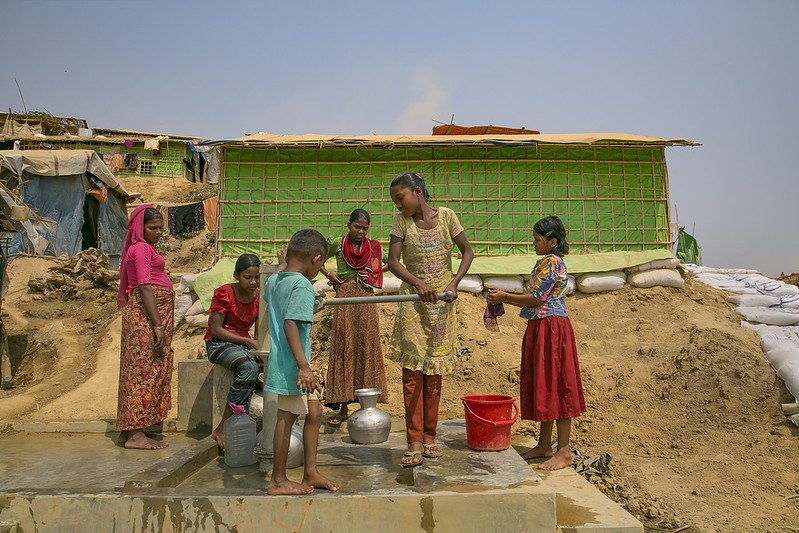
 Refugees from Myanmar face staggering levels of trauma, stress, and mental and physical health challenges, made worse by living conditions in refugee camps across Southeast Asia. The toll on health is especially severe, but telehealth offers hope by expanding health care access for Myanmar refugees.
The Crisis in Myanmar
Since 2017, nearly 1.5 million people have fled Myanmar amid the country’s humanitarian crisis, and 3.5 million are considered internally displaced. Most of these refugees are Rohingya Muslims from Rakhine State, who have lived without citizenship and faced persecution since 1962. Following the military coup in 2021, the military forced additional ethnic groups — including the Shan, Karen, and Kachin, among others —to flee their homes. Around 70% of the refugees are women and children. Many now live in overcrowded camps in neighboring Bangladesh.
The twin forces of violence and displacement have stripped Myanmar’s refugees of their homes, livelihoods, social support networks and health care, leaving them deeply impoverished. UNDP reported that as of 2024, nearly half the population in Myanmar lived below the poverty line, while 76% lived at or close to subsistence level, numbers which surged just in the three years since 2021.
As is common in conflict situations, access to health care is a luxury. This is due not only to cost and shortages of trained medical personnel, but also to the challenge of delivering proper care in temporary and scattered refugee camps.
In Cox’s Bazar refugee camp in Bangladesh, where most refugees have relocated, communicable and waterborne diseases run rampant, and mental health is severely impaired.
Telehealth as a Lifeline
Telehealth expands health care access for Myanmar refugees by connecting them with the care they need. The digital delivery of services simplifies the diagnosis, treatment, monitoring and follow-up for many physical and mental health conditions. Patients also do not have to travel as far — Cox’s Bazar is more than an hour by foot from the nearest health center, and clinics within the camp are understaffed and not always open 24 hours a day.
Within a few months of the military coup, the Ministry of Health of the National Unity Government launched its “Telekyanmar” initiative to provide telehealth services to people in Myanmar. The program’s telehealth clinics grew rapidly; by month three, almost all of Myanmar’s 330 townships had a telehealth clinic. As of May 2024, more than 71,000 people have registered with Telekyanmar, with over 178,000 consultations provided by both general practitioners and specialists.
The World Health Initiative, a U.S.-based nonprofit, also runs a program within Cox’s Bazar and at HOPE Field Hospital inside the camp since 2018. It provides a “specialized medical care that would otherwise not be available,” drawing on the expertise of volunteer physicians across a range of clinical disciplines, as well as virtual care devices donated by Teladoc Health.
One such device, the wheeled and collapsible Teladoc Health Lite, includes a touchscreen interface, audio system, port panel and a storage compartment for peripherals like stethoscopes and privacy headsets — all enabling clear and seamless video and communication between doctor and patient. Even with subpar Internet connectivity, doctors from anywhere in the world can beam in from their own remote devices, according to the World Telehealth Initiative.
The Global Case for Telehealth
The benefits of telehealth cannot be overstated. Essential health care services remain out of reach for half of the world’s population because they are “inaccessible, unavailable, unaffordable or of poor quality.” Every year, millions die from conditions that would be entirely preventable in high-income countries.
The poor suffer the most from this lack of access to critical health care, and telehealth offers a way to address this by enhancing and simplifying access to specialty providers.
Telehealth brings numerous other benefits:
- Lower costs for patients and health systems
- Increased flexibility in scheduling and delivery
- Elimination of geographic distance
- Facilitation of mental health support
- Promotion of health equity
- Decreased transmission of infectious diseases
The Future
Despite the advantages, challenges remain. Telehealth requires reliable Internet access, appropriate devices, and training for patients on device use and for providers on how to deliver care effectively. Language differences and cultural barriers can also complicate care delivery, and privacy worries are a reality for displaced persons who have not had the best relationship with authorities.
However, these obstacles are not insurmountable, given the ongoing, demonstrable improvements in the technology. Telehealth represents a promising approach with significant potential to expand health care access, improve health outcomes and help chart a pathway out of poverty for one of the world’s most vulnerable populations.
– Amanda Sablan
Amanda is based in Kensington, MD, USA and focuses on Technology and Global Health for The Borgen Project.
Photo: Flickr

HIV/AIDS in Armenia
Rising Infections Among Key Populations
While the national prevalence of HIV remains low, the virus disproportionately affects vulnerable groups. Integrated Bio-Behavioral Surveillance (IBBS) studies and independent reporting indicate that HIV prevalence among men who have sex with men (MSM) increased from 2.7% in 2018 to approximately 5.0% in 2021. Additional risk groups include people who inject drugs (2.6%), transgender individuals (2.5%) and sex workers (0.2%). These trends underscore the need for targeted prevention services, especially in urban areas like Yerevan and regional centers such as Gyumri and Shirak.
HIV/AIDS Stigma and Health Care Barriers in Armenia
Despite the availability of free HIV testing and antiretroviral therapy (ART), stigma in health care settings remains a significant barrier. People living with HIV/AIDS in Armenia frequently report being denied services, especially in nonspecialized clinics. Zhenya Mayilyan, head of the NGO Real World, Real People, stated, “If we compare the situation 10 years ago and now, a lot has changed – both in the public perception and in the level of people’s awareness. However, people living with HIV in Armenia are discriminated against in various spheres of life, in particular, in medical institutions, where a person has to report his or her HIV status when they need some kind of medical intervention.”
She also highlighted specific instances of discrimination, such as a case where an HIV-infected person with a second group of disabilities was refused a spinal tap in two well-known medical centers in Yerevan. The procedure was only carried out after the intervention of a social worker from a public organization.
National Progress and Global Recognition
Armenia became one of the first countries in the World Health Organization (WHO) European Region to eliminate mother-to-child transmission of both HIV and syphilis—a milestone officially recognized by the WHO in 2018. The achievement followed years of investment in maternal health screening, antiretroviral access and prenatal care. Between 1996 and 2010, the country registered 968 HIV cases, with more than 400 progressing to AIDS. A peer-reviewed study in the Journal of AIDS and HIV Research found that most infections occurred among men aged 30 to 39 and more than half had links to heterosexual contact or injecting drug use.
More recently, Armenia has made significant progress toward meeting UNAIDS’ “95-95-95” targets. By late 2022, approximately 77% of people living with HIV were aware of their status, 81% of those diagnosed were receiving ART and 86% of those on treatment had achieved viral suppression.
Community Efforts and Harm Reduction
Local NGOs, such as Real World, Real People, Pink Armenia and Right Side, continue to lead the HIV response at the grassroots level. These organizations provide mobile testing services, legal advocacy, peer support networks, and psychosocial care. Pre-exposure prophylaxis (PrEP) access has also expanded through donor-supported pilot programs.
While government reporting suggested that more than 18,000 individuals from high-risk groups received HIV prevention services in recent years, exact figures are not publicly available in English-language government databases. Independent sources note that outreach efforts remain strong, with HIV testing coverage exceeding 90% for groups such as MSM and people who inject drugs.
Moving Forward
HIV/AIDS in Armenia remains a concentrated but growing public health concern. The country has taken bold steps—from eliminating mother-to-child transmission to reaching strong treatment coverage levels—but stigma, rising infections and inadequate legal protections continue to threaten progress. Continued investment in public education, stigma reduction, legal reform and NGO-led outreach can potentially ensure that all Armenians—regardless of background or identity—have access to lifesaving HIV prevention and care.
– Mamie Hirsh
Photo: Flickr
Using AI to Support Maternal Health in Pakistan
Dr. Maryam Mustafa, assistant professor of computer science at Lahore University of Management Sciences and co-founder of Awaaz-e-Sehat (“Voice of Health”), is harnessing speech-based artificial intelligence to revolutionize maternal health in Pakistan. Funded by the Gates Foundation’s Grand Challenges, her AI app enables under-resourced frontline maternal health workers to record and assess patient information by talking into a smartphone.
Maternal Health Challenges in Rural Pakistan
Maternal health in Pakistan faces serious obstacles, especially in rural areas where women lack access to skilled care. Pakistan Maternal Mortality Survey 2019, conducted by the National Institute of Population Studies and funded by the United States Agency for International Development (USAID), reveals considerable demographic differences between rural and urban areas of Pakistan.
The maternal mortality ratio (MMR) is nearly 26% higher in rural areas than in urban areas due to a major difference in health care services provided to people living in urban areas as compared to those living in distant regions. In addition, delays in medical care during obstetric complications are another factor that leads to maternal deaths. Every year, thousands of women die from causes like bleeding, infections and high blood pressure during pregnancy. In Pakistan, an estimated 154 women die per 100,000 live births. Globally, maternal mortality has decreased by approximately 40% since 2000; however, this progress has slowed.
How Awaaz-e-Sehat Works
In many clinics, doctors and nurses only have a few minutes to spend with each patient. Symptoms, like swelling, headaches or blurred vision, can go unnoticed. Awaaz-e-Sehat helps by guiding health workers through structured questions in Urdu or other local languages before digitally saving each response. The app also analyzes responses for warning signs, such as high blood pressure or anemia and sends automatic alerts if a patient is at risk. The tool was tested at Shalamar Hospital in Lahore, where it supported care for 500 pregnant women in its early phase.
Helping Women at Home
Not all women in Pakistan can regularly travel to clinics for checkups. To help bridge this gap, Awaaz-e-Sehat also works through WhatsApp. Pregnant women can respond to voice messages from home, answering simple health questions. Artificial Intelligence (AI) reviews their responses and if something seems wrong, a health worker receives a prompt to follow up.
Making a Difference
After several months of use, the Awaaz-e-Sehat team saw a clear improvement in early risk detection. The tool helped identify health concerns in about 40% of patients, compared to only 7% in traditional short visits, highlighting a notable step forward in maternal health in Pakistan.
What Comes Next
Dr. Mustafa and her team plan to expand Awaaz-e-Sehat across more clinics and provinces. By collaborating with hospitals, health organizations and the government, they aim to provide AI-powered support to a broader range of health workers and expectant mothers. Their goal is to help Pakistan reach the United Nation’s (U.N.) target of fewer than 70 maternal deaths per 100,000 live births by 2030.
– Anna Chiaradonna
Photo: Flickr
Addressing the Gender Wage Gap in Sudan
The Depth of Economic Disparity
Sudan faces one of the largest gender pay gaps on the continent. Recent reports indicate that, on average, Sudanese women earn an astonishing 82% less than men for performing the same work. The gender wage gap in Sudan significantly surpasses the global average and underscores the need for immediate, specific interventions.
Directly contributing to this gap, the female labor force participation rate in Sudan stood at a low 14.5% in 2022, down from earlier figures and significantly below the global average. This low participation actively inhibits women’s economic independence and their right to earn a fair wage. Furthermore, occupational segregation frequently confines women to specific areas, such as agriculture or unstructured trade, which typically offer lesser wages and limited opportunities for advancement. Such labor segregation directly limits their earning potential and maintains the wage disparity. A lack of transparency in compensation schemes and discriminatory recruitment practices also increase the wage gap. Without clear guidelines and supervision, inequalities easily perpetuate unimpeded.
Societal and Structural Barriers
Institutionalized cultural practices and traditional gender roles largely explain the gender wage gap in Sudan. In most instances, these roles push women to the outskirts of the formal economy, concentrating them in lower-paying jobs or the informal sector where their work often faces devaluation. Educational disparities also account for a significant share of the gender gap in pay. Though some improvements exist, fewer than half of girls finish primary school, and many do not complete their education. Less literacy among women, particularly those from poorer backgrounds, limits their access to better-paying, more skilled jobs. While entrepreneurial activities among many Sudanese women are rampant, often necessitated by circumstances, they face serious constraints. These include restricted access to finance, a lack of knowledge and skills in business and socio-cultural values that restrain their mobility and prospects.
The intersection of gender and poverty is particularly stark in Sudan. While the overall national poverty rate stood at 46.5% in 2009 for North Sudan, recent data from 2021 indicates that 52.3% of the population is considered multidimensionally poor, with an additional 17.7% vulnerable to multidimensional poverty. Women, especially those without assets, private businesses, or education, are disproportionately affected, with studies showing that 90% of women with high economic dependency live below the poverty line. This direct correlation between the gender wage gap and women’s poverty rates highlights how limited economic opportunities and lower earnings trap women in a cycle of destitution, further exacerbated by their vulnerable employment status. For instance, in 2022, 55.5% of women in Sudan were in vulnerable employment, compared to 36.1% of men, meaning they are less likely to have formal work arrangements, social protection or safety nets.
Conflict’s Devastating Impact
Ongoing socio-political instability and conflict severely impede women’s access to employment and education, thus worsening the gender wage gap in Sudan. Displacement, destruction of infrastructure and breakdown of services disproportionately fall on women and girls, leaving them in increasingly marginalized economic positions. The conflict has also generated an enormous increase in demand for gender-based violence services, placing women and girls at higher risks of sexual exploitation and violence. This violence not only leads to physical and psychological trauma but also undermines their ability to integrate into the economy and gain livelihood, as safety concerns and trauma disrupt their economic engagement.
Paving the Path Forward: Empowering Women for Change
Despite daunting difficulties, several organizations and local women-owned businesses actively contribute to combat gender inequality and empower women economically in Sudan. One such organization is the Gender Centre for Research and Training (GCRT), a Sudanese civil society organization established in Khartoum in 1997. GCRT actively raises awareness on gender concepts to ensure gender mainstreaming in development and government policies. The GCRT focuses on research, training, alliance building, networking, advocacy and creating solidarity as means to achieve its objectives. It promotes women’s equality and their right to be active participants in social, cultural, economic and political life in Sudan, particularly during this transitional period toward democracy and peace.
Since 2011, UN Women has also instituted programs which have helped more than 60 women-owned organizations in Sudan. These programs provide vital skills training, humanitarian relief, and support women’s participation in peacebuilding. This assistance directly empowers women to become game-changers in their communities, demonstrating resilience and possibilities of a more equitable future in Sudan.
Towards a More Equitable Future
The long-lasting gender wage gap in Sudan is a complex issue of entrenched economic disparities, gendered social norms and the devastating impacts of war. The resolution of this issue requires an integrated approach of addressing low women’s labor market participation, occupational segregation, education inequalities and the heightened vulnerabilities of poor and war-affected women. By educating women, empowering them economically, and giving them freedom from violence, agencies like GCRT and UN Women are paving new ways for an improved and equitable Sudan, demonstrating that through concerted efforts, even the biggest roadblocks to gender equality can be overcome.
– Anoushka Rai
Photo: Unsplash
Pakistan’s Water Crisis: The Indus Water Treaty Suspension
The Indus Water Treaty is one of the most successful international treaties in the world; however, after a military conflict between India and Pakistan that began in April 2025, India’s Prime Minister Narendra Modi suspended the treaty, attempting to increase India’s control of the basin. While infrastructure to control the basin would take India some time to complete, Pakistan’s existing water crisis would certainly worsen without access to this resource.
Pakistan’s Water Crisis
Water has always been scarce in Pakistan due to low rainfall in its alluvial plain climate, but currently, Pakistan could be one of the most water-stressed countries in the world. Administrative challenges and shortcomings – such as policy implementation delays, regulatory enforcement deficiencies, inefficient data collection and unsatisfactory climate adaptations – have hindered resource management and, as a result, access to water for people in Pakistan, significantly worsening the water crisis.
In June 2025, usable water reserves dropped drastically, with experts reporting a cumulative decrease of 723,000 feet over just four days. Pakistan experienced 67% less rainfall than usual in the winter 2024 to 2025, making the season one of the driest in the country’s history. The hardest-hit region, Sindh, recorded a 90% reduction in rainfall, and Pakistan’s agricultural center, Punjab, documented a 69% reduction.
As Pakistan relies on the basin’s water for around 90% of its agriculture, water from the Indus Basin is essential for food cultivation. Farming in Pakistan could be severely limited due to a lack of water from the basin, causing people to lose both livelihoods and access to indispensable crops.
Unstable Hydropower System
Because of an unstable hydropower system, Pakistan relies heavily on coal imports. A lack of water and an increased investment in power from fossil fuels could cause an increase in coal imports; at a time when around 60% of Pakistan’s GDP is burdened by debt, this will further economic hardship and hinder Pakistan’s ability to invest in hydropower infrastructure or diversification in the energy sector.
In 2022, Pakistan suffered the costliest flood ever recorded: the disaster disrupted lives, upended agricultural infrastructure and rendered water undrinkable. Because the Indus Water Treaty suspension has resulted in India withholding information on Indus Basin water levels, Pakistan may experience a greater risk of sudden, disastrous floods.
As it stands, only about 39% of people living in Pakistan have access to clean water, and estimates place up to 90% of available water being subpar quality. If water from the Indus Basin is cut off, Pakistani people are at risk of further losing access to the drinking water needed to sustain lives and communities.
NGOs Support Communities in Need
As Pakistan’s water crisis has endured, NGOs have played a pivotal role in offsetting harm. Humanitarian groups help install handpumps, solar-powered filtration systems and water-extracting boreholes to help ensure people in Pakistan have access to clean water.
Ek Plate Biryani installed more than 600 hand pumps across Thar – a district in Sindh, Pakistan – by the end of 2024. Each pump provides about 50 to 100 Pakistani people with safe drinking water daily.
Human Appeal uses donations to help build water wells in Pakistan with its multinational Water and Sanitation projects. Water wells are critical to combating water scarcity, as they can provide whole communities with water for drinking, cooking, bathing and agriculture.
In November 2023, WaterAid Pakistan announced its Country Programme Strategy for 2023-2028 that aims to expedite WASH progress in the country, emphasizing solutions that bolster public health outcomes and consider climate change challenges.
Looking Ahead
Following sustained tensions between Pakistan and India that instigated the Indus Water Treaty suspension, Pakistan’s water crisis is becoming increasingly dire. Though it could take years for India to build the infrastructure needed to cut off Pakistan from the Indus Basin, imperative next steps to support those affected by Pakistan’s water crisis include community mobilization, practical legislation, dam building, water conservation and diplomatic negotiations between Pakistan and India.
– Erin Hellhake
Photo: Flickr
Everything To Know About HIV/AIDS in Mongolia
In the context of public health, Mongolia has been largely spared from large-scale epidemics. HIV prevalence remains low, but that does not mean the risk is absent. For a nation often overlooked in global health discussions, Mongolia’s quiet battle against HIV is a story of early success—and urgent, unfinished business. Here is information about HIV/AIDS in Mongolia and efforts to combat it.
The Prevalence of HIV/AIDS in Mongolia
Mongolia has maintained a low overall HIV prevalence, estimated at around 600 people living with HIV in 2023. Men account for a significantly larger proportion of cases than women. While the numbers remain low compared to other countries, the number of cases has been slowly increasing over time. This highlights the need for sustained prevention efforts and real awareness campaigns.
The country reports fewer than 100 AIDS-related deaths annually, a reflection of progress in raising awareness, early detection and improved access to antiretroviral therapy (ART). However, treatment coverage remains below international targets; approximately 39% of people living with HIV receive ART, falling short of the UNAIDS 95-95-95 goals aimed for 2030. Without adequate treatment, the virus risks spreading further, especially among vulnerable populations.
Key Populations Most Affected by HIV/AIDS
Sexual contact is the primary mode of transmission. Certain groups carry a disproportionate burden of HIV infection:
Poverty and HIV/AIDS in Mongolia
Poverty exacerbates vulnerability to HIV infection and limits access to health care services in Mongolia. Many people living in poverty, particularly in rural and ger (traditional tent) districts around Ulaanbaatar, face barriers such as transportation costs, limited health care infrastructure and social stigma. These challenges reduce access to testing and treatment, increasing the risk of undiagnosed and untreated infections.
Mongolia’s Efforts To Address HIV/AIDS
To address these challenges, Mongolia has implemented several programs focused on vulnerable populations and poverty reduction:
Looking Ahead
Mongolia has kept HIV prevalence and AIDS-related deaths relatively low, but a slow rise in new cases, especially among impoverished and stigmatized groups, presents ongoing challenges. Addressing poverty’s role in HIV vulnerability and improving health care access through innovative programs and sustained investment will be essential for Mongolia to sustain its progress and meet international targets. With continued commitment, Mongolia can look forward to a healthier future.
– Julia Skowrońska
Photo: Flickr
Innovations in Poverty Eradication in Panama
Programs in poverty eradication in Panama have grown over the past few decades, thanks to the Panamanian government, creating innovative approaches to improve the lives of its citizens, such as increasing jobs for the nation and social programs such as the Universal Educational Social Assistance Program (PASE-U) and the Panamá Solidario emergency program. Despite these advancements, the region faces challenges, particularly in addressing income inequality.
Job Creation and Economic Prosperity
Panama’s rapid economic growth has been a cornerstone of its poverty reduction efforts. Between 1990 and 2019, the country’s economy grew at an average rate of 5.8% annually, thanks to the usage of the Panama Canal. This pace significantly outpaced the regional average of 2.6%. This growth has translated into improved labor conditions for the people of Panama, with mean hourly real wages increasing by 60%, the employment rate rising from 48% to 63% and women’s labor force participation increasing from 34.1% to 55.5%. This increase in jobs has decreased the number of people living in poverty in Panama, plummeting from 50.2% in 1989 to 12.9% in 2021.
This is just one step in poverty eradication in Panama, as giving people jobs and positive economic growth in a country can hopefully help all classes of people in Panama, not just the wealthy business owners.
Social Protection Programs
Innovative social protection programs have been a crucial strategy to poverty eradication in Panama. The Universal Educational Social Assistance Program (PASE-U) and the Panamá Solidario emergency program are notable examples. Starting in 2020, the PASE-U objectives are to prevent school dropout, raise enrollment and school attendance rates and motivate to strengthen academic improvement. This is done by a government allowance to students who continue to pursue education, with the benefits of 270 PAB for primary school students, 360 PAB for presecondary school students and 450 PAB for secondary school students (PASE-U).
Panamá Solidario’s emergency program prioritized the purchase of local production from both agribusinesses and producers, for the manufacture of bags and delivery of products of agricultural and livestock origin. This program aimed to continue economic production in light of the COVID-19 pandemic. The results of the program were widely successful, as the nation delivered more than 6 million bags of meals until January 2021. About 2.1 million physical bonds and 4.7 million digital vouchers were credited to continue economic growth. The Panamá Solidario would support more than 1.6 million Panamanians during the COVID-19 pandemic, maintaining economic growth.
Addressing Inequality
Despite these achievements in addressing poverty reduction, Panama continues to grapple with significant income inequality. The country ranks third in South America and Central America for income disparity, with the poorest 20% earning just 1.2% of the total labor income, while the wealthiest 20% claim 32.7%. Geographic disparities are also pronounced, with poverty rates being higher in the rural areas of the region, compared to urban areas. Indigenous communities face even greater challenges, with 69.4% living in poverty and limited access to basic services such as education and health services.
Future Directions
Progress is still occurring, as the World Bank Group’s Poverty and Equity Assessment of Panama suggests that Panama must prioritize policies that expand access to basic services, improve job quality, enhance human capital and promote household resilience in the long run. Addressing the structural challenges that perpetuate inequality for the people of Panama will be essential for achieving shared prosperity.
Panama’s strides towards poverty eradication are a testament to the power of innovative approaches and sustained economic growth. While challenges remain, the country’s commitment to improving the lives of its citizens offers a long-term goal for a more equitable and prosperous future for the people of Panama.
– Dylan Fly
Photo: Flickr
How AI in South Africa Fights Poverty
Despite challenges, South Africa leads Africa in harnessing artificial intelligence (AI) to revive struggling industries, boost productivity and drive economic development. Indeed, the 2024 Global Index on Responsible AI ranks it as the continent’s top performer. The implementation of AI in South Africa plays a key role as the country fights poverty, by addressing structural inequalities and innovating health care, agriculture and the workforce.
AI in South Africa Fights Poverty
In 2019, South African President Cyril Ramaphosa announced the establishment of a commission to help the country benefit from the Fourth Industrial Revolution (4IR). The 4IR represents the ongoing technological transformation in society, driven by advances in modern technologies and artificial intelligence. Indeed, the commission’s efforts have opened new opportunities for South African society to integrate more effectively into a technology-driven workforce.
The creation of the AI Institute of South Africa further expands career and educational pathways for both students and professionals. Former IT students founded the institution to equip citizens with the skills needed for a digital workforce. It offers internships, job placements and professional development opportunities in the IT and engineering sectors, helping individuals thrive in a technology-driven economy.
Universities and research institutions also play an important role in building digital and technical skills, offering postgraduate programs focused on AI and data analytics. The University of Pretoria’s Data Science for Social Impact group offers courses in big data and natural language processing, while TVET colleges and Sector Education and Training Authorities deliver programs focused on 4IR.
These measures aim to directly reduce unemployment in South Africa. They support economic development by enhancing digital skills within the workforce.
AI in Agriculture
South Africa’s agricultural sector faces serious challenges from unpredictable and frequent natural disasters, which reduce crop yields and cause livestock losses. Rising food prices hit rural communities hardest, increasing the risk of food insecurity. Statistics South Africa revealed that by 2023, 19.7% of households had experienced some form of food insecurity.
Using AI in South Africa through digital agricultural technologies offers a chance to increase productivity and improve resource efficiency. For example, tools like Aerobotics use drone and satellite technology to detect pest and disease outbreaks, providing valuable support to rural communities with limited data access. Insights on irrigation and fertilisation strategies, predicted yields and water usage help farmers allocate resources more effectively, according to the 2024 GSMA report.
Alongside these technologies, locally led initiatives such as the ITIKI project demonstrate how AI can also strengthen food security by addressing climate-related risks. Led by the Central University of Technology, the project uses AI and indigenous knowledge to forecast droughts and track food security, GSMA reports. Delivering real-time insights to farmers and decision-makers aids in reducing crop loss. Additionally, farmers are guided to interventions and insights combat food insecurity in rural communities.
By strengthening agricultural resilience and efficiency, AI in South Africa plays a vital role in reducing food insecurity and alleviating poverty in vulnerable communities.
AI in Health Care
South Africa has seen significant advances in equal access to healthcare. As of 2025, the World Health Organization (WHO) projects that essential health care services will cover 6.2 million additional people.
The implementation of AI in South Africa further drives innovation in the health care sector by improving diagnostic accuracy, easing workloads and expanding access to services in rural areas. With 62% of health care leaders adopting AI for decision-making and treatment monitoring, South Africa is outpacing the global average in key areas of health tech adoption.
Data-driven decision-making and personalised healthcare initiatives significantly ease pressure on the public health sector. The government-led MomConnect initiative uses AI-powered messaging and virtual symptom assessments to support pregnant mothers. Timely health advice has improving maternal and child health outcomes, GSMA reports.
By expanding access to quality care, AI in healthcare plays a key role in reducing health-related poverty and bridging gaps in vulnerable communities.
The Future of AI in South Africa
Continued implementation of advanced technology in South Africa supports strong economic growth. Furthermore, AI-driven solutions directly address long-standing social challenges effectively by improving the quality of life in vulnerable areas.
South Africa’s National Artificial Intelligence Policy Framework aims to harness the long-term societal and economic benefits of advanced technologies. It sets clear guidelines for integrating AI in alignment with the country’s existing socio-economic goals. By doing so, the framework helps maximize AI’s potential while minimizing associated risks.
To fully realise the benefits of AI in South Africa, active collaboration between policymakers, government and citizens should drive inclusive policies, ensure equitable access to technology and prioritise solutions that address poverty and inequality. Indeed, with a shared commitment to innovation and ethical development, South Africa is well-positioned to shape a future where AI empowers its people and strengthens its society.
– Beatrice Punt
Photo: Flickr
C3’s Fight Against Child Marriage in India
At the forefront of efforts to resolve the issue is the Centre for Catalyzing Change (C3), a nonprofit organization working tirelessly to empower girls, shift mindsets and create systemic change. C3 believes that when girls are educated, healthy and supported, they can break the cycle of child marriage and build stronger futures for themselves and their communities.
Understanding the Challenge
Child marriage remains alarmingly prevalent in India, especially in rural areas. According to the United Nations International Children’s Emergency Fund (UNICEF), nearly one in four girls in India gets married before the age of 18. Girls forced into early marriage are more likely to drop out of school, experience complications from early pregnancy, suffer from domestic violence and face limited economic prospects.
Behind these statistics are complex factors: poverty, lack of access to education, deeply entrenched gender norms and the belief that marriage offers girls social or economic security. The COVID-19 pandemic only worsened the situation, with reports of rising child marriage rates during lockdowns.
About C3
Founded in 2002, C3 is a nationally recognized nonprofit organization (NGO) dedicated to improving the lives of women and girls across India. C3 envisions a world where all women and girls can realize their full potential, participate in decisions that affect them and live lives of dignity and equality. C3 works at the intersection of education, health, leadership and rights. Its child marriage prevention initiatives rely on community partnerships, grassroots mobilization and evidence-based advocacy.
C3’s Approach to Ending Child Marriage
C3’s multi-layered strategy addresses both the symptoms and root causes of child marriage:
Looking Ahead
In Bihar and Jharkhand—two states with high child marriage rates—C3 has reached more than 100,000 adolescent girls. It has engaged thousands of community members through workshops, leadership training and school-based interventions. With the help of C3 and other advocates, 23 child marriages have already been prevented. Despite progress, it appears ending child marriage in India still requires more effort. Social stigma, poverty and weak enforcement continue to pose challenges. But C3 remains committed by adapting to new realities, scaling what works and deepening its impact.
In 2025 and beyond, C3 aims to:
Ultimately, by empowering girls and challenging harmful norms, C3 is helping build a more just, equal and hopeful India for everyone.
– Meagan Beaver
Photo: Flickr
Expanding Health Care Access for Myanmar Refugees
The Crisis in Myanmar
Since 2017, nearly 1.5 million people have fled Myanmar amid the country’s humanitarian crisis, and 3.5 million are considered internally displaced. Most of these refugees are Rohingya Muslims from Rakhine State, who have lived without citizenship and faced persecution since 1962. Following the military coup in 2021, the military forced additional ethnic groups — including the Shan, Karen, and Kachin, among others —to flee their homes. Around 70% of the refugees are women and children. Many now live in overcrowded camps in neighboring Bangladesh.
The twin forces of violence and displacement have stripped Myanmar’s refugees of their homes, livelihoods, social support networks and health care, leaving them deeply impoverished. UNDP reported that as of 2024, nearly half the population in Myanmar lived below the poverty line, while 76% lived at or close to subsistence level, numbers which surged just in the three years since 2021.
As is common in conflict situations, access to health care is a luxury. This is due not only to cost and shortages of trained medical personnel, but also to the challenge of delivering proper care in temporary and scattered refugee camps.
In Cox’s Bazar refugee camp in Bangladesh, where most refugees have relocated, communicable and waterborne diseases run rampant, and mental health is severely impaired.
Telehealth as a Lifeline
Telehealth expands health care access for Myanmar refugees by connecting them with the care they need. The digital delivery of services simplifies the diagnosis, treatment, monitoring and follow-up for many physical and mental health conditions. Patients also do not have to travel as far — Cox’s Bazar is more than an hour by foot from the nearest health center, and clinics within the camp are understaffed and not always open 24 hours a day.
Within a few months of the military coup, the Ministry of Health of the National Unity Government launched its “Telekyanmar” initiative to provide telehealth services to people in Myanmar. The program’s telehealth clinics grew rapidly; by month three, almost all of Myanmar’s 330 townships had a telehealth clinic. As of May 2024, more than 71,000 people have registered with Telekyanmar, with over 178,000 consultations provided by both general practitioners and specialists.
The World Health Initiative, a U.S.-based nonprofit, also runs a program within Cox’s Bazar and at HOPE Field Hospital inside the camp since 2018. It provides a “specialized medical care that would otherwise not be available,” drawing on the expertise of volunteer physicians across a range of clinical disciplines, as well as virtual care devices donated by Teladoc Health.
One such device, the wheeled and collapsible Teladoc Health Lite, includes a touchscreen interface, audio system, port panel and a storage compartment for peripherals like stethoscopes and privacy headsets — all enabling clear and seamless video and communication between doctor and patient. Even with subpar Internet connectivity, doctors from anywhere in the world can beam in from their own remote devices, according to the World Telehealth Initiative.
The Global Case for Telehealth
The benefits of telehealth cannot be overstated. Essential health care services remain out of reach for half of the world’s population because they are “inaccessible, unavailable, unaffordable or of poor quality.” Every year, millions die from conditions that would be entirely preventable in high-income countries.
The poor suffer the most from this lack of access to critical health care, and telehealth offers a way to address this by enhancing and simplifying access to specialty providers.
Telehealth brings numerous other benefits:
The Future
Despite the advantages, challenges remain. Telehealth requires reliable Internet access, appropriate devices, and training for patients on device use and for providers on how to deliver care effectively. Language differences and cultural barriers can also complicate care delivery, and privacy worries are a reality for displaced persons who have not had the best relationship with authorities.
However, these obstacles are not insurmountable, given the ongoing, demonstrable improvements in the technology. Telehealth represents a promising approach with significant potential to expand health care access, improve health outcomes and help chart a pathway out of poverty for one of the world’s most vulnerable populations.
– Amanda Sablan
Photo: Flickr
CDB and the Global Alliance Against Hunger and Poverty
After electing its newest president in 2025, Daniel Best, the CDB is working to address geopolitical tensions and shifting financial conditions, while approving a historic $460 million from the Special Development Fund — an amount intended to sustain the organization for three years. Best is intending to start in his newly appointed position, hitting the ground running by looking to introduce three new financial products to support a just green transition and reduce investment risk for the private sector. Furthermore, he’s made it an utmost priority to address the United Nations (U.N.) Sustainable Development Goals (SDGs) 1 and 2 by joining the Global Alliance Against Hunger and Poverty.
Integration with the Global Alliance Against Hunger and Poverty
The Global Alliance Against Hunger and Poverty is a governance structure that focuses on accelerating the achievement of specifically SDG 1 and 2—No Poverty (1) and Zero Hunger (2). Many board members of the CDB have reached out to the press, explaining that the organization sought to join the Global Alliance Against Hunger to address globalized poverty and food insecurity through sustainable agricultural practices. In addition, this decision could enhance domestic lives in the Caribbean by working with international programs and partners incorporated with the Global Alliance Against Hunger and Poverty.
Before publicly joining this fight alongside such an established organization, the CDB pledged to support the Alliance’s objectives through knowledge sharing, ethical engagement and the development of solutions tailored to the needs of vulnerable communities, including Indigenous populations and tribal groups. Both governance bodies have been made aware of the disproportionate poverty indigenous populations experience in not just the Caribbean, but all of Latin America. Of the 42 million Indigenous people living in the region, 43% live in poverty — more than twice the rate of non-Indigenous populations in Latin America — deepening their underrepresentation in areas such as the humanities and politics, according to Elizabeth Wong’s article Indigenous Erasure and Resistance in the Caribbean. Fortunately, the CDB and Global Alliance Against Hunger and Poverty are exploring strategies on how to address this long-established systematic oppression.
Furthering Progress
While addressing domestic issues with support from international partners is a strength of the Caribbean Development Bank, the organization also maintains a mutual aid agreement to advance the SDGs abroad. However, this task could be a lot more challenging, as in the last year, the World Bank has found a divergence in SDG 1 and SDG 2—which primarily have a close correlation with one another—in the past one to two decades. This could mean several things, ranging from poor or outdated data and analysis tools or genuine economic gaps in certain countries.
Moving Forward
The CDB appears to be in a position to be a key contributor in providing aid to address the issue and resolve weaker data systems among affected nations. As a region that many consider data poor, the integration of new data systems—if the U.N. can successfully achieve this—could improve the region’s capacity to properly track poor and malnourished environments. This could legitimize the organization’s influence, effectively resulting in its global expansion to provide improved analysis measures for more data-poor nations and regions.
– Sam Barbagallo
Photo: Flickr