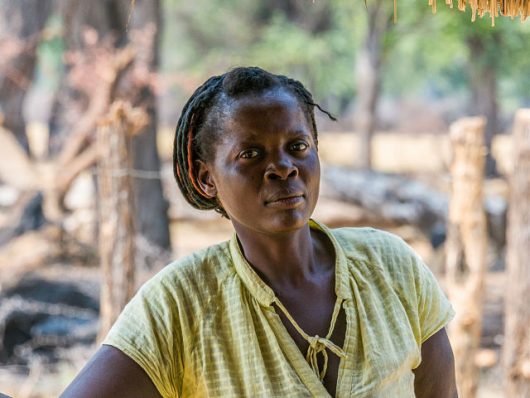
 Seventy-two percent of Zimbabweans live under the national poverty line, making it the 22nd poorest country in the world. Gogo Olive is a charity whose focus is to mitigate some of the problems faced by Zimbabweans, specifically women. Here is how one charity is changing the lives of Zimbabwean women.
The Problem: Difficulty Making a Living
One hardship faced by many women is HIV/AIDS, a disease that affected 1.3 million Zimbabweans in 2016. This results in many widowed parents who have to provide for their families by themselves. Providing for their households, however, is a difficult task when job opportunities are so limited. The unemployment rate in Zimbabwe is currently at 11.3 percent, and increases when excluding the large numbers of subsistence farmers and those working in the informal economy. This, however, is not the main problem for Zimbabweans.
The real problem, according to the International Labour Organization, is the poor quality of employment, characterized by low wages, no sick leave for employees and poor working conditions. In this way, the great need in Zimbabwe is decent jobs. Gogo Olive has met this need by employing women to knit goods, primarily in the form of knitted animals.
The Solution: Gogo Olive
Gogo Olive was founded by Julie Hagan as a way to create jobs for six women through knitting. Since its inception in 2008, the charity has grown to include about 80 knitters who produce hundreds of these knitted animals each month. According to the website, “Knitting was chosen as it only requires basic materials and can be done anywhere and at anytime, which suits the lifestyle of a Zimbabwean woman.”
The charity operates on two levels. Gogo Olive Knits creates jobs and generates income for women by selling their knitted products. Gogo Olive Cares focuses on meeting the other needs of the women. This includes establishing savings plans, running educational workshops, distributing care packages, and setting up an emergency fund to help with health costs and school fees. This is how one charity is changing the lives of Zimbabwean women: they not only provide an income, they also include additional benefits that have no doubt helped the poor greatly.
Gogo Olive Knits presents a flexible way to earn income. The knitters are paid monthly for each product they produce. According to Ruth Hagan, they can earn up to $250 monthly.
An additional benefit of working for Gogo Olive is the educational workshops. The majority of the knitters have had little education, a problem which keeps them in the poverty trap. Some of the topics covered are budgeting, HIV/AIDS awareness, healthcare, single parenting and farming techniques.
Beyond Income: Gogo Olive Cares
Gogo Olive Cares also provides an emergency fund for people in special circumstances. This includes school fees for their children and medical fees for medication or treatment that the women would otherwise be unable to afford. Ruth Hagan shared a story about one of the knitters who received a payment from the emergency fund. “In January, one of our knitters accessed the fund which allowed her to have a hip replacement following living in considerable pain for a number of years.” The knitter, Florence, is now back at work and able to walk with a crutch.
The benefits extend far beyond simply meeting physical needs. Ruth explains, “We love that we are able to teach a skill and offer employment to many ladies. Not only does this allow them to make enough money to feed their children and pay for school fees but it also gives them each a sense of value and worth as they have meaningful occupation.”
Ruth Hagan said of the experience, “It is great to be a part of positively impacting lives of so many in Zimbabwe.” Seeing how one charity is changing the lives of Zimbabwean women goes to show that any good deed, big or small, can have an immense impact.
– Olivia Booth
Photo: Flickr

The Boomerang Effect: How Foreign Aid Gives Back
Who Gives to Whom?
According to an article by Jason Hickel, Global Financial Integrity (GFI) and the Centre for Applied Research at the Norwegian School of Economics completed a study in which they found that a much larger amount of money travels from poor countries to rich countries, rather than the other way around. As of 2015, cumulative foreign investment in the U.S. totaled more than $3 trillion.
Beyond the quantitative, the proof of return on investment manifests in countries like South Korea, Japan and Germany. All having once depended on U.S. aid in their times of need, these nations now play major roles in the global economy.
How Foreign Aid Gives Back to Developed Nations
Consider the fact that half of U.S. exports now go to developing countries and that developing countries’ economies grow three times faster than our own. The economics speak for themselves—with more new consumers to trade and do business with, more growth opportunities arise both at home and abroad. In Tennessee alone, more than 22 percent of jobs are supported by trade—that’s 830,000 reasons to continue investing in developing nations.
Beyond the wallet, though, foreign aid gives back in ways that cannot be measured. Potential new markets keep the U.S. competitive on the world stage, allowing its reputation and influence to spread. As Bill Gates points out, foreign aid even helps to keep the U.S. safe. By its nature, aid fights poverty, promotes development and largely focuses on foundational areas like healthcare, nutrition and education, which provide for a strong infrastructure.
The ultimate goal of this infrastructure-building rests in the ability to form a middle class, and by extension, find some stability. Countries that achieve this are more capable of preventing global health epidemics and are less likely to go to war. Stabilizing these nations by promoting democracy and human rights and by helping to install strong governance has far-reaching effects.
What Drawbacks Exist for Foreign Aid?
While some would argue that corruption and misuse of aid render the process futile, the results drown out the argument. Programs are in place to fight against this kind of criminality and are finding success. Foreign aid gives back in ways never thought of before now, such as:
Foreign aid gives back despite the stigma that claims otherwise. Experts say that cutting the U.S. foreign aid budget would do very little to reduce the federal deficit anyway. If the strongest argument against the use of foreign aid remains money, then it is time to take out the wallet and make a change.
– Daniel Staesser
Photo: Flickr
Economic Growth in Nicaragua Has Helped Reduce Poverty
“Notwithstanding challenging external conditions, economic activity remains buoyant,” said Gerardo Peraza, head of the study that IMF led in 2016. The study also revealed how economic growth was projected at 4.7 percent that year. The main factors that contributed to such economic growth in Nicaragua were, according to the study, steady agricultural and commercial activity and an inflation rate that is projected to accommodate under four percent.
Where Did the Economic Growth Originate?
Experts argue that such improvements in economic growth in Nicaragua are largely attributable to the re-election of President Daniel Ortega. Many argue that his political identity and approach to crucial matters such as macroeconomy and anti-poverty measures have significantly shifted toward a more pro-business attitude.
Moreover, experts say that thanks to Ortega’s social programs, poverty fell by 30 percent between 2005 and 2014. Moreover, in 2011, Nicaragua was taken out of a debt relief program enacted by IMF in 2005, called Heavily Indebted Poor Countries Initiative.
The Benefits of Economic Growth in Nicaragua
A study issued by the World Bank has also found that in 2011, economic growth hit 5.1 percent, slowing to 4.7 and 4.5 in 2016 and 2017, respectively. For 2018, predictions see the Nicaraguan economy growing at 4.4 percent, making it the second largest among Central American countries in terms of growth. The country’s overall stability led decision makers to focus on long-term improvement and growth rather than just damage control, with the war on poverty the highest objective, particularly in rural areas.
Such economic improvement also restored the international community’s trust in Nicaragua. It is thanks to this renewed trust that, for instance, the USDA awarded a McGovern-Dole Food for Education grant to the organization Food For The Poor in Nicaragua. The grant was distributed as a three-year program, from the fall of 2011 to the fall of 2014.
During this period, more than 4,500 metric tons of food were delivered to the poorest communities of the Central American country. The majority of the recipients were children. Students of 774 schools, located primarily in Managua, Nueva Segovia and Madriz, greatly benefitted from the program.
Looking Toward the Future
The mission, however, is far from being fully accomplished. A statement issued by the U.S. Department of State reveals that Nicaragua still has the lowest level of GDP per capita in Central America and, most importantly, 40 percent of the population still lives in poverty. The situation gets even worse in rural areas, where the rate of poverty reaches nearly 60 percent.
The hope is that the path of economic growth and fiscal responsibility, paired with social programs and foreign aid initiatives, will keep Nicaragua on a path of prosperity and heavily reduced poverty.
– Luca Di Fabio
Photo: Flickr
Top 10 Bosnian War Facts
Top 10 Bosnian War Facts
Even today, as a result of these Bosnian War facts, the territory remains highly divided between two sections: Muslim-Croat and the Serbian Republic. Both sections face a continuous fight against poverty, unemployment and ethnic discord.
Photo: Flickr
Why Is It Important to Vote?
Lyndon B. Johnson stated, “The vote is the most powerful instrument ever devised by man for breaking down injustice and destroying the terrible walls which imprison men because they are different from other men.” This truism is important for anti-poverty activists to remember as they enter their polling places.
The Power of One
It is important to vote because many candidates for political offices are voted in by only one or two votes. The same goes for important issues that are passed into law. The people who are most likely to be affected by changes in legislation or political power, such as the poor, minorities and the disenfranchised, are the least likely to vote.
The supreme court has taken steps to ensure that voter ID laws do not institutionally discriminate against groups of people. The right to vote is not dependent on whether the voter is more or less likely to be impacted by the results. Theodore Roosevelt said, “A vote is like a rifle; its usefulness depends on the character of the user,” because each vote that is cast is important and has an impact on the political climate of America.
John Quincy Adams sums up the reason why anti-poverty activists and other people wishing to make lasting changes for the better need to go out and vote when he said: “Always vote for principle, though you may vote alone, and you may cherish the sweetest reflection that your vote is never lost.”
A Tool for Change
So why is it important to vote? Voting is a powerful tool that can be used to make positive changes to social policy.
While marches and rallies are an important way to help inform people about various social issues, voting is a more powerful and useful tool for change. Morgan Carroll in “Take Back Your Government: A Citizen’s Guide to Making Your Government Work For You” eloquently expresses the power of a vote when she says: “When there’s a vacuum of public input, lobbyists usually fill it. But when there’s public input, the people usually win.”
Voting is one of the most effective ways to make lasting and beneficial changes to social policy. While marches and rallies tend to raise awareness about social issues that need to be addressed by the government, voting tells the government that awareness about the issue is no longer sufficient and that direct action to correct the issue is being demanded.
Why Is It Important to Vote?
It is crucial for anti-poverty activists and others who want to make lasting and beneficial changes to social policy to get out and vote. Franklin D. Roosevelt expresses the power of voting and the answer to the question “why is it important to vote?” when he said: “Nobody will ever deprive the American people of the right to vote except the American people themselves and the only way they could do this is by not voting.”
– Michael Israel
Photo: Flickr
Prosperity with High Prices: 10 Facts About Poverty in Tianjin
However, poverty still exists. Despite Tianjin’s overall economic growth, some serious problems hide below the surface and cannot be ignored. These facts about poverty in Tianjin help shed light on these hidden issues.
10 Facts About Poverty in Tianjin
Overall, even though Tianjin’s economy looks good on paper, these 10 facts about poverty in Tianjin illustrate the problems that government officials need to focus on. However, as shown above, the government is taking action to solve these problems, and more policies are being enacted to facilitate this process and improve the lives of those in poverty.
– Judy Lu
Photo: Unsplash
Gogo Olive Changing the Lives of Zimbabwean Women
The Problem: Difficulty Making a Living
One hardship faced by many women is HIV/AIDS, a disease that affected 1.3 million Zimbabweans in 2016. This results in many widowed parents who have to provide for their families by themselves. Providing for their households, however, is a difficult task when job opportunities are so limited. The unemployment rate in Zimbabwe is currently at 11.3 percent, and increases when excluding the large numbers of subsistence farmers and those working in the informal economy. This, however, is not the main problem for Zimbabweans.
The real problem, according to the International Labour Organization, is the poor quality of employment, characterized by low wages, no sick leave for employees and poor working conditions. In this way, the great need in Zimbabwe is decent jobs. Gogo Olive has met this need by employing women to knit goods, primarily in the form of knitted animals.
The Solution: Gogo Olive
Gogo Olive was founded by Julie Hagan as a way to create jobs for six women through knitting. Since its inception in 2008, the charity has grown to include about 80 knitters who produce hundreds of these knitted animals each month. According to the website, “Knitting was chosen as it only requires basic materials and can be done anywhere and at anytime, which suits the lifestyle of a Zimbabwean woman.”
The charity operates on two levels. Gogo Olive Knits creates jobs and generates income for women by selling their knitted products. Gogo Olive Cares focuses on meeting the other needs of the women. This includes establishing savings plans, running educational workshops, distributing care packages, and setting up an emergency fund to help with health costs and school fees. This is how one charity is changing the lives of Zimbabwean women: they not only provide an income, they also include additional benefits that have no doubt helped the poor greatly.
Gogo Olive Knits presents a flexible way to earn income. The knitters are paid monthly for each product they produce. According to Ruth Hagan, they can earn up to $250 monthly.
An additional benefit of working for Gogo Olive is the educational workshops. The majority of the knitters have had little education, a problem which keeps them in the poverty trap. Some of the topics covered are budgeting, HIV/AIDS awareness, healthcare, single parenting and farming techniques.
Beyond Income: Gogo Olive Cares
Gogo Olive Cares also provides an emergency fund for people in special circumstances. This includes school fees for their children and medical fees for medication or treatment that the women would otherwise be unable to afford. Ruth Hagan shared a story about one of the knitters who received a payment from the emergency fund. “In January, one of our knitters accessed the fund which allowed her to have a hip replacement following living in considerable pain for a number of years.” The knitter, Florence, is now back at work and able to walk with a crutch.
The benefits extend far beyond simply meeting physical needs. Ruth explains, “We love that we are able to teach a skill and offer employment to many ladies. Not only does this allow them to make enough money to feed their children and pay for school fees but it also gives them each a sense of value and worth as they have meaningful occupation.”
Ruth Hagan said of the experience, “It is great to be a part of positively impacting lives of so many in Zimbabwe.” Seeing how one charity is changing the lives of Zimbabwean women goes to show that any good deed, big or small, can have an immense impact.
– Olivia Booth
Photo: Flickr
Five Positive Facts About Global Poverty
Five Positive Facts About Global Poverty
Positive changes are happening, but society must never forget that one person being hungry is already too many. Together, the world can continue to move the needle in the right direction: the end of global poverty.
– Naomi C. Kellogg
Photo: Flickr
Efforts to Expand Education for Syrian Refugees in Turkey
Of the school-aged Syrian refugees living in Turkey, 612,603 were enrolled in either Turkish public school or temporary education centers as of October 2017. The Turkish government plans to close temporary education centers by the end of 2018. Approximately 300,000 refugee children attending these centers will be transferred to public schools and will transition to a Turkish-language curriculum. Another 360,000 refugee students who are not currently enrolled will also be sent to public school.
The Current Situation
For the first time since the policy was announced, more refugee school-aged children are enrolled in the Turkish public school system, at 59 percent, than in temporary education centers, 41 percent. The Turkish government plans to close all temporary education centers by the end of the year.
Temporary education centers teach an accredited curriculum in Arabic. For the past seven years, these facilities have provided education for Syrian refugees in Turkey in their mother tongue. However, these centers have been criticized for fostering cultural and linguistic separation between refugees and natives.
What Must Still Be Done
To accommodate the influx of students, the Turkish government is building 150 new schools with donated funds. However, this new construction will not adequately incorporate matriculating refugees from temporary education centers and additional funding is still needed.
Currently, the Ministry of National Education is adjusting to the increased number of students attending public school by sending some Syrian children to imam-hatip schools. Imam-hatip schools teach religious texts alongside other curriculum.
Critics of the new policy worry that Syrian students will drop out of school rather than attend Turkish-language public schools. Cultural tensions between Turkish and Syrian students, aggravated by resource shortages in public schools, could create hostile learning environments for Syrian children.
Working Toward Education for Syrian Refugees in Turkey
To mitigate the risk, the Ministry of National Education has declared that kindergarten and primary school are compulsory for all Syrian children. The government plans to enroll refugee children in intensive Turkish language courses to help students adjust to a Turkish curriculum. Also, refugee children will be offered additional classes on Arabic language and culture to help Syrian students stay connected to their heritage.
Additionally, to encourage older refugee children to stay in school, an E.U. program offers subsidies to Syrian schoolchildren. Subsidies are awarded to students who attend 80 percent of their classes and payments differ based on age and gender. Female high school students are entitled to the largest subsidies.
The Ministry of National Education’s public education initiative shows a real commitment to creating inclusive education for Syrian refugees in Turkey. Despite cultural and language barriers, more Syrian refugee children than ever before are enrolled in schools in Turkey.
– Katherine Parks
Photo: Flickr
Understanding How the U.S. Benefits from Foreign Aid to Angola
Angola continues to see repercussions from decades of war in the region. Roughly two-thirds of Angola’s citizens live in poverty, and much of Angola’s infrastructure has been destroyed by civil conflicts, war and lack of maintenance. The civil unrest in the region is also exacerbated by Angola’s possession of large oil reserves and a strong military force, creating a strong incentive for power struggles and polarizing forces in the region.
The U.S. benefits from foreign aid to Angola include providing food and food security, promoting democratic practices, providing disaster relief, providing better and more widely available health care and fighting the spread of disease in Angola. As well as these humanitarian efforts, the United States supports Angola in its efforts to utilize its agricultural abilities and sell oil reserves on the open market.
U.S. benefits from foreign aid to Angola have been in place since 1989 when the United States began providing large-scale disaster relief and humanitarian aid in the form of consumable material goods. In 1992, the United States Agency for International Development (USAID) began a relief and assistance program for Angola in the hopes that it would help prevent the region from falling back into the grips of civil conflict.
Unfortunately, the fighting did not stop and aid was suspended until 1995 when U.S. benefits from foreign aid to Angola resumed with millions being dispersed toward the rehabilitation of the agricultural sector and displaced children/orphans in the region. Much of the U.S. foreign aid dispersed during times of conflict in the area was provided in the form of material goods such as medical supplies and food, helping stabilize conditions and promote health and humanitarian causes.
Since the beginning of more peaceful times in Angola, U.S. benefits from foreign aid to Angola have provided over $1 billion in aid to programs directly helping the people of Angola. The year 2011 marked the 15-year anniversary of the full-time presence of USAID assistance programs in Angola, helping citizens rebuild and promote health standards in the country.
While aid dollars for humanitarian efforts have been successful in the region, it is important to remember that the primary U.S. benefits from foreign aid to Angola are to support leaders and governments that wish to take Angola down the road to a peaceful future. These aid dollars fund programs in Angola to increase credit access to citizens and governmental bodies, create fair and healthy economic conditions for trade and business expansion and create land registration systems to help prevent turf wars and property theft.
With the help of U.S. foreign aid dollars, Angola has made progress in installing leaders with a more peaceful vision for the future and a willingness to improve socioeconomic conditions for its citizens. The United States hopes to help Angola in its efforts to become the economic powerhouse it has the potential to be. With the help of programs like USAID, Angola has the potential to improve conditions not only for itself but the rest of Africa. With its agricultural and natural resources, Angola could prove itself to be one of Africa’s largest economic breadwinners.
– Dalton Westfall
Photo: Wikimedia Commons
Mexican Government Protects Peyote for Native Rituals
Tourists in Mexico Are Putting Peyote At Risk
Since it is illegal in Mexico for anybody who is not part of the Wixárika tribe to harvest and use Peyote, many tour guides take people to places where the cactus grows to let them reap the crop without giving them any instructions on how to sustainably harvest the crop. Harvesting Lophophora Williamsii using unsustainable methods is the main reason why the plant is at risk of being over-harvested.
It takes Peyote over 30 years to grow. Removing it in a way that is not environmentally sustainable poses the risk of destroying the ability of the Wixárika to use the plant for decades.
Methods such as GPS tracking units, security guards and fences have been used to stop poachers from illegally harvesting Peyote. Illegally collecting Lophophora Williamsii carries a jail term of up to 25 years in prison but most police officers in Mexico tend to took the other way when tourists steal the plant.
Lophophora Williamsii in Wixárika Rituals
The use of Lophophora Williamsii is an integral part of the religious experience for the Wixárika or Huichol Indians. Tourists who are harvesting Peyote on the sacred sites used by the Wixárika for generations are putting the rights of the Wixárika to use Peyote during their religious rituals at risk.
Pedro Medellin, who is running a study on the risks that tourists who harvest Peyote are putting on the Wixárika or Huichol Indians, stressed the importance of the cactus in Wixárika rituals to NPR. Medellin stated, “If Peyote disappears, then their whole culture disappears.”
Furthermore, NIERKIA, the Multidisciplinary Association for the Preservation of the Indigenous Traditions of Sacred Plants, published a pamphlet detailing some of the steps that the Mexican government could take in the future to protect Peyote so that the Wixárika always have access to Peyote during their rituals.
Inconsistent Laws Create More Risk
A loophole in Mexican law allows people to come to San Luis Potosi to consume Lophophora Williamsii in the desert without risking jail time. It is only illegal to harvest and remove the plant from San Luis Potosi to use it in other places. The Mexican government must have more consistent laws about the harvesting and use of Peyote in order to better protect it on the lands that are sacred to the Wixárika.
Even though it is a balancing act to protect the rights of native peoples while also promoting tourism to the area, it is important to ensure that native groups that live in a specific region are not forced to give up their traditional identity in the pursuit of economic prosperity. The Mexican government is beginning to help protect the ancient rituals of the Wixárika.
– Michael Israel
Photo: Flickr