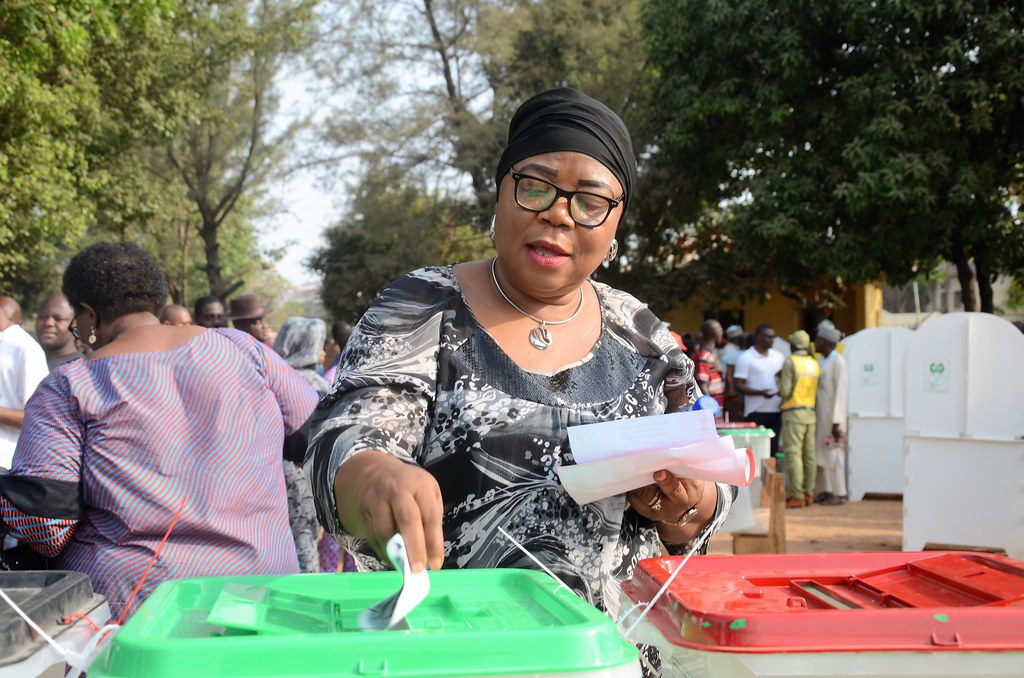
 Nigeria, based in West Africa, has the largest economy and most populous country in Africa. It has a great amount of natural resources, such as oil, yet it remains one of the poorest countries globally, with an estimated 87 million Nigerians living below the poverty line. There are many reasons for endemic poverty in the region but one of these is the state of the rule of law in Nigeria, in particular, the nature of corruption and violence. These two features exist as persistent structural problems in the region. They undermine development efforts, job creation and service delivery. Poor Nigerians are most affected by these problems as they depend most on security and public institutions. These two issues weaken institutions and efforts to reduce poverty. Here are some of the ways that the state of the rule of law in Nigeria affects poverty.
Corruption and Poverty
Nigeria remains one of the most corrupt countries in Africa with a score of 26/100 from Transparency International, an organization dedicated to monitoring corruption. There is poor government accountability. Public institutions routinely suffer from embezzlement, ghost workers and contract fraud.
These practices drain funds that are meant for poverty reduction initiatives such as social welfare and infrastructure projects. Corrupt officials also often divert aid or demand bribes to release public goods. While there are some anti-poverty programs like N-Power, they often fail to reach the poorest and political favoritism further reduces their impact.
Corruption also worsens access to services. Citizens sometimes have to pay bribes to access health care, school enrollment, land documents or housing support. This inflates the cost of these services and makes them inaccessible to the poorest who need them the most.
Corruption also shapes access to job opportunities as nepotism and bribery influence public sector jobs, scholarships and government contracts. Poor people, lacking money or political connections, are often excluded from these opportunities. This reinforced cycles of inequality and poverty as elites stay empowered while the poor stay locked out. The poor state of the rule of law in Nigeria, as it pertains to corruption, reduces trust in the system and discourages participation in government programs or elections, furthering the cycle of poverty.
Violence and Poverty
Violence in Nigeria, since the fourth republic, has largely been concentrated in the northern and central regions. These regions also experience the highest poverty rates in Nigeria. Several studies have drawn the link between insecurity and deprivation in these regions.
In particular, in the north-east (Borno, Yobe, Adamawa), Boko Haram has terrorized civilians in their attempt to overthrow the government, leading to mass displacement. Meanwhile, in the north-west (Zamfara, Katsina, Sokoto), there is widespread banditry, kidnapping and extortion. Additionally, in the middle belt of the country (Benue, Plateau, Taraba), there are herder-farmer conflicts and communal violence which lie along ethnic and religious lines.
In these regions, their poverty rates range from 60-80%. In contrast, the southern regions, such as Lagos and Anambra, have much lower poverty rates, suggesting a geographic overlap between insecurity and extreme poverty.
While it is likely the case that extreme poverty has led to violence in these regions, the violence itself has exacerbated poverty and its plight. It affects food production by reducing farming and livestock output and leads to great food insecurity as tens of millions are put at risk.
It also affects education as the destruction of schools and fear leads to dropout and inaccessibility. Likewise, Internally Displaced Persons from the violence, generally lack stable housing, health care and clean water. The weakened rule of law in Nigeria produces great violence which worsens poverty now and makes it more difficult to escape it in the future.
Anti-Corruption Initiatives
There have been some recent promising efforts to tackle corruption. In 2024, the Economic and Financial Crimes Commission (EFCC) secured 4,111 criminal convictions and recovered about $214.5 million USD in looted funds. The establishment of the Integrated Payroll and Personnel Information System (IPPS) has gone a long way to eliminate ghost workers. The launch of the Open Treasury Portal in 2019 has provided public access to federal government expenditures.
These initiatives have had some effect on tackling poverty. Recoveries help plug fiscal gaps for services, although they have limited impact on direct poverty alleviation. The elimination of ghost workers helps free up some salary funds. Transparency tools can build long-term trust and enable advocacy which is crucial in the fight against poverty although they currently remain underused or inconsistently updated.
Security Reforms & Community-Based Approaches
Some efforts recently taken to address violence include military offensives such as Lafiya Dole against insurgents. The Civilian Joint Task Force (CJTF) has increasingly involved itself in local defense. Additionally, the government has initiated peacebuilding and deradicalization programs in Borno and Zamfara and has further emphasized community policing and state security networks.
These efforts have allowed the return of displaced persons in some areas such as in Borno, which goes a long way in tackling poverty. However, poverty reduction is slow due to damaged infrastructure, trauma and loss of livelihoods. Localized success stories exist but are not yet scalable or systemic. However, efforts in bolstering the rule of law in Nigeria goes a long way in facilitating poverty reduction in the country.
Looking Ahead
Nigeria faces complex and varied challenges, with insecurity, poverty, and corruption, but these difficulties are not insurmountable. Recent steps show a growing awareness that change is both urgent and possible. There remains real hope that Nigeria’s immense potential can be more fully realized.
– Seun Adekunle
Seun is based in Scotch Plains, NJ, USA and focuses on Politics for The Borgen Project.
Photo: Flickr

Healthy Learners: Zambia’s School Health Program
The Poverty Trap: Preventable Illness = Lost Learning
Worm infections, vitamin A deficiency and other routine ailments quietly siphon school days and future earnings for Zambian children. Absenteeism forces caregivers to miss work too. By moving first‑line care into classrooms, Zambia’s Healthy Learners School Health Program targets that cycle where it begins: illness that keeps kids out of class.
Clinic in a Classroom: How the Model Works
Healthy Learners partners with the Ministries of Health and Education to train and equip teachers as School Health Workers. In 598 public primary schools, more than 5,300 teachers now use a mobile app (built with THINKMD). The app mirrors physician logic to triage, treat mild conditions (deworming, vitamin A, first aid) and fast‑track severe cases to clinics, plugging schools straight into the national health system.
The Numbers That Matter
These improvements mean fewer sick days now and more substantial earning potential later.
Small Price, Massive Payoff
After an initial setup cost of $10 to $15 per child, the ongoing cost falls to about $1.50 thanks to economies of scale and government integration. That frugality is why Zambia’s Healthy Learners School Health Program is financially realistic for national ownership and replicable elsewhere.
In 2022, the Ministries of Health and Education signed an MoU to scale the program nationally, embedding data systems and training inside state structures. Spring Impact highlights this “design for integration” as the core reason the model can scale without ballooning costs.
A Call to Action
Zambia’s Healthy Learners School Health Program is a ready‑made template for any country where schools reach kids more reliably than clinics.
A child walks back to class, symptoms eased, lesson saved. Indeed, one tablet tap at a time, Zambia’s Healthy Learners School Health Program is proving that health in schools is one of the cheapest, most innovative ways to fight poverty.
– Arabella D’Aniello
Photo: Flickr
Vaccinations in Africa: How Gavi Advances Economic Development
To reshape this narrative, Gavi, the Global Vaccine Alliance, is laying the foundations for a thriving, self-sustaining vaccine economy for the continent. Through continental partnerships, investments and innovations, the international organization created to ensure vaccine security is working to transform African health policy. The goal is to shift it from a long-standing area of weakness into a pillar of long-term economic strength.
Initiating Local Manufacturing
The COVID-19 pandemic exposed the risks of global supply chain disruptions and the weakness of economies reliant on vaccine importation. Many African countries struggled to access vaccines in the early rollout, sparking calls for regional self-reliance. In response, the African Union set a bold goal: to produce 60% of the continent’s vaccine needs locally by 2040, with Gavi central to achieving that ambition.
Through initiatives like the African Vaccine Manufacturing Accelerator, Gavi is shaping markets, lowering barriers and mobilizing funding to grow production capacity across the continent. More than 30 African vaccine manufacturing initiatives are now in motion, supported by a mix of government leadership and international investment. These efforts aim to build a sustainable, locally based supply of vaccines for routine immunizations. By producing vaccines within the continent, Africa is taking direct action to reduce its dependence on external sources and strengthen its resilience against future global health crises.
The strength of Gavi’s procurement and demand-forecasting models is crucial to growing an African vaccine economy. It allows local producers to see and rely on predictable, long-term vaccine demand figures. This crucial step sustains the development of a successful and relevant supply chain of vaccines within Africa, ensuring the local industries remain viable and successful as the continent builds to its 2040 goal.
Economic Growth Through Immunization
Gavi’s core mission of expanding access to immunization has driven development in Africa far beyond vaccine manufacturing. Vaccinations across Africa continue to deliver strong economic benefits, improving public health while boosting productivity and long-term growth. Healthier populations lead to fewer missed school days, lower health care costs and higher workforce productivity. According to Gavi, every $1 spent on vaccinations in Africa yields up to $21 in economic benefit through avoided illness, improved wages and long-term growth.
Since its inception in 2000, Gavi’s efforts have helped immunize more than 800 million children, averting more than 14 million deaths. In Africa alone, since 2000, coverage of the diphtheria, tetanus and pertussis (DTP3) vaccine across Gavi-supported African countries has increased from 52% to more than 70%. By building health systems around vaccine delivery, such as training workers, investing in cold chains and digitizing records, Gavi has strengthened public infrastructure in regions where such systems are often underfunded. This progress has not only saved lives but also helped countries make strides toward the Sustainable Development Goals.
Toward a Resilient Vaccine Future
A more secure future for African public health begins with Gavi’s support for the African Vaccine Manufacturing Accelerator. This initiative not only increases vaccine supply but also strengthens regional resilience against future pandemics. This resilience, however, is seen as only the starting point for an African vaccination economic sector. The developmental transition of African nations from Gavi support to self-financed immunization programs is hoping to create not just independence but also leadership in global health manufacturing.
In this vision, Gavi in Africa is more than a health initiative; it is an economic strategy, a security policy and a development model. As African-made vaccines begin protecting African communities, the continent moves closer to a future where health equity and economic strength go hand in hand.
– Tom Finighan
Photo: Flickr
How Zzapp Malaria Uses AI Technology To Fight Malaria in Africa
Despite decades of progress, including a 38% reduction in malaria incidence and a 60% drop in mortality from 2000 to 2022, gains have stalled. Challenges such as drug and insecticide resistance, underfunding and changing climatic conditions continue to hamper efforts. As traditional tools fall short, technology to fight malaria is becoming increasingly vital.
AI as a Solution
Malaria has been eliminated in several countries that are able to carry out comprehensive control operations, particularly by targeting mosquito breeding grounds in stagnant water bodies. However, such interventions require significant investment.
To overcome these barriers, innovative initiatives like Zzapp Malaria are using technology to fight malaria. They are transforming control operations with AI and mobile tools to offer scalable, cost-effective solutions to one of Africa’s most persistent public health threats.
How Zzapp Malaria Works
Zzapp Malaria is an Israeli nonprofit startup. It uses AI-driven software to plan and execute malaria control operations, particularly larviciding and house spraying, in low-resource and urban settings across Africa.
Its approach combines several key steps:
The app works offline, supports low-end smartphones and uses icons for low-literacy users. It recognizes traditional huts and modern homes and training is simple. For many field workers, using the app is their first digital experience, empowering them with new skills.
Proven Impact and Cost-Effectiveness
Zzapp Malaria remains active in Ghana, São Tomé and Príncipe and has expanded to Mozambique, Zanzibar in Tanzania, Ethiopia and Kenya. Its pilots have reached 500,000 people, with expansion agreements aiming for at least five million.
Recent Developments
Why Zzapp Malaria’s Solutions Matter
Despite large global investments, conventional tools often fall short and progress has stalled. Technology to fight malaria, like Zzapp Malaria, enables task-shifting to community health workers while enhancing surveillance, diagnosis and treatment. Its AI-powered mapping, targeted larviciding and drone-assisted detection fill key gaps:
Zzapp Malaria exemplifies the transformative potential of technology to fight malaria through digital health solutions:
In a world where malaria continues to claim hundreds of thousands of lives each year, Zzapp Malaria shows how technology to fight malaria can provide scalable, cost-effective solutions to one of the world’s most persistent health challenges.
– Jacobo L. Esteban
Photo: Flickr
Community Programs in Johannesburg and Pretoria
From setting up life training sessions and job safety nets to raising awareness through volunteer experience, the communities of Johannesburg and Pretoria are selflessly committed to poverty reduction in the cities.
U-Turn Homeless
One of the community programs in Johannesburg and Pretoria is U-turn Homeless Ministries (U-turn). The program is focused on raising awareness and correcting misconceptions about the homeless population in South Africa.
One of its most popular events involves citizens volunteering to spend a night on the streets to experience homelessness for one night. The event is done to raise awareness among citizens who are in a position to help and honor the homeless population.
The most recent U-turn event occurred on May 17, 2025, in Cape Town and Johannesburg, South Africa. The event also served as a fundraiser for homeless communities. Thanks to the strong turnout, enough funds were raised to provide 13,000 nights of shelter for 300 unhoused individuals.
The Community Work Program
One program prevalent in Johannesburg and Pretoria is the Community Work Program (CWP), which focuses on creating job safety nets for individuals. It offers many services to individuals looking for work and the unemployed youth.
The CWP helps establish mentorships to guide youth through difficult life situations and teach them how to handle them. In 2020, 43.2% of working-age youth in South Africa were unemployed. Programs like the CWP aim to reduce this number by creating safer and more accessible job opportunities for young people.
The Integrated Community Registration Outreach Program
The Integrated Community Registration Outreach Program (ICROP) focuses on reaching excluded and isolated individuals and communities. While its primary goal is inclusion, the broader objective is to reduce poverty significantly.
One of its biggest achievements was helping lower the national poverty rate from 57% to 45% in just four years. Furthermore, ICROP has also facilitated hundreds of thousands of child grant registrations and continues to expand its impact.
The University of Pretoria
The University of Pretoria (UP) stands out as a key driver of poverty reduction among South Africa’s many community programs. Indeed, UP has become a hub for integrating poverty solutions at both the local and national levels. The university has supported numerous student-led initiatives and volunteer efforts to tackle poverty in Pretoria.
It has also collaborated with international partners to address the root causes of poverty in South Africa. One example is the UP Law Clinic, which provides free legal assistance to low-income individuals. It involves law students directly in helping resolve legal issues that can trap people in cycles of poverty.
Conclusion
While the road to ending poverty in South Africa is still long and difficult, it’s encouraging to see that the fight isn’t left to the government alone. Citizens and communities across the country are stepping up with determination and compassion to drive real change.
– Russell Bivins
Photo: Flickr
Education Reforms in Mexico
The current President of Mexico, Claudia Sheinbaum, took office in late 2024 and has since introduced a series of education reforms. These education reforms in Mexico fall under the Comprehensive Plan of the National Baccalaureate System, part of the New Mexican School framework originally developed by former President Andrés Manuel López Obrador. The plan is built on three core pillars:
Comprehensive Strengthening
Sheinbaum aims to modernize the curriculum through conversations with educators and the establishment of educational equity programs. To achieve these goals, her administration would implement two programs: the Benito Juarez Universal Scholarship and the extension of the School is Ours program.
The Benito Juarez Universal Scholarship encourages students to enroll in upper secondary school by providing financial support to more than 5.6 million secondary school students. In the same vein, Sheinbaum plans to invest around 4.6 billion pesos (about $243 million) into the School is Ours program, which will ultimately benefit more than 6,000 schools nationwide by improving educator salaries and encouraging community involvement.
Integration
In addition to providing scholarships, the plan consolidates the existing 31 systems of secondary education into two: the National General Baccalaureate and the General Technological Baccalaureate. The unification brings about various benefits, including the reduction of administrative barriers when transferring between schools, easier transfer processes for students and teachers and equity in the quality of education.
As a part of the plan, the two systems of education will be validated by the National Polytechnic Institute and the National Technological Institute of Mexico, thus simplifying the transition between secondary and higher education.
Expansion
Sheinbaum hopes to expand educational offerings throughout the nation in an effort to increase equity and access. Through the plan, her administration sets forward to create 37,500 new spaces for students in upper secondary schools. She plans to achieve this by erecting 20 new high school campuses and expanding 30 already-existent but high-in-demand campuses.
In addition, 35 secondary schools that currently only offer morning classes will be converted to afternoon and evening schools, allowing more students to attend at flexible hours. By the end of six years, Sheinbaum hopes to have created more than 100,000 high school spots and 330,000 university slots.
Final Remarks
Though Sheinbaum has only been in office for a few months, her administration has made tangible progress in expanding educational access. With her six-year plan in action, she seeks to create an education system built on unity and equity. Suppose she continues to progress as she has in these past months. In that case, Mexico is on the way to ensuring quality education for its people.
– Ariana Wang
Photo: Unsplash
The Hidden Burden of Depression in Africa
In Africa, the situation is particularly acute. The continent has the highest suicide rate in the world, at 11 per 100,000 people, compared to nine globally. It is estimated that more than 20 million individuals in Africa have depression, representing 9% of the global burden. North, West and Central Africa are particularly affected, grappling with fragile health care systems, conflicts, stigma and limited mental health services.
The Central African Republic (CAR) has one of the highest suicide rates worldwide, often linked to untreated depression. In contrast, Nigeria has more than seven million sufferers. Even in better-resourced countries like Egypt, Tunisia and Morocco, depression rates remain high.
Africa’s Mental Health Crisis
Mental health systems in Africa are underfunded. African governments allocate less than $0.50 per person annually to mental health. This is far below the recommended $2 per capita for low-income countries. In 2020, only 94 mental health outpatient visits were recorded per 100,000 people compared to 2,001 worldwide, indicating a lack of formal treatment access for most Africans with mental health issues.
In West and Central Africa, psychiatric hospitals are scarce and located in large cities. The situation is further complicated by conflicts in Mali, the Democratic Republic of Congo (DRC), CAR and Libya, where many health facilities have been destroyed or are difficult to access. On average, sub-Saharan Africa has just one psychiatrist per million people. Specialists are often concentrated in capitals or major cities, leaving rural populations underserved. Patients usually face long-distance travel costs to tertiary hospitals, which are cost-prohibitive for many and rely on general practitioners with limited psychiatric training.
Furthermore, antidepressants and psychotropic drugs are often out of stock or unaffordable for many patients. According to the WHO, more than 75% of people with mental disorders in low- and middle-income countries, including most of Africa, receive no treatment for depression. Second-line TRD treatments, such as atypical antipsychotics and dopaminergic drugs, are rarely stocked in public health facilities or private clinics in Sudan, South Sudan, Niger, Mali and CAR. Even in Nigeria, Uganda and Ghana, which have better health care infrastructures, access to these treatments remains limited to tertiary referral hospitals in major cities, with frequent shortages.
Initiatives Addressing Mental Health in Africa
Despite challenges, promising efforts are underway, from policy reforms to community-led interventions.
Conclusion
Depression in Africa is not just a personal struggle but a public health emergency driven by limited funding, poor access to care and deep-rooted stigma. With suicide rates among the highest globally and millions untreated, the call for action is urgent. Expanding community care, improving mental health training and ensuring access to essential medications are critical.
– Juliette Delbarre
Photo: Flickr
Ending Mother-To-Child HIV Transmission in Botswana
A Triumph Against the Odds
Botswana has long been one of the nations hardest hit by HIV/AIDS, with adult prevalence rates among the highest in the world. Yet, through committed public health efforts, the country has demonstrated that even in high-prevalence settings, eliminating new pediatric HIV infections is achievable.
The WHO’s Gold Tier status is awarded to countries that meet rigorous criteria for the elimination of mother-to-child transmission, including maintaining transmission rates below 2% and sustaining this achievement over time. Botswana’s attainment of this status is a testament to its effective health policies, strong political will and dedicated community programs.
Keys to Success: Universal Treatment and Comprehensive Care
Central to Botswana’s success has been the provision of universal free antiretroviral treatment (ART) to all pregnant women living with HIV. This policy ensures that pregnant women receive the medication necessary to suppress the virus, drastically reducing the chance of passing HIV to their babies.
Moreover, Botswana boasts high rates of antenatal care attendance and widespread HIV testing among pregnant women. Early diagnosis and continuous monitoring throughout pregnancy enable timely intervention and care adjustments, maximizing the chances of a healthy, HIV-free birth.
Complementing clinical care, robust community-based health programs have played a critical role. These programs provide education, support and follow-up services, ensuring that women stay engaged in treatment and adhere to prescribed regimens.
A Model for the World
Botswana’s achievement in reducing mother-to-child HIV transmission not only saves countless children from HIV but also offers a blueprint for other countries facing high HIV burdens. It challenges the notion that eliminating vertical transmission is unattainable in resource-limited, high-prevalence environments. The country’s success underscores the power of integrating free, accessible health care services with community engagement and strong political commitment. It also highlights the importance of sustained investments in maternal and child health programs.
While Botswana’s milestone is cause for celebration, continued vigilance is essential. Maintaining low transmission rates requires ongoing support for pregnant women, access to ART and community outreach. Indeed, Botswana’s experience demonstrates that with the right strategies and resources, the goal of an HIV-free generation is within reach, even in the most challenging settings.
As global health organizations and countries worldwide strive to eliminate pediatric HIV, Botswana stands as a beacon of hope, proving that with determination and comprehensive care, vertical transmission of HIV can be stopped.
– Meagan Beaver
Photo: Flickr
Fragility and Rule of Law in Nigeria
Corruption and Poverty
Nigeria remains one of the most corrupt countries in Africa with a score of 26/100 from Transparency International, an organization dedicated to monitoring corruption. There is poor government accountability. Public institutions routinely suffer from embezzlement, ghost workers and contract fraud.
These practices drain funds that are meant for poverty reduction initiatives such as social welfare and infrastructure projects. Corrupt officials also often divert aid or demand bribes to release public goods. While there are some anti-poverty programs like N-Power, they often fail to reach the poorest and political favoritism further reduces their impact.
Corruption also worsens access to services. Citizens sometimes have to pay bribes to access health care, school enrollment, land documents or housing support. This inflates the cost of these services and makes them inaccessible to the poorest who need them the most.
Corruption also shapes access to job opportunities as nepotism and bribery influence public sector jobs, scholarships and government contracts. Poor people, lacking money or political connections, are often excluded from these opportunities. This reinforced cycles of inequality and poverty as elites stay empowered while the poor stay locked out. The poor state of the rule of law in Nigeria, as it pertains to corruption, reduces trust in the system and discourages participation in government programs or elections, furthering the cycle of poverty.
Violence and Poverty
Violence in Nigeria, since the fourth republic, has largely been concentrated in the northern and central regions. These regions also experience the highest poverty rates in Nigeria. Several studies have drawn the link between insecurity and deprivation in these regions.
In particular, in the north-east (Borno, Yobe, Adamawa), Boko Haram has terrorized civilians in their attempt to overthrow the government, leading to mass displacement. Meanwhile, in the north-west (Zamfara, Katsina, Sokoto), there is widespread banditry, kidnapping and extortion. Additionally, in the middle belt of the country (Benue, Plateau, Taraba), there are herder-farmer conflicts and communal violence which lie along ethnic and religious lines.
In these regions, their poverty rates range from 60-80%. In contrast, the southern regions, such as Lagos and Anambra, have much lower poverty rates, suggesting a geographic overlap between insecurity and extreme poverty.
While it is likely the case that extreme poverty has led to violence in these regions, the violence itself has exacerbated poverty and its plight. It affects food production by reducing farming and livestock output and leads to great food insecurity as tens of millions are put at risk.
It also affects education as the destruction of schools and fear leads to dropout and inaccessibility. Likewise, Internally Displaced Persons from the violence, generally lack stable housing, health care and clean water. The weakened rule of law in Nigeria produces great violence which worsens poverty now and makes it more difficult to escape it in the future.
Anti-Corruption Initiatives
There have been some recent promising efforts to tackle corruption. In 2024, the Economic and Financial Crimes Commission (EFCC) secured 4,111 criminal convictions and recovered about $214.5 million USD in looted funds. The establishment of the Integrated Payroll and Personnel Information System (IPPS) has gone a long way to eliminate ghost workers. The launch of the Open Treasury Portal in 2019 has provided public access to federal government expenditures.
These initiatives have had some effect on tackling poverty. Recoveries help plug fiscal gaps for services, although they have limited impact on direct poverty alleviation. The elimination of ghost workers helps free up some salary funds. Transparency tools can build long-term trust and enable advocacy which is crucial in the fight against poverty although they currently remain underused or inconsistently updated.
Security Reforms & Community-Based Approaches
Some efforts recently taken to address violence include military offensives such as Lafiya Dole against insurgents. The Civilian Joint Task Force (CJTF) has increasingly involved itself in local defense. Additionally, the government has initiated peacebuilding and deradicalization programs in Borno and Zamfara and has further emphasized community policing and state security networks.
These efforts have allowed the return of displaced persons in some areas such as in Borno, which goes a long way in tackling poverty. However, poverty reduction is slow due to damaged infrastructure, trauma and loss of livelihoods. Localized success stories exist but are not yet scalable or systemic. However, efforts in bolstering the rule of law in Nigeria goes a long way in facilitating poverty reduction in the country.
Looking Ahead
Nigeria faces complex and varied challenges, with insecurity, poverty, and corruption, but these difficulties are not insurmountable. Recent steps show a growing awareness that change is both urgent and possible. There remains real hope that Nigeria’s immense potential can be more fully realized.
– Seun Adekunle
Photo: Flickr
Renewable Energy: Improving the Health Care System in Haiti?
Thanks to its location in the center of Cap-Haitien in Northern Haiti and available services, Justinien University Hospital is one of the largest public hospitals in the country. The hospital is also the second-largest teaching hospital in Haiti. Justinien University Hospital serves a population of more than 1 million in the surrounding area of northern Haiti
Renewable Energy Use at Justinien University Hospital
Beginning in 2024, Justinien University Hospital has been transitioning to a renewable energy model to power their medical facilities. As of May 2025, 60% to 75% of daily energy needs within the hospital are supplied by renewable sources. Justinien University Hospital used to rely heavily on diesel generators for power. As an administrator commented to a World Bank reporter, “We used to buy 120 gallons of diesel every day, which would cost nearly $22,000 per month. The installation of the renewable energy system has allowed us to reduce our dependence on fossil fuels by more than 60%. Now, we reallocate these funds to other services and improve the quality of care offered.”
Hospitals Turning to Solar Energy
In addition to Justinien University Hospital, the Ministries of Health and Public Works of Haiti, the United Nations Office of Project Services (UNOPS) and the World Bank have come together to implement renewable energy in five hospitals across Haiti. These hospitals have implemented a solar photovoltaic and battery storage system that provides a clean and reliable energy system to their medical facilities. Because of the quantity and reach of hospitals that have implemented this energy model, more than 1.5 million people could benefit, according to the World Bank. This increased energy security for medical facilities means a revolutionary increase in access to healthcare within Haiti
The Future
Access to energy is an ongoing issue in Haiti. Political upheaval and the impact of natural disasters, such as hurricanes, leave the country struggling to establish a widespread power grid. Despite the United Nations Sustainable Energy for All initiative aiming to provide universal energy access by 2023, there is still a long way to go within some Caribbean nations
Several sectors feel the impacts of this, but none so dire as the health care system in Haiti. In recent years, however, the Haitian government, along with several NGOs, has initiated the implementation of renewable energy sources in hospitals across Haiti. This has significantly improved healthcare access in Haiti, cutting hospital operating costs, making services more consistently available, and expanding the reach of the hospital within the local community.
– Gwyneth Connor
Photo: Flickr
USAID Programs in Armenia: Light in the Battle Against Poverty
USAID programs in Armenia have evolved over the course of almost 30 years, moving from providing immediate humanitarian assistance to allowing inclusive, long-term development plans. At this point, USAID funds about 32 projects in all 10 Armenian regions, improving social services, economic opportunity and democratic institutions.
The Community Level Access to Social Services Project
One notable work is the Community Level Access to Social Services (CLASS) project. CLASS assists community social service providers in establishing accessible, inclusive support networks, especially for families facing financial difficulties and children with disabilities. These services help people achieve long-term stability and meet their immediate needs by connecting them to health care, education and employment opportunities.
The program fights poverty at its source while preserving each person’s dignity by promoting inclusive growth, strengthening community resilience and investing in sustainable local capacity for future generations.
The Armenia Support Initiative
USAID assisted the Armenian government during the 2023 humanitarian crisis brought on by the Nagorno-Karabakh conflict. It provided $8.5 million to address housing needs and psychosocial support for displaced persons and refugees. These efforts safeguarded human welfare during the emergency by promptly ensuring that vulnerable populations received food, housing, medical assistance and emotional care. Beyond immediate relief, the aid supported long-term recovery by strengthening local service providers and reinforcing community resilience against future crises.
Another essential component of USAID’s work in Armenia is economic development. The organization has set lofty objectives to increase agricultural productivity, develop clean energy infrastructure and encourage innovation-driven entrepreneurship in its 2020–2025 Country Development Cooperation Strategy (CDCS). The goal of USAID programs in Armenia is to lessen rural poverty and foster economic resilience by assisting industries that generate long-term jobs and income growth. The strategy strengthens Armenia’s integration into global markets, supports small businesses and builds sustainable pathways for inclusive economic opportunity.
Rather than relying on short-term aid, USAID programs in Armenia emphasize sustainable solutions driven by local partnerships. One community at a time, this people-first strategy enables Armenians to create better futures.
Conclusion
USAID programs in Armenia are changing lives through practical, empowering and locally based interventions. From improving social services to supporting displaced populations and strengthening economic opportunities, these programs embody the best of what international development can be.
– Kyra Cribbs
Photo: Pixabay