Healthy Learners: Zambia’s School Health Program
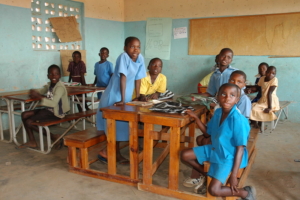 A Grade 4 pupil in Lusaka coughs during maths class. Instead of sending her home, a teacher, now a trained School Health Worker, opens a tablet, runs through a WHO‑style checklist, dispenses deworming pills, logs the visit and, if needed, fast‑tracks her to a clinic. The entire effort is part of Zambia’s Healthy Learners School Health Program and averages just $1.51 per child per year, which is less than 1% of what the Ministry of Education already spends per pupil.
The Poverty Trap: Preventable Illness = Lost Learning
Worm infections, vitamin A deficiency and other routine ailments quietly siphon school days and future earnings for Zambian children. Absenteeism forces caregivers to miss work too. By moving first‑line care into classrooms, Zambia’s Healthy Learners School Health Program targets that cycle where it begins: illness that keeps kids out of class.
Clinic in a Classroom: How the Model Works
Healthy Learners partners with the Ministries of Health and Education to train and equip teachers as School Health Workers. In 598 public primary schools, more than 5,300 teachers now use a mobile app (built with THINKMD). The app mirrors physician logic to triage, treat mild conditions (deworming, vitamin A, first aid) and fast‑track severe cases to clinics, plugging schools straight into the national health system.
The Numbers That Matter
- Reach: More than 830,000 students served, about a quarter of Zambia’s public primary school population, with a goal of 2.2 million by 2028.
- Health Gains: A study found a 38% drop in disease morbidity, a 48% jump in both deworming and vitamin A coverage, a 22% rise in health knowledge and a 52% reduction in the odds of stunting.
These improvements mean fewer sick days now and more substantial earning potential later.
Small Price, Massive Payoff
After an initial setup cost of $10 to $15 per child, the ongoing cost falls to about $1.50 thanks to economies of scale and government integration. That frugality is why Zambia’s Healthy Learners School Health Program is financially realistic for national ownership and replicable elsewhere.
In 2022, the Ministries of Health and Education signed an MoU to scale the program nationally, embedding data systems and training inside state structures. Spring Impact highlights this “design for integration” as the core reason the model can scale without ballooning costs.
A Call to Action
Zambia’s Healthy Learners School Health Program is a ready‑made template for any country where schools reach kids more reliably than clinics.
A child walks back to class, symptoms eased, lesson saved. Indeed, one tablet tap at a time, Zambia’s Healthy Learners School Health Program is proving that health in schools is one of the cheapest, most innovative ways to fight poverty.
– Arabella D’Aniello
Arabella is based in Toronto, Canada and focuses on Good News and Technology for The Borgen Project.
Photo: Flickr
