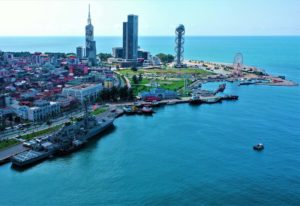
 Georgia’s policies aimed at reducing poverty have been successful, especially regarding efforts to modernize the labor market and increase access to assistance for large portions of the population. The country’s gross national income per capita rose from $3,000 in 2010 to $5,702 in 2023, along with reducing poverty in Georgia by roughly 35% in a timespan of over a decade. There is a continued sense of urgency to address and curb poverty.
Despite these efforts, in 2024, the Georgian government backtracked on European Union accession talks. This forced successful policies that reduced poverty to be abandoned, leaving only unproven strategies. The resulting suspension of some foreign aid in the form of investments will harm citizens by hindering national economic growth and slowing trade. Furthermore, some Georgians in rural regions and minority groups, consisting of Azerbaijanis and Armenians, still face high levels of poverty due to the government’s limited current legislation focused on their needs.
Ethnic tensions in Georgia are prevalent, stemming from the need to preserve the unique identity of Georgians, especially from outside invaders, including Russia. Georgia has two breakaway regions, Abkhazia and South Ossetia, both striving for independence. However, the Georgian government and people have been skeptical of foreign influence in the regions and the potential for disruption to the Georgian identity, according to the Carnegie Endowment for International Peace.
This fear, along with the hindrance of the government viewing minorities as lesser members of the nation, has restricted support and Georgia’s hope to curb poverty in predominantly minority regions.
Black Sea Importance and Access
The Black Sea is of great importance to Georgia, allowing access to beneficial trade resources and international partnerships. Partnerships between foreign nations can also enhance security, unify independent countries and provide protection in this dynamic region. Without the Black Sea, Georgia would be unable to utilize ports to facilitate trade and resource distribution.
Also, the Blue Economy or ocean resources used for economic growth, is vital to Georgia. A recent project from the European Climate, Infrastructure and Environment Executive Agency increases support for fisheries, coastal and maritime tourism and maritime transport, according to the European Commission.
Besides ports, oil and gas pipelines also flow through and around the Black Sea, creating a significant trade route from nations such as Russia and Turkey to nations in Europe. The ability for nations to tap into Western markets is key to maintaining national economic growth and potential job growth, ensuring that the nation thrives and that poverty can be reduced.
This is beneficial not only to individual nations in the region but also to the U.S., which has the goal of minimizing adversary movements in conflict zones and areas of high trade interest. Specifically, nations that can rely on Western nations for trade and an economic boost will become less dependent on Russian trade and influence. Additionally, their national independent movements will be protected, according to the Foreign Policy Research Institute.
Georgia’s Ports
Georgia’s unique location between the Black Sea and the Caspian Sea, along with neighboring Azerbaijan, allows the country to connect seven landlocked countries. It promotes trade between Europe and Asia. According to the National Library of Medicine, Georgia maintains aspirations of being a direct hub between Europe and Asia, with added economic growth, infrastructure and development. Trade agreements are vital in preserving and increasing Georgian dominance on the Black Sea to become a significant trade and support nation in a time when foreign influence downplays the nation.
The Batumi Sea Port, located near the southwest corner of the nation, is designed to deal with cereal cargo and petroleum goods. According to the Logistics Cluster, the port transfers goods from land-based transport to ships. It also handles trade vessels and military ships from the U.S. and NATO. These military vessels dock to support regional security through joint exercises and training. By maintaining a strong flow of trade and military ships through their ports, Georgia ensures a positive economic output and strong international cooperation while maintaining security against threats.
Ongoing Strife in the Black Sea
With Russia’s ongoing expanded war against Ukraine, originating in 2014, the Black Sea is still a threatened region, facing military threats, environmental risks and disruptions to vital shipping routes. Primarily at the start of the war, the Russian Navy increased warship presence in the Black Sea and since then, both the Russian Navy and the much smaller Ukrainian Navy have utilized sea mines to deter advances from both sides.
However, with the presence of warships and mines, coastal authorities continue to warn marine traffic of the dangers, ultimately creating uncertainty in trade routes and the potential for disasters, according to the NATO Shipping Center. Environmental risks are also occurring, with mines and oil spills from Russian oil tankers harming the Black Sea shipping lanes and wildlife. Aging tankers in Russia’s shadow fleet, used to evade oil price caps, are at higher risk of spills or navigation failures. Collisions involving these vessels also disrupt trade and daily life in regions like Crimea.
With Russian deals to implement new naval policies and create new bases to house warships, Georgia will be at a disadvantage. Continued disruptions to trade and Russian influence to bar additional Georgian efforts to secure new ports and infrastructure relating to trade will negatively impact the Georgian economy and reduce poverty in Georgia.
A Future for Georgia and the Black Sea
Georgia continues to find new ways to reduce poverty. A report supported by the United Nations Development Programme (UNDP) describes how investments in social security, health care and education will help reduce poverty. To create long-lasting economic growth, the Black Sea’s role must be at the forefront of future deals. Prioritizing investment, tourism and port development will boost jobs, raise incomes and improve regional trade efficiency, key steps toward reducing poverty in Georgia.
– Avery Kachmarsky
Avery is based in Los Angeles, CA, USA and focuses on Business and Politics for The Borgen Project.
Photo: Flickr

Top 10 Facts About Poverty in Zimbabwe
The 2024 El Niño-induced drought further pushed the country into a dire humanitarian crisis. However, a favorable 2025 harvest has offered some respite, improving livelihoods and food security for millions. Despite these recent positive developments, underlying issues remain, underscoring the need for sustained support and long-term solutions.
Facts About Poverty in Zimbabwe
Organizations Providing Aid
Despite these challenges, organizations like Action Against Hunger (ACF) and the World Food Program (WFP) are stepping up their efforts to meet the urgent needs of vulnerable Zimbabweans.
ACF provides cash transfers to farmers and households with malnourished children, while ensuring these children receive the necessary medical referrals. Its actions benefited a total of 8,000 people. The organization has also prioritized access to clean water, constructing and refurbishing boreholes and mini water systems that now serve water to more than 19,000 individuals.
Meanwhile, WFP strengthens rural farming communities by training farmers on climate-smart farming techniques, encouraging traditional small grain cultivation, diverse horticulture and animal farming. WFP also introduces agricultural risk insurance, alongside savings and credit products.
Final Remarks
While the successful 2025 harvest has provided a temporary relief, it highlights Zimbabwe’s acute vulnerability to climate shocks. Continued funding and collaboration between the government and international partners are critical for building long-term resilience, ensuring sustainable development and preparing for future crises linked to climate instability.
– Juliette Delbarre
Photo: Flickr
The Synonymity of Disability and Poverty in Burundi
Disability and Poverty in Burundi
With only 14.78% of its population living in urban areas, Burundi is the least urbanized country in Africa. As such, Burundi relies on small-scale farming to maintain its economy. This means that financial well-being is directly connected to physical ability. For many Burundians who experience limitations, this way of life makes it extremely difficult to support themselves.
While the exact metrics for Burundians with disabilities have not been adequately documented, the World Health Organization (WHO) estimates that around 10-15% of any given country’s population experiences some form of disability. Due to the country’s limited health care system, many Burundians with physical disabilities are not being adequately treated or given solutions to compensate for a lack of mobility, which makes them unable to work.
In an economy that values labor as a commodity, disability is synonymous with poverty, and the statistics support this. According to the National Library of Medicine, “68% of men and 75% of women with disability were affected by multidimensional poverty compared to 54% and 46% of their peers without disability.”
Emerging Solutions
In 2014, Burundi ratified the Committee on the Rights of Persons with Disabilities. The Burundian Constitution was revised to include Article 22, which “reaffirms the protection and equality of everyone before the law and that no one may be subject to discrimination, including, among others, on the ground of disability.”
Legislation like this is a tremendous step in the right direction to ensure that Burundians with disabilities can dispel stigma and discrimination to open up opportunities for themselves in the workforce. Financial stability is an important component of ensuring that people with disabilities are afforded the same respect as nondisabled persons.
The United Nations Children’s Fund (UNICEF) is also striving to improve the treatment of those with disabilities in Burundi. With a specific focus on youth, the organization makes it its mission to study how children with disabilities face social exclusion, barriers to equal education, and inaccessibility to social services. Furthermore, its strategy is to prepare the next generation to be more inclusive and understanding of their peers.
Conclusion
Efforts from both the government and organizations like UNICEF protect the rights of people living with a disability and in poverty in Burundi, while challenging the discrimination that hinders social acceptance.
– Zoey Kartchner
Photo: Flickr
How Enhanced Rock Weathering in Africa Is Turning Heads
The new technology, Enhanced Rock Weathering (ERW), offers a dual solution to two of Africa’s most pressing challenges: unstable climatic conditions and food insecurity. ERW captures carbon dioxide (CO2) directly from the atmosphere by accelerating a natural geological process. At the same time, minerals from the rock revitalize depleted, acidic soils, leading to dramatic increases in crop yields and farmer incomes.
How It Works
The science behind ERW is surprisingly simple. The natural weathering of rocks regulates Earth’s climate by pulling CO2 from the air. ERW turbocharges this process by increasing the surface area of available rock. Finely crushed silicate rock, typically basalt, is spread across agricultural fields.
When rainwater mixes with CO2 in the atmosphere, it forms a weak acid that inevitably falls to the ground and reacts with the rock dust. This reaction converts the CO2 into stable bicarbonate ions that are eventually washed into rivers and oceans, where the carbon is locked away for a projected 10,000 years.
Initial Outcomes of Enhanced Rock Weathering in Africa
While the climate benefits are global, the local impact is life-changing. Many African farmers have struggled with degraded, acidic soils that reduce crop growth for years. With ERW, the basalt dust acts as a slow-release natural fertilizer, replenishing the soil with essential nutrients like calcium, magnesium and phosphorus. It also raises the soil’s pH, making it less acidic and more fertile.
The results are starting to turn heads. In collaboration with ERW company Mati Carbon, farmers in India are reporting increased rice yields “in excess of 20%” with Mati Carbon’s CEO, Shantanu Agarwal, stating that results will be even more pronounced on the most degraded soils.
A recent pilot study in Kenya conducted by the climate-tech startup Flux in collaboration with the United Nations Convention to Combat Desertification proves Mati Carbon right. The study found that applying basalt dust to maize fields increased grain yields by an average of 47.5%, with some farms noting a yield increase of more than 200%. For the participating farmers, this translated into an economic gain of more than $326 per hectare, per harvest, a transformative sum for families living in subsistence conditions.
The Carbon Credit Connection
Another beautiful aspect of these new programs is their business model. All the profits from increased crop yield go straight to the farmers. Companies like Flux and Mati Carbon sell the carbon credits to climate-conscious corporations, then provide the rock dust to farmers free of charge.
The farmers benefit immediately from healthier soils and bigger harvests and credit purchasers solidify their commitment to the environment. Enhanced rock weathering is gaining traction with a sustainable business model, concrete outcomes and increasing interest from the corporate sector.
Into the Future
Mati Carbon, the company that recently won the $50 million XPRIZE for Carbon Removal, aims to support 30,000 smallholder farmers by the end of 2025. Nairobi-based Flux has also set an ambitious goal of generating $300 million in additional income for African farmers by 2030. Early indicators of enhanced rock weathering in Africa point to a win-win situation. However, there are still concerns about the cost of crushing and spreading.
As the technology scales from pilot projects in Kenya, Zambia and Tanzania to larger initiatives across the continent, it promises to turn millions of hectares of African farmland into catalysts for both environmental restoration and human prosperity.
– Levi Ravnsborg
Photo: Pixabay
What Does the Israel-Iran War Mean for Iranians
Economy Pre-Conflict
Iran’s economy, like the majority of the Middle East, depends upon access to power sources: natural gas and oil. These resources are invaluable for Iran and have become its most powerful bargaining chip throughout the Israel-Iran War.
Oil and gas power the Iranian economy and make it an area of interest for the Western world. As of 2024, Iran’s Gross Domestic Product (GDP) was roughly $434.24 billion. While the overall GDP is significant, different units of measurement paint a different picture for the common people living in Iran. When examining Iran’s GDP per capita, the country ranks 117th out of nearly 200. Trade sanctions have worn Iran’s economy down. As a result, it cannot hold the weight of an all-out war. While oil makes up 17% of Iran’s exports and its energy sources bring in a great deal of money, the sanctions greatly limit the economic growth of Iran. Every plan to recover the Iranian economy involves improving relations with the Western world to get the sanctions lifted.
Iran Focus, a nonprofit news outlet that reports on Iran, Iraq and the Middle East as a whole, reported as recently as June 9, 2025, that “in Tehran, 55% of individuals’ income is spent on housing” as inflation batters and bruises civilians. Nearly 75% of Iranians live below the poverty line and as the Israel-Iran War progresses, the percentage could rise.
Impact of the War
Already, the people of Iran are struggling to provide for themselves and their families. The ongoing conflict means even their lives are at risk. On June 15, 2025, the number of deceased Iranians was roughly 224. Civilians have fled from Tehran in droves and Iran’s retaliation could worsen financial hardship. According to The National, another news source that is also reporting on Iran, state collapse could be imminent for the nation. The rial, the currency of Iran, could lose more value. The Israel-Iran war has driven Iran to a tipping point.
Humanitarian Aid in Iran
The most immediate danger to the Iranian people is the Israel-Iran War. In the days after the U.S. allied itself with Israel, global headlines focused on the potential for escalating violence. Thankfully, de-escalation has been orchestrated and the back-and-forth bombing has come to a rest.
Nonprofit organizations are working hard to help the struggling people of Iran. The Center for Human Rights in Iran offers consistent coverage of the ongoing events while focusing on civilians and those who are directly in the line of fire. Its focus is on documenting all human rights issues in Iran and it has been in action since 2008.
Another organization that has global reach but still operates within Iran is Relief International. Relief International targets the damage caused by natural disasters while also building schools and offering financial assistance to struggling citizens. Relief International has a collection of testimonies from people the organization has directly helped; such reminders of good news can serve as a resource for motivation.
Looking Ahead
The Israel-Iran ceasefire remains fragile and recent events show how quickly tensions can escalate. Yet, there is still reason for hope. Humanitarian organizations working in Iran continue to prioritize the needs of civilians, many of whom have little influence over the conflict but bear its heaviest burdens. Their efforts highlight the importance of international attention and support in creating a path toward stability.
– Peyton Worsham
Photo: Flickr
People Living With HIV/AIDS in Samoa
Health Care Capacity: Data-Driven Constraints
As of 2022, Samoa allocates 6.3 % of its gross domestic product (GDP) to health, one of the highest rates among Pacific Island nations, compared to a global average of 9.8%. However, this spending is stretched: the government covers approximately 75% of that, with external aid contributing 13% and out-of-pocket spending comprising 11%.
Despite this investment, Samoa’s health workforce remains critically low, with only 0.55 physicians per 1,000 people. This falls far below the global average of 1.7 and the European Union’s 4.1 per 1,000. The World Health Organization (WHO) recommends at least 2.5 medical professionals (including nurses, midwives and physicians) per 1,000 people, yet Samoa’s national average remains below that. Rural areas fare worse, with just one health worker per 1,000 people, while some urban centers report up to eight per 1,000, according to International Health Strategies.
The imbalance means rural communities are underserved, central hospitals are overburdened and preventive outreach is limited. Faced with a dual disease burden, noncommunicable diseases like diabetes and rising infectious threats like HIV and Tuberculosis (TB) limit the workforce and curtail Samoa’s ability to mount widespread prevention and treatment campaigns.
HIV/AIDS in Samoa
As of the most recent public reports, Samoa has reported only 12 individuals living with HIV, all receiving antiretroviral treatment and in stable health, with no new locally acquired cases since 2020. A national population of approximately 216,000 (2023) means HIV prevalence is 0.005%, far below the Western Pacific regional average of 0.1%. Since 1990, 24 total cases have been recorded, with 11 still living as of the 2016 UNAIDS report. Still, low testing rates, 4–5 % of the population yearly, suggest some infections may go undetected.
People living with HIV/AIDS in Samoa often face significant stigma, leading to discrimination in their workplace and their communities. This social exclusion contributes to job loss and a lack of access to support services. This traps individuals in cycles of poverty. In a small economy, where every job counts, the loss of employment due to health-related stigma is especially damaging.
Global Support and Development Goals
International aid has been vital in Samoa’s fight against HIV/AIDS, funding prevention and treatment efforts that also strengthen education and health care. Viewing HIV as both a health and development issue makes aid more impactful and sustainable.
A key project supporting Samoa’s HIV response is the Global Fund–backed Multi-Country Western Pacific Integrated HIV/TB Program. It was implemented by the United Nations Development Project (UNDP) and Samoa’s Ministry of Health. The program focuses on testing, prevention, treatment and community outreach across 12 Pacific nations.
Conclusion
HIV/AIDS in Samoa is more than just a medical concern. It is a challenge that intersects poverty, social justice and economic development. Combating the epidemic requires medicine, education, compassion and strong international partnerships.
– DeMarlo Jon Gray
Photo: Unsplash
Fighting Poverty in Georgia: The Role of Black Sea
Despite these efforts, in 2024, the Georgian government backtracked on European Union accession talks. This forced successful policies that reduced poverty to be abandoned, leaving only unproven strategies. The resulting suspension of some foreign aid in the form of investments will harm citizens by hindering national economic growth and slowing trade. Furthermore, some Georgians in rural regions and minority groups, consisting of Azerbaijanis and Armenians, still face high levels of poverty due to the government’s limited current legislation focused on their needs.
Ethnic tensions in Georgia are prevalent, stemming from the need to preserve the unique identity of Georgians, especially from outside invaders, including Russia. Georgia has two breakaway regions, Abkhazia and South Ossetia, both striving for independence. However, the Georgian government and people have been skeptical of foreign influence in the regions and the potential for disruption to the Georgian identity, according to the Carnegie Endowment for International Peace.
This fear, along with the hindrance of the government viewing minorities as lesser members of the nation, has restricted support and Georgia’s hope to curb poverty in predominantly minority regions.
Black Sea Importance and Access
The Black Sea is of great importance to Georgia, allowing access to beneficial trade resources and international partnerships. Partnerships between foreign nations can also enhance security, unify independent countries and provide protection in this dynamic region. Without the Black Sea, Georgia would be unable to utilize ports to facilitate trade and resource distribution.
Also, the Blue Economy or ocean resources used for economic growth, is vital to Georgia. A recent project from the European Climate, Infrastructure and Environment Executive Agency increases support for fisheries, coastal and maritime tourism and maritime transport, according to the European Commission.
Besides ports, oil and gas pipelines also flow through and around the Black Sea, creating a significant trade route from nations such as Russia and Turkey to nations in Europe. The ability for nations to tap into Western markets is key to maintaining national economic growth and potential job growth, ensuring that the nation thrives and that poverty can be reduced.
This is beneficial not only to individual nations in the region but also to the U.S., which has the goal of minimizing adversary movements in conflict zones and areas of high trade interest. Specifically, nations that can rely on Western nations for trade and an economic boost will become less dependent on Russian trade and influence. Additionally, their national independent movements will be protected, according to the Foreign Policy Research Institute.
Georgia’s Ports
Georgia’s unique location between the Black Sea and the Caspian Sea, along with neighboring Azerbaijan, allows the country to connect seven landlocked countries. It promotes trade between Europe and Asia. According to the National Library of Medicine, Georgia maintains aspirations of being a direct hub between Europe and Asia, with added economic growth, infrastructure and development. Trade agreements are vital in preserving and increasing Georgian dominance on the Black Sea to become a significant trade and support nation in a time when foreign influence downplays the nation.
The Batumi Sea Port, located near the southwest corner of the nation, is designed to deal with cereal cargo and petroleum goods. According to the Logistics Cluster, the port transfers goods from land-based transport to ships. It also handles trade vessels and military ships from the U.S. and NATO. These military vessels dock to support regional security through joint exercises and training. By maintaining a strong flow of trade and military ships through their ports, Georgia ensures a positive economic output and strong international cooperation while maintaining security against threats.
Ongoing Strife in the Black Sea
With Russia’s ongoing expanded war against Ukraine, originating in 2014, the Black Sea is still a threatened region, facing military threats, environmental risks and disruptions to vital shipping routes. Primarily at the start of the war, the Russian Navy increased warship presence in the Black Sea and since then, both the Russian Navy and the much smaller Ukrainian Navy have utilized sea mines to deter advances from both sides.
However, with the presence of warships and mines, coastal authorities continue to warn marine traffic of the dangers, ultimately creating uncertainty in trade routes and the potential for disasters, according to the NATO Shipping Center. Environmental risks are also occurring, with mines and oil spills from Russian oil tankers harming the Black Sea shipping lanes and wildlife. Aging tankers in Russia’s shadow fleet, used to evade oil price caps, are at higher risk of spills or navigation failures. Collisions involving these vessels also disrupt trade and daily life in regions like Crimea.
With Russian deals to implement new naval policies and create new bases to house warships, Georgia will be at a disadvantage. Continued disruptions to trade and Russian influence to bar additional Georgian efforts to secure new ports and infrastructure relating to trade will negatively impact the Georgian economy and reduce poverty in Georgia.
A Future for Georgia and the Black Sea
Georgia continues to find new ways to reduce poverty. A report supported by the United Nations Development Programme (UNDP) describes how investments in social security, health care and education will help reduce poverty. To create long-lasting economic growth, the Black Sea’s role must be at the forefront of future deals. Prioritizing investment, tourism and port development will boost jobs, raise incomes and improve regional trade efficiency, key steps toward reducing poverty in Georgia.
– Avery Kachmarsky
Photo: Flickr
Syrian Women in Jordan Redefining Advocacy
Through the efforts of innovative community organizations and strategic partnerships with various nongovernmental organizations (NGOs), Syrian women in Jordan are addressing critical issues such as gender-based violence, gaps in education and economic exclusion. At the same time, they are challenging longstanding stereotypes about the capabilities and roles of refugees, demonstrating resilience, agency and the potential for positive transformation within refugee communities.
Building Women-Led Governance Structures
Leading this important movement within the camps is the Women’s Committee in Za’atari camp, a pioneering female-majority decision-making body that has been at the forefront of advocating for meaningful improvements across the entire camp community. Its initiatives include the installation of better lighting in key areas to enhance safety—significantly reducing risks of gender-based violence in the dark alleyways—and establishing comprehensive childcare centers that allow mothers to participate in work opportunities or training programmes, thereby promoting economic independence and empowerment.
These grassroots efforts are further bolstered and expanded through support from centres like the United Nations Women’s “Oasis” safe spaces, which actively operate in both Za’atari and Azraq camps. These centres serve 4,000 women monthly, offering a wide range of services such as cash-for-work opportunities, gender-based violence prevention workshops, leadership and skills training and psychosocial support. Additionally, the organization makes a concerted effort to involve men and boys in gender equality discussions, recognizing the importance of engaging the whole community in creating sustainable change and promoting gender equality at all levels.
Economic Empowerment Through Skills and Solidarity
Economic initiatives have proven especially transformative for refugee women navigating the challenges posed by Jordan’s strict and often difficult work permit system. One prominent example is the Made in Za’atari Center, a facility funded by the United Nations High Commissioner for Refugees (UNHCR) that focuses on empowering women by training them in various marketable skills, such as food processing, handicraft production and other vocational trades. This program also generously provides free childcare services, which are a vital support system that enables women to participate actively in the workforce or skill development activities without the concern of unpaid caregiving responsibilities.
Similarly, the United Nations Children’s Fund’s (UNICEF) neonatal kit programme actively employs Syrian women in Jordan, engaging them in the assembly of essential baby supplies, such as diapers, clothing and health items. This initiative not only provides a reliable source of income for the women involved but also plays a crucial role in improving maternal health outcomes within the refugee camps. Collectively, these programmes illustrate how humanitarian aid can extend beyond mere short-term relief efforts, evolving into comprehensive approaches that foster sustainable livelihood opportunities, empower women and contribute to the long-term resilience of refugee communities.
Educating the Next Generation
Education has increasingly become a vital and symbolic arena in the ongoing struggle for women’s rights and empowerment across the globe. In particular, Syrian refugee women have taken on a significant role in this arena, exemplifying resilience and leadership.
They constitute more than 60% of UNICEF’s 413 education volunteers in Za’atari, serving not only as teachers but also as mentors who provide crucial support to young girls, encouraging them to stay in school despite numerous challenges. Their dedicated efforts are further bolstered by recent initiatives such as the expansion of kindergarten facilities within both refugee camps, which now offer educational spaces for nearly 4,000 preschool-aged children.
Advocates highlight this development as a critical step, emphasizing that quality early childhood education is a fundamental right and a necessary safeguard against child marriage and other harmful practices. Additionally, organizations like the Jordanian Women’s Union (JWU) have played a pivotal role in strengthening these initiatives by creating links between Syrian activists and Jordanian feminist networks. This collaboration fosters cross-community solidarity and reinforces shared commitments to gender equality, social justice and the protection of girls and women in these vulnerable settings.
Lighting the Way Forward
The achievements of Syrian women in Jordan’s refugee camps offer insights for humanitarian response worldwide. They have demonstrated that refugee women are not just vulnerable populations in need of aid but also capable leaders who can drive meaningful and lasting change when provided with the right resources, opportunities and platforms.
The women have shown resilience and innovation in overcoming numerous challenges, such as legal exclusion, funding instability and social barriers. Their efforts have laid the groundwork for more sustainable, community-led approaches to crisis response, including establishing governance structures, economic cooperatives and educational initiatives that empower others in their communities.
The lights installed by Za’atari’s Women’s Committee, which illuminate the camp each night, reflect their broader contribution: even in the darkest and most difficult circumstances, Syrian women in Jordan are finding ways to light the path forward and inspire hope for a brighter future.
– Emilia Bartle
Photo: Flickr
Things To Know About the Income Gap in Italy
Income Gap in Italy
Italy, as a country, has experienced numerous economic hardships. Italy’s poverty rate exceeds the European Union (EU) average, with nearly one in 12 Italians living in absolute poverty. Southern Italy holds significantly less of the nation’s wealth than the North. More than two million people in the region live in absolute poverty, which is defined as having low incomes to meet basic needs such as food, shelter, education and health care.
Southern Italy holds significantly less gross domestic product (GDP) and wealth than the North. In Lombardy, a northern region, GDP per capita reaches 127% of the EU average. In contrast, Calabria, a southern region, sits at just 56%, a gap of nearly 75%. The South has historically lagged behind in industrial development. It has had limited access to both domestic and foreign markets compared to the North, deepening the economic divide.
Solutions to the Income Gap
To address the country’s income gap, the Italian government has introduced a program called Assegno di Inclusione (Inclusion Allowance). This financial support targets households with at least one member who is disabled, a minor or aged 60 or above. Eligible families can receive up to €6,000 annually (approximately $7,050), with an additional €3,360 per year (around $3,950) to help cover rent. The allowance is issued for 18 months and can be renewed every 12 months thereafter.
Another effort to reduce income inequality in Italy comes from international nonprofit organizations, such as the Italian Food Bank Network. These organizations work to combat poverty and food scarcity via charity and international coalitions dedicated to ending poverty and hunger. The Italian Food Bank collects surplus food from the supply chain and redistributes it through its network of 21 regional organizations. This system supports nearly 9,000 charitable groups across the country, helping deliver essential resources to those in need.
Conclusion
Italy’s regional income divide is more than an economic issue; it’s a social and structural issue. While programs like the Inclusion Allowance and initiatives from nonprofits like the Italian Food Bank offer relief, long-term solutions require systemic investment in Southern infrastructure, job creation and inclusive policy reform. Without bridging this gap, Italy risks deepening the economic and social rift that holds back its national progress.
– Caelan Caukin
Photo: Flickr
Russia’s Resilient Petrostate: Oil Economy and Poverty Reduction
Russia is a leader in oil and gas production. Natural resource rents account for 16.7% of Russia’s GDP as of 2024. Around 30-50% of the federal government’s revenue comes from Russia’s hydrocarbon sector. Any abrupt change in demand for energy can stimulate economic growth or trigger a recession. The government adopted various measures and policies to create and sustain Russia’s resilient petrostate.
Stabilization Fund
Minister of Finance Alexei Kudrin set out to limit vulnerability to and dependence on volatile energy prices. Kudrin put the Stabilization Fund into operation in 2004. The Fund accumulated surplus revenues from oil production and exports. The Fund helps the Central Bank accommodate external shocks to maintain a balanced budget and reduce inflationary pressures.
When raw material prices decreased in 2008, Russian GDP shrank by 8%. This prompted Kudrin to create a buffer to withstand larger fluctuations. The Stabilization Fund was split into the National Reserve and the National Wealth Fund in 2008. Despite continued dependence on oil and gas exports, Russia maintained macroeconomic stability.
Private-Public Partnership
President Putin improved state control over natural resources in the early 2000s. While two national champions, Rosneft and Gazprom, dominate, private companies still operate in a semi-competitive environment. Independent firms help generate output and investment in new technologies and infrastructure. Novatek is now a leader in the production of LNG. The Russian style “public-private partnership” improved the ability of the energy sector to absorb fluctuations in oil and gas prices.
Russia’s Pivot to the East
China surpassed America in energy consumption in 2009, which heightened hydrocarbon demand. In the 2010s, Putin launched Russia’s “Pivot to the East.” This shift in policy emphasis to Asia required new oil and gas routes. The Russian government developed production areas in Eastern Siberia and built two vast pipeline systems. The Eastern Siberia-Pacific Ocean (2012) and Power of Siberia (2019) represented a crucial diversification of Russian export markets.
When Russia invaded Ukraine in 2022, Western governments decided to cut imports of Russian energy. This put more pressure on Russia to redirect export flows toward Asia. Robust global prices for fossil fuel commodities softened the shock of Russia’s “Pivot to the East.” Moreover, Russia overcame unprecedented trade restrictions and avoided a forced oil output reduction.
Russia’s Resilient Petrostate
The crisis in Ukraine provoked massive Western economic and political sanctions. Oil and gas exports are instrumental in Russia’s relative economic security. A resilient petrostate, Russia recorded GDP growth of 3.6% in 2023 and managed to keep inflation in check at 7.4%. Overall macroeconomic stability allows the Russian government to fulfill the social contract with citizens.
– Alessandra Lewis
Photo: Flickr
Colton Dixon Uses Music To Fight Poverty and Inequality
Partnering With Mercy Ships To Bring Healing
In Dixon’s song “Build a Boat,” he partners with Mercy Ships to create the music video that shows the lives of two twins being changed and the boat Global Mercy being built. Dixon hopes to open more people’s minds to the idea that they are capable of doing anything.
Mercy Ships is a nonprofit organization that builds and operates hospital ships to deliver medical care to those without access. The charity addresses poverty by providing health care essentials and care services to some of the world’s most underserved communities. Operating in countries with limited health care infrastructure, Mercy Ships offers free surgical care and dental services, as well as medical training to local professionals in developing nations.
By delivering health care to impoverished communities and training local professionals, Mercy Ships helps alleviate suffering, improve health outcomes and enhance host countries’ capacity to provide medical care.
Championing Child Sponsorship With Compassion International
Dixon has also supported Compassion International through multiple tours and by spreading the word with his music. Compassion International is a Christian humanitarian organization dedicated to releasing children from poverty through child sponsorship and holistic care. During his “Build a Boat” tour, Dixon partnered with Compassion International and celebrated 1,000 sponsored children.
Compassion International combats poverty by partnering with local churches to deliver holistic child-centered support that spans nutrition education, health care, emotional care and spiritual guidance. Rooted in a Christ-centered mission, its model reaches more than 2.3 million children in 29 countries, helping them build resilience and fostering long-term community impact. By equipping children with resources and mentorship, the charity not only improves individual lives but also creates ripple effects of change as graduates return to uplift their communities.
Dixon has also made an impact in the fight against poverty by partnering with Compassion International through various tours, including “A Night with Colton Dixon,” set for this spring. His 2023 Love and Light tour also gave children in need the opportunity to be sponsored. These events not only featured inspiring music and personal stories but also encouraged the audience to give. This resulted in hundreds of lives being transformed. By combining entertainment with support for poverty, Dixon continues to use his platform to raise awareness.
Conclusion
Through heartfelt music, powerful partnerships and a commitment to uplifting those in need, Dixon proves that advocacy doesn’t require grand gestures. It starts with using your platform to inspire action by joining forces with organizations like Mercy Ships and Compassion International. He not only changes lives but empowers others to do the same. His journey reminds us that hope, compassion and purpose-driven art can truly shape a better world.
– Karisma Polly
Photo: Flickr