Fragility and Rule of Law in Nigeria
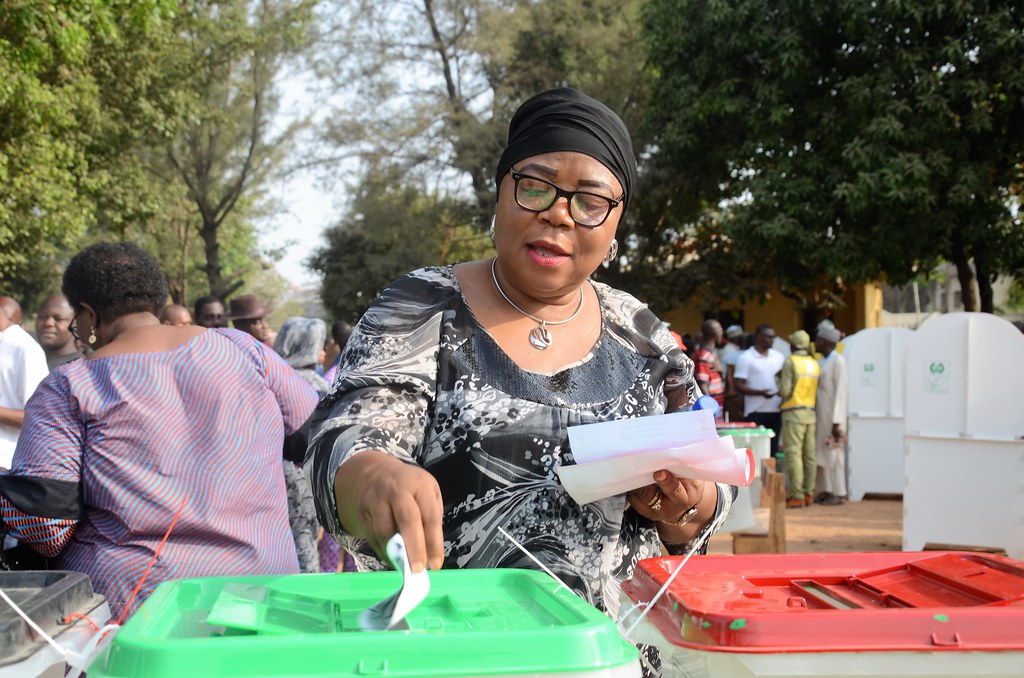 Nigeria, based in West Africa, has the largest economy and most populous country in Africa. It has a great amount of natural resources, such as oil, yet it remains one of the poorest countries globally, with an estimated 87 million Nigerians living below the poverty line. There are many reasons for endemic poverty in the region but one of these is the state of the rule of law in Nigeria, in particular, the nature of corruption and violence. These two features exist as persistent structural problems in the region. They undermine development efforts, job creation and service delivery. Poor Nigerians are most affected by these problems as they depend most on security and public institutions. These two issues weaken institutions and efforts to reduce poverty. Here are some of the ways that the state of the rule of law in Nigeria affects poverty.
Corruption and Poverty
Nigeria remains one of the most corrupt countries in Africa with a score of 26/100 from Transparency International, an organization dedicated to monitoring corruption. There is poor government accountability. Public institutions routinely suffer from embezzlement, ghost workers and contract fraud.
These practices drain funds that are meant for poverty reduction initiatives such as social welfare and infrastructure projects. Corrupt officials also often divert aid or demand bribes to release public goods. While there are some anti-poverty programs like N-Power, they often fail to reach the poorest and political favoritism further reduces their impact.
Corruption also worsens access to services. Citizens sometimes have to pay bribes to access health care, school enrollment, land documents or housing support. This inflates the cost of these services and makes them inaccessible to the poorest who need them the most.
Corruption also shapes access to job opportunities as nepotism and bribery influence public sector jobs, scholarships and government contracts. Poor people, lacking money or political connections, are often excluded from these opportunities. This reinforced cycles of inequality and poverty as elites stay empowered while the poor stay locked out. The poor state of the rule of law in Nigeria, as it pertains to corruption, reduces trust in the system and discourages participation in government programs or elections, furthering the cycle of poverty.
Violence and Poverty
Violence in Nigeria, since the fourth republic, has largely been concentrated in the northern and central regions. These regions also experience the highest poverty rates in Nigeria. Several studies have drawn the link between insecurity and deprivation in these regions.
In particular, in the north-east (Borno, Yobe, Adamawa), Boko Haram has terrorized civilians in their attempt to overthrow the government, leading to mass displacement. Meanwhile, in the north-west (Zamfara, Katsina, Sokoto), there is widespread banditry, kidnapping and extortion. Additionally, in the middle belt of the country (Benue, Plateau, Taraba), there are herder-farmer conflicts and communal violence which lie along ethnic and religious lines.
In these regions, their poverty rates range from 60-80%. In contrast, the southern regions, such as Lagos and Anambra, have much lower poverty rates, suggesting a geographic overlap between insecurity and extreme poverty.
While it is likely the case that extreme poverty has led to violence in these regions, the violence itself has exacerbated poverty and its plight. It affects food production by reducing farming and livestock output and leads to great food insecurity as tens of millions are put at risk.
It also affects education as the destruction of schools and fear leads to dropout and inaccessibility. Likewise, Internally Displaced Persons from the violence, generally lack stable housing, health care and clean water. The weakened rule of law in Nigeria produces great violence which worsens poverty now and makes it more difficult to escape it in the future.
Anti-Corruption Initiatives
There have been some recent promising efforts to tackle corruption. In 2024, the Economic and Financial Crimes Commission (EFCC) secured 4,111 criminal convictions and recovered about $214.5 million USD in looted funds. The establishment of the Integrated Payroll and Personnel Information System (IPPS) has gone a long way to eliminate ghost workers. The launch of the Open Treasury Portal in 2019 has provided public access to federal government expenditures.
These initiatives have had some effect on tackling poverty. Recoveries help plug fiscal gaps for services, although they have limited impact on direct poverty alleviation. The elimination of ghost workers helps free up some salary funds. Transparency tools can build long-term trust and enable advocacy which is crucial in the fight against poverty although they currently remain underused or inconsistently updated.
Security Reforms & Community-Based Approaches
Some efforts recently taken to address violence include military offensives such as Lafiya Dole against insurgents. The Civilian Joint Task Force (CJTF) has increasingly involved itself in local defense. Additionally, the government has initiated peacebuilding and deradicalization programs in Borno and Zamfara and has further emphasized community policing and state security networks.
These efforts have allowed the return of displaced persons in some areas such as in Borno, which goes a long way in tackling poverty. However, poverty reduction is slow due to damaged infrastructure, trauma and loss of livelihoods. Localized success stories exist but are not yet scalable or systemic. However, efforts in bolstering the rule of law in Nigeria goes a long way in facilitating poverty reduction in the country.
Looking Ahead
Nigeria faces complex and varied challenges, with insecurity, poverty, and corruption, but these difficulties are not insurmountable. Recent steps show a growing awareness that change is both urgent and possible. There remains real hope that Nigeria’s immense potential can be more fully realized.
– Seun Adekunle
Seun is based in Scotch Plains, NJ, USA and focuses on Politics for The Borgen Project.
Photo: Flickr
