 Recent months have seen several instances of progress in U.S. foreign policy, specifically in terms of foreign aid initiatives. In the span of little over a month, from mid-June to late-July, four such initiatives have come one step closer to making it through Congress. These initiatives are described in the text below.
Global Food Security Reauthorization Act
On June 19, 2018, the Global Food Security Reauthorization Act of 2018 passed in the Senate, and is currently under consideration by the House of Representatives. If passed, the bill will renew the Global Food Security Act of 2016, allowing for continued U.S. assistance in efforts to eradicate chronic hunger and poverty in developing nations.
In 2017, the Food and Agriculture Organization of the United Nations (FAO) cited the number of people suffering from chronic hunger at 815 million, which is 10 million more than when the initial legislation was drafted. Of this number, 489 million people were living in areas experiencing conflict.
U.S. foreign assistance seeks to install agricultural development programs in target countries that will use innovative science and technology to make the most of agricultural resources. In fostering food security and economic growth, increased productivity in agriculture will alleviate both hunger and poverty, in addition to stabilizing populations that are especially vulnerable to conflict and environmental hardship. The stabilization of these countries ultimately bolsters U.S. national security.
Women’s Entrepreneurship and Economic Empowerment Act
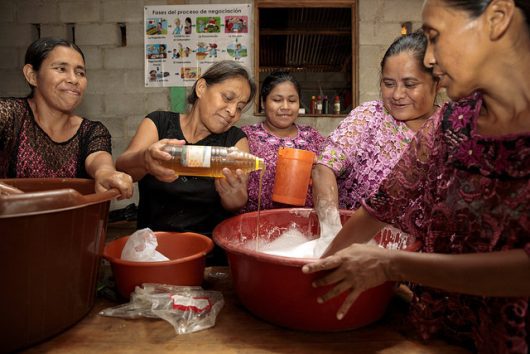
The House of Representatives passed the Women’s Entrepreneurship and Economic Empowerment Act of 2018 on July 17, 2018. It is now under review by the Senate Foreign Relations Committee.
Globally, discrimination impedes women’s financial success in a number of ways:
- Lower wages mean smaller incomes.
- Laws and practices in some countries keep women from their rightful ownership of assets, as in the case of inheritance.
- Gender-specific constraints have left over 1 billion women worldwide out of the formal financial system, depriving them of opportunities such as access to credit.
These factors all contribute to the reality that women comprise the majority of the world’s poor, rendering them more susceptible to violence, exploitation and poor health.
If this bill is implemented, the United States Agency for International Development (USAID) will work with countries to develop standards for gender equality and reduce gender violence. The agency will also support programs that establish and ensure equal rights to ownership and equal economic inclusion.
In 2016, the McKinsey Global Institute estimated that women’s equal participation in economic activity would add $28 trillion to the global GDP by 2025.
Better Utilization of Investments Leading to Development (BUILD) Act
July 17, 2018, saw another instance of progress in U.S. foreign policy with the House of Representatives also passing the BUILD Act. The bill has gotten through the Senate Foreign Relations Committee and is under further consideration by the Senate.
The BUILD Act would combine the Overseas Private Investment Corporation (OPIC) with certain functions of USAID, creating the United States International Development Finance Corporation (USIDFC) to replace OPIC.
Through loans, investments and partnerships with American businesses, the USIDFC would encourage and facilitate the investment of American private sector resources in developing nations. In financing business endeavors in these countries, the bill serves to create jobs, thereby stimulating their economies. This economic stimulation would make developing countries capable to afford infrastructure development projects.
The ultimate aim of the BUILD Act is to reduce the need for U.S. foreign aid by catalyzing modern development and bringing relations closer to an equal partnership. Congress expects that the USIDFC will go beyond self-sufficiency to bring in revenue to the U.S. Treasury.
Protecting Girls’ Access to Education in Vulnerable Settings Act
The Protecting Girls’ Access to Education in Vulnerable Settings Act made it through the House of Representatives on Oct. 3, 2017. On July 26, 2018, the Senate Foreign Relations Committee finally passed the bill along to the Senate for consideration.
As of June 2018, disaster and conflict have displaced upward of 68 million people, out of whom 25 million are refugees. Over half of the refugee population are children, and almost four million of these children lack access to primary education. The average length of displacement is 26 years, meaning that the affected children are at risk of never receiving an education. And yet, as of 2016, under 2 percent of all foreign aid has gone toward ensuring education for children in need.
If enacted into law, the bill will mandate the U.S. to work with other countries in making education accessible to all displaced children. By educating children, countries combat poverty, exploitation and extremism, which thrives in areas of hardship. As its name suggests, the legislation would give special priority to girls, who are both economically disadvantaged and more vulnerable to sexual exploitation, human trafficking and child marriage.
Benefits of US Foreign Policy
Although these initiatives are designed to directly impact nations in need, each of them would also have an indirect positive impact in the U.S. and around the world.
Whether helping to stimulate the global economy, improving overall global health or ensuring that human rights that are upheld around the world, global interdependence means that progress in U.S. foreign policy could lead to progress around the globe.
The recent steps that Congress has taken to approve the foreign aid legislation cited above have brought hopes for this goal of becoming reality.
One simple way to find out more about these and similar issues is the direct contact with the Congress, which is easily possible through The Borgen Project, more specifically, through this link.
– Ashley Wagner
Photo: Flickr

Progress in US Foreign Policy in 2018
Global Food Security Reauthorization Act
On June 19, 2018, the Global Food Security Reauthorization Act of 2018 passed in the Senate, and is currently under consideration by the House of Representatives. If passed, the bill will renew the Global Food Security Act of 2016, allowing for continued U.S. assistance in efforts to eradicate chronic hunger and poverty in developing nations.
In 2017, the Food and Agriculture Organization of the United Nations (FAO) cited the number of people suffering from chronic hunger at 815 million, which is 10 million more than when the initial legislation was drafted. Of this number, 489 million people were living in areas experiencing conflict.
U.S. foreign assistance seeks to install agricultural development programs in target countries that will use innovative science and technology to make the most of agricultural resources. In fostering food security and economic growth, increased productivity in agriculture will alleviate both hunger and poverty, in addition to stabilizing populations that are especially vulnerable to conflict and environmental hardship. The stabilization of these countries ultimately bolsters U.S. national security.
Women’s Entrepreneurship and Economic Empowerment Act
The House of Representatives passed the Women’s Entrepreneurship and Economic Empowerment Act of 2018 on July 17, 2018. It is now under review by the Senate Foreign Relations Committee.
Globally, discrimination impedes women’s financial success in a number of ways:
These factors all contribute to the reality that women comprise the majority of the world’s poor, rendering them more susceptible to violence, exploitation and poor health.
If this bill is implemented, the United States Agency for International Development (USAID) will work with countries to develop standards for gender equality and reduce gender violence. The agency will also support programs that establish and ensure equal rights to ownership and equal economic inclusion.
In 2016, the McKinsey Global Institute estimated that women’s equal participation in economic activity would add $28 trillion to the global GDP by 2025.
Better Utilization of Investments Leading to Development (BUILD) Act
July 17, 2018, saw another instance of progress in U.S. foreign policy with the House of Representatives also passing the BUILD Act. The bill has gotten through the Senate Foreign Relations Committee and is under further consideration by the Senate.
The BUILD Act would combine the Overseas Private Investment Corporation (OPIC) with certain functions of USAID, creating the United States International Development Finance Corporation (USIDFC) to replace OPIC.
Through loans, investments and partnerships with American businesses, the USIDFC would encourage and facilitate the investment of American private sector resources in developing nations. In financing business endeavors in these countries, the bill serves to create jobs, thereby stimulating their economies. This economic stimulation would make developing countries capable to afford infrastructure development projects.
The ultimate aim of the BUILD Act is to reduce the need for U.S. foreign aid by catalyzing modern development and bringing relations closer to an equal partnership. Congress expects that the USIDFC will go beyond self-sufficiency to bring in revenue to the U.S. Treasury.
Protecting Girls’ Access to Education in Vulnerable Settings Act
The Protecting Girls’ Access to Education in Vulnerable Settings Act made it through the House of Representatives on Oct. 3, 2017. On July 26, 2018, the Senate Foreign Relations Committee finally passed the bill along to the Senate for consideration.
As of June 2018, disaster and conflict have displaced upward of 68 million people, out of whom 25 million are refugees. Over half of the refugee population are children, and almost four million of these children lack access to primary education. The average length of displacement is 26 years, meaning that the affected children are at risk of never receiving an education. And yet, as of 2016, under 2 percent of all foreign aid has gone toward ensuring education for children in need.
If enacted into law, the bill will mandate the U.S. to work with other countries in making education accessible to all displaced children. By educating children, countries combat poverty, exploitation and extremism, which thrives in areas of hardship. As its name suggests, the legislation would give special priority to girls, who are both economically disadvantaged and more vulnerable to sexual exploitation, human trafficking and child marriage.
Benefits of US Foreign Policy
Although these initiatives are designed to directly impact nations in need, each of them would also have an indirect positive impact in the U.S. and around the world.
Whether helping to stimulate the global economy, improving overall global health or ensuring that human rights that are upheld around the world, global interdependence means that progress in U.S. foreign policy could lead to progress around the globe.
The recent steps that Congress has taken to approve the foreign aid legislation cited above have brought hopes for this goal of becoming reality.
One simple way to find out more about these and similar issues is the direct contact with the Congress, which is easily possible through The Borgen Project, more specifically, through this link.
– Ashley Wagner
Photo: Flickr
How ACE Africa Has Impacted Kenya
ACE Africa was established in Kenya in 2003 with only four staff members: a U.K. expatriate and three Kenyans. They had a tall order, as the city of Bungoma, Kenya was near the point of collapse in 2003. Nearly one in three households in the community were infected with HIV/AIDS and all government and community structures were falling apart. ACE Africa began their work and 14 years later, Bungoma is a drastically different place.
Focus and Work
ACE Africa focuses on three core areas to improve a community over the long term: child development, community health and wellbeing and community livelihoods. Using specific programs to mold projects to communities in Kenya and East Africa, ACE Africa has grown from four to 58 staff indigenous to Africa and 12,500 community volunteers. ACE Africa is a registered NGO in Kenya, the United Kingdom, the United States and Tanzania, employing small staffs in each country. The organization has also partnered with investment banks, world-leading universities, Dame Judi Dench and other NGOs and international organizations.
In 2010 the Star Foundation, an independent charity founded in London by a wealthy Saudi Arabian family-owned business conglomerate, awarded ACE Africa with an Impact Award. The award was given for the organization’s work in rural Kenya to reduce the spread and increase the treatment of HIV/AIDS. The organization began by opening testing centers and educating the community at all levels about the spread of HIV/AIDS and the necessary treatment. They also educated the population about the importance of a healthy diet, which can improve health increase the productivity of a village. As of 2010, ACE Africa had helped to improve the lives of more than 300,000 children in Kenya.
Beyond Kenya
ACE Africa has begun to branch out of Kenya into the north of Tanzania. In 2014 the organization began working with the Innocent Foundation in Tanzania. According to the Innocent Foundation, the project will last 10 to 12 years. When the project began in 2014, over 93 percent of the wage-earners in the villages where ACE and Innocent are working earn less than $1 a day. Nearly 44 percent of the children in the schools are orphans, and it is estimated that only 4 percent of the villagers eat a balanced diet.
ACE Africa and the Innocent foundation will work with six community organizations within these villages to improve the quality of life. Training the locals ensures that skills will stay and flourish within the community. ACE Africa is working closely with the Tanzania government and more than 7,000 local volunteers to see that this plan succeeds.
ACE Africa’s Impacts
The organization has improved the lives of more than 1 million children through their programs. It has helped to establish more than 500 community garden clubs, resolved more than 12,000 cases of child neglect and abuse and engaged nearly 100,000 children in school guidance programs. ACE Africa has screened roughly 100,000 people for HIV/AIDs and has helped around 80,000 people seek treatment and counseling. As part of their community livelihood programs, the organization has trained more than 35,000 people on the proper techniques for sustainable farming. This has allowed approximately 87,000 kitchen gardens to be established. The group also works with partners and third-parties to research better techniques to help people and make their projects more efficient.
In 2017 ACE Africa founder Jonna Waddington was invited to the Sustainable Development Goals for Africa conference, where the United Nations development plan for Africa through 2030 will be discussed. With six awards and international cooperation and recognition from the United Nations, it appears that ACE Africa will continue to make a positive impact on the world.
– Nicholas Anthony DeMarco
Photo: Flickr
The 7 Virtues and Afghanistan’s Opium Epidemic
However, farmers in Afganistan can defeat terrorism with this unexpected strategy- selling oranges and roses. A perfume company called The 7 Virtues pays a generous amount for these ingredients which are used in the perfumes so that families can have a sustainable livelihood. Their philanthropy benefits the people of Afghanistan, the United States, and the world in general.
Opium Production in Afganistan
There is a huge demand for opium in Afghanistan, but the consequences of this illegal drug extend far beyond the country’s borders. Afghanistan farmers produce between 70 and 80 percent of the world’s supply of opium, and the drug industry spurring on their production is responsible for opium-related deaths throughout the world. In addition to funding terrorist operations, growing opium encourages other illegal behaviors and contributes to Afghanistan’s violent atmosphere.
It is no coincidence that some of the poorest farmers in the world are producing opium in Afghanistan. To survive, families must resort to a form of employment they might abstain from under less desperate circumstances. However, selling legal crops is not very profitable. Experts concerned about the economic development of Afghanistan have warned against stifling the opium trade because they don’t want more than three million farming families to lose their main source of income. Renting land is expensive for shareholders, so they need to sell crops in high demand. Compared to legal crops, opium brings in the most revenue.
The 7 Virtues
Barb Stegemann, the founder of The 7 Virtues, is determined to address violence and economic instability in Afghanistan with economic power. Many businesses in the fashion industry exploit cheap labor without giving the workers sustainable wages, so the company hopes to set a good example for others to follow. It lifts more than 1,000 families in Afganistan out of poverty by paying twice as much for essential oils to the farmers as they would get by selling opium. By selling legal crops for a generous price, this simultaneously limits financial support for terrorist groups. The company does business with other countries affected by violence and conflict such as Haiti, Rwanda and countries in the Middle East.
Legal crop production benefits more people than just farmers in the country. Reduced activity from terrorist groups is good for U.S. national security and saves people from opium addiction all over the world. Stegemann’s motto is: “Good for the world. Good for your skin.” Not only that perfumes made by The 7 Virtues are phthalate and paraben free, but they are also not tested on animals. Due to their rising popularity, the perfumes will be sold in Sephora outlets. Partnering with a mainstream beauty store helps maximize their visibility among consumers and makes the perfume easily accessible for supporters of Stegemann’s company.
Other Methods for Opium Reduction
The elected government in Afghanistan has introduced several other methods for interrupting the opium trade. They’re currently testing the effectiveness of aircraft that spray herbicides over poppy fields. This practice is announced prior to the harvest season that gives opium farmers a chance to make the decision of planting legal crops. The government is also confiscating the property of landlords who encourage shareholders to grow opium poppy plants. Future plans include research on types of crops grown in provinces controlled by terrorist groups. This will provide information about where they collect revenue and allow the government to focus their opium eradication efforts.
Barb Stegemann began a legacy to demonstrate the power of investment for alleviating poverty. Instead of fighting terrorism with more violence, she proves that Afghanistan’s problems can be solved with a bottle of fragrance.
– Sabrina Dubbert
Photo: Flickr
Top 10 Facts about Poverty in Sudan
Located in Northeast Africa, Sudan is the third largest country of the African continent with a current population of more than 41 million people. The biggest problem country is facing is the poverty rate that is currently about 46.5 percent and continues to increase. This does not only affect men and women living in Sudan but children as well. In the text below, 10 facts about poverty in Sudan are presented.
Facts about Poverty in Sudan
These top 10 facts about poverty in Sudan bring not only the awareness of the people’s lives but reflects how much change and development is being brought to the country. These issues can be solved and poverty rates can be improved.
Organizations, including the few listed in the text above, will continue to develop and come together, bringing not only hope to the people but also dedication, ensuring a better future for the people in the country.
– Charlene Frett
Photo: Flickr
Advocating for People with Disabilities in Australia
The high level of poverty among the indigenous populations is mirrored by inadequate health resources, particularly regarding physical and cognitive disabilities, both of which are disproportionately common in indigenous communities.
Focusing in on Disabilities in Indigenous Communities
Approximately 45 percent of Aboriginal and Torres Islander people live with a disability or long-term health condition and more than 7 percent of Aboriginal and Torres Islander people live with a profound or severe disability. Indigenous Australians (also called First Peoples) are over two times more likely to be living with a disability than their non-indigenous counterparts, and five times more likely to experience mental illness.
Such high levels of disabilities among the Aboriginal and Torres Islander communities can only be attributed to the high levels of poverty found within said communities. While urban indigenous poverty rates have been steadily declining over the past decade, dropping from 33.9 percent in 2006 to 24.4 in 2016, poverty rates both stagnated and rose in more remote regional areas between 1.2 and 7.6 percent depending on the area.
According to census data analyzed by Australian National University, while median disposable household income among indigenous families rose by $57 weekly in urban areas, it fell by $12 in remote rural areas over the same time period. As a result of such poverty, indigenous Australians face a myriad of issues that cyclically disadvantage their communities further.
In 2012-13, 24 percent of non-indigenous people were unemployed, but over half of the Aboriginal and Torres Strait Islanders were not employed. only 19 percent of disabled Aboriginal and Torres Strait Islander people currently participate in Australia’s workforce.
A Cycle of Poverty
Disability is innately connected to poverty, as it can result in significant barriers in education and skill development, job loss and reduced earning, additional monetary and time expenses and a variety of other factors that lead to economic hardship and disempowerment. Lack of economic resources limits access to primary health care services and preventive services, increasing the likelihood that a person works and lives in a physically and mentally detrimental environment.
A 2009 study conducted by the Center for Economic and Policy Research found that half all working-age adults who experience one year of poverty are disabled, and almost two-thirds of those who experience long-term extreme poverty have either a physical or cognitive disability.
People with disabilities are also more likely to experience food insecurity and an inability to make or pay rent due to lack of employment opportunities. In 2014, the overall poverty rate was 15 percent; however, the poverty rate by disabled status ranged between 12 and 29 percent. Although disabled people only make up 8 percent of America’s population, they account for 17 percent of its impoverished population.
Similarly, those experiencing extreme poverty are more likely to become disabled due to limited access to adequate sanitation, food security, safe drinking water and primary health services. They are also more likely to pursue high-risk areas of work.
First Peoples Disability Network Australia
First Peoples Disability Network Australia (FPDN) is governed and run by people who have experienced and continue to experience life with a disability, following the framework of The United Nations Convention on the Rights of Persons with Disabilities. The organization was established in 2010, working within the social construct of disability (as opposed to diagnosis) to create community networks for disabled indigenous Australians and link them to affordable care while simultaneously working to dismantle stigmas surrounding both First Peoples and disabilities.
Gisela Rosa, a future intern at the Federal Public Defender for Western Washington, understands the gravitas of the change this organization is making, as her younger brother has Autism. “Accessible care is so incredibly important to people with disabilities and their families and caretakers can have the best quality of life possible,” she said. “It’s kind of a game of luck and can be near impossible for underprivileged people with disabilities to get the care they need.”
The work FPDN is doing sets an example for organizations to follow, paving the way in terms of how disabled people receive care, giving underprivileged citizens a chance to live the way they hope to.
– Katherine Anastas
Photo: Flickr
Top 10 Facts About Poverty in Guatemala
One of the strongest economic performers in Latin America in recent years, Guatemala’s GDP has steadily grown. However, the benefits of this economic growth have not been realized by a large portion of Guatemalan society, particularly the indigenous population. The top 10 facts about poverty in Guatemala reveal that, while it is a country with tremendous economic potential, several institutional changes must occur before the welfare of all the people in Guatemala can improve.
Top 10 Facts about Poverty in Guatemala
The top 10 facts about poverty in Guatemala demonstrate that by working to solve the issues of its neighbors, the United States can solve issues of its own in ways that will prove to be constructive for all parties involved.
Achievement of long-term social and economic objectives rest on the U.S. State Department’s commitment to Guatemalan aid and the Guatemalan government’s commitment to collaborate with international supporters.
Beyond this, the Guatemalan government must address the fundamental inadequacies within its current institutions that have disproportionately affected rural and indigenous people.
– Julius Long
Photo: Flickr
An Opportunity for Growth within Bosnia and Herzegovina
Bosnia and Herzegovina is a sovereign state in the southeastern region of Europe, found on the Balkan Peninsula and borders Croatia, Serbia and Montenegro. This nation has been through a multitude of financial struggles, yet there has been continued growth within Bosnia and Herzegovina. The country is now on the path to stable economic development.
Bosnia and Herzegovina
Rates continue to improve substantially. For example, the unemployment rate among adults decreased from 25.4 percent in 2016 to about 20.5 percent in the first six months of 2017. This is a meaningful advancement for the country.
Bosnia and Herzegovina is also a candidate nation, which signifies that it could potentially be a partner within the European Union. This is a great opportunity for Bosnia and Herzegovina as it could accelerate the country’s economic and political systems even more quickly.
In addition to this hopeful alliance, the World Bank assists Bosnia and Herzegovina by both funding initiatives and formulating a new growth model.
Projects for Growth
Growth within Bosnia and Herzegovina begins with foreign aid from international organizations, particularly the World Bank, which will implement advanced infrastructural and economic structures within the country.
There are now 11 active projects within Bosnia and Herzegovina that will hasten reforms, and the World Bank will lend an overall $521.63 million to the nation.
Better Than Before
“Better than Before — Rebuilding Bosnia and Herzegovina” is one of the many projects that are currently active. The country witnessed devastating floods that impacted 25 percent of the population. Since the economy is agriculturally-based, they lost approximately 15 percent of the country’s GDP. This initiative salvaged 248 infrastructure facilities and helped 580,000 individuals.
“Banking Sector Strengthening Project” improves “banking regulation, supervision and resolution capacity and by enhancing the governance of the Entity development banks.” This will better banking among every sector since they plan to replace obsolete banking styles with improved strategies that will promote economic development.
“Bosnia and Herzegovina Employment Support Program” will increase private sector opportunities and jobs for citizens. It will allow better interaction and discourse for employers, employees, public policy makers, etc. It will also allow the government to expand active labor market programs.
There are eight more projects that will accelerate growth within Bosnia and Herzegovina. They address public health programs, transportation systems and energy efficiency.
New Model for Growth within Bosnia and Herzegovina
Growth within Bosnia and Herzegovina also starts with a new economic strategy. The new framework consists of structural reforms within the public and private sector.
The World Bank will:
The World Bank will guide and fund this new growth model for Bosnia and Herzegovina and will continually advise the financing so economic growth occurs more rapidly.
Conclusion
The World Bank’s robust presence within Bosnia and Herzegovina is vital to its development as a sovereign state. This nation represents countries’ ability and capacity to progress and change economically.
Its history is sad and unfortunate, yet thankfully, Bosnia and Herzegovina is recovering and growing. The country has earned the right to be an E.U. candidate country.
– Diana Hallisey
Photo: Flickr
Protecting Girls’ Access to Education in Vulnerable Settings Act
What is the Problem?
In 2016, 65.6 million people were identified as forcibly displaced. This number included three different populations: refugees, people displaced within their own countries and asylum seekers. In 2018, the number of displaced people grew to roughly 68 million people. Refugees make up approximately 25 million displaced people and half of the refugees are children. Many of these children do not have access to education. This is largely because a majority of refugees are hosted by the least developed countries in the world.
What is Protecting Girls’ Access to Education in Vulnerable Settings Act or S. 1580?
S. 1580 or Protecting Girls’ Access to Education in Vulnerable Settings Act, is a bill that advocates the education of girls who have been displaced all over the world. The bill also grants The Department of State and The U.S. Agency for International Development (USAID) the ability to work on programs that will aid displaced girls. These programs must provide safe primary and secondary education, increase the capacity of schools in host countries and help girls receive access to educational and economic opportunities.
Under S. 1580, the State Department and USAID are also encouraged to collect data with the help of multilateral organizations. This data will be about how accessible schooling and economic opportunities are for displaced people and if the programs put in place by the bill have benefited them.
How Much Will S. 1580 Cost?
According to the Congressional Budget Office (CBO), S. 1580 has an insignificant cost to the federal government. Between 2019 and 2023, the bill will cost roughly $500,000, S. 1580 is drawing from funds that are already being given and does not require much additional funding. S. 1580 would also not create any budget deficits, i.e. it will not contribute to the national debt.
Where is the Bill Now?
S. 1580 was introduced in the Senate on July 19, 2017, by Sen. Marco Rubio. On July 26, 2018, the Committee on Foreign Relations issued a revised version of the bill without a written report to the Senate. Since then, the bill remains in limbo and there is currently no date for a vote on the bill. S. 1580 currently has 18 cosponsors, a majority of which are Democrats.
Foreign aid remains a small portion of the U.S. budget, approximately 1 percent. Despite this small number, it is important that the U.S. makes sure that money for foreign aid reaches the people that need it the most. S. 1580 ensures that conflicts and natural disasters do not get in the way of girls’ education. What is S. 1580? An opportunity to invest in girls who desperately need an education.
– Drew Garbe
Photo: Flickr
International Affairs Budget: Prevent Funding Cuts
Thinking about more recent epidemics, such as the Ebola and Zika virus, it can be seen that funding for health-related programs within The International Affairs Budget was crucial to lowering the statistics of those who are affected. Up to now, 16 percent of The International Affairs Budget is dedicated to global health funding. This includes maternal and child healthcare, nutrition and tackling diseases such as polio and HIV/AIDS.
The Polio Virus Around the World
The Polio vaccine is a great example of a threat that could be eradicated with the correct application of foreign aid. Polio, also known as Poliomyelitis, is an infectious disease that causes paralysis and possibly death. According to The Polio Global Eradication Initiative, as of 1988, polio has infected and paralyzed over 1,000 children daily worldwide.
In 1931, Sir Macfarlane Burnet and Dame Jean MacNamara were able to identify multiple strains of polio, which became known as types 1, 2, and 3. In 1955, a polio vaccine was introduced from wild-type poliovirus strains that were killed, therefore inactive. Also known as IPV, this form of the vaccine has been able to eliminate polio from countries such as Scandinavia and the Netherlands.
In 1961, the oral polio vaccine, a mixture of the 3 strains of polio, was introduced. The strains selected are less likely to originate within the body and be spread to others. Due to the high rates of success of the OPV, alongside its low cost to purchase, this version of the vaccine has been key in globally eliminating polio.
Despite these 2 forms of vaccines being available, The Polio Global Eradication Initiative reports that 430 million children are still at risk of contracting polio, mainly in Africa and Asia. As of February 2015, The United States government approved a $228 million in funds to tackle the elimination of polio.
Once a pandemic, now the rates of polio have been reduced by 99.99 percent because of funding that has gone towards research and creating initiatives such as The Global Polio Eradication Initiative to continually fight polio.
The Smallpox Virus Around the World
Variola virus, also known as smallpox, was an infectious disease that caused fever and a specific type of progressive skin rash. While many recovered from the disease, three out of 10 died and, of those who survived, many had large scars left on their body.
Looking back at the history, there had been several global outbreaks of smallpox from China to Africa to Australia. In 1959, The World Health Organization (WHO) started a plan to eradicate smallpox, but it was difficult to obtain funding and countries willing to participate. When The Intensified Eradication Program started in 1967, progress was made in areas such as South America, Asia and Africa. One thing that became clear was that, with the eradication of smallpox, comes lower medical expenses.
For instance, when smallpox was finally eradicated in 1980, quarantine conditions no longer had to be initiated. When combined with the costs of the disabilities of those who had survived the disease after fighting smallpox, the savings were around $1 billion. Therefore, it can be concluded that with funding, comes research and initiatives, which heightens the likelihood of vaccines and lowers medical expenses both domestically and globally.
HIV/AIDS Around the World
Around $330 million of the global health percentage of The International Affairs Budget has been dedicated to HIV/AIDS. Out of these funds, $275 million will be shared with Gavi, The Vaccine Alliance. According to The Lancet, AIDS-related deaths, when comparing 2005 to 2016, have decreased .9 million. In addition, the rates of new infections have decreased by 16 percent.
One reason for this decrease is because of increased treatments that are available due to an increase in funding. Therefore, if funding is reduced, inversely, there would be a rise in infection rates of HIV/AIDS due to lack of research, services and education about preventing the virus.
As readers can see, The International Affairs Budget is crucial to the progression of global health. Instances such as polio, smallpox and HIV/AIDS are prime examples of how funding can be the key to reduction and even eradication. With increased funding, comes increased research, cures, education and prevention techniques. E-mail your senators and representatives today to urge their support and protection for the funding of The International Affairs Budget.
– Jessica Ramtahal
Photo: Flickr
Raising Awareness: Ai Weiwei and the Refugee Crisis
Ai Weiwei: Inspiring with Art
In recent years, however, he has been working outside China in either a subterranean studio in Berlin or working in New York with the Public Art Fund. Ai Weiwei and the refugee crisis are hardly a surprising pair. Though he is veering away from the domestic politics that prompted many of his earlier works, tackling the global refugee crisis, nonetheless, inspires the same poignant and emotionally resonant works for which Ai has become internationally celebrated.
Ai’s art is certainly deserving of its reputation. “Remembering,” perhaps one of his most famous projects, was a massive art piece created in response to the Sichuan earthquake. Ai lined up thousands of backpacks along the Haus der Kunst in Munich. Each backpack represented a child who was lost in the earthquake. In addition, the backpacks spelled out a sentence written by one of the victim’s mother: “All I want is to let the world remember she had been living happily for seven years.”
The sensitivity Ai showed in focusing on the tragedy of a large number of people while highlighting the individual—in that case, the child’s mother—is how he has been able to approach the global refugee crisis. It is also that level of sensation, that which marked “Remembering” as an art piece, that should keep Ai Weiwei and the refugee crisis in the headlines.
Ai Weiwei and the Refugee Crisis
Ai Weiwei has responded to the crisis with several art projects and a documentary film, “Human Flow,” now available for streaming on Amazon. The documentary, as well as the project of combatting the refugee crisis, is ambitious. It is grand. It is wide in scope.
The film opens with an aerial shot of the sea. A refugee reception is soon underway as refugees come ashore from their boat on that sea. The image, the tiny heads adrift surrounded by impossibly small waves, conveys the immeasurability of the scene. Yet, as the film progresses, faces are visible, close-up. And, for a moment in this opening see, the audience sees the director.
The film isn’t just about the refugee crisis; it is about the international figure Ai Weiwei and the refugee crisis. He, the director, appears in many crucial scenes throughout the film. It is his documentary and his exploration of the crisis. Yet, his image is used sparingly. The audience sees him react to people organically; they see his emotional reactions, but the focus is always on the other people—the refugees.
The documentary spans several countries and jumps from location to location; not creating a story, but an especially moving tapestry of lives woven together by the different crises they experience. Close-ups highlight the individual while aerial shots from drone cameras create a sense of scale.
Ai Weiwei’s New York Art Project
As part of his work for New York’s Public Art Fund, with proceeds also going to the IRC and the UNHCR, Ai Weiwei used portraits of 300 of the refugees he encountered doing research and creating the documentary to create banners on display around the city. The banners are part of his “Good Fences Make Good Neighbors” exhibition, in which the artist also created several fence or cage installations around New York City as a commentary on the tendencies to not treat refugees with the respect and humanity they deserve.
Moreover, the images of individuals, used as part of a massive and publicly accessible art projects deal, are a testament to the massive scale of the crisis, and yet they imbue the subject, the refugee, with individuality and emotional resonance. These pieces are guaranteed to be seen when walking around New York.
The documentary and his other art projects serve to create and propagate awareness. It is not just an awareness of the refugee crisis, but of the otherwise unseen humans who are affected by the crisis. It is the emotion behind the art of Ai Weiwei and the refugee crisis itself that needs to be shared. And a readily streamable documentary along with a strong public art project serve as excellent ways of spreading awareness. His work can be seen as a call for action to address the needs of the global poor and the world’s refugees.
Ai Weiwei is far from finished making a statment on the refugee crisis. His next project, entitled “Laundromat,” will be in Qatar. The artist uses 2,046 articles of clothing left behind by refugees when fleeing the Greek island of Lesbos. In an email interview about this new project with the New York Times, Ai asserts this call for action, noting “We cannot reject the idea that humanity is one.”
– William Wilcox
Photo: Flickr