Top 10 Facts about Girls’ Education in Iraq
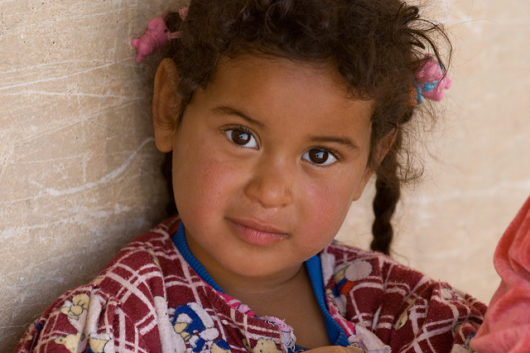
A history of conflict has negatively reflected on girls’ educational future in Iraq. Education levels have never returned to their pre-Gulf War levels. Furthermore, conflict with ISIS has erased much of the progress for girls’ education seen through higher enrollment rates in times of relative peace. Therefore, a rough chronology of conflicts is useful when reading the top 10 facts about girls’ education in Iraq, as these events drastically change the quality of education.
Top 10 Facts About Girls’ Education in Iraq
- Girls are under-represented in both primary and secondary schools and tend to drop out at a higher rate than boys. In the 2015/2016 school year, five million boys were enrolled in school compared to 4.2 million girls. In addition, at the lower secondary level, 4.7 percent of girls dropped out compared to 3.6 percent of boys.
- Rural girls are one of the groups with the lowest access to education in Iraq. For example, the lowest rate of primary school enrollment is among rural girls. The enrollment rate in 2009 was only 68 percent. Furthermore, this enrollment rate drops even further to 15 percent when analyzing the secondary school enrollment among rural girls. A contributing factor to this situation is the decline in the capabilities of teachers.
- The illiteracy rate among girls that are 12 and older is more than double the male rate. The illiteracy rate for girls is 28.2 percent, compared to the male rate of 13 percent. According to the U.N., traditional cultural and social factors remain main obstacles in improving the access to education for girls. The discrepancy between literacy rates illustrates how gender-based discrimination in the education system is both a cause and an effect of poverty.
- The rate of girls’ education and their access to adequate teaching was slightly better in Northern Iraq than the other regions in 2007. In the southern provinces, there was a decline in female attendance from two girls for every three boys to one girl for every four boys in this same time period.
- While this was true in 2007, a 2016 report by a UNICEF consultant found that in Kurdistan, the northern region of Iraq, education environments were a momentous challenge to girls’ education. Mistreatment, beatings and poor quality of teaching was reported, giving parents more reasons to remove their girls from school.
- While girls do suffer from underrepresentation in the school system, total girls’ enrollment in Iraq was 4.2 million in 2015-2016, up from 3.8 million in 2013-2014. Although this statistic is initially promising, two problems remain. First, girls still remain at a disadvantage in educational access. Contributing factors to the issue of educational access include a family’s wealth, the child’s age and the choice to work instead of attending school. Second, if the trend toward increased enrollment continues, a strain will be placed on existing educational resources and further funding for public education are needed.
- About 355,000 internally displaced children in Iraq don’t attend school, the majority of them being girls. The two main sources of internally displaced persons (IDP) originate from the upheaval caused by the Syrian civil war and the brutality of the Islamic State in neighboring countries. In IDP camps, the most common reason cited for children not attending school was a lack of interest in the classes. Other reasons included the cost of education and the time period for their arrival at the camp.
- Cities occupied by the Islamic State struggle to provide education to girls. In 2014, the Islamic State detained up to 7,000 Yazidi women and girls in Northern Iraq, removing them from access to education. Given the testimony of survivors who managed to escape, a report released by Human Rights Watch stated that the crimes against the Yazidis in Northern Iraq might amount to crimes against humanity.
- The International Committee of the Red Cross (ICRC) first access to an education project in Iraq is in collaboration with teachers from the Al-Rajaa school for girls in Ramadi. When the ICRC team first visited the school it there was danger and destruction around every corner, so the ICRC team began to rebuild it. This school is the only one in Ramadi to offer a science curriculum to girls’ and has been reopened in 2017 after conflict forced it to shut down. The school currently educates approximately 600 children.
- The issue of girls’ education in Iraq has received the attention of humanitarian celebrities like Malala Yousafazai who spent her 20th birthday in Iraq meeting with young women who were, and continue to be, victims of ISIS. The meeting was part of the Malala Fund’s Girl Power Trip, an initiative meant to tell the stories of the more than 130 million girls around the world who are out of school.
As it can be seen through these top 10 facts about girls’ education in Iraq, the education system continues to be plagued by conflicts in the country, and girls are disproportionately at higher risk of dropping out or repeating grades if remained in school.
While this is certainly a cause for concern, the risks for girls’ education in Iraq have not gone unnoticed and many strive to change this. The Iraqi education system was once hailed as the best in the Middle East and many nongovernmental organizations, domestic policymakers, politicians, celebrities, and the local populous desire to return it to this position of dominance.
Georgie Giannopoulos
Photo: Flickr
